Drainage excavation forms the foundation of effective water management systems across commercial developments, residential properties, and infrastructure projects. Whether installing new drainage networks for drive-through facilities or upgrading existing systems in established areas, proper excavation techniques ensure long-term performance and compliance with current regulations. Understanding the complexities of soil conditions, safety requirements, and installation methodologies becomes essential for any civil engineering project requiring subsurface water management solutions.
Understanding Drainage Excavation Fundamentals
Drainage excavation involves the systematic removal of soil and substrate materials to create trenches, channels, or basins for water management infrastructure. This process requires careful planning to account for soil composition, water table levels, and the proximity of existing utilities.
The scope of drainage excavation varies significantly depending on project requirements. Commercial developments such as drive-through restaurants demand comprehensive surface water drainage systems to manage large paved areas, whilst residential properties typically require more modest installations for driveway and patio drainage. Each scenario presents unique challenges that influence excavation depth, width, and methodology.
Project Planning and Site Assessment
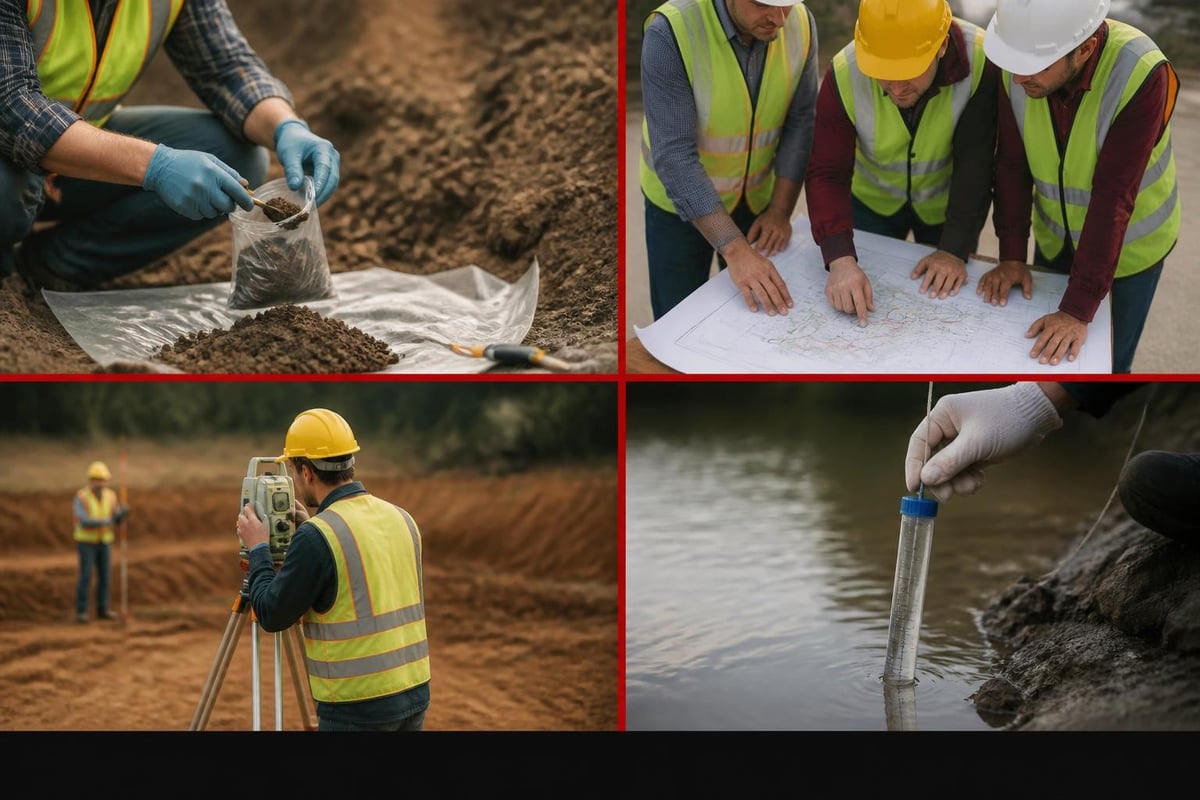
Before commencing any drainage excavation work, thorough site assessment establishes critical parameters for successful execution. Soil composition analysis reveals load-bearing capacity, drainage characteristics, and potential stability concerns that directly impact excavation methods.
Key assessment factors include:
- Existing utility locations and depths
- Groundwater levels and seasonal variations
- Soil type classification and bearing capacity
- Surface gradients and natural water flow patterns
- Access requirements for machinery and materials
Professional survey work combined with historical data provides invaluable insights into subsurface conditions. Modern techniques, including advanced remote sensing technologies for detecting subsurface drainage infrastructure, enhance planning accuracy and reduce the risk of encountering unexpected obstacles during excavation.
Safety Standards and Regulatory Compliance
Drainage excavation operations present significant hazards that demand strict adherence to safety protocols and regulatory frameworks. The OSHA trenching and excavation guidelines establish fundamental safety requirements for protecting workers from cave-ins, falls, and other excavation-related risks.
Protective Systems and Trench Safety
Implementing appropriate protective systems becomes mandatory for excavations exceeding specific depths. These systems prevent soil collapse and create safe working environments for installation teams.
| Protective System | Application | Advantages | Limitations |
|---|---|---|---|
| Sloping | Shallow to medium depth | Cost-effective, simple | Requires more space |
| Shoring | Medium to deep trenches | Adaptable, reusable | Higher initial cost |
| Shielding | Variable depths | Quick deployment | Limited soil support |
The comprehensive excavation safety requirements outlined by OSHA detail specific measures for water accumulation management, atmospheric testing, and safe access provisions. Projects undertaken by experienced civil engineering firms incorporate these standards from initial planning through completion, ensuring compliance whilst maintaining operational efficiency.
Competent person designation represents another critical safety requirement. This individual possesses the authority to identify hazards and implement corrective measures immediately. Their continuous presence during excavation operations provides essential oversight for worker protection and regulatory compliance.
Access and Emergency Preparedness
Safe entry and exit points must be established within 25 feet of any worker in a trench exceeding four feet deep. These access points, typically in the form of ladders or ramps, facilitate rapid evacuation during emergencies and enable efficient workflow during normal operations.
Emergency response planning addresses potential scenarios including:
- Sudden soil collapse or cave-in events
- Water inundation from broken mains or heavy rainfall
- Hazardous atmosphere detection
- Equipment failure or power loss
- Worker injury requiring immediate medical attention
Technical Excavation Methods for Drainage Systems
Modern drainage excavation employs various techniques tailored to project specifications, site conditions, and installation requirements. Mechanical excavation using tracked or wheeled machinery provides efficiency for larger commercial projects, whilst manual methods offer precision for sensitive areas or restricted access locations.
Mechanical Excavation Approaches
Hydraulic excavators represent the primary equipment choice for most drainage excavation projects. Their versatility accommodates different bucket configurations, enabling operators to match equipment specifications to soil conditions and trench dimensions.
Equipment selection considerations:
- Trench depth and width requirements
- Soil hardness and composition
- Site access constraints
- Proximity to existing structures
- Environmental impact limitations
Mini excavators prove particularly valuable for residential drainage work and confined commercial areas. These compact machines navigate tight spaces whilst delivering sufficient power for trenching operations in typical soil conditions. Projects such as commercial developments requiring precise excavation benefit from this equipment's manoeuvrability combined with operator expertise.
The Federal Highway Administration’s drainage excavation guidelines emphasize the importance of matching excavation techniques to site-specific conditions, particularly when dealing with unstable soils or high water tables.
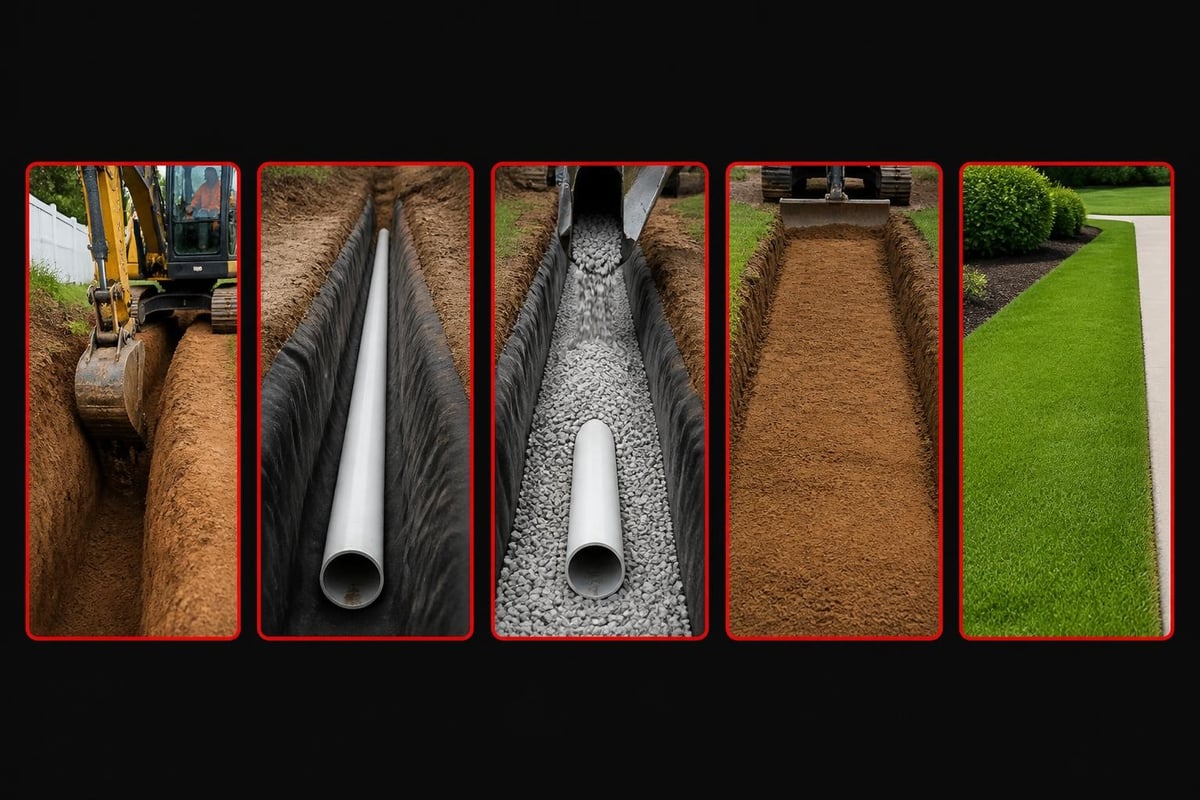
Precision Trenching Techniques
Achieving proper gradient becomes paramount for gravity-fed drainage systems. Laser-guided excavation equipment ensures consistent slopes that facilitate efficient water flow without creating low spots prone to sediment accumulation or standing water.
Typical drainage gradients range from 1:40 to 1:80 depending on pipe diameter, flow volume, and local authority requirements. Maintaining these precise specifications throughout excavation requires:
- Establishing accurate datum points before commencing work
- Continuous monitoring during excavation progress
- Regular verification using laser levels or surveying equipment
- Immediate correction of any deviations from specified grades
- Final confirmation before pipe installation begins
Installation Best Practices and Material Selection
Proper installation techniques transform excavated trenches into functional drainage systems capable of decades of reliable service. The relationship between excavation quality and long-term system performance cannot be overstated.
Bedding and Surround Materials
Pipe bedding provides uniform support whilst facilitating water infiltration into the drainage system. Granular materials such as pea gravel or angular stone create stable foundations that accommodate minor ground movement without compromising pipe integrity.
| Material Type | Particle Size | Applications | Drainage Performance |
|---|---|---|---|
| Pea Gravel | 10-20mm | General drainage | Excellent |
| Angular Stone | 20-40mm | Heavy-duty systems | Very Good |
| Sand | Fine grade | Pipe bedding layer | Good |
| Crushed Aggregate | 6-20mm | Permeable surrounds | Excellent |
Layer thickness typically ranges from 100mm beneath pipes to 150mm above, though specific requirements vary based on ground conditions and anticipated loads. Commercial projects involving vehicle trafficking, such as drive-through developments, demand more substantial bedding depths to distribute loads effectively.
Pipe Installation and Connection Methods
Modern drainage pipes utilise various jointing systems designed for watertight connections and ease of installation. Push-fit joints with rubber seals provide reliable performance whilst accommodating minor ground settlement without joint failure.
Careful alignment during installation prevents stress concentrations that could lead to premature failure. Professional installation teams verify:
- Continuous gradient maintenance throughout pipe runs
- Proper joint engagement and seal seating
- Adequate clearance from sharp objects or debris
- Correct orientation of inspection chambers and connections
- Secure positioning before backfilling commences
Backfilling and Surface Restoration
Completing drainage excavation requires systematic backfilling that protects installed infrastructure whilst restoring ground stability. The trenching safety practices recommended by industry experts extend through backfilling operations, as partially filled trenches present ongoing hazards.
Compaction Requirements and Techniques
Proper compaction prevents future settlement that could damage surface finishes or compromise drainage system integrity. Mechanical compactors suitable for trench widths ensure uniform density throughout backfilled materials.
Compaction methodology follows systematic phases:
- Initial placement in 150-200mm layers
- Mechanical compaction achieving 95% maximum dry density
- Verification testing at specified intervals
- Progressive filling maintaining support for pipe systems
- Final surface preparation matching existing grades
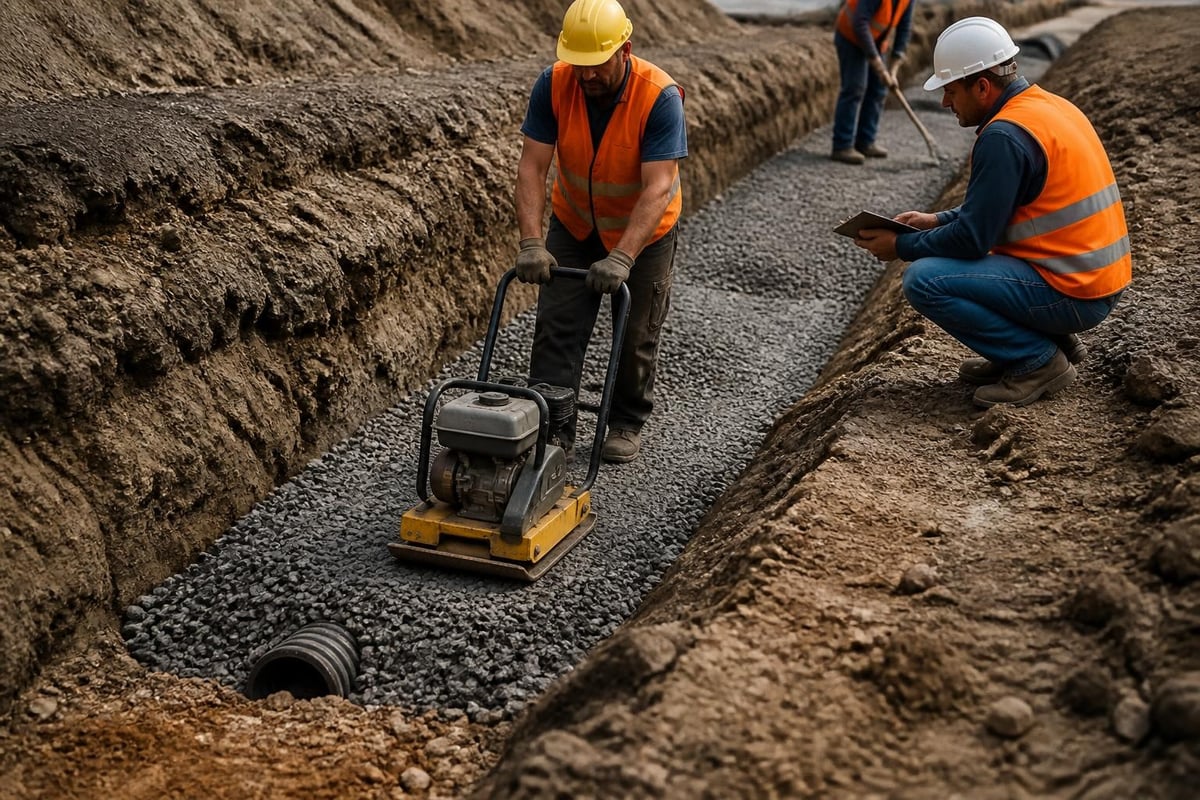
Different backfill materials suit various zones within the trench profile. Granular materials surrounding pipes transition to selected excavated material or imported fill for upper layers, with final surfaces receiving appropriate reinstatement matching existing conditions.
Surface Reinstatement Standards
Surface restoration standards vary depending on location and usage. Highway drainage works demand compliance with local authority specifications, whilst private developments permit greater flexibility provided structural integrity and aesthetic requirements are met.
Typical reinstatement profiles include:
- Sub-base layer restoration matching existing construction
- Base course installation for trafficked areas
- Binder course application providing structural capacity
- Surface course placement matching surrounding finishes
- Edge sealing preventing water ingress
Projects involving comprehensive infrastructure development integrate drainage excavation with broader construction programmes, coordinating backfilling and surface works to optimise efficiency and minimise disruption.
Advanced Monitoring and Quality Assurance
Quality drainage excavation extends beyond physical works to encompass verification testing and performance monitoring. Modern deformation monitoring techniques enable precise measurement of excavation stability and surrounding ground movement, particularly valuable for projects near sensitive structures.
Testing Protocols and Verification Methods
Pre-commissioning testing confirms drainage system functionality before final acceptance. CCTV surveys document pipe condition, joint integrity, and gradient consistency throughout installed lengths.
Verification testing encompasses:
- Water tightness testing identifying joint or pipe defects
- Flow testing confirming adequate gradient and capacity
- Structural inspection verifying bedding and surround adequacy
- Surface level surveys checking settlement absence
- Documentation compilation for maintenance records
Professional civil engineering contractors maintain comprehensive records documenting excavation depths, material specifications, test results, and as-built drawings. This documentation proves invaluable for future maintenance, modifications, or investigations.
Environmental Considerations and Sustainable Practices
Contemporary drainage excavation incorporates environmental protection measures addressing soil management, water quality, and ecological impact. Sustainable practices align regulatory compliance with corporate responsibility objectives.
Soil Management and Reuse
Excavated material represents both a disposal challenge and potential resource. Classifying soils according to contamination status and reuse suitability enables informed decisions regarding off-site disposal versus on-site redeployment.
Soil management hierarchy prioritises:
- On-site reuse for backfilling operations
- Redeployment to other project areas requiring fill
- Processing for landscaping or agricultural applications
- Controlled disposal at licensed facilities for contaminated materials
Water management during excavation prevents sediment-laden runoff from impacting watercourses or drainage systems. Temporary settling tanks, filter barriers, and controlled pumping arrangements protect water quality whilst enabling site dewatering when necessary.
Cost Factors and Project Planning
Drainage excavation costs vary considerably based on site conditions, access constraints, and specification requirements. Accurate cost estimation demands detailed site knowledge and experience with similar project types.
| Cost Component | Typical Range | Influence Factors |
|---|---|---|
| Site Preparation | 5-10% | Access, existing services, clearance |
| Excavation Works | 30-40% | Depth, soil type, equipment requirements |
| Materials | 25-35% | Pipe specification, bedding, backfill |
| Installation Labour | 15-20% | Complexity, weather, working hours |
| Testing & Reinstatement | 10-15% | Finish standards, traffic management |
Experienced contractors provide detailed breakdowns enabling clients to understand value delivery and make informed decisions regarding specification adjustments or phasing strategies.
Specialist Applications and Complex Scenarios
Certain drainage excavation projects demand specialist expertise addressing unique challenges. High water tables, contaminated ground, or proximity to critical infrastructure require enhanced planning and execution capabilities.
Deep Excavation Support Systems
Projects requiring excavations beyond typical drainage depths necessitate engineered support systems. Sheet piling, soldier pile walls, or secant piling protect adjacent structures whilst enabling safe working conditions at depth.
These systems integrate with drainage installation programmes, with temporary support remaining until backfilling provides adequate lateral restraint. Coordination between structural and drainage teams ensures efficient sequencing and hazard mitigation.
Confined Space Working Procedures
Deep inspection chambers or connection points may require entry for installation verification or future maintenance. Confined space procedures addressing atmospheric hazards, rescue provisions, and communication systems become mandatory.
Training requirements and equipment specifications for confined space operations exceed standard drainage excavation needs. Contractors undertaking such work demonstrate competence through recognised qualifications and documented safety management systems.
Projects ranging from commercial facility development to residential enhancements benefit from contractors possessing comprehensive capabilities addressing standard and specialist drainage excavation requirements. The detailed guidance provided by OSHA’s construction trenching resources supports contractors in maintaining exemplary safety standards across all excavation scenarios.
Long-term Performance and Maintenance Access
Designing drainage excavation with future maintenance in view extends system service life and reduces lifecycle costs. Strategic placement of inspection chambers, adequate cover depths, and comprehensive documentation facilitate efficient intervention when required.
Access provisions should accommodate anticipated maintenance equipment and techniques. Modern CCTV inspection technology requires minimal access points, though physical intervention for blockage clearance or repair work demands adequate chamber spacing and sizing.
Regular inspection programmes identify developing issues before they escalate into system failures or emergency situations. Proactive maintenance approaches, supported by quality initial installation, deliver reliable drainage performance for decades following excavation completion.
Successful drainage excavation combines technical expertise, safety consciousness, and quality-focused execution to deliver infrastructure supporting diverse development types. From understanding soil conditions through final testing and documentation, each phase contributes to long-term system performance and regulatory compliance. Whether your project involves commercial developments, highway infrastructure, or residential improvements, JRG Civils brings the experience and professionalism necessary to execute drainage excavation works to the highest standards across the North East and throughout the UK.