Stormwater drainage systems form the backbone of effective water management in modern infrastructure projects, from major highways to residential driveways. As climate patterns shift and urban development intensifies across the UK, the importance of robust drainage solutions has never been more critical. These engineered systems protect properties, prevent flooding, and ensure compliance with increasingly stringent environmental regulations. Understanding how stormwater drainage systems function and how to implement them correctly can mean the difference between a successful project and costly remediation work.
Understanding Stormwater Drainage System Components
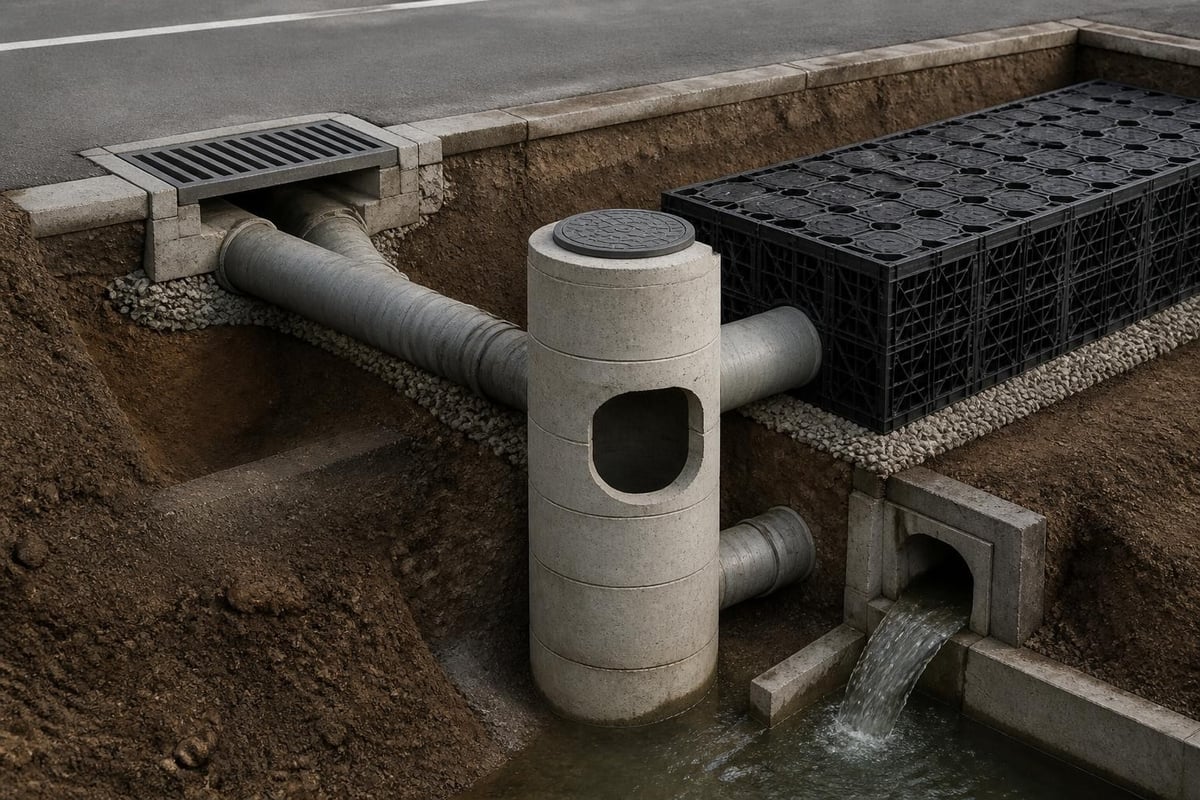
Modern stormwater drainage systems comprise multiple interconnected elements that work together to manage surface water effectively. Each component serves a specific purpose within the broader infrastructure network.
Surface water inlets represent the first point of contact between rainfall and the drainage system. These grates, channels, and catch basins capture runoff from paved surfaces before it can accumulate and cause flooding. The design and placement of inlets directly influences system efficiency, particularly during heavy rainfall events.
Underground conveyance pipes transport collected water away from developed areas. These pipes must be sized appropriately to handle peak flow rates whilst maintaining adequate gradient for self-cleansing. Material selection depends on soil conditions, expected loads, and project specifications, with options ranging from concrete to modern plastic alternatives.
Critical Infrastructure Elements
- Manholes and inspection chambers providing access for maintenance
- Outlet structures controlling discharge rates into watercourses
- Attenuation tanks reducing peak flows during storm events
- Filtration systems removing pollutants before discharge
- Swales and bioretention areas offering sustainable drainage solutions
Properly designed foundations and sub-base preparation ensure drainage infrastructure remains stable and functional throughout its service life. The interaction between drainage systems and ground conditions requires careful consideration during the planning phase.
Design Principles for Commercial Projects
Commercial developments require sophisticated stormwater drainage systems capable of handling significant volumes from large impermeable surfaces. Car parks, loading areas, and building roofs generate substantial runoff that must be managed effectively.
The introduction to stormwater drainage system design outlines fundamental principles that apply to all project scales. Hydraulic calculations determine pipe sizes, gradients, and storage requirements based on local rainfall data and catchment characteristics.
Design Considerations for High-Traffic Areas
Commercial sites such as drive-through restaurants and retail locations present unique challenges. Heavy vehicle loads require reinforced inlet grates and robust pipe bedding. Contamination risks from oils and chemicals necessitate interceptors and treatment systems.
| Design Factor | Commercial Requirement | Residential Comparison |
|---|---|---|
| Flow Capacity | High (large paved areas) | Moderate (smaller catchments) |
| Load Rating | Class D (heavy vehicles) | Class A-B (light traffic) |
| Treatment | Oil/grit separators essential | Basic filtration sufficient |
| Maintenance Access | Frequent, planned intervals | Occasional inspection |
Peak flow calculations must account for the time of concentration, the duration required for water to travel from the furthest point of the catchment to the outlet. Shorter concentration times in commercial developments mean systems must respond rapidly to intense rainfall.
Understanding regulatory requirements through NPDES programmes ensures compliance with discharge permits and environmental protection standards. These regulations govern both construction phase and operational drainage management.
Installation Methods and Best Practices
Successful implementation of stormwater drainage systems depends on meticulous installation techniques and quality control throughout construction. Site preparation establishes the foundation for long-term performance.
Excavation work must maintain stable trench sides whilst protecting existing services. Proper bedding materials provide uniform support for pipes, preventing differential settlement that could lead to joint failure or pipe deformation. The specified bedding depth and compaction requirements vary according to ground conditions and pipe materials.
Sequential Installation Process
- Site survey and utility mapping to identify conflicts and constraints
- Setting out and level checks ensuring correct gradients throughout
- Excavation and temporary works maintaining safety and stability
- Pipe laying and jointing following manufacturer specifications
- Backfilling and compaction in controlled layers to specification
- Testing and commissioning verifying system performance
Quality assurance during installation prevents future failures. CCTV surveys of completed pipework identify any defects before backfilling, whilst mandrel tests confirm pipes have not deformed during installation. Pressure testing of sealed systems verifies joint integrity.
Professional civil engineering services ensure installations meet required standards through experienced supervision and quality control procedures. Attention to detail during construction phases prevents costly remedial work later.
Sustainable Drainage Solutions
Sustainable drainage systems (SuDS) represent an evolution in stormwater management philosophy, moving beyond simple conveyance to multifunctional water management. These approaches mimic natural drainage processes whilst providing amenity and biodiversity benefits.
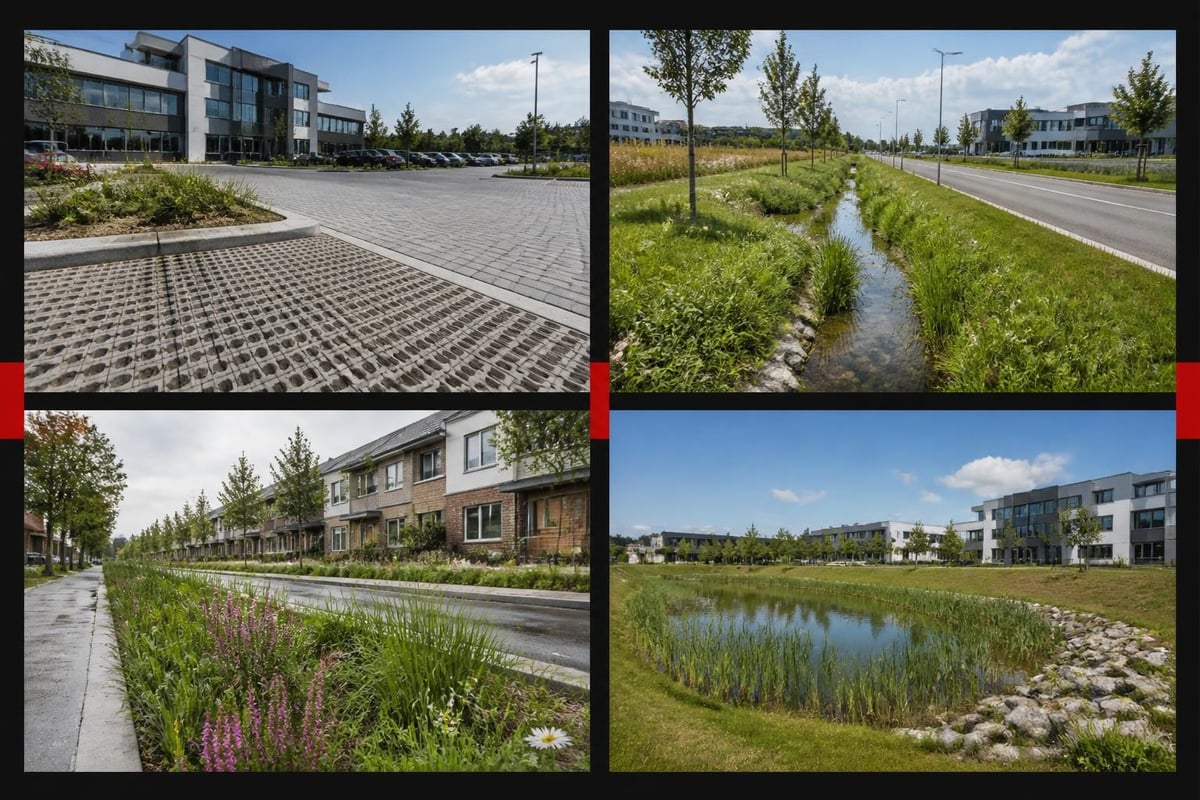
Permeable paving allows water to infiltrate through surface layers into stone reservoirs beneath. This technique reduces runoff volumes whilst recharging groundwater. Applications range from residential driveways to commercial car parks, with structural designs accommodating expected traffic loads.
SuDS Component Functions
Bioretention areas and rain gardens provide natural filtration through vegetation and engineered growing media. These features remove pollutants whilst slowing discharge rates. They integrate seamlessly into landscaping schemes, creating attractive spaces that serve practical drainage purposes.
Swales convey water in shallow vegetated channels, allowing infiltration and treatment as flow moves downstream. Properly designed swales handle regular rainfall events through infiltration, only discharging to conventional drainage during exceptional storms.
The Storm Water Management Model provides sophisticated analysis tools for evaluating SuDS performance alongside traditional infrastructure. This modelling capability supports integrated design approaches combining multiple techniques.
| SuDS Feature | Primary Function | Secondary Benefits |
|---|---|---|
| Permeable Paving | Infiltration, storage | Reduced surface runoff |
| Swales | Conveyance, treatment | Landscape enhancement |
| Rain Gardens | Filtration, infiltration | Biodiversity support |
| Attenuation Basins | Flow control, storage | Amenity space creation |
Maintenance Requirements and Lifecycle Management
Long-term performance of stormwater drainage systems relies on planned maintenance programmes addressing predictable deterioration and blockage risks. Neglected systems fail prematurely, leading to flooding and structural damage.
Regular inspection schedules identify developing problems before they escalate. Visual checks of surface features reveal blockages, damage, or settlement issues. CCTV surveys of underground pipework detect root intrusion, joint displacement, or structural defects requiring remediation.
Gully cleaning removes accumulated sediment and debris that reduces inlet capacity. High-traffic commercial areas require more frequent cleaning than residential locations due to higher contamination levels. Seasonal variations influence maintenance frequency, with autumn leaf fall presenting particular challenges.
Predictive maintenance strategies use historical data and condition assessments to optimise intervention timing. This approach balances maintenance costs against system reliability, preventing emergency responses to failures.
Common Maintenance Tasks
- Clearing blocked inlets and grates quarterly or as needed
- Inspecting and cleaning interceptors to maintain treatment efficiency
- CCTV surveying pipework on three to five-year cycles
- Jet washing to remove deposits and restore flow capacity
- Repairing damaged components before failures occur
Client testimonials often highlight the importance of maintenance planning in system longevity and performance. Systems designed with maintenance access in mind prove more cost-effective over their operational life.
Technical Specifications and Material Selection
Specifying appropriate materials for stormwater drainage systems requires balancing performance requirements, ground conditions, and budget constraints. Modern options provide improved durability and installation efficiency compared to traditional materials.
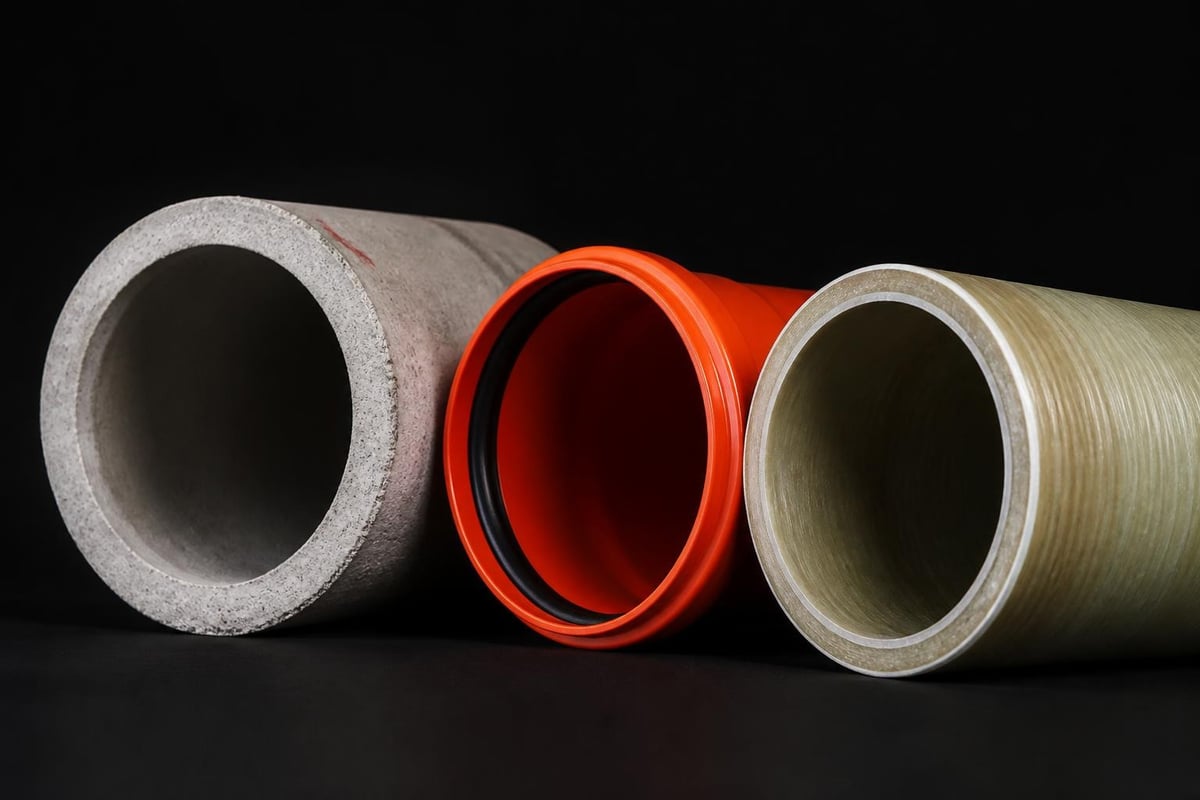
Concrete pipes offer exceptional strength and longevity in demanding applications. Their rigid structure suits heavy loading conditions and provides excellent flow characteristics through smooth internal surfaces. However, weight and handling requirements can increase installation costs.
Plastic piping systems including PVC-U, polypropylene, and polyethylene provide lightweight alternatives with excellent chemical resistance. These materials simplify handling and installation whilst offering watertight jointing systems. Structural design must account for their flexible nature and interaction with surrounding soil.
Material Performance Characteristics
| Material Type | Strength Rating | Chemical Resistance | Installation Ease | Typical Applications |
|---|---|---|---|---|
| Concrete | Excellent | Good (standard mix) | Moderate | Main sewers, high loads |
| PVC-U | Good | Excellent | High | General drainage, foul systems |
| Polypropylene | Very Good | Excellent | High | Contaminated areas, treatment |
| Clay | Good | Excellent | Moderate | Traditional applications |
Bedding and surround materials interact with pipe structural performance. Properly graded and compacted materials distribute loads effectively whilst preventing pipe displacement. Specifications must address particle size distribution, compaction requirements, and placement methods.
Design considerations extend to municipal stormwater programmes which establish standards for public infrastructure connections. Private developments must comply with adoption requirements when connecting to public systems.
Hydraulic Design Calculations
Accurate hydraulic design ensures stormwater drainage systems handle design storm events without surcharging or flooding. Engineers employ established methodologies to determine pipe sizes, gradients, and storage volumes.
Rainfall intensity varies geographically and temporally across the UK. Design calculations use intensity-duration-frequency curves derived from local meteorological data. The selected return period reflects acceptable flood risk, typically ranging from 1 in 30 years for minor systems to 1 in 100 years plus climate change allowances for critical infrastructure.
The rational method provides a straightforward approach for smaller catchments, relating peak discharge to rainfall intensity, catchment area, and runoff coefficient. More complex developments require detailed modelling using specialist software that simulates system behaviour throughout storm events.
Calculation Parameters
- Catchment area encompassing all surfaces draining to each inlet
- Runoff coefficient reflecting surface permeability and infiltration
- Time of concentration determining system response time
- Pipe roughness influencing flow velocity and capacity
- Storage volume required for flow attenuation
Pipe sizing follows hydraulic principles ensuring adequate capacity with appropriate freeboard. Minimum velocities prevent sediment deposition during normal flows, whilst maximum velocities avoid erosive damage. Self-cleansing design typically requires minimum gradients of 1 in 150 for foul drainage and 1 in 200 for surface water systems.
Climate change projections influence modern design standards, with increased rainfall intensity allowances reflecting anticipated future conditions. Designs incorporate adaptability for potential system upgrades as climate patterns evolve.
Integration with Highway and Driveway Construction
Stormwater drainage systems integrate intimately with pavement construction, influencing both structural design and construction sequencing. Proper integration prevents premature pavement failure caused by water infiltration and subgrade weakening.
Highway drainage requires particular attention to longitudinal and cross-fall gradients directing water to collection points. Edge details including gullies and linear drainage channels must align precisely with surface levels whilst accommodating pavement tolerances.
Driveway installations benefit from integrated drainage design addressing both surface water management and longevity. Proper falls prevent ponding whilst directing runoff to suitable discharge points. Homeowners increasingly recognise that effective drainage protects their investment in quality surfacing.
Construction sequencing coordinates drainage installation with earthworks and surfacing programmes. Underground infrastructure must be completed and tested before final surfacing, avoiding costly reinstatement work. Temporary drainage provisions may be necessary during phased construction.
Highway Drainage Features
- Gullies at low points collecting concentrated flows
- Linear channels along kerb lines or central reservations
- Cross-drainage beneath carriageways at natural watercourse crossings
- Soakaways providing infiltration where ground conditions permit
- Interceptors treating runoff before discharge to watercourses
Professional contractors coordinate trades effectively, ensuring drainage works integrate seamlessly with surfacing, kerbing, and landscaping activities. This coordination proves particularly critical in commercial projects with tight programme constraints.
Regulatory Compliance and Approval Processes
Navigating regulatory requirements for stormwater drainage systems involves multiple authorities and approval stages. Understanding these processes prevents project delays and ensures legal compliance.
Planning conditions frequently mandate specific drainage strategies addressing flood risk and water quality. Local planning authorities require detailed proposals demonstrating how developments manage surface water sustainably. These submissions must show system capacity calculations, discharge arrangements, and maintenance provisions.
Building regulations address drainage design and construction standards, requiring compliance certification before occupation. Approved Inspectors or Local Authority Building Control verify installations meet required standards through inspection at critical stages.
Lead Local Flood Authorities hold responsibility for sustainable drainage system approval under Schedule 3 of the Flood and Water Management Act 2010. They assess proposed systems against national standards, ensuring adoptable infrastructure meets long-term performance criteria.
Approval Requirements
- Outline drainage strategy at planning application stage
- Detailed design submission for technical approval
- Discharge consent from relevant environmental regulator
- Building regulation compliance certification
- Adoption agreements for systems serving multiple properties
Environmental and regulatory compliance requires engagement with professional resources ensuring designs meet evolving standards. Experienced civil engineering teams navigate these requirements efficiently, supporting project progression.
Water companies establish connection requirements for systems discharging to public sewers. Section 106 agreements may be necessary, defining responsibilities and technical specifications for adoptable infrastructure. These agreements protect long-term system integrity through enforceable maintenance standards.
Effective stormwater drainage systems protect infrastructure investments whilst ensuring environmental compliance and flood resilience. Whether planning a commercial development or residential enhancement, professional design and installation deliver systems that perform reliably throughout their operational life. If you require expert civil engineering services for your drainage project, JRG Civils brings the experience and attention to detail necessary for successful outcomes. Contact our team to discuss how we can support your next project with comprehensive drainage solutions tailored to your specific requirements.