Sustainable Urban Drainage Systems (SUDS) have become an essential component of modern infrastructure projects across the UK. As climate change intensifies rainfall patterns and urban development increases impermeable surfaces, proper suds installation is no longer optional but a regulatory requirement for many commercial and residential developments. Whether you're planning a new driveway, commercial car park, or large-scale highway project, understanding the fundamentals of SUDS implementation ensures compliance, reduces flood risk, and creates environmentally responsible drainage solutions.
Understanding SUDS Installation Principles
Suds installation represents a fundamental shift from traditional drainage methods that simply channel water away as quickly as possible. Instead, these systems mimic natural drainage processes by managing surface water at its source through infiltration, attenuation, and treatment.
The core objective of any suds installation project is to replicate pre-development runoff conditions. This means controlling the volume and rate of water discharge whilst improving water quality before it enters watercourses or sewers. Understanding the key concepts behind Sustainable Urban Drainage Systems provides essential context for why these systems have become industry standard.
The Four Pillars of SUDS Design
Every successful suds installation must address four critical aspects that work together to create effective drainage solutions:
- Water Quantity Management: Controlling runoff rates and volumes to prevent downstream flooding
- Water Quality Treatment: Removing pollutants before water enters natural watercourses
- Amenity Value: Creating attractive landscape features that enhance the environment
- Biodiversity Enhancement: Supporting wildlife habitats through thoughtful design
These pillars ensure that suds installation delivers multiple benefits beyond simple drainage. Commercial projects, such as the drive-through restaurants completed by specialists in commercial services, demonstrate how effective SUDS can integrate seamlessly into functional spaces whilst meeting environmental standards.
Key Components in SUDS Installation
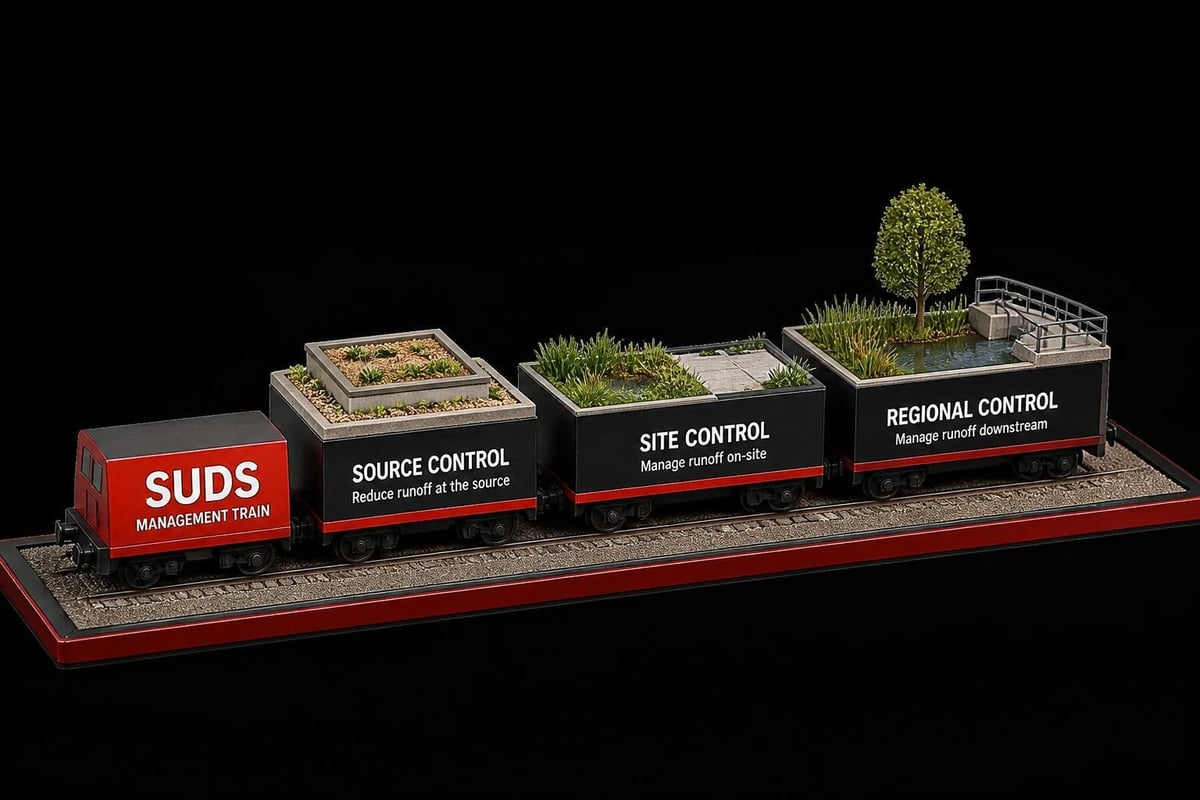
Understanding the various components available for suds installation allows designers and contractors to select the most appropriate solutions for specific site conditions. Each element serves distinct purposes within the overall drainage strategy.
Permeable Paving Systems
Permeable paving has become increasingly popular for driveways, car parks, and pedestrian areas. This approach allows water to infiltrate through the surface layer into underlying stone reservoirs, where it slowly percolates into the ground or connects to other drainage elements.
| Paving Type | Infiltration Rate | Best Applications | Maintenance Requirements |
|---|---|---|---|
| Permeable Block Paving | 200-300 mm/hr | Driveways, parking areas | Annual vacuum sweeping |
| Porous Asphalt | 300-500 mm/hr | Highways, large surfaces | Quarterly inspection |
| Resin-Bound Gravel | 250-400 mm/hr | Paths, residential drives | Minimal, periodic cleaning |
| Grass Reinforcement | 150-250 mm/hr | Overflow parking, verges | Standard lawn maintenance |
The selection of permeable paving depends on expected traffic loads, aesthetic requirements, and ground conditions. Ground works preparation is critical to ensure adequate sub-base construction and proper infiltration performance.
Detention and Retention Basins
These engineered landscaping features temporarily store surface water during rainfall events, releasing it gradually to prevent system overload. Detention basins drain completely between storms, whilst retention basins maintain permanent water pools.
For commercial developments, these features can be designed as attractive landscape elements that add value to the property. The key to successful suds installation with basins includes proper sizing calculations based on catchment area, rainfall intensity, and discharge limitations.
Swales and Filter Strips
Shallow vegetated channels, known as swales, convey and treat runoff whilst providing visual amenity. Filter strips are gently sloping vegetated areas that treat sheet flow from impermeable surfaces.
These components work particularly well in highway projects and large commercial sites where land availability permits naturalistic drainage solutions. Their effectiveness depends on appropriate gradient design, vegetation selection, and regular maintenance schedules.
Planning Your SUDS Installation Project
Thorough planning distinguishes successful suds installation from problematic implementations that fail to meet performance standards or regulatory requirements. The planning phase should commence early in the design process, not as an afterthought once layouts are finalized.
Site Assessment and Investigation
Before designing any suds installation, comprehensive site investigation identifies constraints and opportunities:
- Soil Permeability Testing: Infiltration tests determine whether the ground can accept water at sufficient rates
- Groundwater Level Assessment: High water tables may preclude certain infiltration-based solutions
- Contamination Survey: Identifying existing pollution prevents exacerbating environmental problems
- Topographical Survey: Understanding site levels ensures gravity-fed systems function correctly
- Utilities Mapping: Locating existing services prevents conflicts during construction
Design and installation guidance emphasizes the importance of thorough site assessment in achieving reliable, long-term system performance.
Regulatory Compliance and Approval
Suds installation in England must align with various regulatory frameworks. The national standards for sustainable drainage systems provide non-statutory technical standards that many local planning authorities have adopted as policy.
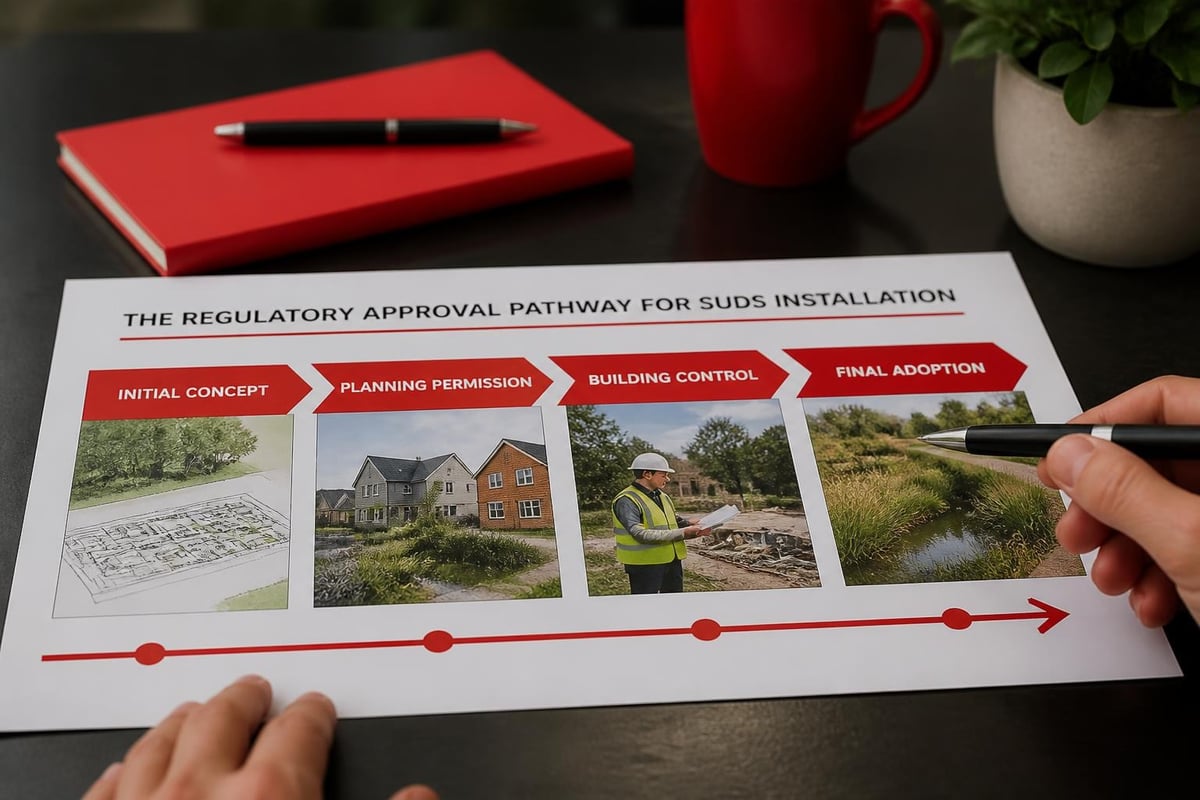
Key regulatory considerations include:
- Planning permission requirements and drainage strategies
- Building Regulations Approved Document H compliance
- Environmental permitting for discharges to watercourses
- Adoption agreements with local authorities or water companies
- Surface Water Management Plan alignment
Engaging with the local planning authority's drainage team early ensures your suds installation proposal meets local requirements and avoids costly redesigns.
Installation Methods and Best Practices
The construction phase of suds installation requires careful execution to ensure the completed system performs as designed. Poor installation practices can compromise even the best-designed systems, leading to premature failure or inadequate performance.
Excavation and Preparation
Proper excavation technique protects the infiltration capacity of the surrounding ground. Excavators should work from completed areas to avoid compacting the base of infiltration features. Where ground conditions permit, excavated material can often be reused as engineered fill, reducing waste and costs.
Protection measures during construction prevent sediment from clogging infiltration systems. Temporary sediment control, such as silt fences and settlement tanks, should be installed before major earthworks commence.
Sub-Base Construction
The sub-base layer in permeable paving systems provides structural support whilst creating water storage capacity. Typical suds installation for car parks and driveways uses clean angular stone in specified gradings:
| Layer | Material | Typical Depth | Function |
|---|---|---|---|
| Surface Course | Permeable pavers/asphalt | 60-80 mm | Traffic surface, initial filtration |
| Bedding Layer | 2-6 mm grit | 30-50 mm | Paver bedding, fine filtration |
| Sub-Base | 20-40 mm clean stone | 150-400 mm | Storage reservoir, structural support |
| Sub-Grade | In-situ or imported soil | Variable | Infiltration interface |
Geotextile membranes separate layers where necessary to prevent soil migration whilst maintaining water flow. The selection and placement of geotextiles requires understanding their filtration properties and compatibility with specific site conditions.
Quality Assurance During Installation
Implementing quality control throughout the suds installation process prevents defects and ensures specification compliance:
- Regular testing of stone gradings and cleanliness
- Verification of excavation depths and gradients
- Inspection of geotextile placement and overlap
- Photographic documentation at each construction stage
- Infiltration testing before final surfacing
These checks identify problems when they're still easily correctable, avoiding expensive remediation after project completion.
Maintenance Requirements for Long-Term Performance
Suds installation creates drainage infrastructure that requires ongoing maintenance to sustain design performance. Unlike traditional piped drainage hidden underground, SUDS components are typically visible and accessible, simplifying inspection and maintenance activities.
Routine Maintenance Tasks
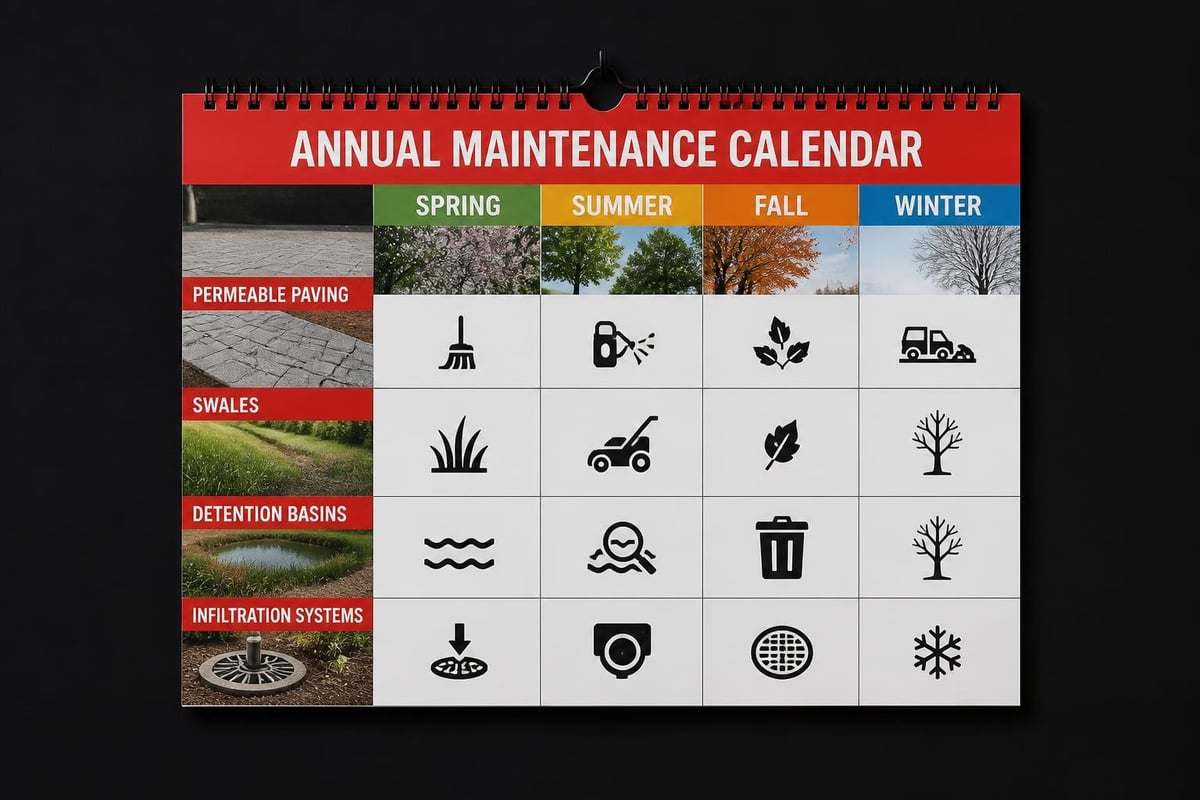
Different SUDS elements require specific maintenance approaches tailored to their design and function. Homeowners and property managers should understand these requirements when considering suds installation.
Permeable Paving Maintenance:
- Vacuum sweeping quarterly to remove sediment accumulation
- Visual inspection after major storms for standing water
- Jet washing or mechanical cleaning annually
- Joint material replenishment as needed
- Immediate removal of any oil or fuel spills
Vegetated Systems Maintenance:
- Grass cutting in swales and filter strips (clippings removed)
- Seasonal vegetation management in detention basins
- Sediment removal from inlet and outlet structures
- Replanting of failed vegetation areas
- Inspection and clearance of overflow structures
Developing Maintenance Plans
Every suds installation should have a documented maintenance plan detailing responsibilities, frequencies, and procedures. For commercial developments, this typically forms part of the adoption agreement or building management protocols.
Maintenance plans should specify:
- Responsible Parties: Clear allocation of maintenance duties between owners, management companies, or adopting authorities
- Inspection Schedules: Regular assessment frequencies appropriate to system complexity
- Performance Monitoring: Criteria for evaluating whether the system functions correctly
- Remedial Thresholds: Triggers for intervention when performance deteriorates
- Budget Allocation: Financial provisions for routine and extraordinary maintenance
Design Considerations for Different Project Types
Suds installation requirements vary significantly between residential driveways, commercial car parks, and highway projects. Understanding these distinctions ensures appropriate system selection and design.
Residential Driveways and Patios
Domestic suds installation focuses on managing runoff from relatively small impermeable areas. The 2008 regulatory changes requiring planning permission for impermeable driveways over 5 square metres have increased awareness of sustainable drainage among homeowners.
For residential applications, permeable block paving offers the most practical solution, combining attractive appearance with effective drainage. The construction typically involves a simplified version of commercial systems, with reduced sub-base depths appropriate for light vehicle loading.
Commercial and Industrial Sites
Larger commercial projects demand more sophisticated suds installation incorporating multiple treatment stages. Car parks, loading yards, and access roads generate higher pollutant loads from vehicles and require enhanced water quality treatment before discharge.
The projects portfolio demonstrates how commercial suds installation integrates with operational requirements whilst meeting stringent environmental standards. Treatment trains combining permeable paving with downstream swales or detention basins provide both quantity control and quality improvement.
Highway and Infrastructure Projects
Highway suds installation presents unique challenges including high traffic volumes, space constraints, and contamination from road pollutants. Filter drains, combined kerb and drainage systems, and roadside swales offer practical solutions within highway verges.
Major infrastructure projects increasingly incorporate SUDS from the initial design stage rather than as afterthoughts. Comprehensive guidance documents support designers in creating highway drainage that balances performance, safety, and environmental protection.
Overcoming Common Installation Challenges
Even well-planned suds installation projects encounter obstacles during implementation. Anticipating common challenges and understanding mitigation strategies improves project outcomes and reduces delays.
Poor Ground Conditions
Low permeability soils prevent effective infiltration, apparently negating the benefits of suds installation. However, several strategies address this limitation:
- Engineered Storage: Creating oversized stone reservoirs that attenuate runoff before controlled discharge
- Partial Infiltration: Combining limited infiltration capacity with supplementary drainage
- Tanked Systems: Completely sealed systems with controlled outflow to sewers or watercourses
- Hybrid Approaches: Using permeable surfaces for amenity and filtration with piped underdrains
These adaptations maintain the water quality and amenity benefits of SUDS whilst accommodating site constraints.
Space Limitations
Urban sites often lack sufficient area for traditional SUDS features like detention basins. Innovative solutions maximize drainage performance within restricted footprints:
| Solution | Space Saving | Application | Considerations |
|---|---|---|---|
| Geocellular Storage | 95% void ratio | Beneath paving, landscaping | Higher cost, maintenance access |
| Blue Roofs | Uses existing roofs | Flat commercial buildings | Structural capacity, waterproofing |
| Rain Gardens | Compact bioretention | Small landscape areas | Soil specification, plant selection |
| Tree Pits | Multi-functional | Street environments | Species selection, irrigation |
These techniques demonstrate that effective suds installation remains achievable even where conventional approaches prove impractical.
Stakeholder Coordination
Complex projects involving multiple parties require careful coordination to ensure successful suds installation. Developers should follow established checklists that guide planning and implementation across design, construction, and handover phases.
Regular communication between designers, contractors, regulators, and future maintainers prevents misunderstandings and ensures everyone understands their responsibilities. This collaborative approach is particularly important when systems will be adopted by local authorities or management companies.
Future-Proofing Your SUDS Investment
Climate projections indicate increasingly intense rainfall events throughout the UK, making robust suds installation essential for long-term flood resilience. Designing systems with adequate capacity margins ensures they continue performing effectively as conditions change.
Climate Change Allowances
Current best practice incorporates climate change uplifts into hydraulic calculations, typically adding 20-40% to peak rainfall intensities depending on project lifetime and risk tolerance. This forward-looking approach prevents systems becoming overwhelmed as weather patterns shift.
Design principles emphasize building adaptability into suds installation from the outset. Providing additional storage capacity, oversized conveyance elements, and flexible discharge controls creates systems that accommodate uncertainty.
Technological Integration
Emerging technologies enhance suds installation performance and monitoring capabilities. Real-time water level sensors, weather forecasting integration, and automated control systems optimize storage utilization and discharge timing.
Smart SUDS represents the evolution of passive drainage systems into actively managed infrastructure that responds dynamically to changing conditions. Whilst currently more common in large-scale applications, these technologies are becoming increasingly accessible for smaller projects.
Biodiversity and Amenity Enhancement
Modern suds installation increasingly emphasizes ecological benefits alongside drainage function. Thoughtful plant selection, habitat creation, and landscape integration transform functional infrastructure into valuable green spaces that support urban wildlife and improve environmental quality.
This holistic approach recognizes that sustainable drainage delivers multiple co-benefits, justifying investment through diverse value streams including flood risk reduction, pollution control, recreational amenity, and biodiversity support.
Successful suds installation requires careful planning, quality construction, and ongoing maintenance to deliver effective, sustainable drainage solutions. Whether you're developing a commercial site, constructing highway infrastructure, or enhancing residential property, professional expertise ensures your project meets regulatory standards whilst providing long-term performance. At JRG Civils, we bring extensive experience in civil engineering and drainage infrastructure to projects across the North East and throughout the UK, from initial design through to final completion. Contact JRG Civils today to discuss how we can deliver excellence in your next drainage project.