Effective drainage systems form the backbone of any successful construction project, whether you're developing a commercial franchise location, building a residential driveway, or undertaking large-scale highway infrastructure. Professional drainage contractors bring specialized expertise that transforms potentially problematic water management challenges into seamless, long-lasting solutions. Understanding what distinguishes exceptional drainage specialists from average providers enables property owners, developers, and project managers to make informed decisions that protect their investments for decades to come.
Understanding the Role of Professional Drainage Contractors
Drainage contractors specialize in designing, installing, and maintaining systems that control water flow around buildings, roads, and landscapes. Their work encompasses everything from simple residential soakaway installations to complex commercial stormwater management systems.
The scope of their responsibilities extends far beyond digging trenches. Professional contractors assess site topography, analyse soil composition, calculate water volumes, and design systems that comply with building regulations whilst addressing unique site challenges. They must balance technical requirements with budget constraints and aesthetic considerations.
Core Competencies Required
Technical expertise separates competent drainage contractors from those who merely move earth. Modern drainage work demands understanding of hydraulic principles, material science, and regulatory frameworks. Contractors must interpret architectural plans, conduct soil percolation tests, and calculate gradients with precision.
Key competencies include:
- Hydraulic engineering knowledge for flow rate calculations
- Survey and level proficiency to establish correct gradients
- Material selection expertise across pipes, channels, and filtration media
- Regulatory compliance understanding for building control and environmental standards
- Problem-solving capabilities for addressing unexpected site conditions

Many experienced civil engineering firms like those working on large-scale commercial projects combine these competencies with extensive practical experience across diverse project types.
Types of Drainage Systems and Applications
Different project requirements demand specialized drainage solutions. Understanding these variations helps clients communicate effectively with contractors and ensures appropriate system selection.
Surface Water Drainage Solutions
Surface water management prevents flooding and property damage by directing rainfall away from vulnerable areas. Channel drains, gullies, and catch basins intercept water before it accumulates. These systems prove particularly crucial in hard landscaping projects where impermeable surfaces concentrate water flow.
Professional patio drainage design requires careful planning to prevent waterlogging whilst maintaining aesthetic appeal. Contractors must consider fall directions, drainage point locations, and connection to existing infrastructure.
| Drainage Type | Primary Application | Typical Capacity | Maintenance Frequency |
|---|---|---|---|
| Channel Drains | Driveways, Patios | 10-40 L/s | Quarterly |
| French Drains | Garden Perimeters | 5-15 L/s | Annual |
| Soakaways | Dispersed Drainage | Variable | 5-year inspection |
| Permeable Paving | Car Parks, Paths | 15-30 L/s | Bi-annual |
Subsurface and Deep Drainage
Below-ground systems handle situations where surface solutions prove insufficient. Land drains intercept groundwater, preventing subsidence and structural damage. These systems require precise installation depths and gradient maintenance.
Agricultural drainage contractors working on drainage system design must account for soil types, crop requirements, and seasonal water table variations. The principles apply equally to sports facilities, commercial developments, and residential gardens.
Selecting the Right Drainage Contractor
Choosing appropriate drainage specialists significantly impacts project outcomes, long-term system performance, and overall costs. Several factors warrant careful consideration during the selection process.
Experience and Portfolio Assessment
Examine contractors' previous work across projects similar to yours. A firm specializing in highway drainage brings different expertise than one focused solely on domestic installations. Request case studies, photographs, and client references.
Contractors with diverse experience, such as those completing training facility projects alongside hospitality developments, demonstrate adaptability and comprehensive technical knowledge.
Qualifications and Certifications
Verify that contractors hold appropriate professional accreditations. Relevant qualifications include CSCS cards, NRSWA certifications for highway work, and membership in professional bodies. Insurance coverage proves equally crucial, encompassing public liability and professional indemnity.
Essential credentials checklist:
- Construction Skills Certification Scheme (CSCS) cards
- New Roads and Street Works Act (NRSWA) qualifications
- Health and Safety certifications
- Public liability insurance (minimum £5 million)
- Professional indemnity cover
Common Drainage Challenges and Solutions
Drainage contractors regularly encounter specific challenges that demand creative problem-solving and technical expertise. Understanding these issues helps clients appreciate the value skilled professionals bring.
Hard Landscaping Water Trapping
Improperly designed hard surfaces create water traps that cause ponding and structural deterioration. Common mistakes in hard landscaping include insufficient falls, blocked drainage points, and inadequate capacity for rainfall intensity.
Professional drainage contractors address these issues through:
- Gradient optimization ensuring minimum 1:80 falls
- Strategic outlet placement at natural low points
- Capacity calculations based on local rainfall data
- Overflow provisions for extreme weather events
Flat Roof Drainage Complications
Commercial buildings with flat roofs present unique drainage challenges. Water accumulation leads to membrane failure, structural stress, and interior damage. Understanding flat roof drainage systems enables contractors to select appropriate solutions from internal drains, scuppers, gutters, or siphonic systems.
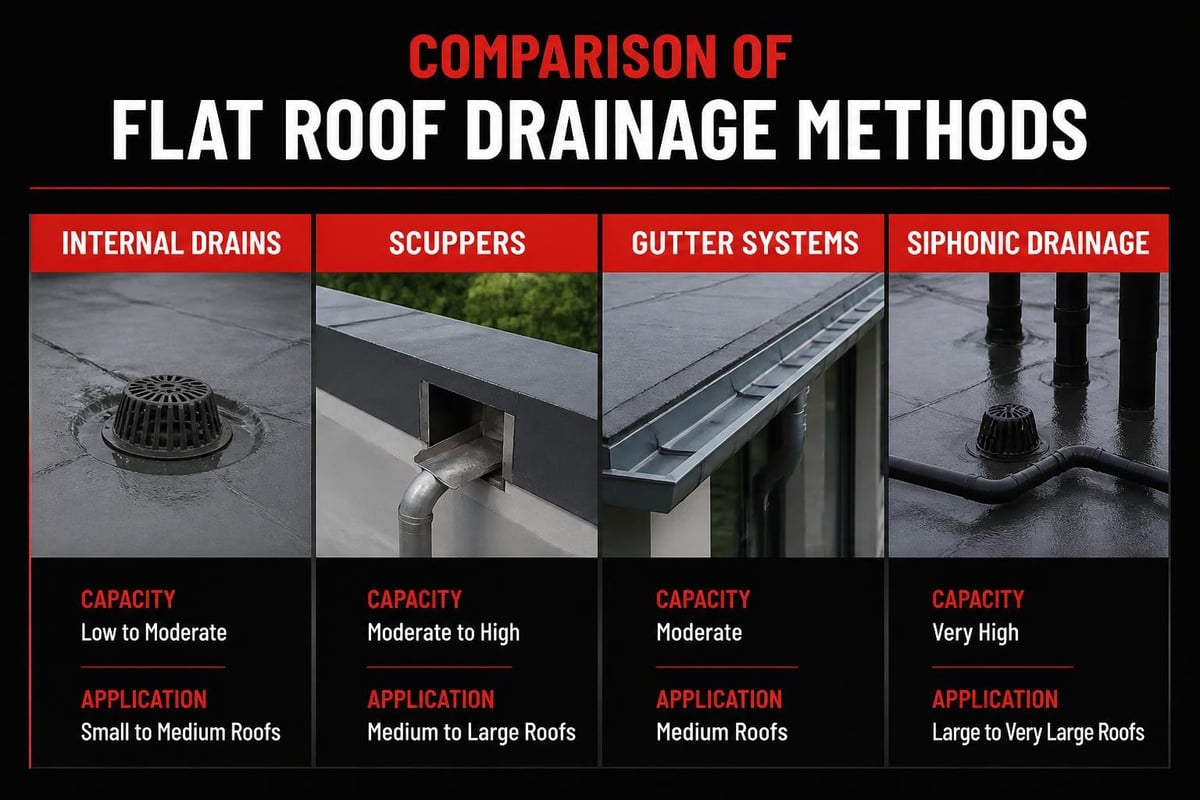
The choice depends on roof area, building height, aesthetic requirements, and local building codes. Experienced contractors calculate required outlet numbers, pipe sizing, and emergency overflow provisions.
Design Principles for Effective Drainage Systems
Professional drainage contractors follow established design principles that ensure system longevity and performance. These fundamentals apply across residential, commercial, and infrastructure projects.
Eight-Step Framework
The fundamentals of drainage design provide a systematic approach to creating effective systems. This methodology ensures comprehensive analysis from initial site assessment through final construction.
| Design Stage | Key Activities | Critical Outputs |
|---|---|---|
| 1. Site Assessment | Survey, topography analysis | Gradient maps, flow patterns |
| 2. Catchment Analysis | Calculate contributing areas | Water volume estimates |
| 3. Soil Investigation | Percolation tests, composition | Infiltration rates, ground conditions |
| 4. System Selection | Evaluate drainage options | Preferred system type |
| 5. Capacity Calculations | Size pipes and structures | Technical specifications |
| 6. Outlet Design | Plan discharge points | Connection details |
| 7. Protection Measures | Specify filters, erosion control | Material specifications |
| 8. Maintenance Planning | Schedule inspections | Long-term care strategy |
Beyond minimum code requirements, forward-thinking drainage contractors design for resilience. Best practices in drainage design recommend considering higher-frequency storms and longer duration events than regulations mandate.
Gradient and Flow Considerations
Correct gradients prove fundamental to drainage system success. Insufficient fall causes sediment accumulation and blockages. Excessive gradients create erosion and velocity problems.
Standard minimum gradients vary by pipe diameter:
- 100mm pipes: 1:40 minimum
- 150mm pipes: 1:60 minimum
- 225mm pipes: 1:80 minimum
- 300mm pipes: 1:100 minimum
Professional drainage contractors adjust these parameters based on expected flow volumes, pipe materials, and specific site constraints.
Commercial Drainage Project Considerations
Large-scale commercial developments demand sophisticated drainage solutions that accommodate heavy usage, regulatory compliance, and long-term durability. Contractors working on these projects must coordinate with multiple stakeholders whilst maintaining construction schedules.
Highway and Infrastructure Drainage
Road construction requires robust drainage preventing surface water accumulation that compromises safety and pavement integrity. Highway drainage construction follows strict federal and local guidelines covering excavation, trenching, pipe laying, and backfilling procedures.
Drainage contractors specializing in civil engineering work across the UK understand that highway projects demand precise coordination with surfacing teams, utilities, and traffic management providers.
Critical highway drainage elements:
- Edge of carriageway channels
- Gully pot positioning and sizing
- Carrier drain networks
- Outfall connections to watercourses
- Attenuation tank installations
Franchise and Retail Development Drainage
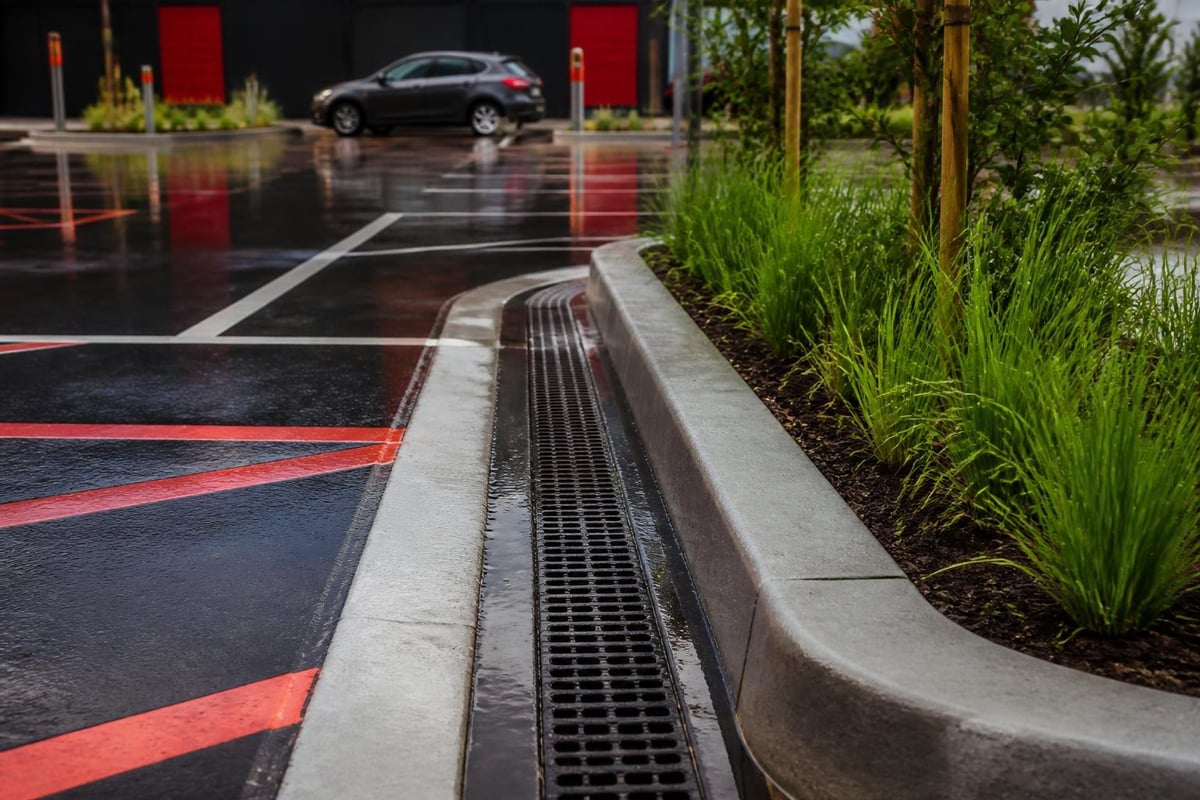
Drive-through restaurants and retail parks generate concentrated surface water runoff from large paved areas. Contractors must design systems handling peak vehicle movements whilst meeting environmental discharge consents.
Sustainable drainage solutions increasingly incorporate permeable paving, infiltration basins, and flow attenuation. These features reduce downstream flooding risk whilst satisfying planning conditions.
Residential Drainage Applications
Homeowners and property developers require drainage contractors who understand domestic-scale challenges whilst delivering aesthetically pleasing solutions. Residential work demands different approaches than commercial projects.
Driveway and Patio Drainage
Hard landscaping around properties must shed water effectively without creating nuisance to neighbours or public highways. Drainage contractors balance functional requirements with design preferences, integrating channels, linear drains, or permeable surfaces.
Block paving driveways benefit from properly constructed sub-bases incorporating drainage layers. Traditional impermeable surfaces require strategic fall directions and adequate drainage point provision.
Garden and Landscape Drainage
Waterlogged gardens frustrate homeowners and kill valuable plants. French drains, land drains, and soakaways address these problems by intercepting groundwater and surface runoff. Contractors must assess soil permeability before recommending solutions.
Clay soils with poor natural drainage often require more extensive systems than free-draining sandy soils. Professional site investigation prevents costly mistakes and system failures.
Advanced Drainage Technologies
Innovation continues transforming how drainage contractors design and implement systems. Modern tools and methodologies improve accuracy, efficiency, and long-term performance.
Computational Design Tools
Software enables precise hydraulic modelling before construction begins. Contractors simulate rainfall events, calculate flow rates, and optimize pipe networks digitally. This approach identifies potential problems early, reducing expensive on-site modifications.
Research into machine learning for drainage simulation demonstrates how technology accelerates complex analyses, helping contractors evaluate multiple design scenarios rapidly.
Strategic Infrastructure Placement
Advanced planning methodologies help drainage contractors position hydraulic control structures optimally. Graph-theoretic optimization approaches enable strategic placement of attenuation features that effectively manage flood peaks whilst minimizing construction costs.
These techniques prove particularly valuable in urban environments where space constraints and existing infrastructure complicate traditional solutions.
Quality Assurance and Project Management
Successful drainage installation requires rigorous quality control throughout the construction process. Professional contractors implement systematic checks ensuring systems perform as designed.
Installation Standards and Inspection
Each project stage demands specific quality verification. Trench preparation requires stable bases free from sharp objects. Pipe laying demands correct gradients verified through precision levelling. Backfilling must compact properly without damaging pipes.
| Construction Phase | Quality Checks | Testing Methods |
|---|---|---|
| Excavation | Depth, width, stability | Manual measurement, visual inspection |
| Bedding | Material type, thickness | Sample testing, depth verification |
| Pipe Installation | Gradient, alignment, joints | Laser levels, water tests |
| Backfilling | Compaction, material specification | Plate testing, layer verification |
| Final Connections | Flow direction, accessibility | Water testing, CCTV surveys |
Photographic documentation throughout construction provides evidence of proper installation for building control approval and future reference.
Coordination with Other Trades
Drainage contractors rarely work in isolation. Coordination with groundworkers, builders, landscapers, and utility companies proves essential. Effective project management ensures drainage installation occurs at appropriate construction phases, preventing damage from subsequent works.
Maintenance and Long-Term Performance
Well-designed drainage systems require ongoing maintenance ensuring continued effectiveness. Professional drainage contractors often provide maintenance services or guidance helping clients protect their investments.
Preventive Maintenance Programs
Regular inspections identify minor issues before they escalate into expensive failures. Quarterly checks on channel drains remove debris preventing blockages. Annual inspections of soakaways verify continued infiltration capacity.
Recommended maintenance schedule:
- Monthly: Visual inspection of surface drainage points
- Quarterly: Clean channel drains, gullies, and inspection chambers
- Annually: CCTV survey of critical pipe runs, soakaway capacity testing
- Five-yearly: Comprehensive system assessment and remedial works planning
Common Failure Modes and Remediation
Understanding why drainage systems fail helps contractors design better solutions and guides homeowners in system care. Root ingress, sediment accumulation, and structural collapse represent typical problems.
Modern diagnostic techniques including CCTV surveys and sonar mapping identify issues without destructive excavation. Targeted repairs using patch lining or localized replacement prove more economical than wholesale system replacement.
Regulatory Compliance and Environmental Considerations
Drainage contractors must navigate complex regulatory frameworks governing water discharge, environmental protection, and construction standards. Compliance ensures legal operation and protects natural watercourses.
Building Regulations and Planning Requirements
Part H of Building Regulations specifies drainage system requirements for new construction and significant alterations. Contractors ensure designs meet these standards whilst securing necessary approvals from local building control departments.
Sustainable drainage systems (SuDS) increasingly feature in planning conditions. These requirements mandate natural water management approaches reducing flood risk and improving water quality before discharge.
Environmental Protection Obligations
Drainage discharge to watercourses requires environmental permits. Contractors must design systems meeting quality standards for temperature, sediment, and pollutants. Oil interceptors prove essential in vehicle parking areas preventing hydrocarbon contamination.
Working near sensitive habitats or protected species demands additional precautions. Experienced drainage contractors coordinate with environmental consultants ensuring compliance with conservation regulations.
Cost Factors and Value Engineering
Understanding drainage system costs helps clients budget appropriately and evaluate contractor quotations effectively. Multiple variables influence final project expenses beyond simple per-metre pipe costs.
Price Determinants
Site conditions dramatically affect installation costs. Rock excavation requires mechanical breaking or careful drilling. High water tables demand pumping and temporary works. Restricted access necessitates manual handling or specialized compact equipment.
Materials represent another significant cost component. Basic PVC pipework costs substantially less than pre-cast concrete channels or specialist filtration systems. However, selecting inappropriate cheaper options often proves economically foolish when lifecycle costs emerge.
- Site investigation and design: £500-£2,500
- Basic drainage per linear metre: £50-£150
- Complex systems per linear metre: £150-£400
- Soakaway construction: £800-£3,000
- Attenuation tank installation: £3,000-£15,000
Return on Investment
Quality drainage systems protect property values and prevent expensive water damage. Commercial developments with effective drainage avoid business interruption from flooding. Residential properties maintain structural integrity and garden usability.
Professional installation typically costs 20-40% more than budget alternatives but delivers substantially longer service life and fewer maintenance requirements. This calculation favours quality contractors who deliver properly engineered solutions.
Effective drainage remains fundamental to successful construction projects across commercial, infrastructure, and residential applications. Professional drainage contractors bring the technical expertise, practical experience, and quality standards that transform water management challenges into reliable, long-lasting systems. Whether you're planning a commercial development, highway project, or residential enhancement, JRG Civils delivers the civil engineering excellence and attention to detail that ensures your drainage systems perform flawlessly for decades to come.