
When undertaking substantial civil engineering projects, from commercial developments to residential enhancements, the expertise of piling specialists becomes essential to ensuring structural integrity. These professionals provide the critical foundation work that supports everything from drive-through restaurants to major highway infrastructure. Understanding what piling specialists do, the methods they employ, and when their services become necessary can help project managers, developers, and property owners make informed decisions about their construction requirements.
Understanding the Role of Piling Specialists
Piling specialists are civil engineering professionals who focus specifically on creating deep foundations for structures requiring additional support beyond standard footings. Their expertise becomes invaluable when ground conditions present challenges such as weak soil layers, high water tables, or when structures demand exceptional load-bearing capacity.
The work undertaken by these experts involves detailed site investigation, ground analysis, and the selection of appropriate piling methods tailored to specific project requirements. Each site presents unique geological characteristics that demand careful assessment before foundation work commences.
When Projects Require Specialist Foundation Work
Not every construction project necessitates the involvement of piling specialists, but certain scenarios make their expertise essential:
- Commercial developments requiring substantial load-bearing capacity for multi-storey buildings
- Highway and infrastructure projects where ground stability varies across extended areas
- Residential properties built on challenging terrain or near water bodies
- Renovation projects where existing foundations prove inadequate for structural modifications
- Sites with contaminated or unstable ground requiring specialized foundation solutions
Companies like JRG Civils have demonstrated this versatility through diverse project portfolios, including commercial franchise developments and highway construction across the UK.
Piling Methods and Their Applications
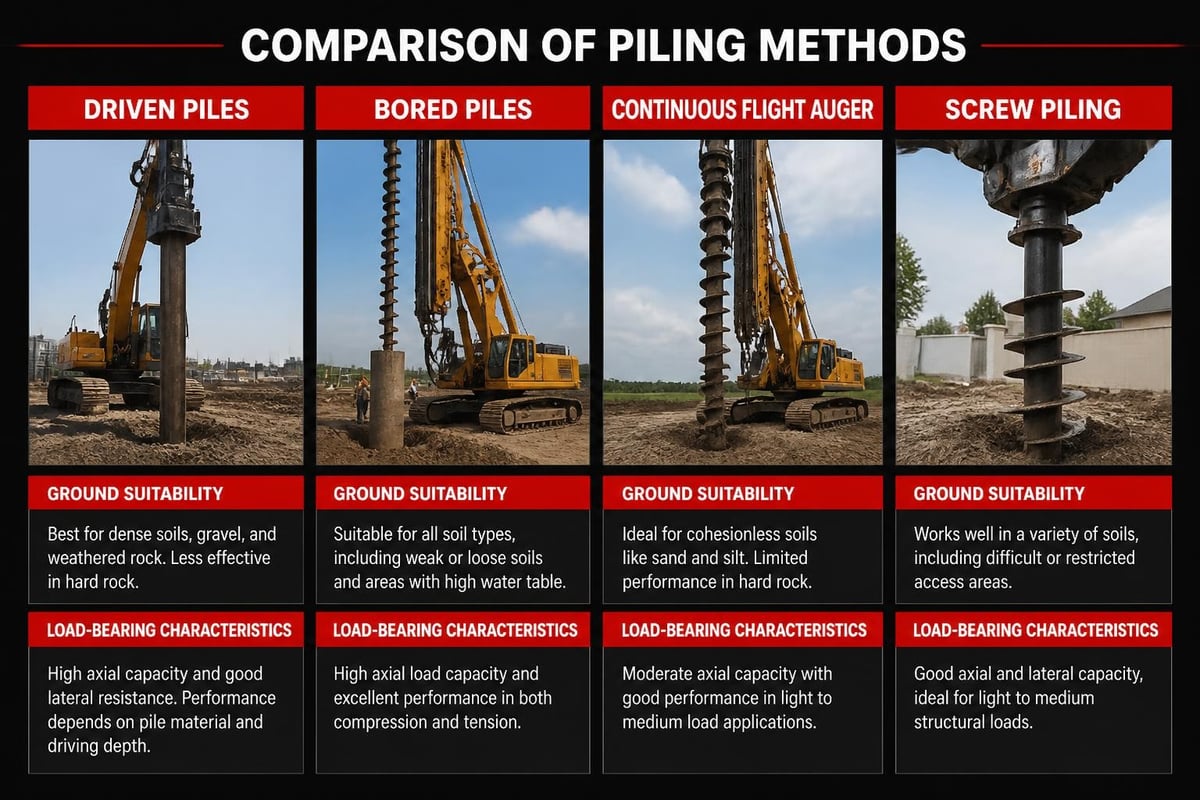
Understanding various piling methods enables informed decision-making for construction projects. Each technique offers specific advantages depending on ground conditions, site accessibility, and project requirements.
Driven Piling Techniques
Driven piling involves hammering or vibrating pre-fabricated piles into the ground until they reach adequate bearing strata. This method suits projects requiring rapid installation and offers excellent load-bearing capacity.
The primary advantage lies in immediate load transfer capability, as the driving process compacts surrounding soil and creates a robust foundation. However, driven piling generates significant noise and vibration, potentially restricting its use in residential areas or near sensitive structures.
| Driven Piling Type | Best Applications | Key Advantages | Potential Limitations |
|---|---|---|---|
| Steel H-piles | Heavy structures, challenging soil | High capacity, durable | Noise, vibration concerns |
| Precast concrete | Commercial buildings, bridges | Cost-effective, reliable | Transportation logistics |
| Timber piles | Temporary works, marine environments | Renewable, economical | Limited lifespan in certain conditions |
Bored Pile Solutions
Bored piling specialists create cylindrical holes in the ground, subsequently filled with reinforced concrete. This method minimizes vibration and noise, making it particularly suitable for urban environments and projects adjacent to existing structures.
The technique allows for larger diameter piles and greater depths than many alternative methods. Engineers can inspect the bore before concrete placement, ensuring ground conditions match expectations and providing quality assurance throughout the installation process.
Key benefits include:
- Reduced environmental impact in sensitive locations
- Adaptability to varying ground conditions
- Minimal vibration risk to neighbouring properties
- Flexibility in pile diameter and depth specifications
Continuous Flight Auger Piling
CFA piling represents a continuous process where a hollow-stemmed auger drills to the required depth before concrete pumps through the stem whilst the auger withdraws. This method suits cohesive soils and provides excellent construction speed.
According to industry guidance on CFA techniques, proper control measures during installation prevent instability and overflighting, ensuring consistent pile quality throughout the foundation system.
Quality Standards and Industry Regulations
Piling specialists operate within rigorous quality frameworks that govern every aspect of foundation work. The ICE Specification for Piling and Embedded Retaining Walls provides authoritative technical guidance covering design, execution, and verification of piling projects.
Safety Protocols in Foundation Work
Safety remains paramount throughout all piling operations. The piling industry standard establishes practical health and safety guidance that specialists must implement across their projects.
Modern piling operations incorporate multiple safety layers:
- Pre-construction risk assessment identifying site-specific hazards
- Equipment maintenance protocols ensuring machinery operates safely
- Personnel training programmes maintaining competency standards
- Environmental monitoring systems protecting workers and surroundings
- Quality verification procedures confirming installation specifications
Projects ranging from Leicester City Football Club training facilities to motorway service stations demonstrate how comprehensive civil engineering firms integrate foundation work within broader construction programmes whilst maintaining safety excellence.
Selecting the Right Piling Approach
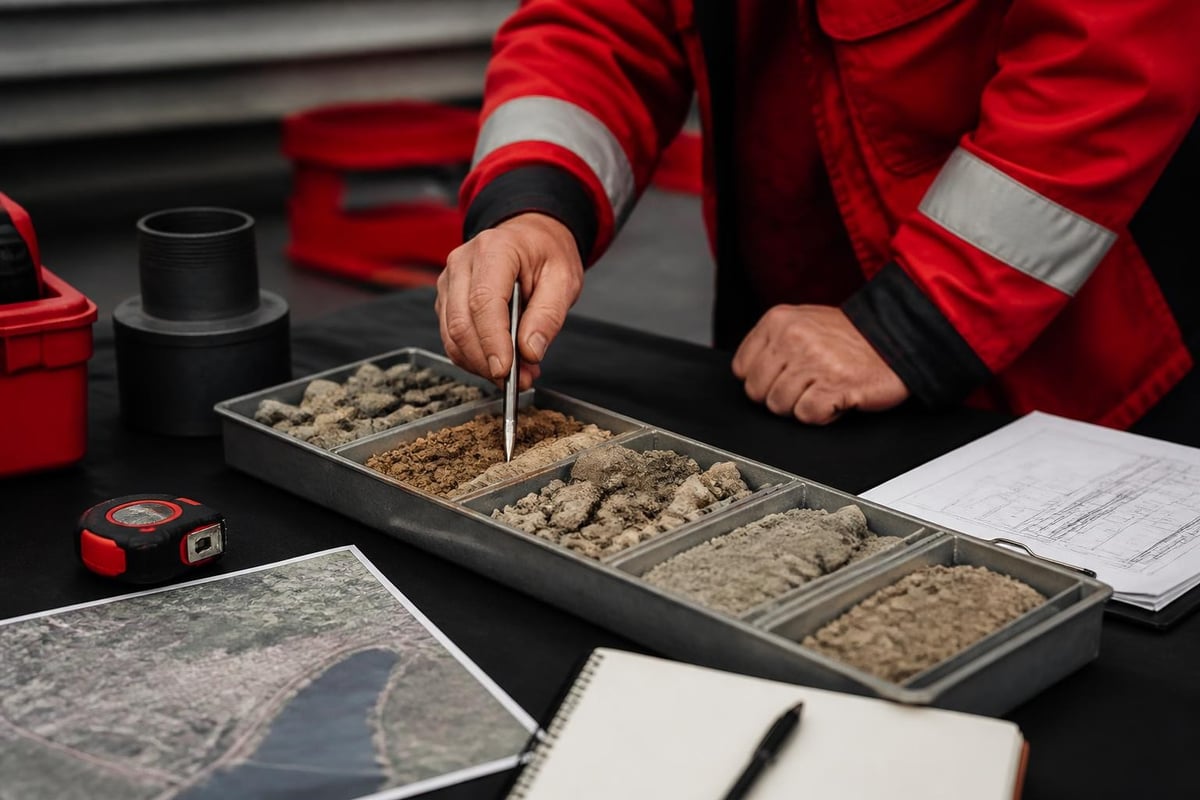
Determining the appropriate piling method requires comprehensive analysis of multiple factors. Ground investigation reports provide essential data about soil composition, bearing capacity, and water table levels that inform method selection.
Technical Considerations
Load requirements dictate the necessary pile capacity, diameter, and depth. Structural engineers calculate anticipated loads, including dead loads, live loads, and environmental factors such as wind and seismic forces.
Ground conditions influence method feasibility and cost-effectiveness. Cohesive clays respond differently to piling operations than granular sands or rock strata, requiring specialists to adapt their approach accordingly.
Site constraints including access limitations, overhead restrictions, and proximity to existing structures may eliminate certain methods whilst favouring others. Urban regeneration projects often demand low-noise, low-vibration techniques regardless of potential cost premiums.
Economic and Environmental Factors
Budget considerations extend beyond initial installation costs to encompass programme duration, equipment mobilisation, and long-term performance characteristics. Whilst some methods carry higher upfront expenses, their speed and reliability may reduce overall project costs.
Environmental responsibility increasingly influences method selection. Noise pollution, vibration transmission, spoil disposal, and carbon footprint now feature prominently in decision-making processes for conscientious developers and contractors.
Testing and Verification Procedures
Piling specialists employ rigorous testing protocols to verify foundation performance before proceeding with superstructure construction. These procedures provide confidence that installed piles meet design specifications and will perform as intended throughout the structure's lifespan.
Load Testing Methods
Static load testing applies controlled loads to test piles, measuring settlement under various load increments. This provides direct evidence of pile capacity and settlement characteristics.
Dynamic load testing uses impact forces during or after installation to assess pile integrity and bearing capacity. The method offers speed advantages and cost savings compared to static testing whilst providing valuable performance data.
Recent guidance on crosshole sonic logging demonstrates the industry's commitment to developing testing methods that protect personnel whilst ensuring quality verification.
Quality Assurance Documentation
Comprehensive documentation accompanies professional piling operations, creating an audit trail from initial design through installation completion:
| Document Type | Purpose | Key Contents |
|---|---|---|
| Ground investigation reports | Establish baseline conditions | Soil profiles, bearing capacity, water levels |
| Method statements | Define installation procedures | Equipment specifications, safety measures |
| Installation records | Track execution progress | Depths achieved, concrete volumes, observations |
| Test certificates | Verify performance | Load test results, integrity assessments |
Integration with Broader Civil Engineering Projects
Foundation work rarely exists in isolation. Piling specialists must coordinate their operations within broader construction programmes, ensuring their activities complement subsequent phases whilst avoiding delays or conflicts.
Programme Planning and Sequencing
Effective project delivery demands careful sequencing of piling operations alongside other civil engineering activities. Groundworks, drainage installation, and surface preparation must align to maintain programme momentum.
Major infrastructure developments like the Roadchef Tibshelf Services project illustrate how foundation specialists integrate their work within complex, multi-disciplinary construction programmes involving highways surfacing, drainage systems, and building construction.
Critical coordination points include:
- Site access arrangements preventing equipment conflicts
- Spoil management and disposal logistics
- Service diversions and protection measures
- Temporary works design and installation
- Handover protocols between construction phases
Future Developments in Piling Technology
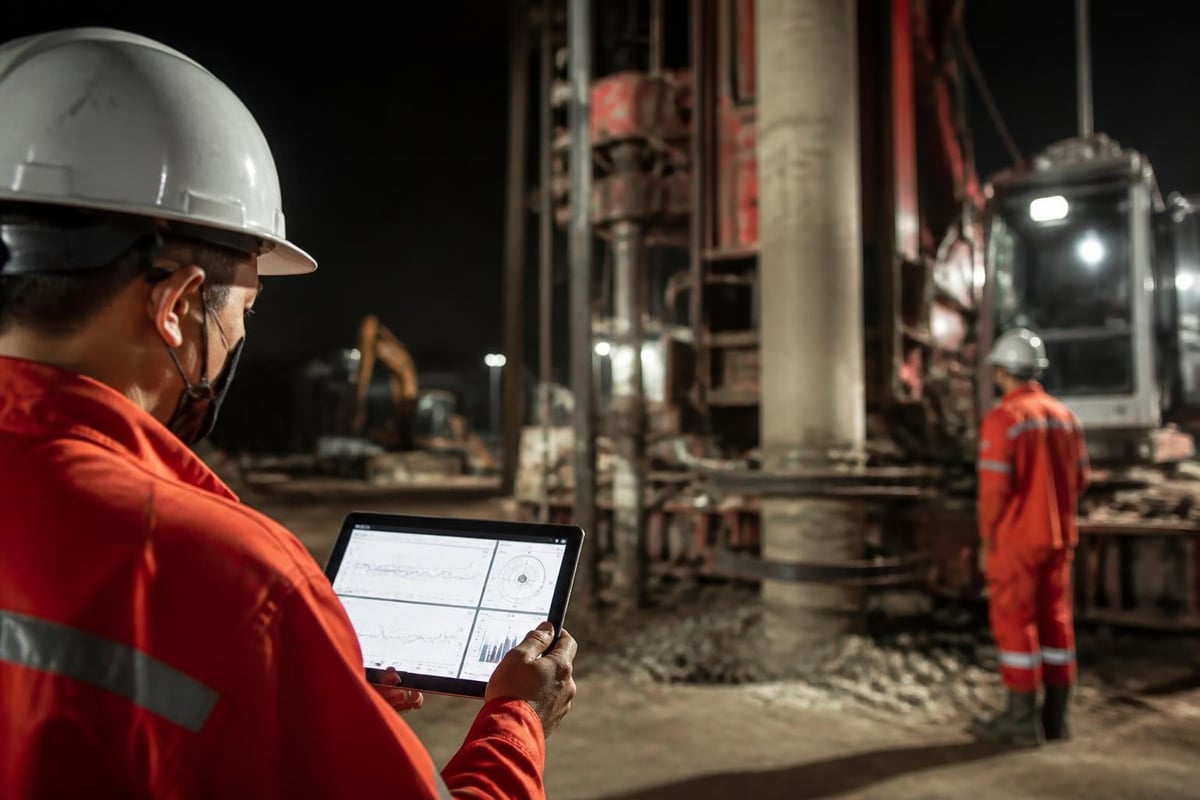
The piling industry continues evolving through technological advancement and sustainability initiatives. Industry discussions highlight how specialists adapt to changing requirements whilst maintaining the fundamental principles of sound foundation engineering.
Sustainable Foundation Solutions
Environmental considerations drive innovation across the construction sector, and piling specialists increasingly adopt sustainable practices. Low-carbon concrete formulations, recycled steel products, and energy-efficient installation equipment reduce the environmental footprint of foundation work.
Ground improvement techniques sometimes offer alternatives to traditional piling, stabilising weak soils through chemical or mechanical means. These approaches suit certain applications whilst reducing material consumption and construction waste.
Digital Technologies and Monitoring
Advanced monitoring systems now provide real-time data during pile installation, enabling immediate adjustments that optimize quality and efficiency. GPS positioning ensures accurate pile placement, whilst instrumentation tracks critical parameters such as concrete pressure, auger torque, and installation depth.
Digital record-keeping streamlines quality assurance, creating comprehensive databases that document every aspect of foundation work. This transparency benefits clients, designers, and contractors by providing verifiable evidence of compliant installation.
Choosing Professional Piling Contractors
Selecting competent piling specialists represents a critical decision affecting project outcomes. Professional contractors demonstrate technical expertise, safety commitment, and quality assurance capabilities that distinguish them from less experienced operators.
Evaluation Criteria
Industry accreditations indicate adherence to recognized standards and participation in professional development activities. Membership of trade associations demonstrates commitment to best practice and continuous improvement.
Project portfolio diversity reveals the breadth of experience across different methods, ground conditions, and application types. Contractors undertaking varied project types develop problem-solving capabilities that benefit complex or challenging assignments.
Safety performance records provide objective evidence of commitment to protecting workers and the public. Accident statistics, training investment, and safety culture indicators reveal organizational priorities.
Technical Capabilities and Resources
Modern piling demands sophisticated equipment operated by skilled personnel. Leading specialists maintain well-maintained plant fleets, invest in operator training, and employ qualified engineers who design temporary works and supervise installations.
Quality management systems ensure consistent delivery standards across projects regardless of size or complexity. ISO certifications, documented procedures, and independent auditing create frameworks supporting reliable performance.
The value of early engagement between piling specialists, designers, and clients cannot be overstated. Collaborative approaches during planning phases often identify opportunities for programme acceleration, cost optimization, or risk reduction that benefit all stakeholders.
Regional Considerations for UK Projects
Geographic location influences piling requirements across the United Kingdom. Ground conditions vary significantly between regions, from London clay to Scottish bedrock, demanding adaptable approaches from piling specialists serving national markets.
Ground Conditions Across Britain
Southern England typically features clay deposits requiring careful management of groundwater and consideration of seasonal shrinkage-swell behaviour. Northern regions often encounter harder, more competent ground that may favour different installation methods.
Coastal locations present unique challenges including marine clays, tidal influences, and corrosion risks requiring specialized materials and protective measures. Urban brownfield sites frequently contain contaminated soils, buried obstructions, and archaeological sensitivities that complicate foundation work.
Logistical Considerations
Nationwide operations demand robust logistics supporting equipment mobilization, material supply, and skilled labour deployment. Companies operating across extensive territories must balance resource allocation against commercial commitments whilst maintaining service quality.
Transport infrastructure, local supplier networks, and accommodation availability all influence project delivery in different regions. Experienced contractors develop regional knowledge that streamlines operations and prevents avoidable delays.
Understanding the capabilities and methodologies of piling specialists empowers informed decision-making throughout construction project development. Whether undertaking commercial developments, infrastructure improvements, or residential enhancements, proper foundation work establishes the literal and figurative groundwork for successful outcomes. At JRG Civils, we bring comprehensive civil engineering expertise to projects across the UK, delivering foundation solutions alongside our highways surfacing, drainage, and construction services. Contact JRG Civils today to discuss how our professional team can support your next project with excellence from groundworks through to final completion.