When building structures that require deep foundation support, selecting the right driven piling contractors becomes a critical decision that influences project timelines, budgets, and structural integrity. From commercial developments to residential projects, the expertise of specialists who understand soil conditions, load-bearing requirements, and modern piling techniques ensures foundations remain stable for decades to come. This comprehensive guide explores what driven piling contractors offer, how to select the right partner, and why their expertise matters for your next construction project.
Understanding Driven Piling Technology
Driven piling represents one of the most established foundation techniques in civil engineering, where steel, concrete, or timber piles are hammered into the ground using specialised equipment. The process creates a robust foundation by transferring structural loads through unstable soil layers to firmer strata below.
How the Process Works
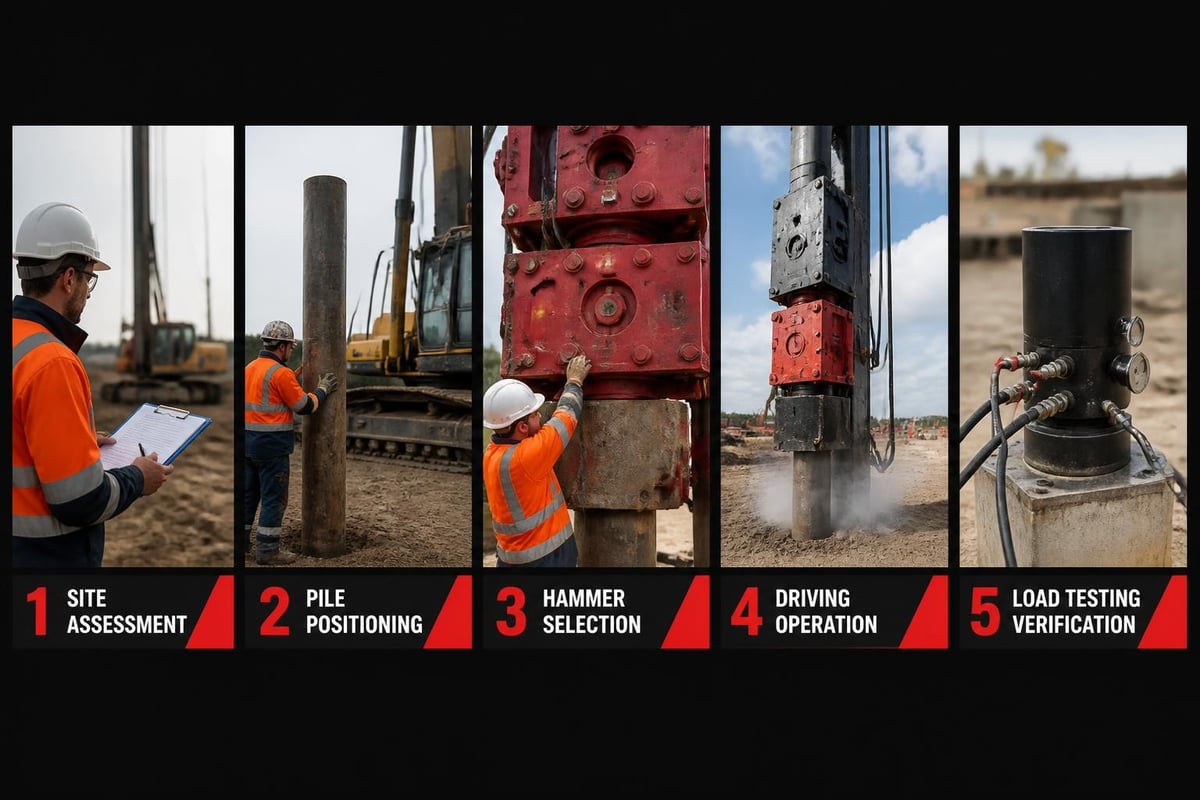
The installation begins with careful site assessment and soil investigation. Engineers analyse ground conditions to determine pile length, diameter, and material specifications. Once design parameters are established, driven piling contractors mobilise equipment to site and begin installation.
Key stages include:
- Site preparation and access creation
- Pile positioning and alignment verification
- Hydraulic or diesel hammer deployment
- Progressive driving to required depth
- Load testing and capacity verification
- Documentation and quality assurance
The driving process compacts surrounding soil, which enhances bearing capacity and creates immediate load-bearing capability. This differs significantly from bored piling, where concrete must cure before carrying loads.
Material Options and Applications
Driven piling contractors work with various materials, each suited to specific applications and ground conditions. Steel H-piles offer excellent load-bearing capacity for heavy commercial structures, whilst precast concrete piles provide durability in corrosive environments. Timber piles, though less common in 2026, still find use in certain marine applications.
| Pile Type | Primary Use | Typical Depth | Load Capacity |
|---|---|---|---|
| Steel H-Pile | Commercial buildings | 15-30 metres | Very high |
| Precast Concrete | Infrastructure projects | 10-25 metres | High |
| Sheet Piles | Retaining structures | 5-15 metres | Moderate |
| Composite Piles | Residential developments | 8-20 metres | Moderate to high |
The selection process involves balancing structural requirements against soil conditions, environmental considerations, and budget constraints. According to guidance from the Texas Department of Transportation, proper consideration of skin friction and point bearing ensures optimal pile performance.
Selecting Qualified Driven Piling Contractors
Choosing the right specialist requires evaluating technical competence, equipment capabilities, and project experience. Not all contractors possess the same level of expertise, and the difference becomes apparent in project outcomes.
Essential Qualifications and Certifications
Professional driven piling contractors maintain current certifications and adhere to industry standards. Look for contractors with CSCS-certified operatives, Plant Operations training, and membership in professional bodies. The Deep Foundations Institute provides valuable resources and industry benchmarks that reputable contractors follow.
Safety compliance represents a non-negotiable requirement. Contractors should demonstrate familiarity with National Highways “Raising the Bar” guidance for piling rig equipment, which sets stringent safety and operational standards.
Verification checklist:
- Request copies of current insurance certificates
- Review recent project references and case studies
- Inspect equipment maintenance records
- Confirm environmental compliance procedures
- Verify health and safety documentation
Equipment and Technology Capabilities
Modern driven piling contractors invest in advanced equipment that improves accuracy, reduces environmental impact, and increases productivity. Hydraulic hammers offer precise energy control, whilst vibro-hammers suit certain soil conditions where traditional impact driving proves less effective.
GPS-guided positioning systems ensure pile placement accuracy within millimetres, crucial for structures with tight tolerance requirements. Real-time monitoring equipment records driving resistance, helping engineers verify pile performance during installation rather than solely through post-installation testing.
The quality of equipment directly affects project outcomes. Well-maintained rigs complete work faster, produce more consistent results, and create fewer site disturbances. When evaluating contractors, enquire about equipment age, maintenance schedules, and technology integration.
Applications Across Project Types
Driven piling contractors serve diverse sectors, from major infrastructure developments to smaller residential projects. Understanding how piling solutions adapt to different applications helps property owners and developers make informed decisions.
Commercial and Infrastructure Projects
Large-scale developments demand robust foundation solutions capable of supporting substantial loads. Drive-through restaurants, retail developments, and commercial warehouses often require piled foundations where ground conditions cannot support traditional spread footings.
For projects like the Costa Coffee and Greggs drive-throughs completed by specialists in civil engineering, driven piling provides rapid installation that keeps construction schedules on track. The technique's speed advantage becomes particularly valuable when developers face tight completion deadlines.
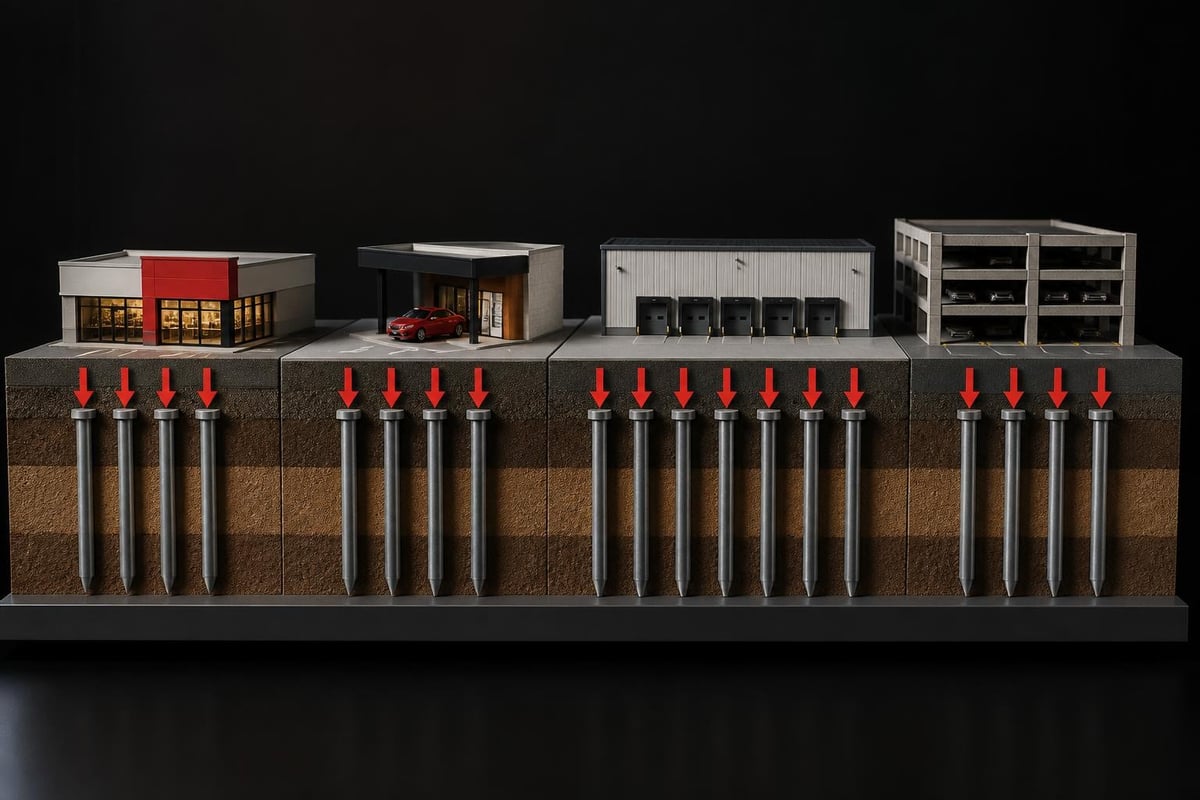
Highway and road construction projects frequently incorporate driven piling for bridge abutments, retaining walls, and sound barriers. Sheet piling creates temporary or permanent earth retention, essential for projects involving elevation changes or waterfront developments.
Residential and Domestic Applications
Whilst often associated with large projects, driven piling contractors also serve residential markets. Homeowners building on challenging sites, properties near watercourses, or locations with poor ground conditions benefit from piled foundation solutions.
Extensions, conservatories, and new-build homes on sloping sites often require foundation reinforcement. Mini-piling equipment allows contractors to work in restricted access situations, bringing professional foundation solutions to domestic projects that would otherwise prove difficult to execute.
Residential applications include:
- Garden room and annexe foundations
- Driveway support on weak subsoils
- Retaining wall stabilisation
- Underpinning existing structures
- Swimming pool installation support
The investment in professional piling services protects long-term property value by eliminating settlement risks that plague inadequately supported structures.
Cost Considerations and Value Analysis
Understanding the financial aspects of driven piling helps project planners budget appropriately whilst recognising the value professional contractors deliver. Initial costs represent only part of the total lifecycle equation.
Pricing Factors and Budget Planning
Driven piling contractors typically price projects based on several variables. Linear metreage of piling required, pile diameter and type, ground conditions, site accessibility, and project timeline all influence final costs. Difficult access sites requiring smaller equipment or hand-guided rigs command premium rates due to reduced productivity.
Testing requirements add to project costs but provide essential verification. Dynamic load testing during installation offers real-time capacity confirmation, whilst static load testing provides definitive proof of pile performance. Research on pile capacity prediction methods demonstrates the importance of proper testing protocols.
| Cost Component | Typical Percentage | Value Delivered |
|---|---|---|
| Mobilisation | 10-15% | Equipment delivery and setup |
| Pile installation | 50-60% | Core foundation creation |
| Materials | 20-25% | Piles, consumables, fittings |
| Testing | 5-10% | Quality assurance, compliance |
| Demobilisation | 3-5% | Site clearance, restoration |
Obtaining detailed quotations from multiple contractors enables meaningful comparison, but the cheapest option rarely delivers best value. Experienced driven piling contractors justify higher rates through superior outcomes, reduced delays, and comprehensive guarantees.
Long-Term Value and Risk Mitigation
Professional piling services eliminate foundation failure risks that generate enormous remedial costs. Settlement cracks, structural movement, and subsidence issues compromise building integrity whilst diminishing property values significantly.
The upfront investment in properly designed and installed driven piling systems provides decades of trouble-free performance. Comparing this against potential remediation costs, which can exceed original foundation budgets by three to five times, demonstrates clear financial logic in selecting qualified contractors initially.
Insurance implications also warrant consideration. Many commercial property insurers require professional foundation certifications for buildings on challenging sites. Documentation from reputable driven piling contractors satisfies these requirements and may reduce premium costs.
Technical Specifications and Design Integration
Successful piling projects require close collaboration between structural engineers, geotechnical specialists, and driven piling contractors. Technical specifications must align with site conditions whilst meeting structural requirements and regulatory standards.
Soil Investigation and Pile Design
Comprehensive ground investigation precedes all professional piling work. Borehole data, trial pits, and laboratory testing reveal soil composition, groundwater levels, and bearing stratum depth. This information informs pile type selection, length calculations, and driving methodology.
Engineers calculate required pile capacity based on structural loads, safety factors, and anticipated environmental conditions. The design process considers both ultimate limit state (structural failure prevention) and serviceability limit state (acceptable settlement limits). Knowledge-based design approaches incorporate historic project data to refine predictions and reduce uncertainty.
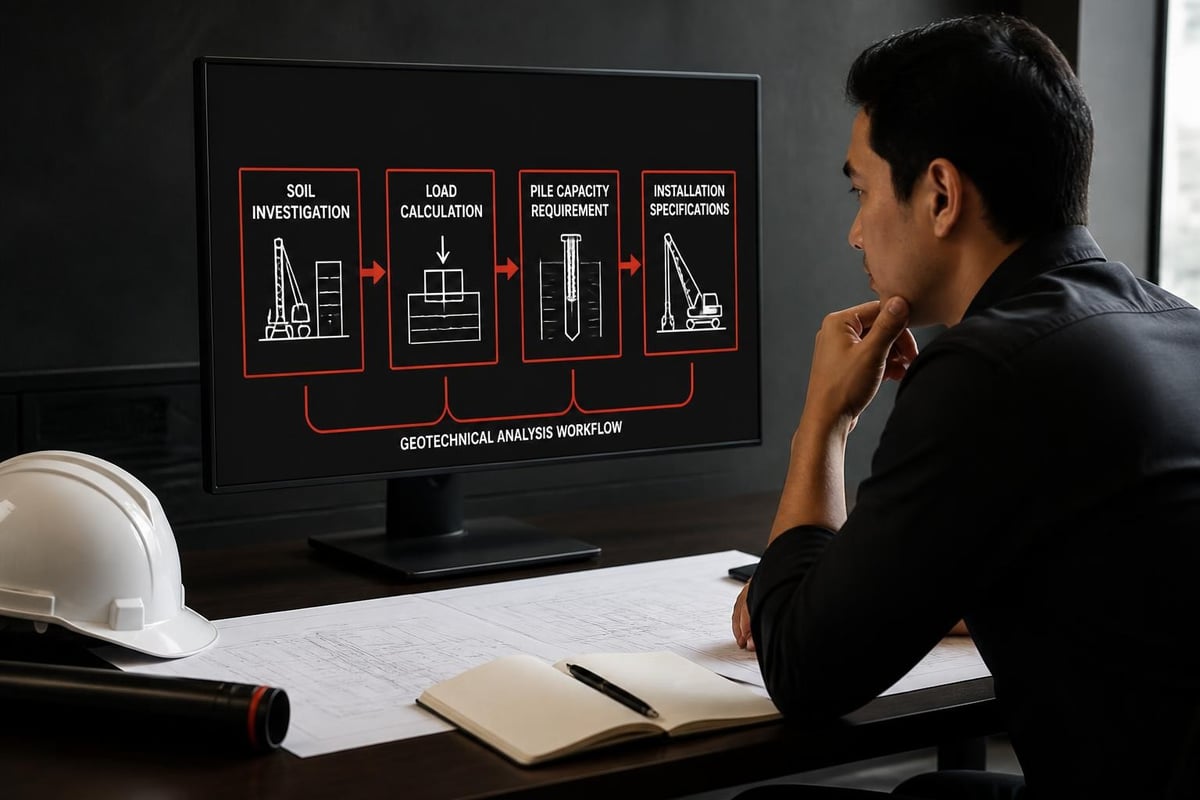
Driven piling contractors contribute valuable practical knowledge during design development. Their field experience with similar ground conditions helps refine theoretical calculations and identifies potential installation challenges before mobilisation.
Installation Monitoring and Quality Control
Advanced monitoring systems track every pile installation, recording blow counts, driving resistance, and energy transfer efficiency. This data verifies that piles achieve design capacity and identifies anomalies requiring investigation.
Pile driving analysers measure stress waves generated during hammer impacts, providing immediate capacity estimates. When resistance values deviate from predictions, contractors can adjust driving procedures or investigate unexpected ground conditions before proceeding further.
Quality assurance measures:
- Pre-installation pile inspection and measurement
- Continuous driving resistance monitoring
- Verticality checks using digital inclinometers
- Post-installation integrity testing
- Comprehensive documentation and reporting
Reputable contractors maintain detailed records for every pile, creating an audit trail that demonstrates compliance and provides valuable information for future reference.
Environmental and Neighbour Considerations
Modern driven piling contractors employ techniques and equipment that minimise environmental impact whilst respecting neighbouring properties. Noise, vibration, and ground disturbance require careful management on sensitive sites.
Vibration and Noise Management
Traditional impact hammers generate significant noise and ground vibration that can disturb nearby structures and occupants. Whilst effective, these hammers face restrictions in urban environments or near sensitive equipment.
Hydraulic hammers with enclosed chambers reduce noise levels substantially compared to older diesel hammers. According to equipment selection guidance, choosing appropriate hammer types and sizes prevents overdriving whilst controlling environmental impacts.
Vibration monitoring equipment placed at sensitive locations provides real-time feedback, ensuring operations remain within acceptable limits. When vibration concerns prove significant, driven piling contractors can switch to alternative techniques or modify installation procedures to reduce ground disturbance.
Sustainable Practices and Material Choices
Environmental responsibility extends beyond immediate site impacts. Progressive driven piling contractors specify recycled steel, use low-carbon concrete mixes, and optimise pile designs to minimise material consumption without compromising performance.
Equipment efficiency improvements reduce fuel consumption and emissions. Modern hydraulic systems operate more cleanly than older diesel hammers, aligning with 2026's increasingly stringent environmental regulations. Contractors pursuing ISO 14001 environmental management certification demonstrate genuine commitment to sustainable operations.
Site management practices prevent pollution through proper fuel storage, spill containment measures, and waste segregation. The groundworks phase of construction projects particularly benefits from contractors who prioritise environmental protection alongside technical excellence.
Future Developments in Driven Piling
The driven piling sector continues evolving through technological advancement, improved materials, and refined methodologies. Understanding emerging trends helps property developers and engineers plan future projects effectively.
Technology Integration and Automation
Digital integration transforms how driven piling contractors operate. Building Information Modelling (BIM) enables precise pile positioning coordination with other structural elements, reducing clashes and improving overall project efficiency. 3D site models guide equipment operators, ensuring accuracy whilst reducing setting-out time.
Remote monitoring capabilities allow project managers to observe operations from off-site locations, receiving real-time data on progress, pile performance, and equipment status. This transparency improves client confidence whilst enabling rapid response to unexpected challenges.
Automated pile handling systems reduce manual intervention, improving safety whilst maintaining productivity. These systems prove particularly valuable on projects requiring numerous piles, where automation delivers consistency that manual operations struggle to match.
Enhanced Testing and Verification Methods
Non-destructive testing technologies provide more detailed pile performance information without requiring destructive sampling. Cross-hole sonic logging, thermal integrity profiling, and advanced stress wave analysis reveal internal pile condition and soil-pile interaction characteristics.
Machine learning algorithms analyse installation data to predict pile capacity with increasing accuracy. By comparing current projects against extensive historic databases, these systems identify patterns that human analysis might overlook, refining capacity predictions and reducing conservatism in design.
The progression towards performance-based specifications rather than prescriptive requirements gives experienced driven piling contractors greater flexibility to optimise solutions. This approach rewards innovation whilst maintaining rigorous quality standards through comprehensive verification protocols.
Working with Regional Specialists
Selecting local driven piling contractors offers distinct advantages for projects across the UK. Regional specialists understand area-specific ground conditions, maintain established supplier relationships, and respond quickly when projects require support.
Benefits of Local Expertise
Contractors familiar with regional geology anticipate ground conditions more accurately than those new to an area. The North East, for instance, presents unique challenges with coal mining legacy issues, glacial deposits, and varied bedrock depth. Local experience proves invaluable when interpreting ground investigation data and planning installation strategies.
Established relationships with local aggregate suppliers, testing laboratories, and equipment hire companies enable competitive pricing and reliable material delivery. These connections keep projects moving smoothly when tight programmes demand rapid resource mobilisation.
Comprehensive Service Integration
Leading contractors offer complete foundation solutions rather than piling in isolation. Integration with broader civil engineering services creates single-point accountability and streamlines project coordination. When the same team handles site preparation, piling installation, and subsequent groundworks, communication improves and interfaces become seamless.
This integrated approach particularly benefits complex projects involving multiple foundation types, retaining structures, and drainage systems. Coordinating these elements under unified management reduces delays, eliminates conflicting methodologies, and produces superior outcomes.
Integrated service advantages:
- Reduced coordination overhead
- Consistent quality standards
- Simplified contract administration
- Faster problem resolution
- Comprehensive warranties
Projects ranging from commercial developments to residential enhancements benefit when experienced teams apply consistent standards throughout construction phases, from initial piling services through final completion.
Selecting qualified driven piling contractors ensures foundation systems perform reliably throughout a structure's lifespan, eliminating costly settlement issues whilst supporting project schedules effectively. Whether planning commercial infrastructure or residential developments, partnering with specialists who combine technical expertise, modern equipment, and proven experience delivers foundations you can trust. For projects across the North East and throughout the UK, JRG Civils brings the civil engineering excellence and attention to detail that transforms challenging ground conditions into stable, long-lasting foundations.