Commercial groundworks form the critical foundation of every successful construction project, from retail developments to highway infrastructure. Understanding the comprehensive scope of these foundational works ensures projects remain on schedule, within budget, and built to last. Whether you're developing a drive-through restaurant, car park, or major retail site, the quality of your groundworks directly impacts the longevity and performance of the entire structure.
Understanding the Scope of Commercial Groundworks
Commercial groundworks encompass all preparatory and foundational works required before above-ground construction commences. These activities create the stable platform necessary for buildings, roads, and associated infrastructure.
The scope typically includes site clearance, excavation, drainage installation, foundation construction, and surface preparation. Each element requires careful planning, skilled execution, and adherence to stringent safety standards. Understanding ground conditions represents one of the most crucial aspects, as soil stability, contamination, and water table levels significantly influence project timelines and costs.
Key Components of Groundworks Projects
Different projects demand varying groundworks approaches, but certain core elements remain consistent across commercial developments:
- Site investigation and soil analysis
- Excavation and earth movement
- Foundation design and installation
- Drainage and utility infrastructure
- Sub-base preparation and compaction
- Surface water management systems
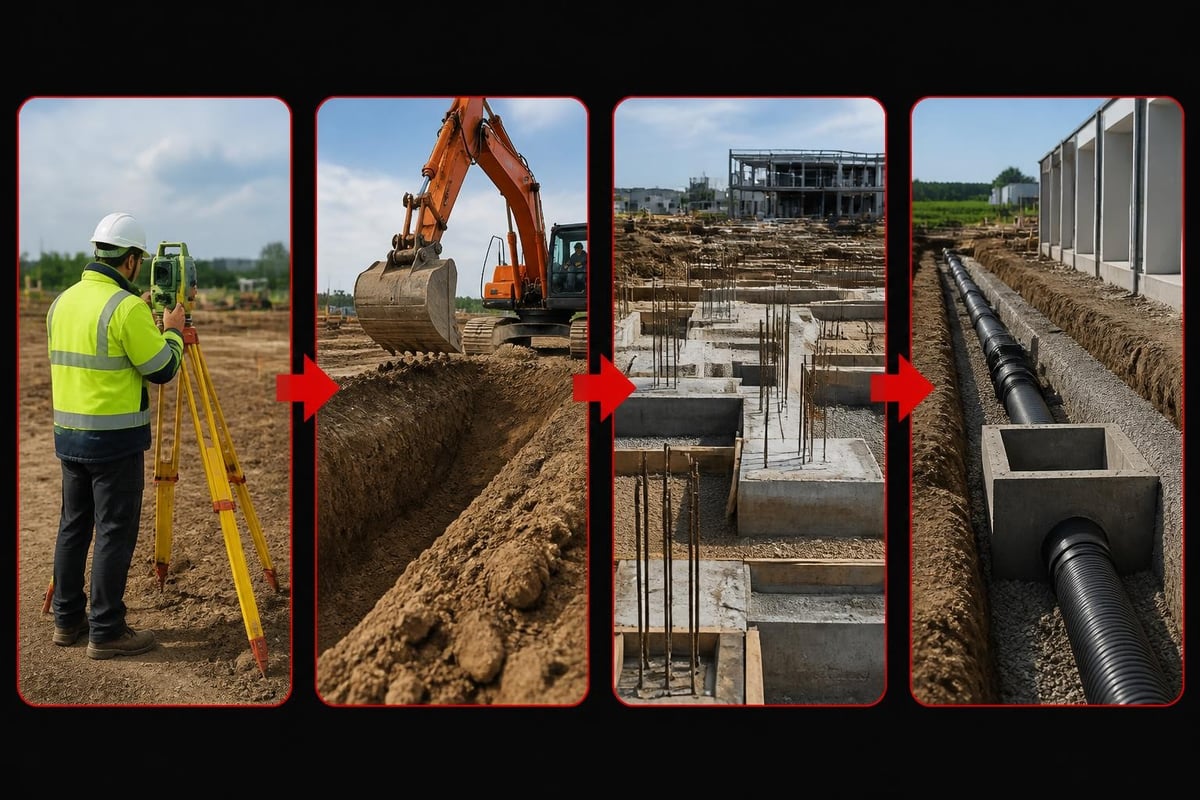
Modern commercial groundworks also incorporate environmental considerations, including sustainable drainage systems (SuDS), contamination remediation, and ecological protection measures. These elements ensure compliance with current environmental regulations whilst creating developments that minimise environmental impact.
Site Investigation and Planning Processes
Thorough site investigation forms the cornerstone of successful commercial groundworks. This phase identifies potential challenges before excavation begins, preventing costly delays and redesigns during construction.
Professional site surveys examine topography, existing services, ground conditions, and environmental constraints. Planning groundworks for commercial sites requires comprehensive understanding of these factors to develop effective solutions. Geotechnical investigations reveal soil bearing capacity, contamination levels, and groundwater presence.
| Investigation Type | Purpose | Key Deliverables |
|---|---|---|
| Topographical Survey | Maps existing ground levels and features | Contour plans, spot heights, boundary locations |
| Geotechnical Survey | Assesses soil conditions and bearing capacity | Borehole logs, soil strength data, foundation recommendations |
| Utility Survey | Locates existing services | Service drawings, depth information, protection requirements |
| Environmental Assessment | Identifies contamination and ecological constraints | Contamination reports, remediation strategies, ecological surveys |
The data gathered during investigations directly informs civil engineering projects and enables accurate cost estimation. Skipping or rushing this phase frequently results in expensive surprises during excavation, including unexpected services, poor ground conditions, or contamination requiring specialist treatment.
Creating Effective Staging Plans
Commercial earthworks staging plans optimise project efficiency through logical sequencing of activities. Proper staging ensures excavation, access routes, and drainage installation occur in the correct order, minimising rework and maintaining site safety.
Staging considerations include material movement, temporary works requirements, and maintaining access for ongoing operations. For projects like drive-through developments, staging must accommodate phased openings whilst completing groundworks safely and efficiently.
Excavation and Earth Movement Techniques
Excavation represents one of the most visible aspects of commercial groundworks, involving removal, movement, and placement of soil and rock materials. The scale of excavation varies significantly between projects, from shallow foundations to deep basements or extensive site regrading.
Modern excavation practices prioritise efficiency and accuracy. GPS-guided machinery enables precise cutting to design levels, reducing waste and minimising the need for imported materials. This technology proves particularly valuable on large sites where maintaining accurate levels across extensive areas challenges traditional surveying methods.
Soil classification determines handling and disposal requirements. Some materials prove suitable for reuse within the project as engineered fill, whilst others require off-site disposal. Contaminated materials demand specialist handling and disposal at licensed facilities, adding significant cost and regulatory complexity.
Managing Excavated Materials
Effective materials management reduces project costs and environmental impact:
- Classify excavated materials based on engineering properties and contamination status
- Segregate different soil types to maximise reuse potential
- Design cut-and-fill balances to minimise import and export volumes
- Stockpile materials strategically for efficient reuse in later phases
- Document disposal of unsuitable materials with appropriate waste transfer documentation
Value engineering in groundworks demonstrates how intelligent materials management generates substantial savings. Projects that achieve balanced earthworks eliminate costly material import whilst avoiding disposal charges.
Foundation Systems and Structural Support
Foundations transfer building loads safely into the ground, making their design and construction absolutely critical. Commercial groundworks include various foundation types, selected based on ground conditions, building loads, and project-specific constraints.
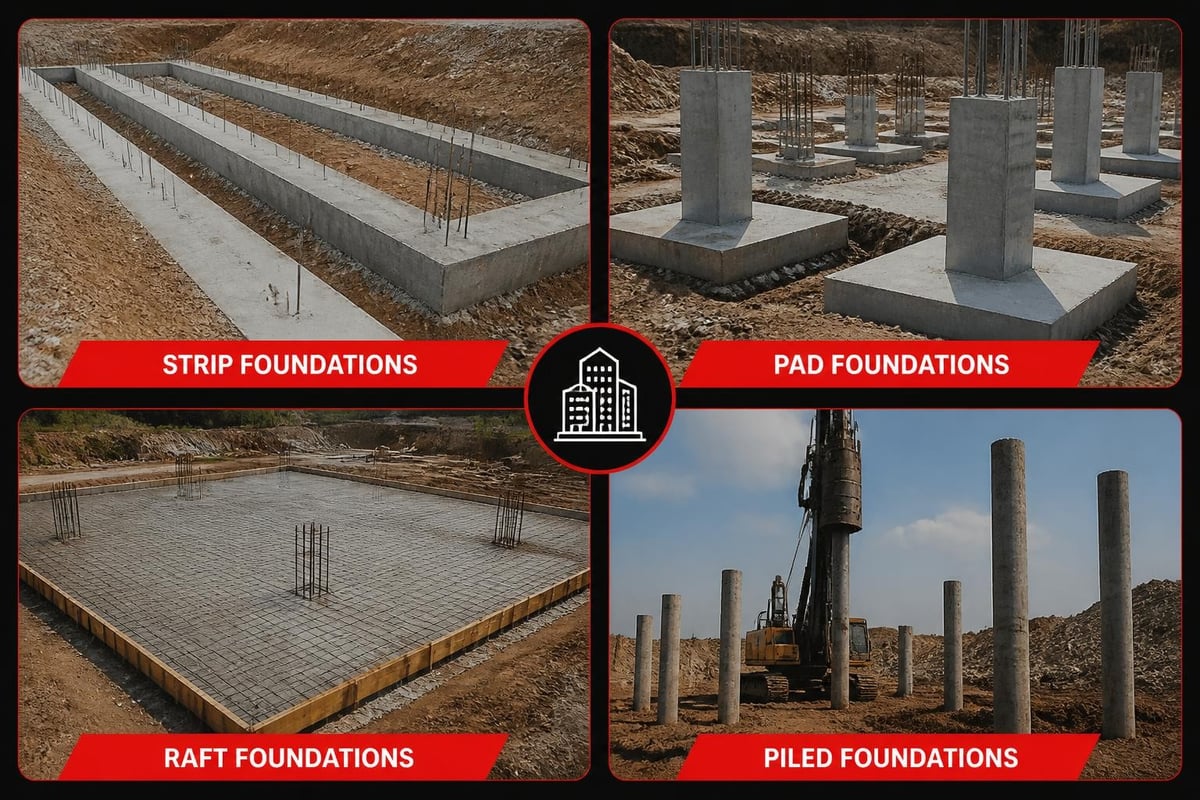
Traditional strip and pad foundations suit stable ground with adequate bearing capacity. Raft foundations distribute loads across wider areas where ground conditions prove more challenging. Piled foundations become necessary where suitable bearing strata lies at significant depth or where ground improvement proves uneconomical.
Foundation Construction Standards
Quality control during foundation construction prevents structural issues that would prove extremely expensive to rectify after building completion. Essential civil engineering techniques ensure foundations meet design specifications and building regulations.
Critical control points include:
- Excavation to correct depths and dimensions
- Removal of loose material from foundation bottoms
- Placement of blinding concrete where specified
- Accurate positioning of reinforcement
- Concrete quality and placement methods
- Adequate curing periods before loading
Ground improvement techniques, such as dynamic compaction, stone columns, or soil stabilisation, enhance bearing capacity where natural ground proves inadequate. These specialist techniques require experienced contractors and careful monitoring to achieve specified performance levels.
Drainage Infrastructure and Water Management
Effective drainage systems protect commercial developments from water damage whilst managing surface water responsibly. Commercial groundworks must incorporate comprehensive drainage solutions addressing both foul sewage and surface water.
Surface water drainage has evolved significantly, with sustainable drainage systems (SuDS) now standard on most commercial developments. These systems manage rainfall through infiltration, attenuation, and treatment, reducing flood risk and improving water quality before discharge.
| Drainage Component | Function | Key Considerations |
|---|---|---|
| Surface Water Sewers | Collects rainfall runoff | Capacity for design storm events, outfall location |
| Foul Sewers | Conveys wastewater | Connection to public sewers, treatment requirements |
| Attenuation Systems | Stores water temporarily | Volume requirements, discharge rates, maintenance access |
| Infiltration Features | Allows water to soak into ground | Ground permeability, water table levels, contamination risk |
| Treatment Features | Improves water quality | Pollution risk, discharge consents, maintenance regimes |
The services of civil engineering encompass detailed drainage design ensuring compliance with building regulations, planning conditions, and water company requirements. Under-designed drainage systems cause persistent flooding, property damage, and potential regulatory enforcement action.
Installing Drainage Systems
Professional installation ensures drainage systems function effectively throughout their design life. Pipes require proper bedding and backfilling to prevent damage and maintain gradients. Inspection chambers and manholes must be positioned for access whilst avoiding conflict with other services and structures.
Quality control includes pressure testing foul sewers, CCTV surveys to verify installation quality, and commissioning of pumping stations where required. These verification activities confirm systems perform as designed before handover.
Surfacing Works and Final Preparation
The final phase of commercial groundworks prepares surfaces for their intended use, whether building construction, vehicle traffic, or landscaping. This stage builds upon properly prepared sub-bases to create durable, long-lasting surfaces.
Best practices for asphalt and tarmac surfacing emphasise the importance of preparation, with the sub-base providing critical support for wearing courses. Inadequate sub-base construction leads to premature surface failure, necessitating expensive reconstruction.
Sub-base construction requires:
- Placement of specified materials in designed thicknesses
- Compaction to achieve required density and stability
- Precise level control to support final surface levels
- Proper drainage to prevent water accumulation
- Protection during subsequent construction activities
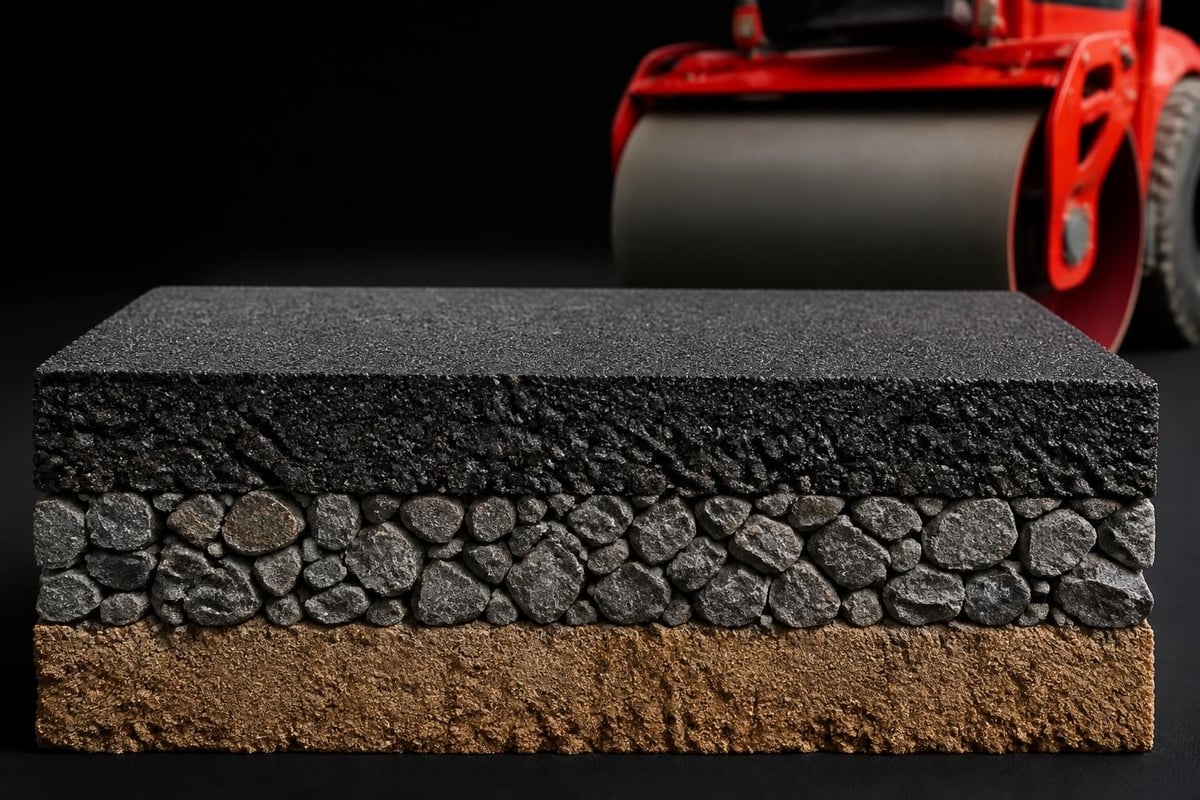
For developments like drive-through restaurants and retail parks, surfacing must withstand regular heavy vehicle traffic whilst providing safe, attractive environments for customers. Material selection balances durability, cost, and aesthetic requirements.
Specialist Surfacing Applications
Different areas within commercial developments demand varying surface specifications. Car parks require robust construction to handle constant vehicle movements and standing loads. Loading areas serving delivery vehicles need enhanced specifications accounting for heavier axle loads and turning forces.
Pedestrian areas prioritise safety and aesthetics alongside durability. Block paving offers attractive, permeable options for walkways and plaza areas. Resin-bound surfacing provides smooth, accessible surfaces suitable for mobility-impaired users whilst offering excellent drainage characteristics.
Regulatory Compliance and Quality Assurance
Commercial groundworks operate within strict regulatory frameworks ensuring public safety, environmental protection, and structural integrity. Compliance begins during design and continues throughout construction and beyond.
Construction engineering professionals must navigate building regulations, planning conditions, environmental permits, and industry standards. Building Control approval confirms structural designs meet regulatory requirements. Planning conditions often impose specific requirements regarding drainage, highways, and environmental protection.
The Construction (Design and Management) Regulations 2015 place duties on all parties to manage health and safety risks. Principal contractors must develop comprehensive safety management systems addressing excavation hazards, plant operations, and temporary works.
Documentation and Testing Requirements
Comprehensive documentation demonstrates regulatory compliance and provides valuable records for future reference:
- Material test certificates confirming compliance with specifications
- Compaction test results verifying sub-base and earthworks performance
- Concrete strength certificates for foundation and structural elements
- Drainage test results including pressure tests and CCTV surveys
- As-built drawings recording final locations of services and structures
- Health and safety files documenting construction details and maintenance requirements
These records prove essential when future works require excavation or modification of existing infrastructure. Missing or inadequate documentation creates uncertainty and risk during subsequent projects.
Commercial Versus Domestic Groundworks
Understanding the differences between domestic and commercial groundworks helps clarify the enhanced complexity, scale, and regulatory requirements of commercial projects. Whilst basic principles remain consistent, commercial works demand greater technical rigour and coordination.
Commercial projects typically involve larger teams, more complex designs, and stricter programmes. The consequences of errors or delays multiply due to project values and commercial pressures. Professional project management becomes essential to coordinate multiple trades, manage interfaces, and maintain progress.
Scale represents an obvious differentiator. A domestic driveway might involve 100 square metres of surfacing, whilst a retail park car park encompasses thousands of square metres requiring careful phasing to maintain access during construction.
Managing Project Costs and Value Engineering
Budget management remains paramount throughout commercial groundworks. Initial cost estimates derived from site investigations provide the baseline, but effective cost control requires ongoing monitoring and proactive management.
Value engineering identifies opportunities to reduce costs without compromising quality or performance. This might involve optimising foundation designs based on actual ground conditions, adjusting cut-and-fill strategies to balance earthworks, or selecting alternative materials offering equivalent performance at lower cost.
Common cost drivers in commercial groundworks include:
- Unexpected ground conditions requiring design changes
- Contamination discovery necessitating specialist treatment
- Service diversions encountering unknown infrastructure
- Weather delays extending programme duration
- Material price fluctuations during long projects
- Regulatory changes imposing additional requirements
Contingency allowances provide buffer against these risks, but proactive management minimises their impact. Early contractor involvement in design development often identifies constructability improvements and cost savings unavailable through traditional procurement routes.
Technology and Innovation in Groundworks
Modern commercial groundworks increasingly incorporate technological innovations improving accuracy, efficiency, and safety. GPS-guided plant enables precise excavation and grading, reducing over-excavation and material waste. Digital survey equipment provides real-time verification of levels and alignment.
Building Information Modelling (BIM) facilitates collaboration between designers, contractors, and clients. Three-dimensional models reveal clashes between proposed works and existing services before excavation begins. This coordination reduces expensive site changes and programme delays.
Ground improvement techniques continue advancing, with new methods offering enhanced performance or reduced environmental impact. Innovations in drainage technology, such as geocellular attenuation systems and advanced filtration media, deliver improved performance within smaller footprints.
Sustainability considerations drive innovation in materials and methods. Recycled aggregates reduce virgin material consumption. Warm-mix asphalts lower production temperatures, cutting energy use and emissions. These sustainable approaches increasingly become standard practice rather than premium options.
Contractor Selection and Project Delivery
Selecting experienced contractors proves crucial for successful commercial groundworks delivery. The complexity and technical demands require contractors demonstrating relevant experience, appropriate resources, and robust management systems.
When evaluating potential contractors, consider their track record on similar projects. Civil engineering jobs delivered successfully provide evidence of capability and reliability. References from previous clients offer insights into working relationships and problem-solving approaches.
Financial stability matters significantly. Commercial groundworks involve substantial financial commitments, and contractor failure mid-project creates enormous disruption and cost. Verify insurance coverage, professional indemnities, and bonding arrangements protect against contractor default.
Collaboration and Communication
Effective project delivery requires excellent communication between all parties. Regular progress meetings, timely information exchange, and proactive issue resolution maintain momentum and prevent misunderstandings escalating into disputes.
Clear contractual arrangements define responsibilities, manage risks appropriately, and establish mechanisms for handling variations and unforeseen circumstances. Well-drafted contracts protect all parties whilst providing frameworks for collaborative problem-solving.
Successful commercial groundworks combine thorough planning, skilled execution, and rigorous quality control to create foundations that support developments for decades. From initial site investigation through final surfacing, each phase demands professional expertise and careful attention to detail. Whether you're developing a retail park, drive-through restaurant, or highway infrastructure, partnering with experienced specialists ensures your project starts on solid ground. JRG Civils brings proven expertise across commercial groundworks, delivering excellence from the North East to projects throughout the UK.