
Groundworks represents the critical foundation phase of any construction project, encompassing all preparatory work required before visible building structures take shape. This essential stage determines the long-term stability, durability, and success of everything built upon it. From commercial developments like drive-through restaurants to residential driveways and patios, proper groundworks execution ensures projects stand the test of time. Understanding the complexities, methodologies, and best practices within this fundamental construction phase enables developers, contractors, and property owners to make informed decisions that prevent costly future remediation.
Understanding the Scope of Modern Groundworks
Groundworks encompasses far more than simply digging holes and pouring concrete. This comprehensive discipline includes site clearance, excavation, soil stabilisation, drainage installation, foundation laying, and surface preparation. Each element requires specialist knowledge, precision equipment, and meticulous attention to detail.
The scope varies dramatically depending on project type and scale. A commercial development requires extensive infrastructure considerations, whilst residential projects focus primarily on structural integrity and aesthetic outcomes. Both demand equal rigour in execution.
Key groundworks activities include:
- Site survey and investigation
- Vegetation clearance and topsoil stripping
- Excavation to required depths
- Soil testing and stabilisation
- Drainage system installation
- Foundation construction
- Service ducting and utility connections
- Sub-base preparation for surfacing
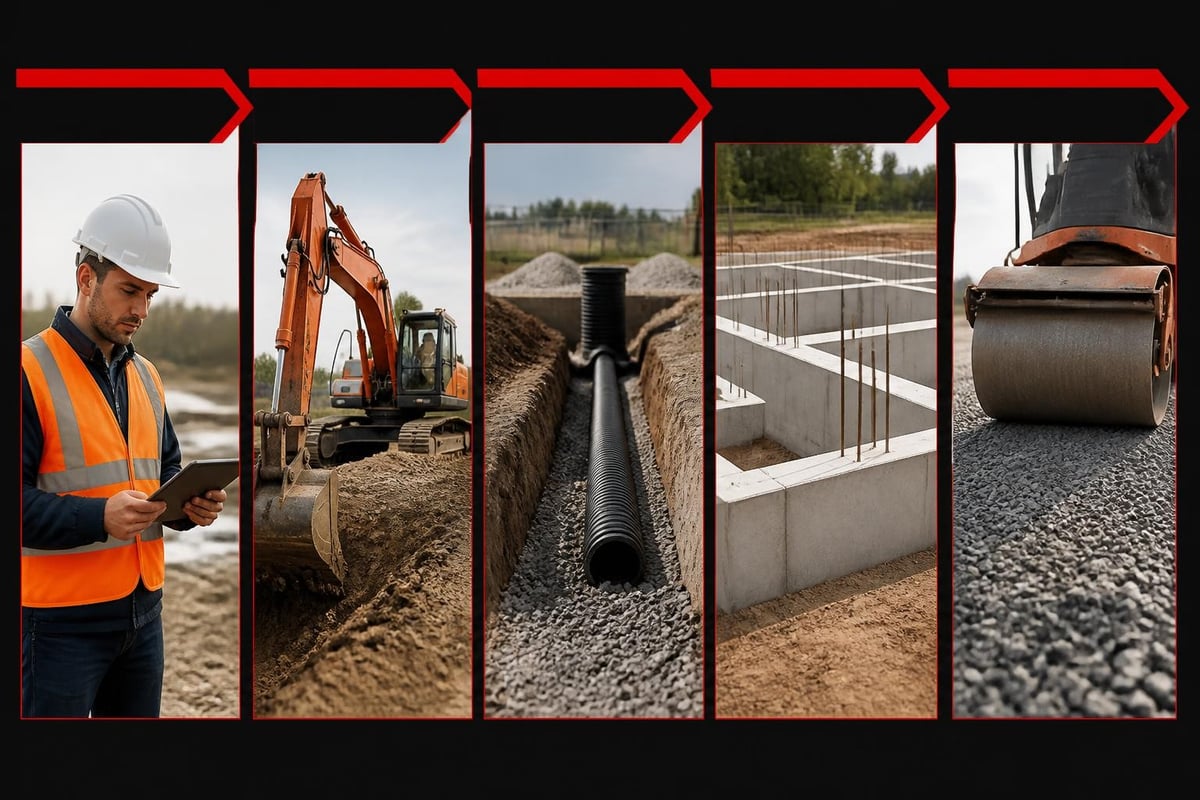
Modern groundworks projects increasingly incorporate sustainable practices, including waste management protocols, environmental protection measures, and material recycling initiatives. These considerations align with contemporary construction standards whilst maintaining project efficiency.
Site Preparation and Assessment Fundamentals
Thorough site preparation forms the cornerstone of successful groundworks execution. Before any excavation begins, comprehensive assessment identifies potential challenges, soil characteristics, and environmental constraints that influence methodology.
Professional site assessment examines multiple factors simultaneously. Soil composition analysis reveals load-bearing capacity, drainage characteristics, and stabilisation requirements. Topographical surveys identify levels, gradients, and water flow patterns. Underground utility mapping prevents costly service strikes and project delays.
Critical Assessment Components
Ground conditions vary significantly across the UK, with regional geology presenting unique challenges. Clay-heavy soils in certain areas require different approaches compared to sandy or rocky substrates. Understanding these variations enables appropriate soil stabilization methods selection.
| Assessment Type | Purpose | Impact on Groundworks |
|---|---|---|
| Soil Analysis | Determine composition and bearing capacity | Influences foundation design and stabilisation needs |
| Topographical Survey | Map existing levels and gradients | Guides excavation depths and drainage planning |
| Utility Mapping | Locate underground services | Prevents damage and ensures safe working |
| Environmental Study | Identify constraints and requirements | Shapes methodology and compliance measures |
The importance of proper site preparation cannot be overstated, particularly for commercial projects requiring stringent regulatory compliance. Documentation from this phase provides essential reference throughout construction and future maintenance.
Weather patterns also influence site preparation timing. Ground conditions during wet periods necessitate additional measures, including temporary drainage installation and working platform construction. Planning around seasonal variations optimises efficiency and reduces cost overruns.
Excavation Techniques and Best Practices
Excavation represents the most visible aspect of groundworks, requiring precision execution to achieve specified depths and dimensions whilst maintaining site safety. Modern machinery enables efficient material removal, but skilled operators remain essential for quality outcomes.
Different projects demand varied excavation approaches. Bulk excavation removes large volumes quickly for commercial developments, whilst precision digging protects adjacent structures in confined residential spaces. Trench excavation for drainage and services requires particular attention to depth, width, and side stability.
Excavation best practices include:
- Establishing clear working zones and safety barriers
- Implementing proper shoring and support systems
- Managing excavated material stockpiling and removal
- Monitoring groundwater ingress and implementing dewatering
- Maintaining accurate depth and level measurements throughout
- Protecting existing structures and boundary features
Material segregation during excavation proves economically beneficial. Topsoil preservation enables reuse in landscaping, whilst suitable excavated material provides backfill for other project areas. Contaminated or unsuitable material requires proper disposal according to environmental regulations.
Excavation depth accuracy directly impacts foundation performance. Insufficient depth compromises structural stability, whilst excessive excavation wastes resources and extends timelines. Regular surveying ensures compliance with design specifications throughout the process.
Foundation Work and Structural Support
Foundation construction transforms prepared ground into stable platforms capable of supporting substantial loads. This critical groundworks element varies significantly based on building type, ground conditions, and structural requirements.
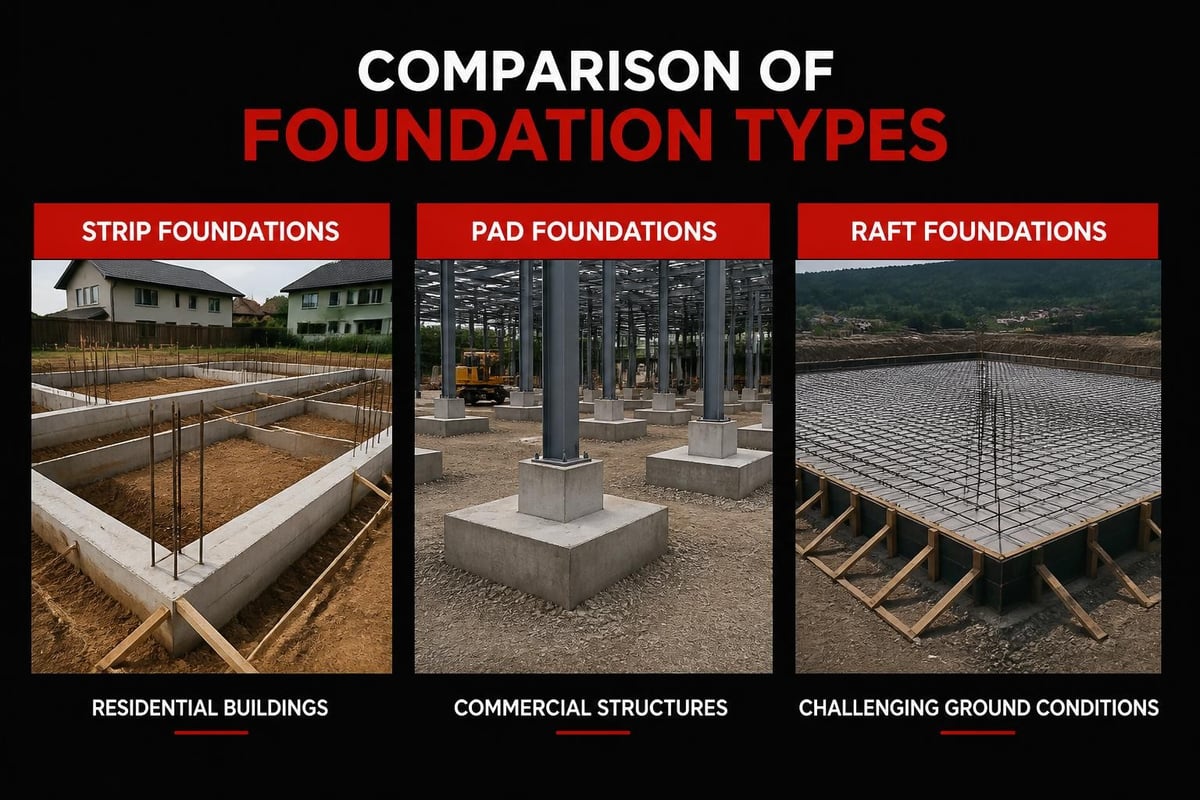
Traditional strip foundations suit most residential applications, providing continuous support beneath load-bearing walls. Commercial developments often require pad foundations or piled systems to accommodate greater structural loads and less favourable ground conditions. The selection process considers civil engineering design principles alongside site-specific factors.
Foundation System Selection Criteria
Ground bearing capacity determines foundation depth and width requirements. Weak soils necessitate deeper excavations or alternative foundation types distributing loads across larger areas. Ground improvement techniques, including compaction methods and consolidation, enhance natural soil properties where necessary.
Concrete quality and placement methodology significantly influence foundation longevity. Proper mix design, adequate reinforcement, and controlled curing prevent common failures including cracking, settlement, and water ingress. Quality assurance testing throughout placement ensures specification compliance.
Waterproofing and damp-proofing integration during foundation construction prevents future moisture problems. Tanking systems, damp-proof membranes, and drainage provisions create effective barriers protecting structures from ground moisture and water table fluctuations.
Drainage and Service Installation
Effective drainage systems prove essential in groundworks, protecting foundations from water damage whilst managing surface water runoff. Poor drainage undermines even excellently constructed foundations, causing settlement, structural movement, and premature deterioration.
Groundworks contractors install multiple drainage types serving distinct purposes. Foul drainage connects buildings to sewerage systems, surface water drainage manages rainfall runoff, and land drainage controls groundwater levels. Each system requires careful design, installation, and testing.
Modern construction sitework best practices emphasise integrated drainage planning from project inception. This approach ensures adequate capacity, appropriate falls, and proper connection points throughout the development.
| Drainage Type | Primary Function | Installation Considerations |
|---|---|---|
| Foul Drainage | Wastewater removal | Gradient requirements, building control compliance |
| Surface Water | Rainfall management | Soakaway sizing, attenuation needs |
| French Drains | Groundwater control | Filter fabric specification, aggregate selection |
| Inspection Chambers | System access | Strategic positioning, depth requirements |
Service installation accompanies drainage work within groundworks programmes. Electrical ducting, water mains, gas services, and telecommunications infrastructure require careful coordination. Proper ducting installation during groundworks prevents disruptive future excavations and facilitates maintenance access.
Separation distances between services prevent interference and maintain safety standards. Protective measures including warning tape, marker posts, and record drawings ensure future contractors identify buried services before excavation. This documentation proves invaluable throughout the building's operational life.
Soil Stabilisation and Ground Improvement
Soil stabilisation transforms unsuitable ground into stable platforms supporting construction loads. This specialised aspect of groundworks addresses challenging conditions including soft clays, loose sands, and variable substrates that would otherwise compromise structural integrity.
Several stabilisation methods address different soil conditions. Mechanical stabilisation through compaction increases soil density and load-bearing capacity. Chemical stabilisation using lime or cement modifies soil properties at molecular level. Geosynthetic reinforcement provides tensile strength to weak materials.
The soil stabilization process selection depends upon soil type, project requirements, and economic considerations. Detailed testing determines the most appropriate methodology for specific site conditions.
Common stabilisation applications include:
- Car park construction on weak substrates
- Road construction across variable ground conditions
- Building platforms in areas with poor natural bearing capacity
- Slope stabilisation preventing erosion and movement
- Temporary working platforms enabling construction access

Compaction represents the most frequently employed stabilisation method in groundworks. Vibratory rollers, plate compactors, and rammers consolidate soil particles, eliminating voids and increasing density. Proper moisture content proves critical, as excessively wet or dry soils resist effective compaction.
Quality control during stabilisation ensures specified outcomes. Regular density testing, California Bearing Ratio measurements, and visual inspections verify compliance with design requirements. Documentation provides assurance to clients and regulatory authorities whilst protecting contractors against future claims.
Commercial Groundworks Considerations
Commercial groundworks projects present unique challenges requiring specialised expertise and equipment. Scale, complexity, and regulatory requirements exceed typical residential work, demanding comprehensive project management and technical capability.
Large commercial developments, including retail facilities and drive-through restaurants, require extensive groundworks addressing multiple considerations simultaneously. Foundation loads significantly exceed residential applications, drainage systems serve greater populations, and service installations accommodate commercial operations.
The commercial sector increasingly demands accelerated project delivery without compromising quality. This pressure requires efficient groundworks execution through meticulous planning, resource allocation, and progress monitoring. Projects like those undertaken for commercial engineering applications demonstrate the importance of professional coordination.
Highways and Infrastructure Projects
Highways groundworks involves specialist techniques addressing high traffic loads, drainage requirements, and durability expectations. Road construction demands precise sub-base preparation, adequate drainage provision, and proper compaction achieving specified density throughout pavement layers.
Implementing best practices for site preparation becomes particularly critical in highways work where premature failure creates safety hazards and substantial remediation costs. Attention to detail during groundworks phases prevents common issues including settlement, rutting, and drainage failures.
Traffic management during commercial groundworks requires careful coordination with local authorities and adjacent businesses. Minimising disruption whilst maintaining safety standards demands experienced project management and clear communication throughout construction phases.
Quality Assurance and Compliance
Groundworks quality directly impacts project longevity and performance. Robust quality assurance systems ensure specification compliance, identify potential issues early, and provide documented evidence of proper execution. These systems protect all stakeholders whilst supporting continuous improvement.
Testing regimes verify material quality, installation accuracy, and performance characteristics throughout groundworks phases. Soil density tests confirm adequate compaction, concrete strength tests verify structural adequacy, and drainage tests demonstrate system functionality.
Building Control and statutory inspections form integral components of groundworks projects. Inspectors verify foundation depths, concrete quality, and drainage installations at prescribed stages. Proper coordination ensures inspections occur efficiently without delaying project progress.
| Inspection Stage | Verification Focus | Required Documentation |
|---|---|---|
| Foundation Excavation | Depth, width, bearing strata | Survey reports, photographs |
| Concrete Placement | Mix design, reinforcement, volume | Delivery tickets, test certificates |
| Drainage Installation | Falls, connections, testing | Test results, record drawings |
| Backfilling | Material type, compaction | Density test results |
Civil contract work demands particular attention to documentation and compliance. Contractual obligations specify quality standards, testing frequencies, and acceptance criteria that groundworks must satisfy. Non-compliance risks rejection, remediation costs, and contractual disputes.
Environmental compliance increasingly influences groundworks methodology. Pollution prevention measures protect watercourses and surrounding land from contamination. Noise and vibration controls minimise community impact. Waste management protocols ensure responsible material disposal and recycling.
Residential Groundworks Applications
Residential groundworks, whilst typically smaller in scale than commercial projects, requires equal professional attention to detail. Driveways, patios, and property extensions demand proper ground preparation ensuring longevity and aesthetic appeal meeting homeowner expectations.
Driveway construction involves multiple groundworks elements including excavation, sub-base installation, drainage provision, and edge restraint construction. Proper execution prevents common failures including settlement, surface cracking, and water ponding that diminish property value and require costly remediation.
Patio construction similarly depends upon thorough groundworks preparation. Level accuracy, adequate drainage, and proper sub-base compaction ensure finished surfaces remain stable and attractive throughout their service life. Attention to detail during groundworks phases proves far more economical than subsequent repairs.
Residential groundworks typically includes:
- Excavation to appropriate depths for intended use
- Installation of geotextile membranes preventing weed growth
- Sub-base material placement and compaction
- Edge restraint installation maintaining boundary definition
- Drainage provision preventing water accumulation
- Final surface preparation for chosen finishing material
Extensions and conversions require foundation work matching existing structure specifications whilst accommodating modern building regulations. Ground conditions may differ from original construction, necessitating careful assessment and appropriate foundation design. Professional groundworks ensures seamless integration with existing buildings.
Garden landscaping projects increasingly incorporate substantial groundworks elements. Retaining walls require proper foundations and drainage, whilst level changes demand careful excavation and ground preparation. These elements transform outdoor spaces whilst ensuring long-term stability and drainage effectiveness.
Project Planning and Coordination
Successful groundworks delivery depends upon meticulous planning coordinating multiple activities, resources, and stakeholders. Early contractor involvement enables buildability review, value engineering opportunities, and realistic programme development avoiding unrealistic expectations.
Programme sequencing ensures logical activity progression whilst accommodating dependencies between different groundworks elements. Foundation construction cannot proceed until excavation completes, drainage installation requires coordination with service providers, and surface preparation awaits drainage testing completion.
Resource allocation matches programme requirements with available plant, labour, and materials. Equipment scheduling ensures appropriate machinery availability when required, whilst material procurement prevents delays from supply chain interruptions. Experienced contractors maintain established supplier relationships facilitating reliable delivery.
Weather contingency planning acknowledges seasonal variations affecting groundworks productivity. Winter working requires additional measures including frost protection, ground heating, and extended curing periods. Summer drought conditions may necessitate dust suppression and material moisture conditioning.
Stakeholder coordination extends beyond immediate project teams. Utility companies require notice periods for diversions and new connections. Environmental agencies monitor compliance with discharge consents and pollution controls. Local authorities oversee highway impacts and planning conditions. Effective communication with all parties prevents delays and maintains positive relationships.
Cost Management and Value Engineering
Groundworks represents significant project expenditure warranting careful cost control throughout planning and execution phases. Accurate estimating based upon thorough site investigation prevents budget overruns whilst enabling competitive tendering. Hidden ground conditions represent the primary risk factor in groundworks pricing.
Value engineering identifies opportunities for cost reduction without compromising quality or performance. Alternative materials, modified construction sequences, or innovative methodologies may deliver equivalent outcomes more economically. Early contractor engagement facilitates value engineering input during design development when changes prove most readily accommodated.
Cost optimisation strategies include:
- Balancing cut and fill quantities minimising material import and export
- Reusing excavated material where suitable reducing disposal costs
- Coordinating service installations minimising repeat excavations
- Optimising plant utilisation through efficient scheduling
- Negotiating favourable material supply terms through volume commitments
Ground improvement techniques sometimes offer economical alternatives to deep foundations or extensive excavation. Stabilising existing soils may prove more cost-effective than removing unsuitable material and importing engineered fill. Detailed ground investigation enables informed decisions balancing technical requirements against commercial realities.
Programme acceleration sometimes justifies additional resource deployment. Extended working hours or increased plant capacity compress timelines where programme criticality outweighs additional costs. These decisions require careful analysis balancing acceleration costs against downstream benefits or delay penalties.
Health, Safety, and Environmental Protection
Groundworks involves inherent hazards requiring comprehensive safety management protecting workers, public, and environment. Excavations present collapse risks, mobile plant creates struck-by hazards, and underground services pose electrocution or explosion dangers. Robust safety systems prevent incidents through hazard identification, risk assessment, and control implementation.
Excavation safety relies upon proper support systems preventing collapse. Trench boxes, sheet piling, or battered sides protect workers from burial hazards. Competent persons assess excavation stability daily, particularly following weather events or vibration from adjacent activities.
Site security prevents unauthorised access to groundworks areas. Fencing, signage, and lighting protect curious members of public from excavation and plant hazards. Evening and weekend security proves particularly important on commercial sites in populated areas.
Environmental protection measures prevent pollution incidents damaging watercourses, groundwater, or surrounding land. Silt management controls sediment-laden water discharge from sites. Fuel and chemical storage incorporates bunding preventing spillage contamination. Dust suppression protects air quality in surrounding areas.
Noise and vibration monitoring ensures compliance with local authority requirements and planning conditions. Particularly sensitive locations including hospitals and schools may require restricted working hours or modified methodologies reducing disturbance. Community liaison maintains positive relationships through transparent communication about planned activities and their duration.
Effective groundworks combines technical expertise, careful planning, and meticulous execution to create stable foundations supporting successful construction projects. Whether undertaking commercial developments, highways infrastructure, or residential enhancements, professional groundworks delivery ensures long-term performance and client satisfaction. At JRG Civils, our team brings extensive experience across all groundworks disciplines, delivering excellence from initial site preparation through to project completion. Contact us today to discuss how our civil engineering expertise can support your next development.