When embarking on major construction or civil engineering projects, the stability of your structure depends entirely on what lies beneath. Piling contractors specialise in creating deep foundations that transfer structural loads through weak or unstable soil to more competent bearing strata below. Whether you're developing a commercial site, constructing a drive-through facility, or expanding industrial infrastructure, understanding the role of professional piling specialists is essential for project success. These experts bring specialised equipment, technical knowledge, and safety expertise that ensures your foundations meet both structural requirements and regulatory standards.
Understanding the Role of Piling Contractors
Piling contractors provide essential groundworks services that address one of construction's most fundamental challenges: establishing stable foundations on problematic ground conditions. Their work begins long before any visible structure emerges from the site.
What Piling Contractors Actually Do
These specialists assess ground conditions, design appropriate foundation solutions, and install various types of piles to support structures. The Piling & Foundation Specialists Federation has established comprehensive standards that guide professional practice across the industry. Piling contractors work closely with structural engineers, soil investigation specialists, and main contractors to deliver foundations that meet specific load-bearing requirements.
Key responsibilities include:
- Conducting site assessments and feasibility studies
- Selecting appropriate piling methods based on soil conditions
- Installing piles using specialised equipment
- Testing and verifying pile integrity
- Ensuring compliance with building regulations and safety standards
The contractor's expertise proves particularly valuable on sites with weak soil, high water tables, or limited access. Many commercial projects, from retail developments to logistics facilities, require deep foundations that only experienced piling contractors can deliver.
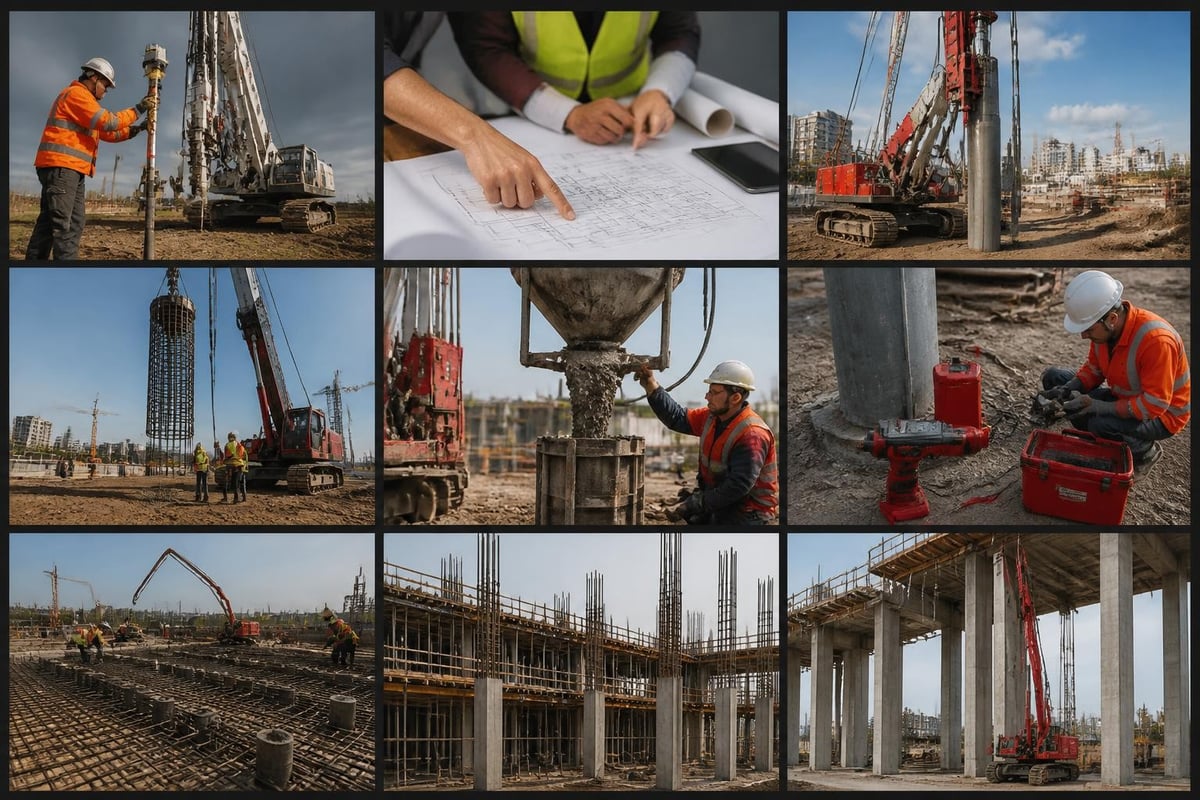
Primary Piling Methods and Applications
Different ground conditions and structural requirements demand varied approaches to pile installation. Understanding these methods helps project managers select the right contractors for their specific needs.
Driven Pile Systems
Driven piles involve forcing prefabricated elements into the ground using impact hammers or vibratory equipment. This method suits many commercial applications, particularly where ground conditions permit straightforward installation.
| Pile Type | Best Applications | Key Advantages | Considerations |
|---|---|---|---|
| Steel H-Piles | Industrial buildings, bridges | High load capacity, versatile | Noise during installation |
| Precast Concrete | Commercial structures | Durable, quality-controlled | Transport limitations |
| Timber Piles | Light structures, marine works | Cost-effective, renewable | Limited load capacity |
Steel piles offer exceptional strength-to-weight ratios and prove ideal for projects requiring substantial vertical and lateral load resistance. The comprehensive guide to piling methods explains how matching solutions to site conditions ensures optimal performance.
Bored Pile Installation
Bored piling involves drilling into the ground and filling the excavation with reinforced concrete. This quieter method works exceptionally well in urban environments or sites adjacent to existing structures.
Contractors use rotary drilling rigs equipped with temporary casing or drilling fluids to maintain hole stability. Once the required depth is achieved, reinforcement cages are lowered into position before concrete placement. This technique allows piling contractors to work in restricted access situations and minimise vibration impact on surrounding properties.
Advantages of bored piling:
- Minimal noise and vibration
- Precise depth control
- Large diameter options for heavy loads
- Suitable for contaminated ground
Continuous Flight Auger (CFA) Piles
CFA piling represents an efficient solution for many ground conditions. The continuous hollow-stem auger drills to depth whilst the soil remains within the flights, preventing collapse. Concrete is then pumped through the hollow stem as the auger withdraws, creating a continuous pile shaft.
This method offers excellent productivity rates and suits projects requiring numerous piles within tight timeframes. Many piling contractors favour CFA techniques for commercial developments where programme efficiency directly impacts project viability.
Selecting Qualified Piling Contractors
Choosing the right specialist requires careful evaluation beyond simple price comparison. The technical complexity and safety implications of piling work demand thorough contractor assessment.
Essential Qualifications and Accreditations
Reputable piling contractors maintain current certification demonstrating their competence. Look for membership in professional bodies, health and safety accreditations, and evidence of continuous professional development. The ICE Specification for Piling and Embedded Retaining Walls provides industry-recognised standards that serious contractors follow meticulously.
Verification should include:
- Professional memberships in recognised industry associations
- Insurance coverage adequate for the project scope
- Health and safety records demonstrating commitment to worker protection
- Technical expertise in the specific piling methods required
- Equipment maintenance programmes ensuring reliable plant operation
Evaluating Track Record and Experience
Past performance provides valuable insight into contractor capability. Request case studies of similar projects, particularly those involving comparable ground conditions or structural requirements. When JRG Civils undertook projects like the Costa Coffee Durham development, the groundworks phase required careful coordination with foundation specialists to ensure programme delivery.
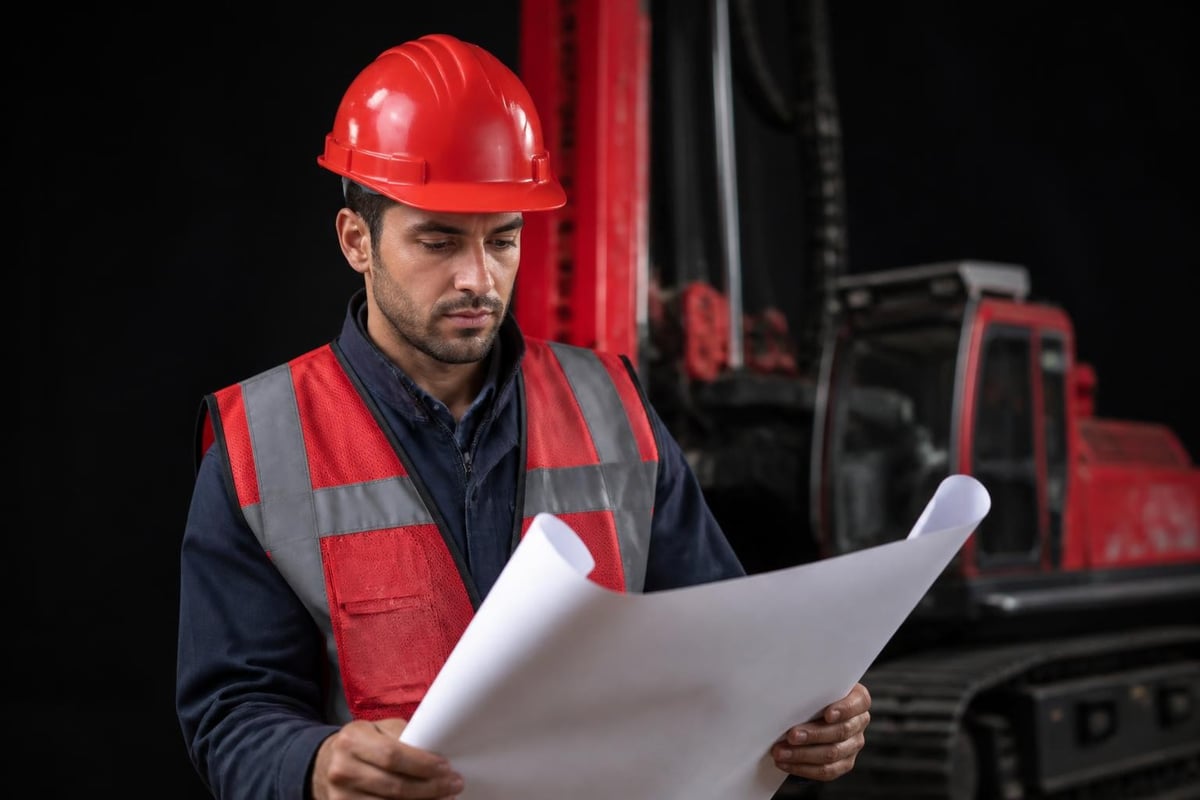
Examine references from previous clients, focusing on aspects such as programme adherence, quality of workmanship, problem-solving ability, and post-installation support. Contractors experienced in commercial work understand the pressures of tight programmes and the importance of reliable completion dates.
Safety Considerations in Piling Operations
Piling work involves significant hazards that professional contractors must manage through robust safety systems. Ground instability, heavy machinery, noise, and vibration present risks requiring specialist control measures.
Regulatory Framework and Standards
The comprehensive overview of piling safety risks highlights how different methods create distinct hazard profiles. Competent piling contractors implement method-specific risk assessments and safe systems of work before commencing operations.
Critical safety elements include:
- Ground instability monitoring and control
- Exclusion zones around operating equipment
- Noise and vibration monitoring
- Structural integrity testing during installation
- Emergency response procedures
Modern piling contractors employ sophisticated monitoring systems that track vibration levels, ensuring compliance with limits protecting adjacent structures. This proves particularly important on urban sites or near sensitive infrastructure.
Quality Assurance and Testing
Professional contractors implement comprehensive testing regimes to verify pile integrity and load-bearing capacity. Dynamic load testing during installation provides real-time feedback, whilst static load tests confirm design assumptions. Understanding common deep foundation terminology helps project teams communicate effectively about quality requirements.
Non-destructive integrity testing using sonic or ultrasonic methods identifies defects without compromising pile performance. These quality measures protect both the contractor's reputation and the client's investment.
Commercial Applications and Project Integration
Piling contractors frequently support diverse commercial developments, from retail facilities to industrial complexes. Their work forms the critical foundation layer that enables subsequent construction phases.
Retail and Hospitality Developments
Drive-through restaurants, retail parks, and hospitality venues often require piled foundations due to site constraints or ground conditions. The foundation design must accommodate not only building loads but also external works, car parking, and service infrastructure. Projects such as Greggs drive-throughs and commercial developments demonstrate how coordinated groundworks and foundation installation support successful project delivery.
| Development Type | Typical Challenges | Piling Solutions | Integration Requirements |
|---|---|---|---|
| Drive-through facilities | Service penetrations, canopy supports | Individual pad foundations on piles | Coordination with drainage and surfacing |
| Retail units | Large floor areas, minimal settlement tolerance | Pile grids with ground beams | Integration with external works |
| Warehouses | Heavy floor loads, racking systems | High-capacity piles with reinforced slabs | Logistics for installation access |
Infrastructure and Civil Engineering Projects
Highways, bridges, and major infrastructure works demand piling solutions that address specific engineering challenges. Contractors must coordinate with multiple disciplines whilst maintaining safety and quality standards. The Leicester City Football Club training facility project exemplifies how complex civil engineering works require integrated foundation solutions.
Piling contractors working on infrastructure projects must understand the broader construction programme, enabling them to sequence their work for optimal efficiency. This includes coordinating with earthworks contractors, structural steelwork erection teams, and follow-on trades.
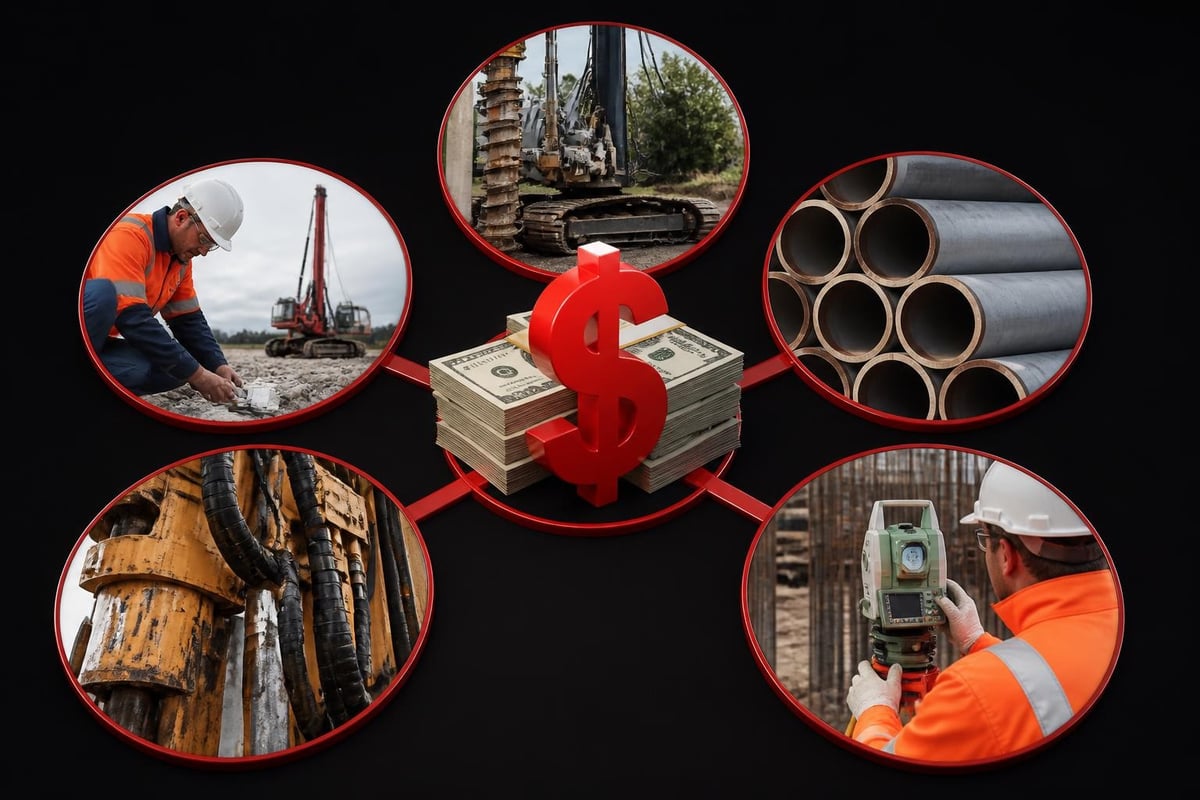
Cost Factors and Budget Planning
Understanding the elements that influence piling costs enables more accurate budget preparation and realistic tendering processes.
Primary Cost Drivers
Several factors significantly impact the overall expense of piling works:
- Ground conditions: Difficult soil requiring specialised techniques increases costs
- Pile type and dimensions: Larger diameter or longer piles require more materials and time
- Site access: Restricted access necessitating smaller equipment affects productivity
- Testing requirements: Comprehensive testing programmes add to project costs
- Programme constraints: Accelerated timescales may require additional resources
Experienced piling contractors provide detailed breakdowns explaining cost components, enabling clients to understand value rather than simply comparing headline figures.
Value Engineering Opportunities
Professional contractors often identify opportunities to optimise foundation design without compromising performance. Alternative pile types, adjusted spacing, or modified installation methods can deliver significant savings whilst meeting structural requirements.
Early contractor involvement during design development allows technical expertise to inform foundation strategy. This collaborative approach frequently results in more buildable, cost-effective solutions than purely theoretical designs.
Emerging Technologies and Future Developments
The piling industry continues evolving through technological advancement and sustainability initiatives. Modern piling contractors embrace innovation whilst maintaining proven quality standards.
Digital Monitoring and Data Collection
Advanced monitoring systems now provide real-time data on pile installation parameters. Sensors track depth, verticality, concrete flow rates, and reinforcement placement, creating comprehensive installation records. This data enables immediate quality verification and provides valuable documentation for building control and warranty purposes.
Digital pile logs replace paper-based recording, improving accuracy and enabling sophisticated analysis. Contractors can identify installation anomalies immediately, implementing corrective measures before problems escalate.
Sustainable Piling Practices
Environmental considerations increasingly influence piling method selection. Low-carbon concrete mixes, recycled steel elements, and optimised pile designs reduce environmental impact without compromising structural performance.
Sustainable approaches include:
- Specification of ground granulated blast furnace slag (GGBS) concrete
- Use of recycled steel for reinforcement and driven piles
- Optimised pile layouts minimising material consumption
- Vibration-reduced installation methods protecting ecology
- Noise attenuation systems for sensitive locations
Forward-thinking piling contractors recognise that sustainability credentials increasingly influence contractor selection on major projects.
Working with Main Contractors and Project Teams
Successful piling works require effective collaboration across the project team. Piling contractors must integrate their specialist operations within broader construction programmes.
Programme Coordination
Piling typically occurs early in the construction sequence, often on the critical path. Delays in foundation installation cascade through subsequent trades, impacting overall project completion. Professional contractors understand this responsibility and maintain robust planning systems.
Regular coordination meetings enable piling contractors to update progress, highlight potential issues, and adjust resources to maintain programme adherence. When ground conditions differ from design assumptions, experienced contractors work collaboratively with engineers to develop revised solutions minimising programme impact.
Interface Management
Piling work interfaces with numerous other activities and disciplines. Effective contractors manage these interfaces proactively:
- Coordinating with demolition and site clearance teams
- Ensuring adequate working space for piling rigs
- Planning concrete deliveries around site access constraints
- Protecting completed piles during subsequent earthworks
- Providing accurate pile position records for structural works
Projects like Wixam warehouses demonstrate how successful commercial developments depend on seamless coordination between foundation specialists and main contractors. Clear communication and mutual respect between trades ensure that complex projects progress smoothly from groundworks through to completion.
Regional Considerations for UK Projects
Ground conditions vary significantly across the United Kingdom, influencing piling method selection and contractor expertise requirements. Understanding regional characteristics helps project teams engage appropriately qualified specialists.
North East England Ground Conditions
The North East presents diverse geological conditions, from glacial till to coal measures and sandstone. Piling contractors operating in this region require experience with variable ground profiles and historical mining legacy issues. Sites in County Durham, Tyne and Wear, and Northumberland each present unique challenges requiring local knowledge.
Made ground from industrial heritage often overlies natural strata, necessitating careful investigation and pile design. Contractors familiar with regional conditions provide more reliable programme and cost forecasts than those lacking local experience.
Nationwide Capability
Whilst regional expertise proves valuable, contractors capable of working across the UK offer advantages for organisations with multi-site development programmes. Consistent quality standards, familiar working relationships, and streamlined procurement processes benefit clients managing portfolios of projects. Civil engineering specialists like JRG Civils understand that whilst based in the North East, capability to deliver projects UK-wide enables them to support clients' broader development aspirations.
Technical Documentation and Compliance
Professional piling contractors maintain comprehensive documentation throughout project delivery. These records demonstrate compliance, support quality assurance, and provide valuable information for future maintenance or development.
Essential Project Records
Complete documentation packages should include:
| Document Type | Purpose | Retention Period |
|---|---|---|
| Ground investigation reports | Foundation design basis | Permanent |
| Pile design calculations | Structural verification | Permanent |
| Installation records | Quality assurance | Permanent |
| Test results | Performance verification | Permanent |
| As-built drawings | Future reference | Permanent |
| Material certificates | Traceability | Building lifespan |
These records support building control approval, satisfy warranty providers, and enable future development or modification. The standards for pile installation operations provide frameworks that professional contractors follow when documenting their work.
Building Control and Certification
Piling contractors coordinate closely with building control bodies, providing necessary documentation and enabling inspection at critical stages. Pre-installation meetings establish inspection requirements, testing protocols, and acceptance criteria.
Experienced contractors facilitate smooth approval processes through thorough preparation and proactive communication. This professional approach prevents delays and ensures that foundation works proceed with appropriate regulatory oversight.
Selecting the right piling contractors fundamentally influences project success, affecting everything from programme certainty to long-term structural performance. By understanding the methods available, evaluating contractor credentials thoroughly, and ensuring proper integration with broader construction activities, you position your project for efficient, high-quality delivery. Whether you're planning commercial development, infrastructure works, or specialist civil engineering projects, JRG Civils brings the professional expertise and commitment to excellence that ensures your foundations are built to last.