
Foundation work represents one of the most critical phases in any construction project, whether you're developing a commercial drive-through facility or installing a residential patio. The structural integrity of every building depends entirely on the quality of its foundation, making the selection of experienced foundation contractors a decision that will impact the project for decades to come. These specialists bring technical expertise, regulatory knowledge, and precision engineering to ensure that structures remain stable, safe, and compliant with current building standards.
Understanding the Role of Foundation Contractors
Foundation contractors specialise in preparing and constructing the base upon which all structures rest. Their responsibilities extend far beyond simply pouring concrete or excavating soil. These professionals must assess soil conditions, calculate load requirements, ensure proper drainage, and execute complex engineering designs that account for environmental factors unique to each site.
The work begins with comprehensive site analysis. Foundation contractors evaluate soil composition, water table levels, and potential settlement issues that could compromise structural integrity. They must understand how different soil types behave under various load conditions and weather patterns throughout the year.
Core Responsibilities and Expertise
Professional foundation contractors bring a diverse skill set to every project:
- Site preparation and excavation to precise depths and dimensions
- Soil stabilisation using appropriate compaction techniques
- Formwork construction that meets exact specifications
- Concrete mixing and placement following industry standards
- Reinforcement installation including rebar and mesh systems
- Quality control testing throughout the construction process
- Compliance verification with building codes and regulations
Each of these elements requires specialised knowledge and equipment. The principles and best practices for designing shallow foundations emphasise the importance of proper load transfer and bearing capacity calculations, which foundation contractors must master to deliver safe, reliable results.
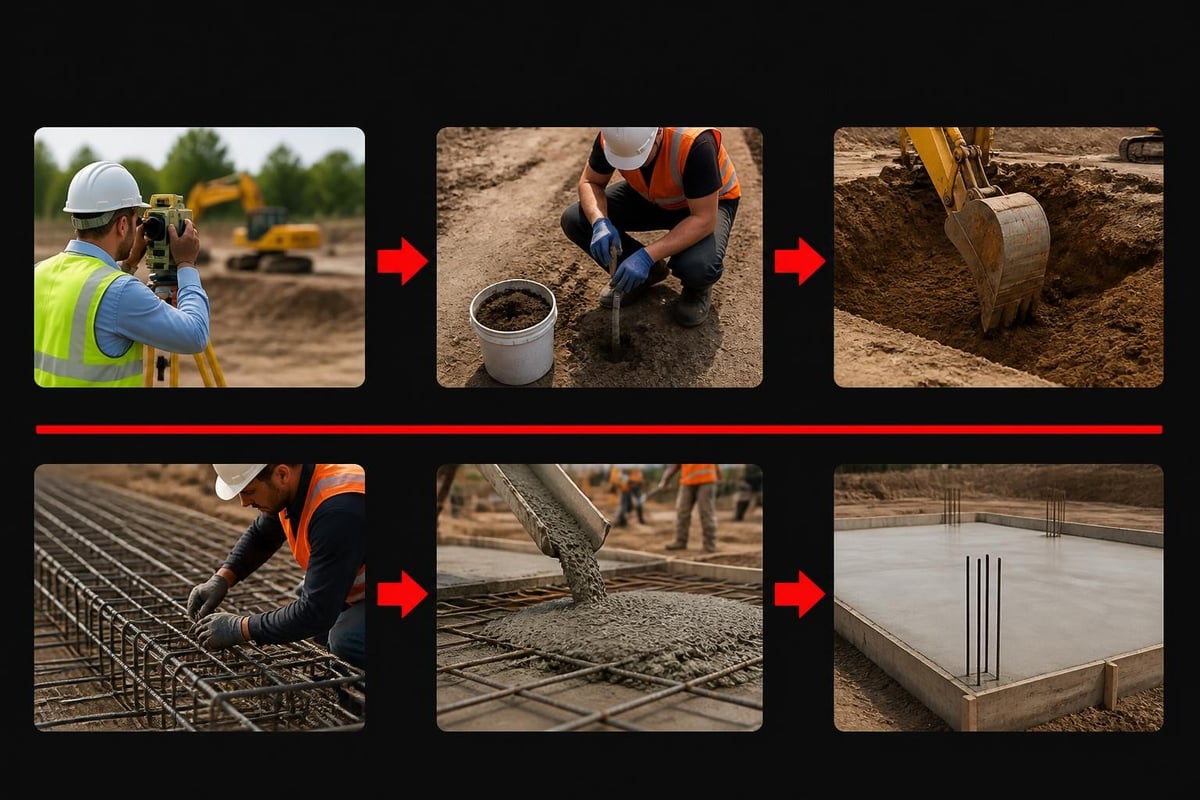
Types of Foundation Work
Foundation contractors work across multiple construction categories, each requiring distinct approaches and techniques. Understanding these differences helps property owners and developers select contractors with appropriate experience for their specific needs.
Commercial Foundation Projects
Commercial developments demand foundations capable of supporting substantial loads whilst accommodating complex utility systems and future expansion possibilities. Foundation contractors working on projects such as retail developments, drive-through facilities, or industrial buildings must coordinate with multiple trades and adhere to stringent timelines.
These projects often involve:
- Deep foundation systems for multi-storey structures
- Raft foundations distributing loads across larger areas
- Pile foundations in areas with poor soil conditions
- Reinforced concrete slabs with integrated services
Commercial projects also require contractors to work within tight schedules, as delays in foundation work cascade through the entire construction timeline. Our commercial foundations expertise demonstrates how experienced teams manage these complex requirements whilst maintaining quality standards.
Residential Foundation Applications
Residential projects present different challenges. Foundation contractors must balance structural requirements with cost considerations whilst respecting the homeowner's property and daily life. From new builds to extensions, these projects require precision and attention to detail.
| Foundation Type | Best For | Key Advantages | Typical Depth |
|---|---|---|---|
| Strip Foundations | Load-bearing walls | Cost-effective, simple | 450-900mm |
| Pad Foundations | Columns, point loads | Material efficiency | 600-1200mm |
| Raft Foundations | Poor soil conditions | Load distribution | 300-600mm |
| Piled Foundations | Unstable ground | Deep load transfer | 3-15m+ |
The importance of strong house foundations cannot be overstated, as these systems protect homeowners' most significant investment whilst ensuring safety and longevity.
Selecting Qualified Foundation Contractors
Choosing the right foundation contractors requires careful evaluation of multiple factors. The decision impacts not only immediate project success but also long-term structural performance and potential maintenance costs.
Essential Qualifications and Certifications
Professional foundation contractors should demonstrate:
- Relevant industry certifications from recognised bodies
- Insurance coverage including liability and professional indemnancy
- Health and safety accreditations appropriate to the work scope
- Technical qualifications in civil engineering or construction
- Equipment certification for specialised machinery
The foundation repair industry associations provide valuable insights into professional standards and qualifications that separate competent contractors from less qualified operators. Whilst these focus on the repair sector, similar professional standards apply to foundation construction.
Experience and Portfolio Review
A contractor's track record offers the most reliable indicator of their capabilities. Request examples of projects similar in scope and complexity to your requirements. Foundation contractors with diverse portfolios demonstrate adaptability and problem-solving skills essential for handling unexpected site conditions.

Technical Standards and Compliance
Foundation contractors operate within a comprehensive regulatory framework designed to ensure structural safety and longevity. Understanding these standards helps clients verify that their chosen contractors follow proper procedures and best practices.
Building Codes and Regulations
The International Building Code and ACI standards establish minimum requirements for foundation design and construction. Professional foundation contractors must stay current with these evolving standards, which address:
- Minimum foundation depths based on frost line considerations
- Concrete strength requirements for different applications
- Reinforcement specifications and placement tolerances
- Drainage and waterproofing standards
- Load calculation methodologies
In the UK, foundation contractors must comply with Building Regulations Part A (Structure), which sets out specific requirements for foundation design based on soil conditions, building loads, and environmental factors. These regulations ensure that foundations perform adequately throughout the structure's design life.
Quality Assurance Processes
Reputable foundation contractors implement rigorous quality control measures throughout the construction process. These procedures protect both the contractor and client by documenting compliance and identifying potential issues before they become costly problems.
Quality control checkpoints include:
- Soil testing and geotechnical analysis before excavation
- Excavation depth and dimension verification
- Formwork inspection for alignment and stability
- Reinforcement placement and spacing confirmation
- Concrete testing for strength and consistency
- Curing protocol adherence
- Final inspection and documentation
The guide to working platforms released by industry organisations highlights the importance of proper site preparation, which foundation contractors must address before beginning excavation and construction activities.
Modern Foundation Construction Techniques
Foundation contractors continually adopt new technologies and methods that improve efficiency, accuracy, and performance. These innovations benefit both commercial and residential clients through faster completion times and enhanced quality outcomes.
Advanced Equipment and Technology
Modern foundation contractors utilise sophisticated equipment that increases precision whilst reducing labour requirements. GPS-guided excavators ensure accurate digging depths, whilst laser levelling systems guarantee proper foundation alignment. Concrete pumps deliver material precisely where needed, reducing waste and improving placement quality.
Digital surveying tools allow foundation contractors to create detailed site maps that identify potential challenges before excavation begins. This proactive approach minimises surprises and keeps projects on schedule and budget.
Specialised Concrete Applications
The best practice guide to tremie concrete for deep foundations demonstrates how foundation contractors employ specialised techniques for challenging applications. Tremie concrete placement allows contractors to pour foundations underwater or in deep excavations whilst maintaining material quality and structural integrity.
Other advanced concrete techniques include:
- Self-consolidating concrete that flows easily into complex formwork
- Fibre-reinforced concrete offering enhanced crack resistance
- High-performance concrete with extended durability characteristics
- Rapid-setting formulations for time-sensitive projects
Common Foundation Challenges
Even experienced foundation contractors encounter difficult conditions that require creative problem-solving and technical expertise. Understanding these challenges helps clients appreciate the complexity of foundation work and the value skilled contractors bring to projects.
Soil-Related Issues
Poor soil conditions represent the most common challenge foundation contractors face. Clay soils expand and contract with moisture changes, sandy soils may lack adequate bearing capacity, and organic soils compress under load. Each condition demands specific solutions.
Foundation contractors address these issues through:
| Soil Condition | Primary Risk | Common Solutions |
|---|---|---|
| Expansive Clay | Heave and settlement | Deeper foundations, soil replacement |
| Sandy Soil | Low bearing capacity | Wider footings, compaction |
| High Water Table | Hydrostatic pressure | Drainage systems, waterproofing |
| Organic Soil | Excessive settlement | Soil removal, piling systems |
| Rock | Excavation difficulty | Specialised equipment, blasting |
The article on ensuring accurate foundations emphasises how precision becomes particularly critical when dealing with challenging site conditions, where small deviations can lead to significant structural problems.
Weather and Environmental Factors
Foundation contractors must work within weather constraints that affect concrete curing, soil stability, and site access. Cold temperatures slow concrete setting, whilst heavy rain can flood excavations and compromise soil bearing capacity. Professional contractors plan for these variables and adjust schedules accordingly.
Cost Considerations and Project Planning
Understanding foundation costs helps property owners and developers budget appropriately and evaluate contractor quotations effectively. Foundation contractors should provide detailed estimates that break down materials, labour, equipment, and contingency allowances.
Factors Affecting Foundation Costs
Multiple variables influence the final cost of foundation work:
- Foundation type and complexity significantly impact material and labour requirements
- Site accessibility affects equipment deployment and material delivery
- Soil conditions may necessitate additional preparation or stabilisation
- Project size offers economies of scale for larger developments
- Regulatory requirements including permits and inspections
- Timeline constraints that may require premium scheduling
Foundation contractors with experience in diverse projects can often identify cost-saving opportunities without compromising quality. Our groundworks services demonstrate how comprehensive civil engineering expertise allows for efficient project delivery across various scales.
Value Engineering Approaches
Skilled foundation contractors collaborate with clients to optimise designs that meet performance requirements whilst managing costs. This might involve adjusting foundation depths, modifying reinforcement patterns, or selecting alternative materials that deliver equivalent results at lower expense.

Working with Foundation Contractors
Successful foundation projects require effective communication and collaboration between contractors and clients. Establishing clear expectations and maintaining open dialogue throughout the project ensures satisfactory outcomes and minimises disputes.
Project Communication and Documentation
Foundation contractors should provide regular updates on project progress, particularly when site conditions differ from initial assessments. Photographic documentation at key stages creates a permanent record of work quality and compliance with specifications.
The foundation construction FAQ addresses common questions about contractor qualifications, permitting requirements, and inspection sequences that clients should discuss with their chosen contractor before work commences.
Managing Project Timelines
Realistic scheduling accounts for weather delays, material delivery lead times, and inspection requirements. Foundation contractors experienced in similar projects can provide accurate timelines based on historical performance data.
Typical foundation project phases include:
- Site survey and geotechnical investigation (3-7 days)
- Permit acquisition and approvals (1-4 weeks)
- Excavation and site preparation (2-5 days)
- Formwork and reinforcement installation (2-4 days)
- Concrete placement and initial curing (1-2 days)
- Form removal and backfilling (2-3 days)
- Final curing and inspection (7-28 days)
These timeframes vary based on project complexity and scale. Commercial developments naturally require extended periods compared to residential applications.
Maintenance and Long-Term Performance
Quality foundation work from experienced foundation contractors should require minimal maintenance, but property owners should understand basic monitoring procedures that identify potential issues before they escalate into expensive repairs.
Foundation Monitoring Best Practices
Regular visual inspections help detect early warning signs of foundation problems. Look for cracks in walls or floors, doors that stick or won't close properly, and gaps between walls and ceilings. These symptoms often indicate foundation movement that requires professional assessment.
The fine art of foundation repair discusses common foundation problems and their causes, providing valuable context for understanding why proper initial construction by qualified foundation contractors proves far more cost-effective than subsequent remediation.
Preventive Measures
Property owners can protect their foundations through simple maintenance activities:
- Maintain consistent soil moisture around the foundation perimeter
- Ensure proper drainage directs water away from the structure
- Control vegetation that might damage foundation walls
- Monitor and repair minor cracks before they expand
- Address plumbing leaks promptly to prevent soil erosion
These straightforward practices extend foundation life and preserve the quality workmanship professional foundation contractors deliver during construction.
Industry Trends and Future Developments
Foundation contractors increasingly adopt sustainable practices and innovative materials that reduce environmental impact whilst maintaining structural performance. These trends reflect broader construction industry movements toward carbon reduction and resource efficiency.
Sustainable Foundation Solutions
Modern foundation contractors explore alternatives to traditional Portland cement concrete, which carries significant embodied carbon. Supplementary cementitious materials like fly ash and ground granulated blast-furnace slag reduce environmental impact whilst often improving concrete performance characteristics.
Geothermal foundation systems represent another emerging area where foundation contractors integrate heating and cooling capabilities directly into foundation structures. These systems circulate fluid through embedded pipes, leveraging stable ground temperatures to improve building energy efficiency.
Digital Integration and Automation
Building Information Modelling (BIM) enables foundation contractors to coordinate more effectively with other trades and identify conflicts before construction begins. Digital documentation creates comprehensive as-built records that prove valuable for future renovations or repairs.
Automated surveying and excavation technologies continue advancing, allowing foundation contractors to achieve tighter tolerances with reduced labour input. These efficiencies benefit clients through lower costs and faster project completion whilst improving worker safety by reducing manual tasks in hazardous environments.
Selecting skilled foundation contractors represents a critical decision that influences every aspect of a construction project's success and longevity. Whether you're planning commercial developments or residential enhancements, proper foundation work establishes the structural integrity upon which everything else depends. At JRG Civils, we bring comprehensive civil engineering expertise to foundation projects throughout the North East and across the UK, delivering the precise, reliable work that projects demand from initial site assessment through final inspection. Discover how our commitment to excellence can support your next project by visiting JRG Civils today.