
When planning a development that requires alterations to existing highways, understanding the legal framework governing these works is essential. A section 278 highways agreement represents a formal arrangement between developers and highway authorities, ensuring that any modifications to public roads meet safety and design standards. For contractors and developers working on commercial projects, residential estates, or infrastructure improvements, navigating this process correctly can determine project timelines, budgets, and overall success.
What Is a Section 278 Highways Agreement
A section 278 highways agreement derives its authority from the Highways Act 1980, specifically Section 278, which permits developers to execute works on the public highway at their own expense. This legal mechanism enables property developers, businesses, and landowners to make necessary alterations to existing roads, junctions, footpaths, and associated infrastructure.
Field Seymour Parkes explains the legal framework behind these agreements, highlighting their importance in the planning permission process. The agreement essentially transfers the responsibility for design, construction, and initial costs to the developer, whilst ensuring the highway authority maintains control over standards and specifications.
Key Components of the Agreement
The typical section 278 highways agreement contains several critical elements that protect both parties' interests:
- Scope of works: Detailed description of all highway alterations required
- Design specifications: Technical drawings and engineering standards that must be met
- Financial provisions: Cost estimates, bond requirements, and payment schedules
- Timescales: Project milestones and completion deadlines
- Liability clauses: Insurance requirements and responsibility for defects
- Commuted sums: Long-term maintenance contributions for new infrastructure
Bond requirements typically range from 10% to 150% of estimated construction costs, providing the highway authority with financial security should the developer fail to complete works satisfactorily.
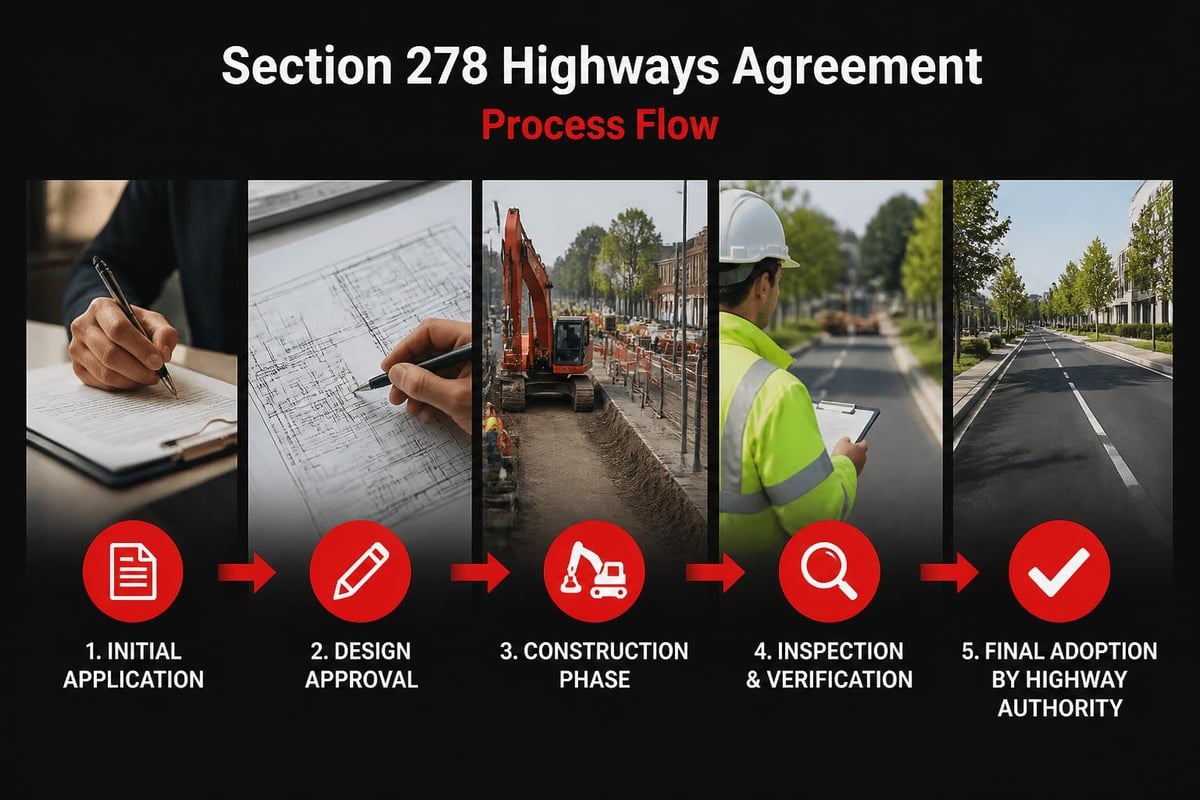
When You Need a Section 278 Agreement
Determining whether your project requires a section 278 highways agreement depends on the scope and location of proposed works. Any alterations affecting the public highway network typically trigger this requirement, regardless of project size.
Common scenarios necessitating these agreements include:
- New access points: Creating vehicular or pedestrian entrances to developments
- Junction improvements: Modifying existing intersections to accommodate increased traffic
- Road widening: Expanding carriageway width for additional lanes or turning facilities
- Pedestrian facilities: Installing new crossings, footpaths, or cycle lanes
- Traffic calming: Implementing speed reduction measures or road safety improvements
- Drainage works: Modifying highway drainage systems affected by development
Commercial developments such as drive-through restaurants and retail facilities frequently require junction modifications to manage increased traffic volumes safely. Similarly, residential estates often need new access roads and visibility splays that meet highway authority standards.
Distinguishing Section 278 from Section 38
Understanding the difference between Section 278 and Section 38 agreements prevents confusion during project planning. Designing Buildings Wiki provides clarity on these distinct mechanisms.
| Aspect | Section 278 | Section 38 |
|---|---|---|
| Purpose | Works to existing highways | Adoption of new highways |
| Typical use | Junction improvements, access modifications | New estate roads, private developments |
| Highway status | Already public highway | Becomes public after adoption |
| Maintenance | Highway authority from completion | Developer until adoption |
The Application Process Explained
Navigating the section 278 highways agreement application requires methodical preparation and attention to procedural requirements. Worcestershire County Council outlines the application steps, which typically follow a structured pathway common across most highway authorities.
Initial Consultation and Pre-Application
Before submitting formal applications, engaging with the highway authority proves invaluable. This preliminary stage allows developers to:
- Discuss design concepts and feasibility
- Understand specific local requirements and standards
- Identify potential issues early in the process
- Receive guidance on technical specifications
- Establish realistic timescales for approval
Pre-application advice often carries a fee, but the investment typically saves considerable time and expense by identifying problems before detailed design work commences.
Documentation Requirements
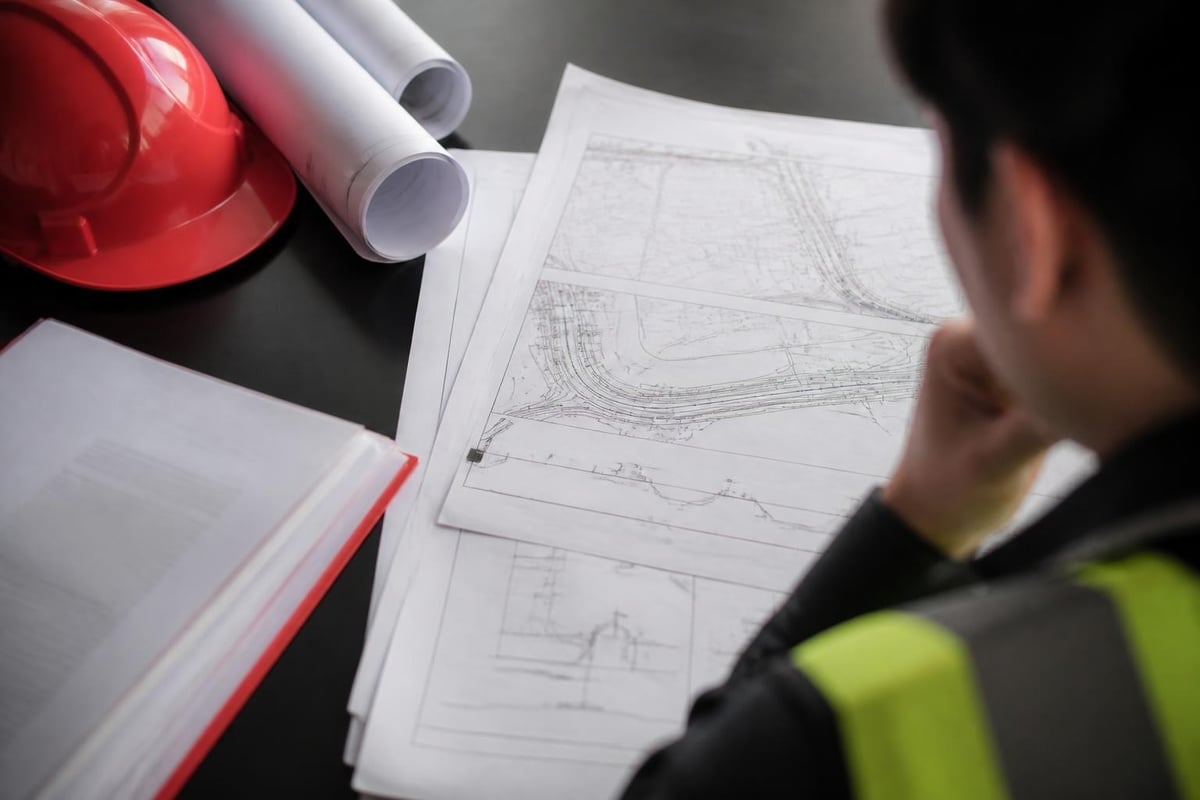
A comprehensive section 278 highways agreement application demands substantial supporting documentation. Highway authorities expect professional-grade submissions demonstrating technical competence and regulatory compliance.
Essential documents include:
- Detailed design drawings: Plans, sections, and elevations to appropriate scales
- Traffic impact assessments: Analysis of vehicular and pedestrian movements
- Safety audits: Stage 1 road safety audits identifying potential hazards
- Drainage calculations: Demonstrating adequate surface water management
- Utility diversions: Identification of affected services and relocation proposals
- Construction methodologies: Outlining how works will be executed safely
- Environmental considerations: Addressing ecological and landscape impacts
Professional highway design services ensure these technical requirements are met to exacting standards, reducing the likelihood of costly revisions during the approval process.
Design Standards and Technical Requirements
Highway authorities maintain rigorous design standards ensuring all alterations integrate seamlessly with existing infrastructure whilst prioritising safety and longevity. These specifications derive from national guidance documents and local supplementary requirements.
Geometric Design Principles
Road geometry forms the foundation of acceptable highway design, with specific parameters governing:
- Visibility splays: Ensuring adequate sightlines at junctions and accesses
- Carriageway widths: Appropriate lane dimensions for anticipated vehicle types
- Gradient limitations: Maximum slopes for safe vehicle operation
- Radii and curvature: Minimum bend radii based on design speed
- Junction spacing: Adequate separation between access points
Design speed significantly influences geometric requirements, with higher speeds demanding more generous dimensions and gentler alignments. Commercial developments often require junction designs accommodating large goods vehicles, necessitating swept path analysis demonstrating adequate manoeuvring space.
Materials and Construction Specifications
The section 278 highways agreement stipulates materials and construction methods meeting the highway authority's adoption standards. This ensures durability and reduces long-term maintenance burdens.
| Component | Typical Specification | Purpose |
|---|---|---|
| Base course | Type 1 sub-base, minimum 150mm | Load distribution and stability |
| Binder course | Dense bitumen macadam, 60mm | Structural strength |
| Surface course | Hot rolled asphalt or SMA, 40mm | Weather resistance and skid resistance |
| Kerbs | Hydraulically pressed concrete, HB2 type | Edge restraint and drainage |
| Drainage | Minimum 150mm diameter pipes | Surface water removal |
Civil engineering expertise ensures these specifications are implemented correctly, with appropriate testing and quality assurance throughout construction.
Financial Considerations and Costs
The financial implications of a section 278 highways agreement extend beyond direct construction costs, encompassing various fees, bonds, and long-term contributions that developers must budget for comprehensively.
Cost Components Breakdown
Understanding the full financial picture prevents unwelcome surprises during project delivery:
- Application fees: Initial processing and technical assessment charges (£1,500-5,000 typically)
- Design fees: Professional engineering and survey costs (5-10% of construction value)
- Legal fees: Agreement preparation and solicitor costs (£2,000-8,000)
- Construction costs: Actual works execution (highly variable by scope)
- Supervision fees: Highway authority inspection and oversight (10-15% of construction costs)
- Bond costs: Financial guarantee provision (110-150% of estimated works value)
- Commuted sums: Long-term maintenance contributions for new assets
Commuted sums deserve particular attention, as they represent the calculated cost of maintaining new infrastructure over a specified period, typically 20-30 years. Highway authorities use established formulae considering asset type, lifespan, and maintenance frequency.
Managing Financial Risk
Prudent financial management throughout the section 278 highways agreement process protects project viability and prevents cost overruns.
Strategic approaches include:
- Competitive tendering: Obtaining multiple quotations from experienced contractors
- Value engineering: Optimising designs to reduce costs whilst meeting standards
- Phased delivery: Breaking works into manageable stages aligned with development progress
- Contingency planning: Allocating 10-15% additional budget for unforeseen circumstances
- Early contractor involvement: Gaining buildability insights during design development
Staffordshire County Council provides guidance on their specific fee structures and financial requirements, illustrating the variation between different highway authorities.
Construction Phase Requirements
Once the section 278 highways agreement receives approval and legal completion, the construction phase commences under strict supervision and quality control protocols. Highway authorities maintain oversight throughout execution, ensuring works comply with approved designs and specifications.
Pre-Construction Activities
Before commencing on-site works, several preparatory steps require completion:
- Insurance certification: Providing evidence of adequate public and employer's liability cover
- Programme submission: Detailed construction schedule for authority approval
- Traffic management: Designing and approving temporary traffic arrangements
- Utility protection: Coordinating with service providers for diversions or protection measures
- Site investigation: Conducting final checks for unforeseen ground conditions
Traffic management represents a critical consideration, particularly for works on busy routes. Temporary measures must maintain safety whilst minimising disruption, often requiring lane closures, diversions, or phased construction sequences.
Quality Assurance and Inspection
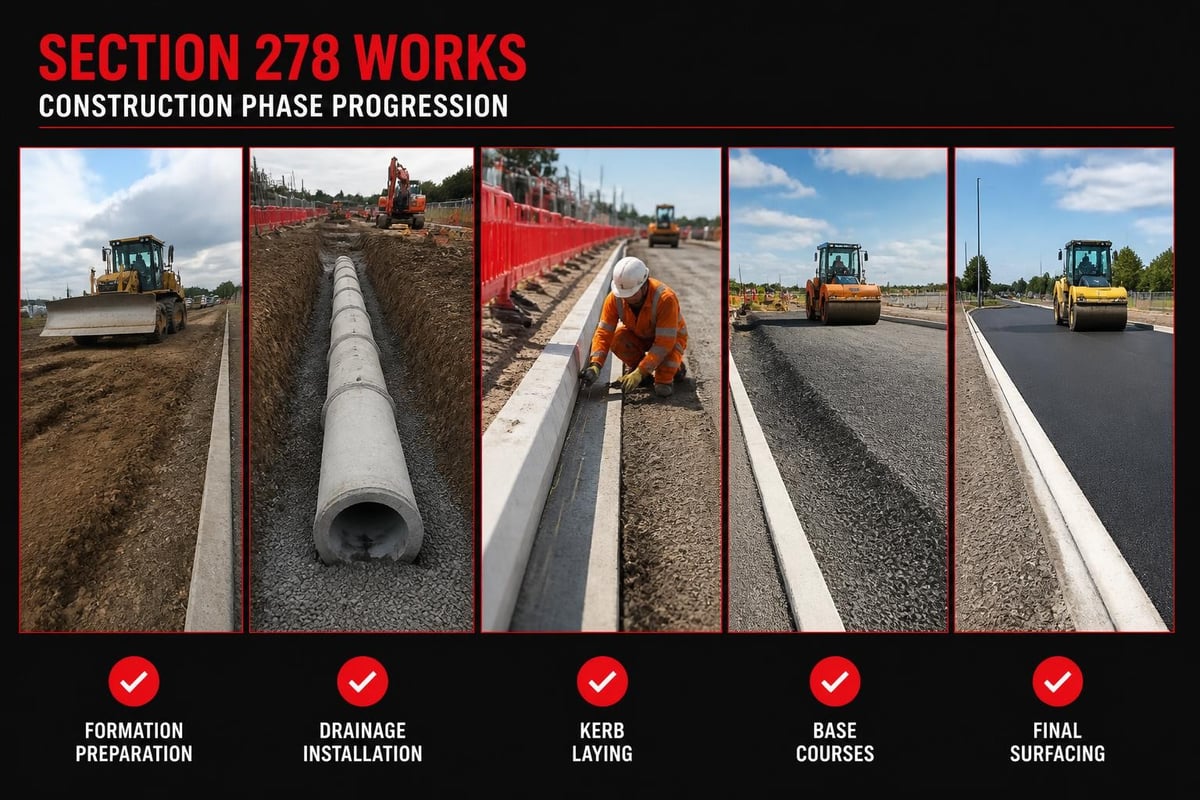
Throughout construction, the highway authority conducts regular inspections at predetermined hold points, verifying compliance before permitting subsequent stages.
Standard inspection stages include:
- Formation level: Checking subgrade preparation and bearing capacity
- Sub-base layers: Verifying thickness, compaction, and material compliance
- Drainage installation: Inspecting pipework, connections, and gradients
- Kerb and edging: Confirming alignment, levels, and fixing
- Binder course: Testing thickness and compaction
- Surface course: Final finish inspection and skid resistance testing
Material testing accompanies these inspections, with samples sent to accredited laboratories for analysis. Core samples, density measurements, and material certificates provide documented evidence of specification compliance.
Common Challenges and Solutions
Executing works under a section 278 highways agreement presents various challenges that can delay projects or increase costs if not anticipated and managed effectively. Experience with commercial infrastructure projects demonstrates the importance of proactive problem-solving.
Design Approval Delays
Highway authorities receive numerous applications simultaneously, creating potential bottlenecks in the approval process. Submission quality significantly influences processing speed.
Solutions include:
- Ensuring complete applications with all supporting documentation
- Engaging specialist highway designers familiar with local authority requirements
- Responding promptly to queries and requests for information
- Building realistic timescales into project programmes
- Maintaining regular communication with case officers
Utility Conflicts
Existing underground services frequently complicate highway works, with diversions adding substantial time and cost. Early identification proves essential.
Effective approaches encompass:
- Comprehensive utility searches: Obtaining records from all service providers
- Ground-penetrating radar surveys: Locating unmarked or poorly recorded services
- Trial holes: Physical investigation confirming service positions before design finalisation
- Early diversion applications: Initiating utility company processes during design stages
- Design flexibility: Incorporating alternative alignments if major services are encountered
Weather-Dependent Operations
Highway surfacing works require specific weather conditions for optimal results, with temperature, rainfall, and ground conditions all influencing quality.
| Weather Factor | Impact | Mitigation Strategy |
|---|---|---|
| Temperature | Affects asphalt workability | Schedule works for suitable seasons |
| Rainfall | Prevents bonding and compaction | Monitor forecasts, have contingency dates |
| Ground frost | Compromises formation stability | Delay earthworks until thaw |
| High winds | Safety risk for traffic management | Secure temporary signs adequately |
Working with Highway Authorities
Successful navigation of the section 278 highways agreement process relies heavily on establishing productive relationships with highway authorities. SANDS discusses the collaborative nature of these arrangements, emphasising mutual objectives around safety and quality.
Understanding Authority Priorities
Highway authorities balance multiple competing demands when assessing applications, with certain priorities influencing decision-making:
- Public safety: Paramount consideration in all design approvals
- Network efficiency: Maintaining traffic flow and minimising congestion
- Long-term maintenance: Avoiding designs creating excessive future costs
- Environmental impact: Protecting natural habitats and managing drainage sustainably
- Accessibility: Ensuring inclusive design for all users
Aligning proposals with these priorities increases approval likelihood and demonstrates professional understanding of regulatory responsibilities.
Communication Best Practices
Maintaining clear, consistent communication throughout the section 278 highways agreement journey prevents misunderstandings and facilitates smoother progression.
Effective communication strategies include:
- Designated contacts: Appointing single points of contact from both parties
- Regular progress meetings: Scheduled reviews at key project milestones
- Written confirmations: Documenting verbal agreements and decisions promptly
- Technical queries: Raising design questions early rather than making assumptions
- Transparency: Promptly disclosing issues or delays affecting delivery
Professional contractors with extensive civil engineering experience understand these dynamics, leveraging established relationships and proven processes to navigate requirements efficiently.
Completion and Handover Procedures
The final stages of a section 278 highways agreement involve rigorous verification that all works meet approved specifications before the highway authority accepts the alterations into public maintenance.
Final Inspections and Snagging
Upon practical completion, comprehensive inspections identify any defects or deviations requiring rectification:
- Visual inspection: Checking surface finish, alignment, and general appearance
- Dimensional verification: Confirming built dimensions match approved drawings
- Safety audit: Stage 3 road safety audit of completed works
- Materials testing: Final core samples and laboratory analysis
- Drainage testing: CCTV surveys and flow tests confirming system functionality
Snagging lists document identified issues, with contractors required to address all items before final acceptance. This process may involve multiple rounds of inspection until the authority confirms satisfaction.
Documentation and As-Built Records
Completing the administrative requirements proves as important as physical construction quality. Highway authorities require comprehensive records for their asset management systems.
Essential completion documentation includes:
- As-built drawings: Accurate plans showing final constructed positions and levels
- Material certificates: Evidence of specification compliance for all components
- Test results: Laboratory reports and quality assurance records
- Photographic records: Visual documentation of construction stages
- Utility records: Updated service plans showing any diversions or new installations
- Maintenance manuals: Guidance for future upkeep of specialised equipment
Defects Liability Period
Most section 278 highways agreements incorporate a defects liability period, typically twelve months, during which the developer remains responsible for rectifying any failures or defects arising from the works.
The bond provided at agreement commencement remains in place throughout this period, protecting the highway authority's interests. Only upon successful completion of the defects period, with no outstanding issues, does the authority release the bond and formally adopt the works into public maintenance.
Strategic Planning for Developers
Incorporating section 278 highways agreement requirements into development planning from the earliest stages prevents delays and ensures realistic project programming. Forward-thinking developers recognise these works as critical path activities requiring careful coordination.
Timeline Integration
Typical section 278 highways agreement timelines extend considerably beyond simple construction durations:
- Pre-application discussions: 4-8 weeks
- Detailed design preparation: 8-16 weeks
- Formal application submission and approval: 12-20 weeks
- Legal agreement preparation: 8-12 weeks
- Construction phase: Variable (4-24 weeks depending on scope)
- Defects liability period: 52 weeks
Total programme duration from initial concept to final adoption frequently spans 18-30 months, requiring integration with wider development timescales and commercial considerations.
Risk Management Strategies
Proactive risk identification and mitigation planning protects project viability and commercial returns:
| Risk Category | Potential Impact | Mitigation Approach |
|---|---|---|
| Design rejection | Programme delay, abortive costs | Early engagement, specialist designers |
| Utility diversions | Cost increase, extended timescales | Comprehensive searches, contingency budget |
| Ground conditions | Additional works, specification changes | Site investigation, flexible design |
| Authority delays | Holding costs, market changes | Buffer periods, alternative delivery routes |
| Construction defects | Remediation costs, bond retention | Quality contractors, rigorous supervision |
Experienced civil engineering contractors bring valuable insights to risk management, drawing on previous projects to anticipate challenges and implement preventative measures effectively.
Navigating section 278 highways agreements successfully requires technical expertise, procedural knowledge, and collaborative relationships with highway authorities. Understanding the comprehensive requirements, from initial design through construction to final adoption, enables developers and contractors to deliver compliant works efficiently whilst managing costs and timescales effectively. At JRG Civils, our extensive experience with commercial developments and infrastructure projects across the UK ensures we deliver highway works to exacting standards, managing the entire process from design coordination through to successful completion and adoption.