
When planning a new driveway or upgrading an existing one, many property owners focus solely on the main surface material whilst overlooking the critical role of edging. Curb stones for driveways serve multiple essential functions, from preventing surface material from spreading to creating clear visual boundaries that enhance property aesthetics. These durable edging elements protect your investment by maintaining the structural integrity of your driveway whilst adding a professional finish that elevates the entire appearance of your property.
Understanding the Purpose of Driveway Curb Stones
Curb stones provide far more than decorative appeal. They create a physical barrier that prevents gravel, tarmac, or block paving from migrating beyond the intended surface area. Without proper edging, loose materials gradually spread into adjacent lawns and garden beds, creating maintenance headaches and requiring frequent repositioning.
The structural benefits extend below the visible surface. Well-installed curb stones for driveways distribute lateral forces that develop when vehicles travel across the surface. This containment prevents edge failures, particularly in areas with heavy vehicle usage or frequent turning movements. Commercial projects, such as drive-through facilities, rely heavily on robust edging to maintain operational surfaces under constant stress.
Key functional benefits include:
- Prevention of material migration and surface spreading
- Protection against edge subsidence and crumbling
- Clear delineation between driveway and landscape areas
- Enhanced drainage management along boundaries
- Reduced long-term maintenance requirements
Property value receives a measurable boost from professional edging installation. Potential buyers immediately notice the attention to detail that quality curb stones demonstrate, viewing them as indicators of overall property care and maintenance standards.
Material Options for Driveway Edging
Natural Stone Selections
Granite remains the premium choice for durability and visual impact. Granite kerbstones offer exceptional resistance to weathering, maintaining their appearance across decades of exposure to British weather conditions. The material withstands freeze-thaw cycles without degradation, making it ideal for our climate.
Sandstone provides a warmer aesthetic with varied colour palettes ranging from buff to deep red tones. This sedimentary stone suits traditional properties whilst offering sufficient strength for residential driveways. The slightly porous nature requires occasional sealing to prevent staining from vehicle fluids.
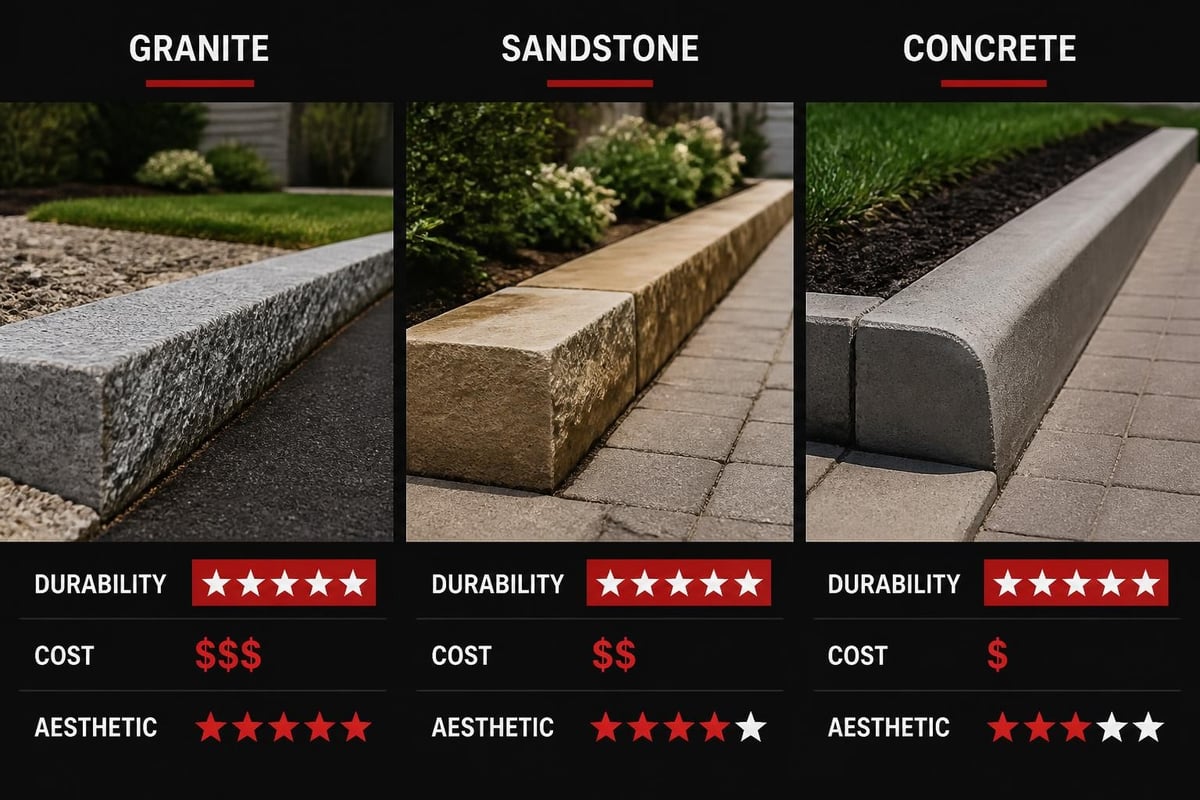
| Material | Durability Rating | Typical Lifespan | Maintenance Level | Price Point |
|---|---|---|---|---|
| Granite | Excellent | 50+ years | Very Low | High |
| Sandstone | Good | 30-40 years | Moderate | Medium-High |
| Concrete | Good | 25-35 years | Low | Low-Medium |
| Limestone | Moderate | 20-30 years | Moderate-High | Medium |
Concrete Alternatives
Manufactured concrete kerbs offer versatility and affordability whilst delivering reliable performance. Modern production methods create units with consistent dimensions and quality, simplifying installation planning. These driveway curbs come in multiple profiles, from simple flat-topped designs to decorative chamfered styles that add architectural interest.
Pre-cast concrete accepts various finishes, including exposed aggregate surfaces that mimic natural stone appearance. Colour additives enable matching or complementing existing property features, creating cohesive design schemes across hardscaping elements.
The weight and density of concrete curb stones provide excellent stability once installed. Their uniform sizing reduces waste during installation, a consideration for both residential projects and larger commercial developments where material efficiency impacts overall project costs.
Design Considerations and Aesthetic Impact
Height and Profile Selection
The visible height of curb stones for driveways significantly influences both function and appearance. Standard heights range from 100mm to 150mm, with the choice depending on several factors including drainage requirements, vehicle types, and visual preferences.
Lower profiles suit driveways where minimal visual interruption is desired, allowing smooth sightlines across the property. These work particularly well with permeable paving systems where drainage occurs through the surface rather than requiring channelling to edges.
Higher kerbs create more dramatic definition, useful where clear separation between different surface materials is required. Commercial applications often specify taller units to manage higher volumes of surface water and provide greater protection against vehicle incursion into landscaped areas.
Profile options include:
- Half-battered kerbs – angled face providing gradual transition
- Bull-nosed kerbs – rounded top edge for softer appearance
- Square-edged kerbs – contemporary aesthetic with sharp definition
- Decorative chamfered – multiple angle cuts creating visual interest
Colour Coordination Strategies
Successful driveway design balances the surface material with edging colour selection. Contrast creates bold definition, making the driveway stand out as a feature element. A charcoal block-paved surface edged with light grey granite produces striking visual impact whilst maintaining professional appearance.
Tonal matching offers subtler elegance, particularly effective for properties where understated sophistication is preferred over statement design. Buff sandstone kerbs complement similar-toned gravel surfaces, creating seamless transitions that feel organic rather than imposed.
The surrounding property architecture should guide colour decisions. Traditional brick homes pair beautifully with red or terracotta-toned edging, whilst contemporary renders suit cooler grey and silver tones. The goal is achieving harmony between the driveway, building facades, and landscape plantings.
Installation Methods and Best Practices
Foundation Preparation Requirements
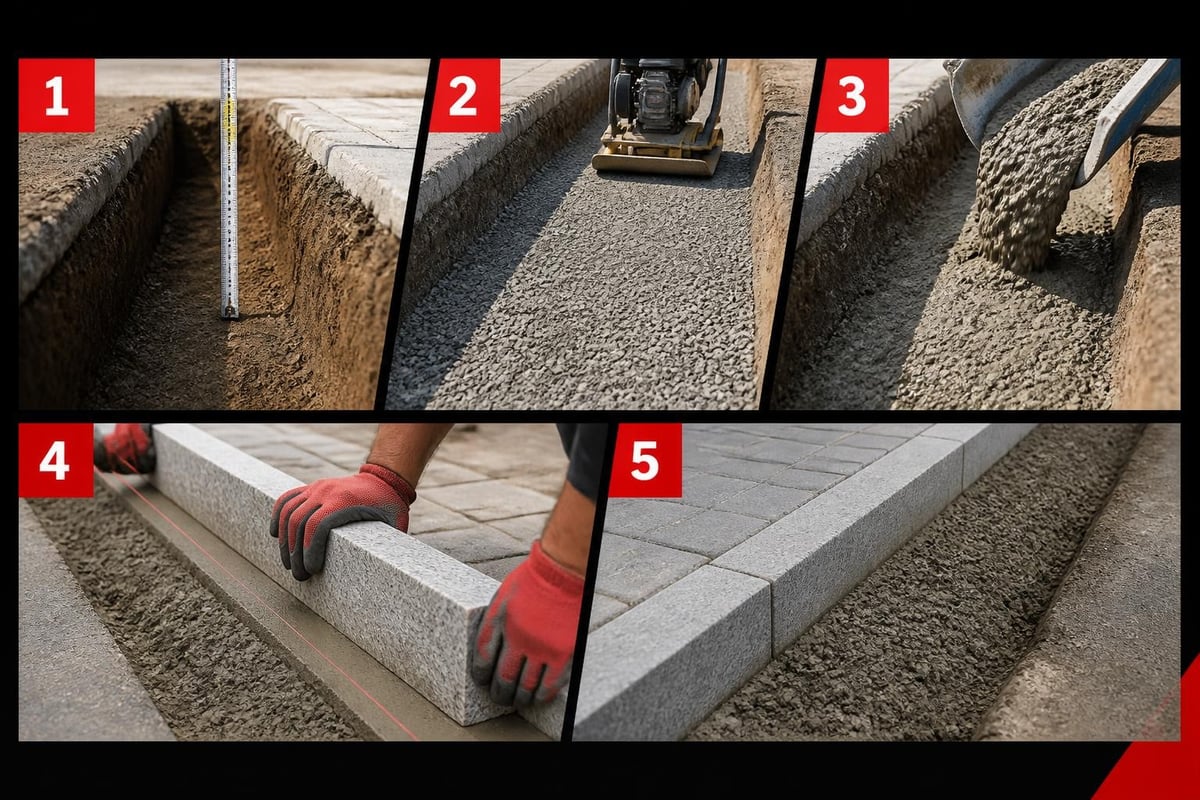
Proper installation begins below ground level. A stable foundation prevents settling, tilting, or displacement that compromises both function and appearance. The foundation depth typically ranges from 150mm to 200mm, depending on soil conditions and expected loading.
Excavation should extend the full length of the proposed kerb line, with width sufficient to accommodate the stone plus a 100mm concrete haunch on the non-visible side. This concrete support prevents lateral movement when vehicles apply pressure during turning or parking manoeuvres.
The base layer consists of well-compacted Type 1 sub-base material, providing drainage and load distribution. Mechanical compaction ensures density levels that resist future settlement, particularly important in areas with clay soils prone to movement during wet periods.
Setting and Securing Techniques
Curb stones require bedding on a mortar base of semi-dry concrete mix. This mixture should be firm enough to support the stone without slumping, yet workable enough to allow final positioning adjustments. A typical ratio uses 6 parts ballast to 1 part cement, with minimal water added.
Each stone is carefully positioned and levelled both longitudinally and transversely. String lines established at planning stage guide alignment, ensuring consistent reveals and smooth curves where required. Professional installers check levels every few metres, making micro-adjustments before the bedding mix sets.
The haunching – concrete poured against the back face – provides critical support. This angled fillet should rise approximately two-thirds of the exposed kerb height, creating substantial resistance against lateral forces. In commercial applications or areas with heavy vehicle traffic, full-depth haunching offers additional security.
Installation sequence:
- Excavate to required depth and profile
- Install and compact sub-base layer
- Establish string lines for alignment
- Lay bedding mortar
- Position and level individual stones
- Apply concrete haunching
- Allow 48 hours curing before backfilling
- Complete surface installation
Maintenance and Long-term Performance
Regular inspection identifies minor issues before they develop into costly repairs. Walking the kerb line quarterly reveals cracks, displacement, or joint degradation requiring attention. Early intervention with repointing or relevelling individual stones maintains the overall system integrity.
Cleaning requirements vary by material selection. Natural stone curbstones benefit from occasional pressure washing to remove organic growth and surface staining. Avoid harsh chemicals that may damage or discolour stone surfaces, opting instead for pH-neutral cleaners designed specifically for masonry applications.
Joint maintenance preserves weather resistance. Mortar joints deteriorate over time through freeze-thaw action and chemical exposure. Repointing every five to seven years using flexible mortar accommodates minor movement whilst maintaining weatherproof seals. This proactive approach prevents water ingress that leads to sub-base erosion.
Weather Protection Considerations
British weather presents specific challenges for driveway edging. Freeze-thaw cycles cause particular stress on water-saturated materials, making drainage crucial for longevity. Properly installed curb stones for driveways direct water away from joints and foundations, minimising exposure to conditions that cause deterioration.
Sealant application offers additional protection for porous materials. Natural stone benefits from breathable sealers that repel water whilst allowing vapour transmission. Application every three to five years maintains optimal performance, though frequency depends on exposure levels and traffic intensity.
Salt and de-icing chemicals used during winter months can damage certain stone types. Limestone and sandstone show particular vulnerability to chemical attack. Where winter treatment is necessary, selecting granite or high-quality concrete units provides superior resistance to degradation.
Commercial Applications and Heavy-Duty Requirements
Large-scale projects demand enhanced specifications compared to residential installations. The civil engineering work completed for drive-through facilities requires curb stones capable of withstanding articulated vehicle movements and constant traffic flow. Material selection shifts towards granite or reinforced concrete units with superior impact resistance.
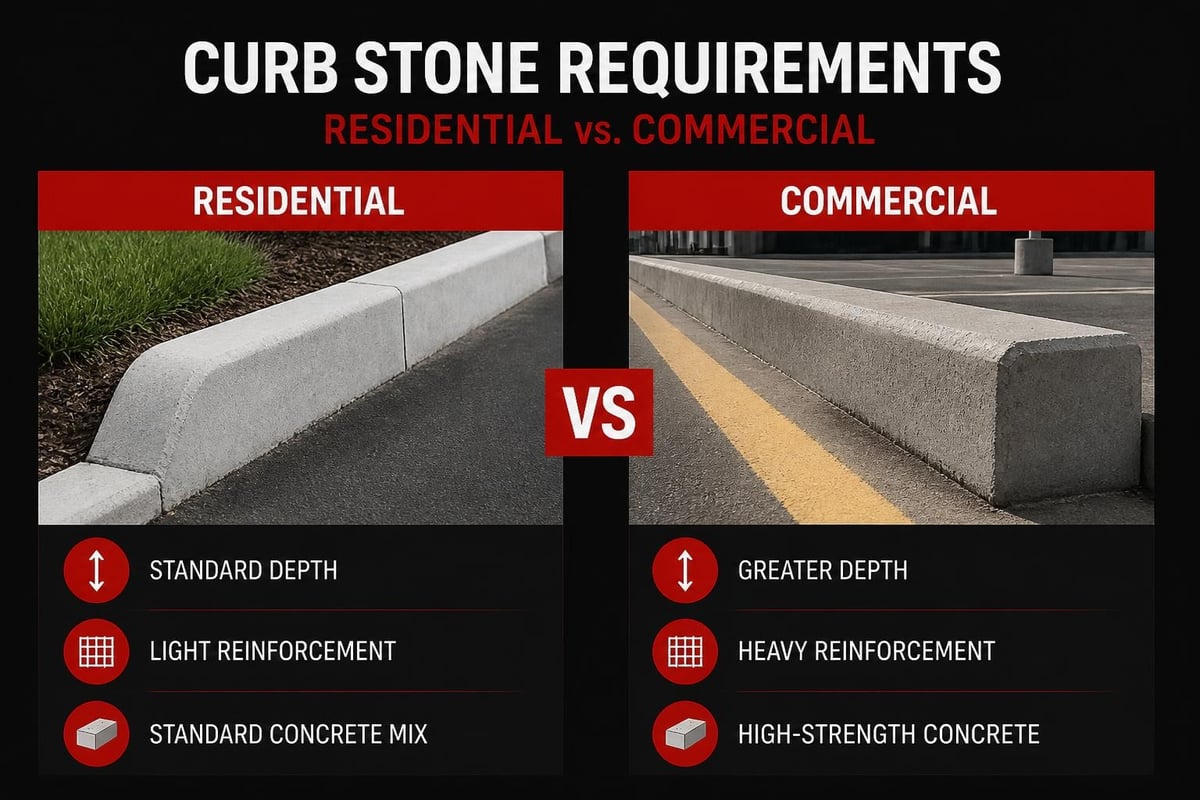
Foundation depths increase significantly for commercial applications. Where residential projects typically specify 150mm sub-base, commercial standards often require 300mm or more, with multiple compacted layers creating stable platforms for heavy loading scenarios.
The projects completed across various franchise locations demonstrate the importance of precise edging in maintaining operational surfaces. Comprehensive civil engineering solutions integrate kerbing with drainage systems, surface treatments, and landscaping elements to create cohesive, functional environments.
Load-bearing Calculations
Engineering calculations determine appropriate specifications for different usage scenarios. Vehicle weights, turning radii, and frequency of use all factor into design decisions. A residential driveway accommodating occasional deliveries requires less robust edging than a commercial entrance handling dozens of heavy vehicles daily.
Impact forces during turning movements create significant lateral loads. Curb stones positioned at tight radius curves experience greater stress than those on straight sections. Reinforcing these critical areas with deeper haunching or switching to larger dimension stones prevents premature failure.
Consultation with experienced civil engineers ensures specifications match intended usage. Projects ranging from private residential driveways to major commercial developments benefit from professional assessment of loading conditions and appropriate material selection.
Cost Factors and Budget Planning
Material costs represent just one component of total project expenditure. Labour, equipment, and site preparation significantly influence final budgets. Understanding these variables enables realistic financial planning and informed decision-making.
Primary cost components include:
- Material purchase and delivery
- Excavation and disposal of spoil
- Sub-base materials and installation
- Labour for setting and haunching
- Equipment hire for compaction and cutting
- Finishing works and cleanup
Natural stone commands premium pricing but delivers superior longevity. When calculated across expected service life, granite curb stones often present better value than cheaper alternatives requiring replacement or extensive maintenance. Lifecycle costing provides clearer comparison than initial purchase price alone.
Quantity calculations should include allowances for cuts, breakage, and future repairs. Ordering 10% additional material prevents project delays if individual units arrive damaged or require replacement during installation. Excess materials serve as matched replacements should future repairs become necessary.
Obtaining Accurate Quotations
Detailed specifications enable accurate price comparisons between suppliers and contractors. Vague descriptions lead to inconsistent quotations that make meaningful comparison impossible. Specify exact dimensions, materials, finishes, and quantities when requesting prices.
Site accessibility affects installation costs substantially. Locations with limited access requiring hand-digging and manual handling command higher labour rates than sites permitting machine excavation and material positioning. Early discussion of site constraints prevents unwelcome surprises when final invoices arrive.
Professional installation by experienced contractors delivers superior results compared to DIY approaches. The expertise required for proper foundation preparation, accurate levelling, and effective haunching justifies the investment in skilled labour. Reputable civil engineering firms bring both technical knowledge and practical experience to ensure lasting performance.
Integration with Overall Driveway Design
Successful projects view curb stones as integral design elements rather than afterthoughts. Planning edging alongside surface material selection creates cohesive schemes where all components work harmoniously. This holistic approach produces results that exceed the sum of individual parts.
Drainage integration requires careful coordination between kerb positioning and surface gradients. Edging stones can incorporate channels or gaps for water management, directing runoff to designated collection points rather than allowing uncontrolled spread. This planning prevents pudding, erosion, and ice formation during winter months.
Lighting considerations enhance both safety and aesthetics. Low-level lighting integrated along kerb lines illuminates driveway boundaries after dark, guiding vehicles safely whilst creating attractive evening ambience. LED strips or individual low-voltage units install easily during construction, avoiding disruptive retrofitting.
The transition between different surface materials requires special attention. Where driveways meet public highways or connect to paved pathways, curb stones for driveways create professional transitions that satisfy both functional requirements and aesthetic preferences. These junctions benefit from expert installation ensuring compliance with regulations whilst maintaining visual appeal.
Selecting and installing appropriate curb stones for driveways involves balancing functional requirements with aesthetic preferences and budget realities. The right edging protects your investment whilst enhancing property appearance and value through professional detailing and expert installation. Whether you're planning a residential driveway or a commercial project, JRG Civils brings civil engineering excellence and meticulous attention to detail to every aspect of your project, from initial planning through to final completion.