
Bluestone kerbing represents one of the most enduring and aesthetically refined choices for defining boundaries in both commercial and residential landscapes. This natural stone solution combines exceptional durability with timeless visual appeal, making it a preferred option for civil engineering projects ranging from large-scale commercial developments to intimate domestic driveways. For contractors and property owners seeking materials that deliver both functional performance and architectural distinction, understanding the nuances of bluestone kerbing becomes essential to achieving successful project outcomes.
Understanding Bluestone as a Kerbing Material
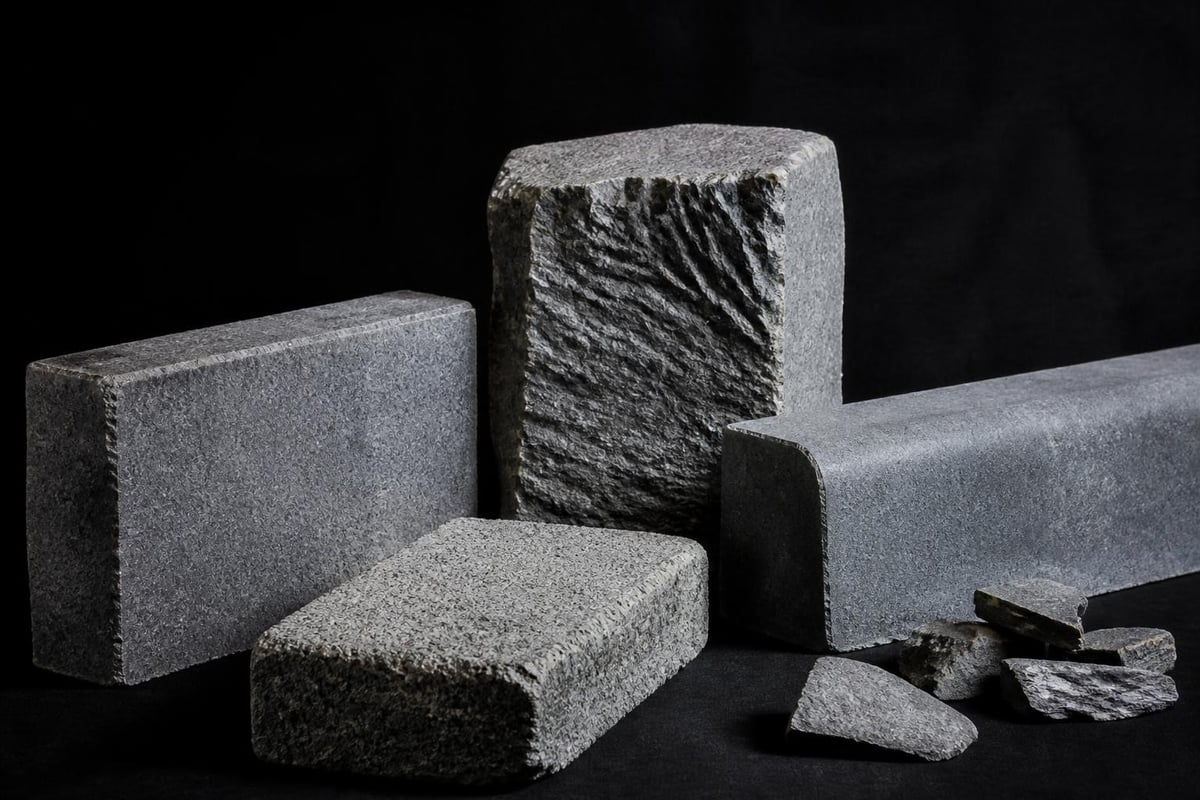
Bluestone's reputation in civil engineering stems from its unique geological composition and physical properties. According to geological classifications, bluestone encompasses several types of dense, hard stone that typically exhibit blue-grey colouration, including specific sandstones and basalts depending on regional variations.
The material's density provides remarkable compression strength, making it ideal for applications where kerbing must withstand significant vehicular loads. This characteristic proves particularly valuable in commercial developments such as drive-through facilities, where constant traffic flow demands materials that maintain structural integrity over decades of service.
Material Composition and Characteristics
The physical attributes of bluestone make it exceptionally suitable for kerbing applications:
- Density: Typically ranging from 2,600 to 2,900 kg/m³, providing excellent load-bearing capacity
- Compression strength: Often exceeding 150 MPa, ensuring long-term durability
- Absorption rate: Generally below 1%, minimizing frost damage and weathering
- Surface texture: Available in thermal, honed, or natural cleft finishes
Different bluestone varieties offer distinct aesthetic qualities, with colour variations spanning from deep charcoal to silver-blue tones. This natural variation allows designers to create visual interest whilst maintaining material consistency throughout a project.
Design Considerations for Bluestone Kerbing Projects
Successful bluestone kerbing installation begins with thoughtful design planning that accounts for both aesthetic objectives and functional requirements. Project specifications must address dimensional tolerances, joint spacing, drainage integration, and long-term maintenance accessibility.
Dimensional Standards and Specifications
Standard bluestone kerbing dimensions typically follow industry conventions whilst allowing for customization:
| Kerb Type | Typical Height | Typical Width | Standard Lengths |
|---|---|---|---|
| Standard upright | 150-200mm | 100-150mm | 600-900mm |
| Laydown kerb | 75-100mm | 200-250mm | 600-1200mm |
| Bullnose profile | 150-200mm | 125-175mm | 600-900mm |
These specifications provide starting points, but bespoke dimensions can be sourced to meet unique project requirements. Commercial developments often benefit from custom sizing that accommodates specific drainage configurations or architectural themes.
When designing for projects similar to the Costa Coffee developments that showcase quality civil engineering work, material consistency becomes paramount. Specifying bluestone from a single quarry source ensures colour matching throughout the installation.
Drainage Integration Planning
Effective water management remains critical in all kerbing applications. Bluestone kerbing excels in drainage integration due to its low absorption rate and compatibility with modern drainage systems.
Designers should incorporate:
- Outlet positioning: Strategic placement of drainage channels at regular intervals
- Fall gradients: Minimum 1:80 gradient along kerb lines to facilitate water movement
- Channel integration: Bluestone kerbs pair effectively with ACO drainage systems
- Joint spacing: 10-15mm joints allow for thermal expansion whilst preventing water pooling
The relationship between kerbing and broader civil engineering design principles ensures that installations perform optimally across all weather conditions. Proper drainage planning prevents undermining of kerb foundations, extending service life considerably.
Installation Methodologies and Best Practices
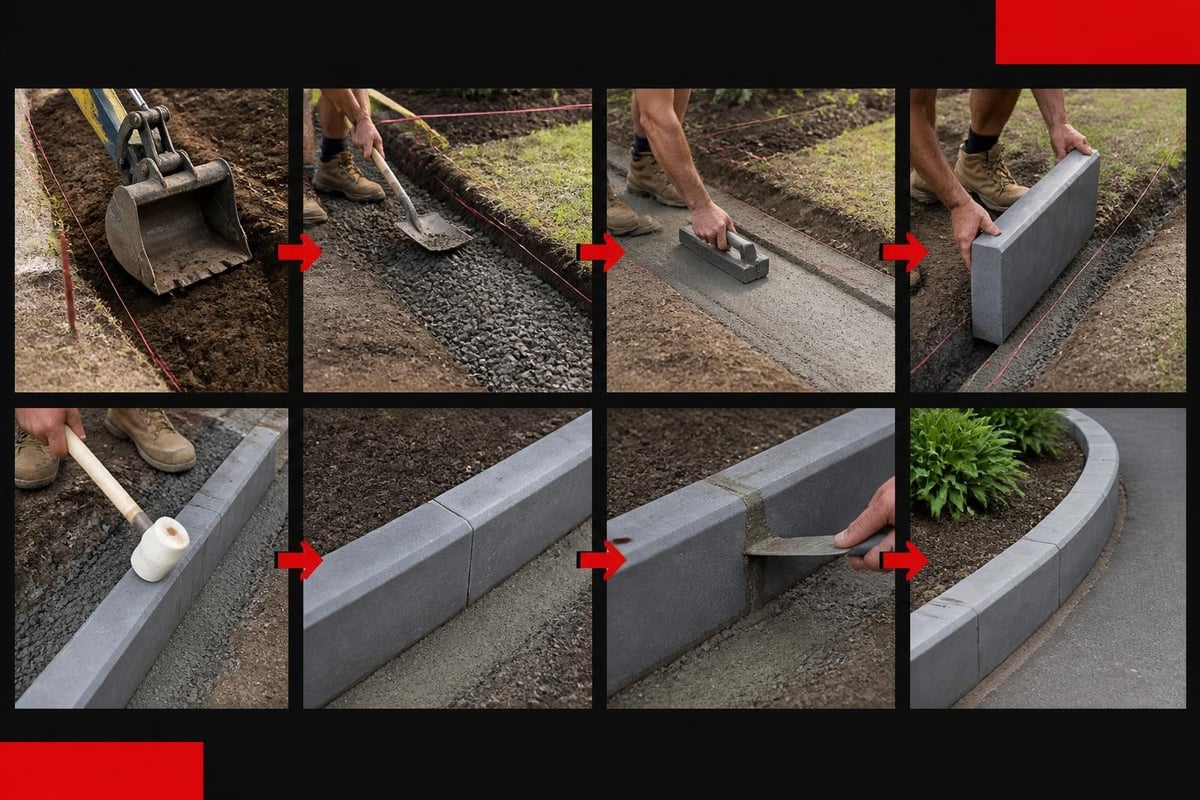
Professional installation of bluestone kerbing requires adherence to proven methodologies that ensure both immediate stability and long-term performance. The foundation preparation, bedding techniques, and jointing procedures all contribute to the final quality of the installation.
Foundation Requirements
A robust foundation forms the cornerstone of durable bluestone kerbing. Foundation depth and composition vary based on expected loading conditions:
Light-duty applications (residential driveways, pedestrian areas):
- Excavation depth: 200-250mm below finished kerb base
- Sub-base: 150mm compacted Type 1 aggregate
- Bedding layer: 50-75mm concrete (ST2 mix)
Heavy-duty applications (commercial vehicle access, highways):
- Excavation depth: 300-400mm below finished kerb base
- Sub-base: 250mm compacted Type 1 aggregate
- Bedding layer: 100-150mm concrete (ST4 mix)
The erosion control considerations highlighted in civil engineering standards reinforce the importance of proper foundation specification. Inadequate foundations lead to settlement, misalignment, and premature failure regardless of kerb material quality.
Setting and Alignment Techniques
Precision in kerb alignment creates visual harmony whilst ensuring proper drainage function. Professional contractors employ laser levels or stringlines to maintain consistent grades and alignments throughout the installation.
Key alignment considerations include:
- Vertical tolerance: ±3mm variance across any 3-metre section
- Horizontal alignment: Maximum 5mm deviation from design line
- Top edge consistency: Level or designed fall maintained within 2mm tolerance
- Joint width uniformity: Consistent 10-12mm spacing throughout
Working on projects that demand the standards seen in engineering for building applications, installers must verify alignment at multiple stages. Initial positioning, post-concrete placement, and final checks before joint filling all provide opportunities to correct minor deviations.
Jointing and Finishing Methods
Proper jointing protects bluestone kerbing from water infiltration whilst accommodating thermal movement. Modern installations typically employ either cement-based mortars or resin-modified compounds depending on exposure conditions.
The jointing process follows a systematic approach:
- Clean all joint faces to remove dust, debris, and loose particles
- Apply backing material (foam rod) to control joint depth
- Introduce jointing compound to two-thirds of total kerb height
- Tool joints to create weathered profile directing water away
- Allow appropriate curing time before exposing to traffic
For commercial applications requiring accelerated completion schedules, rapid-setting compounds reduce project timelines without compromising joint integrity. This proves particularly valuable in franchise developments where operational deadlines remain non-negotiable.
Material Selection and Quality Assessment
Selecting appropriate bluestone for kerbing applications involves evaluating multiple quality parameters that influence both immediate aesthetics and long-term performance. Understanding grading systems and quality indicators empowers informed procurement decisions.
Grading Systems and Quality Standards
Professional quarries implement rigorous grading processes that classify bluestone based on dimensional accuracy, surface integrity, and colour consistency. These grading systems typically differentiate between premium, standard, and economy grades.
| Grade | Thickness Tolerance | Surface Defects | Colour Variation | Best Applications |
|---|---|---|---|---|
| Premium | ±3mm | Minimal | Very consistent | High-visibility commercial |
| Standard | ±5mm | Minor acceptable | Moderate variation | General commercial/residential |
| Economy | ±8mm | Visible permitted | Significant variation | Budget projects |
Premium-grade bluestone commands higher pricing but delivers superior visual consistency crucial for projects where kerbing forms a prominent design element. Standard grades offer excellent value for most civil engineering applications whilst maintaining acceptable quality thresholds.
Colour Consistency Considerations
Natural stone inherently exhibits colour variation, but excessive inconsistency can detract from project aesthetics. Assessing sample batches before full procurement helps establish realistic expectations regarding colour range.
Bluestone’s characteristic appearance includes natural veining and subtle colour shifts that many designers view as assets rather than defects. However, dramatic colour differences between adjacent kerb units create visual discontinuity that undermines design intent.
Requesting samples from the specific quarry layer designated for your project provides the most accurate preview of delivered material. Photographic samples, whilst convenient, rarely capture the true colour and texture variations present in natural stone.
Cost Analysis and Budget Planning
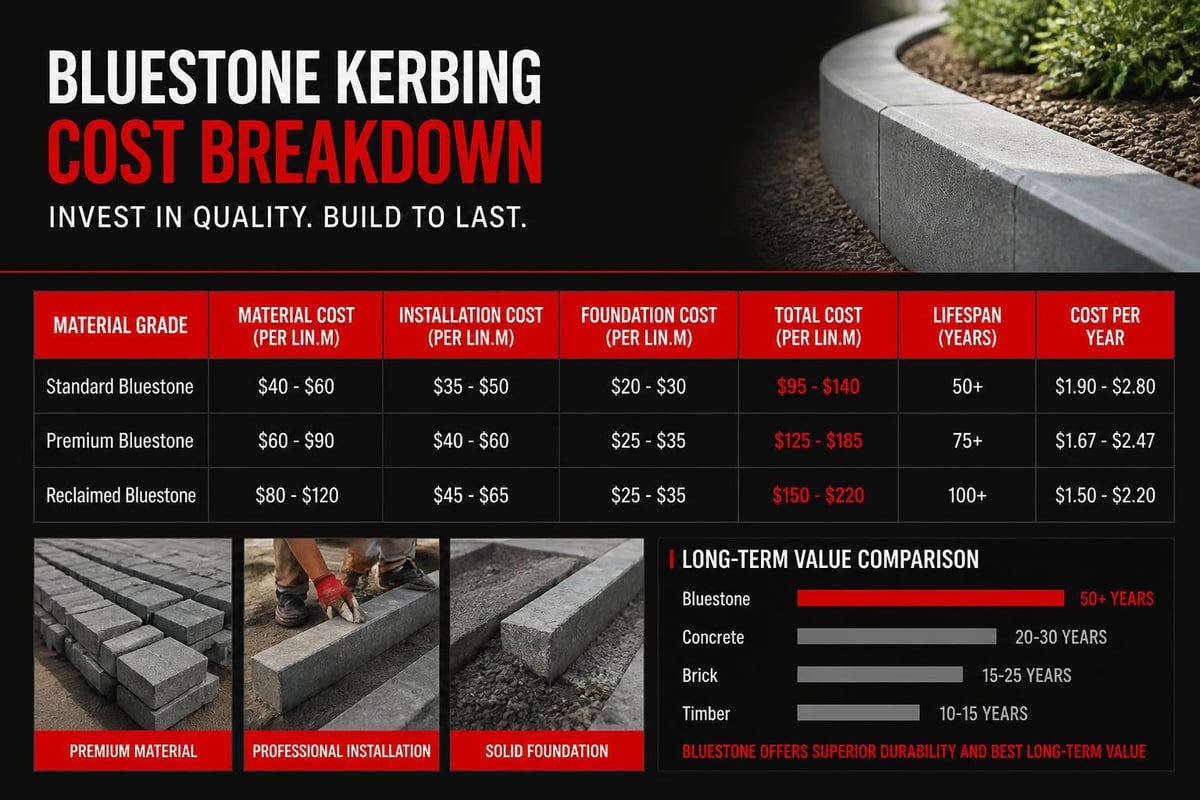
Bluestone kerbing represents a premium investment that delivers exceptional value through extended service life and minimal maintenance requirements. Accurate budget planning accounts for material costs, installation labour, foundation preparation, and long-term maintenance provisions.
Material Cost Factors
Bluestone kerbing pricing varies based on several interconnected factors:
- Grade specification: Premium materials cost 30-50% more than standard grades
- Finish requirements: Thermal finishing adds 15-25% to material costs
- Dimensional customization: Bespoke sizes increase costs by 20-40%
- Delivery logistics: Regional availability affects freight components
Current market conditions in 2026 position bluestone as a mid-to-upper tier kerbing option. Whilst initial material costs exceed concrete or reconstituted stone alternatives, the lifecycle cost analysis often favours bluestone due to its exceptional longevity.
Installation Cost Components
Professional installation represents a significant portion of total project expenditure. Engaging experienced contractors ensures proper execution whilst potentially reducing long-term maintenance costs.
Typical installation cost breakdown:
- Site preparation and excavation (15-20% of installation budget)
- Foundation materials and placement (25-30% of installation budget)
- Kerb setting and alignment (35-40% of installation budget)
- Jointing and finishing (10-15% of installation budget)
Companies offering comprehensive construction engineering services often provide more competitive pricing through integrated project delivery. This approach streamlines coordination between earthworks, drainage installation, and kerbing placement.
Application-Specific Considerations
Bluestone kerbing performs across diverse applications, but optimizing specifications for specific contexts maximizes both functional performance and aesthetic contribution. Commercial, residential, and heritage applications each present unique requirements.
Commercial Development Applications
Large-scale commercial projects demand kerbing solutions that withstand intensive use whilst contributing to brand presentation. Drive-through facilities, retail developments, and business parks rely on bluestone kerbing for its professional appearance and proven durability.
Key commercial considerations include:
- Traffic loading: Specify heavier sections (200mm height minimum) for vehicle access routes
- Maintenance accessibility: Design radii and alignments permitting mechanical sweeping equipment
- Brand integration: Select bluestone colours complementing corporate colour schemes
- Accelerated schedules: Plan installation sequences minimizing disruption to adjacent construction activities
Projects similar to the Greggs drive-through developments demonstrate how quality kerbing installation contributes to overall project success. The visual refinement bluestone provides enhances customer perception whilst the material's durability ensures minimal maintenance intervention during critical operating periods.
Residential Driveway Applications
Domestic driveways benefit from bluestone kerbing's ability to create elegant transitions between paved surfaces and planted areas. The material's versatility accommodates both traditional and contemporary design aesthetics.
Residential specifications differ from commercial applications:
- Reduced foundation depths acceptable for passenger vehicle loading
- Greater design flexibility in dimensional variations
- Enhanced focus on aesthetic detailing and visual consistency
- Integration with domestic drainage systems and water management
Reclaimed bluestone kerbing offers interesting possibilities for heritage properties or developments seeking character-rich materials. The patina developed over decades creates instant maturity, though procurement requires careful assessment of dimensional consistency and structural soundness.
Heritage and Conservation Projects
Historic site development demands materials that respect original construction methods whilst meeting contemporary performance standards. Bluestone's historical provenance makes it particularly appropriate for conservation contexts.
Conservation projects require:
- Material matching: Sourcing bluestone with comparable colour and texture to existing installations
- Traditional detailing: Replicating original profile shapes and jointing techniques
- Reversibility considerations: Installation methods permitting future conservation interventions
- Documentation requirements: Detailed recording of specifications and installation methodologies
Working within conservation areas often necessitates approval from heritage authorities. Demonstrating material appropriateness through historical precedent and physical samples facilitates approval processes.
Maintenance and Long-Term Performance
Bluestone kerbing's exceptional durability translates to minimal maintenance requirements, but understanding proper care procedures ensures optimal appearance and function throughout the material's service life. Routine inspection and timely intervention prevent minor issues escalating into costly repairs.
Routine Maintenance Protocols
Establishing systematic maintenance schedules preserves both functional performance and aesthetic quality:
Monthly inspections should assess:
- Joint integrity and mortar condition
- Drainage channel functionality
- Surface staining or biological growth
- Structural alignment and settlement
Annual maintenance typically includes:
- Pressure washing to remove accumulated debris and organic matter
- Joint inspection with remedial repointing where deterioration evident
- Drainage system flushing ensuring unobstructed water flow
- Surface treatment application if specified in design documentation
The characteristics of properly installed bluestone include remarkable resistance to weathering, but periodic cleaning maintains optimal appearance. Avoiding harsh chemical cleaners preserves the stone's natural patina whilst preventing surface damage.
Addressing Common Issues
Despite bluestone's robust nature, certain issues occasionally emerge requiring professional attention:
| Issue | Typical Cause | Remedial Action |
|---|---|---|
| Joint failure | Inadequate initial filling or freeze-thaw | Rake out failed material, repoint with appropriate compound |
| Individual kerb settlement | Foundation failure beneath specific units | Remove affected units, reinstate foundation, reset kerbs |
| Surface staining | Organic growth or mineral deposits | Clean with appropriate pH-neutral stone cleaner |
| Edge spalling | Impact damage or poor-quality stone | Replace damaged units or apply edge repairs |
Engaging contractors experienced in on-site engineering services ensures repairs maintain consistency with original installation standards. Professional intervention prevents localised problems spreading to adjacent sections.
Environmental and Sustainability Considerations
Contemporary construction practice increasingly emphasizes environmental responsibility and sustainable material selection. Bluestone kerbing offers several sustainability advantages whilst requiring consideration of extraction impacts and lifecycle implications.
Natural Material Benefits
As a natural stone product, bluestone presents inherent environmental credentials:
- Minimal processing requirements: Unlike manufactured alternatives requiring energy-intensive production
- Chemical-free composition: No synthetic binders or additives present environmental concerns
- Recyclability potential: Removed kerbing can be repurposed for other landscaping applications
- Longevity reduces replacement: 50+ year service life minimizes resource consumption over time
The extraction process does involve quarrying operations with associated environmental impacts. However, responsible quarry operators implement rehabilitation programmes and environmental management systems that mitigate these effects.
Carbon Footprint Considerations
Evaluating bluestone's environmental impact requires whole-lifecycle assessment including extraction, transport, installation, and end-of-life scenarios. Local sourcing significantly reduces transportation emissions, making regional material selection environmentally preferable where suitable bluestone deposits exist.
Comparative analysis often positions natural stone favourably against manufactured alternatives when extended service life factors into calculations. A bluestone kerbing installation lasting 75 years potentially represents lower lifetime environmental impact than concrete alternatives requiring replacement every 25-30 years.
Integration with Modern Drainage Systems
Contemporary civil engineering practice demands sophisticated water management solutions. Bluestone kerbing integrates effectively with modern drainage technologies whilst maintaining traditional aesthetic values. This compatibility makes it particularly valuable for projects balancing heritage sensitivity with contemporary performance requirements.
ACO Drainage Compatibility
Channel drainage systems pair excellently with bluestone kerbing, creating cohesive water management solutions. The design process should coordinate kerb heights, channel depths, and surface gradients ensuring effective water capture.
Installation sequencing becomes critical when integrating drainage channels:
- Establish finished surface levels and drainage fall requirements
- Position channel runs with appropriate gradients to collection points
- Set bluestone kerbing to designed levels relative to channel tops
- Verify water flow patterns before completing adjacent surfacing
- Test complete system under simulated rainfall conditions
Projects demanding the precision seen in highway surfacing applications require millimetre-accurate coordination between kerbing and drainage elements. Professional survey control throughout installation prevents costly remedial work.
Sustainable Urban Drainage Integration
Modern developments increasingly incorporate sustainable urban drainage systems (SUDS) that manage water at source rather than rapid discharge to sewers. Bluestone kerbing contributes to SUDS implementation through its compatibility with permeable paving systems and rain gardens.
SUDS-compatible installations might include:
- Intermittent kerb sections: Allowing controlled water flow into planted bioretention areas
- Dual-height configurations: Higher sections containing water temporarily during storm events
- Slotted kerb details: Permitting surface water entry whilst retaining paving materials
- Integration with tree pits: Directing runoff to irrigate street tree plantings
These innovative approaches demonstrate bluestone's adaptability to evolving civil engineering practices whilst maintaining the material's core attributes of durability and visual refinement.
Bluestone kerbing delivers unmatched combination of durability, aesthetic refinement, and functional performance across commercial and residential applications. Understanding material selection, installation methodologies, and long-term maintenance ensures projects achieve their full potential. Whether developing commercial drive-throughs, residential driveways, or heritage conservation projects, partnering with experienced specialists makes all the difference. JRG Civils brings comprehensive civil engineering expertise to bluestone kerbing projects throughout the UK, delivering installations that combine technical excellence with meticulous attention to detail.