The concept of united earthworks represents a transformative approach to civil engineering projects, where collaboration, precision, and comprehensive planning converge to deliver exceptional outcomes. In an industry where fragmented processes can lead to costly delays and quality issues, bringing together all aspects of earthwork operations under a unified framework ensures consistency, efficiency, and superior results. This integrated methodology proves particularly valuable for commercial developments, highway surfacing projects, and residential enhancements where multiple disciplines must work in harmony.
Understanding the United Earthworks Philosophy
United earthworks embodies a holistic approach to ground preparation and civil engineering that goes beyond traditional siloed methods. Rather than treating excavation, grading, drainage, and surfacing as separate tasks, this philosophy emphasizes the interconnected nature of all earthwork activities.
The core principles include:
- Comprehensive site assessment before any ground is disturbed
- Coordinated planning across all project phases
- Integrated material management and logistics
- Unified quality control standards throughout execution
- Collaborative communication between all trades and stakeholders
This approach recognizes that decisions made during initial excavation directly impact drainage performance, surface stability, and long-term durability. When teams operate under a united earthworks framework, they can anticipate challenges, optimize material usage, and deliver projects that exceed client expectations.
Strategic Planning in United Earthworks
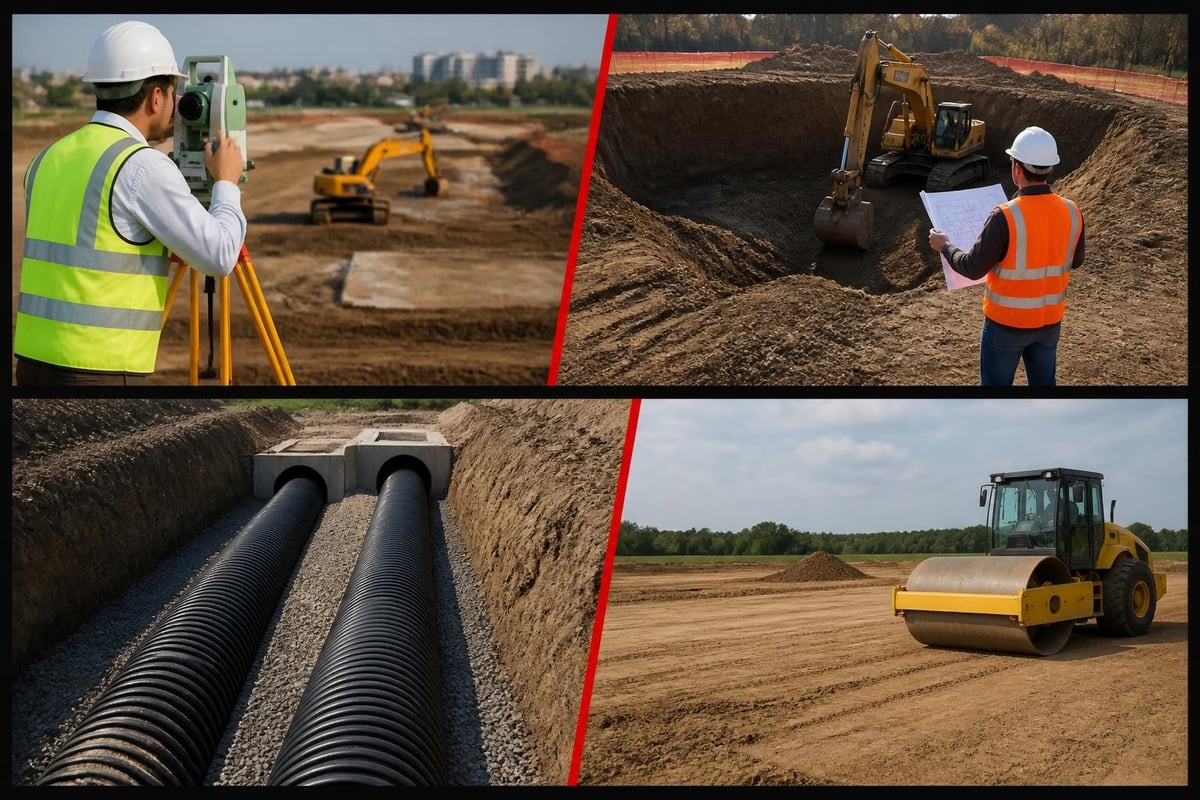
The foundation of any successful united earthworks project lies in meticulous planning. This phase demands detailed topographical surveys, soil analysis, and environmental assessments that inform every subsequent decision. Effective earthworks management requires understanding material behavior and implementing appropriate specifications from the outset.
Pre-construction planning checklist:
- Complete geotechnical investigation
- Establish drainage requirements and water management strategy
- Calculate cut and fill volumes with precision
- Identify material reuse opportunities
- Develop sequencing that minimizes disruption
- Create contingency plans for weather and ground conditions
When JRG Civils approaches projects ranging from commercial drainage systems to residential foundations, this comprehensive planning phase ensures that all earthwork elements align with project objectives and regulatory requirements.
Material Management and Sustainability
United earthworks principles champion sustainable material handling practices that reduce waste, lower costs, and minimize environmental impact. The traditional approach of treating excavated material as waste contradicts both economic and environmental sense.
Modern projects benefit from sophisticated material classification systems that identify opportunities for on-site reuse. Topsoil preservation, subgrade material recycling, and strategic stockpiling all contribute to a more sustainable and cost-effective operation. Understanding earthwork construction processes helps teams recognize the value in every cubic metre of material moved.
| Material Type | Reuse Application | Benefit |
|---|---|---|
| Topsoil | Landscaping, restoration | Preserves organic content, reduces import costs |
| Granular subgrade | Base layers, temporary roads | Eliminates disposal costs, provides structural fill |
| Clay materials | Containment berms, shaping | Water retention, site modeling |
| Rock fragments | Drainage aggregate, hardstanding | Free drainage material, reduces procurement |
The environmental considerations extend beyond material reuse. Erosion control, sediment management, and dust suppression all require attention within the united earthworks framework. Best practices in site preparation emphasize thorough assessment and proactive environmental protection measures.
Cost Estimation and Budget Control
Accurate cost estimation forms a critical component of united earthworks success. Unlike simpler construction activities, earthwork projects involve numerous variables that can significantly impact final costs. Estimating earthworks costs requires consideration of soil types, haul distances, equipment requirements, and site accessibility.
Key cost factors include:
- Excavation volumes and depths
- Material disposal or import requirements
- Equipment mobilization and demobilization
- Site access limitations and traffic management
- Weather-related delays and ground condition variations
- Compaction testing and quality assurance
Professional estimators working within a united earthworks framework consider these elements holistically rather than in isolation. This comprehensive view prevents cost overruns and ensures realistic budgets that account for project complexity.
Technical Execution Standards
The execution phase transforms planning into reality, and united earthworks demands rigorous standards throughout every operation. From initial site clearing to final surface preparation, consistency and quality control remain paramount.
Excavation depth control, proper compaction techniques, and precise grading all require skilled operators working with well-maintained equipment. Modern technology, including GPS-guided machinery and laser leveling systems, enhances accuracy and reduces rework. However, technology complements rather than replaces experienced judgment and craftsmanship.
Drainage Integration
No united earthworks project can succeed without proper drainage consideration. Water management influences every aspect of ground stability, from initial excavation through to long-term performance. Surface water control, groundwater management, and subsurface drainage systems all require careful integration.
The relationship between earthwork levels, drainage gradients, and surface finishing demands precision. A comprehensive drainage services strategy considers both immediate construction needs and decades of future performance.
Drainage design considerations:
- Natural watercourse protection and diversion
- Temporary dewatering during construction
- Permanent drainage infrastructure installation
- Surface gradients for positive drainage
- Subsurface systems for groundwater control
- Connection to existing drainage networks
Projects in the North East often face challenging ground conditions with high water tables and heavy rainfall periods. United earthworks methodologies anticipate these challenges through robust drainage design implemented during earthwork operations rather than retrofitted afterwards.
Commercial Applications and Case Studies
United earthworks principles prove invaluable across commercial developments where multiple disciplines converge. Drive-through facilities, retail developments, and industrial estates all demand coordinated earthwork execution that accommodates complex requirements.
Consider a typical drive-through restaurant development. The project requires precise levels for customer circulation, proper drainage to prevent standing water, adequate foundation preparation for building structures, and surface treatments for vehicle and pedestrian areas. Each element depends on unified earthwork planning and execution.
| Project Phase | United Earthworks Activity | Critical Success Factor |
|---|---|---|
| Site preparation | Bulk earthworks, temporary drainage | Accurate survey control, material management |
| Foundation zones | Precision excavation, compaction | Specification compliance, testing verification |
| Circulation areas | Subgrade preparation, kerb lines | Level accuracy, drainage integration |
| Surface finishing | Final grading, preparation for paving | Surface tolerances, completion standards |
The engineering principles in earthworks design emphasize how proper planning prevents issues during these sequential phases. When one phase fails to meet standards, subsequent work suffers, creating cascading delays and quality problems.
Residential Projects and Attention to Detail
While commercial projects demonstrate united earthworks at scale, residential developments equally benefit from this integrated approach. Whether preparing ground for patio construction or establishing foundations for extensions, the same principles apply.
Homeowners investing in driveways or garden areas deserve the same professional standards that govern major infrastructure projects. Proper excavation depth, correct material specification, adequate compaction, and appropriate drainage all contribute to longevity and performance.
Residential earthworks best practices:
- Assess existing ground conditions and services
- Establish clear levels referenced to property datum
- Ensure adequate drainage falls and connections
- Specify appropriate materials for intended use
- Compact to standards suitable for surface loads
- Protect adjacent structures and landscaping
The united earthworks approach transforms residential projects from simple groundwork into properly engineered solutions that perform reliably for decades.
Equipment and Technology Integration
Modern earthwork operations leverage advanced equipment and technology to enhance precision and productivity. However, within the united earthworks framework, technology serves the broader objective of coordinated, quality-focused delivery.
GPS-guided excavators maintain precise levels across large sites, ensuring consistency that manual methods struggle to achieve. Laser-controlled grading equipment creates perfectly uniform surfaces that facilitate subsequent drainage and surfacing operations. Digital surveying tools provide real-time verification of progress against design specifications.

The structured process for earthmoving projects from planning to completion benefits enormously from these technological tools when properly integrated into project workflows.
Quality Assurance and Testing
United earthworks demands rigorous quality assurance throughout execution. Testing regimes verify that materials and installation meet specification requirements, providing objective evidence of compliance.
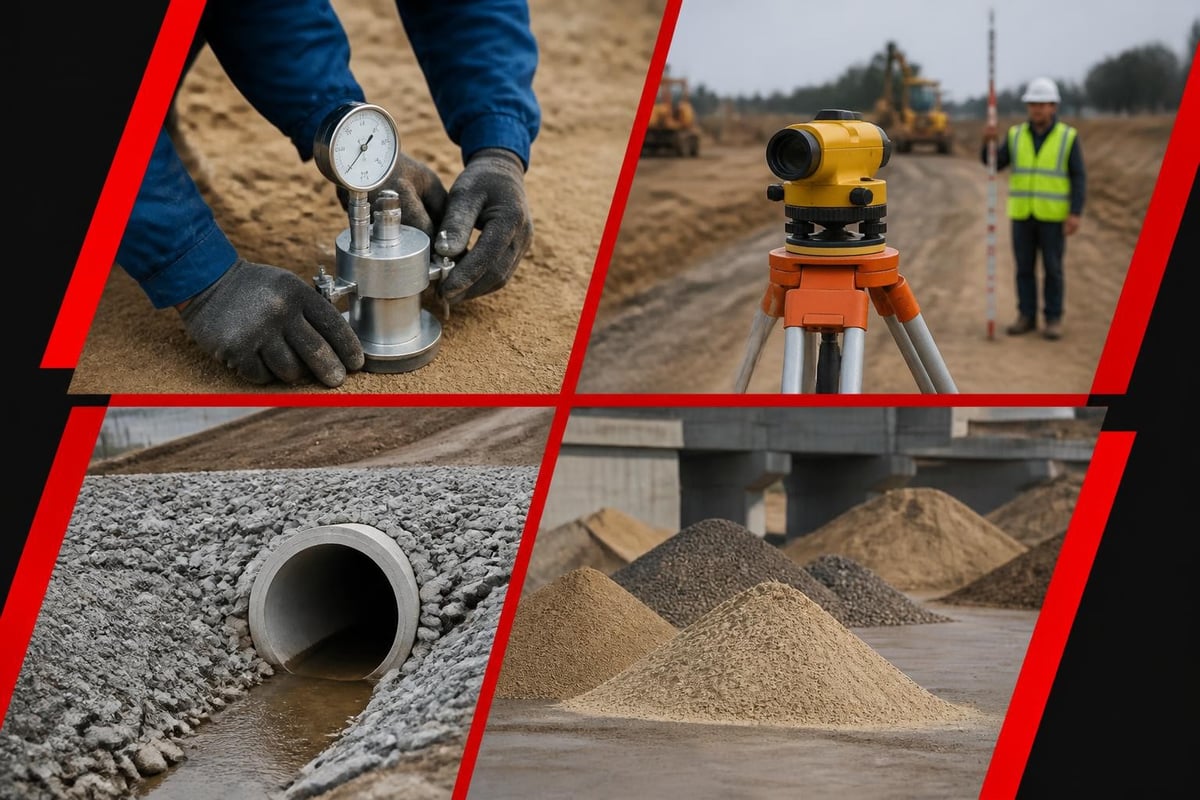
Compaction testing using nuclear density gauges or plate bearing tests confirms that subgrade and fill materials achieve required strength and stability. Moisture content monitoring ensures materials are placed at optimal conditions. Level verification checks confirm surfaces match design grades and drainage requirements.
Testing frequency guidelines:
- Compaction tests: Every 250-500 square metres per layer
- Level checks: At critical points and regular grid intervals
- Material verification: Each distinct material type and source
- Drainage testing: Before backfilling and at practical completion
These quality control measures protect both contractor and client, establishing a documented record of compliant work that supports long-term warranties and performance guarantees.
Collaboration and Communication
Perhaps the most crucial element of united earthworks lies in effective collaboration between all project participants. Engineers, surveyors, machine operators, materials suppliers, and subsequent trades all contribute essential expertise that must be coordinated.
Regular site meetings, clear documentation, and proactive problem-solving create an environment where issues are addressed before they escalate. When the groundworks contractor maintains open communication with the highways team, paving specialists, and drainage engineers, the entire project benefits from aligned objectives and shared understanding.
This collaborative approach extends to clients and stakeholders. Transparent reporting on progress, challenges, and solutions builds trust and ensures decisions reflect accurate, current information. JRG Civils’ portfolio demonstrates how professional communication and collaboration deliver successful outcomes across diverse project types.
Risk Management in Earthworks
Every earthworks project carries inherent risks that require proactive management. Ground conditions may differ from investigations, weather can disrupt programmes, and unforeseen services or contamination may emerge during excavation. United earthworks incorporates risk assessment and mitigation strategies throughout project delivery.
Common earthworks risks and mitigation:
- Adverse ground conditions: Thorough investigation, contingency planning, flexible methodology
- Weather impacts: Programme float, weather protection measures, alternative sequencing
- Service conflicts: Comprehensive utility searches, trial holes, careful excavation near known services
- Material availability: Early procurement, approved supplier lists, material testing protocols
- Environmental incidents: Pollution prevention plans, erosion control, compliance monitoring
Addressing these risks within a united framework ensures consistent responses aligned with overall project objectives rather than isolated reactions that may create secondary problems.
Future Trends and Innovation
The earthworks sector continues evolving, with emerging technologies and methodologies enhancing the united earthworks approach. Automation, artificial intelligence, and advanced materials all promise improvements in efficiency, quality, and sustainability.
Autonomous earthmoving equipment can operate continuously with exceptional precision, though skilled operators remain essential for complex situations and quality oversight. Machine learning algorithms optimize haul routes and material placement strategies, reducing fuel consumption and improving productivity.
Environmental pressure drives innovation in sustainable earthworks practices. Carbon footprint reduction, habitat protection, and circular economy principles increasingly influence project design and delivery. The united earthworks philosophy readily accommodates these priorities through its holistic, integrated approach.
Research into GPT models in construction suggests artificial intelligence may soon assist with planning optimization, risk assessment, and real-time decision support, further enhancing the capabilities of experienced earthworks professionals.
Regulatory Compliance and Standards
United earthworks projects must navigate complex regulatory requirements covering environmental protection, health and safety, and technical specifications. Comprehensive compliance management forms an integral component of the unified approach.
Planning conditions often mandate specific earthworks methodologies, material handling procedures, or environmental protections. Highway projects require adherence to strict specifications for materials, compaction, and finishing standards. Kerbing installations and concrete slab construction all carry technical requirements that earthworks must accommodate.
Key regulatory areas:
- Environmental permits and discharge consents
- Construction Design and Management (CDM) regulations
- Highways specification compliance (for road projects)
- Building regulations for foundation works
- Waste management and duty of care requirements
- Health and safety management systems
Professional contractors integrate compliance into everyday operations rather than treating it as a separate burden. When regulatory requirements are understood and incorporated during planning, they guide rather than obstruct project delivery.
United earthworks represents more than a construction methodology; it embodies a commitment to excellence through integration, collaboration, and comprehensive planning. By unifying all aspects of ground preparation, material management, and infrastructure installation, this approach delivers superior outcomes across commercial and residential projects. Whether you require professional earthworks for a major development or precise groundwork for domestic improvements, JRG Civils brings the expertise, equipment, and dedication necessary to execute your project to the highest standards, from initial excavation through to final completion.