Professional driveway and highway surfacing projects demand robust edge restraint systems that deliver both structural integrity and aesthetic appeal. Among the various solutions available to civil engineering contractors, keykerb has established itself as a versatile choice for creating clean boundaries between paved surfaces and adjacent areas. This specialized edging system plays a crucial role in preventing lateral movement of block paving whilst providing the visual definition that separates driveways from pathways, lawns, or other landscaping features. Understanding the technical specifications, installation requirements, and practical applications of keykerb systems enables contractors and property owners to make informed decisions about their surfacing projects.
Understanding Keykerb Systems and Their Applications
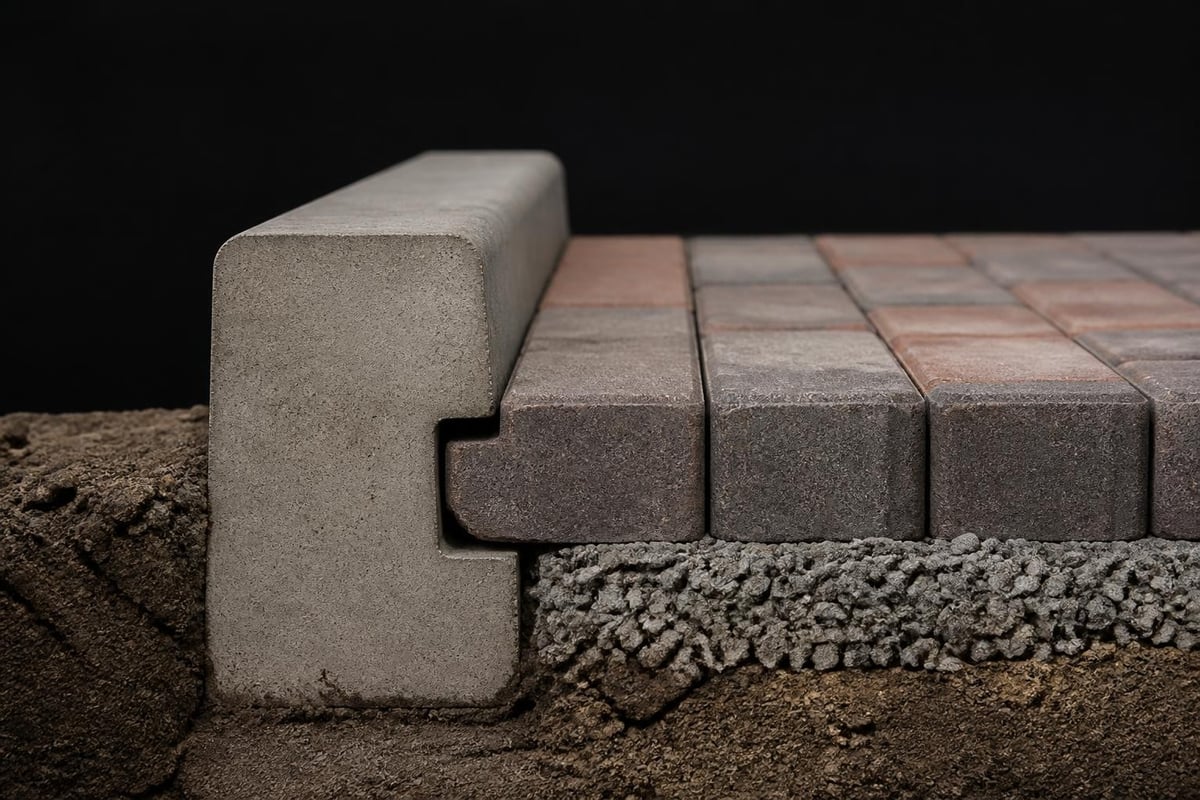
Keykerb represents a category of concrete edging units designed specifically to restrain block paving and create distinct boundaries in both commercial and residential settings. Unlike traditional kerb units that follow British Standard specifications, keykerb products feature unique profiles that interlock with paving materials to prevent movement under traffic loads and environmental conditions.
The primary function of any keykerb installation centres on edge restraint. When block paving is laid without adequate edge support, the individual blocks gradually shift outward through vehicular traffic, pedestrian use, and thermal expansion. This lateral creep compromises the integrity of the entire paved surface, creating uneven areas, trip hazards, and premature failure of the installation.
Key Features and Benefits
Keykerb systems deliver multiple advantages that make them suitable for diverse civil engineering projects:
- Structural restraint preventing lateral movement of block paving under load
- Design flexibility accommodating straight runs, curves, and complex geometries
- Weather resistance manufactured to withstand freeze-thaw cycles and moisture exposure
- Installation efficiency reducing labour time compared to traditional concrete haunching methods
- Aesthetic versatility available in various colours and profiles to complement different paving schemes
Commercial projects such as drive-through facilities and retail car parks particularly benefit from the robust performance characteristics of keykerb installations. The ability to withstand repeated vehicular movements whilst maintaining visual appeal makes these systems ideal for building and civil engineering applications where durability and appearance both matter.
Technical Specifications and Standards Compliance
Professional contractors must ensure keykerb installations meet relevant British and European standards for concrete products. The BS EN 1338:2003 standards for concrete paving blocks provide the framework for assessing compatibility and performance characteristics of edging systems used alongside block paving.
Manufacturing standards for keykerb products typically align with requirements outlined in BS EN 1340:2003 for concrete kerb units, which specify dimensional tolerances, compressive strength classes, and durability criteria. These standards ensure consistent quality across different manufacturers and product ranges.
Material Properties and Performance Criteria
| Property | Requirement | Significance |
|---|---|---|
| Compressive Strength | Minimum Class C40/50 | Ensures structural integrity under vehicular loads |
| Freeze-Thaw Resistance | Class F3 (severe exposure) | Prevents deterioration in British climate conditions |
| Dimensional Tolerance | ±3mm length, ±2mm height | Maintains consistent appearance and fit |
| Water Absorption | Maximum 6% by mass | Reduces frost damage risk and surface degradation |
The classification system enables specifiers to select appropriate keykerb products for specific exposure conditions and loading scenarios. Projects involving heavy commercial vehicles require higher strength classifications than residential driveways with occasional car access.
Understanding these technical parameters proves essential when specifying materials for projects across different regions of the UK. Climate variations between the North East and southern counties influence the durability requirements, particularly regarding freeze-thaw resistance and moisture management.
Installation Methods and Best Practices
Successful keykerb installation requires careful attention to foundation preparation, alignment, and securing methods. The longevity and performance of the edging system depend substantially on proper installation techniques that account for ground conditions, anticipated loads, and drainage requirements.
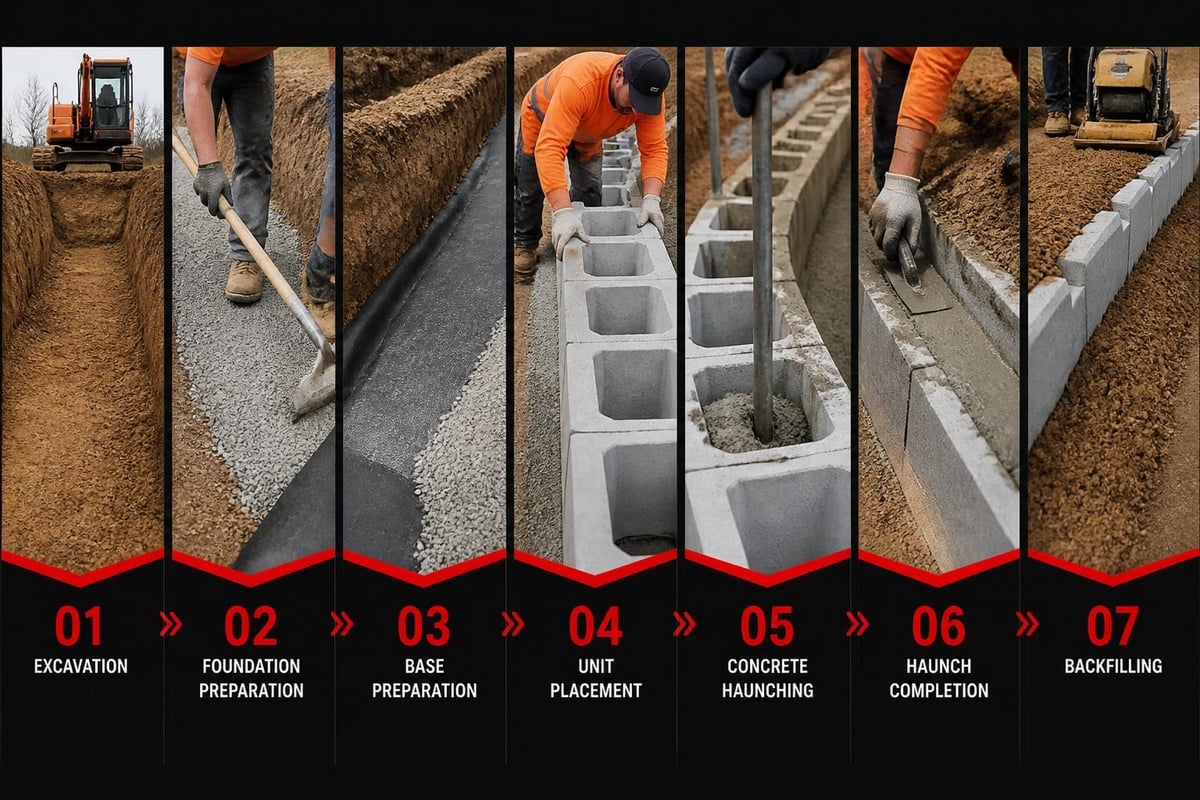
Foundation preparation begins with excavating a trench of appropriate depth and width to accommodate the keykerb units and their concrete bedding. The trench depth typically allows for 100-150mm of compacted sub-base material beneath a concrete haunch that supports the kerb units.
Step-by-Step Installation Process
- Excavate the trench to the required depth, ensuring consistent width along the entire run
- Compact the sub-base using suitable mechanical equipment to achieve firm, level foundation
- Mix and place concrete bedding to the specified thickness, typically 100mm minimum
- Position keykerb units to the correct line and level, checking alignment regularly
- Pour concrete haunch to secure units, ensuring adequate coverage on both faces
- Allow curing time before backfilling or laying adjacent paving materials
- Backfill and compact behind the installed kerb to provide additional support
The concrete mix used for bedding and haunching should achieve minimum C20/25 strength to provide adequate support. In areas subject to heavy trafficking or where ground conditions present challenges, higher strength mixes may be specified.
Professional contractors working on civil engineering projects across the UK recognize that climate conditions affect curing times and installation sequencing. Winter installations require additional protection and extended curing periods to ensure proper concrete strength development.
Design Considerations for Different Applications
Keykerb systems serve diverse applications across commercial and residential projects, each presenting unique design challenges and requirements. The versatility of these edging products enables contractors to address varied site conditions whilst maintaining consistent quality standards.
Commercial Applications
Large-scale commercial developments such as retail parks, industrial estates, and food service drive-throughs demand robust edging solutions that withstand constant vehicular movements. Projects similar to commercial warehouse developments require keykerb installations capable of restraining extensive areas of block paving subjected to heavy goods vehicle traffic.
The design approach for commercial projects typically incorporates:
- Enhanced foundation specifications with increased sub-base depth
- Higher strength concrete mixes for bedding and haunching
- Consideration of turning circles and vehicle sweep paths
- Integration with drainage systems and surface water management
- Coordination with lighting, signage, and other street furniture
Commercial applications often specify British Standard kerbs alongside keykerb units to create comprehensive edging schemes that address both functional and aesthetic requirements.
Residential Projects
Domestic driveways, patios, and garden features benefit from the versatile installation options that keykerb systems provide. Homeowners seeking professional finishes appreciate the clean demarcation these products create between different surface materials and landscaping elements.
Residential design considerations include:
- Scale and proportion appropriate to domestic settings
- Colour coordination with house brickwork and existing features
- Curved installations following garden layouts and property boundaries
- Integration with planting allowing for beds and borders alongside paved areas
- Vehicle access accommodating family cars without commercial loading requirements
The block paver edging applications demonstrate how keykerb units enhance both structural performance and visual cohesion in residential settings. Creating clear demarcation between driveways and pathways improves property appearance whilst providing practical benefits.
Product Variations and Specification Options
Manufacturers offer keykerb products in various profiles, dimensions, and finishes to suit different project requirements. Understanding the available options enables accurate specification for particular applications and design intentions.
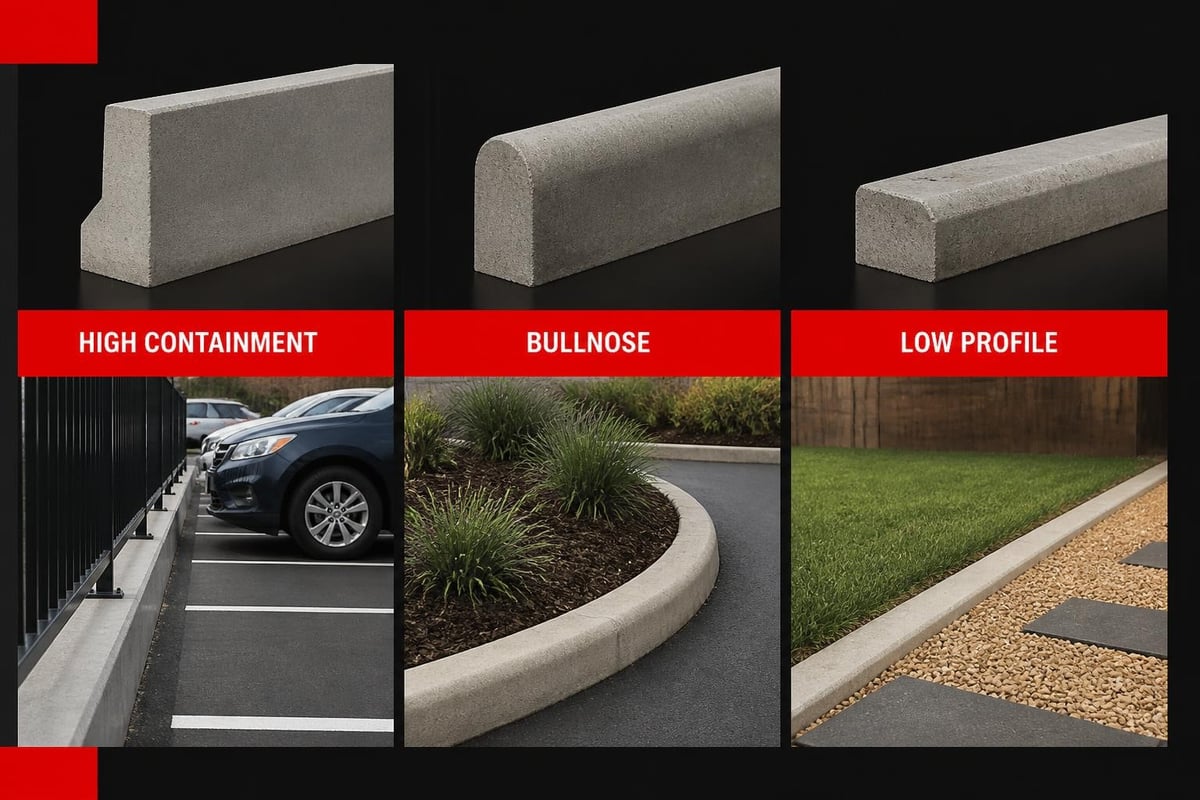
Common profile types include high containment (HB) variants designed for use with standard block paving thickness, and bullnose (BN) versions that provide rounded finishing touches for driveway edges. The profile selection influences both the visual appearance and the mechanical restraint characteristics of the installation.
| Profile Type | Typical Height | Best Applications | Visual Effect |
|---|---|---|---|
| High Containment (HB) | 100-125mm | Standard driveways, car parks | Clean, vertical edge |
| Bullnose (BN) | 100-125mm | Feature edges, garden boundaries | Softened, rounded top |
| Low Profile (LP) | 50-75mm | Decorative edging, light traffic | Subtle demarcation |
| Radius Units | Varies | Curved sections, circular features | Smooth curves |
Colour options typically mirror those available in accompanying block paving ranges, enabling coordinated schemes where edging complements or contrasts with the main paved surface. Common colours include charcoal, buff, red, and natural grey, with regional variations reflecting local architectural preferences.
The dimensional consistency of keykerb units facilitates accurate quantity calculations and minimizes waste during installation. Standard lengths of 450-600mm allow contractors to plan material orders efficiently whilst accommodating site-specific requirements.
Quality Assurance and Long-Term Performance
Ensuring keykerb installations deliver expected service life requires attention to quality throughout the specification, installation, and maintenance phases. Professional contractors implement quality assurance procedures that verify compliance with standards and project specifications.
Material verification begins with confirming supplier certifications and testing documentation. Reputable manufacturers provide comprehensive technical data demonstrating compliance with relevant British and European standards for concrete products. This documentation should include:
- Factory production control certificates
- Independent test results for strength and durability
- Dimensional conformity declarations
- Installation guidelines and recommendations
- Warranty terms and coverage details
Site quality control during installation focuses on foundation adequacy, unit alignment, and concrete quality. Regular inspections throughout the installation process identify potential issues before they compromise long-term performance.
Maintenance Requirements
Properly installed keykerb systems require minimal maintenance compared to alternative edging solutions. Routine inspections should monitor for:
- Settlement or movement of individual units
- Concrete haunch deterioration or cracking
- Joint opening between adjacent kerb sections
- Vegetation growth affecting structural integrity
- Surface staining or discoloration requiring cleaning
Addressing minor defects promptly prevents progression to more significant failures requiring extensive remedial work. The robust construction of quality keykerb products typically ensures decades of service life when installed correctly and maintained appropriately.
Integration with Modern Surfacing Projects
Contemporary civil engineering projects increasingly demand sustainable, efficient solutions that balance performance requirements with environmental considerations. Keykerb systems contribute to these objectives through durable construction that minimizes replacement frequency and supports permeable paving schemes.
The compatibility of keykerb with various highways surfacing and driveway applications enables contractors to deliver comprehensive solutions addressing drainage, aesthetics, and structural performance within single projects. This integration proves particularly valuable in complex developments combining vehicular access, pedestrian areas, and landscaping features.
Modern installation techniques incorporate technological advances that improve accuracy and efficiency. Laser-guided levelling systems enable precise alignment across extensive kerb runs, whilst mechanical handling equipment reduces manual labour requirements for positioning heavy units.
Environmental Considerations
Sustainable construction practices increasingly influence material selection and installation methods. Keykerb manufacturers respond to these requirements through:
- Locally sourced raw materials reducing transportation impacts
- Recycled aggregate content in concrete mixes
- Production processes minimizing energy consumption and emissions
- Long service life reducing replacement frequency
- Compatibility with permeable paving and sustainable drainage systems
Projects prioritizing environmental credentials benefit from specifying products with independently verified environmental credentials and third-party certification demonstrating sustainable manufacturing practices.
Cost Factors and Value Engineering
Budget considerations influence keykerb specification decisions across both commercial and residential projects. Understanding the cost components enables accurate project estimation and identification of value engineering opportunities without compromising quality or performance.
Material costs vary according to profile type, colour specification, and order quantities. Standard grey units in high containment profiles typically represent the most economical option, whilst specialist colours and bullnose profiles command premium pricing. Bulk ordering for large projects achieves economies of scale reducing per-unit costs.
Installation costs depend on site conditions, foundation requirements, and project complexity. Straightforward installations on firm, level ground proceed efficiently with minimal foundation preparation. Challenging ground conditions requiring extensive excavation and engineered fill substantially increase installation costs.
| Cost Component | Typical Range | Variables Affecting Cost |
|---|---|---|
| Materials | £8-15 per linear metre | Profile, colour, quantity |
| Excavation | £12-20 per linear metre | Ground conditions, access |
| Concrete (bed/haunch) | £15-25 per linear metre | Mix specification, volume |
| Labour | £20-35 per linear metre | Complexity, site constraints |
| Total Installed Cost | £55-95 per linear metre | Combined factors |
Value engineering opportunities exist through careful specification that matches product performance to actual requirements without over-specification. Residential driveways rarely require the same strength classifications as commercial lorry parks, enabling cost savings through appropriate product selection.
The long-term value proposition of quality keykerb installations becomes apparent when comparing lifecycle costs against cheaper alternatives requiring frequent replacement or remedial work. Initial cost premiums for superior products and professional installation typically deliver savings over extended service periods.
Quality edge restraint systems form the foundation of successful block paving installations, ensuring long-term structural integrity and visual appeal across commercial and residential applications. Understanding keykerb specifications, installation requirements, and application-specific considerations enables informed decision-making that delivers lasting results. At JRG Civils, we bring extensive experience in highways surfacing, driveways, and civil engineering projects across the UK, combining technical expertise with commitment to excellence in every installation. Whether you're planning a commercial development or residential enhancement, our team delivers professional results that stand the test of time.