The integration of functional drainage and aesthetic edging has become increasingly important in modern civil engineering projects, particularly for driveways, commercial developments, and public realm installations. KeyKerb Marshalls represents a comprehensive solution that addresses both water management and visual appeal, offering contractors and property owners a reliable system that combines kerb containment with integrated drainage channels. This innovative product line has established itself as a preferred choice for projects ranging from residential driveways to large-scale commercial developments across the United Kingdom.
Understanding the KeyKerb Marshalls System
The keykerb marshalls range consists of precast concrete units designed to serve dual purposes within landscaping and highway projects. Each unit integrates a traditional kerb face with a purpose-built channel section, eliminating the need for separate drainage components whilst maintaining structural integrity along surface boundaries.
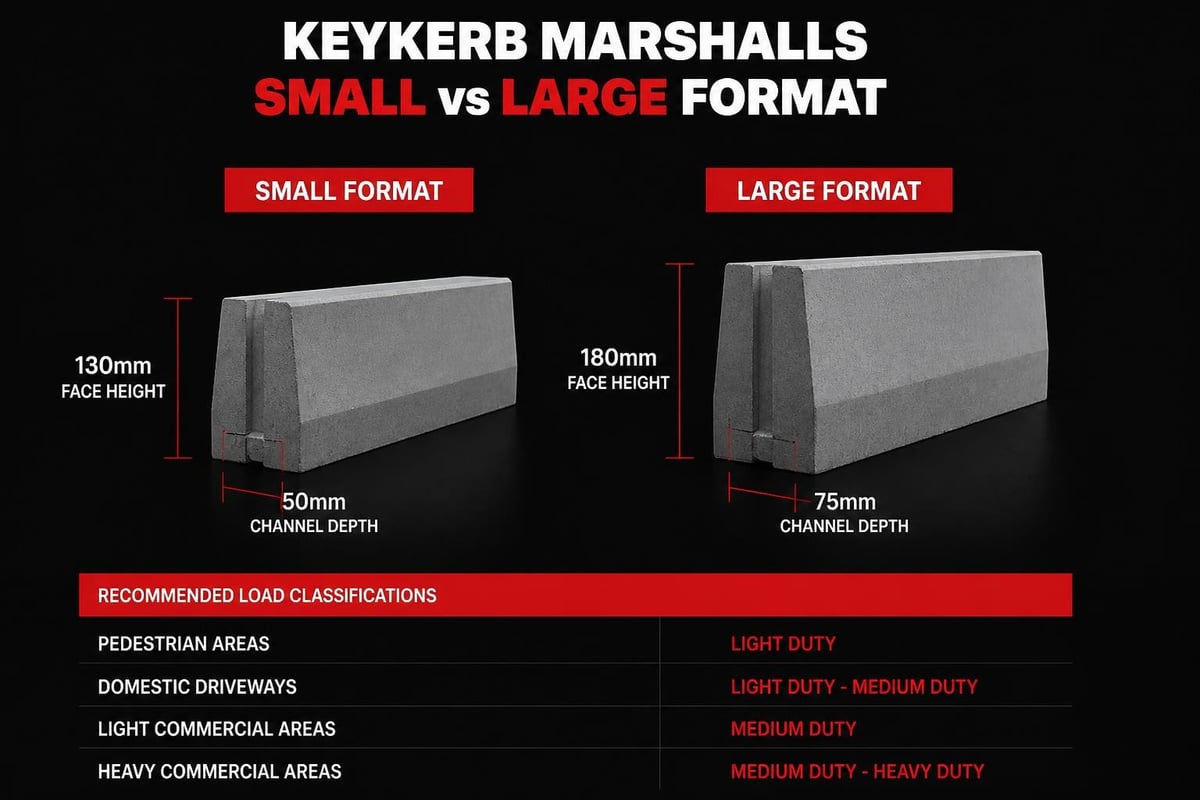
Available in multiple size configurations, keykerb marshalls products cater to various project requirements. The system includes both small and large format units, with dimensions specifically engineered to accommodate different traffic loads and drainage capacities. The Keykerb range from Marshalls offers comprehensive specifications that detail load-bearing capacities, channel depths, and recommended applications.
Material Composition and Durability
Manufactured from high-quality concrete with carefully selected aggregates, keykerb marshalls units deliver exceptional longevity even under demanding conditions. The production process ensures consistent strength characteristics throughout each piece, with compressive strength values exceeding industry standards for kerb applications.
Key material benefits include:
- Resistance to freeze-thaw cycling common in British weather conditions
- Low water absorption rates preventing structural degradation
- Consistent color retention across product lifespan
- Chemical resistance suitable for areas exposed to de-icing salts
The manufacturing specifications align with British Standards for precast concrete kerbs, ensuring compliance with regulatory requirements for both private and public sector projects. This standardization proves particularly valuable when integrating keykerb marshalls into public realm developments where adherence to specifications is mandatory.
Installation Methodology for KeyKerb Systems
Proper installation determines the long-term performance of any kerb system, and keykerb marshalls products require specific preparation and placement techniques to achieve optimal results. The installation process begins with thorough site assessment and preparation, establishing foundation conditions capable of supporting both the units themselves and anticipated loading patterns.
Foundation Preparation Requirements
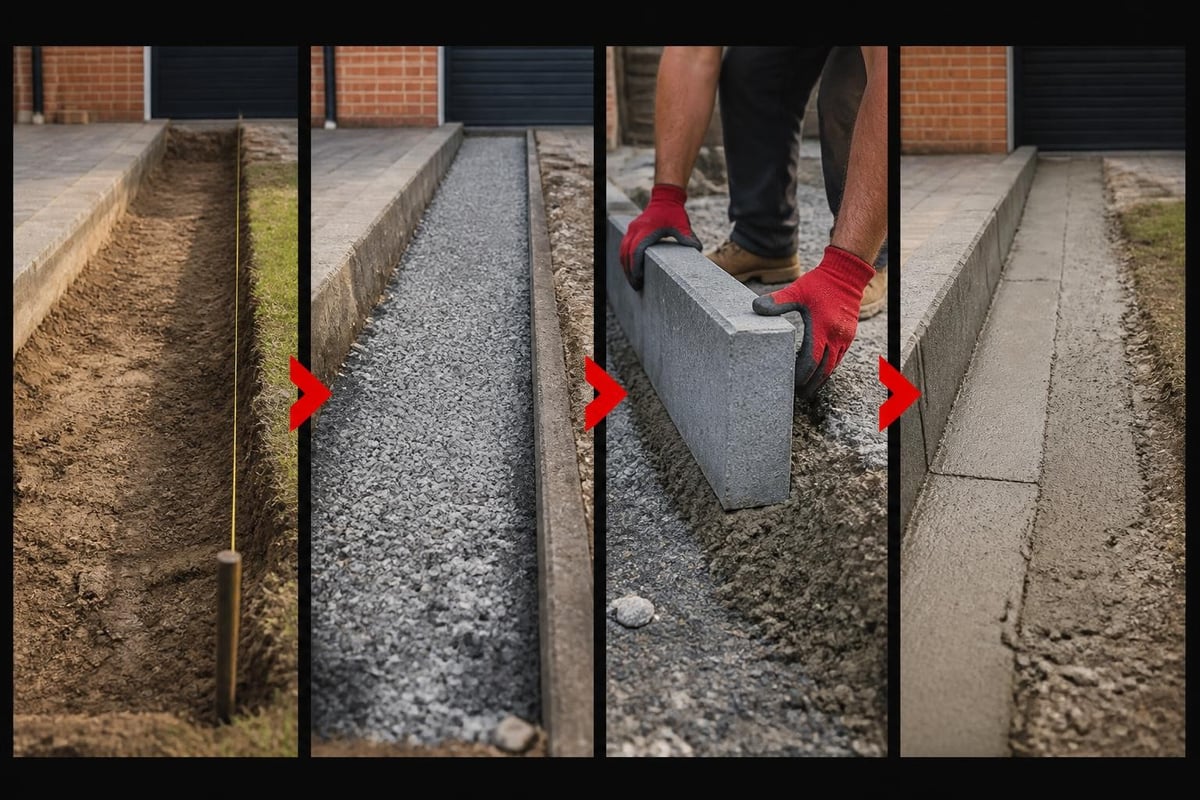
Creating an appropriate foundation represents the critical first stage of installation. The sub-base must provide uniform support across the entire kerb run, with particular attention to maintaining consistent levels and grades. Excavation depth depends on anticipated loading conditions, with residential driveway applications typically requiring minimum depths of 150mm beneath the unit base.
- Excavate to required depth maintaining consistent width for the concrete haunch
- Compact granular sub-base material to specified density using suitable compaction equipment
- Install lean-mix concrete bed with appropriate thickness for unit support
- Check falls and gradients ensuring proper drainage flow direction
- Position keykerb marshalls units whilst concrete remains workable
- Construct concrete haunching to manufacturer's specified dimensions
- Allow adequate curing time before applying surface loads
The concrete haunching provides essential lateral support, preventing movement under trafficking loads and maintaining alignment over time. Recommended haunch dimensions vary according to application, with commercial installations requiring more substantial support than purely decorative residential boundaries.
Product Variations and Selection Criteria
Selecting appropriate keykerb marshalls products requires consideration of multiple factors including anticipated loading, drainage capacity requirements, and aesthetic preferences. The product range accommodates diverse specifications through carefully engineered size variations and finish options.
| Product Type | Face Height | Channel Depth | Typical Applications |
|---|---|---|---|
| KeyKerb Small | 125mm | 50mm | Residential driveways, garden edging |
| KeyKerb Large | 150mm | 75mm | Commercial access roads, car parks |
| Standard Profile | 125mm | Variable | General landscaping boundaries |
Size Selection Guidelines
The small format keykerb marshalls units suit residential applications where moderate drainage capacity suffices and visual proportions favor lower kerb heights. These units integrate seamlessly with standard driveway construction depths whilst providing adequate surface water collection. Further details on driveway-specific applications demonstrate the versatility of smaller profile options.
Large format units deliver enhanced channel capacity and increased face height, making them appropriate for commercial developments, industrial access roads, and areas subject to heavy vehicle movements. The additional height provides greater containment whilst the deeper channel accommodates higher water flow rates during intense rainfall events.
Drainage Performance and Water Management
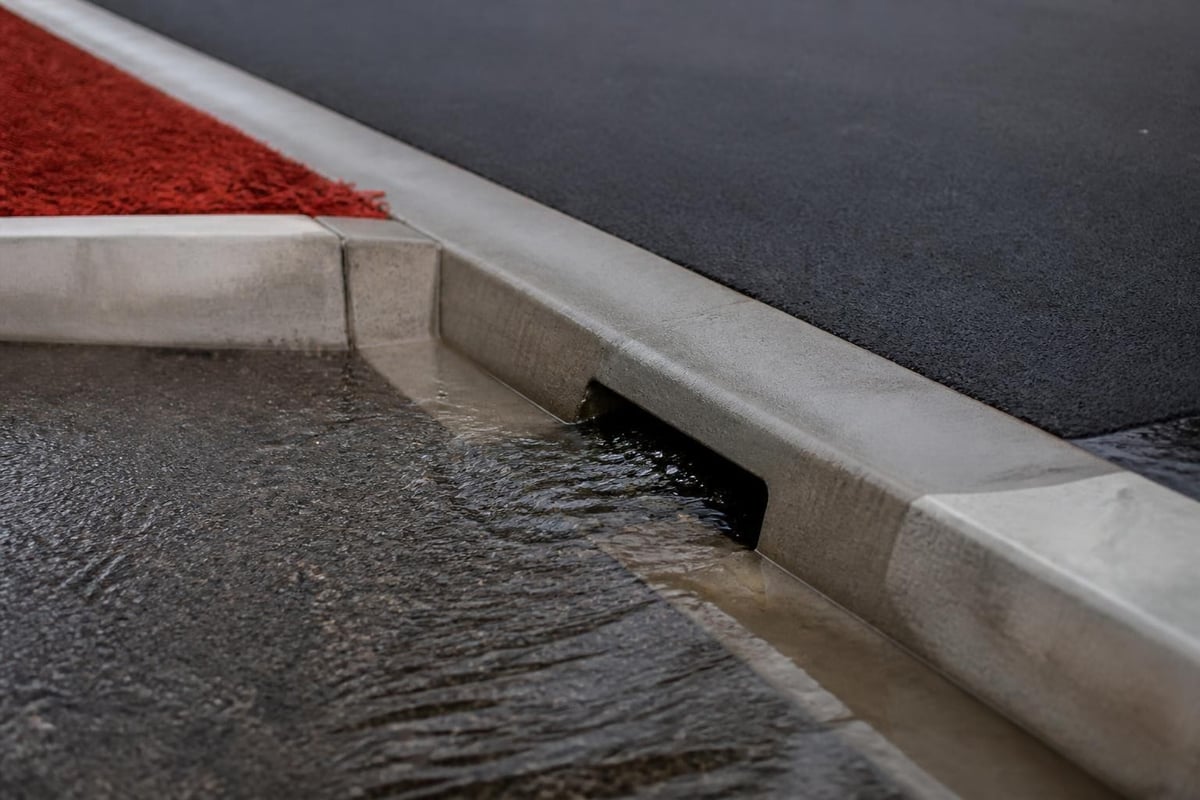
The integrated channel design distinguishes keykerb marshalls from conventional kerb systems, offering superior water management capabilities that prove essential in contemporary surface water management strategies. The channel section captures runoff directly at the surface boundary, directing flow toward designated collection points or permeable areas.
Calculating Required Drainage Capacity
Determining adequate channel capacity involves analyzing contributing surface areas, expected rainfall intensities, and acceptable flow rates. The channel cross-sectional area within keykerb marshalls units provides quantifiable capacity that designers can incorporate into hydraulic calculations. Channel profiles feature smooth internal surfaces that minimize friction losses, maximizing conveyance efficiency.
Factors affecting drainage performance:
- Surface area contributing runoff to the kerb line
- Rainfall intensity values for the project location
- Kerb gradient and resulting flow velocity
- Spacing of outlet connections to main drainage systems
- Surface texture of the channel affecting flow resistance
Professional installation of drainage services ensures that keykerb marshalls units integrate effectively with broader site drainage infrastructure, maintaining coordinated water management across entire developments.
Aesthetic Considerations and Design Integration
Beyond functional requirements, keykerb marshalls products contribute significantly to project aesthetics through carefully developed finish options and color selections. The range includes natural aggregate exposures and pigmented concrete variations that complement surrounding materials whilst maintaining visual consistency throughout kerb runs.
Color and Texture Options
Standard gray remains the most widely specified finish, offering neutral tones that suit diverse architectural contexts. However, colored variants provide opportunities for creating visual interest, demarcating specific zones, or matching existing site materials. The exposed aggregate finishes reveal carefully selected stone aggregates, creating textured surfaces that add depth and character to boundaries.
Consistency across production batches ensures that kerb runs maintain uniform appearance, avoiding the color variations that sometimes affect site-mixed concrete products. This reliability proves particularly valuable on commercial projects where visual quality directly impacts perceived development standards.
Commercial Applications and Project Examples
Large-scale commercial developments benefit substantially from keykerb marshalls installations, particularly where drainage requirements combine with significant edge loading from vehicular traffic. Shopping center perimeters, drive-through facilities, and industrial estates frequently incorporate these systems to address multiple engineering challenges simultaneously.
The construction of drive-through restaurants, similar to completed Costa Coffee and Greggs projects, demonstrates how keykerb marshalls units handle concentrated traffic patterns whilst managing surface water from extensive hardstanding areas. The robust construction withstands repeated wheel loading at acute angles, whilst the drainage channel prevents water accumulation that could compromise pavement integrity.
| Project Type | KeyKerb Benefits | Installation Considerations |
|---|---|---|
| Retail Car Parks | High drainage capacity, defined boundaries | Heavy duty haunching required |
| Drive-Through Facilities | Traffic durability, water management | Tight radius capabilities |
| Industrial Yards | Load resistance, long service life | Enhanced foundation specifications |
Residential Driveway Applications
Homeowners increasingly recognize the value that keykerb marshalls brings to residential properties, particularly where conventional drainage solutions prove impractical or visually intrusive. The system creates clean boundaries between driveways and adjacent lawns or planted areas whilst discreetly managing surface water. The complete range of kerbs and edging demonstrates how these products integrate within broader landscaping schemes.
Maintenance Requirements for Homeowners
Properly installed keykerb marshalls systems require minimal ongoing maintenance compared to alternative edging solutions. The primary maintenance activity involves periodic channel cleaning to remove accumulated sediment, leaves, and debris that could impede water flow. Simple brushing or pressure washing typically suffices to restore full drainage capacity.
Annual inspection should verify that haunching remains intact, units maintain proper alignment, and no settlement has occurred. Addressing minor issues promptly prevents progressive deterioration that could necessitate extensive repairs. The durable construction typically delivers decades of service when correctly installed, representing excellent long-term value.
Technical Specifications and Standards Compliance
Professional contractors require detailed technical information to specify keykerb marshalls products appropriately and ensure installations meet project requirements. Comprehensive specifications available through resources such as NBS Source for KeyKerb Large provide the dimensional accuracy, material properties, and performance characteristics necessary for thorough project documentation.
Dimensional Tolerances and Quality Standards
Manufacturing processes maintain strict dimensional controls ensuring units fit together precisely during installation. Length tolerances typically fall within ±3mm, whilst height and width measurements remain within ±2mm of nominal dimensions. These tight tolerances facilitate accurate setting and consistent joint widths throughout kerb runs.
Compliance with BS EN 1340 for concrete kerbs ensures keykerb marshalls products meet fundamental performance criteria including:
- Minimum compressive strength values
- Maximum water absorption percentages
- Freeze-thaw resistance classification
- Abrasion resistance ratings
Sustainable Construction Benefits
Contemporary construction practice increasingly emphasizes environmental responsibility, and keykerb marshalls contributes to sustainable development objectives through multiple mechanisms. The integrated drainage functionality supports sustainable urban drainage systems (SuDS) by facilitating surface water management at source rather than overwhelming conventional drainage infrastructure.
Environmental advantages include:
- Reduced need for separate drainage components minimizing material consumption
- Long service life reducing replacement frequency and associated resource use
- Manufactured from widely available materials with established recycling pathways
- Supports permeable paving systems by directing water to infiltration areas
- Local production reducing transportation environmental impact
The detailed specifications for KeyKerb Small include information on environmental product declarations, enabling projects to accurately assess embodied carbon and other sustainability metrics.
Integration with Broader Civil Engineering Works
KeyKerb marshalls installations rarely occur in isolation, instead forming components within comprehensive civil engineering projects. Coordination with other ground works elements ensures proper integration and optimal performance. Surface preparation, sub-base construction, drainage installation, and surfacing work must all align with kerb positioning and levels.
Effective project planning sequences these activities logically, avoiding conflicts between trades and ensuring each element supports overall project objectives. The flexibility of keykerb marshalls systems allows adaptation to site-specific constraints whilst maintaining performance standards. Whether incorporated into new construction or retrofitted into existing developments, proper planning ensures successful outcomes.
Installation Challenges and Solutions
Despite straightforward installation principles, contractors occasionally encounter site-specific challenges requiring adaptive solutions. Tight radius curves, for example, demand careful unit selection and possibly reduced unit lengths to achieve smooth geometry without excessive joint widths. The broader kerb stone range includes specialist radius units that complement keykerb marshalls in complex layouts.
Managing Variable Ground Conditions
Ground conditions significantly influence foundation requirements and installation approaches. Soft or unstable substrates necessitate enhanced foundation treatments, potentially including geotextile reinforcement, increased excavation depths, or stabilized sub-base materials. Conversely, rock or heavily compacted ground may require mechanical excavation equipment and modified haunch designs.
Professional assessment of ground conditions prior to installation prevents subsequent failures and ensures appropriate specification of foundation treatments. Experienced contractors recognize indicators of challenging conditions and adjust methodologies accordingly, maintaining installation quality regardless of substrate variability.
Cost Considerations and Project Budgeting
Understanding the complete cost implications of keykerb marshalls installations enables accurate project budgeting and value engineering. Material costs represent only one component, with excavation, foundation construction, unit placement, and haunching contributing substantially to total installed costs. However, the elimination of separate drainage channels and associated connections often results in overall cost savings compared to conventional solutions.
Budget components typically include:
- Materials (keykerb units, concrete, aggregates)
- Excavation and disposal of spoil
- Sub-base preparation and compaction
- Bedding and haunching concrete
- Labour for installation and finishing
- Equipment hire for excavation and compaction
Long-term value extends beyond initial installation costs, encompassing maintenance requirements, service life expectancy, and performance reliability. The durability of keykerb marshalls systems delivers extended service with minimal intervention, reducing whole-life costs compared to alternatives requiring frequent repair or replacement.
Quality Assurance During Installation
Maintaining consistent quality throughout installation ensures keykerb marshalls systems perform as designed over their intended service life. Systematic checking of levels, alignment, and joint widths at regular intervals prevents cumulative errors that compromise final outcomes. String lines establish precise alignment references, whilst laser levels verify gradients meet drainage requirements.
Concrete quality directly affects haunch performance and unit support. Using appropriate concrete specifications, ensuring thorough compaction around units, and allowing adequate curing time before applying loads all contribute to installation longevity. Documentation of installation procedures, including photographic records of foundation conditions and critical details, provides valuable reference for future maintenance activities.
The keykerb marshalls system represents a proven solution for projects requiring integrated kerb and drainage functionality, combining structural performance with effective water management. Whether addressing residential driveway requirements or complex commercial developments, proper product selection and professional installation deliver reliable long-term performance. For expert installation of keykerb marshalls and comprehensive civil engineering services throughout the North East and across the UK, JRG Civils brings the experience and attention to detail that ensures your project achieves exceptional standards from start to finish.