
The foundation of any successful civil engineering project rests upon the quality and precision of its earthworks. Whether constructing a commercial car park, installing a residential driveway, or developing complex highway infrastructure, the approach to earthworks can determine both the longevity of the structure and the efficiency of the entire construction process. A one earthworks strategy represents a holistic methodology that integrates planning, execution, and quality control into a seamless operation, ensuring that every cubic metre of soil moved serves a specific purpose in the project's success.
Understanding the A One Earthworks Approach
A one earthworks philosophy centres on treating the earthmoving phase as an integrated system rather than a series of disconnected tasks. This comprehensive approach begins long before the first excavator arrives on site, incorporating detailed geotechnical analysis, precise surveying, and thorough planning of material movements.
The methodology recognises that earthworks constitute far more than simply digging holes or moving dirt. Every decision made during this phase impacts subsequent construction stages, from drainage performance to structural stability. Professional civil engineering firms understand that earthwork construction requires meticulous attention to soil characteristics, compaction requirements, and environmental considerations.
Key Components of Integrated Earthworks
When implementing a one earthworks strategy, several essential elements must work in harmony:
- Site investigation and soil analysis to determine material properties and bearing capacity
- Volumetric calculations ensuring accurate estimates for cut and fill operations
- Sequencing plans that optimize equipment usage and minimize material double-handling
- Quality control protocols maintaining compaction standards throughout the project
- Environmental safeguards protecting surrounding areas from erosion and contamination
The integration of these components creates a framework where each phase informs and supports the others, reducing delays and preventing costly remediation work.
Planning Excellence in Earthworks Projects
Successful earthworks begin months before machinery reaches the site. The planning phase establishes the parameters that will govern every subsequent decision, making it arguably the most critical stage of the entire operation.
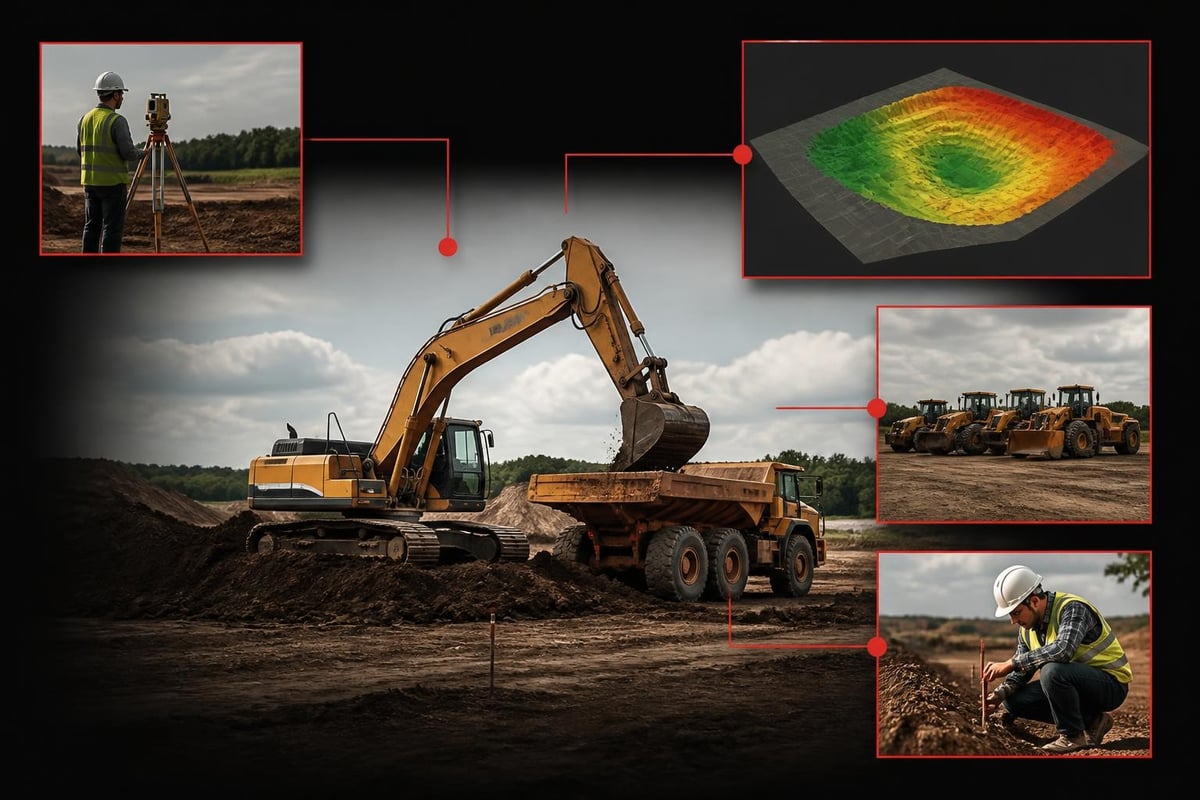
Professional teams conduct comprehensive site surveys using modern GPS technology and laser scanning equipment. These tools provide centimetre-accurate topographical data, enabling engineers to design efficient cut-and-fill operations that balance earthmoving volumes. This precision becomes particularly valuable on constrained sites where importing or exporting material proves expensive or logistically challenging.
Material Classification and Handling
Not all soil behaves identically during excavation and compaction. A one earthworks approach requires classifying materials according to their engineering properties:
| Material Type | Characteristics | Best Application |
|---|---|---|
| Granular Fill | Free-draining, stable | Road sub-bases, drainage layers |
| Cohesive Clay | Poor drainage, high plasticity | Capping layers when treated |
| Rock | Excellent bearing capacity | Deep foundations, hard standings |
| Topsoil | High organic content | Landscaping, final restoration |
Understanding these distinctions allows contractors to position materials strategically during excavation, minimizing handling costs whilst ensuring each soil type reaches its optimal application. Projects like the Leicester City Football Club training facility demonstrate how proper material management contributes to project efficiency.
The planning phase also addresses equipment selection. Different soil types and site conditions demand specific machinery capabilities. Dense clay might require powerful excavators with rock breakers, whilst sandy materials move efficiently with standard buckets and appropriate compaction equipment.
Execution Standards for Commercial Projects
Commercial earthworks demand heightened precision and coordination, particularly for time-sensitive developments. Drive-through restaurants, retail parks, and distribution centres all require level platforms, robust drainage systems, and durable surfaces capable of supporting heavy traffic loads.
A one earthworks execution strategy emphasizes continuous quality monitoring rather than end-stage inspection. Compaction testing occurs in lifts, typically 150-225mm thick, with each layer verified before the next placement. This incremental approach prevents costly remediation that might be necessary if deficiencies only appear after substantial completion.
Drainage Integration
Effective water management forms an integral component of earthworks execution. Surface water that infiltrates poorly compacted fill will inevitably compromise structural integrity, leading to settlement, rutting, and premature failure.
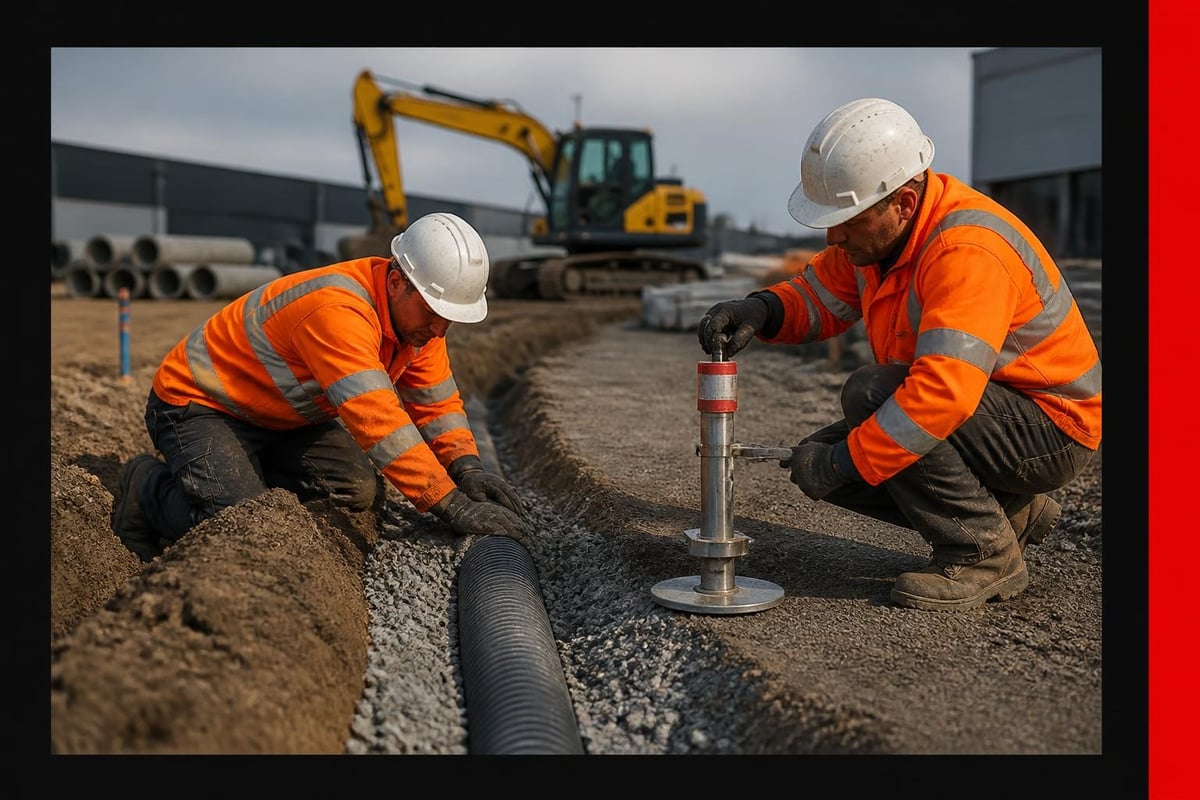
Professional earthworks incorporate drainage solutions during the construction phase:
- Install primary drainage runs in trenches with appropriate gradients
- Place permeable granular layers to intercept and channel groundwater
- Form surface falls directing rainfall to collection points
- Protect exposed surfaces during construction to prevent saturation
- Connect systems to sustainable drainage solutions or existing infrastructure
These measures become particularly crucial in highway surfacing projects where standing water accelerates pavement deterioration. The principles outlined in earthworks design best practices emphasize the importance of integrated drainage planning.
Residential Applications and Driveway Construction
Whilst commercial projects often capture attention, residential earthworks require equally rigorous standards adapted to smaller scales. A one earthworks approach benefits homeowners by ensuring their driveways, patios, and landscaping features rest upon properly prepared foundations.
Residential driveway construction exemplifies how comprehensive earthworks methodology translates to domestic projects. The process begins with excavating existing surfaces and unsuitable materials to expose stable formation level. Depth requirements vary based on soil conditions and anticipated traffic, but typical residential driveways require 200-300mm of combined sub-base and base course materials.
Compaction Requirements for Different Surfaces
Achieving appropriate compaction density ensures longevity across various surface types. The table below outlines typical standards:
| Surface Type | Formation Compaction | Sub-base Compaction | Base Course Compaction |
|---|---|---|---|
| Block Paving | 95% maximum density | 98% maximum density | 100% maximum density |
| Tarmac | 95% maximum density | 98% maximum density | 100% maximum density |
| Gravel | 90% maximum density | 95% maximum density | N/A |
| Concrete | 95% maximum density | 98% maximum density | N/A |
These standards prevent the differential settlement that creates unsightly and potentially hazardous dips and depressions. Professional contractors employ plate compactors and vibratory rollers sized appropriately for residential access constraints whilst still achieving specification requirements.
Cost Management and Estimation
Accurate earthworks cost estimation separates profitable projects from financial disappointments. A one earthworks approach includes robust estimating procedures that account for all cost drivers, from material quantities to equipment requirements and disposal fees.
The foundation of accurate estimation lies in precise volumetric calculations. Modern surveying technology enables contractors to generate digital terrain models comparing existing and proposed ground levels. These models calculate cut and fill volumes to within 1-2% accuracy, substantially more reliable than traditional methods.
Primary Cost Considerations
Several factors influence the final earthworks expenditure:
- Soil type and excavation difficulty affecting productivity rates
- Haul distances for material movement or disposal
- Compaction requirements determining equipment needs and cycle times
- Site access constraints potentially limiting machinery options
- Environmental controls such as dust suppression and sediment management
- Testing frequency for quality assurance verification
Resources like earthworks cost estimation guides provide frameworks for incorporating these variables into comprehensive budgets. Experienced contractors maintain historical productivity data that refines estimates based on proven performance metrics rather than theoretical assumptions.
The Wixam warehouses project illustrates how proper estimation and execution controls costs on large-scale developments.
Quality Assurance and Testing Protocols
Quality assurance distinguishes professional earthworks from amateur efforts. A one earthworks methodology embeds testing and verification throughout the construction sequence rather than relying solely on final inspections.
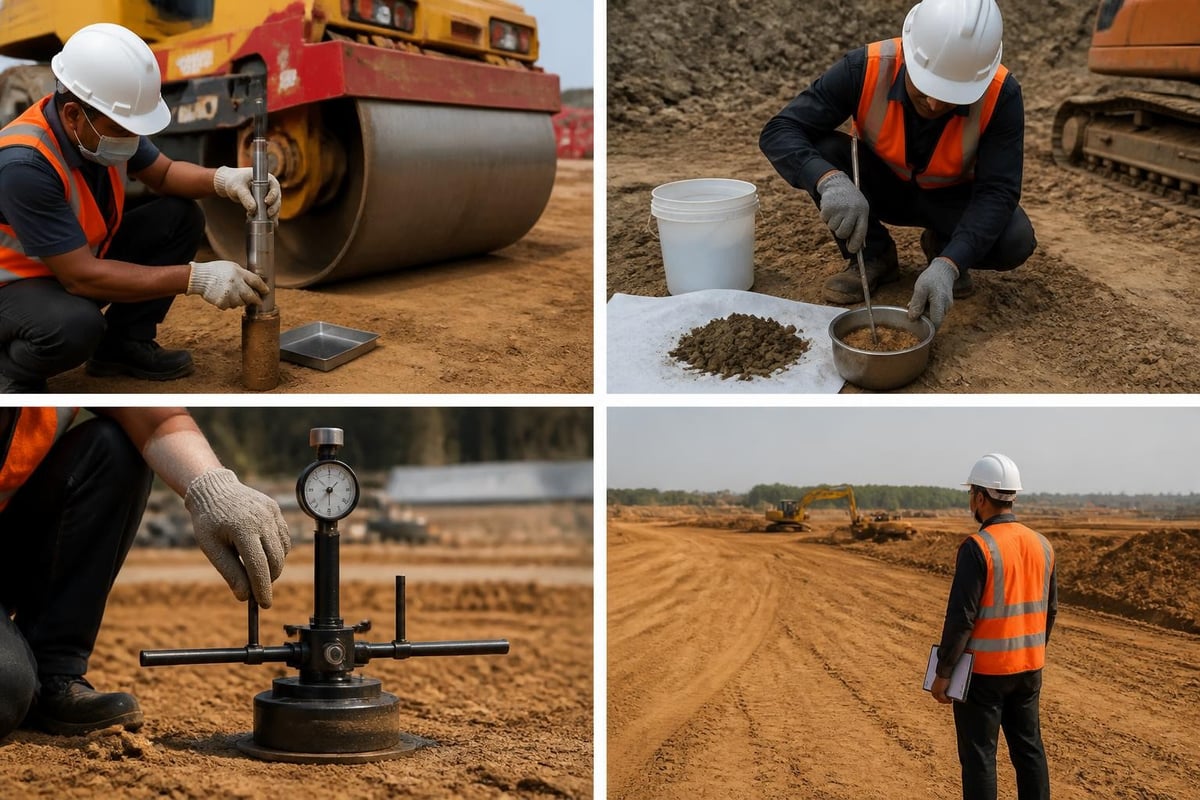
Field testing typically includes several assessment types performed at specified intervals. Nuclear density gauges provide rapid compaction verification, measuring both density and moisture content without destructive sampling. This real-time feedback enables immediate corrections if results fall below specification.
Testing Frequency and Standards
Professional earthworks follow structured testing regimes:
- Formation level testing before any fill placement begins
- Compaction testing on each 150-225mm lift at specified grid intervals
- Proof rolling using loaded vehicles to identify weak spots
- CBR testing (California Bearing Ratio) for pavement design verification
- Level surveys confirming finished surfaces meet design tolerances
The frequency increases in critical areas such as beneath structural foundations or in heavily trafficked zones. This vigilance prevents future failures that would prove far more expensive to rectify than the modest testing investment.
Environmental considerations also feature prominently in quality protocols. Sediment controls, dust suppression, and protection of existing vegetation demonstrate the broader responsibilities inherent in earthworks best practices.
Equipment Selection and Deployment
Matching equipment capabilities to project requirements optimizes productivity whilst controlling costs. A one earthworks approach recognizes that the cheapest available machinery often proves the most expensive choice when productivity losses and quality deficiencies accumulate.
Modern excavators offer sophisticated control systems including GPS-guided grading buckets that work to digital designs without traditional grade stakes. These technologies dramatically improve accuracy whilst reducing labour requirements for setting out and checking levels.
Compaction equipment selection proves equally critical. Different soil types respond optimally to specific compaction methods. Granular materials compact efficiently under vibratory rollers, whilst cohesive clays often require multiple passes with smooth-wheeled or padfoot rollers followed by vibratory equipment.
Machinery Productivity Factors
Several variables influence equipment output rates:
- Operator skill and experience dramatically affecting cycle times
- Machine size and power relative to material density and volume
- Haul distance for material movement or disposal
- Site conditions including working space and ground bearing capacity
- Weather impacts on trafficability and compaction moisture content
Professional contractors maintain diverse equipment fleets enabling optimal machine selection for varying conditions. This flexibility prevents the false economy of forcing unsuitable equipment into roles where it underperforms.
Highway Surfacing and Infrastructure Works
Highway projects demand the highest earthworks standards given the traffic loads and longevity expectations. A one earthworks philosophy aligns perfectly with infrastructure requirements where premature failure carries significant public safety and economic consequences.
Pavement design calculations specify precise subgrade strength values, typically expressed as CBR percentages. Earthworks must consistently achieve these targets across the entire alignment, not just at isolated test locations. This consistency requires meticulous control of material quality, moisture content, and compaction energy.
Structural Layers in Highway Construction
Highway pavements comprise multiple layers, each serving specific functions:
| Layer | Thickness | Primary Function |
|---|---|---|
| Subgrade | Variable | Natural foundation |
| Capping | 150-600mm | Improve weak subgrades |
| Sub-base | 150-350mm | Load distribution, drainage |
| Base Course | 100-250mm | Structural strength |
| Binder Course | 50-100mm | Surface regulation |
| Surface Course | 40-50mm | Skid resistance, waterproofing |
Each layer requires specific material properties and compaction standards. The earthworks phase establishes the foundation layers, with quality here directly impacting the entire pavement structure's performance.
Coordination with drainage installation proves essential, as highway drainage systems must integrate seamlessly with the earthworks construction sequence. This integration exemplifies the comprehensive thinking that defines a one earthworks approach.
Environmental Responsibility in Modern Earthworks
Contemporary earthworks practice extends beyond technical performance to encompass environmental stewardship. A one earthworks methodology incorporates sustainable practices that minimize ecological impact whilst meeting project objectives.
Soil management represents a primary environmental consideration. Preserving and reusing suitable excavated materials reduces both disposal volumes and the carbon footprint associated with importing virgin aggregates. Professional contractors segregate topsoil for later restoration, identify reusable materials for engineered fill, and minimize waste consigned to landfill.
Sediment and erosion control protects watercourses and adjacent properties from contamination. Temporary measures including silt fencing, check dams, and settlement ponds capture sediment before it migrates off-site. These controls require daily inspection and maintenance throughout the earthworks phase.
Water management extends to controlling dust generation on dry sites. Regular dampening of haul roads and working areas suppresses airborne particles that might affect nearby residents or sensitive ecosystems. This attention to community impact demonstrates professionalism and social responsibility.
Technology Integration and Digital Workflows
Modern earthworks increasingly leverage digital technologies that enhance accuracy, efficiency, and documentation. A one earthworks approach embraces these innovations as tools that elevate project delivery standards.
GPS machine control systems enable operators to work directly from 3D design models displayed in the cab. The technology guides cutting and filling operations to millimetre tolerances, dramatically reducing surveying requirements and eliminating grade stakes. This precision minimizes over-excavation and excess material handling.
Drone photogrammetry provides regular progress documentation and volumetric verification. Weekly flights capture current site conditions, generating updated terrain models that compare actual versus planned earthworks quantities. This transparency benefits both contractors and clients through accurate interim valuations and early identification of any deviations from design.
Digital documentation systems capture testing results, delivery tickets, and quality records in cloud-based platforms accessible to all project stakeholders. This transparency streamlines communication and provides comprehensive evidence of specification compliance.
Maintenance Considerations and Long-term Performance
Whilst earthworks constitute the hidden foundation beneath visible surfaces, their quality determines long-term maintenance requirements and lifecycle costs. A one earthworks philosophy recognizes that construction phase decisions echo throughout a structure's serviceable life.
Properly executed earthworks require minimal intervention once complete, with maintenance limited to surface renewal rather than structural remediation. Conversely, deficient earthworks manifest through progressive deterioration requiring increasingly expensive interventions.
Settlement monitoring on large projects provides early warning of any anomalous movement. Strategic placement of survey monuments enables periodic measurements confirming the earthworks platform remains stable. Any detected movement triggers investigation before minor issues escalate into major failures.
Understanding these long-term implications elevates earthworks from a temporary construction phase to a permanent investment in infrastructure quality. Professional contractors take pride in work that performs flawlessly for decades, knowing their standards prevent future problems.
The comprehensive approach adopted by specialists ensures projects benefit from proven methodologies refined through diverse experience. Whether developing commercial sites or residential improvements, the principles remain constant: thorough planning, precise execution, rigorous testing, and unwavering commitment to quality standards.
Implementing a one earthworks approach requires expertise, appropriate equipment, and an unwavering commitment to quality at every project stage. These principles apply equally whether constructing major highway infrastructure or residential driveways, with the methodology scalable to match project scope and complexity. At JRG Civils, we bring this comprehensive earthworks philosophy to every project across the UK, ensuring your civil engineering works rest upon foundations built to last. Contact our team today to discuss how our expertise can support your next development.