
The civil engineering landscape has transformed dramatically over recent years, with technology playing an increasingly vital role in project delivery. Modern excavator operators now have access to sophisticated grade control systems that fundamentally change how earthmoving work is accomplished. For contractors working on highways surfacing, driveways, and commercial developments, investing in advanced machine control technology represents a significant competitive advantage in delivering projects faster, more accurately, and with reduced material waste.
Understanding Machine Control Technology
Trimble earthworks for excavators represents a comprehensive grade control solution designed specifically for the demands of modern construction sites. This system integrates GPS positioning, 3D design files, and intuitive display interfaces to provide operators with real-time guidance throughout excavation operations.
The technology works by connecting positioning sensors mounted on the excavator with a cab-mounted display that shows the operator exactly where to dig. Unlike traditional methods requiring constant checking with surveying equipment and grade stakes, Trimble Earthworks for Excavators delivers continuous feedback that keeps operators on target throughout their shift.
Core Components and Functionality
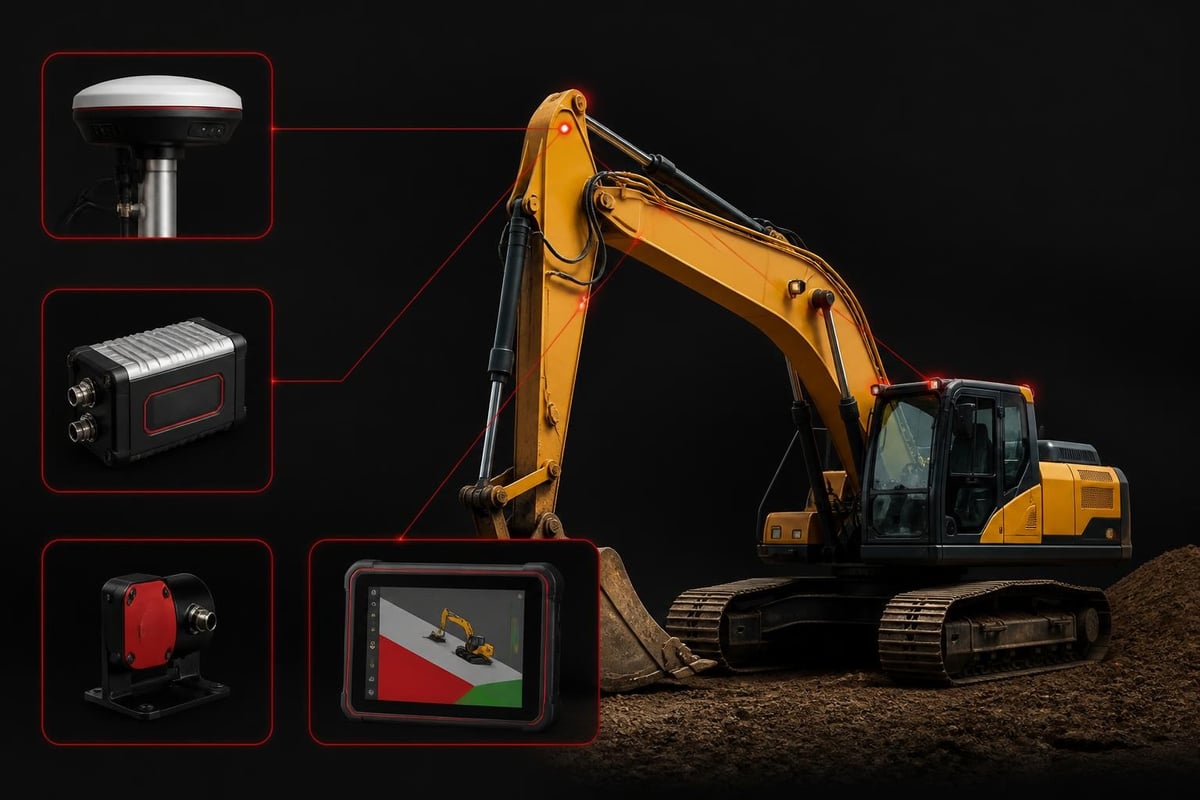
The system comprises several integrated elements working together seamlessly:
- GNSS receivers mounted on the machine for precise positioning
- Inertial measurement units (IMUs) tracking bucket position and orientation
- Tilt sensors monitoring machine and attachment angles
- Rugged touchscreen display presenting real-time design information
- Radio or cellular connectivity for data transfer and remote support
When properly configured, these components enable operators to achieve grade accuracy within centimetres rather than the traditional tolerances measured in tens of centimetres. This precision proves particularly valuable for foundations work and road construction where exact depths and slopes are critical.
Benefits for Civil Engineering Contractors
Implementing trimble earthworks for excavators delivers measurable advantages across multiple aspects of project delivery. Contractors who have adopted this technology consistently report significant improvements in productivity and profitability.
Increased Productivity and Speed
Traditional excavation methods require frequent stops for grade checking, stake placement, and surveying verification. Machine control eliminates these interruptions, allowing operators to work continuously with confidence. Research from field implementations shows productivity gains between 25% and 50% depending on project complexity and site conditions.
The Trimble Earthworks implementation at Reuscher Tiefbau demonstrated remarkable efficiency improvements, with operators completing tasks substantially faster whilst maintaining superior accuracy compared to conventional methods. For businesses handling multiple concurrent projects, this speed advantage translates directly into increased revenue potential and improved client satisfaction.
Material Cost Savings
Over-excavation represents one of the most common sources of waste on construction sites. When operators lack precise grade information, they typically dig slightly deeper than necessary to ensure adequate depth, then backfill with purchased material. This approach wastes time, fuel, and materials whilst increasing project costs.
Trimble earthworks for excavators addresses this issue through constant visual feedback showing exactly when target grade is achieved. Operators can work to precise depths without the safety margin typically added for uncertainty. Projects commonly see material savings of 10-20%, which quickly offsets technology investment costs.
| Cost Category | Traditional Method | With Trimble Earthworks | Typical Savings |
|---|---|---|---|
| Material Over-excavation | High | Minimal | 10-20% |
| Surveying Hours | Significant | Reduced | 40-60% |
| Rework Requirements | Moderate | Rare | 70-90% |
| Fuel Consumption | Baseline | Reduced | 15-25% |
Technical Capabilities and Features
The sophistication of modern machine control systems extends far beyond simple depth indication. Trimble earthworks for excavators incorporates numerous advanced features designed to support diverse project requirements and working conditions.
3D Design Integration
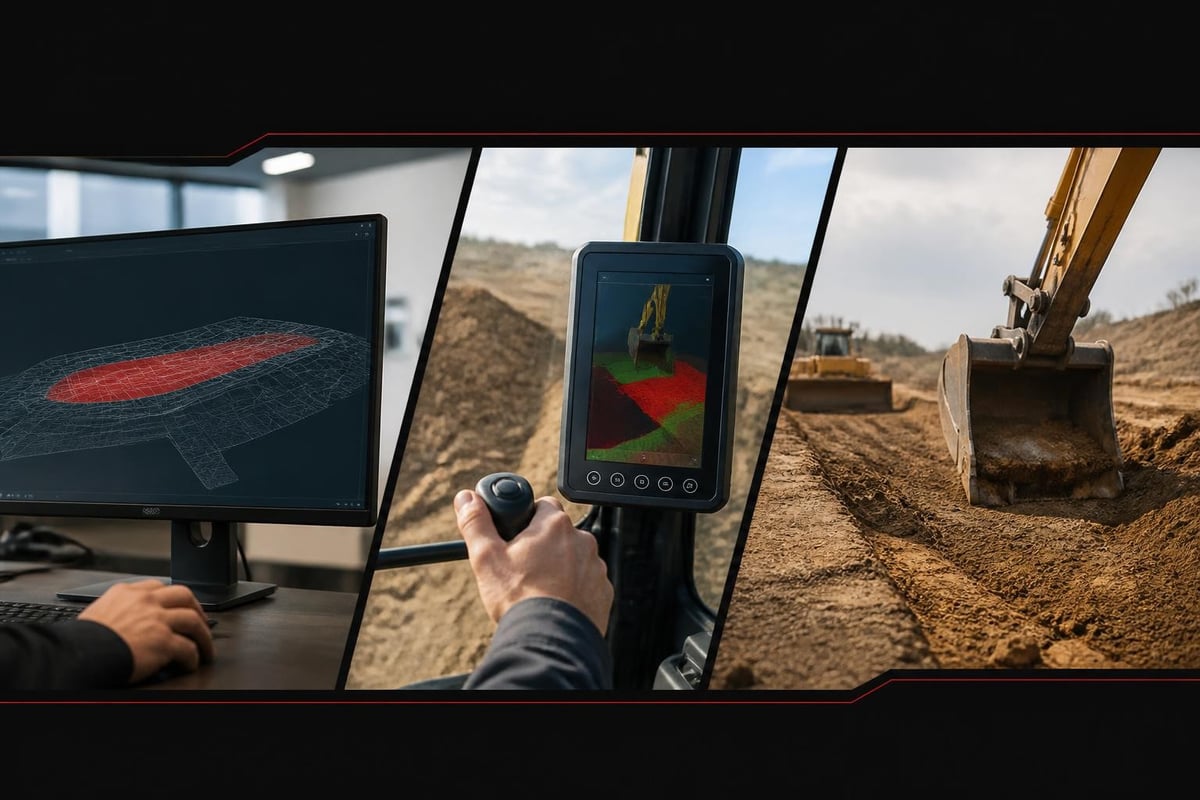
Digital design files created in civil engineering software can be loaded directly onto the excavator's display system. Operators see cross-sections, plan views, and 3D representations of the target surface alongside their current bucket position. This visual guidance makes complex geometries achievable without extensive surveying support.
For civil engineering projects involving intricate drainage systems, road profiles, or foundation layouts, the ability to visualise design intent directly in the cab proves invaluable. Operators understand not just where to dig, but why, fostering better decision-making throughout the working day.
Automated Bucket Control
Advanced configurations can integrate with excavator hydraulics to provide semi-automatic bucket control. When enabled, the system assists operators in maintaining grade by automatically adjusting bucket position as the arm moves. This feature reduces operator fatigue whilst improving consistency, particularly valuable during long shifts or repetitive grading tasks.
The technology doesn't remove operator skill from the equation but rather enhances their capabilities. Experienced operators working with trimble earthworks for excavators can achieve results previously impossible with manual methods alone.
Implementation Considerations
Successfully deploying machine control technology requires thoughtful planning and proper support infrastructure. Contractors considering this investment should evaluate several key factors before proceeding.
Initial Investment and Return
The upfront cost for trimble earthworks for excavators varies depending on configuration, machine compatibility, and feature requirements. Complete systems typically range from £25,000 to £45,000 per machine, representing a substantial capital outlay for contractors operating smaller fleets.
However, return on investment calculations consistently demonstrate payback periods of 12-24 months for contractors with steady workflow. The combination of productivity gains, material savings, reduced surveying costs, and competitive advantages in bidding creates compelling financial justification. When announced in 2017, the system represented a significant advancement in accessible machine control technology.
Training and Operator Adoption
Technology adoption success depends heavily on operator buy-in and competence. Whilst the Trimble interface is designed for intuitive use, operators still require proper training to maximise system capabilities. Most contractors schedule 1-2 days of initial training followed by ongoing support during early projects.
Younger operators often adapt quickly, having grown up with touchscreen interfaces and digital technology. More experienced operators may initially resist the change but typically become strong advocates once they experience the benefits firsthand. Creating a supportive learning environment where questions are welcomed accelerates the adoption process significantly.
Project Applications and Use Cases
The versatility of trimble earthworks for excavators makes it suitable for diverse project types across the civil engineering spectrum. Understanding where the technology delivers maximum value helps contractors prioritise implementation.
Highway and Road Construction
Road projects demand precise grading to ensure proper drainage, smooth surfaces, and structural integrity. Machine control excels in these applications, enabling operators to achieve exact subgrade elevations and cross-slopes without constant surveying intervention.
For contractors working on highways surfacing projects, the ability to prepare subgrade to exact specifications reduces the risk of costly callbacks and ensures proper pavement performance. Groundworks projects particularly benefit from the precision and efficiency gains this technology provides.
Commercial Development Sites
Large commercial projects like retail developments, industrial facilities, and franchise locations require extensive earthmoving with tight tolerances. The complexity of utility corridors, building pads, and drainage systems makes these ideal applications for machine control technology.
Projects involving multiple elevation changes, precise foundation preparation, and coordinated earthwork balance benefit significantly from the planning and execution advantages trimble earthworks for excavators provides. The technology enables smaller crews to accomplish what previously required larger teams and extensive surveying support.
Residential and Smaller Projects
Whilst the technology shines on large projects, it also proves valuable for residential work including driveways, patios, and landscaping. The ability to quickly establish accurate grades for drainage and aesthetics enhances quality whilst reducing project duration.
For businesses handling diverse commercial and domestic work, a single equipped excavator can deliver consistent precision across all project types. This versatility maximises technology investment returns whilst building reputation for quality workmanship.
System Connectivity and Data Management
Modern construction increasingly relies on connected workflows where information flows seamlessly between office and field. Trimble earthworks for excavators integrates into these digital ecosystems through various connectivity options and data management features.
Cloud-Based Design Delivery
Rather than manually loading design files onto machines, contractors can utilise cloud connectivity to push updated designs directly to equipment in the field. This capability ensures operators always work from current information, reducing errors from outdated plans and eliminating trips to the office for file updates.
When design changes occur during construction, revised files can be distributed immediately to all affected machines. This real-time communication substantially improves project coordination and reduces the risk of costly mistakes from working to superseded information.
Production Tracking and Reporting
The system automatically records work completed, tracking where material was excavated or placed throughout the shift. This as-built data provides valuable documentation for progress reporting, billing verification, and quality assurance purposes.
Managers can review completed work remotely, identifying areas requiring attention without site visits. The detailed records also support continuous improvement initiatives by highlighting productivity patterns and identifying opportunities for optimisation. For comprehensive guidance on system features, the Trimble Earthworks support portal offers extensive documentation and tutorials.

Integration with Existing Equipment
One significant advantage of trimble earthworks for excavators is its flexibility in retrofitting existing machinery. Contractors need not purchase new equipment to access advanced machine control capabilities.
Compatibility Across Machine Brands
The system works with excavators from all major manufacturers including Caterpillar, Komatsu, Volvo, Hitachi, and others. This brand-agnostic approach allows contractors to equip their current fleet regardless of machine make or model. Technical specifications detail the extensive compatibility options available.
Installation typically requires one to two days per machine, with minimal modifications to the excavator itself. The modular design means systems can be transferred between machines if fleet composition changes, protecting the technology investment over time.
Scalable Implementation Approach
Contractors need not equip their entire fleet simultaneously. Many begin with a single machine on suitable projects, then expand based on experience and workflow demands. This phased approach spreads investment costs whilst allowing time for operator training and process development.
Starting with one well-supported implementation builds internal expertise and demonstrates value before broader deployment. Success stories from early adoption help overcome resistance and build enthusiasm for wider technology integration.
Future Developments in Excavator Automation
The construction technology landscape continues evolving rapidly, with ongoing research pushing boundaries of what's possible in earthmoving automation. Understanding emerging trends helps contractors plan long-term technology strategies.
Autonomous Operation Advances
Academic research explores autonomous obstacle removal for excavators, investigating how machines might safely navigate complex sites with minimal human intervention. Whilst fully autonomous excavators remain years away from widespread commercial deployment, semi-autonomous features continue advancing steadily.
Current systems already offer automation assists for specific tasks like maintaining grade during grading passes. Future iterations will likely expand these capabilities, reducing operator workload whilst improving consistency and precision. Studies on high-precision hydraulic excavator control demonstrate the technical feasibility of enhanced automation in heavy-duty grading operations.
Enhanced Sensor Integration
Next-generation systems will incorporate additional sensor types including lidar, cameras, and advanced IMUs to provide even more detailed environmental awareness. These sensors will enable features like automatic utility detection, obstacle avoidance, and enhanced surface modelling from as-built conditions.
The progression from basic grade control to comprehensive digital guidance represents the ongoing evolution of construction technology. Trimble earthworks for excavators positions contractors at the forefront of this transformation, providing a platform that will continue improving through software updates and hardware enhancements.
Maintenance and Support Requirements
Like any sophisticated equipment, machine control systems require proper maintenance and access to technical support for optimal performance. Understanding these requirements helps contractors budget appropriately and maintain system reliability.
Regular Calibration and Checks
GPS/GNSS systems require periodic calibration to ensure positioning accuracy. Most contractors establish monthly verification routines checking system performance against known benchmarks. This proactive approach identifies issues before they impact production.
Sensor cleaning and protection from harsh site conditions extends equipment lifespan. Whilst the hardware is built for construction environments, basic care practices significantly reduce failure rates and repair costs.
Technical Support Access
Comprehensive support networks provide troubleshooting assistance, software updates, and replacement parts when needed. Establishing relationships with authorised dealers ensures rapid response when issues arise, minimising downtime and maintaining project schedules.
Many contractors opt for service agreements providing guaranteed response times and regular system health checks. For businesses where equipment downtime directly impacts revenue, this insurance proves worthwhile despite the additional cost.
Making the Technology Investment Decision
Evaluating whether trimble earthworks for excavators makes sense for a particular business requires honest assessment of project types, competitive positioning, and growth objectives.
Key Decision Factors
- Project volume and complexity: Higher workflow and technical demands increase return potential
- Competitive landscape: Technology differentiation matters more in competitive markets
- Client expectations: Sophisticated clients increasingly expect machine control capabilities
- Operator skill levels: Strong operator foundation maximises technology benefits
- Financial capacity: Adequate capital or financing for initial investment and support costs
Contractors working primarily on price-competitive commodity work may find different value propositions than those pursuing technically demanding projects where quality and precision command premium pricing. Understanding where your business sits on this spectrum informs the investment decision.
Building the Business Case
Quantifying expected benefits creates a compelling internal business case for technology investment. Consider productivity improvements, material savings, reduced surveying costs, competitive advantages in bidding, and enhanced safety outcomes when calculating return on investment.
Speaking with existing users in similar market segments provides realistic expectations and identifies potential implementation challenges. Most contractors who've adopted the technology willingly share experiences and insights with peers considering similar investments.
Modern excavation technology has fundamentally transformed how civil engineering projects are executed, delivering unprecedented precision and efficiency gains. For contractors committed to delivering excellent work from initial excavation through final completion, trimble earthworks for excavators provides the capabilities needed to exceed client expectations whilst improving profitability. Whether you're planning highway surfacing, commercial developments, or residential enhancements, JRG Civils combines traditional craftsmanship values with modern technological capabilities to deliver superior results across the North East and throughout the UK.