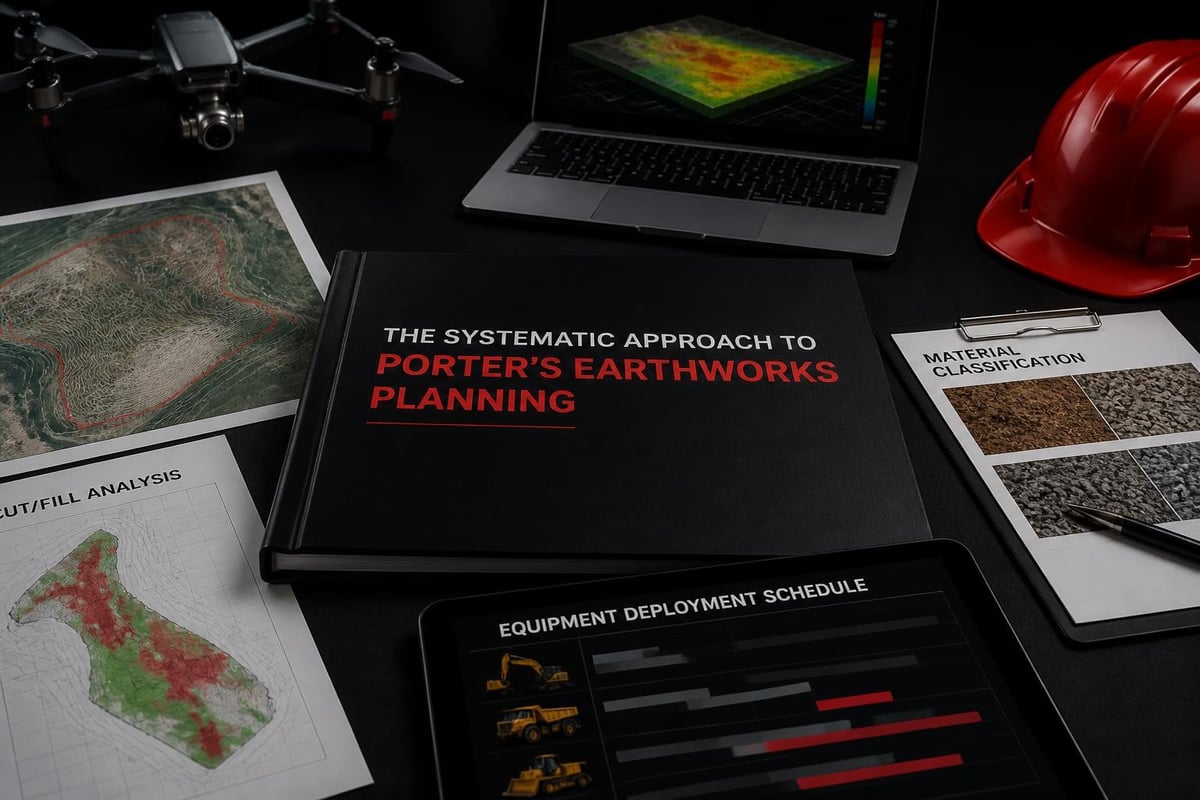
Porters earthworks represents a fundamental aspect of civil engineering that encompasses the systematic movement, manipulation, and preparation of earth materials to create stable foundations for construction projects. Whether you're developing a commercial site, constructing highways, or preparing ground for residential driveways, understanding the principles and practices of porters earthworks ensures project success from initial excavation through to final completion. This comprehensive guide explores the essential components, methodologies, and best practices that define professional earthworks operations in 2026.
Understanding Porters Earthworks in Modern Construction
Porters earthworks involves the strategic excavation, transportation, placement, and compaction of soil and rock materials to achieve specific engineering objectives. The process transforms natural terrain into suitable foundations for infrastructure development, requiring precise planning and execution.
Earthworks in civil engineering encompasses multiple disciplines, from initial site assessment through to final grading. Professional contractors must balance material quantities, understand soil mechanics, and coordinate complex machinery operations to deliver projects efficiently.
Core Components of Earthworks Operations
The foundation of successful porters earthworks rests on several interconnected elements that work together throughout project delivery:
- Site Assessment and Survey: Detailed topographical analysis identifying existing ground conditions
- Cut and Fill Calculations: Precise measurements determining material movement requirements
- Material Classification: Understanding soil types, rock formations, and their engineering properties
- Equipment Selection: Matching machinery capabilities to project demands and site constraints
- Quality Control: Continuous testing and verification of compaction and grade specifications
These components integrate seamlessly on well-managed projects, ensuring that earthworks operations proceed according to design specifications whilst maintaining safety standards.
Excavation Techniques and Material Management
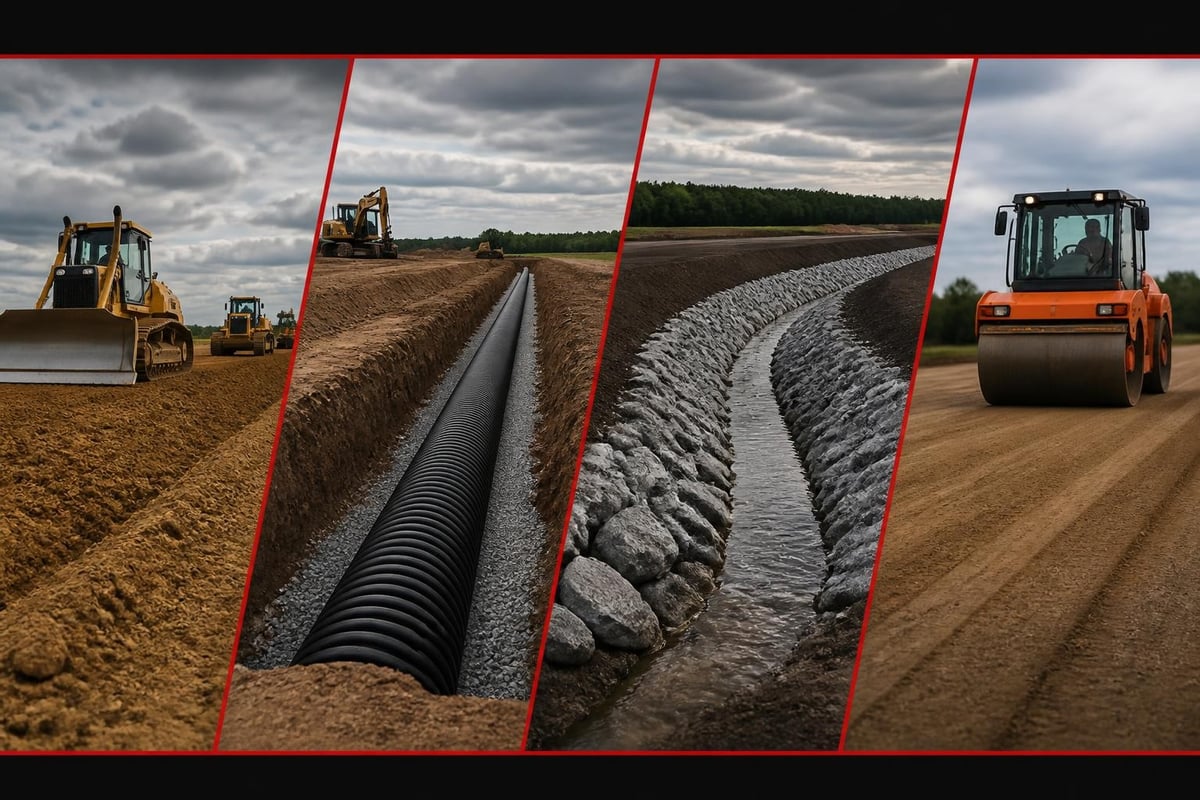
Excavation forms the initial phase of porters earthworks, requiring careful execution to preserve surrounding structures whilst efficiently removing material. Different soil conditions demand specific approaches, from mechanical excavation in stable ground to rock breaking in harder formations.
Material Handling Strategies
| Soil Type | Excavation Method | Handling Considerations | Compaction Requirements |
|---|---|---|---|
| Clay | Mechanical digger | Moisture-sensitive | High effort required |
| Sand | Hydraulic excavator | Free-draining | Moderate compaction |
| Rock | Breaking/ripping | Disposal challenges | Minimal compaction |
| Mixed soils | Combined approach | Segregation needed | Variable standards |
Material classification determines appropriate handling methods throughout porters earthworks operations. Cohesive soils behave differently from granular materials, affecting everything from excavation speed to final placement techniques.
Efficient material management minimises double-handling whilst ensuring suitable materials reach appropriate locations. Topsoil preservation, for instance, requires separate stockpiling for later reinstatement, whilst unsuitable materials may need off-site disposal.
Compaction Methodologies and Quality Standards
Compaction represents perhaps the most critical aspect of porters earthworks, directly influencing long-term structural performance. Inadequate compaction leads to settlement, surface deformation, and potential structural failure.
Achieving Specification Compliance
Professional earthworks operations employ systematic compaction protocols that ensure consistent results across project areas. Layer thickness, moisture content, and compaction effort must align with engineering specifications.
Standard compaction requirements typically include:
- Maximum loose layer thickness of 150-250mm depending on soil type
- Moisture content within 2% of optimum for cohesive soils
- Minimum 95% of maximum dry density for structural fills
- Regular testing at specified intervals throughout placement
- Documentation of all test results and compaction passes
Road construction earthworks demand particularly stringent compaction standards, as inadequate preparation causes premature pavement failure and costly remediation. Many commercial services require similarly rigorous quality control to meet performance specifications.
Modern compaction equipment ranges from small pedestrian-operated vibrating plates for confined areas to large smooth-wheeled rollers and grid rollers for bulk earthworks. Equipment selection depends on soil characteristics, layer thickness, and accessibility constraints.
Drainage Integration Within Earthworks Projects
Water management forms an integral component of porters earthworks, as moisture significantly affects soil behaviour and long-term stability. Effective drainage design prevents saturation, maintains bearing capacity, and protects infrastructure from water-related damage.
Temporary drainage during construction differs from permanent systems, yet both require careful planning. Temporary measures protect works-in-progress whilst permanent drainage ensures ongoing performance throughout the structure's service life.
Drainage System Categories
Porters earthworks projects typically incorporate multiple drainage elements working in coordination:
- Surface water management: Grading, channels, and collection systems
- Subsurface drainage: French drains, perforated pipes, and granular layers
- Cut-off drains: Intercepting upslope water before reaching critical areas
- Outfall systems: Safely conveying collected water to appropriate discharge points
Integration between earthworks and drainage requires precise coordination during construction sequencing. Installing drainage systems at appropriate stages ensures proper embedment whilst avoiding damage from subsequent earthworks operations.
Equipment and Technology in Contemporary Earthworks
Modern porters earthworks leverages advanced machinery and technology to enhance productivity, precision, and safety. Equipment capabilities have evolved significantly, with GPS-guided systems enabling centimetre-level accuracy in grading operations.
Machinery Selection Criteria
| Equipment Type | Primary Applications | Productivity Range | Optimal Conditions |
|---|---|---|---|
| Hydraulic excavators | Bulk excavation, loading | 100-500m³/day | General earthworks |
| Dozers | Spreading, rough grading | 200-800m³/day | Large open areas |
| Motor graders | Fine grading, shaping | 500-2000m²/day | Surfacing works |
| Articulated dump trucks | Material haulage | 20-40 loads/day | Medium distances |
| Compaction rollers | Soil densification | 1000-3000m²/day | All soil types |
Technology integration extends beyond machine guidance systems. Drone surveys provide rapid topographical data, whilst software platforms enable real-time cut-fill calculations and progress monitoring. These tools enhance decision-making throughout porters earthworks delivery.
Foundations for commercial projects particularly benefit from precision technology, where tight tolerances demand accurate execution. Similarly, highway surfacing projects require exact grade control to achieve specified profiles and drainage characteristics.
Site Preparation for Specific Applications
Different project types demand tailored approaches to porters earthworks, with methodologies adapted to suit intended use and performance requirements. Understanding these variations ensures appropriate specification and execution.
Commercial Development Requirements
Commercial sites often involve substantial earthworks to create level platforms for buildings and associated infrastructure. Working within constrained urban environments adds complexity through proximity to existing structures and services.
Key considerations for commercial porters earthworks include:
- Existing service protection: Identifying and safeguarding underground utilities
- Temporary works design: Supporting excavations and adjacent structures
- Material reuse strategies: Balancing cut and fill to minimise import/export
- Programme coordination: Sequencing earthworks with subsequent construction phases
- Environmental protection: Controlling dust, noise, and sediment runoff
Projects like drive-through restaurants or retail developments require careful coordination between earthworks, drainage, and surfacing operations to achieve functional layouts within tight timeframes.
Residential and Driveway Applications
Domestic earthworks projects, whilst typically smaller in scale, demand equal attention to detail. Driveways, patios, and garden features require proper ground preparation to prevent settlement and maintain aesthetics over time.
Residential porters earthworks often faces unique challenges including restricted access, proximity to buildings, and landscaping preservation. Compact equipment and careful methodology protect existing features whilst achieving specified outcomes.
Ground Improvement and Stabilisation Techniques
Some sites present challenging ground conditions requiring enhancement before standard porters earthworks can proceed. Weak soils, high groundwater, or contaminated materials necessitate specialist treatment approaches.
Common ground improvement methods include:
- Soil replacement with engineered fill materials
- Chemical stabilisation using lime or cement
- Mechanical densification through dynamic compaction
- Geosynthetic reinforcement within fill layers
- Dewatering to lower groundwater levels temporarily
Ground improvement decisions balance technical requirements against project economics. Comprehensive site investigation data informs appropriate methodology selection, ensuring cost-effective solutions that meet performance criteria.
Testing and Quality Verification Protocols
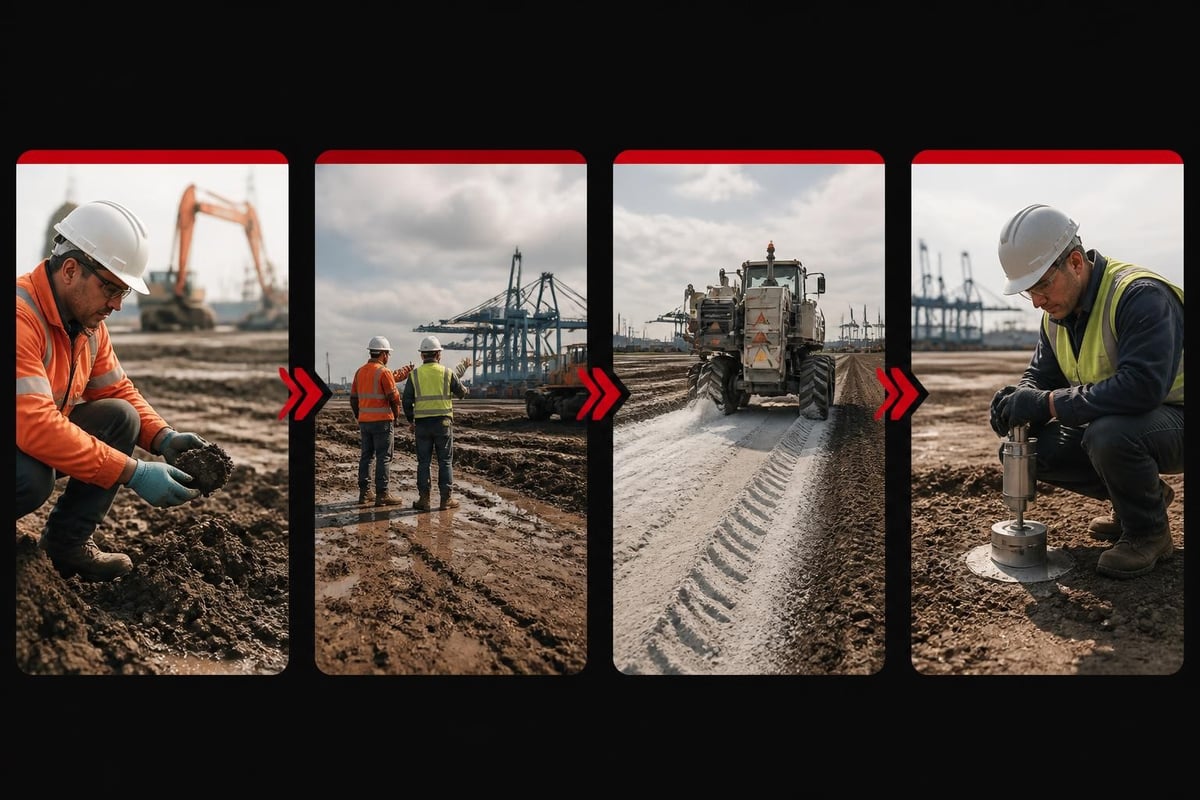
Systematic testing throughout porters earthworks operations provides objective evidence of compliance with specifications. Regular verification catches deficiencies early, enabling correction before subsequent construction proceeds.
Essential Testing Procedures
| Test Type | Purpose | Frequency | Acceptance Criteria |
|---|---|---|---|
| Density testing | Verify compaction | Every 250-500m³ | 95% max dry density |
| Moisture content | Check placement conditions | With each density test | ±2% of optimum |
| California Bearing Ratio | Assess bearing capacity | Per specification | Minimum CBR value |
| Plate bearing tests | Evaluate stiffness | Selected locations | Required modulus |
| Level surveys | Confirm grades | Continuous | ±25mm tolerance |
Documentation of testing results creates an auditable trail demonstrating quality compliance. This record protects all parties by providing objective evidence of proper execution throughout porters earthworks delivery.
Earthworks applications across industries share common quality principles despite varying scales and contexts. Whether preparing ground for infrastructure, agriculture, or mining operations, fundamental compaction and grading standards remain consistent.
Environmental Considerations and Sustainable Practices
Contemporary porters earthworks increasingly emphasises environmental stewardship alongside technical performance. Sustainable approaches minimise ecological impact whilst often delivering economic benefits through resource efficiency.
Sustainability Strategies
Modern earthworks contractors implement various environmental protection measures throughout project delivery:
- Topsoil management: Preserving and reinstating natural soil profiles
- Sediment control: Installing barriers and settlement ponds to protect watercourses
- Material reuse: Maximising on-site soil utilisation to reduce transportation
- Dust suppression: Water spraying and speed controls minimising airborne particulates
- Habitat protection: Timing works to avoid sensitive breeding seasons
These practices align with regulatory requirements whilst demonstrating corporate responsibility. Public realm projects particularly benefit from visible environmental commitment, enhancing community acceptance.
Material reuse deserves special attention within porters earthworks sustainability strategies. Balancing cut and fill minimises both import and disposal costs whilst reducing project carbon footprint through decreased vehicle movements.
Programme Planning and Resource Coordination
Successful porters earthworks delivery requires meticulous planning that coordinates resources, sequencing, and dependencies. Earthworks often sits on the critical path, with subsequent trades awaiting completion before commencing their operations.
Scheduling Considerations
Weather sensitivity significantly impacts earthworks programming. Wet conditions halt compaction works and can render sites inaccessible to heavy plant. Realistic scheduling accounts for seasonal weather patterns, building contingency for unavoidable delays.
Resource planning encompasses equipment availability, material delivery coordination, and workforce allocation. Peak efficiency occurs when all elements align, avoiding plant standing time or labour waiting for materials.
Understanding the comprehensive role of earthworks within project delivery helps stakeholders appreciate scheduling implications. Early contractor involvement enables buildability input during design, potentially streamlining execution.
Safety Management in Earthworks Operations
Porters earthworks involves inherent hazards requiring robust safety management systems. Excavations, heavy machinery, and ground instability present risks that demand constant vigilance and control measures.
Critical safety considerations include:
- Excavation support and collapse prevention
- Vehicle and plant segregation from pedestrians
- Underground service location and protection
- Edge protection around deep excavations
- Emergency response procedures and equipment
Safety culture stems from leadership commitment and workforce engagement. Regular briefings, hazard observations, and incident investigations create learning environments that continuously improve safety performance.
Site-specific risk assessments identify hazards unique to each porters earthworks project. Method statements then detail control measures, ensuring systematic hazard management throughout operations.
Cost Management and Value Engineering
Earthworks costs significantly impact overall project budgets, making efficient delivery essential for commercial viability. Understanding cost drivers enables informed decisions that optimise value without compromising quality.
Budget Control Strategies
| Cost Element | Typical Proportion | Control Approaches | Optimisation Opportunities |
|---|---|---|---|
| Plant and equipment | 35-45% | Efficient utilisation | Right-sizing machinery |
| Labour | 20-30% | Productivity focus | Skilled operators |
| Materials | 15-25% | Source locally | On-site reuse |
| Haulage | 10-20% | Minimise distances | Cut-fill balance |
| Testing/quality | 5-10% | Planned testing | Risk-based frequency |
Value engineering examines porters earthworks methodology, questioning whether alternative approaches deliver equivalent results more economically. Sometimes conventional wisdom yields to innovative solutions when objectively analysed.
Early quantities assessment prevents costly surprises during execution. Accurate surveys and calculations establish realistic budgets, whilst regular monitoring tracks actual performance against estimates.
Long-Term Performance and Maintenance Implications
Quality porters earthworks underpins decades of satisfactory service from overlying structures. Conversely, deficient ground preparation causes ongoing maintenance burdens and premature failure.
Settlement represents the primary long-term concern, occurring when inadequately compacted fills consolidate under load or environmental cycles. Differential settlement proves particularly problematic, inducing stress concentrations in supported structures.
Maintenance requirements for earthworks-dependent infrastructure reflect initial construction quality. Well-executed porters earthworks with proper drainage and compaction minimises subsequent intervention needs, delivering lifecycle cost benefits.
Regulatory Compliance and Specification Adherence
Porters earthworks operates within regulatory frameworks governing construction activities, environmental protection, and public safety. Compliance ensures legal operation whilst protecting project stakeholders from liability.
Specifications translate design intent into measurable requirements that contractors must achieve. Understanding specification nuances prevents disputes and ensures delivered works meet intended performance criteria.
Highway specifications, for instance, impose stringent standards reflecting infrastructure importance and expected traffic loadings. Piling services similarly demand exacting ground preparation to ensure pile integrity and performance.
Professional earthworks contractors maintain current knowledge of applicable standards, codes, and regulations. This expertise guides compliant delivery whilst advising clients on regulatory implications affecting project scope and cost.
Porters earthworks excellence demands comprehensive understanding of ground conditions, appropriate methodologies, and quality standards that ensure long-term performance across commercial and residential applications. Whether you're planning highway infrastructure, commercial developments, or domestic improvements, partnering with experienced professionals delivers the foundation for project success. JRG Civils brings proven expertise across all aspects of civil engineering and earthworks, from initial site preparation through to completion, serving clients throughout the North East and across the UK with the attention to detail and commitment to quality that your project deserves.