
Modern civil engineering demands precision, efficiency, and the ability to deliver complex projects on time and within budget. Whether you're constructing highways, commercial developments, or residential driveways, the technology you deploy can mean the difference between profitability and project delays. Trimble earthworks represents a significant advancement in 3D grade control technology, transforming how contractors approach excavation, grading, and surfacing operations across the construction industry.
Understanding the Trimble Earthworks Platform
Trimble earthworks is a comprehensive 3D grade control system designed to enhance productivity and accuracy across various construction machines. The platform integrates advanced GPS and laser positioning technology with intuitive software, enabling operators to work with precision from the cab of their equipment.
At its core, the system provides real-time guidance for excavators, dozers, graders, and compactors. Operators receive instant feedback about blade position, depth, and grade, eliminating the need for constant surveying and manual staking. This digital approach to earthmoving fundamentally changes how contractors execute projects.
Key Components of the System
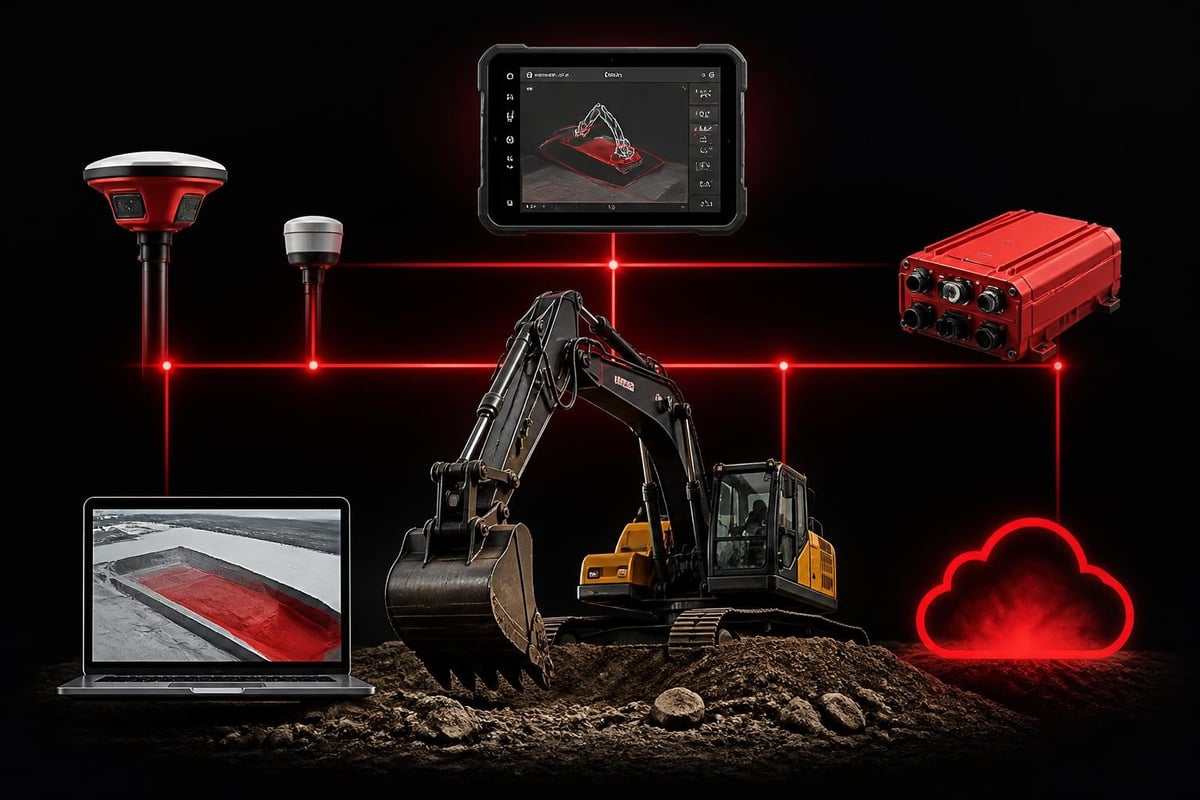
The trimble earthworks platform comprises several integrated elements that work together seamlessly:
- In-cab display: A touchscreen interface that provides operators with 3D visualisation of design surfaces and current machine position
- Positioning sensors: GPS, laser receivers, or total station sensors that track machine location and movement
- Machine control modules: Hardware that translates design data into actionable guidance for hydraulic systems
- Design software integration: Compatibility with major CAD and civil engineering design packages
- Cloud connectivity: Real-time data sharing between machines, office, and project stakeholders
The Trimble Earthworks Grade Control Platform offers a unified interface across different machine types, reducing training time and improving operational efficiency across your fleet.
Practical Applications for Civil Engineering Projects
For contractors specialising in highways, surfacing, and commercial developments, trimble earthworks delivers tangible benefits across multiple project types. The technology adapts to various applications, from large-scale infrastructure to detailed residential work.
Highway and Road Construction
Road construction demands strict adherence to design specifications, particularly for drainage, crown, and surface smoothness. Trimble earthworks enables operators to achieve precise grades on the first pass, significantly reducing the need for rework. The system handles complex cross-slopes and transitions that are common in highway design.
When constructing access roads for commercial franchises or main thoroughfares, the ability to work accurately in all conditions becomes crucial. The platform's 3D models account for drainage requirements, camber, and super-elevation, ensuring every section meets engineering standards.
| Application | Primary Benefit | Time Savings |
|---|---|---|
| Highway grading | First-pass accuracy | 30-40% |
| Car park construction | Precise drainage slopes | 25-35% |
| Access roads | Complex geometry handling | 35-45% |
| Driveway installations | Rapid setup and execution | 40-50% |
Commercial Development Projects
Large commercial projects, such as drive-through facilities or retail developments, require extensive site preparation. These projects involve civil construction building activities that benefit enormously from digital grade control.
The case study from NIX Contracting demonstrates impressive results, with a 60% production increase and doubled workload capacity within twelve months of adopting the technology. For civil engineering firms competing for commercial contracts, this level of productivity improvement directly impacts profitability.
Residential and Small-Scale Applications
Trimble earthworks isn't limited to large machinery. The system scales down effectively for mini excavators and compact equipment used in residential projects. Contractors working on patios, driveways, and landscaping features can achieve professional-grade results with reduced physical effort.
Scotty’s Contracting enhanced productivity by up to 50% by integrating trimble earthworks into mini excavators, demonstrating its versatility in tight residential spaces where precision matters most.
Implementation and Workflow Integration
Successfully deploying trimble earthworks requires thoughtful integration into your existing processes. The transition from traditional methods to digital grade control involves several key stages.
Initial Setup and Training
The platform's user interface prioritises intuitive operation, but comprehensive training remains essential. Operators need to understand:
- Design file import procedures: Loading CAD files and creating working surfaces
- Calibration processes: Ensuring accurate machine measurements and sensor alignment
- Interface navigation: Efficiently accessing different views and data layers
- Quality control protocols: Verifying work against design specifications
- Data export functions: Capturing as-built information for project documentation
Most contractors report that operators become proficient within days rather than weeks, particularly when transitioning from other machine control systems.
Design File Preparation
The overview of Trimble Earthworks capabilities highlights the importance of proper design file preparation. Files must contain accurate surface models, linework, and alignment data that reflect the intended construction outcome.
Civil engineers and designers should coordinate closely with field teams to ensure:
- Surface models represent buildable grades with appropriate tolerances
- Drainage features are clearly defined and achievable
- Complex transitions are simplified where possible without compromising design intent
- File sizes remain manageable for efficient machine performance
Productivity and Business Impact
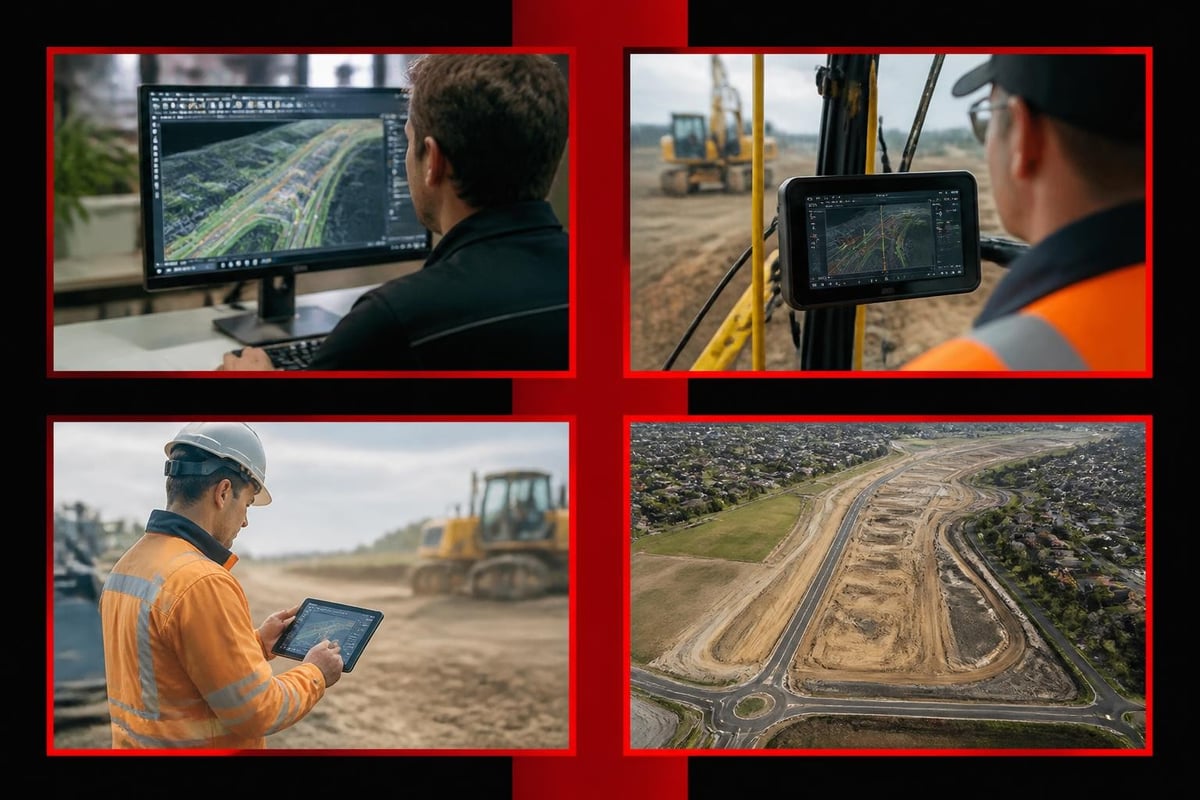
The financial justification for trimble earthworks becomes clear when examining productivity metrics, reduced rework, and improved project margins. Contractors report significant improvements across multiple performance indicators.
Measurable Performance Improvements
Reduced surveying costs represent one of the most immediate benefits. Traditional staking and grade checking require dedicated survey crews making multiple site visits. With continuous machine guidance, these costs decrease substantially while accuracy improves.
Faster project completion emerges from first-pass grading accuracy and reduced rework cycles. When operators can see precisely where they are relative to design grade, they work confidently and quickly.
The fully digital earthworks programme implemented by one contractor integrated over 270 machines, achieving real-time quality conformance across massive sites.
Return on Investment Considerations
| Cost Factor | Traditional Method | With Trimble Earthworks |
|---|---|---|
| Survey labour per hectare | £1,200-£1,800 | £200-£400 |
| Rework percentage | 8-15% | 2-4% |
| Production rate (m³/hour) | 45-60 | 70-95 |
| Fuel consumption per m³ | Baseline | 15-25% reduction |
| Project timeline | Baseline | 20-35% shorter |
These improvements compound across multiple projects. For civil engineering firms undertaking building engineering projects, the technology becomes a competitive differentiator when bidding and executing work.
Advanced Features and Capabilities
Modern trimble earthworks systems incorporate sophisticated features that extend beyond basic grade control. These advanced capabilities address specific challenges that contractors encounter in complex projects.
Mastless and Hybrid Positioning
Traditional GPS systems require masts extending above the machine, which can be problematic in confined spaces or near overhead obstacles. Mastless solutions integrate positioning technology directly into the machine structure.
Rummel Construction adopted mastless grade control alongside drones, achieving a 30% efficiency boost whilst improving site safety. This approach proves particularly valuable for urban projects and sites with overhead utilities.
Compaction Control Integration
Beyond excavation and grading, trimble earthworks extends into compaction management. Intelligent compaction systems provide real-time feedback about material density, moisture content, and pass count.
Operators can see exactly which areas require additional compaction and which meet specification, eliminating guesswork and ensuring structural integrity. This capability is essential for highway subgrades and commercial car parks where inadequate compaction leads to premature failure.
Multi-Machine Coordination
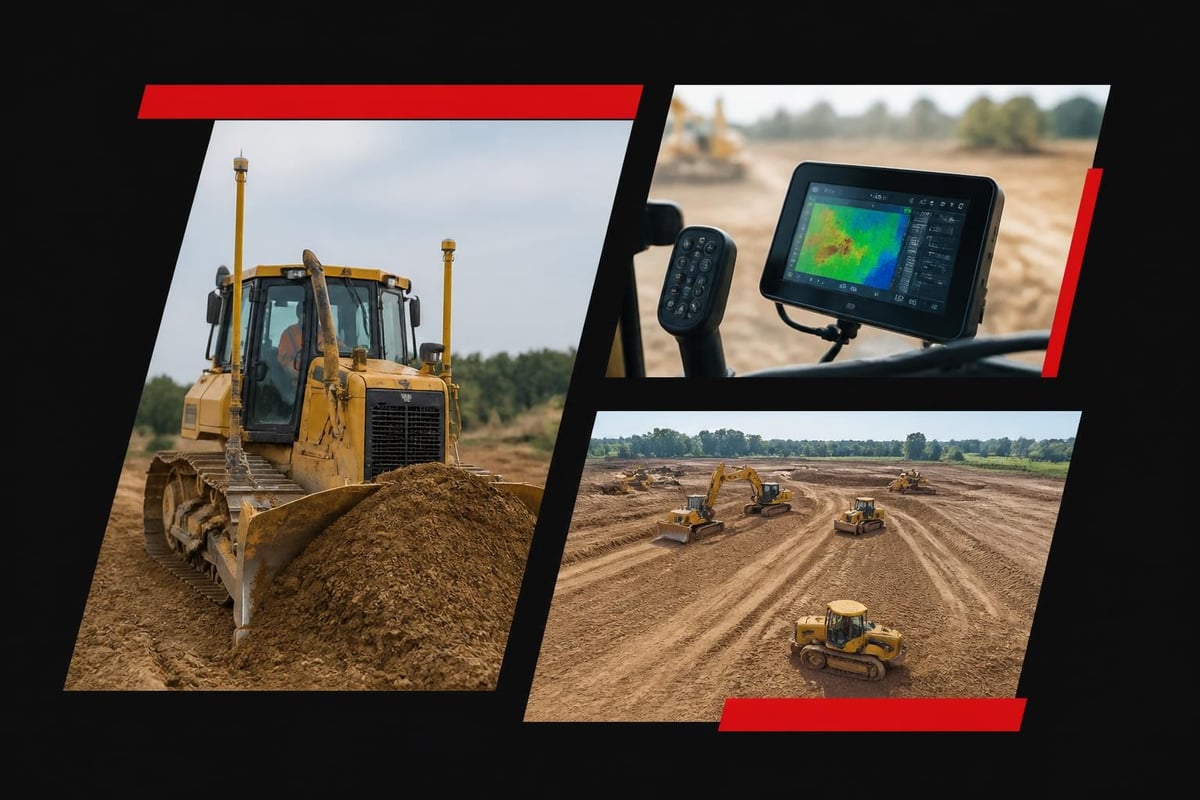
Large projects benefit from coordinated machine operations. Trimble earthworks enables multiple machines to work from the same design files whilst tracking each other's positions, preventing conflicts and optimising workflow.
Project managers can monitor progress across the entire fleet through cloud-based dashboards, identifying bottlenecks and reallocating resources as needed.
Specific Use Cases and Success Stories
Real-world applications demonstrate how trimble earthworks solves practical challenges across diverse project types. These examples illustrate the technology's versatility and impact.
Deep Excavation Projects
Complex excavations present significant safety and precision challenges. The case study from Buesing Corp. shows how they utilised trimble earthworks and 3D models to safely execute deep excavations with exceptional precision.
For contractors working on commercial developments requiring extensive basement excavation or utility installations, this capability reduces risk whilst maintaining productivity. The ability to work accurately in deep cuts prevents over-excavation and reduces backfill requirements.
Precision Dredging and Marine Applications
Whilst less common for typical civil engineering firms, the precision dredging project at Fort Jefferson demonstrates trimble earthworks versatility. The project required protecting historic structures whilst achieving precise depths and verifying quantities in a challenging environment.
These principles apply to any project where working near sensitive structures demands exceptional control and documentation.
Maintenance and Ongoing Support
Implementing trimble earthworks represents a long-term commitment requiring proper maintenance and support infrastructure. Understanding these requirements helps contractors plan effectively.
System Maintenance Requirements
Regular maintenance ensures consistent performance:
- Daily equipment checks: Verifying sensor cleanliness, cable connections, and display functionality
- Weekly calibrations: Confirming system accuracy through known benchmarks
- Monthly updates: Installing software patches and feature enhancements
- Annual servicing: Professional inspection and recalibration of positioning components
- Backup procedures: Regular data exports and design file archiving
Most contractors establish maintenance routines that operators can perform as part of standard equipment preparation, minimising downtime and ensuring reliability.
Technical Support and Training Resources
Trimble provides comprehensive support networks including local dealers, online resources, and telephone assistance. Contractors should establish relationships with local support providers who understand regional project requirements.
Ongoing training keeps operators current with new features and best practices. Many firms schedule quarterly refresher sessions, particularly when adding new machines or expanding into different project types.
Integration with Broader Digital Workflows
Trimble earthworks functions most effectively as part of an integrated digital ecosystem. Modern civil engineering firms are adopting comprehensive digital workflows that connect design, construction, and project management.
Building Information Modelling (BIM) Connectivity
The platform integrates seamlessly with BIM processes, allowing direct import of intelligent 3D models containing design intent, material specifications, and construction sequencing. This connectivity ensures that what operators build matches precisely what designers intended.
For contractors pursuing civil engineering opportunities in the UK, BIM proficiency increasingly becomes a prerequisite for major projects.
As-Built Documentation
Trimble earthworks automatically captures as-built data during construction. Operators working according to design create digital records of actual installed conditions, providing valuable documentation for quality assurance and future maintenance.
This automated documentation reduces administrative burden whilst improving accuracy compared to manual survey methods.
Project Management Platform Integration
Modern construction management platforms can receive real-time data from trimble earthworks systems, updating progress dashboards, material tracking, and billing information automatically. This integration reduces duplicate data entry and improves project visibility for all stakeholders.
Selecting the Right Configuration
Not all trimble earthworks configurations suit every contractor or project type. Understanding available options helps firms make appropriate investments aligned with their business needs.
Machine Type Considerations
Different machines benefit from different control approaches:
- Excavators: Typically use 2D or full 3D control depending on complexity
- Dozers: Often employ full 3D control for grading operations
- Graders: Require sophisticated cross-slope control for road construction
- Compactors: Focus on compaction measurement and documentation
- Mini excavators: Utilise compact systems optimised for tight spaces
Contractors should prioritise systems based on their primary equipment and typical project requirements.
Positioning Technology Options
| Technology | Accuracy | Best Applications | Limitations |
|---|---|---|---|
| GPS only | ±15-25mm | Open sites, bulk earthworks | Obstructed areas |
| GPS + laser | ±10-15mm | Mixed environments | Requires base stations |
| Total station | ±5-10mm | Confined spaces, precision work | Limited range |
| Hybrid systems | ±5-15mm | All applications | Higher cost |
Many contractors working on diverse projects select hybrid systems offering flexibility across different site conditions.
Modern civil engineering demands precision and efficiency that traditional methods struggle to deliver. Trimble earthworks provides the technological foundation for contractors to meet these demands whilst improving profitability and competitive positioning. Whether you're constructing highways, commercial developments, or residential driveways, investing in digital grade control technology represents a strategic decision that impacts every project you undertake. At JRG Civils, we understand the importance of combining cutting-edge technology with skilled craftsmanship to deliver exceptional results across all our civil engineering projects throughout the North East and beyond.