
Modern civil engineering demands precision, efficiency, and technological integration to deliver projects on time and within budget. As the industry evolves, contractors face increasing pressure to reduce costs whilst maintaining exceptional quality standards. The advent of machine control technology has fundamentally transformed how earthmoving operations are planned and executed, with trimble earth works standing at the forefront of this revolution. This sophisticated grade control platform enables contractors to achieve unprecedented accuracy in grading, excavation, and compaction tasks, whilst simultaneously reducing rework and improving operator productivity across diverse project types from highways to commercial developments.
Understanding Trimble Earth Works Technology
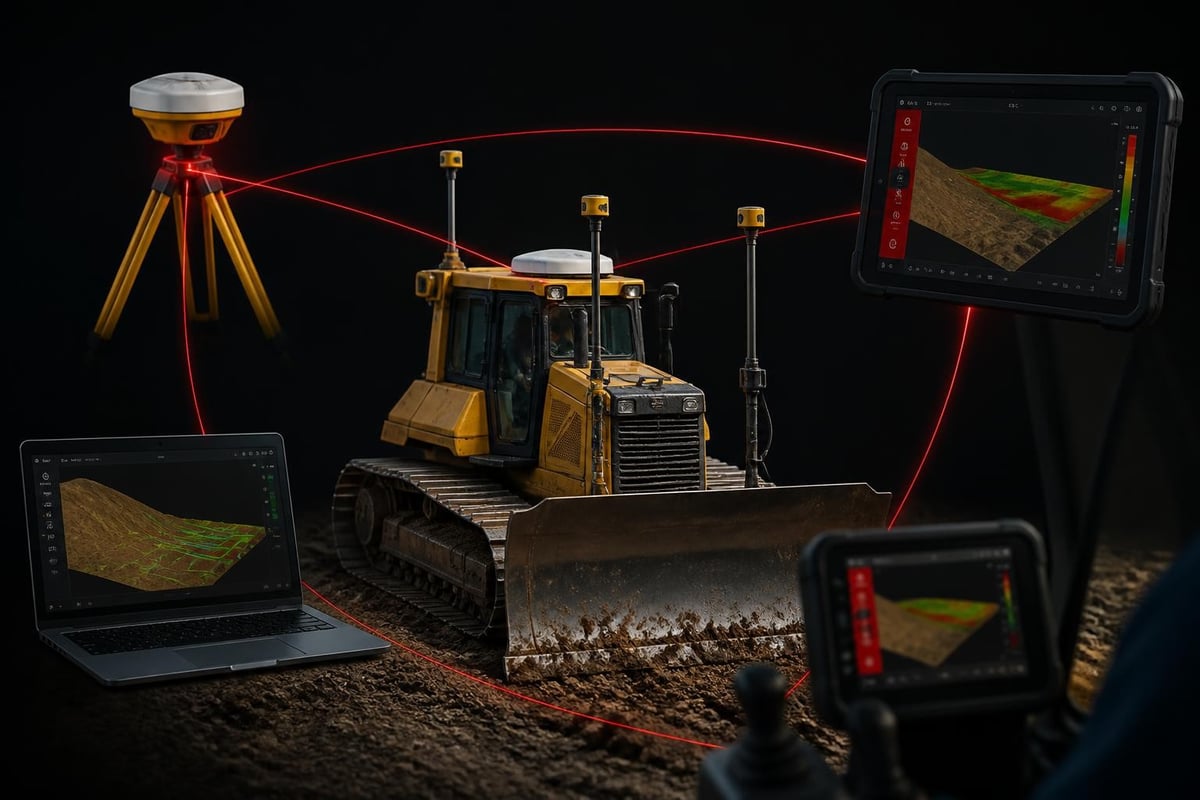
Trimble earth works represents a comprehensive 3D grade control platform designed specifically for construction machinery. The system integrates digital design files directly into excavators, dozers, graders, and compactors, providing operators with real-time guidance that eliminates traditional grade stakes and manual measurements.
The technology transforms how civil engineering projects approach site engineering challenges. Operators view their machine's position relative to the design surface on an in-cab display, receiving continuous feedback about cut and fill requirements. This immediate visual reference enables precise grading with significantly fewer passes than conventional methods.
Core Components of the System
The trimble earth works platform comprises several integrated elements that work together seamlessly:
- In-cab touchscreen display providing intuitive 3D visualisation of design surfaces
- GNSS receivers delivering centimetre-level positioning accuracy
- Inertial measurement units tracking blade and bucket orientation
- Machine-mounted sensors monitoring hydraulic movements and machine geometry
- Wireless connectivity enabling design file updates and production data transfer
These components create a closed-loop system where design intent translates directly into physical reality. The Trimble Earthworks Grade Control Platform delivers comprehensive functionality across multiple machine types, ensuring consistency regardless of equipment manufacturer.
Operational Benefits for Civil Contractors
The implementation of trimble earth works delivers measurable improvements across multiple operational dimensions. Contractors consistently report productivity gains ranging from 30% to 50% compared to traditional grading methods, with some achieving even higher efficiency increases in specific applications.
Accuracy represents perhaps the most significant advantage. Traditional staking methods typically achieve tolerances of ±50mm, whilst machine control systems routinely deliver ±10mm precision. This enhanced accuracy reduces material waste, eliminates over-excavation costs, and ensures proper drainage gradients from initial passes.
Productivity Enhancement Metrics
| Performance Indicator | Traditional Methods | Trimble Earth Works | Improvement |
|---|---|---|---|
| Grade Tolerance | ±50mm | ±10mm | 80% reduction |
| Staking Costs | £15,000-£25,000 | Eliminated | 100% saving |
| Operator Efficiency | Baseline | 30-50% faster | Significant gain |
| Rework Requirements | 15-20% of time | 2-5% of time | 75% reduction |
The financial implications extend beyond immediate productivity gains. Projects complete faster, reducing equipment rental costs, labour expenses, and site overheads. For companies like those working on building and civil engineering projects, these savings directly impact profit margins whilst enhancing competitive positioning.
Applications Across Civil Engineering Projects
Trimble earth works excels across diverse construction scenarios, from large-scale highway developments to residential driveways. The system's versatility enables contractors to deploy consistent methodology regardless of project scale or complexity.
Highway and Road Construction
Road building demands precise longitudinal and cross-slope control to ensure proper drainage and riding quality. The trimble earth works platform enables operators to achieve exact subgrade elevations whilst maintaining complex cross-sections. Highway projects benefit particularly from the system's ability to handle intricate junction geometries and transition curves.
The technology proved invaluable on projects similar to major service area developments, where tight tolerances and coordinated earthworks determine project success. Operators working on kerb installations, pavement layers, and drainage gradients achieve specification compliance consistently.
Commercial Development Sitework
Commercial projects require coordinated grading that accommodates building pads, car parks, drainage systems, and utility corridors. The comprehensive sitework capabilities enabled by trimble earth works allow contractors to manage these complex requirements efficiently.
A case study demonstrates this versatility: Buesing Corp. employed Trimble Earthworks and 3D models to safely and precisely execute complex, deep excavations, highlighting competitive advantages gained through advanced machine control. Their experience mirrors challenges faced on commercial developments where basement excavations, utility trenches, and foundation preparations demand millimetre-level precision.

Implementation and Workflow Integration
Successful trimble earth works deployment requires thoughtful integration into existing workflows. The transition from conventional methods demands initial investment in training, process modification, and quality control procedures, but contractors who commit to comprehensive adoption realise substantial returns.
Design File Preparation
The workflow begins in the office where engineers prepare digital terrain models and design surfaces. These files must accurately represent final grade intentions, including:
- Surface definitions for subgrade, base courses, and finished elevations
- Corridor models defining road centrelines, cross-sections, and transitions
- Drainage elements including swales, ditches, and collection points
- Utility locations requiring excavation or avoidance
- Boundary definitions establishing work limits and property lines
Modern software enables seamless file transfer to field equipment. The Design to Device feature allows users to select model features and send them directly to devices running trimble earth works, facilitating immediate field integration without intermediate conversion steps.
Operator Training Requirements
Effective system utilisation depends on operator proficiency. Training programmes typically span three to five days, covering:
- System fundamentals including GNSS principles and accuracy factors
- Display interpretation for various grading scenarios and machine types
- Calibration procedures ensuring sensor accuracy and machine geometry verification
- Troubleshooting techniques addressing common field issues independently
- Quality verification methods confirming achieved grades match design intent
Contractors investing in comprehensive training report faster return on investment and higher operator acceptance rates. Experienced operators often become system advocates, driving broader technology adoption across equipment fleets.
Advanced Features and Capabilities
Beyond basic grade control, trimble earth works incorporates sophisticated features that address complex construction challenges. These advanced capabilities differentiate the platform from simpler guidance systems.
Compaction Control Integration
Recent platform updates include support for soil compactors, as detailed in the new version announcement. This expansion enables integrated compaction management where operators monitor pass counts, coverage patterns, and achieved density values directly through the trimble earth works interface.
Compaction control proves particularly valuable on projects requiring documented density verification, such as highway embankments and structural fill zones. The system automatically generates spatial reports showing compaction effort distribution, identifying areas requiring additional passes before acceptance testing.
Multi-Machine Coordination
Large earthmoving operations often deploy multiple machines simultaneously. The trimble earth works platform facilitates coordination through:
- Shared design files ensuring all machines work from identical surface models
- Real-time position tracking preventing conflicts and optimising traffic patterns
- Production monitoring identifying high-performing operators and equipment bottlenecks
- Progress visualisation showing completed versus remaining work areas
- Automated reporting documenting daily production and material movements
A compelling example of multi-machine integration comes from a contractor who connected over 270 machines, ensuring near real-time quality conformance on a large-scale project. This digital integration demonstrates practical benefits achievable when trimble earth works forms the foundation of enterprise-wide technology strategies.
Cost-Benefit Analysis for Contractors
Investment in trimble earth works technology requires careful financial evaluation. System costs vary depending on machine types, fleet size, and support requirements, but typical implementations range from £25,000 to £45,000 per machine including hardware, software, and initial training.
Return on Investment Calculations
| Cost Factor | Annual Impact | Notes |
|---|---|---|
| System Investment | £35,000 amortised | 5-year depreciation typical |
| Productivity Gain | £75,000-£125,000 | Based on 30-50% efficiency increase |
| Staking Elimination | £15,000-£25,000 | Per medium-sized project |
| Reduced Rework | £20,000-£35,000 | Material and time savings |
| Competitive Advantage | Variable | Enables winning complex bids |
Most contractors achieve payback within 12 to 18 months on actively utilised machines. The return accelerates when systems deploy across multiple projects annually, particularly those involving complex grading requirements where conventional methods prove time-intensive.
Beyond quantifiable savings, trimble earth works delivers strategic advantages. Contractors equipped with machine control technology can confidently bid projects that competitors avoid due to complexity or tight tolerances. This capability expansion opens new market segments whilst reinforcing reputation for technical competence.
Integration with Estimating and Project Management
The trimble earth works ecosystem extends beyond field operations into upstream planning and estimating functions. Comprehensive guidance on the Earthwork module demonstrates how contractors can perform takeoffs, calculate cut and fill quantities, and manage sitework elements directly from blueprints during the estimating phase.
This integration creates data continuity from initial bid through final grading. Quantity calculations developed during estimating transform directly into production targets and design surfaces for machine control, eliminating redundant data entry and reducing transcription errors.
Project Execution Workflow
Modern civil engineering firms leverage trimble earth works within comprehensive digital workflows:
- Pre-construction planning using earthwork modules to optimise haul routes and balance cut-fill quantities
- Site establishment with GNSS base station setup and control network verification
- Production execution guided by real-time machine control and progress monitoring
- Quality verification through automated as-built surface generation and variance analysis
- Documentation delivery providing clients with detailed records of achieved grades and material quantities
This systematic approach ensures consistency across projects whilst building institutional knowledge. Firms document lessons learned, refine standard procedures, and continuously improve efficiency through data-driven analysis of historical performance.
Specialised Applications and Case Studies
While trimble earth works excels in conventional grading scenarios, the technology also enables specialised applications that would prove extremely challenging with traditional methods. These niche capabilities demonstrate the platform's versatility and precision.
Precision Excavation in Sensitive Environments
Historical preservation projects and environmentally sensitive sites demand exceptional control to prevent damage whilst achieving specification compliance. One compelling example involves precision dredging at historic Fort Jefferson, where digital tools protected structures whilst ensuring accuracy and verifying quantities in challenging conditions.
This same precision proves valuable when working near existing utilities, structures, or environmentally protected areas. Operators can programme exclusion zones that trigger alerts when approaching sensitive features, preventing costly damage and project delays.
Compact Equipment Applications
The platform's scalability extends to smaller machines operating in confined spaces. Research shows that a heavy civil contractor increased productivity by up to 50% by integrating trimble earth works into mini excavators, highlighting flexibility and efficiency gains in tight spaces.
This capability matters significantly for contractors handling diverse project portfolios. The same technology deployed on highway earthworks scales down effectively for residential driveways, utility trenches, and landscape grading, maximising investment utilisation across varied applications.
Future Developments and Industry Trends
The evolution of trimble earth works continues as manufacturers integrate emerging technologies and respond to industry feedback. Current development trends indicate several directions that will shape future capabilities.
Autonomous and Semi-Autonomous Operations
Machine learning algorithms combined with precise positioning enable increasingly automated earthmoving operations. Current systems already support automated blade control where operators focus on steering whilst the platform manages grade adjustments. Future implementations may progress toward fully autonomous operations for repetitive tasks, though operator oversight will remain essential for safety and quality assurance.
Enhanced Connectivity and Data Integration
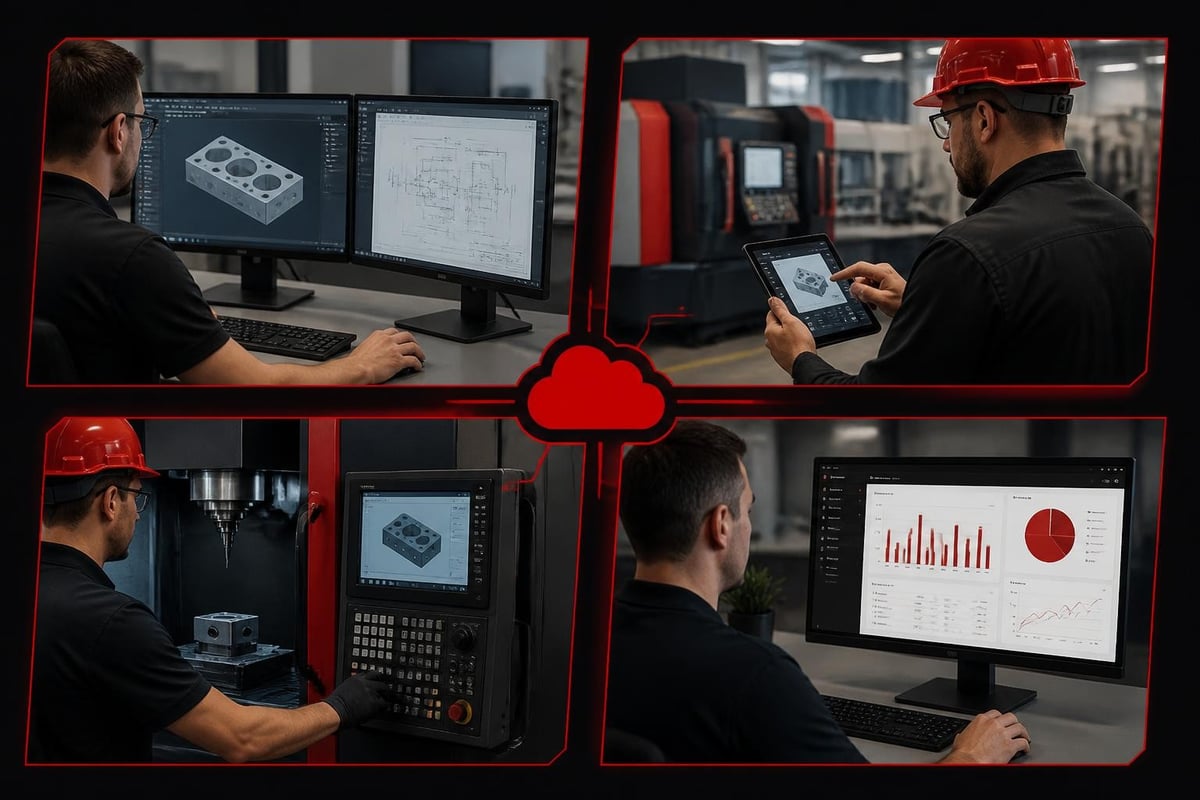
Cloud-based platforms increasingly connect field operations with enterprise systems, enabling:
- Real-time progress dashboards accessible to project managers and clients
- Automated quantity calculations for progress billing and material tracking
- Predictive maintenance alerts based on machine utilisation patterns
- Fleet optimisation algorithms recommending equipment allocation across multiple sites
- Integrated quality management linking as-built verification with payment applications
These connectivity improvements transform trimble earth works from a machine control system into a comprehensive production management platform. The overview of Trimble Earthworks capabilities demonstrates how the 3D grade control platform enhances productivity and accuracy particularly for excavators and dozers, enabling precise grading with fewer passes through integrated digital workflows.
Training and Support Infrastructure
Successful technology adoption depends heavily on available support resources. Trimble maintains extensive training programmes, technical support networks, and user communities that facilitate implementation and ongoing optimisation.
Contractors benefit from multiple support channels including telephone assistance, remote diagnostics, on-site service, and comprehensive online documentation. This infrastructure reduces downtime when issues occur whilst building internal expertise through structured training pathways.
Regional dealer networks provide localised support, understanding specific market conditions and regulatory requirements. This proximity proves valuable during initial deployment when frequent consultation accelerates operator proficiency and system optimisation.
Building Internal Expertise
Forward-thinking contractors develop internal technology champions who drive adoption and provide peer support. These individuals typically combine strong operational backgrounds with aptitude for digital tools, serving as translators between technical capabilities and practical field requirements.
Investment in internal expertise pays dividends through reduced dependency on external support, faster problem resolution, and continuous improvement initiatives. Companies pursuing comprehensive technology strategies often establish dedicated roles focused on digital workflow optimisation, achieving efficiency improvements exceeding 30% whilst enhancing site safety in mass earthmoving projects.
Regulatory Compliance and Documentation
Modern construction projects demand extensive documentation proving specification compliance. Trimble earth works generates detailed records automatically, simplifying quality assurance and regulatory reporting requirements.
The system continuously logs achieved elevations, creating comprehensive as-built surfaces that verify conformance to design tolerances. These digital records prove particularly valuable during inspections, payment applications, and dispute resolution, providing objective evidence of work performed.
Environmental regulations increasingly require documentation of soil disturbance, material movements, and erosion control measures. The platform's production tracking capabilities support these requirements through spatial records showing excavation locations, fill placement, and compaction verification. This documentation streamlines permit compliance whilst protecting contractors from unsubstantiated claims.
The integration of trimble earth works technology represents more than equipment upgrades; it fundamentally transforms how civil engineering contractors approach grading, excavation, and site development challenges. From enhanced accuracy and productivity to improved documentation and competitive positioning, the benefits extend across all project phases. Whether you're planning highway developments, commercial sitework, or residential improvements, JRG Civils combines technological expertise with traditional craftsmanship to deliver exceptional results throughout the North East and across the UK. Our commitment to innovation and quality ensures your project benefits from industry-leading techniques whilst maintaining the personal service and attention to detail that defines our work.