
The quality of kerbing installation can make or break a civil engineering project, particularly when it comes to highways surfacing, driveways, and commercial developments. Pinkerb has established itself as a trusted name in the industry, offering robust kerbing solutions that meet the demanding requirements of modern construction projects. Whether you're managing a large-scale commercial development or a residential driveway installation, understanding the applications and benefits of pinkerb systems can significantly enhance project outcomes and long-term durability.
Understanding Pinkerb Kerbing Systems
Pinkerb represents a specific category of precast concrete kerbing designed to provide clean, durable edges for various surfacing applications. The system offers contractors and civil engineers a reliable method for defining boundaries between different surface types, managing water drainage, and creating professional-looking finishes that stand the test of time.
What Makes Pinkerb Different
The distinctive characteristics of pinkerb products stem from their manufacturing process and material composition. Unlike traditional kerb stones that may vary in quality, pinkerb units are produced under controlled conditions, ensuring consistent dimensions, strength, and appearance across every batch.
Key specifications include:
- Manufactured to British Standard BS EN 1340
- High compressive strength ratings
- Frost-resistant formulation
- Dimensional accuracy within tight tolerances
- Range of profiles for different applications
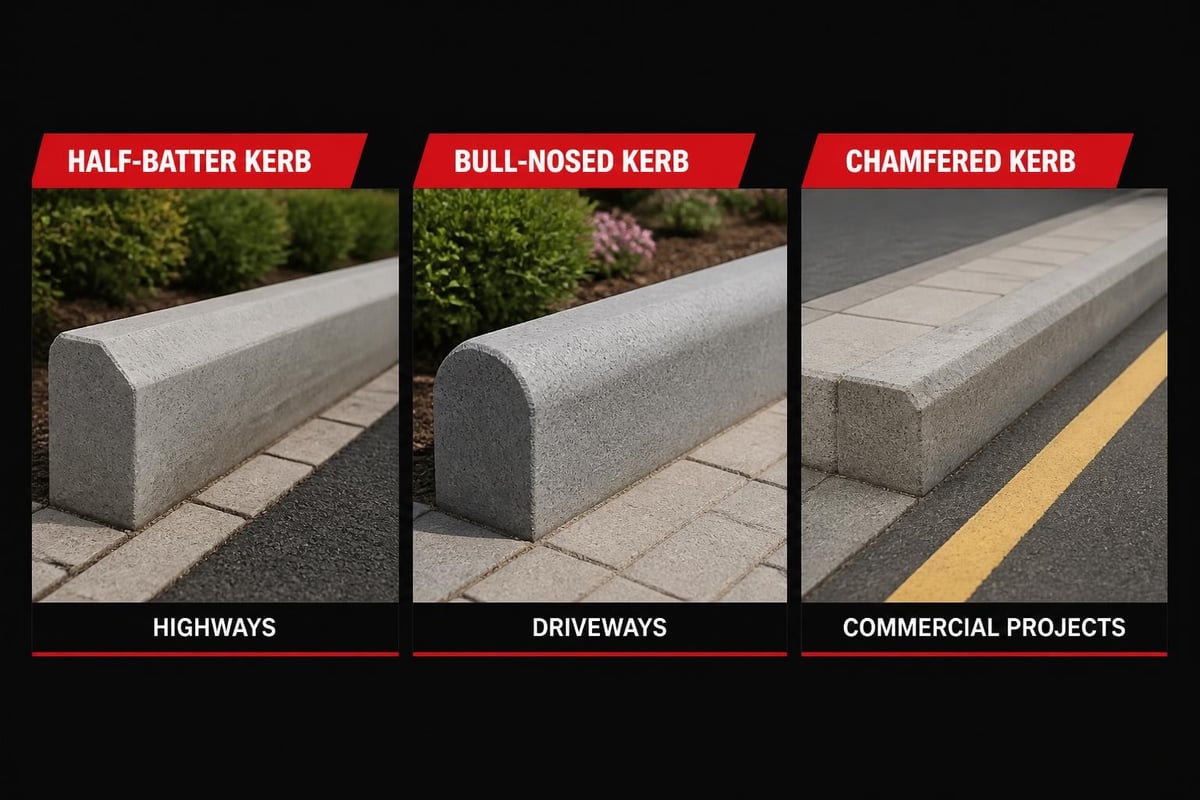
The controlled production environment eliminates many variables that can affect traditional stone cutting, resulting in components that fit together seamlessly during installation. This precision proves particularly valuable when working on projects where aesthetics and functionality must align perfectly.
Applications in Highways Surfacing Projects
Highways surfacing requires kerbing solutions that can withstand substantial loads, resist weathering, and maintain structural integrity over decades of service. Pinkerb systems excel in these demanding environments, offering civil engineering teams dependable materials for road construction and refurbishment works.
Commercial Highway Developments
Large-scale commercial projects, such as drive-through restaurants and retail developments, demand kerbing that performs under heavy traffic whilst maintaining visual appeal. The pinkerb range accommodates these requirements through various profile options and installation methods.
| Application Type | Recommended Profile | Key Benefit |
|---|---|---|
| Car park perimeters | Half-batter kerb | Vehicle containment |
| Pedestrian areas | Bull-nosed kerb | Safety and aesthetics |
| Highway edges | Standard kerb | Drainage management |
| Service station forecourts | Chamfered kerb | Fuel spill containment |
When delivering commercial work for major franchises, the consistency of pinkerb products ensures that brand standards are met whilst providing the durability essential for high-traffic locations. Each unit arrives on site ready for installation, reducing preparation time and accelerating project completion.
Drainage Integration
Effective water management forms a critical component of any highways surfacing project. Pinkerb systems incorporate features that facilitate proper drainage design, preventing water accumulation that could compromise surface integrity or create safety hazards.
The channel behind standard pinkerb installations provides a natural pathway for surface water, directing it towards designated drainage points. This design consideration reduces the risk of standing water, ice formation in winter months, and premature deterioration of adjacent surfacing materials.
Residential Driveway Applications
Whilst pinkerb systems are renowned for their performance in commercial settings, they offer equally compelling advantages for residential projects. Homeowners increasingly recognise the value of professional-grade materials that combine functionality with aesthetic appeal.
Design Flexibility for Domestic Projects
The range of pinkerb profiles available enables creative design solutions that complement various architectural styles. From traditional properties requiring subtle edging to contemporary homes demanding bold geometric lines, pinkerb products adapt to diverse aesthetic requirements.
Popular residential applications include:
- Driveway perimeter definition
- Garden bed edging
- Patio boundary demarcation
- Path delineation
- Tree pit surrounds
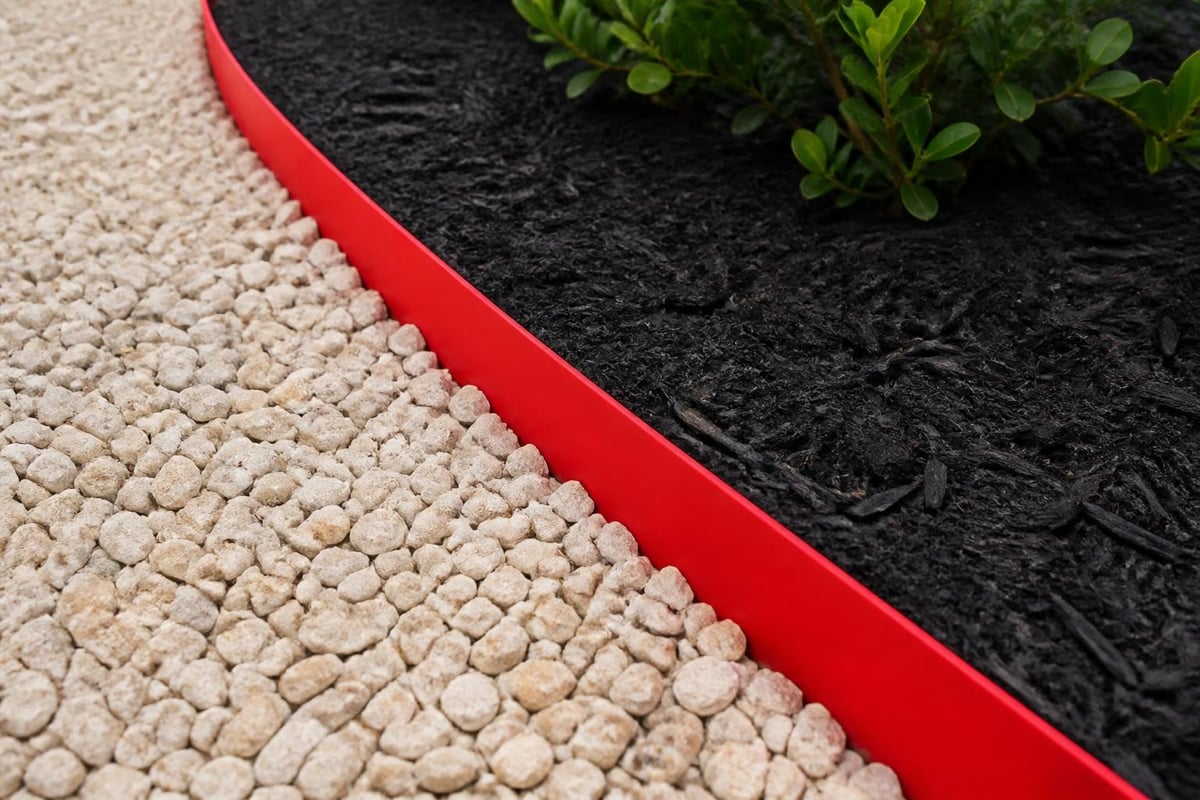
When undertaking domestic services projects, the professional finish achieved with pinkerb installations significantly enhances property value and kerb appeal. The durability of these systems means homeowners enjoy maintenance-free edging that retains its appearance for years.
Installation Considerations for Driveways
Proper installation methodology determines the long-term performance of any kerbing system. Pinkerb units require appropriate foundation preparation, correct bedding techniques, and adequate haunching to resist movement under load.
The foundation depth varies according to expected traffic loads and ground conditions, but typically ranges from 100mm to 150mm of compacted sub-base material. A concrete bed of ST2 mix provides stable support, whilst rear haunching prevents backward movement when vehicles mount the kerb during turning manoeuvres.
Material Specifications and Performance Standards
Understanding the technical characteristics of pinkerb products enables informed specification decisions that align with project requirements and budget constraints. The manufacturing process incorporates quality control measures that ensure compliance with relevant British and European standards.
Strength and Durability Metrics
Pinkerb units undergo rigorous testing during production to verify their mechanical properties and environmental resistance. These tests measure parameters critical to long-term performance in exposed conditions.
| Property | Test Method | Typical Value |
|---|---|---|
| Compressive strength | BS EN 1338 | >50 N/mm² |
| Water absorption | BS EN 1338 | <6% |
| Frost resistance | BS EN 1338 | Pass (28 cycles) |
| Abrasion resistance | BS EN 1338 | <20mm loss |
The frost resistance testing proves particularly relevant for projects in regions experiencing harsh winter conditions. Pinkerb's low water absorption rate prevents the freeze-thaw damage that can fracture inferior materials, ensuring the kerbing maintains structural integrity throughout seasonal temperature variations.
Environmental Considerations
Modern construction practices increasingly prioritise sustainability and environmental responsibility. Pinkerb manufacturing utilises locally sourced aggregates where possible, reducing transportation emissions whilst supporting regional economies.
The longevity of pinkerb installations contributes to sustainability objectives by eliminating the need for frequent replacement. A well-installed pinkerb system can serve effectively for 50 years or more, avoiding the resource consumption and waste generation associated with short-lived alternatives.
Installation Best Practices for Optimal Results
Achieving the full performance potential of pinkerb systems requires adherence to established installation protocols. Experienced civil engineering contractors understand that shortcuts during installation inevitably lead to premature failure and costly remediation.
Foundation Preparation
The foundation layer provides crucial support that distributes loads and prevents differential settlement. Ground conditions must be assessed and addressed before commencing kerb installation.
Essential preparation steps:
- Excavate to required depth (typically 300-350mm below finished kerb height)
- Remove unsuitable material and replace with granular sub-base
- Compact in layers not exceeding 150mm thickness
- Verify levels using appropriate surveying equipment
- Ensure adequate fall for drainage purposes
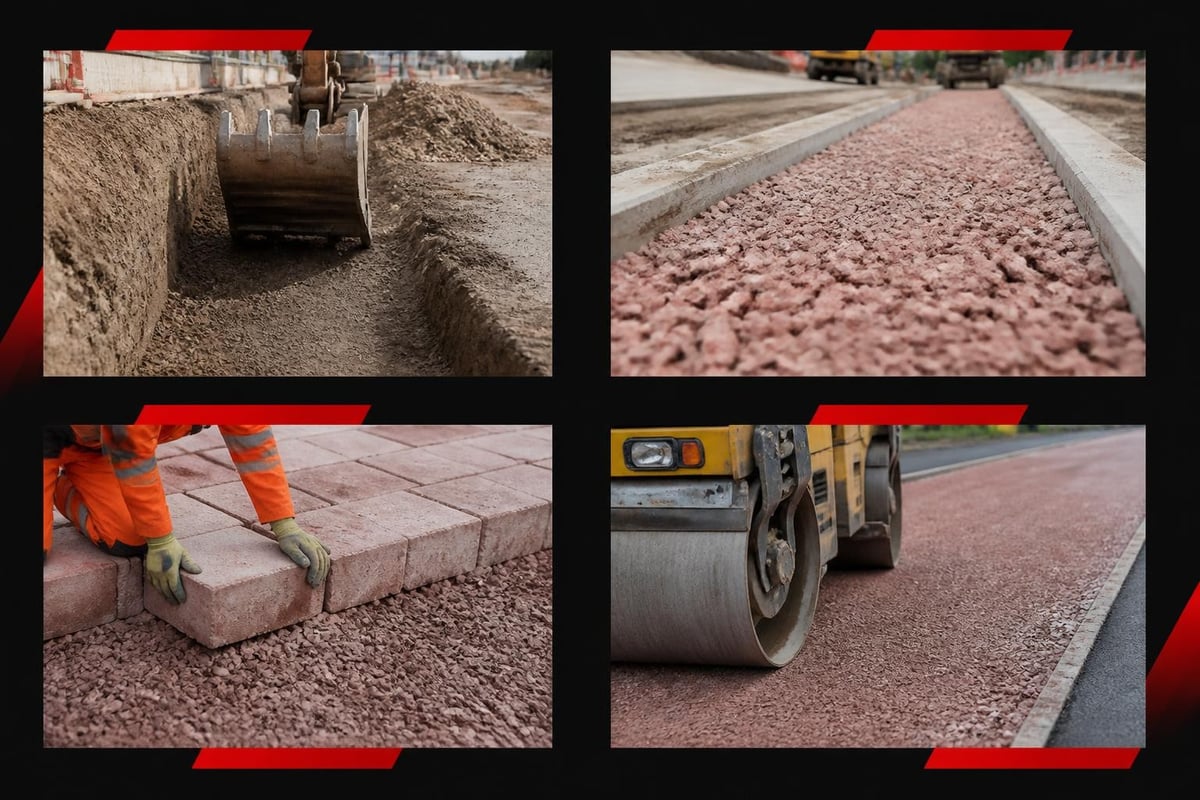
The compaction process demands particular attention, as inadequately consolidated foundations permit movement that translates to cracked joints and misaligned kerb lines. Mechanical compaction equipment appropriate to the site conditions ensures uniform density throughout the foundation layer.
Bedding and Haunching Techniques
The concrete bed upon which pinkerb units rest must provide continuous support along the entire length. Voids beneath the kerb create stress concentrations that can fracture the units under load.
A semi-dry ST2 concrete mix offers optimal handling characteristics whilst providing adequate strength when cured. The bed thickness typically ranges from 75mm to 100mm, adjusted according to ground conditions and expected loads.
Rear haunching serves multiple purposes: it locks the kerb in position, provides additional support, and creates a barrier preventing surface water from undermining the foundation. The haunching should extend at least 150mm above the bed level and be well-compacted against the rear face of the pinkerb unit.
Cost Considerations and Project Planning
Budget management forms an integral component of successful civil engineering projects. Understanding the cost structure associated with pinkerb installation enables accurate quotations and realistic client expectations.
Material Costs Versus Long-Term Value
Initial material costs for pinkerb systems typically exceed basic alternatives, but this comparison fails to account for lifecycle economics. The superior durability and minimal maintenance requirements of pinkerb installations deliver lower whole-life costs.
| Cost Factor | Pinkerb System | Basic Alternative |
|---|---|---|
| Initial material cost | Higher | Lower |
| Installation complexity | Moderate | Variable |
| Expected lifespan | 50+ years | 15-25 years |
| Maintenance frequency | Minimal | Regular |
| Replacement cycles | Rare | Multiple |
Professional contractors recognise that presenting clients with comprehensive cost comparisons builds trust and demonstrates expertise. Explaining how pinkerb's durability translates to financial savings over the project lifespan often justifies the initial investment.
Labour and Equipment Requirements
Efficient pinkerb installation requires skilled labour familiar with proper laying techniques and quality control procedures. The learning curve for inexperienced teams can lead to delays and substandard results that compromise project profitability.
Equipment needs for typical projects include excavation machinery, compaction tools, concrete mixers, and precision levelling instruments. Larger commercial developments may benefit from mechanical kerb-laying equipment that accelerates installation whilst maintaining accuracy.
Quality Control and Inspection Protocols
Maintaining consistent quality throughout pinkerb installation projects protects reputation and ensures client satisfaction. Systematic inspection protocols identify issues before they escalate into expensive remediation requirements.
Critical Inspection Points
Experienced site supervisors implement structured inspection routines that verify compliance with specifications at key stages. Documentation of these inspections provides valuable evidence of quality assurance processes.
Essential inspection checkpoints:
- Foundation depth and compaction verification
- Bed concrete consistency and thickness confirmation
- Kerb unit alignment and level accuracy
- Joint width uniformity assessment
- Haunching placement and compaction validation
Dimensional tolerance for pinkerb alignment typically permits ±10mm deviation over any 3-metre straight edge, whilst vertical tolerance allows ±6mm variation. Maintaining these tight tolerances creates the professional appearance that distinguishes quality workmanship.
Addressing Installation Defects
Despite careful planning and execution, occasional defects require correction. Prompt identification and remediation minimise disruption and cost escalation. Common issues include inadequate haunching, misalignment, and joint problems.
Remediation methods vary according to the nature and extent of the defect. Minor alignment issues may be correctable through localised excavation and re-laying, whilst more extensive problems necessitate complete removal and reinstallation of affected sections.
Integration with Modern Surfacing Materials
Contemporary highways surfacing and driveway projects often combine multiple materials to achieve functional and aesthetic objectives. Pinkerb systems integrate seamlessly with various surfacing options, from traditional asphalt to modern permeable paving solutions.
Compatibility with Different Surface Types
The transition between pinkerb edging and adjacent surfacing materials requires careful detailing to prevent failure at the interface. Different surfacing materials impose varying requirements on the kerb installation.
Asphalt surfaces typically require the kerb to project 75-100mm above the finished surface level, providing clear delineation and preventing asphalt creep. Block paving installations may sit flush with the kerb top or slightly below, depending on aesthetic preferences and drainage requirements.
Permeable paving systems, increasingly popular for environmental compliance, work effectively with pinkerb edging when proper drainage considerations are incorporated. The kerb installation must not impede sub-surface water movement, requiring careful design of the transition zone.
Maintenance and Long-Term Care
Whilst pinkerb systems require minimal maintenance compared to alternatives, some periodic attention ensures optimal long-term performance. Understanding maintenance requirements enables accurate lifecycle cost projections and client education.
Routine Inspection Schedules
Establishing regular inspection routines identifies minor issues before they develop into significant problems. Annual inspections typically suffice for most installations, with additional checks following severe weather events.
Inspection focus areas include:
- Joint condition and integrity
- Surface cleanliness and staining
- Settlement or movement indicators
- Drainage function verification
- Damage from vehicle impact
Early detection of settlement allows targeted intervention that prevents progressive failure. Similarly, maintaining clear drainage paths ensures the system continues managing water effectively.
Cleaning and Appearance Maintenance
Professional cleaning maintains the aesthetic appeal of pinkerb installations, particularly in high-visibility commercial settings. Pressure washing removes accumulated dirt and organic growth without damaging the concrete surface.
Stubborn staining from oil, fuel, or other contaminants may require specialist cleaning products formulated for concrete surfaces. Testing cleaning agents on inconspicuous areas prevents inadvertent discolouration or surface damage.
Professional kerbing installation using pinkerb systems delivers the durability, precision, and aesthetic quality that distinguish superior civil engineering work. From highways surfacing projects to residential driveways, these proven materials provide reliable performance that satisfies demanding clients and withstands the test of time. Whether you're planning a major commercial development or enhancing your property with quality surfacing, JRG Civils brings the expertise and attention to detail that ensures exceptional results from initial groundwork through to final completion.