
The quality of road surfaces directly impacts safety, efficiency, and long-term infrastructure costs across the United Kingdom. As we progress through 2026, roadworks and resurfacing projects continue to evolve with new techniques, materials, and standards that deliver better outcomes for both public highways and private developments. Understanding the complexities behind these essential maintenance operations helps property owners, developers, and businesses make informed decisions about their surfacing requirements whilst appreciating the craftsmanship involved in professional civil engineering work.
Understanding the Fundamentals of Road Surface Maintenance
Road surfaces deteriorate through constant use, weather exposure, and the natural ageing of materials. The decision between repair and complete resurfacing depends on numerous factors including current condition, traffic volume, and projected lifespan requirements.
Surface defects manifest in various forms, each indicating specific underlying issues. Cracking patterns reveal structural weaknesses, whilst rutting demonstrates compaction problems or material fatigue. Professionals assess these symptoms to determine whether targeted repairs suffice or if comprehensive resurfacing becomes necessary.
Key indicators requiring resurfacing include:
- Widespread surface cracking exceeding 30% of the total area
- Significant rutting depths greater than 15mm
- Extensive ravelling where aggregate particles separate from the binder
- Widespread potholes indicating structural failure
- Surface age exceeding the expected design life
The distinction between patching and full resurfacing often determines project costs and longevity. Whilst temporary repairs address immediate safety concerns, strategic resurfacing investments prevent escalating deterioration and deliver superior long-term value.
Modern Techniques in Professional Resurfacing Operations
Contemporary roadworks and resurfacing operations employ sophisticated methods that balance performance requirements with environmental considerations. The selection of appropriate techniques depends on traffic patterns, existing substrate conditions, and durability expectations.
Surface Dressing Applications
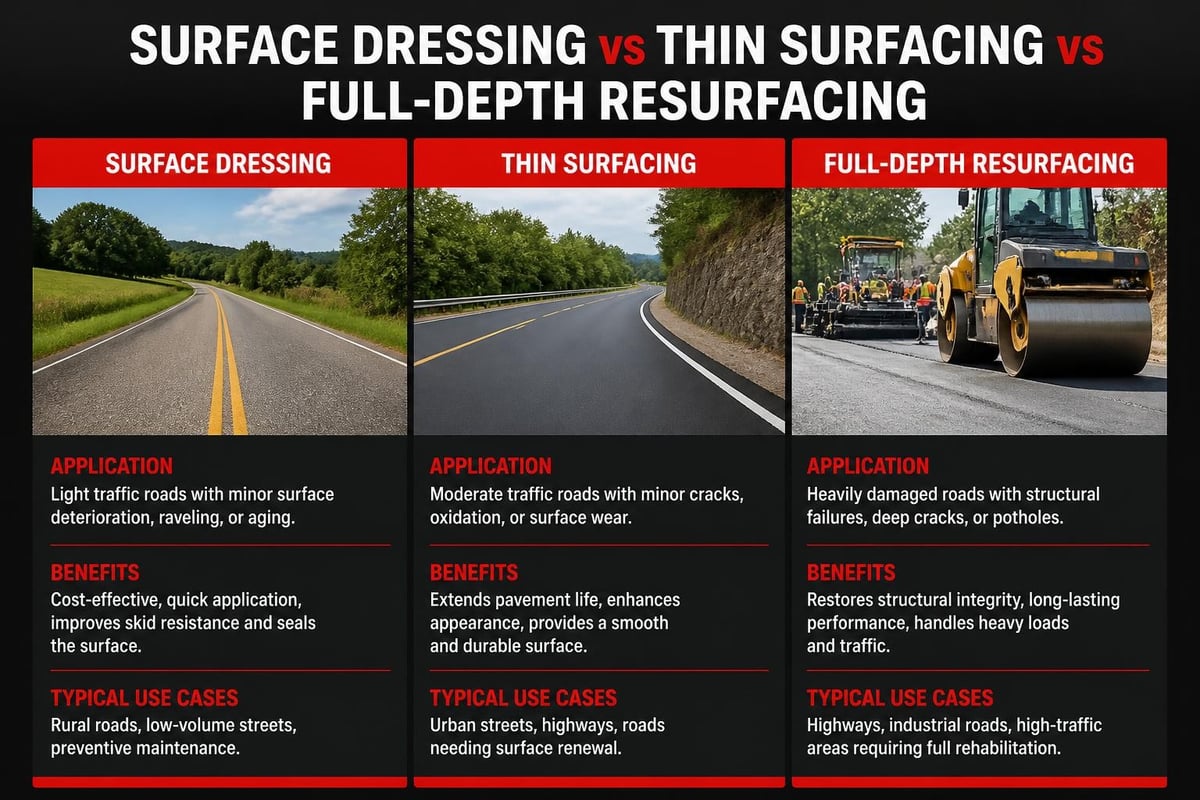
Surface dressing represents a cost-effective preventative treatment extending road life when applied at the optimal time. This technique involves spraying bitumen emulsion followed by aggregate application, creating a refreshed wearing course that seals minor cracks and restores surface texture.
According to Wokingham Borough Council’s resurfacing methods, surface dressing offers environmental benefits through reduced material consumption whilst maintaining excellent skid resistance. The process typically adds 5-7 years to road life when existing foundations remain structurally sound.
Thin Surfacing Systems
Thin surfacing courses between 20mm and 40mm thickness provide enhanced durability compared to surface dressing whilst using less material than traditional overlays. These systems incorporate polymer-modified binders that deliver superior flexibility and resistance to rutting.
Modern thin surfacing materials incorporate recycled components, reducing environmental impact whilst maintaining performance standards. The thinner application reduces height buildup, particularly valuable where kerb heights or drainage patterns must be preserved.
Full-Depth Resurfacing
Comprehensive resurfacing removes deteriorated material and replaces it with new asphalt courses designed to meet current loading requirements. This approach addresses structural deficiencies and accommodates modern traffic demands that may exceed original design parameters.
| Resurfacing Method | Typical Thickness | Lifespan Extension | Best Application |
|---|---|---|---|
| Surface Dressing | 10-15mm | 5-7 years | Preventative maintenance |
| Thin Surfacing | 20-40mm | 8-12 years | Moderate wear surfaces |
| Full-Depth Overlay | 60-100mm | 15-20 years | Structural rehabilitation |
| Reconstruction | Variable | 20-30 years | Complete failure |
Planning and Executing Roadworks Projects
Successful roadworks and resurfacing operations require meticulous planning that coordinates multiple stakeholders whilst minimising disruption. Professional contractors develop comprehensive programmes addressing traffic management, material logistics, and quality assurance protocols.
The planning phase establishes project scope through detailed surveys and condition assessments. Ground-penetrating radar and core sampling reveal subsurface conditions that influence design decisions and methodology selection. These investigations prevent unexpected complications during execution phases.
Essential planning considerations include:
- Traffic management strategies that maintain safe passage whilst protecting workers
- Material sourcing and specification ensuring compliance with relevant standards
- Weather contingencies accounting for temperature and precipitation requirements
- Utility coordination preventing conflicts with underground services
- Quality control procedures verifying compliance throughout execution
Project programming balances efficiency with practicality. Asphalt installation requires specific temperature ranges and weather conditions, limiting available working windows. Strategic scheduling maximises productivity whilst accommodating these technical constraints.

Material Selection and Performance Specifications
Contemporary roadworks and resurfacing projects utilise diverse material formulations engineered for specific performance requirements. The specification process considers anticipated loading, climate exposure, and functional expectations such as noise reduction or permeability.
Hot rolled asphalt provides excellent durability for heavily trafficked routes, whilst porous asphalt addresses drainage requirements in specific applications. Stone mastic asphalt combines durability with superior resistance to deformation under heavy loads.
Sustainable Material Innovations
The civil engineering sector increasingly embraces sustainable practices without compromising performance standards. Warm mix asphalt technologies reduce production temperatures, decreasing energy consumption and emissions whilst maintaining structural integrity.
Recycled asphalt pavement (RAP) incorporation reduces virgin material demand whilst delivering equivalent performance when properly formulated. Current specifications permit up to 30% RAP content in many applications, with ongoing research exploring higher percentages.
Recent studies, including research on emissions from road construction activities, emphasise the importance of considering environmental impacts throughout the construction lifecycle. These findings inform material selection and methodology choices that minimise community exposure whilst maintaining project efficiency.
Commercial and Industrial Surfacing Requirements
Commercial developments demand surfacing solutions that accommodate heavy vehicle movements, frequent turning manoeuvres, and long service lives with minimal maintenance interventions. Projects ranging from distribution centres to retail developments require engineered approaches addressing specific operational demands.
The engineering for building process integrates surfacing design with broader site development requirements. Coordinated planning ensures drainage integration, utility accommodation, and appropriate transitions between different surface types.
Drive-Through and High-Traffic Applications
Specialist applications such as drive-through facilities present unique challenges requiring customised solutions. These locations experience concentrated loading patterns, frequent braking and acceleration forces, and continuous operation throughout their lifespan. Projects like the Costa Coffee and Greggs developments demonstrate the importance of robust surfacing specifications that withstand intensive use.
| Application Type | Key Requirements | Typical Specification | Critical Considerations |
|---|---|---|---|
| Distribution Yards | Heavy loading, turning | 100mm+ asphalt depth | Reinforced subgrade |
| Retail Car Parks | Moderate traffic, aesthetics | 60-80mm asphalt | Drainage integration |
| Drive-Throughs | Concentrated loading | Enhanced binder course | Rutting resistance |
| Service Roads | Regular HGV access | 80-100mm asphalt | Edge restraint |
Quality Assurance and Testing Protocols
Professional roadworks and resurfacing operations incorporate rigorous quality control measures ensuring compliance with specifications and performance expectations. Testing protocols verify material properties, compaction levels, and surface characteristics at critical stages throughout construction.
Temperature monitoring ensures asphalt placement within specified ranges that permit proper compaction before cooling. Core sampling validates achieved thickness and density, confirming structural adequacy. Surface regularity testing verifies ride quality meets established standards.
Critical quality checkpoints include:
- Pre-construction substrate verification and preparation assessment
- Delivery temperature confirmation for asphalt materials
- Compaction testing achieving minimum 95% density requirements
- Layer thickness verification through cores or depth measurements
- Surface regularity assessment using straightedge or profiler equipment
- Final visual inspection identifying any defects requiring correction
Documentation throughout these processes provides verification of compliance and establishes baseline conditions for future reference. Comprehensive records support warranty administration and inform maintenance planning.
Maintenance Strategies and Lifecycle Management
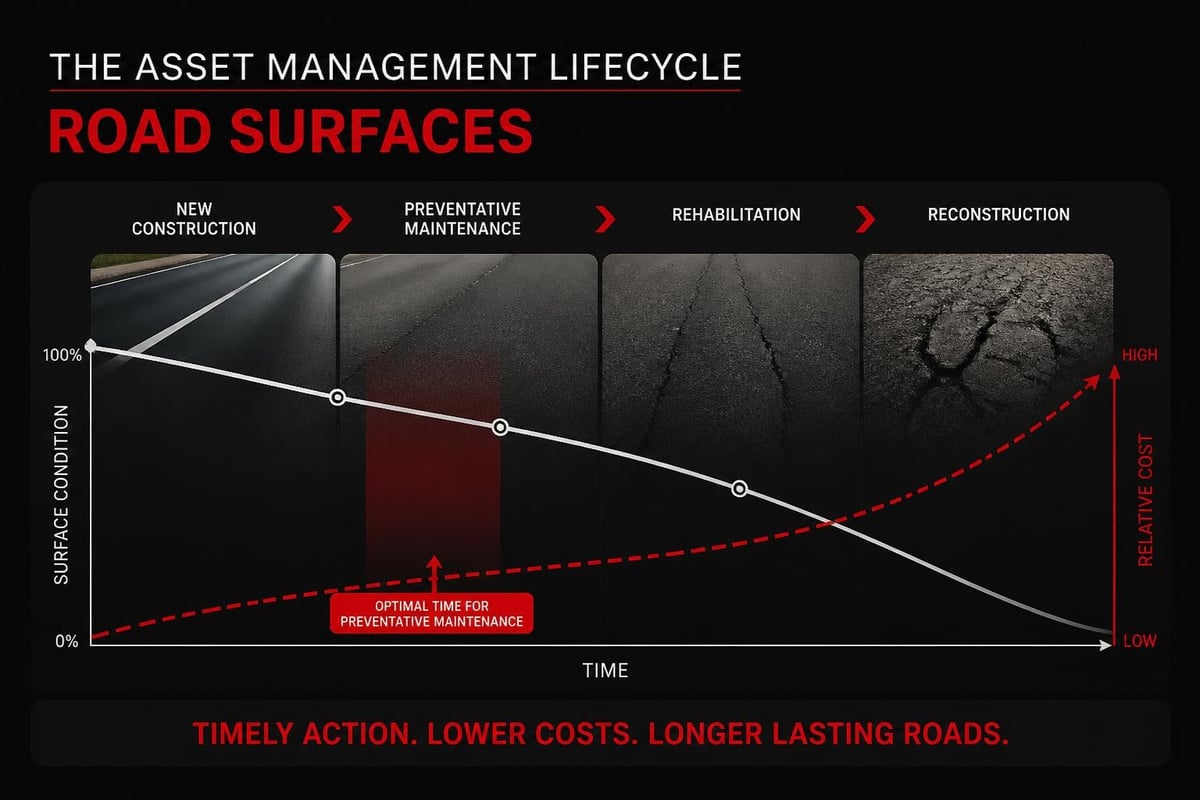
Strategic maintenance extends surface life whilst controlling long-term costs through timely interventions that prevent accelerated deterioration. Proactive approaches identify developing issues early, enabling cost-effective treatments before expensive reconstruction becomes necessary.
Regular inspection programmes establish condition trends and inform intervention timing. Visual surveys supplemented by periodic detailed assessments create comprehensive condition databases supporting evidence-based decision making.
Preventative Maintenance Benefits
Preventative treatments applied when surfaces remain in good overall condition deliver exceptional cost-benefit ratios. Surface sealing prevents water ingress that accelerates deterioration, whilst crack sealing arrests defect propagation before structural damage occurs.
The timing of interventions significantly influences outcomes and costs. Surfaces maintained in good condition through regular preventative measures last substantially longer than those receiving only reactive repairs after significant deterioration develops.
Civil Engineering Contract Considerations
Engaging professional contractors for roadworks and resurfacing projects requires clear specification of requirements, performance standards, and quality expectations. Well-structured civil engineering contracts establish mutual understanding whilst protecting all parties' interests.
Contract documents should specify materials by recognised standards, define testing requirements and frequencies, and establish completion criteria. Clear communication protocols and change management procedures prevent misunderstandings whilst accommodating necessary adjustments.
Contractor Selection Criteria
Selecting qualified contractors involves evaluating experience, resources, and quality systems. Evidence of similar project completion demonstrates relevant capability, whilst appropriate plant and equipment ensure efficient execution.
Quality assurance systems including materials testing facilities, trained personnel, and documented procedures indicate professional operations capable of delivering specified outcomes. References from previous clients provide insight into reliability and performance.
Private Development and Residential Applications
Roadworks and resurfacing extends beyond public highways to encompass private developments, residential estates, and commercial properties. These applications often involve smaller-scale projects requiring equivalent attention to design, materials, and execution quality.
Private road construction must consider adoption standards where future public maintenance becomes anticipated. Designing to adoptable standards ensures surfaces meet local authority requirements whilst providing owners with high-quality, durable infrastructure.
Residential projects including driveways and access roads benefit from professional civil engineering approaches that consider drainage integration, edge restraints, and appropriate material selection. Civil design services ensure residential surfacing projects achieve both aesthetic appeal and functional longevity.
Residential surfacing considerations include:
- Subgrade preparation ensuring adequate load-bearing capacity
- Drainage provision preventing water accumulation and frost damage
- Edge restraint installation maintaining structural integrity
- Surface selection balancing appearance with practical requirements
- Future maintenance access and requirements
Regional Variations and Local Requirements
Local authorities across the United Kingdom maintain specific requirements and standards governing roadworks and resurfacing operations within their jurisdictions. These variations reflect local conditions, traffic patterns, and authority preferences developed through experience.
Material specifications may vary based on climate considerations, available local materials, and performance history in regional applications. Northern regions experiencing frequent freeze-thaw cycles may specify enhanced binder grades, whilst southern areas might prioritise high-temperature rutting resistance.
Permitting requirements, traffic management standards, and inspection protocols differ between authorities. Professional contractors familiar with local requirements navigate these variations efficiently whilst ensuring full compliance with applicable regulations.
Technology Integration in Modern Surfacing
Contemporary roadworks and resurfacing operations increasingly incorporate technological advances that enhance precision, efficiency, and quality outcomes. Machine control systems utilising GPS guidance ensure accurate grade control and material placement, reducing waste whilst improving consistency.
Digital project management platforms coordinate multiple parties, track progress, and maintain comprehensive documentation accessible to authorised stakeholders. Real-time communication improves responsiveness whilst reducing administrative burdens.
Material production facilities employ automated quality control systems monitoring consistency and adjusting formulations to maintain specification compliance. These systems reduce variability whilst documenting quality assurance data supporting project verification requirements.
Understanding the complexities of roadworks and resurfacing enables informed decision-making whether planning commercial developments, maintaining existing infrastructure, or undertaking residential projects. Professional execution combining appropriate material selection, proven methodologies, and rigorous quality control delivers surfaces that perform reliably throughout their design life whilst maximising return on investment. Based in the North East and operating across the United Kingdom, JRG Civils brings extensive experience in highways surfacing, commercial developments, and residential projects, delivering civil engineering excellence from initial assessment through to completion with the attention to detail and professional standards that distinguish truly exceptional work.