Earthworks solutions form the critical foundation of every successful construction project, from major highways to residential driveways. Whether you're planning a commercial development, a franchise expansion, or a private residential enhancement, understanding the scope and importance of professional earthworks services ensures your project starts on solid ground. These comprehensive civil engineering services encompass everything from initial site preparation and excavation to drainage systems and foundation work, setting the stage for long-term structural integrity and project success.
Understanding Earthworks Solutions in Modern Civil Engineering
Earthworks solutions represent a comprehensive approach to site preparation and ground engineering that transforms raw land into construction-ready sites. These services involve the strategic movement, shaping, and stabilisation of earth materials to create suitable building platforms for various infrastructure projects.
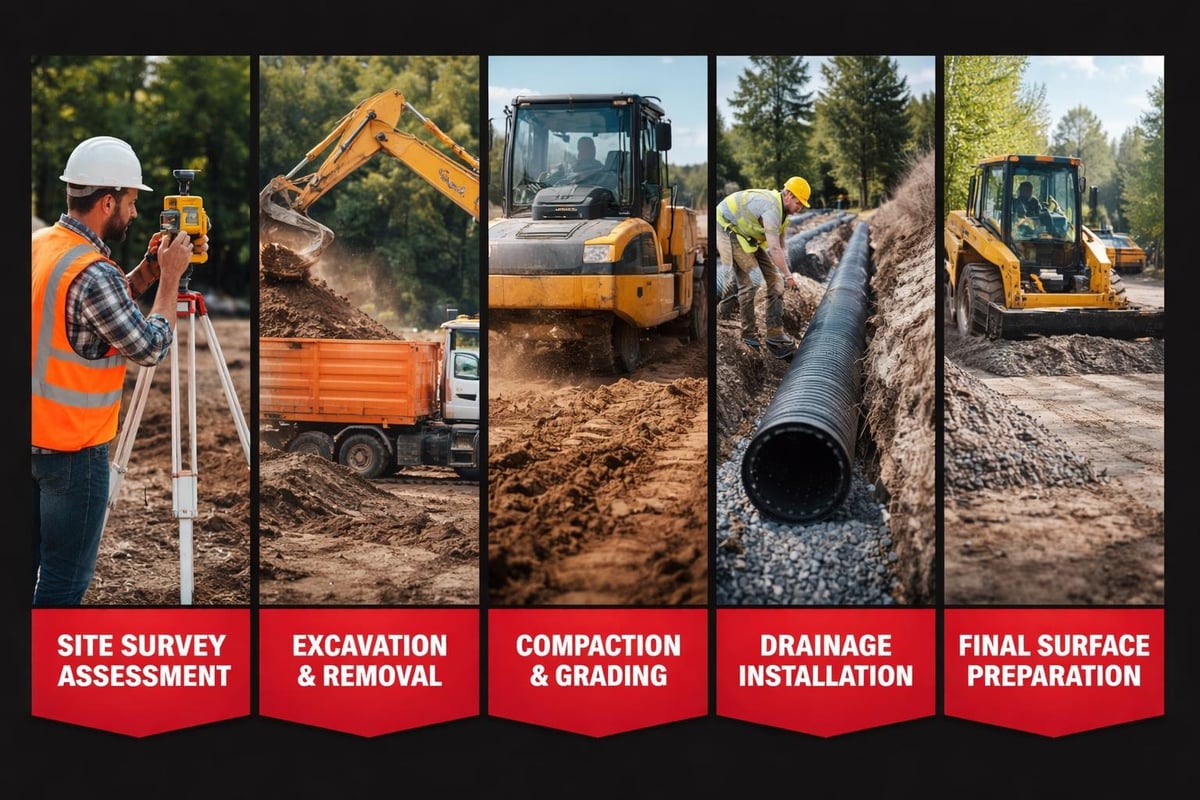
The scope of earthworks extends far beyond simple excavation. It encompasses soil analysis, cut and fill operations, compaction, grading, and the installation of critical underground utilities. Professional civil engineering teams assess site conditions, identify potential challenges, and implement solutions that ensure compliance with building regulations and engineering standards.
Core Components of Professional Earthworks
Site Assessment and Planning
Every successful earthworks project begins with thorough site investigation. Engineers evaluate soil composition, drainage patterns, existing utilities, and topographical features to develop comprehensive plans that minimise risk and optimise efficiency.
Excavation and Ground Preparation
This fundamental phase involves removing unsuitable materials, excavating to required depths, and preparing the ground for subsequent construction phases. Precision during this stage prevents costly corrections later in the project timeline.
Compaction and Stabilisation
Proper soil compaction ensures the ground can support the intended structures. This process involves layering and compacting fill materials to achieve specified density levels, creating a stable foundation that prevents future settlement or structural issues.
Commercial Applications of Earthworks Solutions
Commercial projects demand earthworks solutions that meet stringent specifications whilst maintaining tight schedules and budgets. Large-scale developments such as drive-through restaurants, retail parks, and industrial facilities require extensive ground preparation that accommodates substantial traffic loads and complex utility requirements.
For highways and carriageways, earthworks solutions must address specific challenges including proper drainage to prevent water accumulation, adequate load-bearing capacity for heavy vehicles, and precise grading to ensure optimal water runoff. These projects often involve coordination with multiple stakeholders and strict adherence to highway authority specifications.
| Commercial Project Type | Key Earthworks Requirements | Critical Considerations |
|---|---|---|
| Drive-Through Facilities | Traffic flow patterns, drainage systems, foundation stability | Customer access, queueing areas, utility connections |
| Retail Developments | Large-scale grading, car park preparation, service access | Load-bearing capacity, surface water management |
| Industrial Sites | Heavy-duty foundations, service trenches, material storage areas | Equipment loads, chemical resistance, future expansion |
Franchise Development Projects
Franchise developments, particularly in the food service sector, require earthworks solutions that accommodate specific operational needs. These projects typically involve creating level platforms for building construction, establishing proper drainage to handle increased surface water runoff, and preparing areas for car parking and drive-through lanes.
The success of franchise projects depends heavily on precise execution during the earthworks phase. Ground preparation must account for anticipated traffic patterns, utility connections for water and waste systems, and compliance with franchise-specific construction standards. Experienced civil engineering teams understand these nuances and deliver solutions that meet both franchisor requirements and local planning regulations.
Residential Earthworks Solutions
Residential projects benefit significantly from professional earthworks solutions, though the scale and complexity differ from commercial ventures. Homeowners seeking to install driveways, create patios, or undertake landscaping improvements require services that balance functionality with aesthetic considerations whilst respecting budget constraints.
Driveway Construction and Surface Preparation
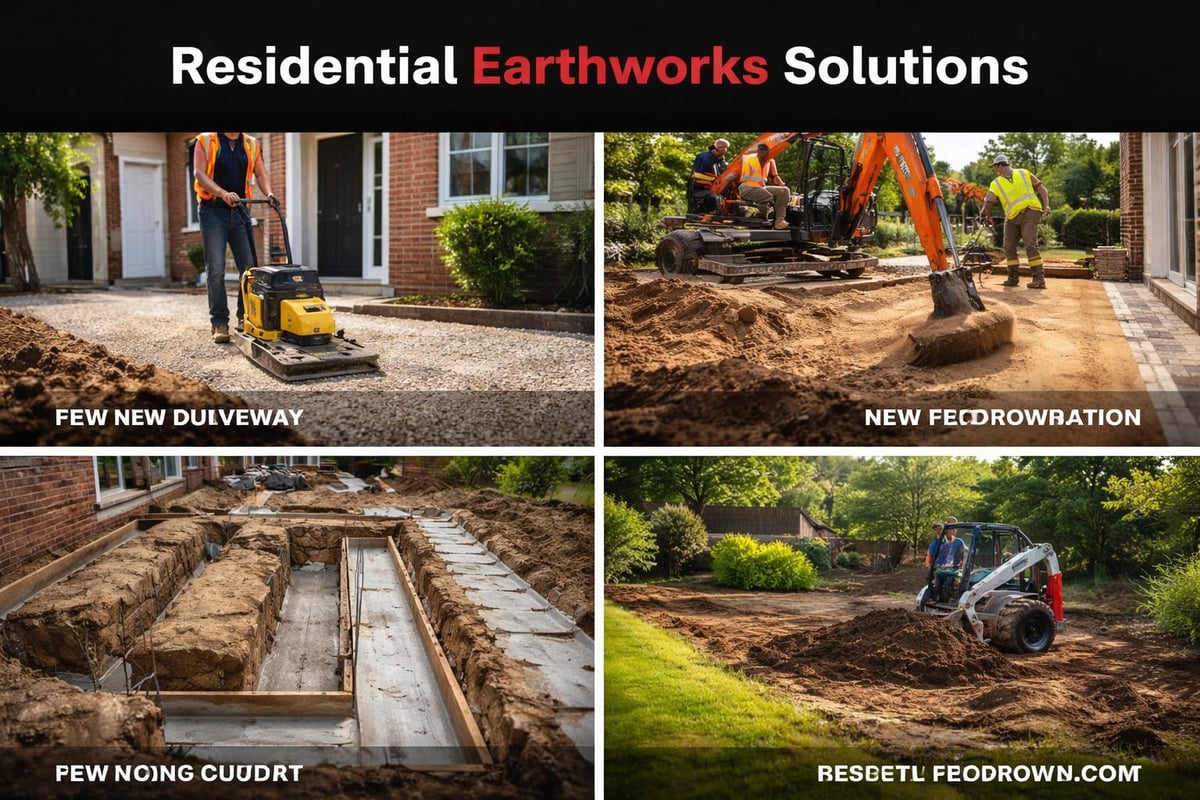
Driveway projects demand careful attention to subgrade preparation, as inadequate earthworks lead to common problems such as cracking, settling, and poor drainage. Professional earthworks solutions for driveways include:
- Excavation to appropriate depths based on soil conditions and intended use
- Installation of sub-base materials with proper compaction
- Establishment of crossfalls and gradients for effective water drainage
- Edge restraint preparation to prevent lateral movement
- Connection to existing drainage systems
The longevity of any driveway surface, whether tarmac, block paving, or resin-bound, depends fundamentally on the quality of underlying earthworks. Shortcuts during this phase inevitably result in premature failure and expensive remedial work.
Foundation Preparation for Residential Extensions
When homeowners undertake extensions or outbuildings, earthworks solutions provide the essential groundwork that determines structural stability. Foundation trenches must be excavated to depths that reach stable load-bearing strata, typically below the frost line to prevent heave damage during winter months.
Understanding foundations for commercial applications provides valuable insights into the engineering principles that also apply to high-quality residential work, scaled appropriately for domestic projects.
Essential Drainage Solutions Within Earthworks Projects
Effective drainage represents a critical component of comprehensive earthworks solutions. Without proper water management, even the most carefully prepared sites face erosion, subsidence, and structural damage. Professional teams integrate drainage planning throughout the earthworks process rather than treating it as an afterthought.
Surface water management involves creating appropriate gradients that direct water away from buildings and towards designated collection points. This requires precise grading work that maintains specified falls whilst accommodating site constraints and existing features.
Underground Drainage Systems
Installing underground drainage during the earthworks phase proves far more cost-effective than attempting retrofits after construction completion. Key elements include:
- French drains for managing groundwater and preventing waterlogging
- Soakaways that allow surface water infiltration in suitable soil conditions
- Pipe networks connecting various drainage points to main sewers or watercourses
- Inspection chambers enabling future maintenance and problem-solving
- Permeable sub-bases that facilitate water movement whilst maintaining structural integrity
The EARTHWORKS Group emphasises sustainable design in engineering, highlighting how modern drainage solutions can incorporate environmental considerations alongside functional requirements.
Materials and Equipment in Modern Earthworks
The quality of earthworks solutions depends substantially on material selection and equipment deployment. Modern civil engineering projects utilise a range of materials chosen specifically for their engineering properties and suitability for intended applications.
Granular Sub-Base Materials
Type 1 and Type 2 aggregates form the backbone of most earthworks projects. These carefully graded materials provide excellent load distribution and drainage characteristics when properly compacted. Material specifications must comply with relevant standards to ensure consistent performance.
Geotextiles and Reinforcement
Advanced earthworks solutions frequently incorporate geotextile membranes that separate different soil layers, prevent contamination, and provide additional tensile strength. These materials prove particularly valuable in challenging ground conditions where natural soils exhibit poor load-bearing characteristics.
| Equipment Type | Primary Applications | Project Scale |
|---|---|---|
| Excavators (3-25 tonne) | Trenching, bulk excavation, material handling | Small to large commercial |
| Bulldozers | Grading, spreading, pushing materials | Large commercial, highways |
| Compaction Rollers | Soil and aggregate compaction | All scales, essential for quality |
| Dumpers | Material transport on-site | Small to medium projects |
| Laser Grading Equipment | Precision level and gradient work | Commercial, highways, sports facilities |
Quality Assurance in Earthworks Projects
Professional earthworks solutions incorporate rigorous quality control measures that verify work meets specified standards. These processes protect clients from substandard work whilst providing documentation for building control approval and future reference.
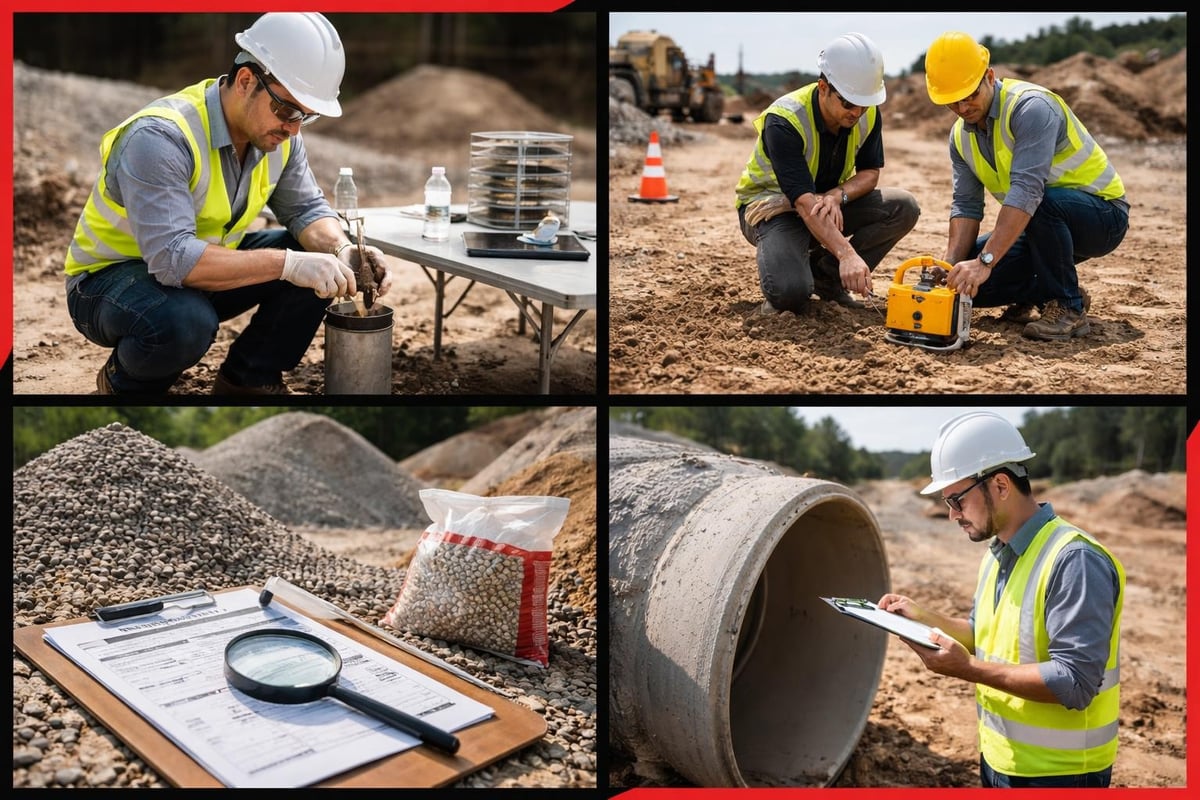
Compaction testing represents a fundamental quality assurance measure. Engineers perform density tests at regular intervals throughout the fill placement process, ensuring materials achieve specified compaction percentages. Projects failing to meet these standards face rejection and costly rework.
Testing and Documentation Procedures
Comprehensive earthworks projects maintain detailed records including:
- Soil investigation reports documenting ground conditions
- Material test certificates confirming aggregate specifications
- Compaction test results demonstrating density achievement
- Photographic evidence of work progression
- As-built drawings showing final levels and drainage layouts
This documentation proves invaluable should disputes arise or future works require understanding of subsurface conditions. Earthworks services that prioritise thorough documentation demonstrate professional standards and commitment to client protection.
Environmental Considerations in Earthworks Solutions
Contemporary earthworks solutions increasingly incorporate environmental protection measures that minimise ecological impact whilst delivering functional results. Responsible contractors consider soil preservation, water quality protection, and waste reduction throughout project execution.
Topsoil stripping and storage allows valuable growing medium preservation for landscaping restoration. Rather than treating topsoil as waste material, professional teams carefully remove and stockpile it for reuse, reducing material costs whilst supporting site reinstatement.
Sustainable Practices in Ground Engineering
Modern civil engineering embraces sustainability through various mechanisms:
- Material reuse by processing excavated materials on-site rather than importing and exporting
- Contamination management addressing polluted soils appropriately rather than spreading contamination
- Water quality protection installing sediment controls preventing silt entering watercourses
- Fuel efficiency optimising equipment deployment and material movement distances
Cost-effective and sustainable ground engineering solutions demonstrate how environmental responsibility and project efficiency complement rather than conflict with each other. These approaches often reduce overall project costs whilst delivering superior environmental outcomes.
Regulatory Compliance and Planning Requirements
Earthworks solutions must navigate complex regulatory frameworks that govern construction activities. Understanding these requirements prevents costly delays and ensures projects proceed legally and safely.
Planning permission typically addresses above-ground structures, but significant earthworks may require separate consent, particularly when altering land levels substantially or affecting drainage patterns. Early engagement with planning authorities clarifies requirements and identifies potential obstacles before work commences.
Building Regulations Compliance
Public realm projects and commercial developments must satisfy building control requirements covering structural adequacy, drainage provisions, and accessibility standards. Earthworks form the foundation upon which these regulations are satisfied, making professional execution essential.
Selecting Earthworks Contractors
Choosing appropriate contractors for earthworks solutions significantly influences project outcomes. Several factors distinguish professional operators from those lacking necessary experience or resources.
Experience and Track Record
Contractors with proven experience across diverse project types bring valuable problem-solving capabilities. Those who have successfully delivered franchise developments, highway projects, and residential works understand the nuanced requirements of different project categories.
Equipment and Resources
Well-equipped contractors complete work efficiently whilst maintaining quality standards. Modern, well-maintained machinery operated by skilled personnel produces superior results compared to inadequate or outdated equipment.
Red Flags When Evaluating Contractors
- Reluctance to provide references or examples of previous work
- Absence of appropriate insurance coverage and health and safety policies
- Inability to articulate their approach to quality control and testing
- Pressure to commence work without proper planning or documentation
- Significantly lower quotations compared to competitors without clear justification
Professional Qualifications and Certifications
Reputable earthworks providers maintain relevant industry certifications and employ qualified personnel. These credentials demonstrate commitment to professional standards and ongoing development.
Cost Factors in Earthworks Solutions
Understanding cost drivers in earthworks solutions helps clients budget appropriately and evaluate quotations effectively. Multiple factors influence project pricing, making direct comparisons challenging without considering scope differences.
Site Conditions
Ground conditions dramatically affect earthworks costs. Stable, free-draining soils require minimal intervention, whilst clay soils, contaminated land, or high water tables necessitate additional measures that increase expenses.
Access and Logistics
Restricted site access complicating equipment deployment and material delivery adds costs. Urban locations with limited working hours or sensitive neighbours require additional planning and potentially extended timescales.
Specification Requirements
Projects demanding high-specification materials, extensive testing, or particularly tight tolerances naturally cost more than basic groundworks. However, these additional investments typically prove worthwhile through enhanced longevity and reduced maintenance requirements.
| Cost Element | Typical Percentage of Total | Variability Factors |
|---|---|---|
| Labour | 25-35% | Skill requirements, project duration |
| Plant and Equipment | 20-30% | Equipment type, hire vs ownership |
| Materials | 30-40% | Specification, import distance, quantities |
| Testing and Quality Assurance | 5-10% | Specification requirements, ground conditions |
| Preliminaries and Overheads | 10-15% | Site setup, insurance, management |
Timing and Seasonal Considerations
Weather conditions significantly impact earthworks solutions, with certain periods proving more favourable for ground engineering activities. Professional contractors plan projects around these factors whilst maintaining flexibility for unexpected conditions.
Winter Challenges
Cold weather complicates earthworks through frozen ground, reduced daylight hours, and increased precipitation. However, experienced contractors can work year-round by adapting methods and employing weather protection measures when necessary.
Optimal Working Periods
Spring and autumn generally provide ideal conditions with moderate temperatures and manageable rainfall. Summer offers extended daylight but may present challenges with extremely dry conditions affecting compaction in certain soil types.
Maintenance and Long-Term Performance
Quality earthworks solutions deliver decades of reliable performance with minimal maintenance when properly executed. However, understanding ongoing care requirements helps property owners protect their investment and address minor issues before they escalate.
Drainage System Maintenance
Regular inspection and cleaning of drainage systems prevents blockages that could undermine earthworks integrity. Annual checks of gullies, inspection chambers, and outfalls identify potential problems early.
Surface Monitoring
Observing surfaces for signs of settlement, cracking, or water ponding enables prompt intervention. Early repairs typically prove far less expensive than major reconstruction after significant deterioration.
Professional earthworks solutions provide the essential foundation for construction projects of all scales, from major commercial developments to residential improvements. The combination of thorough planning, quality materials, skilled execution, and rigorous testing ensures projects achieve their functional objectives whilst delivering long-term value. Whether you're planning highway improvements, commercial developments, or residential enhancements, JRG Civils brings the expertise, equipment, and commitment to excellence that transforms earthworks challenges into successful outcomes across the North East and throughout the UK.