Selecting the right earthwork company represents one of the most critical decisions in any construction project, whether you're planning a commercial development, highway surfacing work, or a residential driveway. These specialist contractors form the foundation of successful builds, transforming raw land into properly prepared sites ready for construction. Understanding what distinguishes exceptional earthwork services from mediocre ones can save thousands of pounds whilst ensuring your project meets all regulatory standards and timeline expectations.
What Does an Earthwork Company Actually Do
An earthwork company specialises in moving, shaping, and preparing earth materials to create stable foundations for construction projects. These operations extend far beyond simple digging, encompassing a comprehensive range of services that require precision engineering, advanced equipment, and extensive technical knowledge.
The core responsibilities typically include excavation, grading, soil stabilisation, drainage installation, and compaction. Each element demands specific expertise and equipment to execute properly. For instance, proper grading ensures water drains away from structures, preventing foundation damage and prolonged maintenance issues down the line.
Primary Service Categories
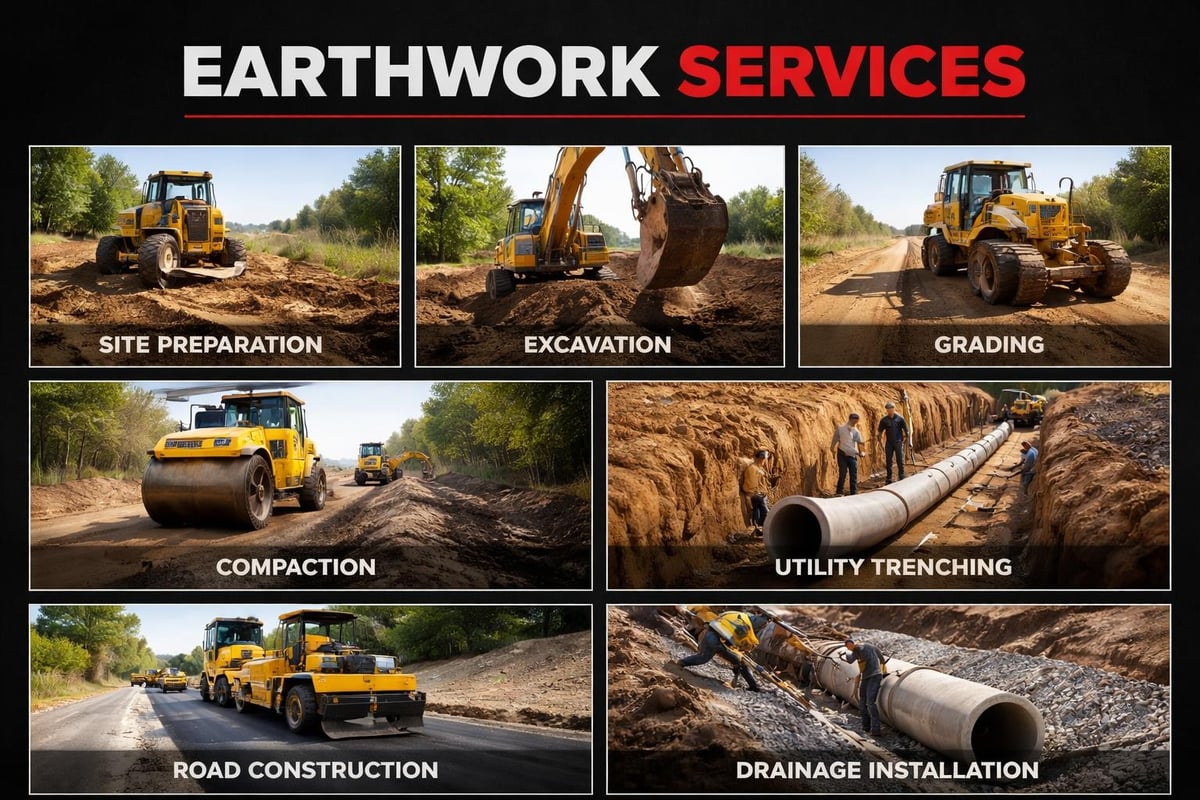
Professional earthwork contractors deliver distinct service categories:
- Site preparation and clearing for new construction developments
- Excavation services for foundations, basements, and utilities
- Grading and levelling to establish proper site drainage
- Soil compaction and stabilisation ensuring load-bearing capacity
- Trenching for utilities including water, gas, and electrical lines
- Road construction and surfacing for access routes and highways
- Drainage system installation preventing water accumulation
Many companies like JRG Civils expand beyond traditional earthwork, offering comprehensive civil engineering solutions that encompass highways surfacing and private residential projects such as driveways and patios. This integrated approach streamlines project management and ensures consistency across all construction phases.
Evaluating Earthwork Company Capabilities
Not all earthwork contractors possess equal capabilities or qualifications. Thorough evaluation before engagement prevents costly mistakes and project delays. Several key factors distinguish competent providers from exceptional ones.
Equipment and Technology Standards
Modern earthwork operations demand sophisticated machinery and technology. Leading contractors invest in:
| Equipment Type | Purpose | Quality Indicators |
|---|---|---|
| Excavators | Digging, trenching, material handling | Multiple sizes, recent models, GPS systems |
| Bulldozers | Grading, clearing, pushing materials | Blade precision controls, operator expertise |
| Compactors | Soil densification | Vibratory mechanisms, moisture sensors |
| Dump trucks | Material transport | Fleet size, payload capacity |
| Graders | Fine grading, road preparation | Laser-guided systems, blade versatility |
Advanced earthwork companies now incorporate Digital Twin frameworks for monitoring earthwork operations, enabling real-time tracking of progress and quality metrics. This technological integration substantially reduces errors whilst improving project delivery times.
Qualifications and Compliance
Professional earthwork contractors maintain comprehensive insurance coverage, relevant certifications, and adherence to health and safety regulations. Verify that potential contractors hold appropriate licences for operating heavy machinery and managing earthwork operations within your jurisdiction.
Compliance with civil engineering earthworks standards ensures projects meet internationally recognised benchmarks for quality and safety. These standards govern everything from soil testing protocols to compaction requirements, forming the backbone of reliable earthwork delivery.
Environmental Considerations in Modern Earthwork
Environmental responsibility has become central to earthwork operations in 2026. Sustainable practices not only protect ecosystems but also enhance project efficiency and reduce long-term costs. Progressive earthwork companies integrate environmental stewardship throughout their operations.
Sustainable Earthwork Practices
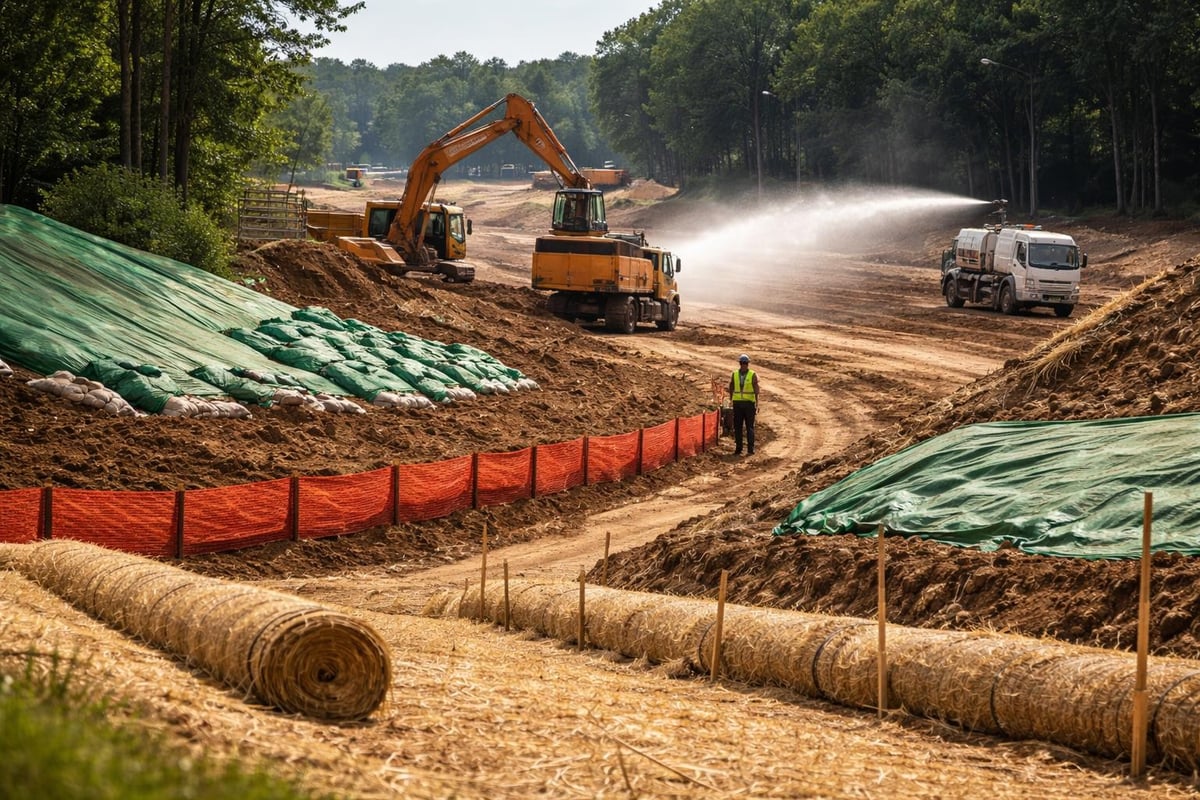
Contemporary best practices in earthwork operations emphasise cleaner, more efficient methods that minimise environmental impact. These approaches include:
- Erosion control measures during active earthwork phases
- Sediment management preventing contamination of waterways
- Dust suppression techniques protecting air quality
- Topsoil preservation and reuse where feasible
- Native vegetation protection during site operations
- Waste reduction through precise material calculations
Research into sustainable construction management practices demonstrates that environmental, social, and economic aspects can be successfully balanced in large earthwork projects. Companies adopting these principles often achieve better outcomes whilst reducing their ecological footprint.
The financial benefits extend beyond regulatory compliance. Efficient material management reduces haulage costs, whilst proper erosion control prevents expensive remediation work. Many clients now prioritise contractors demonstrating genuine environmental commitment, particularly for commercial developments requiring planning approval.
Commercial Versus Residential Earthwork Projects
An earthwork company's expertise often varies between commercial and residential sectors. Understanding these distinctions helps match the right contractor to your specific project requirements.
Commercial Earthwork Requirements
Large commercial projects such as Costa Coffee outlets, Greggs drive-throughs, or retail developments demand extensive earthwork capabilities. These projects typically involve:
- Comprehensive site surveys establishing existing conditions and constraints
- Complex grading plans accommodating buildings, car parks, and drainage
- Utility coordination integrating multiple service providers
- Regulatory compliance meeting planning conditions and environmental permits
- Timeline management coordinating with other trades and contractors
Commercial earthwork often requires managing substantial material volumes whilst maintaining tight schedules. An experienced earthwork company brings project management expertise that keeps multiple elements progressing simultaneously without conflicts or delays.
Residential Earthwork Characteristics
Residential projects, including driveways, patios, and garden landscaping, demand different strengths from an earthwork company. Attention to detail becomes paramount, as homeowners scrutinise every aspect of workmanship. These projects benefit from:
- Direct communication with property owners
- Flexibility accommodating individual preferences
- Minimal disruption to neighbouring properties
- Aesthetic considerations alongside functional requirements
- Smaller equipment suitable for residential access
| Aspect | Commercial Projects | Residential Projects |
|---|---|---|
| Scale | Large volumes, extensive areas | Smaller, focused areas |
| Timeline | Fixed, contract-driven deadlines | More flexible scheduling |
| Regulations | Extensive permits, inspections | Building regulations, local requirements |
| Client interaction | Multiple stakeholders, formal processes | Direct homeowner communication |
| Equipment | Heavy machinery, large fleets | Compact equipment, precision tools |
The most versatile earthwork contractors successfully navigate both sectors, adapting their approach to suit project scale and client expectations.
Quality Assurance in Earthwork Operations
Quality control separates exceptional earthwork companies from those merely meeting minimum standards. Rigorous testing and verification throughout project phases ensures lasting results that withstand environmental stresses and usage demands.
Soil Testing and Analysis
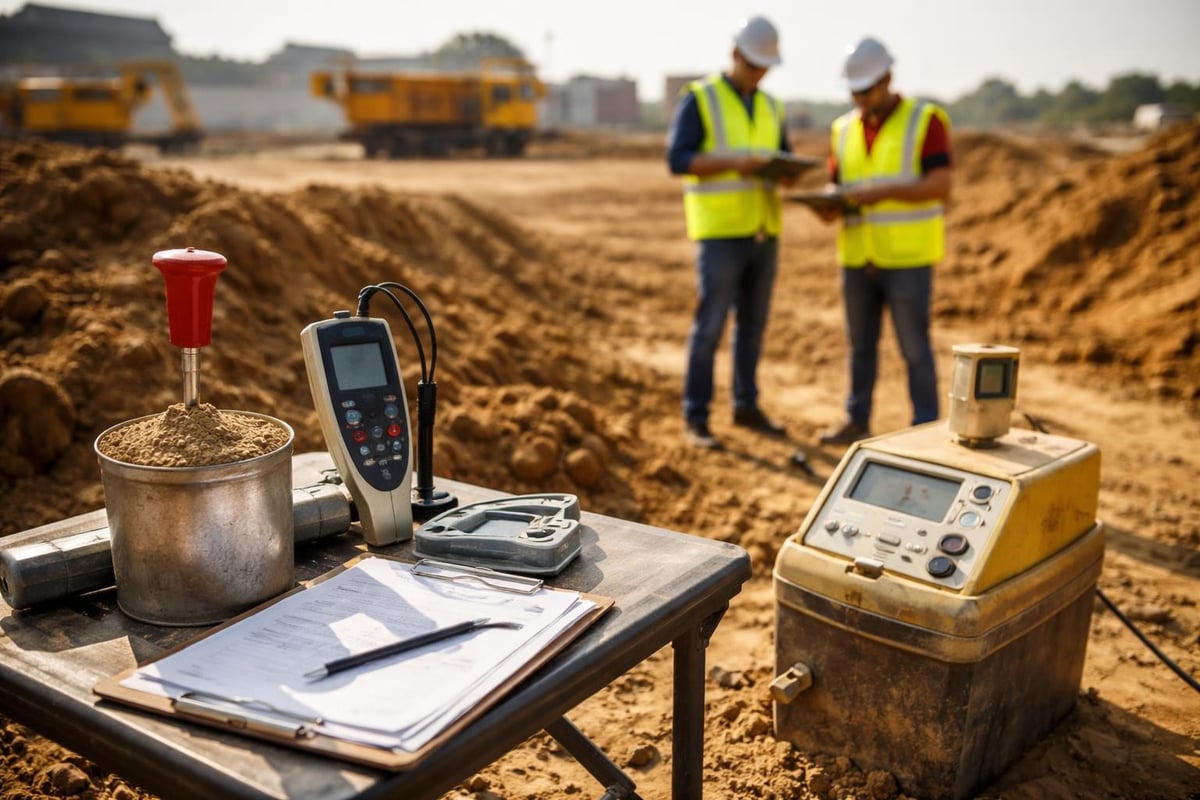
Professional earthwork begins with comprehensive soil analysis determining composition, bearing capacity, and drainage characteristics. Laboratory testing identifies:
- Particle size distribution affecting compaction and stability
- Moisture content influencing workability and compaction efficiency
- Plasticity indices indicating clay behaviour under varying conditions
- Bearing capacity confirming suitability for intended loads
- pH levels relevant for certain construction materials
These data points inform every subsequent decision, from excavation depths to compaction specifications. Skipping proper soil testing represents false economy, frequently resulting in settlement issues, drainage failures, or structural complications requiring expensive remediation.
Compaction Verification
Achieving specified compaction levels remains critical for earthwork success. Under-compacted soil settles over time, causing surface cracking, structural movement, and drainage problems. Professional contractors employ multiple verification methods:
- Nuclear density testing providing immediate compaction readings
- Sand cone testing for alternative density verification
- Proof rolling identifying soft spots requiring additional compaction
- Moisture content monitoring ensuring optimal compaction conditions
Documentation of compaction results protects all parties, providing evidence that work meets construction standard specifications for earthwork. This becomes particularly important should any disputes arise regarding workmanship or performance.
Cost Factors in Earthwork Projects
Understanding what drives earthwork costs enables better budgeting and more informed contractor selection. Pricing varies considerably based on project complexity, site conditions, and regional factors.
Primary Cost Components
Several elements contribute to overall earthwork expenditure:
- Site accessibility affecting equipment mobilisation
- Soil conditions determining excavation difficulty and disposal requirements
- Material import/export volumes and haulage distances
- Rock excavation requiring specialised equipment or techniques
- Groundwater management and dewatering systems
- Compaction requirements and testing frequency
- Timeline constraints necessitating additional resources
Competent earthwork companies provide detailed quotations breaking down these elements, enabling clients to understand exactly what they're paying for. Suspiciously low quotes often signal corners being cut, whether through inadequate compaction, substandard materials, or insufficient testing.
Value Versus Price
Selecting an earthwork company purely on lowest price frequently proves counterproductive. Consider the total value proposition:
| Value Factor | Impact on Project Success |
|---|---|
| Experience | Fewer unexpected issues, efficient problem-solving |
| Equipment quality | Precision work, reduced timeline, better finishes |
| Insurance coverage | Protection against accidents or damage |
| Warranty provision | Confidence in long-term performance |
| Communication | Reduced stress, clear expectations |
| Reputation | Proven track record, verifiable results |
Companies like JRG Civils, established since August 2020, build reputations through consistent delivery across commercial franchises and residential projects. This track record provides assurance that experience and expertise justify any price premium over less established competitors.
Project Planning With Your Earthwork Contractor
Successful earthwork outcomes depend heavily on thorough planning before equipment arrives on site. Collaborative planning between clients and contractors establishes clear expectations whilst identifying potential challenges early.
Pre-Construction Planning Steps
Effective projects follow a structured planning sequence:
- Site assessment including topographical surveys and geotechnical investigations
- Scope definition establishing exactly what earthwork operations are required
- Timeline development coordinating with other construction phases
- Permit acquisition securing necessary approvals and licences
- Utility location identifying and marking underground services
- Access arrangements ensuring equipment can reach work areas
- Material sourcing confirming availability of fill materials or disposal facilities
This preparation phase, whilst adding upfront time, dramatically reduces delays during execution. An earthwork company with robust planning processes flags potential issues before they become expensive problems.
Communication Protocols
Establishing clear communication channels prevents misunderstandings that derail projects. Define:
- Primary contact points for both parties
- Reporting frequency and format
- Decision-making authority and approval processes
- Change order procedures
- Quality inspection schedules
- Progress documentation requirements
Regular site meetings maintain alignment between earthwork contractors and other trades, ensuring everyone understands current status and upcoming activities. This coordination proves particularly crucial on commercial developments where multiple contractors work simultaneously.
Seasonal Considerations for Earthwork
Weather and seasonal factors significantly influence earthwork operations. Understanding these constraints helps schedule projects for optimal conditions and realistic timelines.
Weather Impact on Earthwork
Different seasons present distinct challenges:
Spring: Increased rainfall can saturate soils, making compaction difficult and creating muddy conditions. However, moderate temperatures generally favour construction activities.
Summer: Ideal earthwork conditions in most UK regions, with dry weather facilitating compaction and minimal weather delays. High demand may affect contractor availability.
Autumn: Declining temperatures and increasing rainfall require careful moisture management. Early autumn often provides good working conditions before winter weather arrives.
Winter: Frozen ground complicates excavation, whilst frost affects compaction quality. Shorter daylight hours reduce productive time. Many earthwork companies reduce operations during severe winter weather.
Planning Around Seasonal Constraints
Experienced contractors adjust approaches based on seasonal realities:
- Scheduling critical compaction work during dry periods
- Implementing enhanced drainage during wet seasons
- Accelerating timelines before winter weather arrives
- Planning indoor or less weather-dependent activities during poor conditions
- Maintaining flexible schedules accommodating weather delays
An earthwork company with deep regional experience understands local weather patterns and plans accordingly. This knowledge proves invaluable for maintaining project momentum despite climatic challenges.
Selecting the Right Earthwork Partner
Choosing an earthwork company represents a significant decision with long-lasting implications. A systematic selection process identifies contractors best suited to your specific requirements.
Evaluation Criteria Checklist
Assess potential contractors against these parameters:
- Relevant experience in similar project types and scales
- Financial stability ensuring they can complete your project
- Equipment inventory matching project requirements
- Safety record demonstrating commitment to worker and public protection
- References from recent comparable projects
- Insurance coverage including public liability and employer's liability
- Quality systems governing testing and verification procedures
- Environmental policies addressing sustainability and compliance
Request detailed proposals addressing each criterion. Vague or incomplete responses suggest potential reliability issues.
The Importance of Local Knowledge
Regional familiarity provides substantial advantages. Local earthwork contractors understand:
- Soil conditions typical to the area
- Planning authority requirements and processes
- Material suppliers and disposal facilities
- Weather patterns affecting operations
- Utility layouts and coordination procedures
Companies operating across regions, like JRG Civils servicing the entire UK from their North East base, combine local expertise with broader experience. This combination delivers both regional insight and diverse project exposure.
Long-Term Performance and Maintenance
Quality earthwork provides decades of reliable performance with minimal intervention. Understanding what contributes to longevity helps specify appropriate standards during initial construction.
Factors Affecting Earthwork Durability
Several elements determine how well earthwork performs over time:
| Factor | Impact on Longevity |
|---|---|
| Compaction quality | Prevents settlement and surface failure |
| Drainage design | Protects against water damage and erosion |
| Material selection | Ensures appropriate strength and stability |
| Construction timing | Avoids adverse weather affecting quality |
| Edge restraint | Maintains boundaries and prevents spread |
Shortcuts during construction inevitably manifest as problems later. Properly executed earthwork by a competent earthwork company requires virtually no maintenance beyond routine drainage cleaning and occasional surface treatments.
Warranty Considerations
Reputable contractors stand behind their work with meaningful warranties. Examine warranty terms carefully:
- Coverage duration for different project elements
- Exclusions and limitations
- Maintenance requirements preserving warranty validity
- Claims procedures and response timeframes
- Financial backing ensuring warranty remains viable
Warranties provide peace of mind whilst demonstrating contractor confidence in their workmanship. Be wary of companies offering no warranty or extremely limited coverage.
Successful earthwork projects require careful contractor selection, thorough planning, and commitment to quality throughout execution. Understanding what distinguishes exceptional earthwork services enables informed decisions that deliver lasting value. Whether you're planning highway surfacing, commercial development, or residential improvements, partnering with experienced professionals ensures your project begins on solid ground. JRG Civils brings civil engineering excellence to projects throughout the UK, combining technical expertise with attention to detail that has delivered successful outcomes for commercial franchises and private clients alike. Discover how JRG Civils can transform your next project with professional earthwork and civil engineering services.