Earth moving excavation forms the foundation of virtually every civil engineering project, from commercial drive-throughs to residential driveways. Understanding the complexities of moving soil, rock, and other materials is essential for project managers, contractors, and property owners who want to ensure their construction projects begin on solid ground. This comprehensive guide explores the critical aspects of earth moving excavation, providing insights into modern techniques, equipment selection, safety considerations, and project planning strategies that deliver successful outcomes.
Understanding Earth Moving Excavation Fundamentals
Earth moving excavation involves far more than simply digging holes in the ground. It encompasses the systematic removal, relocation, and placement of earth materials to create the proper foundation for construction projects. The process requires careful planning, precise execution, and thorough understanding of soil composition, site conditions, and project requirements.
Modern earth moving excavation projects demand a comprehensive approach that integrates site surveying, soil analysis, drainage planning, and environmental considerations. Whether preparing a site for a commercial facility or creating the base for a residential driveway, the principles remain consistent whilst the scale and complexity vary significantly.
Key Components of Excavation Projects
Successful excavation work depends on several interconnected elements:
- Site assessment and surveying to determine existing conditions and establish proper grades
- Soil classification to understand material properties and handling requirements
- Equipment selection based on project scope, soil type, and site accessibility
- Material management including removal, stockpiling, and disposal strategies
- Safety protocols to protect workers and adjacent properties
The Food and Agriculture Organization outlines various earthmoving methods that provide foundational knowledge applicable to both large-scale and smaller civil engineering projects. These techniques have evolved considerably with technological advancement, yet the core principles remain relevant in 2026.
Equipment Selection for Different Excavation Scenarios
Choosing the appropriate machinery represents one of the most critical decisions in earth moving excavation planning. The wrong equipment selection can lead to project delays, increased costs, and substandard results. Different scenarios demand different solutions, and understanding these requirements separates efficient operations from problematic ones.
Excavators and Their Applications
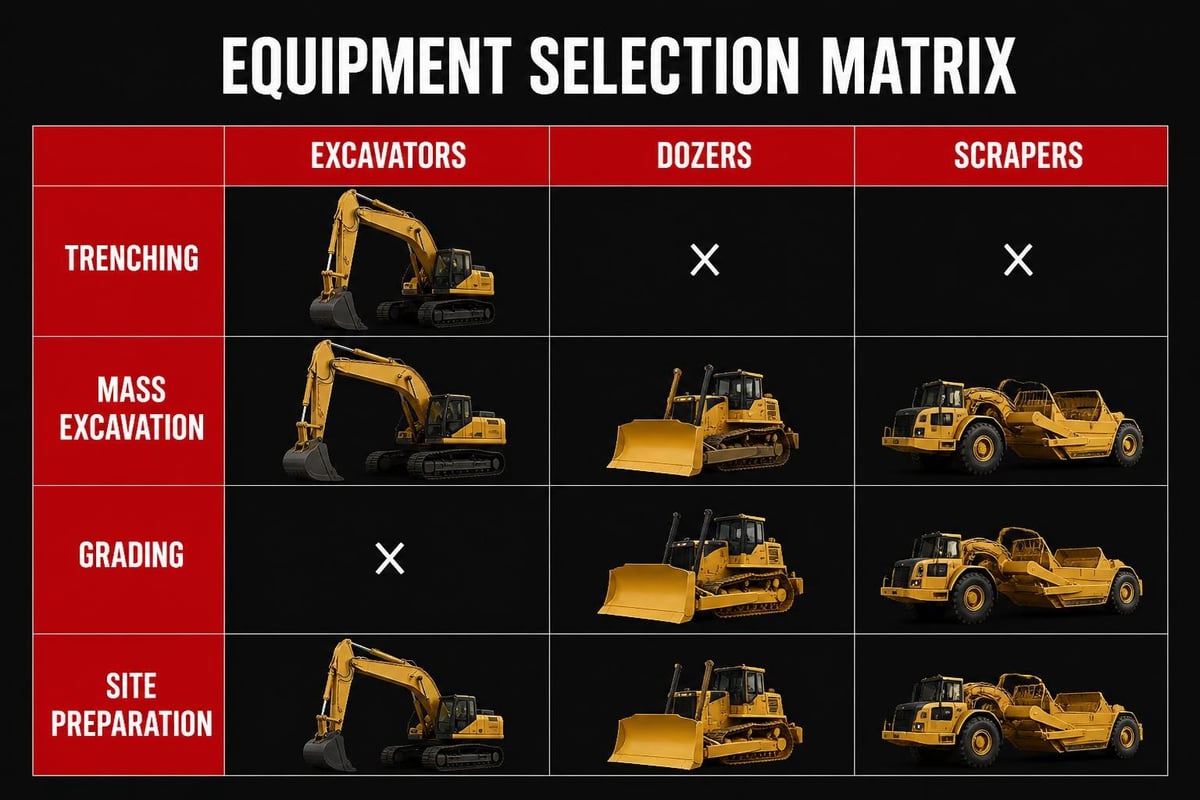
Hydraulic excavators serve as the workhorse for most earth moving excavation projects. Their versatility makes them suitable for:
- Trenching operations for utilities, drainage systems, and foundations
- Precision digging around existing structures or sensitive areas
- Material loading onto trucks for off-site disposal
- Demolition work when fitted with appropriate attachments
- Slope shaping and detailed grading work
Track-mounted excavators offer superior stability on soft ground, whilst wheeled variants provide better mobility for projects requiring frequent repositioning. The choice depends on site conditions, project duration, and specific task requirements.
Mass Earthmoving Equipment
For larger projects requiring significant material movement, different equipment becomes necessary. Research on mass excavating techniques demonstrates how scrapers versus excavators paired with articulated trucks each offer distinct advantages depending on haul distances and material types.
| Equipment Type | Best Application | Typical Capacity | Optimal Haul Distance |
|---|---|---|---|
| Scrapers | Mass earthworks, level terrain | 20-40 cubic metres | 300-1500 metres |
| Excavator + Trucks | Varied terrain, harder materials | 15-30 cubic metres | Over 500 metres |
| Dozers | Pushing material, spreading fill | 5-15 cubic metres | Under 100 metres |
| Graders | Final surface preparation | N/A | On-site only |
Projects like the Costa Coffee Durham development demonstrate how commercial sites often require a combination of equipment types to handle initial bulk excavation, detailed foundation work, and precise final grading.
Excavation Techniques for Varied Terrain Conditions
Earth moving excavation strategies must adapt to terrain characteristics, soil composition, and environmental factors. What works efficiently on flat, stable ground becomes problematic on slopes or in areas with high water tables. Understanding these variations enables contractors to develop effective approaches for challenging conditions.
Working with Sloped Terrain
Sloped sites present unique challenges requiring specialised approaches. Efficient earthmoving techniques for sloped terrain include careful attention to cut and fill balancing, erosion control, and drainage management throughout the excavation process.
Cut and fill operations involve removing material from higher elevations (cuts) and placing it at lower areas (fills) to achieve desired grades. This approach minimises material transport costs whilst creating stable building platforms. However, proper compaction of fill material remains absolutely critical to prevent future settlement issues.
The site engineering work required for sloped projects demands additional considerations:
- Benching techniques to create stable working platforms
- Temporary retention systems during excavation phases
- Drainage interceptors to manage surface water
- Erosion control measures including silt fencing and sediment basins
Soil Type Considerations
Different soil classifications respond differently to excavation equipment and techniques. Clay soils, whilst stable when dry, become problematic in wet conditions. Sandy soils offer easy digging but require careful slope management. Rock excavation may necessitate breaking or blasting before removal.
Soil behaviour directly impacts equipment productivity and project timelines. Understanding these characteristics during the planning phase prevents unexpected complications during execution. Testing and analysis inform decisions about appropriate excavation methods and equipment deployment.
Safety Standards and Regulatory Compliance
Safety represents the paramount concern in earth moving excavation operations. The combination of heavy machinery, deep excavations, and potential ground instability creates serious hazards that demand rigorous controls and constant vigilance from all project personnel.
Hazard Identification and Control
The University of Maryland provides comprehensive excavation safety guidelines that outline critical protective measures. These protocols address common hazards including cave-ins, equipment strikes, and underground utility damage.
Primary excavation hazards include:
- Cave-ins and trench collapse (the leading cause of excavation fatalities)
- Contact with buried utilities including gas, electric, and telecommunications
- Equipment rollovers on unstable ground or steep slopes
- Falls into excavations or from equipment
- Hazardous atmospheres in deep or confined excavations
Protective Systems and Inspections
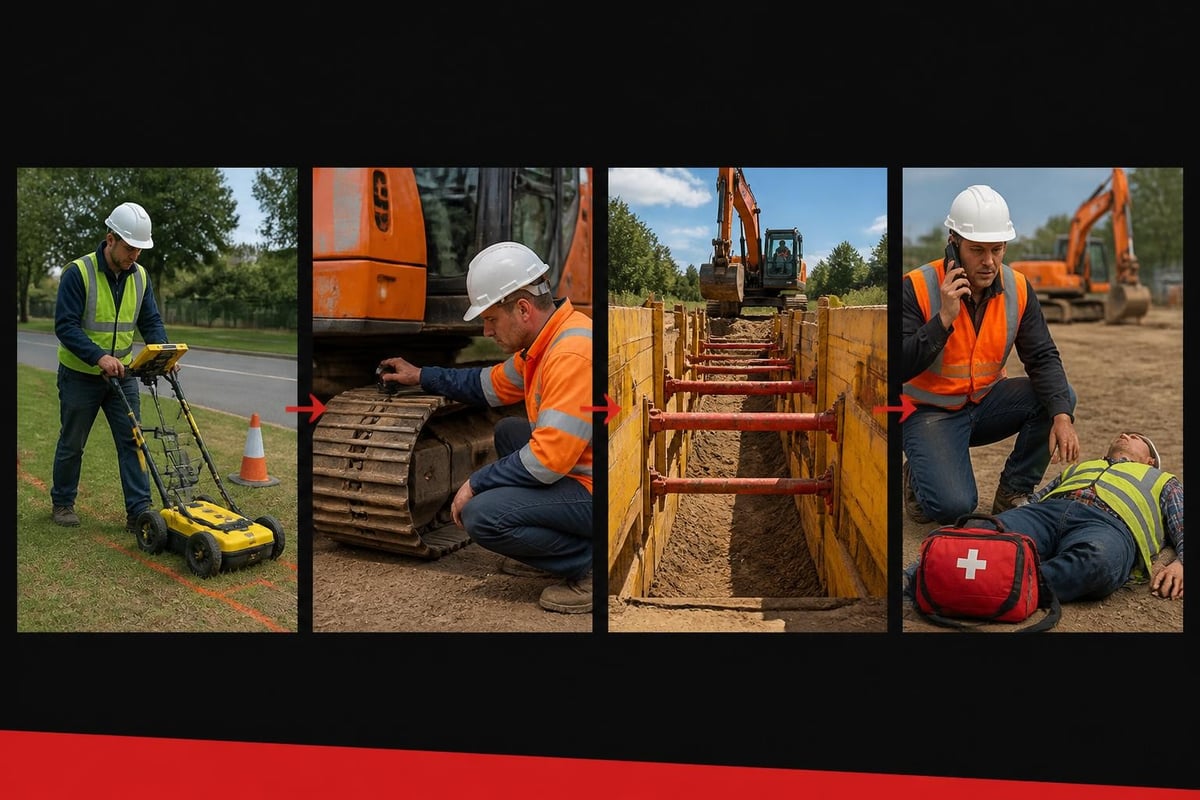
Excavations exceeding 1.5 metres in depth typically require protective systems such as:
- Sloping or benching the excavation sides to prevent collapse
- Shoring systems using timber or hydraulic supports
- Trench boxes or shields that protect workers within the excavation
- Underpinning for excavations adjacent to existing structures
Daily inspections by competent persons before work commences identify changing conditions that might compromise safety. Weather events, groundwater seepage, or vibrations from nearby activities can transform a previously safe excavation into a hazardous situation requiring immediate intervention.
Planning and Preparation for Successful Projects
Thorough planning distinguishes successful earth moving excavation projects from those plagued by delays, cost overruns, and quality issues. The preparation phase establishes the framework for efficient execution and helps identify potential challenges before they impact the construction schedule.
Site Investigation and Design
Comprehensive civils design begins with detailed site investigations that reveal subsurface conditions, water table levels, and soil bearing capacities. This information guides excavation planning and informs structural design decisions.
Geotechnical investigations typically include:
- Trial pit excavations to examine soil layers and composition
- Boreholes for deeper investigation of ground conditions
- Laboratory testing of soil samples for engineering properties
- Groundwater monitoring to assess seasonal variations
The data gathered during investigations directly influences excavation methodology, equipment selection, and material handling strategies. Unexpected ground conditions discovered during excavation often result from inadequate investigation work during the planning phase.
Material Management Strategies
Efficient material management reduces project costs and environmental impact. Earth moving excavation generates substantial volumes of material requiring appropriate handling, whether reused on-site, stockpiled for future use, or transported off-site for disposal.
| Material Type | Reuse Potential | Handling Requirements | Disposal Considerations |
|---|---|---|---|
| Topsoil | High (landscaping) | Separate stockpiling | Minimal disposal needed |
| Subsoil | Medium (fill material) | May require processing | Quality dependent |
| Rock | Low (unless crushed) | Specialised equipment | Often disposed off-site |
| Contaminated soil | None | Isolated containment | Regulated disposal required |
Engineering for construction projects demands careful coordination between excavation activities and subsequent construction phases. Timing material removal with foundation work, utility installation, and structural construction prevents unnecessary double-handling and keeps projects moving efficiently.
Modern Technology in Earth Moving Operations
Technology continues transforming earth moving excavation through innovations that improve precision, efficiency, and safety. From GPS-guided machinery to sophisticated simulation tools, modern excavation projects benefit from capabilities unavailable just a decade ago.
Machine Control and Automation
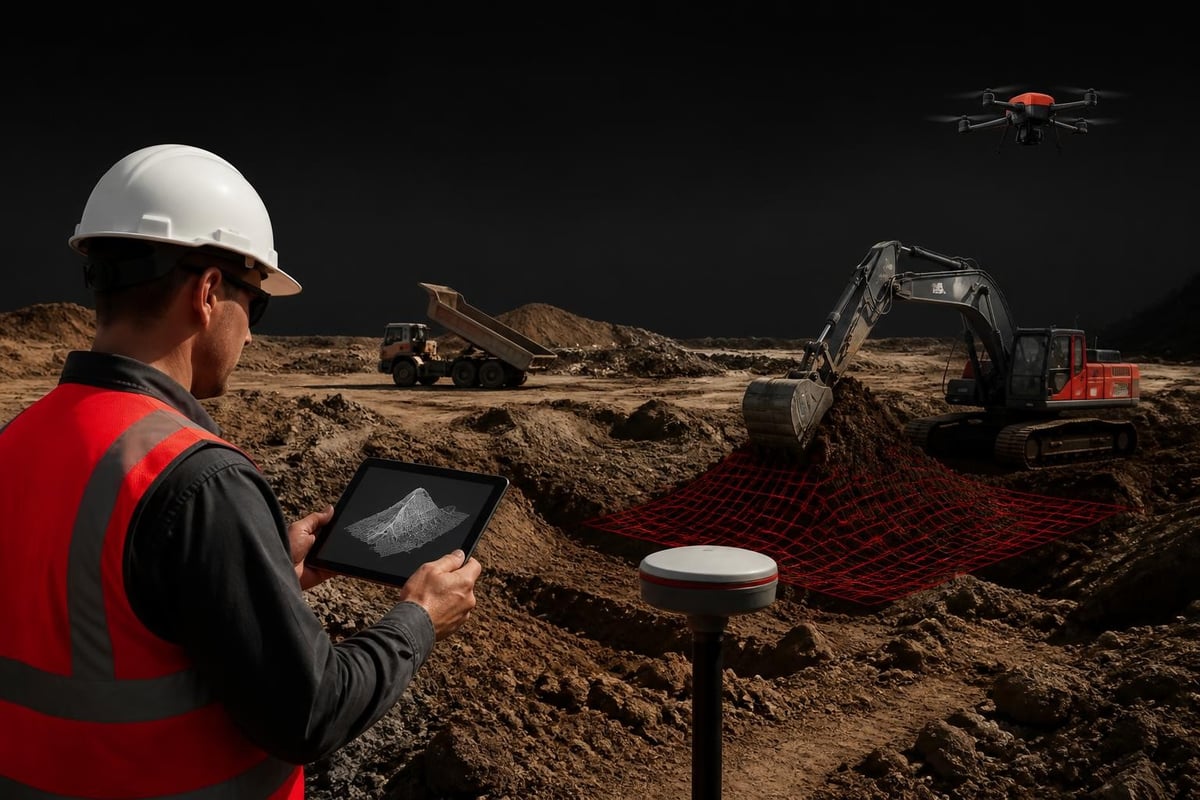
GPS and laser-guided excavation equipment enables operators to achieve design grades with millimetre precision. These systems reduce the need for manual surveying, minimise over-excavation, and accelerate project completion. Automated blade control on dozers and graders maintains consistent slopes and elevations without constant manual adjustment.
Research into autonomous excavation systems demonstrates how adaptive control systems can handle challenging terrain conditions more effectively than traditional methods. Whilst fully autonomous excavation remains primarily in development, semi-autonomous features increasingly appear on commercial equipment.
Digital Planning and Simulation
Advanced modelling tools allow contractors to simulate earth moving excavation sequences before equipment arrives on-site. Multiscale models for terrain dynamics simulation provide insights into soil behaviour and equipment interaction, helping planners optimise approaches for specific site conditions.
Three-dimensional models integrate survey data, design requirements, and existing conditions to create comprehensive visualisations of excavation projects. These models facilitate:
- Accurate volume calculations for cost estimation
- Identification of potential conflicts or challenges
- Optimisation of haul routes and material placement
- Communication with clients and stakeholders through visual representations
Environmental Considerations and Sustainability
Modern earth moving excavation must balance project requirements with environmental responsibility. Sustainable practices reduce ecological impact whilst often delivering cost savings through efficient resource utilisation and waste minimisation.
Erosion and Sediment Control
Excavation activities disturb soil and vegetation, creating potential for erosion and sediment discharge into waterways. Effective control measures protect water quality and prevent environmental damage:
- Perimeter silt fencing to capture sediment at site boundaries
- Sediment basins that allow particles to settle before water discharge
- Temporary vegetation or mulching on exposed areas
- Construction entrance stabilisation to prevent mud tracking onto public roads
On-site engineering services increasingly incorporate environmental monitoring to ensure compliance with regulations and permits. Regular inspections verify that control measures remain effective throughout project duration.
Material Reuse and Waste Reduction
Sustainable earth moving excavation prioritises on-site material reuse over disposal. Balancing cut and fill volumes during design reduces unnecessary hauling whilst appropriate material classification ensures suitable soils find productive uses rather than heading to landfill.
Crushed concrete and masonry from demolition activities can serve as engineered fill or sub-base material for driveways and parking areas. This approach reduces both disposal costs and the environmental impact of quarrying new aggregates.
Quality Control and Documentation
Maintaining quality throughout earth moving excavation requires systematic inspection, testing, and documentation. These processes verify that work meets design specifications and regulatory requirements whilst creating records that demonstrate compliance and inform future maintenance decisions.
Testing and Verification Protocols
Compaction testing ensures fill materials achieve required densities for structural support. Nuclear density gauges or sand cone tests measure in-place density, comparing results against specifications that typically require 95% to 98% of maximum dry density.
Key testing activities include:
- Proctor tests to establish maximum density for specific soils
- Field density testing at specified intervals during fill placement
- Plate bearing tests for subgrade strength verification
- Moisture content monitoring to ensure optimal compaction conditions
- Survey checks confirming excavation depths and grades
Documentation creates a permanent record of subsurface conditions, material placement, and quality verification. These records prove invaluable if future issues arise or when planning additions or modifications to existing structures.
As-Built Records
Accurate as-built drawings document actual constructed conditions, capturing variations from design plans that occurred during construction. For earth moving excavation, these records show:
- Final excavation extents and depths
- Locations of buried utilities encountered or installed
- Areas requiring special treatment or remediation
- Fill material types and placement locations
Engineering for building projects relies on accurate as-built information to coordinate excavation work with structural elements and ensure proper integration between site work and building construction.
Commercial Versus Residential Excavation Projects
Earth moving excavation requirements differ significantly between commercial developments and residential projects, though fundamental principles remain consistent. Understanding these distinctions helps contractors allocate appropriate resources and manage client expectations effectively.
Commercial Project Characteristics
Large commercial developments like drive-through restaurants or retail centres demand substantial site preparation including extensive grading, stormwater management systems, and heavy-duty pavement foundations. These projects typically involve:
- Multiple equipment types operating simultaneously
- Strict timeline requirements with liquidated damages clauses
- Coordination with numerous trades and utilities
- Comprehensive engineering oversight and quality control
- Significant earthwork volumes requiring careful material management
The scale and complexity necessitate detailed planning, robust project management, and experienced personnel capable of maintaining progress whilst ensuring quality and safety standards.
Residential Project Approaches
Residential excavation for driveways, patios, and home extensions operates at a different scale but demands equal attention to detail. These projects emphasise:
- Minimising disruption to occupied properties and neighbours
- Protecting existing landscaping and structures
- Precision work in confined spaces with limited access
- Careful coordination with homeowner schedules and preferences
- Attention to aesthetic details in finished grades and surfaces
Smaller equipment suited to residential sites provides the manoeuvrability needed whilst limiting damage to surrounding areas. The personal nature of residential work requires excellent communication and responsiveness to client concerns throughout the project.
Earth moving excavation success depends on comprehensive planning, appropriate equipment selection, rigorous safety protocols, and attention to quality throughout every project phase. Whether tackling commercial developments or residential enhancements, the principles outlined here provide the foundation for efficient, safe, and high-quality outcomes. The experienced team at JRG Civils brings this expertise to projects across the UK, combining modern equipment with meticulous attention to detail that ensures your excavation work establishes the perfect foundation for construction success.