
Concrete curb stones represent a fundamental component in modern civil engineering, serving both functional and aesthetic purposes across highways, commercial developments, and residential properties. These essential elements create clear boundaries between vehicular traffic areas and pedestrian zones whilst managing surface water drainage effectively. Whether you're planning a commercial drive-through facility or a domestic driveway project, understanding the specifications, installation requirements, and maintenance protocols for concrete curb stones ensures long-lasting results that meet industry standards.
Understanding Concrete Curb Stone Types and Applications
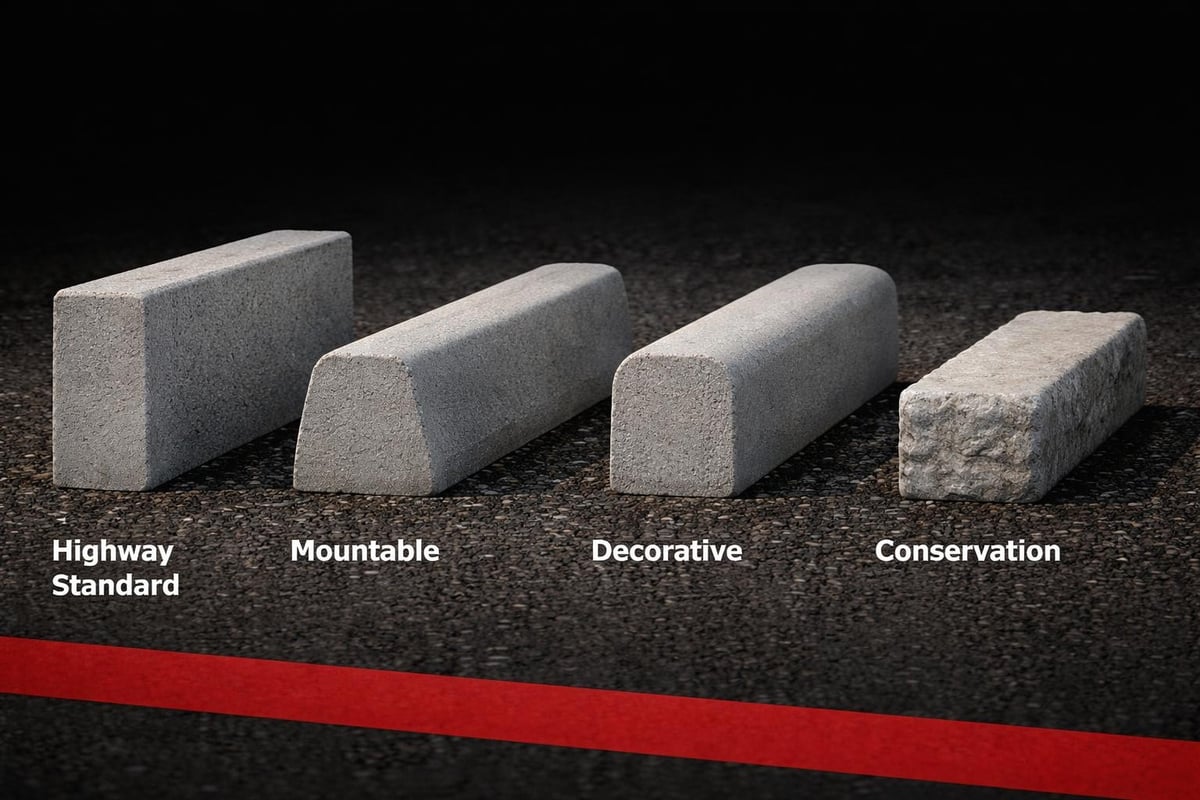
The versatility of concrete curb stones makes them indispensable across various civil engineering projects. Different profiles and dimensions serve specific purposes, from standard highway kerbs to decorative residential edging.
Standard Highway Kerbs
Highway-grade concrete curb stones typically measure 125mm in height with varying lengths between 450mm and 915mm. These robust units withstand heavy traffic loads and harsh weather conditions whilst providing essential drainage channels. Commercial projects such as drive-through facilities require these heavier-duty specifications to accommodate frequent vehicle movements and turning forces.
Key specifications include:
- Minimum compressive strength of 40 N/mm²
- Chamfered or bullnosed top edges for safety
- Pre-formed drainage channels where required
- Compliance with relevant British Standards
Decorative and Residential Options
Residential applications often utilize smaller profile concrete curb stones that complement driveway and patio installations. These units range from 50mm to 100mm in height, offering subtle definition without overwhelming domestic landscaping schemes.
| Kerb Type | Typical Height | Primary Use | Load Capacity |
|---|---|---|---|
| Highway Standard | 125-150mm | Roads, commercial car parks | Heavy duty |
| Mountable | 75-100mm | Shared surfaces, pedestrian areas | Medium duty |
| Decorative | 50-75mm | Driveways, garden borders | Light duty |
| Conservation | 100-125mm | Heritage projects | Medium-heavy duty |
Installation Best Practices and Technical Requirements
Proper installation determines the longevity and performance of concrete curb stones. The foundation preparation, alignment accuracy, and securing methods all contribute to a professional finish that withstands environmental stresses.
Site Preparation and Foundation Works
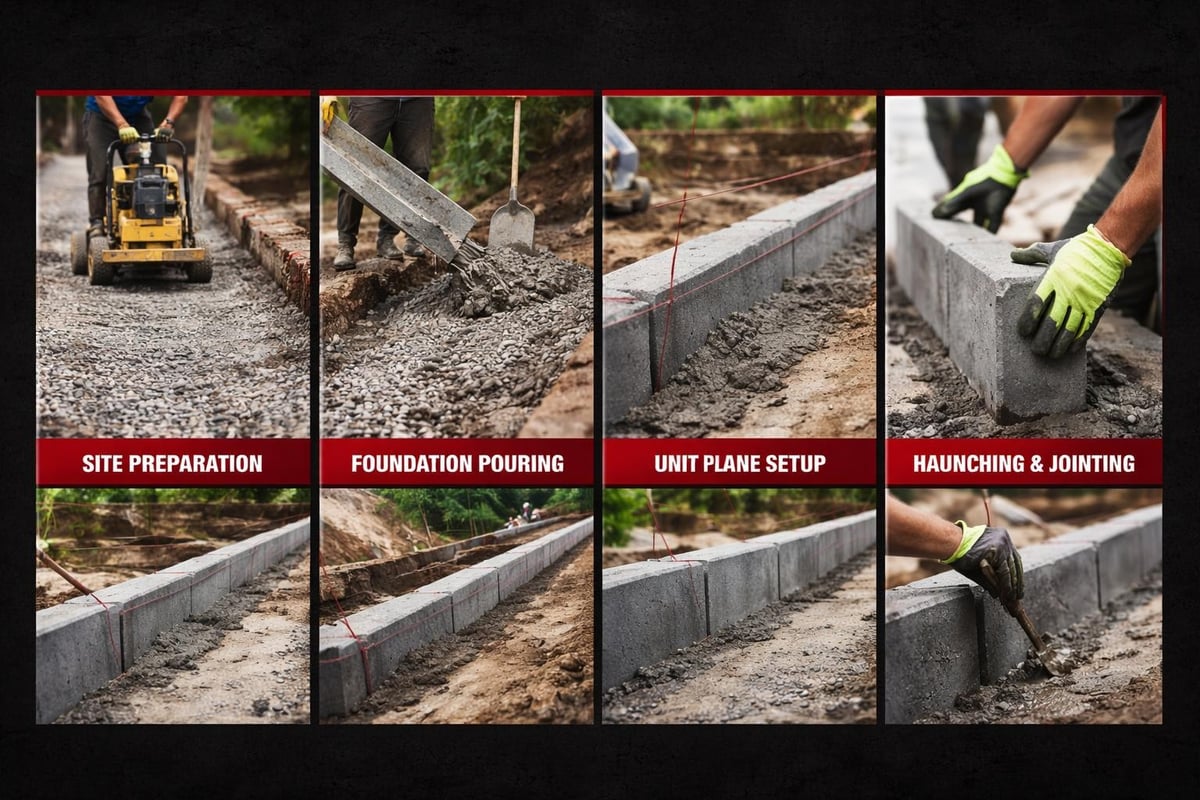
The sub-base layer requires meticulous preparation before laying concrete curb stones. Excavate to a depth that accommodates the kerb height plus 150mm for the concrete foundation bed. Compact the formation level thoroughly using appropriate vibrating equipment.
A minimum 100mm thickness of ST4 concrete (or equivalent 25 N/mm² mix) provides adequate foundation support. Pour this bed in manageable sections, ensuring a consistent 50mm haunch behind the kerb line once units are positioned.
Alignment and Setting Procedures
Establish accurate string lines at the required finished face and height levels. Professional installation demands precision – deviations exceeding 10mm across any 3-metre section appear noticeably uneven.
Installation sequence:
- Set reference kerbs at 30-metre intervals maximum
- Stretch taut string lines between established units
- Lay intermediate kerbs to line, checking levels continuously
- Bed each unit on fresh concrete, tapping into position
- Form rear haunch immediately before concrete sets
- Joint units with 10mm nominal gap, pointed as specified
Following best practices for concrete installation ensures both safety and structural integrity throughout the construction process. The curing period requires protection from traffic loading for minimum 24 hours, with full strength developing over subsequent days.
Material Specifications and Quality Standards
Selecting appropriate concrete curb stones involves understanding manufacturing standards and material properties. Quality assurance protocols guarantee consistent performance across diverse applications.
Manufacturing Requirements
Reputable manufacturers produce concrete curb stones using hydraulic pressing or vibration casting methods. These processes achieve the density and strength characteristics essential for durability. The concrete mix typically comprises cement, graded aggregates, and admixtures that enhance frost resistance and reduce water permeability.
Modern production facilities incorporate quality control testing at regular intervals. Sample units undergo compressive strength testing, dimensional tolerance checks, and visual inspection for surface defects. Understanding curbstone kerb characteristics and standards helps specifiers make informed decisions when sourcing materials.
Regulatory Compliance Considerations
All concrete curb stones installed in highway applications must demonstrate compliance with relevant standards. These regulations specify minimum strength requirements, dimensional tolerances, and performance criteria under simulated traffic loading.
For projects involving workforce safety, contractors should reference OSHA standards related to concrete products to ensure proper handling procedures and protective equipment requirements are met throughout installation works.
Commercial Applications and Project Considerations
Commercial developments present unique challenges requiring specific concrete curb stone solutions. Drive-through restaurants, retail parks, and industrial estates demand robust kerbing that manages increased traffic volumes whilst maintaining aesthetic coherence.
Drive-Through Facilities
Fast-food franchises and coffee shop drive-throughs require carefully designed kerb layouts that guide vehicle movements safely. The turning radii at collection windows typically necessitate mountable kerb profiles, allowing vehicles to track smoothly without tyre damage or kerb displacement.
Recent projects including Costa Coffee and Greggs installations demonstrate how properly specified concrete curb stones contribute to operational efficiency. These schemes incorporate:
- Reinforced sections at tight radii
- Contrasting colours for visual guidance
- Adequate drainage provision
- Tactile paving transitions where pedestrian routes intersect
Car Park and Access Road Installations
Large-format car parks utilize hundreds of metres of concrete curb stones to delineate parking bays, create traffic islands, and define pedestrian walkways. The consistency of precast units ensures uniform appearance across extensive areas whilst simplifying the construction programme.
Coordination between kerb installation and surface course paving proves critical. Setting kerbs to precise levels facilitates subsequent surfacing works, eliminating costly remedial adjustments. Professional civil engineering contractors sequence operations to maximize efficiency whilst maintaining quality standards.
Residential Driveways and Garden Landscaping
Domestic projects benefit from the clean lines and durability that concrete curb stones provide. Whether defining a block-paved driveway or creating raised planting beds, these versatile units offer practical solutions with minimal maintenance requirements.
Driveway Edging Solutions
Properly installed kerb edging prevents lateral movement of block paving or tarmac surfaces. The restraining effect maintains surface integrity over decades, avoiding the unsightly spreading that occurs with inadequately supported perimeters.
For typical domestic driveways, 100mm high concrete curb stones set on a concrete bed provide sufficient restraint. The installation depth positions approximately 40mm of the kerb height above finished paving level, creating a subtle but effective boundary.
Residential installation considerations:
- Match kerb profile to property architecture
- Consider drainage requirements and crossfall
- Plan vehicle access points and dropped kerbs
- Select appropriate colour finishes
Patio and Garden Features
Garden designers increasingly specify concrete curb stones for creating terraced levels, retaining soil in raised beds, and defining lawn edges. The material's versatility allows both contemporary and traditional landscape schemes.
Curved layouts require cutting standard units into shorter lengths, maintaining joint widths to create smooth radii. Specialized cutting equipment produces clean breaks without compromising structural integrity. Some projects incorporate decorative aggregates or coloured concrete mixes that complement surrounding materials.
Maintenance Protocols and Longevity Strategies
Well-maintained concrete curb stones can perform effectively for thirty years or more. Regular inspection and timely intervention prevent minor issues escalating into costly replacements.
Routine Inspection and Cleaning
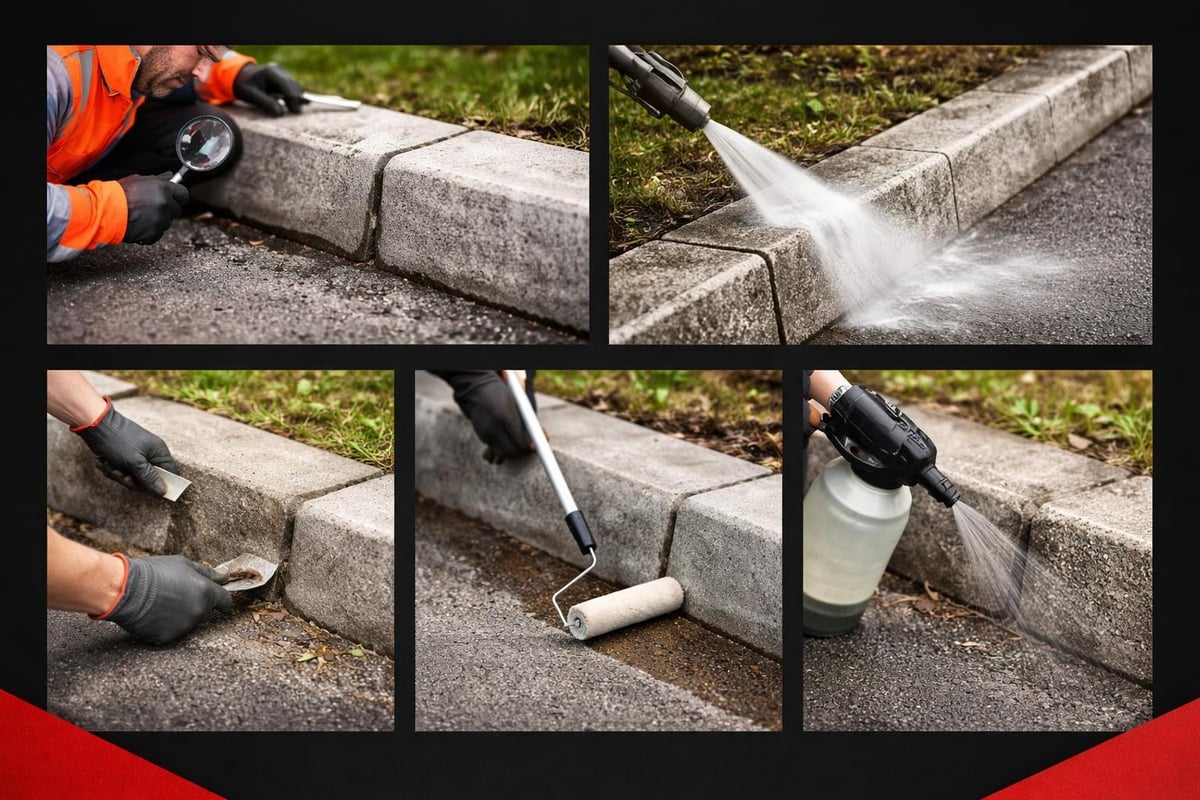
Quarterly visual inspections identify early signs of deterioration, including surface scaling, joint failure, or displacement from position. Addressing these issues promptly extends service life significantly. Following maintenance tips for concrete curbing ensures systematic care that preserves both function and appearance.
Remove vegetation growth from joints using appropriate tools, avoiding damage to kerb faces. Power washing removes accumulated dirt and organic matter, though excessive pressure can erode joint pointing or surface textures. Apply cleaning solutions specifically formulated for concrete to tackle stubborn staining.
Protective Treatments and Repairs
| Maintenance Task | Frequency | Purpose | Method |
|---|---|---|---|
| Joint repointing | Every 5 years | Prevent water ingress | Mortar or proprietary jointing compound |
| Surface sealing | Every 3-5 years | Enhance weather resistance | Penetrating silane/siloxane sealers |
| Crack repair | As required | Prevent progressive damage | Epoxy or polyurethane injection |
| Realignment | As required | Restore line and level | Remove, relay on new concrete bed |
Applying breathable sealers reduces water absorption without trapping moisture within the concrete matrix. This treatment proves particularly beneficial in areas experiencing freeze-thaw cycling, where absorbed water can cause spalling damage. Resources like concrete curbing care guides provide detailed application instructions.
Seasonal Challenges and Environmental Factors
British weather subjects concrete curb stones to significant environmental stresses throughout the year. Understanding seasonal challenges enables proactive maintenance planning that mitigates weather-related deterioration.
Winter Protection Measures
Frost action poses the primary threat during winter months. Water penetrating through damaged joints or porous surfaces expands upon freezing, creating internal pressures that fracture concrete. Pre-winter inspections should identify vulnerable areas requiring remedial sealing.
De-icing chemicals, particularly sodium chloride, accelerate concrete degradation through salt crystallization cycles. Where possible, mechanical snow clearance methods prove less harmful than chemical treatments. Following seasonal maintenance tips for stone and concrete kerbs helps property owners implement appropriate protective strategies.
Summer Expansion and Movement
Thermal expansion during prolonged warm periods can cause concrete curb stones to lift slightly or displace if joints lack adequate provision for movement. Properly specified joint widths accommodate thermal expansion without inducing stresses.
Vegetation growth accelerates during summer months, with roots potentially dislodging units or penetrating joints. Regular weed control prevents established growth that requires aggressive removal techniques potentially damaging kerb integrity.
Cost Considerations and Value Analysis
Understanding the financial aspects of concrete curb stone projects helps clients make informed decisions balancing initial expenditure against long-term value.
Material and Installation Costs
Supply costs vary depending on kerb profile, finish specification, and order quantities. Standard highway kerbs typically cost less per linear metre than decorative or coloured alternatives. Bulk purchases for large commercial projects benefit from economies of scale unavailable to small domestic installations.
Professional installation represents a significant proportion of total project costs. Experienced civil engineering contractors complete works efficiently whilst maintaining quality standards that amateur attempts rarely achieve. The precision required for commercial schemes particularly justifies professional expertise.
Cost factors include:
- Site access and working space constraints
- Ground conditions requiring additional preparation
- Complexity of layout including radii and transitions
- Specification of ancillary works such as drainage connections
Long-Term Value and Return on Investment
Quality concrete curb stones installed to professional standards require minimal ongoing expenditure. Comparing lifecycle costs against alternative edging materials demonstrates compelling value propositions.
Timber edging deteriorates within 10-15 years requiring complete replacement. Plastic alternatives suffer UV degradation and lack the structural robustness for vehicular applications. Steel edging products develop corrosion issues unless regularly maintained with protective coatings.
Well-executed kerb installations enhance property values through improved aesthetics and functionality. Commercial developments benefit from professional appearances that attract customers whilst residential properties gain kerb appeal that distinguishes them within local markets.
Specialized Applications and Technical Innovations
The concrete curb stone industry continues developing products addressing specific technical requirements and aesthetic preferences. Modern manufacturing capabilities produce units unimaginable in previous decades.
Permeable and Sustainable Solutions
Environmental concerns drive demand for permeable kerb systems that facilitate sustainable drainage. These specialist units incorporate voids allowing water infiltration whilst maintaining structural integrity. Commercial car parks increasingly adopt permeable paving systems where concrete curb stones with compatible drainage characteristics prove essential.
Recycled aggregate content reduces environmental impact without compromising performance. Some manufacturers achieve 30% recycled content in standard production whilst maintaining full compliance with relevant specifications.
Integrated Lighting and Safety Features
Innovation extends beyond basic structural functions. Concrete curb stones with integral LED lighting channels illuminate pedestrian routes whilst creating distinctive visual effects. These systems find applications in public realm schemes, hospitality venues, and prestige commercial developments.
Reflective strips embedded during manufacture enhance visibility in low-light conditions. These safety enhancements prove particularly valuable at complex junctions or areas with vulnerable road users.
Working with Professional Civil Engineering Contractors
Selecting appropriate contractors significantly influences project outcomes. Experienced professionals bring technical knowledge, specialized equipment, and quality assurance procedures that ensure successful completion.
Expertise and Project Management
Established civil engineering firms possess comprehensive understanding of concrete curb stone specifications, installation methodologies, and coordination requirements. This expertise proves invaluable when managing complex commercial developments involving multiple trades and tight completion schedules.
Professional project management ensures materials arrive when required, installation sequences follow logical progressions, and quality control procedures maintain standards throughout. The coordination between kerb installation and subsequent surfacing works requires careful planning that experienced contractors execute efficiently.
Quality Assurance and Warranty Provision
Reputable contractors provide warranties covering both materials and workmanship. These guarantees offer clients protection against defects whilst demonstrating contractor confidence in their work quality. Documentation of materials used, installation methods employed, and testing results completed provides valuable records for future maintenance planning.
Following concrete use guidelines and best practices throughout construction phases ensures compliance with industry standards and manufacturer recommendations. This systematic approach to quality management distinguishes professional operations from informal alternatives.
Concrete curb stones deliver essential functionality combined with aesthetic versatility across diverse civil engineering applications, from major highway schemes to residential driveways. Proper specification, professional installation, and systematic maintenance ensure these critical infrastructure elements perform reliably for decades. Whether you're planning a commercial development, highway improvement, or domestic enhancement project, JRG Civils brings the expertise, equipment, and commitment to excellence that transforms concrete curb stone installations into lasting assets. Contact our team today to discuss how our civil engineering capabilities can deliver the quality results your project deserves.