
Plastic kerbing has emerged as a transformative solution in civil engineering and surfacing projects, offering contractors and property developers a versatile alternative to traditional concrete and stone edging systems. As infrastructure demands evolve and sustainability becomes increasingly critical, understanding the applications, benefits and installation considerations of plastic kerbing materials is essential for any professional working in highways, driveways or commercial surfacing. This guide examines the practical aspects of plastic kerbing deployment across various project types, from large-scale highway installations to residential driveways.
Understanding Plastic Kerbing Materials and Composition
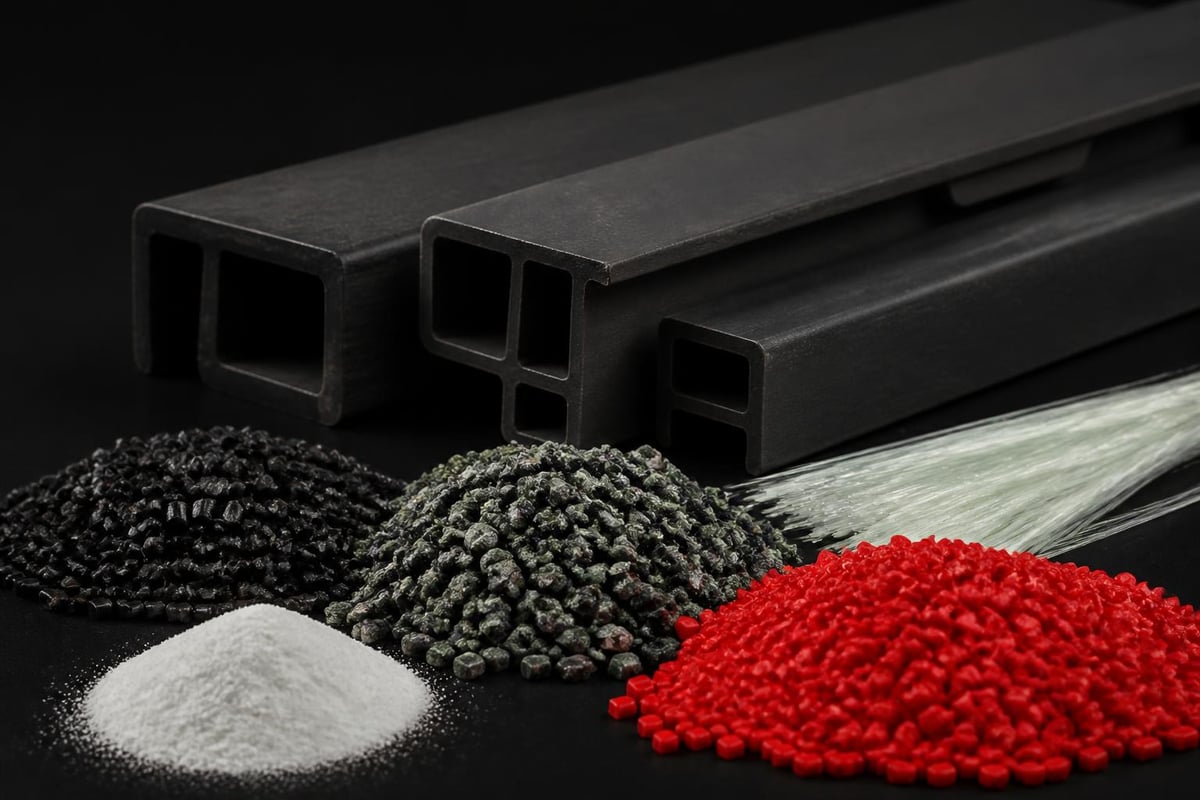
Modern plastic kerbing systems utilise advanced polymer formulations designed to withstand vehicular loads, environmental stresses and the rigorous demands of commercial and residential applications. The primary materials employed include high-density polyethylene (HDPE), recycled plastics and composite formulations that combine virgin polymers with reclaimed materials.
Manufacturing processes have evolved significantly since 2020, with plastics molding and forming techniques becoming more sophisticated. These advances enable the production of kerbing products that match or exceed the performance characteristics of traditional materials whilst offering distinct installation advantages.
Recycled Content and Environmental Considerations
Many manufacturers now incorporate substantial recycled content into their plastic kerbing products, addressing environmental concerns whilst maintaining structural integrity. The Environmental Product Declaration for Durakerb demonstrates how recycled plastic kerbing systems can deliver measurable environmental benefits compared to traditional concrete alternatives.
Key environmental advantages include:
- Reduced carbon emissions during manufacturing and transportation
- Diversion of plastic waste from landfills and oceans
- Lower energy consumption throughout the product lifecycle
- Elimination of concrete curing requirements and associated water usage
- Extended service life reducing replacement frequency
The ISO 17422:2018 standard provides comprehensive guidelines for incorporating environmental considerations into plastic product standards, offering a framework for assessing the sustainability credentials of plastic kerbing systems.
Applications Across Commercial and Residential Projects
Plastic kerbing serves diverse functions across multiple project categories, making it a valuable specification for contractors handling varied workloads. From drive-through facilities to residential landscaping, the material's adaptability proves particularly beneficial.
Highway and Road Projects
In highway applications, plastic kerbing delivers exceptional performance where traditional materials face installation challenges. Temporary traffic management projects benefit from the lightweight nature and rapid installation capabilities of plastic systems. The material withstands the thermal expansion and contraction cycles common in asphalt surfaces whilst maintaining dimensional stability.
| Application Type | Typical Specification | Installation Duration | Expected Lifespan |
|---|---|---|---|
| Highway edge restraint | 150mm height, reinforced | 40% faster than concrete | 25+ years |
| Service station perimeters | Custom profiles available | 2-3 days typical site | 20+ years |
| Temporary installations | Modular systems | Same-day completion | 10+ years reusable |
Commercial projects such as drive-through facilities and service stations require durable edging that accommodates regular vehicular movements whilst defining traffic flow patterns. Plastic kerbing excels in these environments, offering impact resistance and consistent performance across temperature ranges.
Driveways and Residential Applications
Residential driveway projects represent a significant market for plastic kerbing installations. Homeowners and developers appreciate the clean aesthetic finishes achievable with modern plastic systems, whilst contractors benefit from simplified installation procedures and reduced labour requirements.
The material suits various surfacing types:
- Block paving installations requiring edge restraint
- Tarmac and asphalt driveways needing defined boundaries
- Gravel driveways where containment prevents material migration
- Resin-bound surfaces demanding stable perimeter support
- Decorative landscaping incorporating multiple surface transitions
Landscaping and Aesthetic Applications
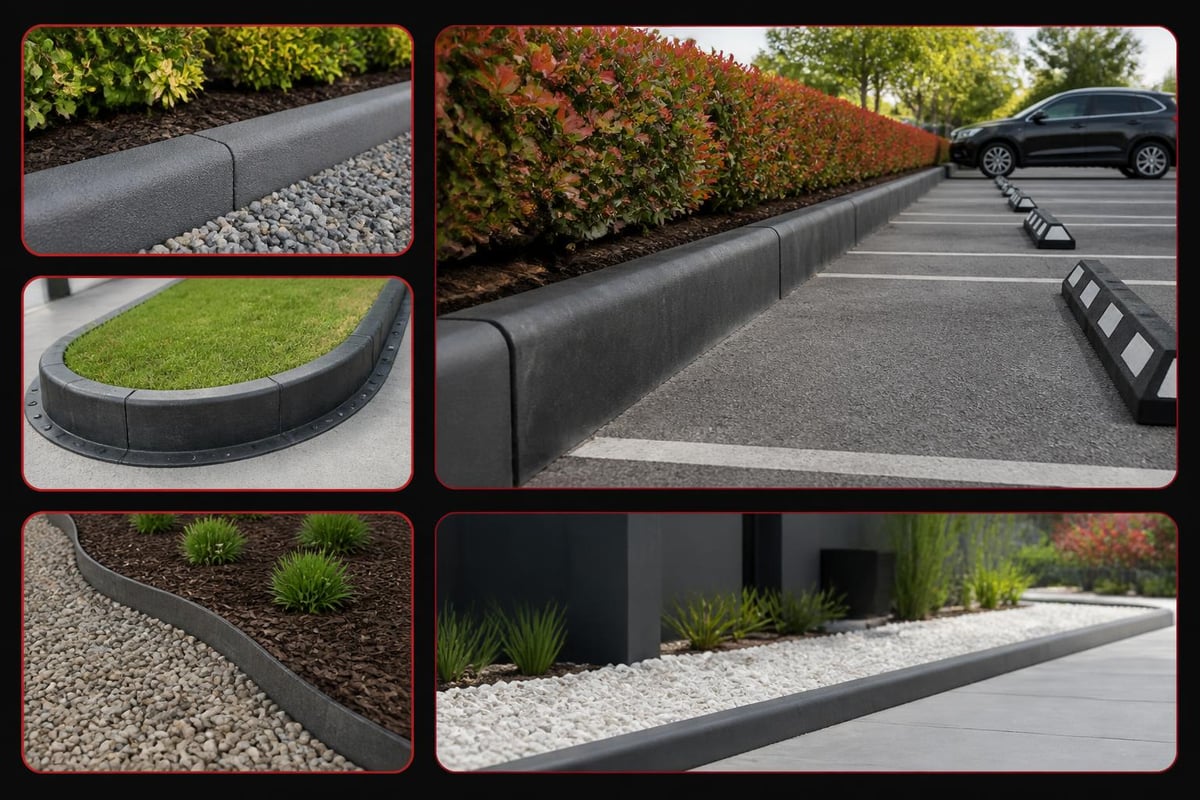
Beyond functional surfacing applications, plastic kerbing offers creative possibilities for landscape architects and garden designers. The material can be manufactured in various colours, profiles and finishes, enabling designers to achieve specific aesthetic objectives whilst maintaining practical performance standards.
Modern plastic kerbing systems accommodate curved installations without the cutting and wastage associated with rigid concrete products. This flexibility proves particularly valuable in projects requiring organic shapes or complex geometric patterns.
Installation Techniques and Best Practices
Successful plastic kerbing installation requires attention to preparation, material handling and securing methods. Whilst the process differs from traditional kerbing techniques, experienced civil engineering teams adapt quickly to the specific requirements.
Site Preparation Requirements
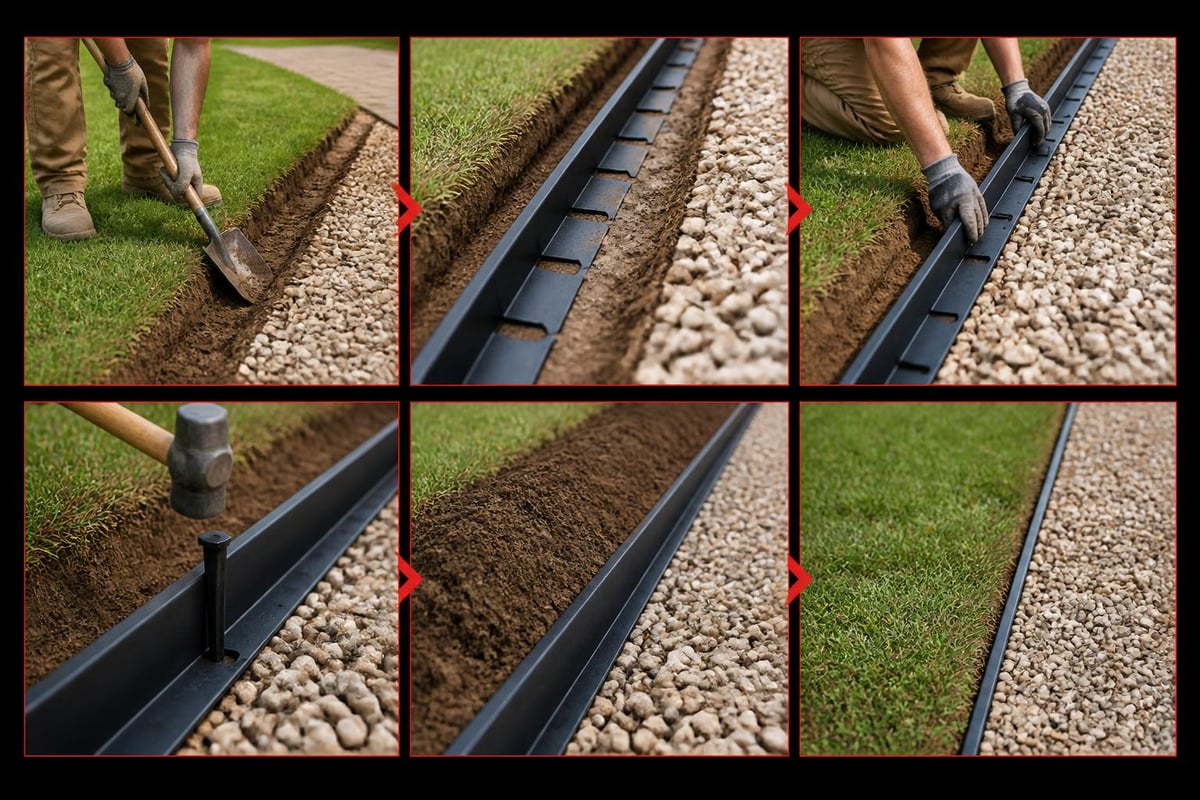
Foundation preparation remains critical despite the reduced weight of plastic kerbing compared to concrete alternatives. The installation trench depth and width must accommodate both the kerbing profile and the backfill material that provides lateral support.
Essential preparation steps:
- Excavate to appropriate depth (typically 100-150mm below finished surface level)
- Create level, compacted base using MOT Type 1 or similar granular material
- Ensure adequate drainage to prevent water accumulation behind kerbing
- Remove vegetation and organic matter that could compromise stability
- Establish consistent falls and gradients according to project specifications
The reduced weight of plastic kerbing simplifies handling and positioning, particularly beneficial when working on projects requiring extensive civil engineering work across challenging sites.
Securing and Fixing Methods
Unlike concrete kerbing that relies primarily on mass and bedding concrete for stability, plastic systems employ specific securing techniques:
| Fixing Method | Application | Advantages | Considerations |
|---|---|---|---|
| Ground stakes | Soft ground installations | Quick installation, adjustable | May require deeper penetration in loose soils |
| Screw anchors | Hard standing areas | Excellent pull-out resistance | Pre-drilling sometimes necessary |
| Adhesive bonding | Existing hard surfaces | No excavation required | Surface preparation critical |
| Mechanical clips | Modular systems | Rapid assembly/disassembly | System-specific components |
Professional contractors understand that proper securing prevents the gradual movement that can compromise the kerbing's functional performance. The societal benefits of plastics in infrastructure applications extend beyond material properties to encompass installation efficiency and long-term reliability.
Performance Characteristics and Durability
Evaluating plastic kerbing performance requires consideration of multiple factors including load-bearing capacity, environmental resistance and maintenance requirements. Modern formulations address the limitations of earlier plastic products, delivering performance that meets the demands of commercial and highway applications.
Load-Bearing and Structural Performance
High-quality plastic kerbing systems incorporate reinforcement elements and optimised profile designs that distribute loads effectively. The material's inherent flexibility provides advantages in certain applications, absorbing impacts that might crack or spall concrete kerbing.
Testing protocols assess:
- Vertical load capacity under static and dynamic conditions
- Lateral restraint strength preventing surfacing material migration
- Impact resistance from vehicular contact
- Flexural properties accommodating ground movement
- Fatigue performance over extended service periods
When specified correctly for the application, plastic kerbing delivers structural performance comparable to traditional materials whilst offering installation and lifecycle advantages.
Environmental and UV Resistance
UV degradation represents a primary concern for plastic products exposed to continuous outdoor weathering. Manufacturers address this through UV stabiliser packages incorporated during the compounding process. Quality products demonstrate minimal colour fading and no significant strength reduction after decades of UV exposure.
The ISO/TR 21960:2020 standard summarises current knowledge on environmental aspects of plastics, providing context for assessing long-term performance expectations. Material selection should consider local climate conditions, with enhanced stabilisation packages specified for regions experiencing intense solar radiation.
Temperature cycling presents another environmental challenge. Plastic kerbing must accommodate thermal expansion and contraction without buckling, pulling away from securing points or developing gaps at joints. Proper installation techniques with appropriate expansion allowances prevent these issues.
Comparative Analysis: Plastic Versus Traditional Kerbing
Understanding the trade-offs between plastic kerbing and conventional materials enables informed specification decisions. Each material category offers distinct advantages depending on project parameters, budget constraints and performance priorities.
Cost Considerations
Initial material costs for plastic kerbing typically fall between economy concrete products and premium natural stone options. However, lifecycle cost analysis reveals different economics:
Direct cost factors:
- Material purchase price per linear metre
- Transportation costs (significantly lower for plastic due to reduced weight)
- Installation labour hours and equipment requirements
- Foundation and bedding material quantities
- Waste disposal and site management expenses
Lifecycle cost factors:
- Maintenance and repair frequency over 25-year period
- Replacement intervals and associated disruption costs
- Performance degradation and remedial work requirements
- Environmental compliance and sustainability reporting benefits
For contractors managing multiple franchise projects with tight timelines, the installation speed advantages of plastic kerbing can deliver substantial project-level savings despite potentially higher unit material costs.
Installation Speed and Labour Requirements
Installation efficiency represents a significant advantage of plastic kerbing systems. A typical two-person team can install 30-40 linear metres per day compared to 15-20 metres for concrete alternatives. This productivity difference stems from several factors:
- Reduced physical handling requirements due to lower weight
- Simplified fixing methods eliminating concrete bedding delays
- Immediate backfilling without curing time constraints
- Flexible working sequences allowing parallel activity streams
- Reduced plant requirements minimising site congestion
These advantages prove particularly valuable on projects requiring construction engineering excellence within compressed timescales or sites with restricted access limiting mechanical handling equipment.
Maintenance and Long-Term Performance Management
Plastic kerbing systems require minimal routine maintenance compared to traditional materials, though understanding potential issues enables proactive management approaches. The absence of joints, mortar degradation and spalling eliminates common concrete kerbing maintenance tasks.
Routine Inspection and Cleaning
Visual inspection programmes should monitor for:
- Securing point integrity and stability
- Surface soiling and biological growth (algae, moss)
- Impact damage from vehicular contact
- Settlement or movement indicating foundation issues
- UV degradation indicators (colour changes, surface chalking)
Cleaning requirements remain minimal, typically limited to pressure washing to remove accumulated dirt and organic growth. Unlike concrete that can harbour biological growth in surface pores, the smooth finish of plastic kerbing resists colonisation and cleans more readily.
Repair and Replacement Procedures
When damage occurs, plastic kerbing often permits section replacement without disturbing adjacent materials. The modular nature of many systems facilitates targeted repairs, though the specific approach depends on the fixing method and product design.
| Damage Type | Typical Cause | Repair Approach | Prevention Strategy |
|---|---|---|---|
| Impact deformation | Vehicle contact | Section replacement | Bollard protection in vulnerable areas |
| Securing point failure | Inadequate foundation | Re-secure with enhanced fixings | Proper initial installation procedures |
| Colour fading | UV exposure beyond specification | Cosmetic acceptance or replacement | Specify UV-enhanced products for high-exposure sites |
| Surface scratching | Maintenance equipment contact | Generally cosmetic only | Operator training and awareness |
Research into plastic waste fragmentation models provides insights into material durability under environmental stresses, informing maintenance planning and lifecycle assessments for plastic kerbing installations.
Specification Considerations for Different Project Types
Selecting appropriate plastic kerbing products requires matching material characteristics to project-specific demands. Contractors experienced in engineering for construction appreciate that specification decisions impact both immediate installation success and long-term client satisfaction.
Commercial and High-Traffic Applications
Drive-through facilities, retail car parks and service stations demand robust kerbing capable of withstanding regular vehicular loading and occasional impact. Specification priorities include:
- Enhanced wall thickness providing increased impact resistance
- Reinforcement elements distributed throughout the profile
- High-grade polymer formulations maximising structural performance
- Appropriate colour selection maintaining appearance despite soiling
- Compatible securing systems suitable for the foundation conditions
Commercial projects benefit from plastic kerbing's consistent appearance and reduced maintenance burden, supporting the professional image essential for franchise operations and brand-focused developments.
Residential and Decorative Projects
Residential driveways and landscaping applications permit broader specification ranges, with aesthetic considerations often weighing equally with functional performance. Homeowners appreciate:
- Colour options complementing existing materials
- Profile variations creating visual interest
- Curve accommodation for organic layouts
- Reduced installation disruption and completion speed
- Warranty provisions supporting long-term investment
The flexibility to achieve design intent whilst maintaining practical functionality makes plastic kerbing particularly suitable for residential projects where client satisfaction depends on both performance and appearance.
Temporary and Modular Installations
Events, temporary access routes and phased construction projects benefit from reusable plastic kerbing systems. Modular products designed for multiple installation cycles offer economic and environmental advantages over single-use alternatives.
Temporary installation specifications should prioritise:
- Mechanical connection systems enabling rapid assembly
- Reusable securing methods minimising ground disturbance
- Dimensional consistency ensuring reliable reassembly
- Storage durability protecting investment between uses
- Transport efficiency reducing logistics costs
Regulatory Compliance and Standards
Plastic kerbing installations must satisfy relevant building regulations, highways standards and environmental requirements. Understanding the applicable framework ensures compliant specifications and installations that satisfy approval authorities.
Highways and Adoption Standards
Projects involving highway authority adoption require compliance with specific standards governing materials, installation and performance. While traditional specifications focused on concrete and natural stone kerbing, many authorities now accept plastic alternatives meeting equivalent performance criteria.
Key compliance areas include:
- Structural adequacy for the intended application
- Material certification and testing documentation
- Installation methodology approval
- Long-term performance guarantees
- Maintenance accessibility and procedures
Contractors should engage with highways authorities early in project planning to establish acceptance criteria and documentation requirements for plastic kerbing specifications.
Environmental and Sustainability Reporting
Increasingly, clients require environmental performance documentation for construction materials. Plastic kerbing manufacturers typically provide Environmental Product Declarations (EPDs) quantifying lifecycle impacts including carbon emissions, energy consumption and waste generation.
The environmental aspects of plastics documented in international standards enable meaningful comparison between material alternatives. Projects targeting sustainability certifications benefit from the documented environmental advantages of recycled-content plastic kerbing products.
Plastic kerbing represents a proven, versatile solution for modern surfacing projects, offering installation efficiency, long-term durability and environmental benefits across commercial and residential applications. Whether you're planning highway improvements, developing commercial facilities or enhancing residential properties, the material delivers reliable performance when specified and installed correctly. At JRG Civils, our experience across diverse projects from drive-through facilities to private driveways ensures expert material selection, professional installation and finishing touches that reflect our commitment to civil engineering excellence. Contact our team to discuss how plastic kerbing can enhance your next project across the North East or anywhere in the UK.