
Pin curb systems represent a fundamental component in modern civil engineering and highway construction, providing crucial structural support and delineation in both commercial and residential projects. As infrastructure demands evolve and construction standards become increasingly sophisticated, understanding the technical aspects and practical applications of pin curb installations has become essential for contractors, developers, and property owners alike. This guide explores the comprehensive aspects of pin curb construction, from material selection and installation methods to design considerations and long-term maintenance strategies.
Understanding Pin Curb Construction Methods
A pin curb is a specialized type of concrete or granite kerb that utilises steel pins to anchor the structure firmly to the underlying base. This anchoring system provides superior stability compared to traditional curbing methods, particularly in areas subject to heavy vehicular traffic or significant ground movement.
The construction process involves drilling precise holes into the prepared base, inserting steel reinforcement pins at calculated intervals, and securing the curb unit to ensure long-term structural integrity. Professional contractors must consider multiple factors including soil conditions, expected load-bearing requirements, and local climate conditions when planning pin curb installations.
Key Components of Pin Curb Systems
Understanding the individual elements that comprise a pin curb system helps ensure proper installation and longevity:
- Steel reinforcement pins manufactured from galvanized or stainless steel to resist corrosion
- Pre-drilled curb units with precision-engineered holes matching pin placement
- High-strength adhesive or grout to secure pins within the base material
- Backing concrete to provide additional support and prevent movement
- Drainage considerations integrated into the overall design
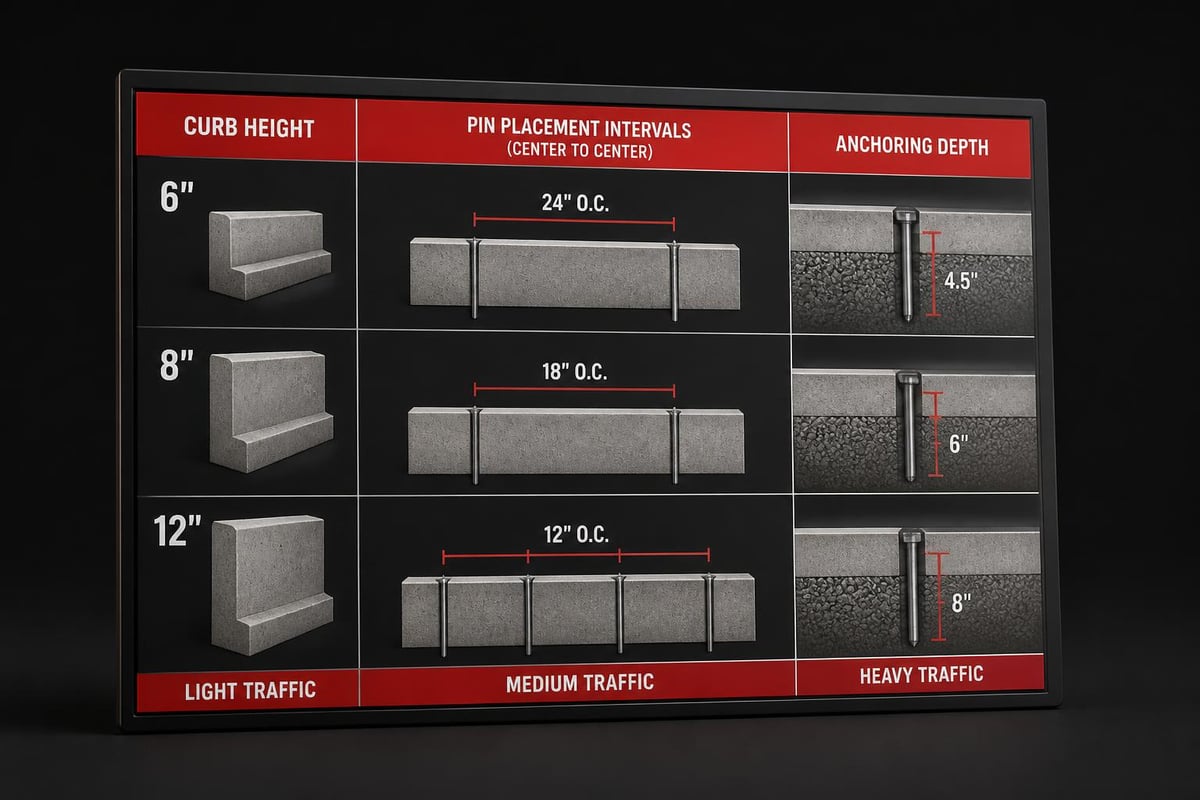
The spacing and diameter of pins varies depending on the specific application, with heavier-duty installations requiring more frequent anchoring points. According to Seattle’s design standards for curbs, proper anchoring systems are crucial for maintaining curb integrity in high-traffic environments.
Material Selection Considerations
Selecting appropriate materials for pin curb construction directly impacts both performance and longevity. Concrete remains the most common choice for commercial applications due to its versatility and cost-effectiveness. Precast concrete units offer consistent quality and faster installation times, particularly beneficial for large-scale projects such as retail developments or industrial estates.
Granite pin curbs provide exceptional durability and aesthetic appeal, making them ideal for premium residential driveways and high-end commercial entrances. The NYC Street Design Manual outlines various curb materials and their specific applications in urban environments, highlighting how material choice influences project outcomes.
Design Standards and Specifications
Modern pin curb installations must adhere to stringent design standards that govern dimensions, materials, and construction methodologies. These specifications ensure safety, durability, and compatibility with broader infrastructure systems.
| Specification Type | Standard Dimension | Application Context |
|---|---|---|
| Height | 150-200mm | Standard roadway applications |
| Width | 125-300mm | Varies by traffic volume |
| Pin Diameter | 12-20mm | Based on load requirements |
| Pin Depth | 100-150mm | Minimum anchoring standard |
| Spacing | 600-1200mm | Determined by engineering analysis |
The New Jersey administrative code on curb construction provides detailed specifications for both granite block and concrete curbs, offering valuable guidance for contractors undertaking pin curb projects across various jurisdictions.
Calculating Proper Pin Spacing
Engineers calculate pin spacing based on several critical factors including anticipated lateral forces, soil bearing capacity, and curb height. Higher curbs exposed to significant vehicular impact require closer pin spacing to maintain structural stability. Professional ground works contractors employ sophisticated analysis methods to determine optimal configurations for each unique project.
Traffic patterns also influence design decisions. Areas subject to frequent turning movements or heavy goods vehicle access demand more robust anchoring systems compared to residential streets with lighter traffic volumes.
Installation Techniques for Optimal Performance
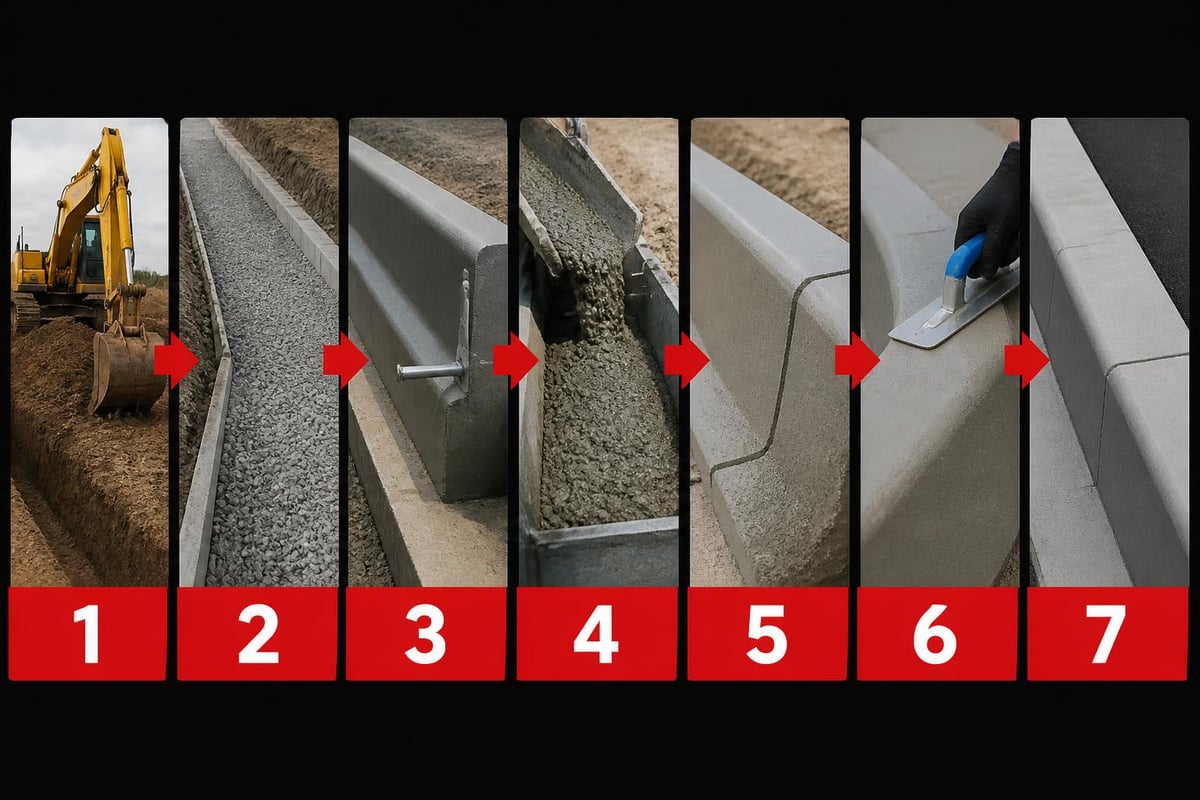
Proper installation technique determines whether a pin curb system achieves its design lifespan or requires premature replacement. The process begins with thorough site preparation, including excavation to the specified depth and establishment of a stable, well-compacted sub-base.
Step-by-Step Installation Process
- Site preparation and excavation to required depth with proper gradient consideration
- Sub-base installation using appropriate granular materials compacted to specification
- Concrete base pouring with allowance for pin hole drilling or pre-positioned formwork
- Pin placement and securing ensuring vertical alignment and proper depth
- Curb unit positioning with precise levelling and alignment verification
- Backing concrete application to complete the structural assembly
- Joint sealing and finishing to prevent water ingress and ensure aesthetic quality
Quality control measures throughout each stage prevent common installation failures. Temperature considerations prove particularly important when working with concrete-based systems, as extreme conditions affect curing rates and ultimate strength development.
The Michigan Department of Transportation’s construction guide offers comprehensive information on concrete curb construction methods applicable to pin curb installations, particularly for highway and commercial applications.
Commercial Applications and Benefits
Pin curb systems excel in commercial environments where durability and precision matter most. Retail developments, particularly drive-through facilities, benefit significantly from the enhanced stability that pin curb construction provides.
Drive-Through and High-Traffic Installations
Fast-food restaurants and coffee shops require robust perimeter definition that withstands constant vehicular movement whilst maintaining sharp, professional aesthetics. Our experience constructing commercial facilities including multiple Costa Coffee and Greggs drive-throughs demonstrates how pin curb systems deliver superior long-term performance in demanding applications.
The anchoring system prevents the gradual displacement common with traditional curbing, where repeated impacts from vehicles gradually shift unsecured units. This stability proves especially valuable in tight turning areas where drivers frequently contact curbs during maneuvering.
Key commercial advantages include:
- Reduced maintenance requirements over the operational lifespan
- Minimal displacement even under heavy vehicle impact
- Consistent alignment maintaining professional appearance
- Enhanced safety through reliable edge delineation
- Cost-effectiveness through extended replacement intervals
Industrial estates and logistics centres represent another ideal application for pin curb technology. Loading areas and articulated vehicle access routes subject curbing to extreme lateral forces that conventional installations struggle to resist.
Residential Driveway Applications
Whilst commercial projects often receive primary focus, pin curb systems offer substantial benefits for residential driveways and private estate roads. Homeowners seeking premium finishes increasingly specify pin curb construction for its superior aesthetics and longevity.
| Feature | Traditional Curb | Pin Curb |
|---|---|---|
| Installation Speed | Faster initially | Longer setup, faster overall |
| Movement Resistance | Moderate | Excellent |
| Aesthetic Precision | Variable | Consistently high |
| Long-term Costs | Higher maintenance | Lower lifecycle costs |
| Load Distribution | Concentrated | Distributed through pins |
Residential applications particularly benefit from the precise alignment that pin curb systems maintain. Driveways leading to period properties or contemporary architectural designs require crisp, consistent edge definition that enhances overall kerb appeal. Property values in premium residential areas correlate strongly with such finishing details.
Integration with Drainage Systems
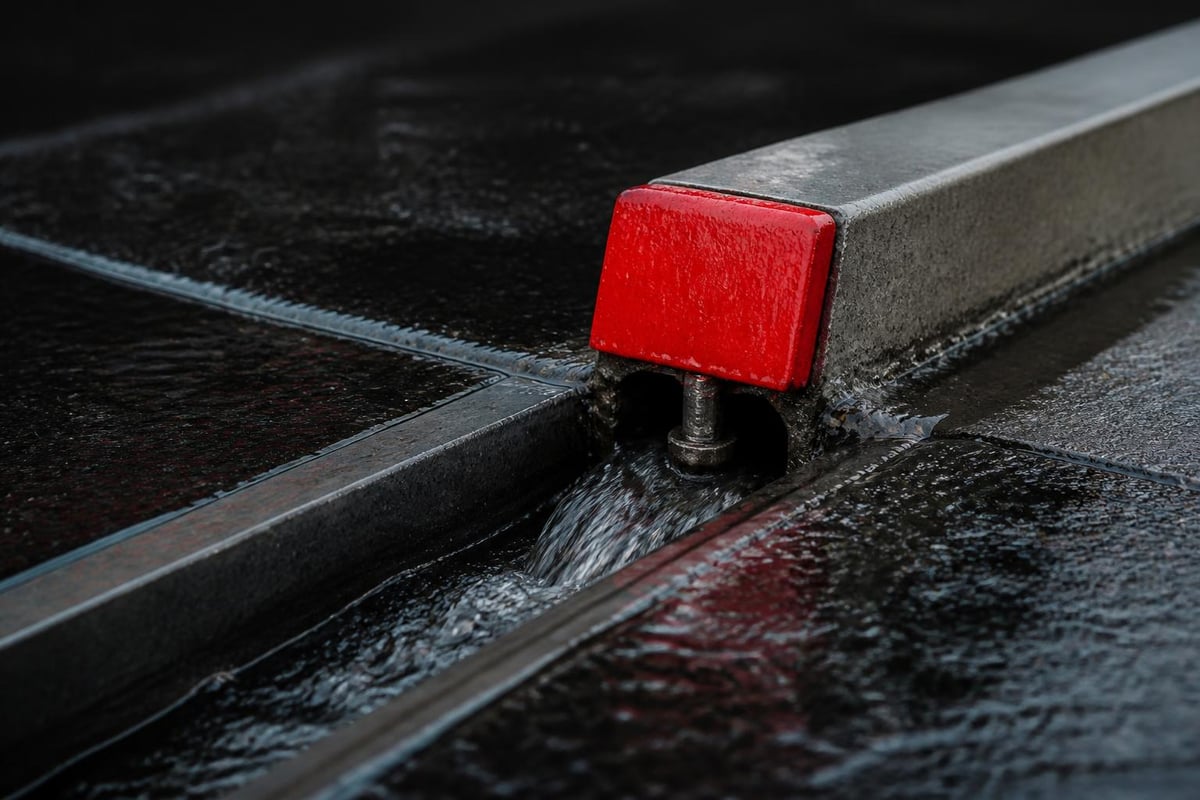
Effective drainage represents a critical consideration in residential pin curb installations. The anchoring system must accommodate drainage requirements whilst maintaining structural integrity. Professional contractors design pin placement to avoid interference with drainage channels or soakaway connections.
Block paving driveways particularly benefit from well-executed pin curb boundaries. The curb prevents lateral creep of paving units whilst providing a professional transition between paved surfaces and adjacent landscaping. Our portfolio of residential projects demonstrates how thoughtfully designed pin curb installations elevate overall project quality.
Curb Extensions and Traffic Calming
Pin curb technology adapts effectively to traffic calming measures including curb extensions, commonly known as bump-outs. These features narrow roadways at strategic points, reducing vehicle speeds whilst improving pedestrian safety. Understanding bump-outs helps contractors implement these safety features effectively.
The structural demands of curb extensions exceed those of standard linear curbing. Extended sections project into roadways, creating exposure to vehicular impacts from multiple angles. Pin curb systems provide the enhanced anchoring necessary to maintain integrity despite these increased stresses.
Design Considerations for Extensions
Curb extensions require careful geometric planning to ensure appropriate radius transitions and proper sight lines. Engineers must balance traffic calming objectives with emergency vehicle access requirements, particularly in residential areas where fire engines and ambulances require unimpeded passage.
Pin placement in extended sections follows specialized patterns that account for multi-directional loading. Corner radiuses typically require closer pin spacing to prevent rotation or displacement under impact. Construction teams with experience in complex civil engineering projects understand these nuanced requirements and implement appropriate solutions.
Maintenance and Longevity Factors
Properly installed pin curb systems require minimal maintenance compared to conventional alternatives, yet periodic inspection ensures optimal long-term performance. Visual assessments should identify any movement, cracking, or pin exposure that might indicate underlying issues.
Common Maintenance Requirements
- Joint inspection to identify sealant degradation requiring renewal
- Drainage verification ensuring water flows correctly without ponding
- Pin examination checking for corrosion or exposure requiring remediation
- Surface cleaning removing debris and preventing biological growth
- Alignment monitoring detecting any settlement or displacement patterns
Winter maintenance presents specific challenges in regions experiencing freeze-thaw cycles. De-icing salts accelerate steel pin corrosion if protective coatings fail or pins become exposed. Specifying stainless steel pins in such environments provides enhanced corrosion resistance despite higher initial costs.
The innovative saw cut vertical curb method described by the AASHTO Innovation Initiative demonstrates how existing curb installations can be modified to meet updated safety standards, offering insights applicable to pin curb maintenance and modification projects.
Material Alternatives and Innovations
While traditional concrete and granite dominate pin curb applications, material science advances continue introducing innovative alternatives. Polymer-modified concrete formulations offer enhanced durability and reduced permeability, extending service life in aggressive environments.
Recycled aggregate concretes provide environmentally conscious options without compromising performance. These materials incorporate processed construction waste, reducing environmental impact whilst meeting structural requirements. Forward-thinking contractors increasingly specify such materials for clients prioritizing sustainability.
Comparative Performance Analysis
Different materials exhibit distinct performance characteristics across various parameters:
| Material Type | Compressive Strength | Freeze-Thaw Resistance | Aesthetic Options | Cost Factor |
|---|---|---|---|---|
| Standard Concrete | Good | Moderate | Limited | Baseline |
| High-Performance Concrete | Excellent | Excellent | Moderate | +15-25% |
| Granite | Excellent | Excellent | Extensive | +40-60% |
| Recycled Aggregate | Good | Good | Limited | -5-10% |
Material selection should align with project-specific requirements rather than defaulting to conventional choices. Commercial developments prioritizing longevity and minimal lifecycle costs often justify premium materials, whilst residential applications may balance performance against budget constraints.
Quality Assurance and Testing Protocols
Ensuring pin curb installations meet design specifications requires systematic quality assurance throughout construction. Testing protocols verify material properties, installation accuracy, and structural performance before project handover.
Concrete testing includes slump tests confirming proper workability, cylinder compression tests validating strength development, and air content measurements ensuring freeze-thaw durability. Pin torque testing verifies anchoring system integrity, whilst alignment surveys confirm geometric accuracy.
Third-party inspection services provide independent verification of installation quality, particularly valuable for large commercial projects where performance guarantees carry significant liability implications. Documentation of testing results creates verifiable records supporting warranty claims and demonstrating contractor competence. Reviewing project testimonials offers insights into how quality assurance translates to client satisfaction.
Documentation Best Practices
Comprehensive project documentation should include material certifications, test results, installation photographs, and as-built drawings showing actual pin locations. This information proves invaluable for future maintenance planning and modification projects requiring knowledge of subsurface conditions.
Digital documentation systems enable efficient information management and retrieval. Photographic records timestamped throughout construction phases provide visual evidence of proper installation techniques and identify any deviations from approved methodologies.
Environmental Considerations in Pin Curb Design
Modern pin curb projects increasingly incorporate environmental sustainability principles throughout design and construction phases. Material sourcing, installation methodologies, and long-term performance all contribute to overall environmental impact.
Locally sourced materials reduce transportation-related carbon emissions whilst supporting regional economies. Specifying recycled content concrete or reclaimed granite reduces demand for virgin materials and diverts waste from landfills. Such considerations align with broader construction industry sustainability trends and client environmental commitments.
Permeable pin curb systems represent an innovative approach addressing stormwater management challenges. Modified designs incorporate drainage slots or gaps between curb units, allowing water infiltration whilst maintaining structural definition. These systems reduce surface runoff volumes and recharge groundwater resources.
Lifecycle Assessment Approaches
Comprehensive environmental evaluation considers the entire lifecycle from material extraction through eventual demolition. Pin curb systems' extended service life represents a significant environmental advantage, as durable installations require fewer replacement cycles over decades of use.
The enhanced stability provided by pin anchoring systems reduces maintenance interventions requiring equipment mobilization, traffic management, and material transportation. These avoided impacts compound over time, creating substantial cumulative environmental benefits compared to conventional curbing requiring frequent repair or replacement.
Understanding various curb and gutter types helps contractors select configurations optimizing both functional performance and environmental outcomes for specific project contexts.
Pin curb installations require careful attention to design standards, material selection, and construction methodology to achieve optimal results. Whether you're planning a commercial development, highway project, or residential enhancement, professional expertise ensures your pin curb system delivers lasting performance and aesthetic quality. At JRG Civils, we bring extensive experience across commercial and residential projects throughout the UK, combining technical knowledge with meticulous craftsmanship. Contact JRG Civils today to discuss how our civil engineering expertise can enhance your next project with superior pin curb installations.