
The foundation of every successful construction project begins below ground level. Whether you're planning a commercial development, residential driveway, or major highway infrastructure, understanding the earthworks is essential for achieving lasting results. This fundamental civil engineering process involves the strategic movement, shaping, and compaction of soil and rock to create stable, level surfaces that can support structures for decades to come. From small-scale domestic projects to large commercial undertakings, the earthworks sets the standard for everything built above it.
Understanding the Earthworks Process
The earthworks encompasses all activities related to excavating, moving, placing, and compacting soil and rock materials. This critical phase transforms raw land into a construction-ready site that meets precise engineering specifications.
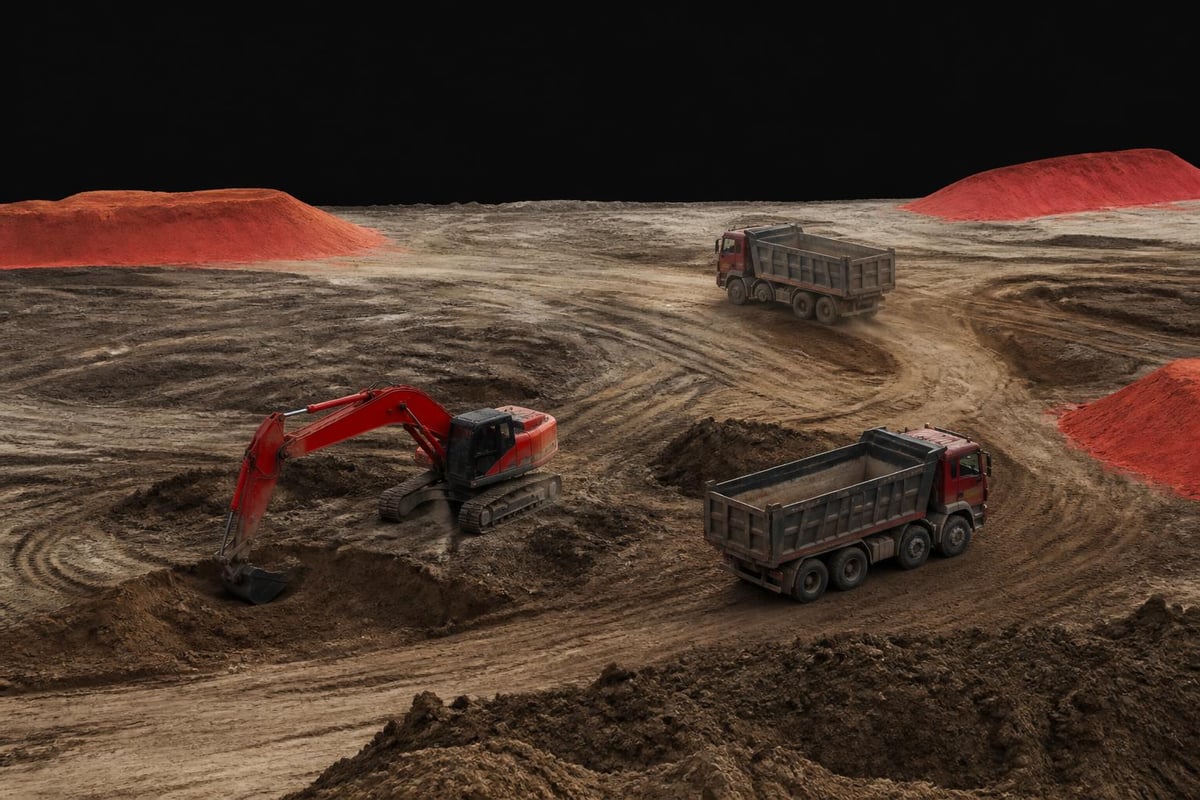
At its core, earthwork construction involves four primary operations: excavation, transportation, placement, and compaction. Each step requires careful planning and execution to ensure the final surface meets load-bearing requirements and drainage specifications.
Key Components of Earthworks Operations
Excavation marks the initial phase where contractors remove existing materials to achieve the desired ground level. This process might involve stripping topsoil, cutting into hillsides, or creating foundations for structures.
The transportation phase moves excavated materials either off-site or to designated fill areas within the project boundary. Efficient logistics during this stage significantly impact project timelines and budgets.
Placement and distribution of fill materials require precision to maintain consistent density and composition throughout the work area. Skilled operators ensure materials are spread evenly before the critical compaction phase begins.
Types of Earthworks in Civil Engineering
Different projects demand specific approaches to the earthworks. Understanding these variations helps contractors select appropriate methods and equipment for optimal results.
Cut and Fill Operations
Cut and fill represents the most common earthworks technique, balancing excavated material (cut) with areas requiring elevation (fill). This method minimises waste and transportation costs by reusing on-site materials.
Projects across the UK frequently employ cut and fill for:
- Highway construction and widening schemes
- Commercial site preparation
- Residential development platforms
- Car park construction
Grading and Levelling Works
Precision grading creates surfaces that meet exact specifications for drainage, accessibility, and structural support. Earthworks in civil engineering demand attention to slope gradients, particularly for highways and drainage systems.
Modern projects incorporate laser-guided equipment to achieve tolerances within millimetres, essential for projects like drive-through facilities and commercial forecourts.
Trenching and Foundation Excavation
Specialised earthworks for utilities, drainage, and foundations require different techniques from broad-area grading. These operations demand precision depth control and often involve working in confined spaces.
| Earthworks Type | Primary Application | Typical Depth Range | Equipment Required |
|---|---|---|---|
| Cut and Fill | Site levelling | Variable | Excavators, bulldozers |
| Precision Grading | Highways, car parks | Surface only | Graders, laser systems |
| Trenching | Utilities, drainage | 0.5m – 3m | Trenchers, mini-diggers |
| Foundation Excavation | Buildings, structures | 1m – 5m+ | Excavators, shoring equipment |
Planning and Preparation for Earthworks Projects
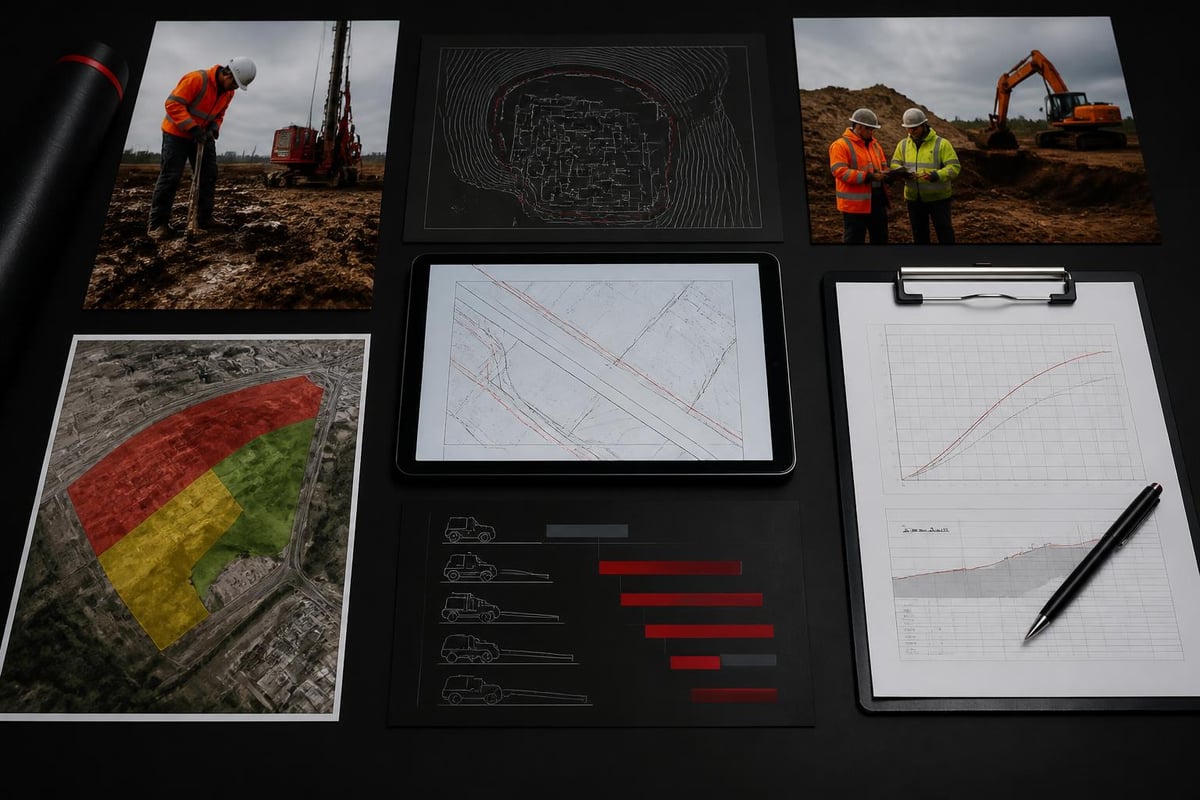
Successful earthworks begin long before machinery arrives on site. Comprehensive planning identifies challenges, optimises resource allocation, and ensures regulatory compliance.
Site investigation forms the foundation of effective planning. Geotechnical surveys reveal soil composition, bearing capacity, and groundwater levels that directly influence the earthworks strategy.
Essential Pre-Construction Assessments
Ground conditions analysis identifies soil types, contamination risks, and underground utilities. This information shapes excavation methods and determines whether materials can be reused on-site or require disposal.
Environmental considerations have grown increasingly important in recent years. Environmental management practices now form integral parts of earthworks planning, addressing sediment control, habitat protection, and noise management.
Drainage planning ensures surface water and groundwater are managed throughout construction and in the completed project. Poor drainage design during the earthworks phase leads to settlement, structural damage, and costly remediation.
Regulatory and Compliance Requirements
UK construction projects must adhere to numerous regulations governing the earthworks. Building Control approval, environmental permits, and highway authority consents may all apply depending on project scope and location.
CDM regulations require comprehensive risk assessments for earthworks activities, addressing:
- Excavation collapse and shoring requirements
- Underground services strikes
- Vehicle and plant interaction
- Dust and noise control measures
Equipment and Techniques for Modern Earthworks
The earthworks industry has evolved significantly with technological advancement. Modern projects combine traditional civil engineering principles with precision equipment and digital monitoring systems.
Essential Machinery for Earthworks
Different phases of the earthworks demand specific equipment. Excavators ranging from compact 1.5-tonne models to 40-tonne tracked machines handle various excavation requirements.
Bulldozers excel at moving large volumes of material across sites, whilst articulated dump trucks transport materials efficiently over longer distances. Motor graders create precise finished surfaces, particularly crucial for highway and car park projects.
Compaction equipment varies based on material type and depth:
- Plate compactors for granular materials and shallow depths
- Vibrating rollers for large area compaction
- Sheepsfoot rollers for cohesive soils
- Grid rollers for reinforced fill areas
Advanced Technology Integration
GPS-guided machinery has transformed the earthworks sector. These systems enable operators to achieve design grades without constant surveying, improving accuracy whilst reducing labour costs.
Autonomous controllers represent the cutting edge of earthworks technology, achieving precision levels that surpass manual operation. Whilst still emerging in the UK market, these systems demonstrate the industry's technological trajectory.
Drone surveys now provide regular progress monitoring, creating 3D models that track earthworks volumes and identify variations from design specifications. This technology proves particularly valuable on large commercial projects where material quantities directly impact budgets.
Material Management and Quality Control
The success of the earthworks depends heavily on proper material handling and quality assurance throughout all phases. Inconsistent practices during placement and compaction lead to settlement, structural failure, and premature surface deterioration.
Soil Classification and Suitability
Different materials exhibit varying characteristics affecting their suitability for the earthworks applications. Clay soils provide excellent support when properly compacted but require careful moisture management. Granular materials drain effectively but may require stabilisation in certain applications.
Material testing determines:
- Particle size distribution
- Moisture content and plasticity
- Maximum dry density
- California Bearing Ratio (CBR)
These properties guide specification compliance and inform compaction requirements.
Compaction Standards and Testing
Achieving specified density throughout fill layers ensures long-term stability. Industry standards typically require 95-98% of maximum dry density for structural fills, with higher specifications for highway works.
Field testing verifies compaction levels through nuclear density gauges or sand replacement methods. Regular testing at specified intervals ensures consistency across the earthworks area.
| Material Type | Typical Layer Thickness | Compaction Requirement | Common Applications |
|---|---|---|---|
| Cohesive Fill | 150-225mm | 95% MDD | General fill, landscaping |
| Granular Sub-base | 150-200mm | 98% MDD | Roads, car parks |
| Selected Fill | 200-300mm | 95% MDD | Service trenches, foundations |
| Capping Layer | 150-350mm | 95% MDD | Road construction |
Drainage Integration During Earthworks
Effective drainage design forms an inseparable element of successful earthworks. Water management influences soil stability, prevents erosion, and protects completed structures from moisture-related damage.
Surface Water Management
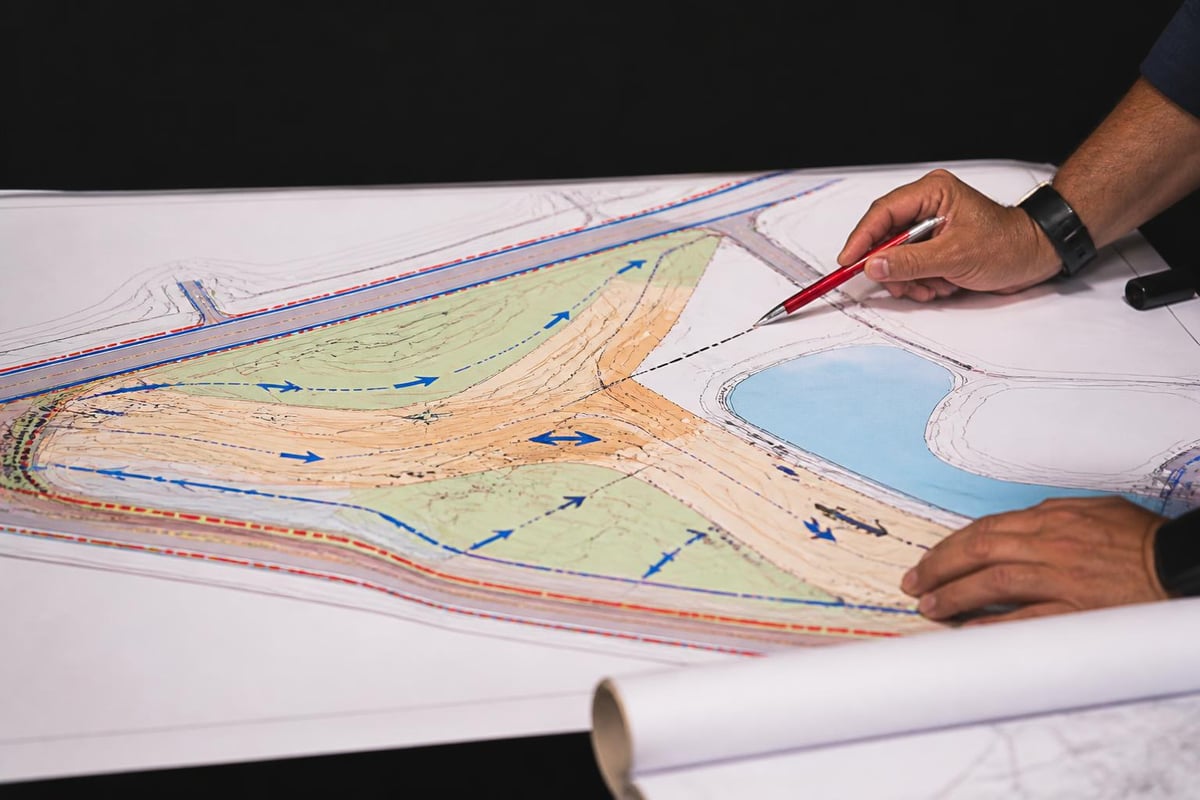
The earthworks must incorporate surface gradients that direct rainfall away from structures and towards designated drainage systems. Minimum falls of 1:80 typically apply for paved surfaces, whilst landscaped areas may accommodate gentler gradients.
Temporary drainage during construction prevents waterlogging of working areas and protects partially completed works. Silt traps and settlement ponds manage sediment discharge, addressing environmental effects of earthworks that could impact nearby watercourses.
Sub-surface Drainage Solutions
French drains, land drains, and perforated pipe systems remove groundwater that might otherwise undermine the earthworks. These systems prove particularly crucial in areas with high water tables or clay soils that restrict natural drainage.
Geotextile membranes separate drainage aggregates from surrounding soils, preventing migration that would reduce drainage efficiency over time. This relatively small investment during the earthworks phase prevents costly future remediation.
Commercial and Residential Earthworks Applications
The principles governing the earthworks remain consistent across project scales, though application methods and equipment vary significantly between large commercial developments and residential projects.
Commercial Development Requirements
Commercial projects such as drive-through restaurants, retail parks, and business estates demand robust earthworks capable of supporting heavy loading and constant traffic. These developments often involve substantial cut and fill operations to create level platforms from sloping sites.
Highway connections and car park construction require precision grading to achieve drainage falls whilst maintaining accessibility standards. The earthworks for commercial forecourts must accommodate service corridors for utilities whilst providing stable bases for asphalt surfacing.
Load-bearing specifications for commercial earthworks typically exceed residential requirements, reflecting anticipated trafficking from delivery vehicles and customer movements.
Residential Earthworks Projects
Domestic driveways, patios, and garden landscaping represent the earthworks at a smaller scale. Despite reduced scope, these projects demand equal attention to preparation, drainage, and compaction.
Block paving driveways require particularly careful sub-base preparation, as inadequate earthworks lead to surface deformation and weed growth through joints. Professional ground works ensure proper foundation layers that support domestic traffic loads whilst maintaining aesthetic appeal.
Garden terracing and retaining walls begin with precise earthworks that establish level platforms and provide stable bearing for structural elements. Drainage consideration during these works prevents water accumulation that could undermine walls or cause soil saturation.
Quality Assurance Throughout Earthworks Projects
Maintaining consistent quality standards throughout the earthworks requires systematic inspection, testing, and documentation at every project phase.
Inspection Protocols
Regular inspections verify that works proceed according to specifications. These checks assess:
- Excavation depths and dimensions
- Material quality and placement methods
- Compaction achievement across fill layers
- Drainage installation and gradients
- Surface levels against design specifications
Photographic records document progress and provide evidence of compliance with specification requirements. This documentation proves invaluable should questions arise during later construction phases or warranty periods.
Testing Regimes and Compliance
Material testing frequency varies with project scale and regulatory requirements. Highway projects typically demand more rigorous testing schedules than private developments, though professional contractors maintain consistent standards regardless of project size.
Civil engineering earthworks rely on systematic verification that materials meet specified performance criteria. Non-compliance identified during testing triggers remedial action before subsequent layers are placed.
Common Challenges in Earthworks Operations
Even carefully planned earthworks encounter obstacles requiring adaptive solutions. Understanding common challenges enables proactive risk management and efficient problem resolution.
Weather-Related Complications
British weather significantly impacts the earthworks scheduling and execution. Heavy rainfall transforms working areas into unsuitable conditions, preventing effective compaction and causing safety concerns.
Winter working presents particular challenges as frozen ground resists excavation and frost-susceptible materials require protection. Extended periods of wet weather may necessitate temporary works suspension, affecting project programmes.
Contractors develop contingency plans addressing weather delays, including alternative working sequences and protected storage for materials awaiting placement.
Unexpected Ground Conditions
Site investigations cannot predict every sub-surface condition. Discovery of contaminated materials, unexpected utilities, or unsuitable bearing strata requires immediate reassessment of the earthworks strategy.
Soft spots within excavation areas demand removal and replacement with competent materials. Archaeological findings may trigger work stoppages pending specialist investigation and recording.
Managing Existing Infrastructure
Working around existing services complicates the earthworks, particularly in developed areas. Precise excavation techniques protect buried utilities whilst achieving required depths and grades.
Service diversions or protection measures add cost and time to earthworks programmes. Early identification and coordination with utility providers minimises these impacts.
Environmental Considerations and Sustainability
Modern earthworks practice incorporates environmental stewardship alongside technical excellence. Sustainable approaches minimise ecological impact whilst delivering functional, long-lasting results.
Soil Resource Management
Topsoil represents a valuable resource requiring careful management during the earthworks. Stripping and stockpiling topsoil separately from subsoil enables restoration of landscaped areas with appropriate growing medium.
On-site reuse of excavated materials reduces transportation, lowering both costs and carbon emissions. Material balance calculations during planning identify opportunities to minimise import and export requirements.
Erosion and Sediment Control
Exposed earthworks areas are vulnerable to erosion during construction. Temporary measures including silt fencing, straw bales, and seeded areas prevent sediment discharge that could impact watercourses or adjacent properties.
Progressive stabilisation of completed earthworks areas reduces environmental impact. Seeding or mulching exposed surfaces minimises dust generation and establishes vegetation that protects soils from erosion.
Noise and Air Quality Management
Earthworks operations generate noise and dust affecting nearby residents and businesses. Professional contractors implement mitigation measures including:
- Restricting noisy operations to daytime hours
- Water suppression for dust control
- Acoustic barriers around fixed plant
- Route planning to minimise vehicle movements
- Regular equipment maintenance reducing emissions
Future Trends in Earthworks Technology
The earthworks sector continues evolving through technological innovation and changing regulatory landscapes. Understanding emerging trends helps contractors maintain competitive advantage whilst improving project outcomes.
Autonomous and semi-autonomous machinery promises increased precision and efficiency. High-precision grading systems demonstrate capabilities exceeding manual operation, suggesting broader adoption in coming years.
Digital twin technology creates virtual models of earthworks projects, enabling optimisation before physical work commences. These systems identify clashes, test drainage designs, and calculate material quantities with unprecedented accuracy.
Sustainability focus intensifies across construction sectors. Carbon accounting for earthworks projects will likely become standard practice, driving adoption of electric plant and optimised logistics that reduce emissions.
Advanced monitoring techniques including seismic assessment methods provide detailed understanding of ground conditions and completed works performance. These technologies enable more informed design decisions and targeted maintenance interventions.
The earthworks represents the essential foundation upon which all successful construction projects are built, demanding technical expertise, quality materials, and rigorous execution standards. Whether your project involves commercial development, highway infrastructure, or residential enhancement, professional earthworks deliver the stability and performance that ensure lasting results. At JRG Civils, our civil engineering experience across commercial and private projects throughout the UK ensures your earthworks are completed to exacting standards from initial excavation through final compaction. Discover how our commitment to excellence can support your next project by contacting JRG Civils today.