
When undertaking development projects that require modifications to public highways, understanding the legal framework governing these works is essential. Section 278 highways act 1980 provides the statutory mechanism that enables developers to carry out alterations, improvements or modifications to publicly maintained highways at their own expense. This legislation has become a cornerstone of infrastructure development across the UK, affecting everything from major commercial developments to residential access improvements. Whether you're planning a drive-through restaurant, constructing a new housing estate, or simply improving access to an existing property, comprehending the requirements and processes involved in section 278 highways act 1980 agreements can save considerable time, expense and potential legal complications.
What Is Section 278 Highways Act 1980?
The section 278 highways act 1980 is a legal provision within the Highways Act 1980 that permits developers to enter into binding agreements with highway authorities to execute works on public highways. These agreements establish the terms under which a developer can modify existing road infrastructure to facilitate their development projects.
The fundamental purpose of this legislation is to ensure that any alterations to public highways maintain safety standards whilst accommodating the needs of new developments. Section 278 agreements provide a transparent framework that protects both public interests and developer requirements.
Key Elements of the Legislation
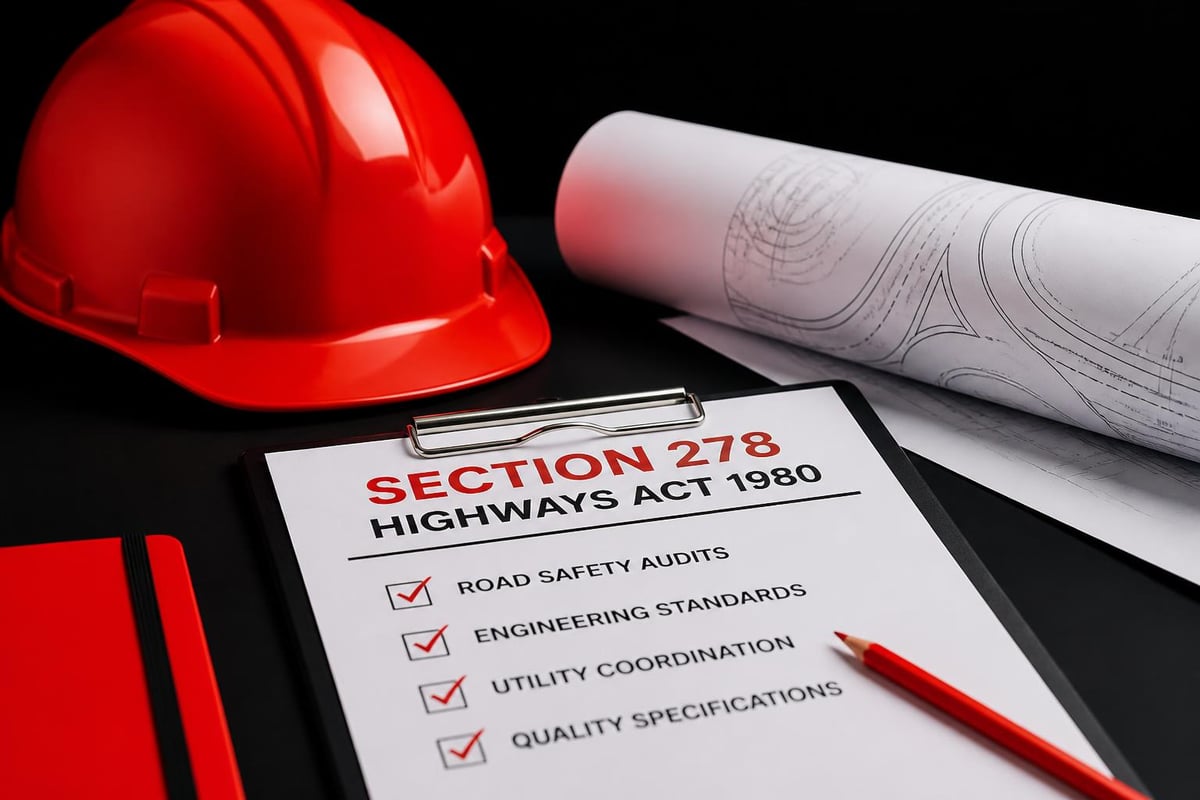
Under section 278 highways act 1980, developers must meet several critical obligations:
- Financial responsibility: The developer bears all costs associated with the highway works
- Design approval: All proposed modifications require highway authority approval
- Quality standards: Works must meet specified technical standards and specifications
- Safety compliance: Designs must satisfy current road safety regulations
- Maintenance provisions: Long-term maintenance arrangements must be agreed
The legislation ensures that highway authorities retain control over public infrastructure whilst enabling necessary development to proceed. This balance between public protection and development facilitation has made section 278 highways act 1980 an essential tool in UK infrastructure planning.
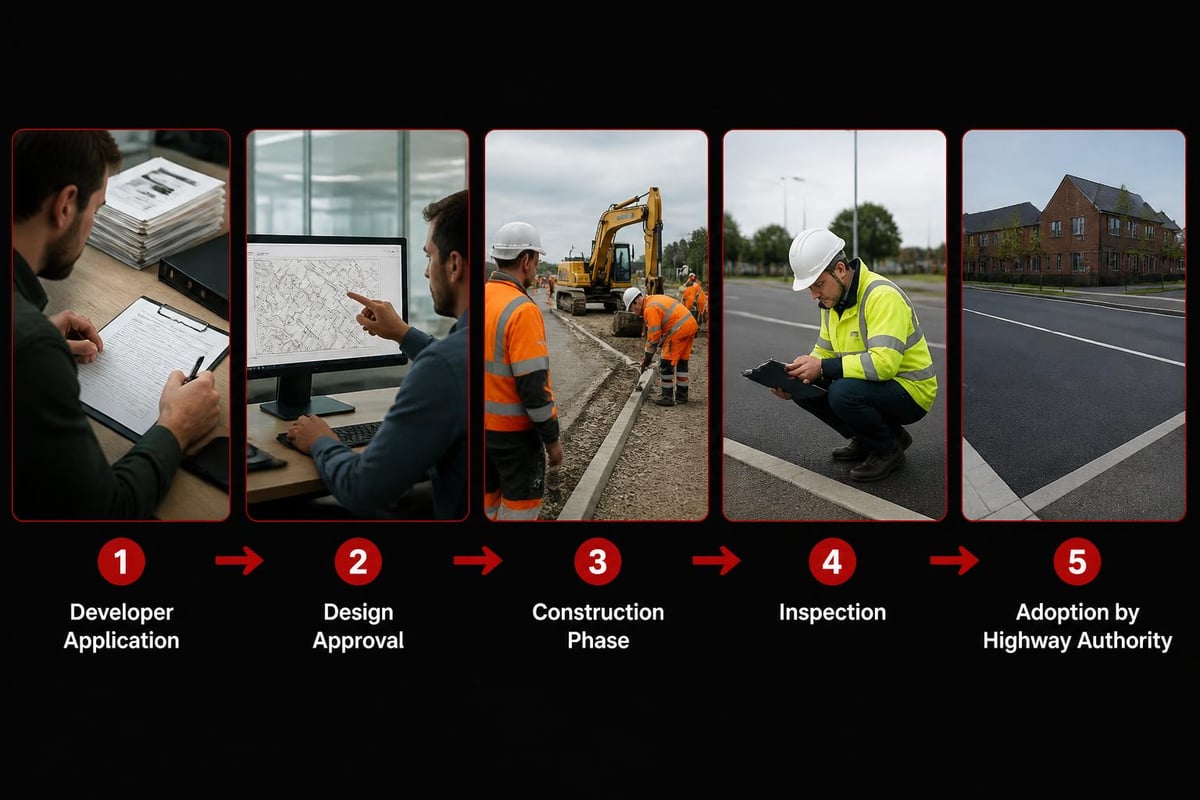
Types of Highway Works Covered
Section 278 highways act 1980 encompasses a broad spectrum of highway modifications and improvements. Understanding which works fall within its scope helps developers plan their projects effectively and budget appropriately.
Common Section 278 Projects
The legislation typically covers the following categories of work:
- New junction creation: Installing completely new access points onto existing roads
- Junction modifications: Altering existing junctions to accommodate increased traffic flows
- Visibility improvements: Removing obstructions or modifying road layouts to enhance sight lines
- Pedestrian facilities: Installing crossings, footways, or refuges
- Traffic calming measures: Implementing speed reduction features
- Street lighting installations: Adding or upgrading illumination for safety
- Drainage systems: Installing or modifying highway drainage infrastructure
Commercial projects frequently require section 278 highways act 1980 agreements. For instance, drive-through restaurants typically need modified junctions with dedicated turning lanes, traffic islands, and improved sight lines. Warwickshire County Council’s Section 278 guidance provides excellent examples of the scope and scale of works commonly undertaken.
| Work Type | Typical Examples | Approximate Duration |
|---|---|---|
| Simple access modifications | Dropped kerbs, minor visibility improvements | 8-12 weeks |
| Standard junction alterations | Turning lanes, traffic islands | 12-20 weeks |
| Major highway improvements | New roundabouts, signalised junctions | 6-12 months |
| Complex infrastructure | Multi-lane junctions, extensive drainage | 12-18 months |
Residential developments also fall under section 278 highways act 1980 when they require new estate roads connecting to the public highway network. Even smaller-scale projects, such as improved driveway access requiring dropped kerbs on public footways, may necessitate formal agreements depending on local authority requirements.
The Section 278 Agreement Process
Navigating the section 278 highways act 1980 agreement process requires careful planning and attention to procedural requirements. The process involves multiple stages, each with specific deliverables and timescales.
Initial Application and Feasibility
Before submitting a formal application under section 278 highways act 1980, developers should:
- Conduct pre-application discussions with the highway authority
- Undertake initial feasibility assessments
- Review relevant highway authority design standards
- Assess potential constraints such as utilities, drainage, or third-party land
- Prepare preliminary cost estimates
These preparatory steps significantly improve the likelihood of successful applications and reduce delays during the formal process.
Design Development and Approval
Once the preliminary groundwork is complete, developers must prepare detailed designs conforming to highway authority standards. This stage involves:
- Technical design preparation: Creating comprehensive engineering drawings
- Safety audit: Conducting Road Safety Audits (RSAs) at appropriate stages
- Statutory consultation: Engaging with relevant stakeholders including utility companies
- Design submission: Presenting complete design packages to the highway authority
- Design approval: Obtaining formal technical approval before proceeding
Birmingham City Council’s Section 278 information emphasises the importance of thorough design preparation and the various approvals required before construction can commence.
Legal Agreement and Financial Matters
Section 278 highways act 1980 agreements involve significant financial and legal considerations:
Cost Components:
- Design and supervision fees charged by the highway authority
- Construction costs for the actual highway works
- Commuted sums for future maintenance obligations
- Legal fees for agreement preparation and execution
- Bond or insurance provisions to guarantee completion
The highway authority typically requires developers to pay these costs upfront or provide suitable financial guarantees. The legal agreement itself is a binding contract that specifies the scope of works, quality standards, completion timescales, and long-term responsibilities.
Construction and Completion
Following agreement execution under section 278 highways act 1980, construction can proceed subject to several conditions:
- Obtaining necessary traffic management approvals
- Appointing approved contractors where required
- Implementing appropriate safety measures during construction
- Maintaining public access where possible
- Coordinating with utility companies and other stakeholders
Throughout construction, highway authority inspectors monitor progress and quality to ensure compliance with approved designs and specifications. Upon completion, final inspections verify that works meet the agreed standards before the highway authority formally adopts the new or modified infrastructure.
Working with Civil Engineering Contractors
Selecting the right civil engineering contractor for section 278 highways act 1980 projects is crucial for successful delivery. Experienced contractors bring invaluable expertise to complex highway works, ensuring compliance with technical standards and efficient project execution.
Essential Contractor Capabilities
When procuring contractors for highway works under section 278 highways act 1980, developers should prioritise firms demonstrating:
- Proven track record: Experience delivering similar highway projects successfully
- Technical competence: Understanding of highway design standards and construction techniques
- Quality management: Robust systems ensuring consistent quality delivery
- Safety culture: Exemplary health and safety records and procedures
- Local knowledge: Familiarity with regional highway authority requirements
Commercial developments, particularly those involving franchise operations such as drive-through restaurants, benefit enormously from contractors who understand the specific requirements of these projects. The integration of highway works with broader construction programmes requires careful coordination and experienced project management.
Quality Assurance and Compliance
Section 278 highways act 1980 works demand rigorous quality control throughout the construction phase. Professional civil engineering contractors implement comprehensive quality assurance systems covering:
| Quality Aspect | Control Measures | Documentation Required |
|---|---|---|
| Materials | Testing and certification | Manufacturer certificates, test results |
| Workmanship | Skilled operatives, supervision | Method statements, inspection records |
| Geometry | Surveying and measurement | As-built drawings, survey data |
| Drainage | Testing and CCTV inspection | Test certificates, CCTV footage |
| Surfacing | Density, texture, level checks | Core test results, surface measurements |
Buckinghamshire Council’s Section 278 guidance outlines the rigorous standards that contractors must achieve throughout the construction process.
Experienced contractors maintain detailed records throughout construction, facilitating smooth handover and adoption by the highway authority. This documentation proves invaluable should any defects emerge during the maintenance period following completion.
Common Challenges and How to Avoid Them
Despite careful planning, section 278 highways act 1980 projects frequently encounter obstacles that can cause delays and cost overruns. Understanding these common pitfalls enables developers to implement preventative measures.
Design and Approval Delays
Design approval often represents the most time-consuming phase of section 278 highways act 1980 projects. Common issues include:
- Insufficient detail in initial submissions leading to multiple revisions
- Failure to coordinate with utility companies resulting in design conflicts
- Inadequate consideration of third-party land ownership
- Non-compliance with current design standards and guidance
- Incomplete safety audits or unresolved safety concerns
Prevention strategies:
- Engage experienced highway designers familiar with local authority requirements
- Conduct thorough utility searches and engage utility companies early
- Verify land ownership and secure necessary rights or agreements
- Reference current design guidance including DfT publications
- Commission independent safety audits from approved auditors
Construction Phase Issues
Once construction commences under section 278 highways act 1980 agreements, various challenges can arise:
- Adverse weather conditions affecting programme delivery
- Discovery of unforeseen ground conditions or buried utilities
- Material supply chain disruptions
- Quality failures requiring remedial works
- Traffic management complications affecting local communities
Experienced civil engineering contractors anticipate these risks and implement robust mitigation strategies. Weather contingency should be built into programmes, ground investigations should be thorough, and procurement should identify reliable material suppliers with appropriate lead times.

Financial Implications and Budgeting
Section 278 highways act 1980 projects involve substantial financial commitments that developers must understand and budget for appropriately. Underestimating costs can jeopardise entire development projects.
Cost Structure Breakdown
The total financial commitment for section 278 highways act 1980 works typically comprises:
Highway Authority Fees (15-25% of construction costs):
- Design checking and approval
- Construction supervision and inspection
- Administrative and legal costs
- Road Safety Audit reviews
Construction Costs (variable):
- Site preparation and enabling works
- Carriageway construction and surfacing
- Drainage installation
- Street furniture and signing
- Traffic management during construction
Additional Financial Obligations:
- Commuted sums for future maintenance (typically 10-15 years)
- Performance bonds or parent company guarantees
- Insurance requirements
- Utility diversions or protections
Shropshire Council’s information on Section 278 agreements explains how these agreements integrate with wider developer contribution frameworks.
Budget Management Best Practices
Successful financial management of section 278 highways act 1980 projects requires:
- Obtaining detailed cost estimates from experienced contractors early in the process
- Including appropriate contingency allowances (typically 10-20% depending on project complexity)
- Securing formal fee quotations from the highway authority before committing to agreements
- Understanding commuted sum calculation methodologies
- Planning cash flow to accommodate upfront payments and staged construction costs
Experienced civil engineering firms provide transparent cost breakdowns and realistic programme estimates, enabling developers to budget confidently. Fixed-price contracts offer cost certainty, though variation mechanisms must be clearly defined for unforeseen circumstances.
Regional Variations and Local Authority Requirements
Whilst section 278 highways act 1980 provides the statutory framework across England and Wales, individual highway authorities implement the legislation differently. Understanding local variations is essential for project planning.
Different Authority Approaches
Highway authorities vary significantly in their:
- Design standards: Specific local supplements to national guidance
- Fee structures: Charging methodologies and rates
- Process requirements: Application procedures and documentation standards
- Timescales: Target periods for design approval and inspections
- Commuted sum calculations: Methods for determining maintenance payments
Developers working across multiple regions must adapt to these variations. Barnsley Council’s Section 278 guidance document exemplifies how local authorities provide detailed supplementary planning documents addressing their specific requirements.
Working Across Multiple Authorities
Projects spanning multiple highway authority jurisdictions face additional complexity under section 278 highways act 1980. Junction improvements affecting roads maintained by different authorities require separate agreements with each organisation, necessitating careful coordination.
Civil engineering contractors with nationwide experience bring valuable insights into regional variations, streamlining the approval process and ensuring designs satisfy diverse local requirements. This expertise proves particularly beneficial for developers undertaking multiple franchise projects across different locations.
Integration with Planning Permission
Section 278 highways act 1980 agreements operate alongside the planning permission regime but remain legally distinct. Understanding this relationship prevents delays and ensures comprehensive development consents.
Planning Conditions and Section 278
Planning permissions frequently include conditions requiring developers to enter into section 278 highways act 1980 agreements before commencing development. These conditions typically specify:
- The scope of highway works required
- Timing of agreement execution relative to development commencement
- Requirements for works completion before development occupation
Developers must recognise that planning permission approval does not constitute highway authority consent for highway works. The section 278 highways act 1980 agreement process operates independently and can take considerably longer than anticipated.
Section 106 and Section 278 Relationships
Planning obligations under Section 106 of the Town and Country Planning Act 1990 sometimes address highway matters alongside section 278 highways act 1980 agreements. Typically:
Section 106 addresses:
- Financial contributions towards off-site highway improvements
- Travel plan requirements and monitoring
- Restrictions on development occupation until highway works complete
Section 278 addresses:
- Technical design and construction of specific highway works
- Quality standards and specifications
- Adoption and maintenance arrangements
Clear delineation between these mechanisms prevents duplication and confusion. Professional advisors help developers navigate these complementary but distinct legal frameworks effectively.
Long-Term Maintenance and Adoption
Section 278 highways act 1980 agreements establish not only construction requirements but also long-term maintenance responsibilities. Understanding these ongoing obligations is crucial for developers and future property owners.
Adoption Process
Upon satisfactory completion of highway works under section 278 highways act 1980, the modified or new infrastructure typically becomes publicly maintainable highway. The adoption process involves:
- Final inspection: Highway authority verification of completed works
- Defects identification: Noting any items requiring rectification
- Remedial works: Contractor correction of identified defects
- Maintenance period: Typically 12 months during which the developer remains responsible
- Final adoption: Transfer of maintenance responsibility to the highway authority
During the maintenance period, developers must rectify any defects arising from poor workmanship or materials. This requirement underscores the importance of engaging quality-focused civil engineering contractors who stand behind their work.
Commuted Sums Explained
Highway authorities often require commuted sums under section 278 highways act 1980 agreements to cover additional maintenance burdens arising from new highway infrastructure. These payments reflect:
- Projected maintenance costs over a specified period (commonly 10-15 years)
- Differences between standard highway maintenance and enhanced features
- Materials requiring specialised maintenance (decorative paving, special surfacing)
| Feature Type | Typical Commuted Sum Basis | Example Cost |
|---|---|---|
| Standard kerbs | Per linear metre | £15-25/m |
| Block paving (vehicular) | Per square metre | £45-75/m² |
| Traffic signals | Per installation | £20,000-£40,000 |
| Street lighting | Per column | £500-£1,500 |
| Drainage systems | Per linear metre/per chamber | £25-50/m, £250-500/chamber |
Negotiating reasonable commuted sums requires understanding maintenance cost assumptions and challenging excessive requirements where appropriate. Experienced contractors provide valuable input into these discussions based on their practical maintenance experience.
Understanding section 278 highways act 1980 requirements is fundamental for any development project involving highway modifications, from major commercial developments to residential access improvements. The legislation provides a structured framework ensuring that highway works maintain safety standards whilst enabling development to proceed, though the process requires careful navigation of design, approval, construction, and adoption phases. JRG Civils brings extensive experience delivering highway works across the UK, from franchise drive-throughs to residential developments, providing the technical expertise and quality standards necessary for successful Section 278 project delivery.