
The landscape of infrastructure development has evolved significantly over the past decade, with advanced civil earthworks emerging as a critical discipline that combines traditional engineering principles with cutting-edge technology. Whether you're planning a commercial drive-through facility, residential driveway, or large-scale highway project, understanding the sophisticated methods and technologies available in 2026 can dramatically improve project outcomes, reduce costs, and ensure long-term structural integrity.
The Evolution of Earthworks in Modern Construction
Advanced civil earthworks has transformed from basic excavation and soil movement into a highly technical field incorporating precision machinery, geotechnical analysis, and digital planning tools. Modern projects demand far more than simply moving earth from one location to another.
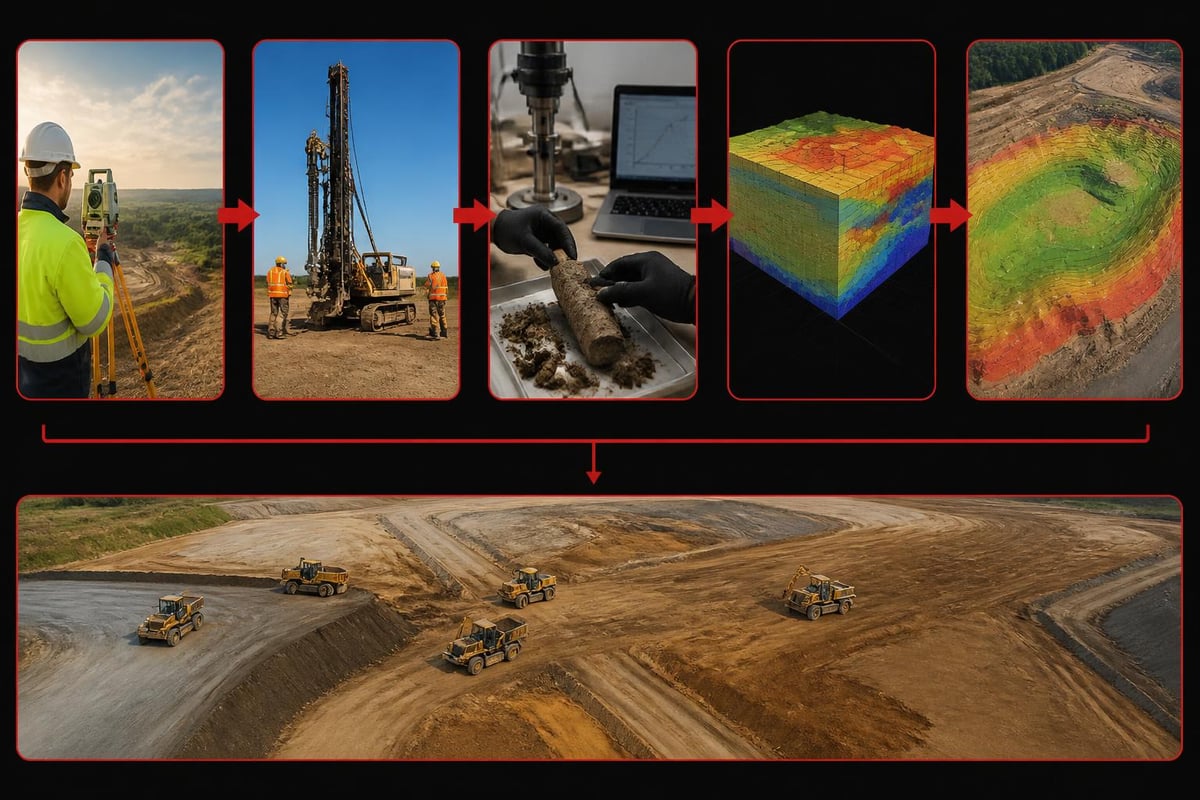
Today's earthworks operations integrate sophisticated surveying equipment, GPS-guided machinery, and comprehensive soil testing protocols. These advancements enable contractors to achieve tolerances measured in millimetres rather than centimetres, essential for projects ranging from groundworks to complex highway surfacing applications.
The integration of technology has revolutionised how civil engineers approach site preparation. Recent research demonstrates that autonomous controllers can achieve high-precision grading, outperforming traditional commercial solutions in both accuracy and efficiency. This technological leap forward represents a fundamental shift in how the industry approaches earthworks challenges.
Key Components of Modern Earthworks Projects
Site Investigation and Assessment
- Comprehensive geotechnical surveys
- Soil composition analysis
- Underground utility mapping
- Environmental impact assessments
- Drainage pattern evaluation
Design and Planning
- CAD-based earthworks modelling
- Cut-and-fill calculations
- Haul route optimisation
- Temporary works design
- Sequencing and phasing strategies
The foundation of successful advanced civil earthworks lies in thorough planning and site assessment. Before any machinery arrives on site, experienced contractors conduct detailed investigations to understand soil conditions, water tables, existing infrastructure, and potential complications that could affect the project timeline or budget.
Technology Integration in Contemporary Earthworks
The incorporation of advanced technology has become non-negotiable for contractors seeking to deliver projects efficiently and profitably. GPS-guided excavators and bulldozers now operate with precision previously unattainable through manual control, reducing material waste and improving accuracy across all phases of ground preparation.
Machine control systems allow operators to work to digital design models uploaded directly to the equipment. This eliminates the need for constant manual checking and stake-out, accelerating project delivery whilst maintaining exacting standards. For commercial projects such as drive-through restaurants or retail developments, this precision ensures proper drainage, accessibility compliance, and structural stability.
| Technology | Primary Benefit | Application Area |
|---|---|---|
| GPS Machine Control | Sub-centimetre accuracy | Grading and levelling |
| 3D Laser Scanning | Rapid site surveying | Volume calculations |
| Drone Photogrammetry | Progress monitoring | Quality assurance |
| Ground Penetrating Radar | Subsurface mapping | Utility detection |
| Compaction Monitoring | Real-time density data | Quality control |
Research into physics-based machine learning models in civil engineering addresses challenges like data shift and enhances predictive accuracy in earthworks projects, demonstrating how artificial intelligence increasingly supports decision-making processes across the construction sector.
Digital Twins and Predictive Modelling
Advanced civil earthworks now benefits from digital twin technology, where virtual replicas of physical sites enable contractors to simulate different scenarios before committing resources. This approach identifies potential issues early, allowing teams to develop mitigation strategies that prevent costly delays or rework.
Predictive modelling software analyses soil behaviour under various conditions, forecasting settlement patterns, slope stability, and drainage performance. These insights prove invaluable for projects requiring long-term durability, such as highway construction or commercial developments where ground stability directly impacts operational success.
Material Management and Sustainability Considerations
Efficient material management separates exceptional earthworks contractors from average operators. Advanced civil earthworks incorporates sophisticated approaches to material handling that minimise waste, reduce transportation costs, and support environmental objectives.
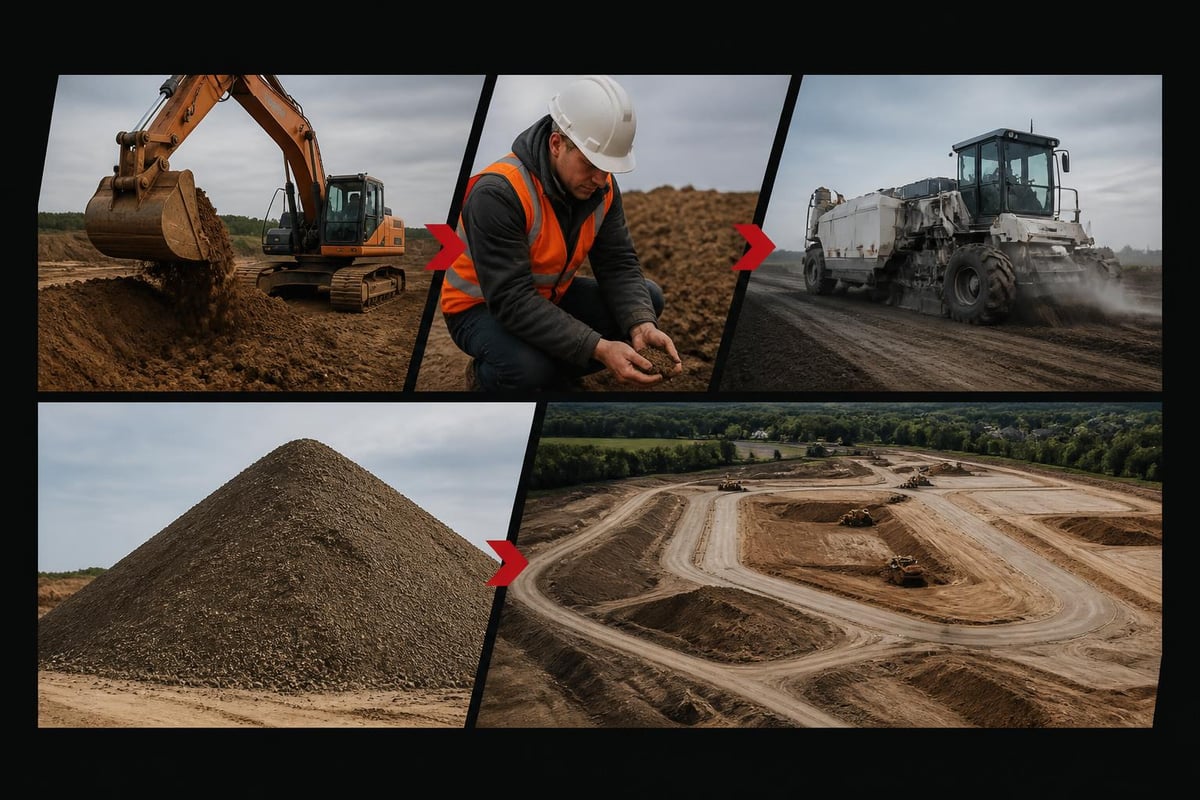
Modern projects prioritise on-site material reuse wherever feasible. Rather than exporting excavated material and importing fill from external sources, experienced contractors analyse soil properties to determine suitability for reuse after appropriate treatment or stabilisation.
Material Optimisation Strategies:
- Soil Stabilisation Techniques – Chemical or mechanical treatment to improve bearing capacity
- On-site Processing – Screening and grading materials for multiple applications
- Strategic Stockpiling – Separating materials by quality for targeted reuse
- Import Minimisation – Maximising use of site-won materials
- Carbon Footprint Reduction – Reducing transportation through intelligent material management
The environmental credentials of earthworks operations have gained prominence as clients increasingly demand sustainable construction practices. Projects incorporating domestic work and residential developments particularly benefit from environmentally conscious approaches that preserve existing landscapes whilst creating functional outdoor spaces.
Quality Control and Compaction Management
Achieving proper compaction represents one of the most critical aspects of advanced civil earthworks. Inadequate compaction leads to settlement, structural failure, and costly remediation regardless of how well subsequent construction phases are executed.
Modern compaction management employs intelligent systems that provide real-time feedback on soil density. Intelligent compaction technology uses sensors mounted on rollers to measure soil stiffness continuously, generating comprehensive maps that verify complete coverage and adequate density throughout the project area.
Laboratory Testing and Field Verification
Quality assurance programmes combine laboratory analysis with field testing to ensure earthworks meet design specifications. Nuclear density gauges, plate bearing tests, and California Bearing Ratio (CBR) tests provide quantifiable data confirming ground conditions support intended loads.
| Test Method | Purpose | Frequency |
|---|---|---|
| Nuclear Density Test | Verify compaction levels | Every 500m² |
| CBR Testing | Measure bearing capacity | Per soil type change |
| Plate Bearing Test | Assess subgrade stiffness | Critical load areas |
| Moisture Content Analysis | Optimise compaction | Daily minimum |
| Particle Size Distribution | Confirm material specification | Each material source |
For highway surfacing and commercial pavement projects, these quality control measures ensure the foundation supports traffic loads over the structure's design life. Inadequate attention to compaction quality inevitably results in premature failure, requiring expensive reconstruction that far exceeds the cost of proper initial execution.
Drainage Integration and Water Management
Effective drainage design forms an integral component of advanced civil earthworks rather than an afterthought added once ground shaping concludes. Water management influences every aspect of site performance, from preventing structural damage to ensuring accessibility during adverse weather conditions.
Modern earthworks projects incorporate multiple drainage strategies working synergistically to control surface water, groundwater, and subsurface moisture. Sophisticated modelling software predicts water behaviour under various rainfall scenarios, enabling designers to size drainage infrastructure appropriately and position elements strategically.
Comprehensive Drainage Solutions:
- French drains and land drains for subsurface water control
- Permeable paving systems reducing surface runoff
- Attenuation tanks managing peak flow rates
- Swales and bioretention areas providing natural treatment
- Geocomposite drainage layers beneath hardstanding areas
Research examining towed seismic arrays and Bayesian inference in assessing railway earthworks demonstrates how non-destructive diagnostic tools evaluate infrastructure condition, methodologies increasingly applicable across broader earthworks applications for assessing drainage effectiveness and structural integrity.
The integration of sustainable drainage systems (SuDS) has become standard practice in commercial and residential projects. These approaches manage water at source, reducing flood risk whilst providing environmental benefits through natural filtration and biodiversity enhancement.
Geotechnical Considerations for Different Applications
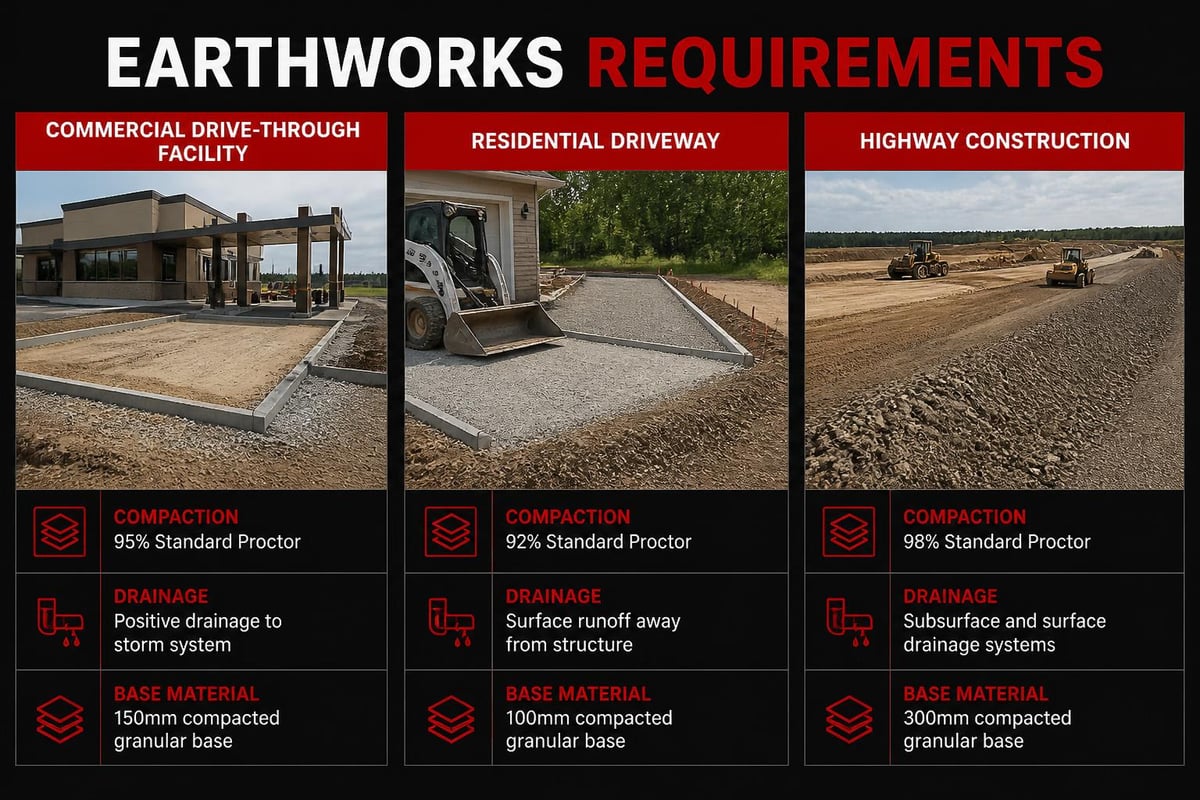
Advanced civil earthworks demands tailored approaches based on specific project requirements and ground conditions. Commercial developments, residential driveways, and highway projects each present unique geotechnical challenges requiring specialised knowledge and experience.
Commercial Infrastructure Projects
Drive-through facilities, retail developments, and industrial sites require robust ground preparation supporting heavy traffic loads and precise dimensional tolerances. These projects typically involve significant cut-and-fill operations to achieve level building platforms and proper drainage gradients.
Subgrade preparation for commercial pavements demands particular attention to bearing capacity and uniformity. Variations in ground support lead to differential settlement, causing pavement cracking and premature failure. Experienced contractors employ systematic soil improvement techniques, including stabilisation with lime or cement, to create homogeneous foundations capable of supporting design loads.
Residential Applications
Domestic earthworks for driveways, patios, and garden landscaping require equal technical rigour despite smaller project scales. Proper ground preparation prevents settlement that causes unsightly cracking and drainage problems, protecting homeowners' investments and maintaining aesthetic appeal.
Residential projects often present access constraints requiring compact equipment and careful planning to minimise disruption. Modern mini-excavators equipped with precision control systems deliver accuracy comparable to full-sized machinery whilst navigating confined spaces effectively.
Automation and Future Developments
The trajectory of advanced civil earthworks points toward increasing automation and artificial intelligence integration. Studies exploring human and machine intelligence integration in civil engineering highlight both opportunities and challenges in enhancing decision-making processes throughout earthworks projects.
Semi-autonomous and fully autonomous machinery already operates on some construction sites, performing repetitive tasks with consistent accuracy whilst human operators focus on complex decision-making and quality oversight. As these technologies mature, adoption will accelerate across the industry, driven by labour shortages, safety improvements, and productivity gains.
Machine Learning Applications
Machine learning algorithms analyse historical project data to optimise earthworks operations continually. These systems identify patterns in soil behaviour, equipment performance, and weather impacts, generating recommendations that improve efficiency and reduce risk exposure.
Predictive maintenance applications monitor equipment condition in real-time, scheduling servicing based on actual wear rather than arbitrary intervals. This approach maximises machinery availability whilst preventing unexpected failures that delay projects and increase costs.
Emerging Technologies Shaping Earthworks:
- Autonomous haul trucks reducing operator requirements
- Swarm robotics coordinating multiple machines simultaneously
- Augmented reality overlaying design data onto physical sites
- Blockchain ensuring material provenance and quality documentation
- IoT sensors providing continuous site monitoring data
Regulatory Compliance and Health and Safety
Modern advanced civil earthworks operates within increasingly stringent regulatory frameworks governing environmental protection, worker safety, and quality standards. Successful contractors maintain comprehensive compliance programmes addressing all applicable requirements whilst implementing industry best practices that exceed minimum standards.
The Construction Design and Management (CDM) Regulations place specific duties on all project participants, requiring systematic risk assessment and control measure implementation. Earthworks present particular hazards including excavation collapse, vehicle interaction, underground services damage, and environmental contamination.
Principal contractors develop detailed method statements and risk assessments addressing each work activity, ensuring operatives understand hazards and control measures before work commences. Regular toolbox talks, site inspections, and near-miss reporting create safety cultures that prevent incidents rather than merely responding after accidents occur.
Environmental Permits and Consents
Earthworks projects frequently require environmental permits addressing dust control, noise management, water discharge, and waste disposal. Early engagement with regulatory authorities prevents delays and ensures projects proceed lawfully whilst protecting surrounding communities and ecosystems.
Contaminated land remediation forms an increasingly common component of earthworks projects, particularly on brownfield sites. Specialist contractors assess contamination extent, develop remediation strategies, and implement treatments that render sites suitable for intended uses whilst meeting environmental protection standards.
Cost Management and Value Engineering
Delivering advanced civil earthworks cost-effectively requires sophisticated planning balancing quality outcomes against budget constraints. Value engineering exercises identify opportunities to reduce costs without compromising performance, examining alternative materials, construction methods, and design approaches.
Accurate quantity surveying prevents both material shortages causing delays and excess procurement wasting resources. Modern earthworks contractors employ volumetric analysis software calculating cut-and-fill quantities precisely from digital terrain models, eliminating estimation uncertainties that inflate budgets unnecessarily.
| Cost Component | Percentage of Total | Optimisation Strategy |
|---|---|---|
| Equipment and Plant | 30-35% | Efficient scheduling and utilisation |
| Labour | 25-30% | Skilled workforce and training |
| Materials | 20-25% | On-site reuse and local sourcing |
| Fuel and Energy | 10-15% | Route optimisation and idle time reduction |
| Quality Control | 5-8% | Integrated testing programmes |
Experienced contractors maintain long-term relationships with equipment suppliers, materials providers, and specialist subcontractors, securing favourable rates that benefit clients whilst ensuring reliable service delivery. These partnerships prove particularly valuable when projects encounter unexpected challenges requiring rapid mobilisation of additional resources.
Project Sequencing and Programme Management
Efficient project sequencing maximises productivity whilst accommodating dependencies between earthworks operations and subsequent construction activities. Advanced civil earthworks rarely occurs in isolation, instead forming part of broader construction programmes requiring careful coordination between multiple trades and disciplines.
Critical path analysis identifies activities that directly impact overall project duration, enabling contractors to allocate resources strategically and prevent bottlenecks. Weather contingencies, equipment availability, and material delivery schedules all influence sequencing decisions that determine whether projects complete on schedule or suffer costly delays.
Typical Earthworks Project Sequence:
- Site establishment and access creation
- Topsoil stripping and preservation
- Bulk excavation and fill placement
- Service installation and protection
- Subgrade preparation and compaction
- Drainage system installation
- Capping layer construction
- Final trim and handover
Communication protocols ensure all stakeholders remain informed of progress, changes, and challenges throughout project delivery. Regular coordination meetings, progress reports, and digital collaboration platforms facilitate information sharing that prevents misunderstandings and enables prompt issue resolution.
Specialist Equipment and Plant Selection
The sophisticated nature of advanced civil earthworks demands specialist equipment selected specifically for project requirements and site conditions. Equipment selection decisions influence productivity, quality outcomes, and overall project economics significantly.
Modern excavators range from compact machines suitable for residential applications through to massive tracked excavators capable of moving hundreds of cubic metres hourly on major infrastructure projects. GPS machine control systems, laser-guided grading blades, and intelligent compaction rollers transform capable operators into precision technicians delivering millimetre-accurate results.
Contractors maintaining diverse equipment fleets can match machinery to specific tasks optimally. However, equipment ownership represents substantial capital investment, making plant hire arrangements attractive for specialised machinery required only occasionally. The plant hire services offered by experienced earthworks specialists provide access to appropriate equipment without ownership burdens.
Telematics and Fleet Management
Telematics systems installed on modern earthworks equipment monitor location, utilisation, fuel consumption, and operating parameters continuously. This data enables fleet managers to optimise deployment, identify training needs, and schedule maintenance proactively, maximising return on equipment investments.
Remote diagnostics capabilities alert operators to developing mechanical issues before failures occur, preventing breakdowns that halt operations and incur expensive emergency repairs. Progressive contractors leverage these technologies to maintain high availability rates that keep projects advancing smoothly.
Advanced civil earthworks combines traditional engineering expertise with modern technology to deliver infrastructure projects meeting increasingly demanding quality, environmental, and performance standards. Whether you're planning commercial developments, residential improvements, or highway construction, partnering with experienced specialists ensures your project benefits from proven methodologies and cutting-edge approaches. At JRG Civils, we bring comprehensive earthworks expertise honed across diverse projects throughout the UK, delivering the precision and reliability your infrastructure investment demands. Contact our team today to discuss how our advanced civil earthworks capabilities can transform your project vision into built reality.