
The foundation of every successful civil engineering project begins below ground level, where skilled earthworks transform raw land into stable, engineered surfaces ready for construction. Whether preparing a site for a commercial car park, constructing a new highway, or laying the groundwork for a residential driveway, the quality of earthworks directly determines the longevity and performance of the finished surface. Understanding what constitutes ace earthworks and how to achieve them is essential for contractors, developers, and property owners alike.
The Fundamentals of Quality Earthworks
Ace earthworks represent the gold standard in site preparation and ground engineering. This term encompasses the comprehensive process of excavating, moving, compacting, and shaping earth materials to create a stable foundation for subsequent construction work.
The primary objective of any earthworks project is to establish a load-bearing platform that will support the intended structure or surface without settlement, movement, or failure. This requires careful consideration of soil types, moisture content, compaction levels, and drainage provision.
Professional earthworks contractors must balance multiple factors simultaneously:
- Soil composition analysis to determine suitability for the intended use
- Cut and fill calculations to optimise material movement and reduce waste
- Compaction requirements tailored to the specific loading conditions
- Drainage design to prevent water accumulation and ground instability
- Environmental considerations including erosion control and sediment management
Site Assessment and Planning
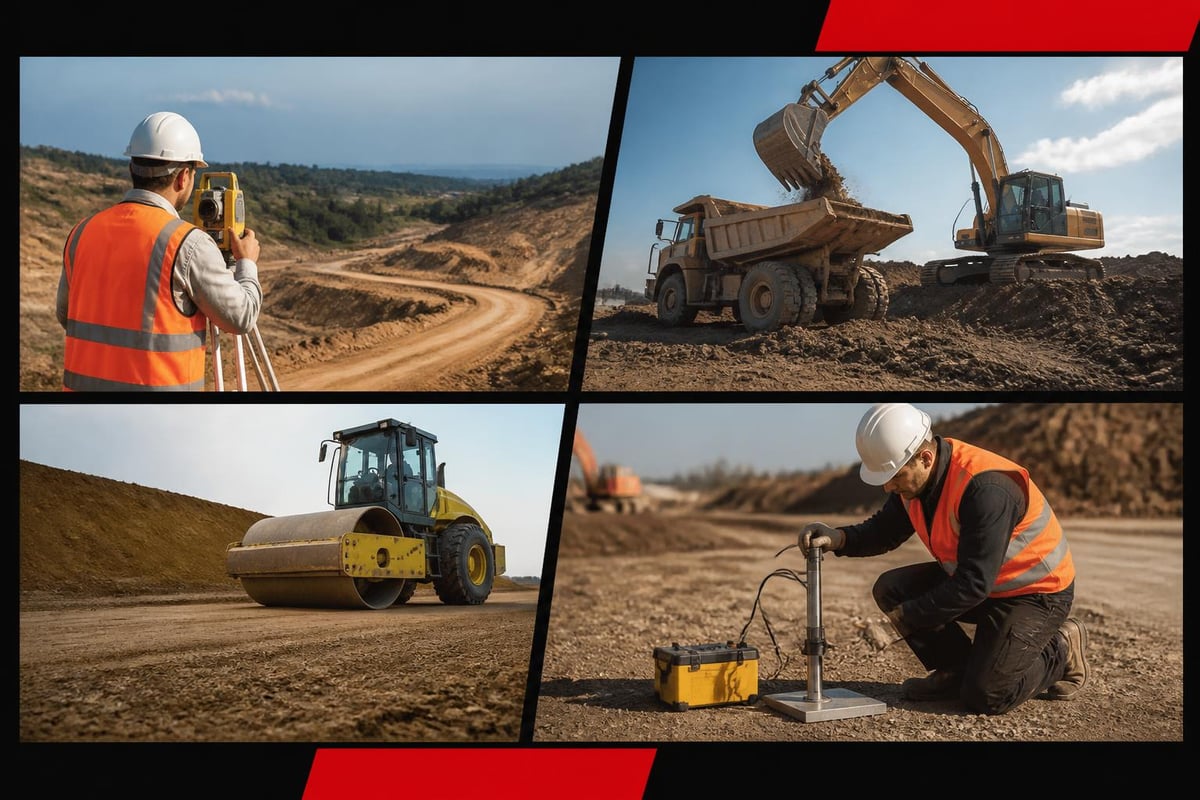
Before any earthmoving equipment arrives on site, thorough assessment and planning separate average projects from ace earthworks. Understanding earthwork construction processes begins with comprehensive geotechnical investigation.
Ground conditions vary dramatically even within small sites. Clay soils behave differently from sandy or gravelly materials, each requiring distinct handling and compaction methods. Water tables, underground services, contamination, and existing structures all influence the earthworks strategy.
A detailed site survey should identify:
- Existing ground levels and topography
- Soil types and bearing capacity
- Drainage patterns and water courses
- Underground utilities and services
- Access constraints and working space
- Environmental sensitivities
This information feeds into the earthworks design, which specifies cut depths, fill heights, slope angles, and material specifications. The investment in proper planning at this stage prevents costly corrections during construction.
Material Selection and Handling
The materials used in ace earthworks must meet specific engineering criteria. Not all soil is suitable for structural fill, and understanding material behavior is crucial for achieving stable, long-lasting results.
Acceptable Fill Materials
| Material Type | Characteristics | Typical Applications |
|---|---|---|
| Granular materials | Free-draining, stable when compacted | Road sub-bases, drainage layers |
| Selected cohesive fill | Controlled clay content, workable | General fill, landscaping |
| Engineered fill | Specified grading, certified quality | Structural foundations, highways |
| Recycled aggregates | Crushed concrete or brick | Secondary layers, temporary roads |
Imported materials must come with appropriate certification and testing documentation. For commercial projects such as drive-through facilities or highway works, material traceability and compliance with specification are non-negotiable requirements.
The handling process significantly affects material performance. Over-working clay soils in wet conditions reduces their strength and creates a pumping, unstable mass. Conversely, granular materials can segregate during placement if dropped from excessive heights, resulting in inconsistent compaction.
Moisture Content Management
Water content dramatically influences how soils compact and perform. Each soil type has an optimum moisture content at which it achieves maximum density under compaction. Working materials too wet or too dry compromises the final result.
During wet weather, site management becomes critical. Protecting placed materials, maintaining drainage, and adjusting working methods prevent the deterioration of completed works. Strategic planning of construction sequences minimises exposure of vulnerable materials to adverse conditions.
Compaction Techniques and Equipment
Achieving ace earthworks requires proper compaction of every layer. This process increases soil density, reduces air voids, improves load-bearing capacity, and minimises future settlement.
Different materials and applications demand specific compaction approaches:
- Vibratory rollers for granular materials and asphalt
- Smooth-wheeled rollers for fine-grained soils
- Sheepsfoot rollers for cohesive clay materials
- Plate compactors for confined spaces and trenches
- Rammers for very restricted areas
Layer thickness is critical. Materials must be spread in layers thin enough for the compaction energy to reach the bottom of each lift. Typically, this means 150-300mm loose thickness depending on material type and equipment capacity.
Quality Control and Testing
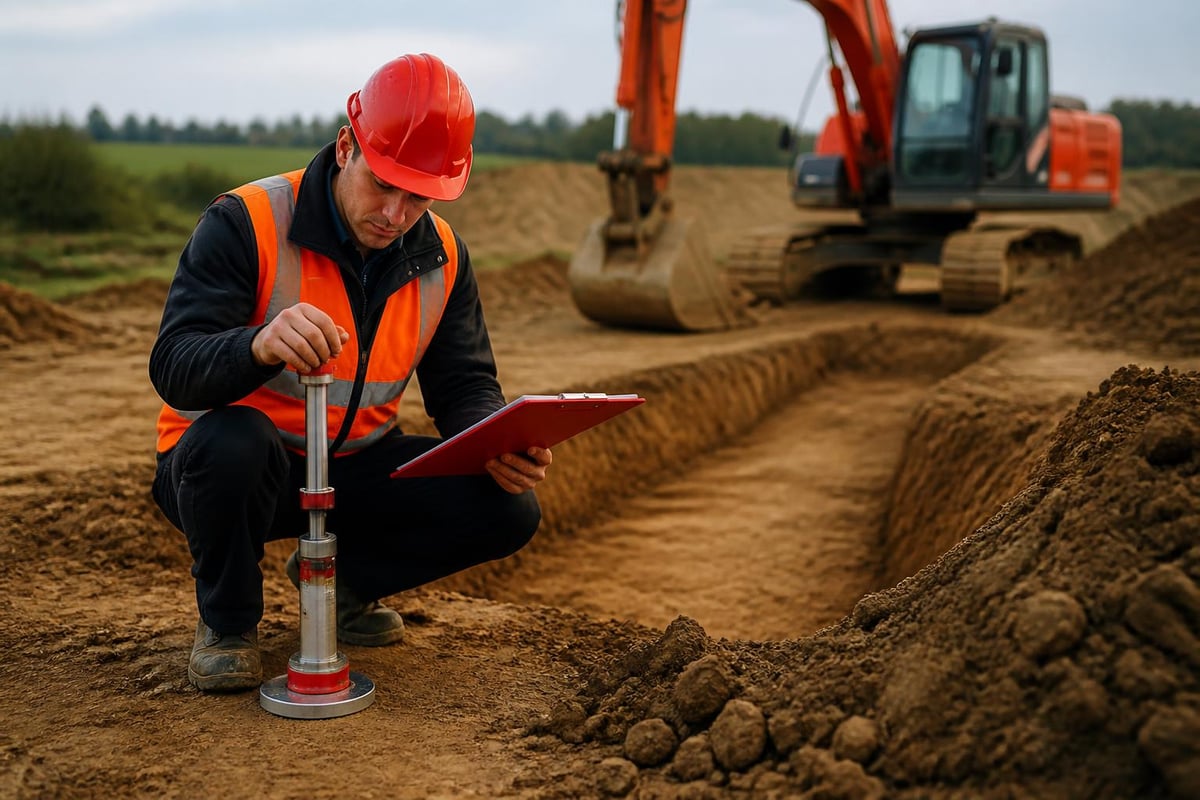
Professional contractors verify compaction through systematic testing. The most common methods include:
- Nuclear density gauge testing for rapid field results
- Sand replacement testing for independent verification
- Plate bearing tests for measuring actual bearing capacity
- Proof rolling to identify soft spots
These tests ensure each layer meets specification before subsequent layers are placed. Rectifying inadequate compaction after covering with additional material is extremely costly and disruptive.
Drainage Integration
Water is the enemy of earthworks stability. Even the most carefully compacted materials will fail if water accumulates and saturates the structure. Ace earthworks incorporate comprehensive drainage from the earliest stages.
Surface water management prevents runoff from eroding freshly placed materials or ponding on working platforms. Temporary drainage during construction often becomes permanent infrastructure, guiding water away from critical areas.
Subsurface drainage addresses groundwater and infiltration. French drains, land drains, and geocomposite drainage layers intercept water before it can compromise structural layers. For highway projects and commercial developments, engineered drainage systems form an integral part of the pavement structure.
The relationship between earthworks and drainage works both ways. Proper ground shaping creates positive drainage, preventing water accumulation through appropriate gradients and crossfalls. Even minor grading errors can create persistent wet spots that degrade performance over time.
Applications Across Civil Engineering Projects
The principles of ace earthworks apply across diverse project types, though the specific requirements vary considerably. Understanding these applications helps contractors and clients appreciate the complexity involved in seemingly straightforward groundworks.
Highway and Road Construction
Road projects demand the highest earthworks standards. Highway embankments must remain stable under heavy traffic loading whilst accommodating drainage, services, and future maintenance access. Planning earthmoving projects from conception through completion ensures these complex requirements are met.
Cuttings through existing ground require slope stability analysis, erosion protection, and often soil retention systems. The interface between cut and fill sections needs careful detailing to prevent differential settlement.
Sub-base layers beneath road pavements must meet stringent specifications for material quality, thickness, and compaction. These form the structural foundation that distributes traffic loads to the underlying ground.
Commercial and Industrial Developments
Projects such as retail parks, distribution centres, and food service drive-throughs involve substantial earthworks to create level platforms and accommodate drainage infrastructure. The ground must support not just buildings but also heavily trafficked service yards, car parks, and delivery areas.
Loading bay areas and refuse collection points experience particularly intense loading from heavy vehicles. These zones require enhanced earthworks specification with increased compaction and potentially stabilised materials.
Residential Driveways and Patios
Whilst smaller in scale, residential projects still demand ace earthworks to prevent failures such as settlement, cracking, or surface deformation. The same principles apply: proper excavation, suitable materials, adequate compaction, and effective drainage.
Domestic clients often underestimate the importance of groundworks, focusing on the visible surface finish. Educating customers about the foundation beneath their new driveway or patio helps them understand the value of professional earthworks.
Cost Estimation and Project Planning
Accurately estimating earthworks costs requires detailed quantity calculations and understanding of productivity rates. The volume of material to excavate, transport, and compact forms the basis of pricing, but numerous other factors influence final costs.
Key Cost Components
| Cost Element | Considerations | Impact on Total Cost |
|---|---|---|
| Site preparation | Vegetation clearance, demolition | 5-15% |
| Excavation | Volume, depth, soil type, disposal | 30-45% |
| Materials | Import fill, aggregates, geotextiles | 25-35% |
| Compaction | Equipment, testing, time | 15-20% |
| Drainage | Systems, materials, installation | 10-20% |
Site access significantly affects productivity and costs. Restricted access requiring smaller plant or longer haul distances increases unit rates substantially. Urban sites with limited working hours or noise restrictions add further constraints.
Ground conditions discovered during works may differ from expectations, particularly on sites lacking comprehensive investigation. Unexpected rock, contamination, or high water tables can transform project economics. Experienced contractors build appropriate contingencies into their estimates whilst maintaining competitive pricing.
Technology and Innovation
Modern earthworks increasingly leverage technology to improve accuracy, efficiency, and outcomes. GPS-guided machine control systems enable operators to achieve precise levels and grades without constant surveying, dramatically improving productivity whilst reducing rework.
Building Information Modelling (BIM) extends into earthworks with detailed 3D models of existing and proposed ground levels. These digital models facilitate accurate cut and fill calculations, identify potential issues before construction, and enable better project coordination.
Drones provide rapid topographic surveys and progress monitoring, generating accurate volumetric measurements without disrupting site operations. This technology proves particularly valuable on larger sites where traditional surveying becomes time-consuming and expensive.

Environmental Considerations
Responsible earthworks contractors prioritise environmental protection throughout their operations. Erosion and sediment control prevents soil and pollutants from leaving the site and impacting watercourses or neighbouring properties.
Techniques include:
- Silt fences and sediment barriers around site boundaries
- Settlement ponds to treat surface water runoff
- Temporary or permanent ground cover to stabilise exposed soil
- Dust suppression through water spraying or chemical stabilisation
- Progressive restoration of completed areas
Material reuse represents both environmental and economic benefits. Excavated material suitable for structural fill eliminates disposal costs whilst reducing the need for imported aggregates. Even materials requiring treatment through lime or cement stabilisation often prove more sustainable than wholesale removal and replacement.
Noise, vibration, and air quality management becomes particularly important in urban environments or near sensitive receptors. Selecting appropriate equipment, limiting working hours, and maintaining plant in good condition all contribute to minimising environmental impact.
Quality Assurance Systems
Ace earthworks result from systematic quality management throughout project delivery. This begins with clear specifications defining material requirements, compaction standards, and testing frequencies. Without these benchmarks, quality becomes subjective and disputes inevitable.
Documentation provides the evidence trail demonstrating compliance. Records should include:
- Material delivery tickets with source and certification
- Compaction test results with locations and dates
- Photographic progress records
- As-built drawings showing final levels and drainage
- Non-conformance reports and corrective actions
Third-party inspection and testing provides independent verification for clients and ensures contractors meet their obligations. For major projects, resident engineers or clerk of works monitor works continuously and witness critical activities.
Common Issues and Solutions
Even with careful planning and execution, earthworks projects encounter challenges. Recognising common problems and understanding appropriate solutions distinguishes competent contractors from exceptional ones.
Inadequate compaction manifests as settlement, rutting, or surface deformation. Prevention through proper technique and testing proves far cheaper than remediation, which often requires excavation and replacement of affected areas.
Poor drainage causes ongoing problems including waterlogging, frost damage, and structural failure. Retrofitting drainage after construction completion is expensive and disruptive, emphasising the importance of getting it right during earthworks.
Unsuitable materials performing poorly despite proper placement and compaction require removal and replacement. Rigorous material approval processes prevent this costly scenario.
Weather impacts can derail even well-planned projects. Contingency programming, protective measures, and flexible working methods help maintain progress despite adverse conditions.
Selecting the Right Contractor
The success of any earthworks project depends heavily on contractor selection. The cheapest quote rarely delivers the best value, particularly when quality shortcomings emerge months or years after completion.
Evaluation criteria should include:
- Relevant experience with similar project types and ground conditions
- Equipment capability appropriate to the project scale and requirements
- Quality systems demonstrating commitment to specifications and testing
- Insurance and certification providing protection and compliance assurance
- References from previous clients confirming performance and reliability
Established contractors with proven track records in civil engineering, highways, and surfacing work bring invaluable experience to complex projects. Their understanding of how earthworks interact with subsequent construction phases ensures compatibility and prevents interface problems.
Quality earthworks form the invisible foundation of successful civil engineering projects, directly determining the performance and longevity of everything built upon them. Whether preparing sites for major highway infrastructure or creating stable platforms for driveways and patios, the same principles of careful planning, appropriate materials, proper compaction, and effective drainage apply. At JRG Civils, we bring this expertise to every project, combining technical knowledge with practical experience gained across commercial and residential works throughout the UK. Our commitment to excellence in earthworks ensures your project starts with the solid foundation it deserves. Contact JRG Civils today to discuss how our civil engineering expertise can support your next project.