
Earth work in excavation forms the foundation of virtually every construction project, from commercial developments to residential driveways. Whether you're planning a new drive-through restaurant, highway resurfacing project, or a domestic patio installation, understanding the principles and practices of excavation earthwork ensures project success, safety compliance, and long-term structural integrity. This comprehensive guide explores the essential elements of excavation work, covering everything from initial site assessment through to completion.
Understanding Earth Work in Excavation Fundamentals
Earth work in excavation encompasses the systematic removal, movement, and placement of soil and rock materials to prepare a site for construction. This process involves far more than simply digging holes; it requires precise planning, technical expertise, and strict adherence to safety protocols.
The scope of excavation earthwork varies dramatically depending on project requirements. Commercial developments like retail franchises demand extensive groundwork preparation, whilst residential projects such as driveways require scaled but equally precise excavation techniques. Each project type presents unique challenges related to soil composition, drainage requirements, and load-bearing capacity.
Primary Categories of Excavation Work
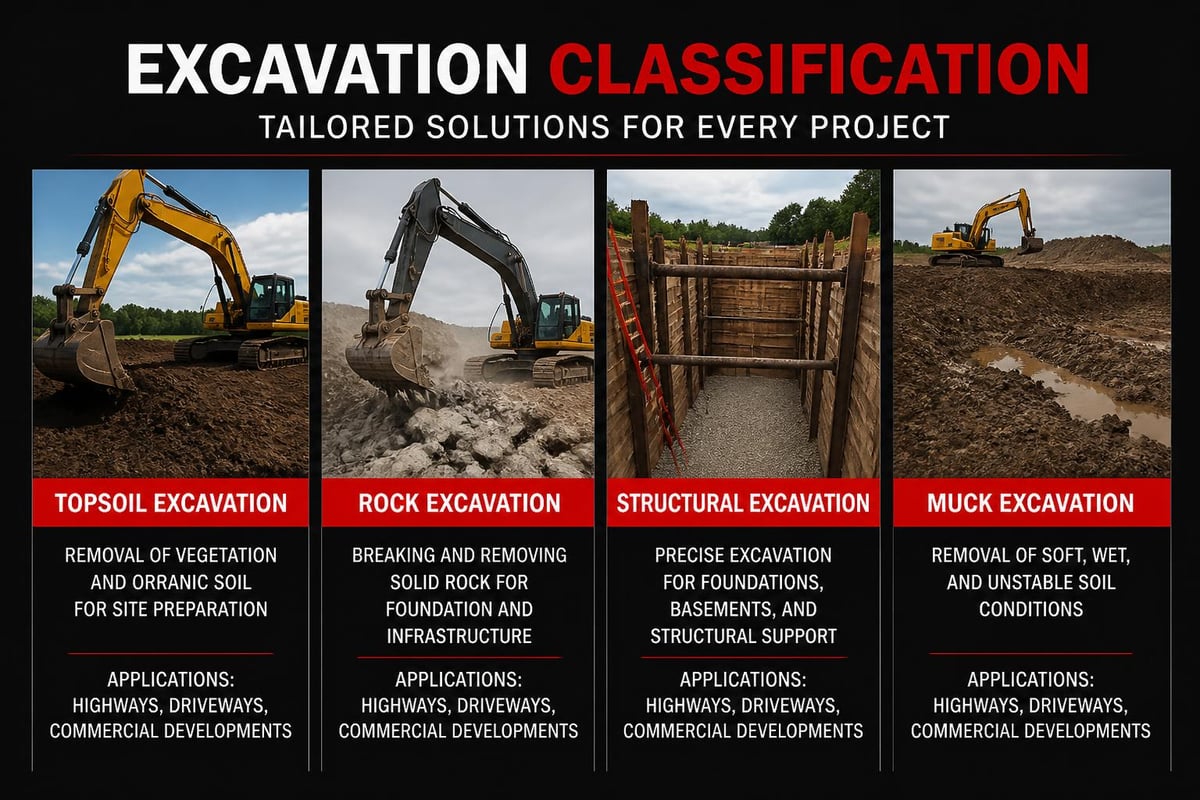
Different construction scenarios require specific excavation approaches:
- Topsoil excavation: Removal of the upper soil layer containing organic matter
- Rock excavation: Breaking and removing solid geological formations
- Muck excavation: Clearing water-laden or unsuitable soil materials
- Unclassified excavation: General earth removal without specific categorisation
- Structural excavation: Precise digging for foundations and building footprints
Understanding which category applies to your project influences equipment selection, timeline estimation, and budget allocation. The Health and Safety Executive provides detailed guidance on excavation safety considerations that apply across all categories.
Site Assessment and Planning Requirements
Thorough site assessment represents the cornerstone of successful earth work in excavation. Before any machinery arrives on site, comprehensive investigation establishes critical parameters that govern the entire project.
Soil Analysis and Ground Conditions
Professional soil testing reveals composition, bearing capacity, moisture content, and contamination levels. These factors directly impact excavation methodology and subsequent construction phases. Clay soils behave differently than sandy or rocky substrates, requiring adjusted approaches to trenching depth, slope angles, and stabilisation techniques.
Ground conditions also determine drainage requirements. Poor drainage leads to water accumulation, soil instability, and potential structural failures. Highway projects particularly demand robust drainage solutions to prevent surface deterioration and maintain long-term performance.
Underground Service Location
Identifying existing underground services prevents catastrophic incidents during excavation. Utility strikes cause project delays, safety hazards, and substantial financial penalties. Modern detection technology including ground-penetrating radar and electromagnetic locators identifies:
- Water mains and sewerage systems
- Gas pipelines and electrical cables
- Telecommunications infrastructure
- Historical foundations or archaeological features
Coordinating with utility companies before commencing excavation work ensures all services are accurately mapped and appropriately protected or relocated.
Safety Standards and Regulatory Compliance
Earth work in excavation operations carry inherent risks that demand rigorous safety protocols. Trench collapses, equipment accidents, and underground service strikes represent serious hazards that proper planning and execution can prevent.
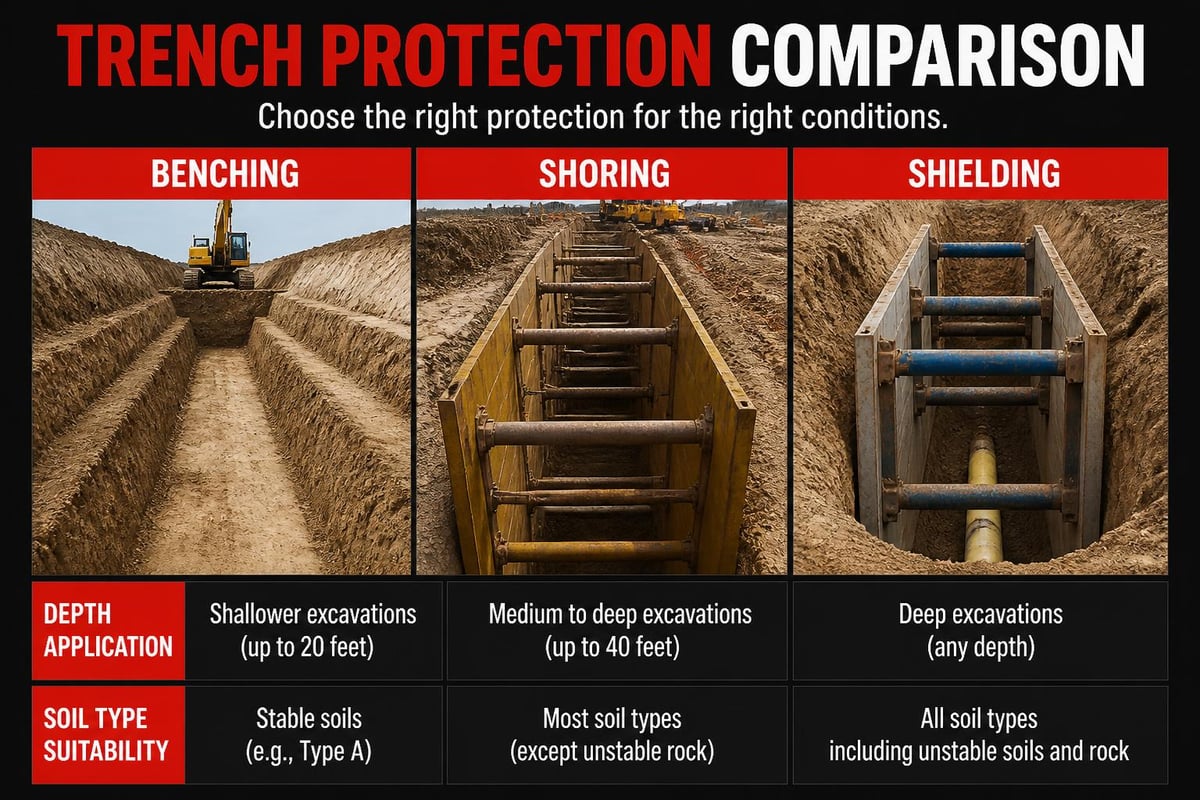
OSHA’s comprehensive trenching guidelines establish minimum safety standards for excavation projects across various scales. These regulations cover protective systems, access and egress requirements, and atmospheric testing in confined excavation spaces.
Essential Safety Measures
| Safety Component | Requirement | Application |
|---|---|---|
| Protective Systems | Shoring, shielding, or sloping | Excavations exceeding 1.5 metres depth |
| Competent Person | Trained safety supervisor on site | All excavation projects |
| Atmospheric Testing | Oxygen and hazardous gas monitoring | Excavations deeper than 1.2 metres |
| Emergency Access | Safe entry and exit within 7.5 metres | All trenches and excavations |
British standards align closely with these international benchmarks whilst incorporating specific UK regulatory requirements. Civil engineering firms operating across commercial and residential sectors must demonstrate comprehensive safety compliance to protect workers and maintain professional accreditation.
The CDC provides valuable resources highlighting the critical importance of protective systems, noting that trench collapses cause numerous preventable fatalities annually.
Equipment Selection and Operational Techniques
Choosing appropriate machinery significantly impacts project efficiency, cost-effectiveness, and final quality in earth work in excavation. Modern civil engineering projects utilise diverse equipment matched to specific operational requirements.
Excavation Machinery Types
Hydraulic excavators dominate contemporary earthwork operations, offering versatility across project scales. Mini-excavators suit confined residential driveways, whilst larger tracked excavators handle substantial commercial developments. Backhoe loaders provide dual functionality, combining excavation capability with loading capacity for material transport.
Specialised equipment addresses particular challenges:
- Bulldozers: Pushing and spreading soil across large areas
- Scrapers: Cutting, hauling, and spreading earth in single operations
- Trenchers: Creating narrow, precise channels for utilities
- Compactors: Achieving specified density in fill materials
Soil Handling and Placement
Proper soil handling maintains material quality and supports successful project outcomes. Excavated material suitable for reuse as fill requires careful stockpiling to prevent contamination or degradation. Segregating topsoil from subsoil enables appropriate redeployment in landscaping and final grading.
Compaction represents a critical phase in earth work in excavation projects. Inadequate compaction causes settlement, structural movement, and premature surface failure in driveways and highways. Achieving specified density requires:
- Appropriate moisture content during placement
- Layer thickness not exceeding equipment capability
- Systematic compaction passes with proper overlap
- Regular density testing to verify compliance
Caltrans construction details on earthwork provide comprehensive technical specifications for highway projects, offering valuable benchmarks for commercial and residential applications.
Drainage and Water Management
Effective water management integrates seamlessly with earth work in excavation planning. Groundwater, surface runoff, and precipitation all influence excavation stability and construction quality.
Dewatering Techniques
Excavations below the water table require active dewatering to maintain dry working conditions. Common approaches include:
- Sump pumping: Collecting water in low points for removal
- Wellpoint systems: Installing temporary wells around excavation perimeters
- Deep well pumping: Drawing down water tables in deeper excavations
Dewatering operations must comply with environmental regulations governing discharge water quality and destination. Sediment-laden water requires treatment before release into drainage systems or watercourses.
Permanent Drainage Solutions
Integrating permanent drainage during excavation prevents long-term problems. French drains, soakaways, and perimeter drainage channels intercept and redirect water away from structural elements. Highway projects incorporate sophisticated drainage networks managing substantial water volumes whilst maintaining surface integrity.
| Drainage Method | Application | Typical Depth | Maintenance Requirement |
|---|---|---|---|
| French Drain | Perimeter and subsurface | 600-1200mm | Low |
| Soakaway | Dispersed surface water | 1000-2000mm | Moderate |
| Channel Drain | Linear surface collection | 100-300mm | Regular cleaning |
| Catchpits | Intercepting sediment | 900-1500mm | Periodic emptying |
Excavation for Different Project Types
Earth work in excavation requirements vary considerably across commercial, infrastructure, and residential applications. Understanding these distinctions enables appropriate planning and resource allocation.
Commercial Development Projects
Large-scale commercial projects such as drive-through restaurants demand extensive site preparation. These developments typically require:
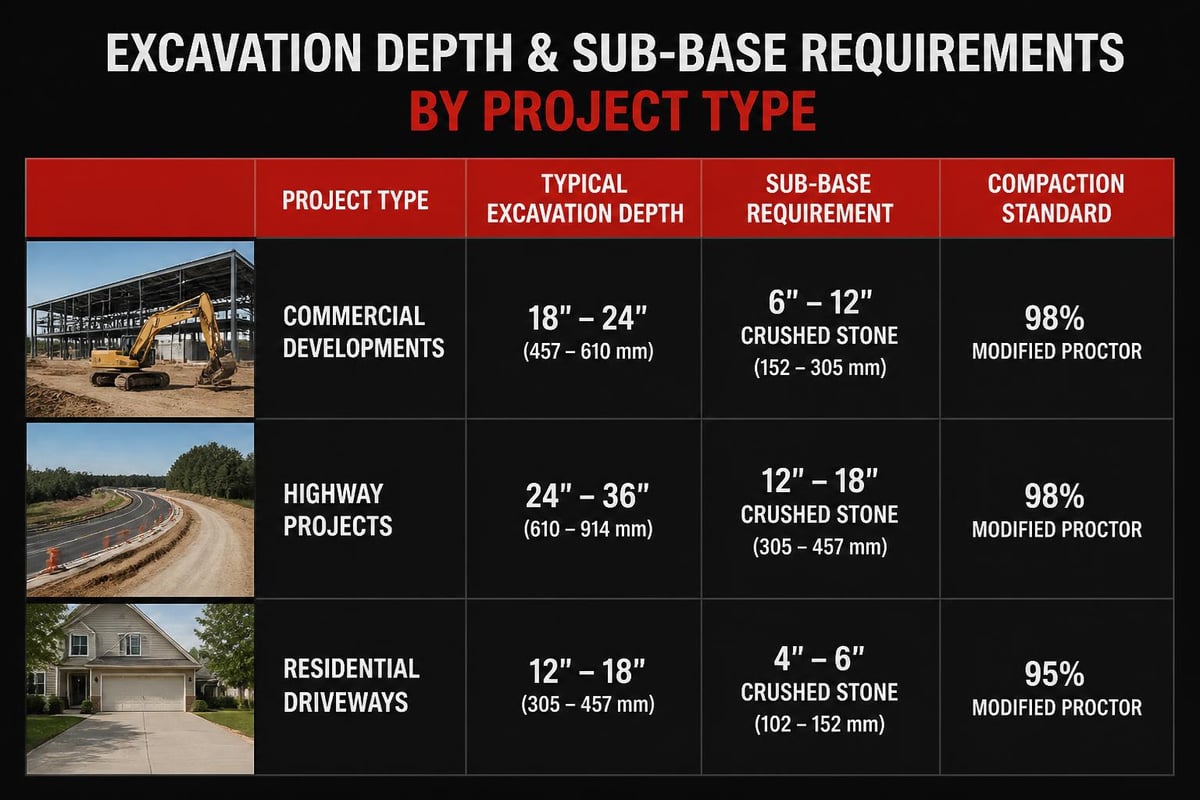
Substantial cut and fill operations to achieve level building platforms, extensive drainage infrastructure supporting large impermeable surfaces, underground service installations for utilities and waste management, and robust sub-base preparation for car parks and access roads.
Commercial projects benefit from early contractor involvement, enabling excavation planning to integrate with architectural and structural design. This collaborative approach identifies potential challenges before they impact timelines or budgets.
Highway and Infrastructure Works
Highway resurfacing and reconstruction projects present unique excavation challenges. Existing traffic management, limited working windows, and stringent specification compliance define these operations. Precision becomes paramount when working within established road corridors where tolerances directly affect final surface quality and longevity.
Infrastructure projects demand rigorous quality control throughout excavation and reinstatement phases. Material testing, compaction verification, and dimensional accuracy receive intensive scrutiny to ensure decades of reliable performance.
Residential Driveways and Patios
Residential earth work in excavation operates at a smaller scale but requires equal attention to detail. Domestic driveways and patios form prominent features where quality directly affects property value and homeowner satisfaction.
Residential excavation considerations include:
- Minimising disruption to occupied properties
- Protecting existing landscaping and structures
- Coordinating with homeowner schedules and access requirements
- Achieving aesthetic outcomes alongside functional performance
- Managing limited working space and equipment access
Despite reduced scale, residential projects demand identical safety compliance and technical standards as commercial operations. Professional civil engineering contractors apply consistent methodology regardless of project size, ensuring reliable outcomes across all applications.
Material Testing and Quality Assurance
Quality assurance processes verify that earth work in excavation meets specified standards throughout project execution. Testing protocols establish whether materials and workmanship comply with design requirements before progressing to subsequent phases.
Key Testing Parameters
California Bearing Ratio (CBR) testing determines soil strength and bearing capacity, informing pavement design for highways and driveways. Low CBR values indicate weak soils requiring remediation through removal and replacement or stabilisation techniques.
Proctor compaction tests establish the relationship between moisture content and maximum dry density for specific soil types. This laboratory data guides field compaction operations, ensuring placed materials achieve required density specifications.
Particle size distribution analysis classifies soil composition, identifying proportions of gravel, sand, silt, and clay. This information influences drainage characteristics, frost susceptibility, and suitability for various construction applications.
On-Site Verification Methods
Field testing validates that actual construction matches specified requirements:
- Nuclear density gauges: Rapid, non-destructive compaction verification
- Plate bearing tests: Direct measurement of soil bearing capacity
- Dynamic cone penetrometer: Simple assessment of layer uniformity
- Visual inspection: Identifying segregation, contamination, or unsuitable materials
Regular testing throughout earthwork operations identifies deficiencies whilst remediation remains straightforward and economical. Discovering compaction failures after surface construction proves far more costly and disruptive.
Environmental Considerations
Contemporary earth work in excavation practices incorporate environmental responsibility alongside technical and economic objectives. Sustainable approaches minimise ecological impact whilst often delivering cost savings through efficient resource utilisation.
Soil Reuse and Waste Minimisation
Maximising on-site soil reuse reduces haulage costs, traffic impacts, and landfill burdens. Careful excavation planning identifies suitable material for redeployment as structural fill, landscaping soil, or noise bunds. Segregated stockpiling maintains material quality and prevents contamination requiring disposal as waste.
Unsuitable materials including contaminated soils demand proper characterisation and licensed disposal. Environmental regulations govern handling, transport, and final destination of various waste classifications.
Ecological Protection Measures
Construction sites potentially impact surrounding ecosystems through sediment runoff, noise disturbance, and habitat disruption. Responsible contractors implement protection measures including:
- Sediment control barriers preventing soil migration
- Restricted working hours minimising wildlife disturbance
- Tree protection zones safeguarding existing vegetation
- Dust suppression through water spraying or chemical treatments
These measures demonstrate professional standards whilst maintaining positive community relationships throughout project duration.
Cost Factors and Budget Planning
Understanding cost drivers in earth work in excavation enables accurate budget development and value engineering opportunities. Multiple variables influence final project expenditure beyond simple volume calculations.
Primary Cost Components
| Cost Element | Typical Percentage | Variables Affecting Cost |
|---|---|---|
| Labour | 25-35% | Project duration, skill requirements, safety complexity |
| Plant and Equipment | 30-45% | Machinery type, hire duration, fuel consumption |
| Materials | 15-25% | Import requirements, disposal volumes, testing frequency |
| Preliminaries | 10-15% | Site establishment, traffic management, temporary works |
Ground conditions significantly impact costs through equipment productivity variations and unexpected challenges like rock excavation or contaminated soil requiring specialist treatment. Thorough site investigation reduces uncertainty but cannot eliminate all risks in subsurface works.
Value Engineering Opportunities
Strategic planning identifies cost optimisation without compromising quality:
- Balancing cut and fill volumes to minimise import and export
- Selecting appropriate equipment matching project scale and access
- Coordinating material testing to satisfy requirements efficiently
- Phasing works to optimise equipment utilisation
- Recycling suitable excavated materials as engineered fill
Experienced civil engineering contractors bring value engineering expertise developed across diverse projects, applying lessons learned to optimise new commissions.
Working with Professional Contractors
Selecting qualified contractors ensures earth work in excavation proceeds safely, efficiently, and to required standards. Professional civil engineering firms bring essential capabilities that DIY approaches or unqualified operators cannot replicate.
Contractor Credentials and Experience
Established contractors demonstrate proven capability through:
- Relevant project portfolios showing similar work completion
- Professional accreditations including industry memberships
- Insurance coverage protecting clients against construction risks
- Safety records evidencing commitment to worker and public protection
- Technical resources including qualified staff and appropriate equipment
Firms operating across commercial and residential sectors offer versatility whilst maintaining consistent quality standards. JRG Civils exemplifies this approach, delivering highway infrastructure alongside domestic driveways with equal attention to detail and professional execution.
Communication and Project Management
Effective contractors maintain clear communication throughout project duration. Regular updates, proactive problem-solving, and responsive customer service distinguish professional operations from basic service providers.
Transparent pricing structures with detailed breakdowns enable informed decision-making. Reputable contractors explain cost components, discuss alternatives, and provide honest assessments of project requirements without hidden charges emerging mid-contract.
Technological Advances in Excavation
Modern earth work in excavation increasingly incorporates technological innovations improving accuracy, efficiency, and safety. These advances benefit projects across all scales from major infrastructure to residential developments.
Machine Control Systems
GPS-guided excavation equipment automatically maintains design grades and slopes without constant manual checking. Operators receive real-time feedback showing blade position relative to target elevations, dramatically improving accuracy whilst accelerating work progress.
Benefits include reduced staking requirements, fewer grade checks, minimal rework from grade errors, and enhanced productivity in limited visibility conditions. Initial technology costs offset through labour savings and quality improvements.
Digital Planning Tools
Three-dimensional modelling software enables comprehensive excavation planning before site mobilisation. Engineers optimise cut-fill balance, identify potential clashes with existing services, and generate accurate quantity estimates supporting reliable budgeting.
Building Information Modelling (BIM) facilitates collaboration between designers, contractors, and clients, ensuring shared understanding of project requirements and reducing costly misunderstandings during construction.
Seasonal and Weather Considerations
Weather conditions substantially influence earth work in excavation productivity and quality. Understanding seasonal variations enables realistic scheduling and contingency planning.
Winter Working Challenges
Cold weather introduces complications including frozen ground, extended excavation times, reduced compaction effectiveness in frozen soils, and limited available daylight hours. Projects scheduled during winter months require additional allowances for weather delays and modified working practices.
However, winter excavation offers advantages in wet ground conditions where frozen surfaces improve trafficability and reduce mud-related complications.
Summer Operations
Warm, dry conditions generally favour excavation progress but present distinct challenges. Excessive dust generation requires suppression measures, whilst very dry soils resist compaction without moisture addition. Intense summer rainfall can rapidly flood excavations lacking adequate temporary drainage.
Experienced contractors adjust methodologies according to prevailing conditions, maintaining quality and safety standards regardless of seasonal variations. Comprehensive project planning anticipates weather impacts and incorporates appropriate mitigation strategies.
Long-Term Performance and Maintenance
Quality earth work in excavation establishes foundations for decades of reliable service. Shortcuts during excavation and backfilling inevitably manifest as premature failures requiring costly remediation.
Settlement and Subsidence Issues
Inadequate compaction causes progressive settlement as soil particles consolidate under loading. Driveways develop depressions and cracking, whilst highways experience premature surface deterioration and pothole formation. Proper compaction eliminates voids and achieves stable density preventing future movement.
Settlement also results from inappropriate fill materials including organic soils that decompose over time or clay soils susceptible to volume changes with moisture variations.
Drainage System Maintenance
Even well-designed drainage requires periodic maintenance sustaining long-term effectiveness. Sediment accumulation in channels and catchpits gradually reduces capacity, whilst root intrusion blocks perforated pipes.
Establishing maintenance schedules preserving drainage functionality protects the broader excavation investment. Simple preventive actions cost far less than addressing water damage after systems fail.
Successfully executing earth work in excavation demands comprehensive planning, technical expertise, and unwavering commitment to quality and safety standards. From initial site assessment through final compaction verification, each phase contributes to long-term project success whether constructing highways, commercial developments, or residential driveways. At JRG Civils, we bring extensive experience across diverse excavation projects throughout the North East and across the UK, delivering civil engineering excellence with pride in every aspect of our work. Contact JRG Civils today to discuss how our professional team can support your next project with reliable, high-quality earthwork and excavation services.