
Understanding the 278 works meaning is essential for anyone involved in property development, commercial construction, or infrastructure projects that interface with public highways. Whether you're planning a new commercial facility, residential development, or infrastructure enhancement, Section 278 agreements under the Highways Act 1980 play a crucial role in ensuring safe and compliant access to your project. This legislative framework governs how developers can make alterations to public highways, and comprehending its implications can save significant time and expense whilst ensuring regulatory compliance.
What Section 278 Works Actually Mean
The legal definition of Section 278 Works refers specifically to highway alterations and improvements carried out by developers under agreement with the local highways authority. These agreements enable private parties to execute works on public highways that would otherwise be the sole responsibility of the council or highways authority.
Key aspects of 278 works meaning include:
- Modifications to existing road layouts and junctions
- Creation of new access points for developments
- Installation of traffic calming measures
- Widening of carriageways or footways
- Repositioning of street furniture and utilities
The fundamental principle behind the 278 works meaning is that developers bear the cost of highway improvements necessitated by their projects. This approach ensures that new developments don't place undue burden on public infrastructure without appropriate mitigation.
The Legal Framework
Section 278 of the Highways Act 1980 provides the statutory basis for these agreements. Under this legislation, a highways authority may enter into an agreement with any person for that person to carry out works on the highway at their own expense. This framework has become increasingly important as development pressure grows across the UK.

The agreement typically covers not only the construction phase but also maintenance obligations, commuted sums for future upkeep, and strict adherence to highways authority design standards. Understanding the comprehensive scope of Section 278 agreements helps developers budget accurately and plan realistic project timelines.
Types of Works Covered Under Section 278
When examining 278 works meaning in practical terms, the range of possible interventions is remarkably broad. From simple dropped kerbs to complex junction reconfigurations, these agreements facilitate essential infrastructure improvements.
Common Highway Alterations
| Type of Work | Typical Application | Complexity Level |
|---|---|---|
| New Vehicle Access | Commercial entrances, driveways | Medium |
| Junction Improvements | Roundabouts, traffic signals | High |
| Pedestrian Facilities | Crossings, footway widening | Low to Medium |
| Carriageway Widening | Turning lanes, additional capacity | High |
| Traffic Calming | Speed cushions, raised tables | Medium |
Commercial projects such as drive-through facilities require particularly careful consideration. When constructing franchise locations like coffee shops or fast-food outlets, the access and egress arrangements must handle peak traffic flows safely whilst minimizing disruption to existing highway users.
Residential developments equally depend on Section 278 works. Estate access roads, visibility splays, and pedestrian connections all fall within this framework. The 278 works meaning extends to ensuring that new housing integrates seamlessly with existing infrastructure networks.
Specialized Infrastructure Requirements
Beyond basic access provisions, many projects require sophisticated highway engineering solutions. Intelligent traffic systems, advanced drainage solutions, and strategic lighting installations all contribute to comprehensive Section 278 schemes.
The technical specifications for these works must align with the highways authority's design manual. Standards covering everything from road construction layers to signage positioning ensure consistency and safety across the highway network. Compliance with these standards is non-negotiable within the 278 works meaning.
The Section 278 Agreement Process
Understanding the procedural aspects of 278 works meaning helps developers navigate the complexities efficiently. The process typically spans several months and involves multiple stakeholder consultations.
Initial stages include:
- Pre-application discussions with the highways authority
- Feasibility assessment of proposed alterations
- Preliminary design development
- Road safety audit (Stage 1)
- Cost estimation and financial arrangements
Following initial approval, detailed design work commences. This phase demands meticulous attention to technical standards, with designs subject to rigorous scrutiny by highways engineers. The key considerations for developers on Section 278 works encompass design standards, approval processes, and financial obligations that must be carefully managed.
Financial Obligations and Bonding
The financial dimension of 278 works meaning cannot be overstated. Developers must provide financial security to guarantee completion of works and cover potential defects during the maintenance period.
Typical financial requirements include:
- Payment of the highways authority's technical approval fees
- Full construction costs borne by the developer
- Performance bond (typically 125% of construction value)
- Commuted sum for future maintenance
- Professional fees for highways authority supervision

These sums represent significant investment beyond the core development costs. Early engagement with highways authorities allows accurate budgeting and prevents costly delays when financial arrangements prove inadequate.
Practical Implementation Considerations
Translating 278 works meaning into on-site reality requires experienced civil engineering contractors. The technical demands of highway construction differ markedly from standard groundworks, demanding specialist equipment and qualified personnel.
Quality Standards and Inspection Regimes
Highway works must achieve exacting quality standards. Materials specification, compaction requirements, and surface regularity all face stringent testing. Independent inspectors verify compliance at critical stages, with non-conforming work subject to rejection and reconstruction.
The inspection process typically includes:
- Material testing before incorporation
- Layer thickness verification
- Compaction density testing
- Surface regularity surveys
- Final commissioning inspections
Contractors undertaking Section 278 works must demonstrate proven capability in highways engineering. Previous experience delivering similar schemes provides confidence in technical competence and regulatory understanding. The civil engineering expertise required spans design interpretation, construction methodology, and quality assurance systems.
Design and Technical Approval
The 278 works meaning encompasses rigorous technical approval processes. Highways authorities scrutinize designs through multiple lenses: safety, functionality, maintenance implications, and future network integration.
| Design Element | Approval Criteria | Common Issues |
|---|---|---|
| Geometric Layout | Visibility, turning radii | Insufficient sight lines |
| Drainage Design | Capacity, maintenance access | Inadequate surface water management |
| Pavement Construction | Structural adequacy | Under-designed for traffic loading |
| Street Lighting | Illumination levels, energy efficiency | Poor column positioning |
| Signage and Lining | Regulatory compliance | Non-standard details |
Road safety audits form a critical component of the approval process. Independent assessors review designs at multiple stages, identifying potential safety concerns before construction commences. Responding to audit recommendations often requires design modifications, extending approval timelines.
Coordination with Statutory Undertakers
Understanding 278 works meaning includes recognizing the interface with utility providers. Highway alterations frequently necessitate diversion or protection of existing services. Gas, electricity, water, telecommunications, and drainage infrastructure all require careful consideration.
Early utility searches identify existing apparatus. Coordination meetings with statutory undertakers establish protection requirements or diversion necessities. These interactions add complexity to project programmes and budgets.
Maintenance and Adoption Procedures
The ultimate objective of most Section 278 schemes is adoption by the highways authority. This transfer of responsibility occurs only after successful completion of works and a defects maintenance period.
The adoption process typically involves:
- Practical completion certification
- Commencement of 12-month maintenance period
- Rectification of any defects identified
- Final inspection by highways authority
- Formal adoption into publicly maintainable highway
During the maintenance period, the developer retains responsibility for all defects and damage. Adequate bonding protects the highways authority should the developer fail to fulfil these obligations. The 278 works meaning extends beyond construction completion to encompass this extended responsibility period.
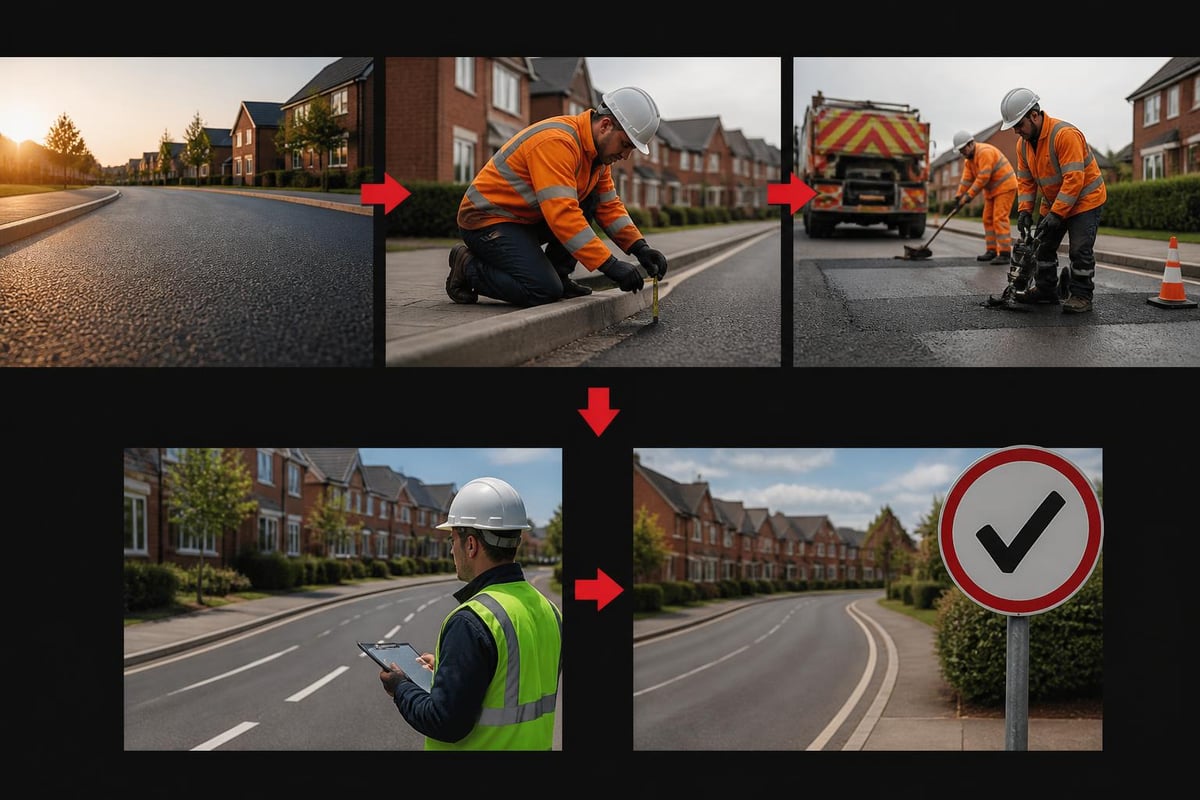
Once adopted, the highway becomes the authority's responsibility. The commuted sum paid by the developer contributes to long-term maintenance costs. This financial contribution reflects the additional maintenance burden created by new infrastructure.
Commercial Development Applications
For commercial developers, comprehending 278 works meaning proves essential to project feasibility. Drive-through facilities, retail parks, business estates, and industrial developments all typically require highway modifications.
Case Study Applications
Consider a new drive-through coffee shop requiring highway alterations. The 278 works meaning in this context encompasses several elements:
- Creation of dedicated access and egress points
- Visibility splay provision for safe entry and exit
- Potential traffic signal modifications at nearby junctions
- Pedestrian crossing facilities connecting to existing footways
- Adequate queuing space within the development boundary
Similar principles apply to industrial developments, though scale and complexity often increase substantially. HGV access requirements, junction capacity enhancements, and potential roundabout installations all fall within the 278 works meaning for larger schemes.
Residential Development Implications
Housing developments universally require Section 278 agreements. Estate access roads, pedestrian connections, and integration with existing networks all demand careful planning and execution.
The 278 works meaning for residential schemes extends to creating adoptable highways within developments. Whilst internal estate roads may be covered under Section 38 agreements, the junction with the existing highway network invariably requires Section 278 works.
Residential-specific considerations include:
- Safe routes to schools and public transport
- Integration with walking and cycling networks
- Traffic calming within residential areas
- Parking restrictions protecting sight lines
- Street lighting enhancing pedestrian safety
Developers must balance technical requirements with commercial viability. Extensive highway works can significantly impact development economics, making early highways consultation essential during land acquisition and feasibility stages.
Working with Specialist Contractors
Successfully delivering Section 278 works requires specialist civil engineering contractors with proven highways experience. The technical demands, quality standards, and regulatory framework distinguish highway works from general construction activities.
Selecting contractors should consider several factors:
| Selection Criteria | Importance | Assessment Method |
|---|---|---|
| Previous Section 278 Experience | Critical | Reference projects, authority feedback |
| Technical Competence | Critical | Qualified personnel, equipment capability |
| Quality Assurance Systems | High | Accreditation, testing facilities |
| Financial Stability | High | Bonding capacity, company accounts |
| Programme Reliability | Medium | Track record, resource availability |
The chosen contractor becomes the developer's representative in delivering compliant highway works. Their understanding of 278 works meaning directly impacts project success, affecting timelines, costs, and approval processes.
Risk Management and Contingency Planning
Highway works carry inherent risks requiring careful management. Ground conditions, utility conflicts, weather impacts, and approval delays all threaten project programmes and budgets.
Effective risk management starts with thorough site investigation. Ground conditions significantly affect pavement design and construction methodology. Unexpected contamination or poor bearing capacity can derail carefully planned schemes.
Critical risk mitigation measures include:
- Comprehensive ground investigation before design finalization
- Detailed utility searches and trial holes
- Early highways authority engagement
- Adequate programme contingency (typically 20-30%)
- Flexible financial provisions for unforeseen costs
Understanding 278 works meaning encompasses recognizing these potential challenges. Experienced developers budget conservatively, knowing that highway works frequently encounter complications despite thorough preparation.
Future Developments in Highway Regulation
The regulatory landscape surrounding highway alterations continues evolving. Increased emphasis on sustainable transport, climate resilience, and digital infrastructure influences Section 278 requirements.
Modern 278 works meaning increasingly incorporates electric vehicle charging provision, enhanced cycling facilities, and sustainable drainage systems. These elements reflect broader policy objectives around carbon reduction and active travel promotion.
Smart infrastructure integration represents another emerging consideration. Ducting for future digital connectivity, sensor installation for traffic management, and adaptive lighting systems all feature in contemporary highway schemes. Developers must anticipate these requirements when planning Section 278 works.
Understanding the comprehensive nature of 278 works meaning empowers developers and contractors to navigate highway alteration requirements effectively, ensuring projects proceed smoothly whilst meeting regulatory obligations. Whether you're planning commercial development, residential estates, or infrastructure improvements that interface with public highways, partnering with experienced civil engineering specialists makes all the difference. JRG Civils brings proven expertise in delivering compliant highway works across the North East and throughout the UK, ensuring your Section 278 requirements are met with professional excellence from initial design through to successful adoption.