
Timber kerbing has become an increasingly popular choice for defining boundaries, edges and transitions in both residential and commercial landscapes across the United Kingdom. This versatile edging solution offers a natural aesthetic that complements various surfacing materials whilst providing practical benefits such as structural support, drainage management and visual definition. From private driveways to commercial car parks, understanding the proper selection, installation and maintenance of timber kerbing ensures long-lasting performance and aesthetic appeal.
Understanding Timber Kerbing Applications
Timber kerbing serves multiple functions in civil engineering and landscaping projects. It creates clear boundaries between different surface materials, prevents edge deterioration of paved areas, and provides structural support to prevent surface spreading. The natural appearance of timber integrates seamlessly with both traditional and contemporary design schemes.
Commercial developments particularly benefit from timber kerbing installations. Drive-through facilities, retail car parks and hospitality venues utilise timber edging to direct traffic flow whilst maintaining an inviting appearance. The material's flexibility allows for curved applications, making it ideal for creating flowing designs that enhance customer experience.
Residential Applications
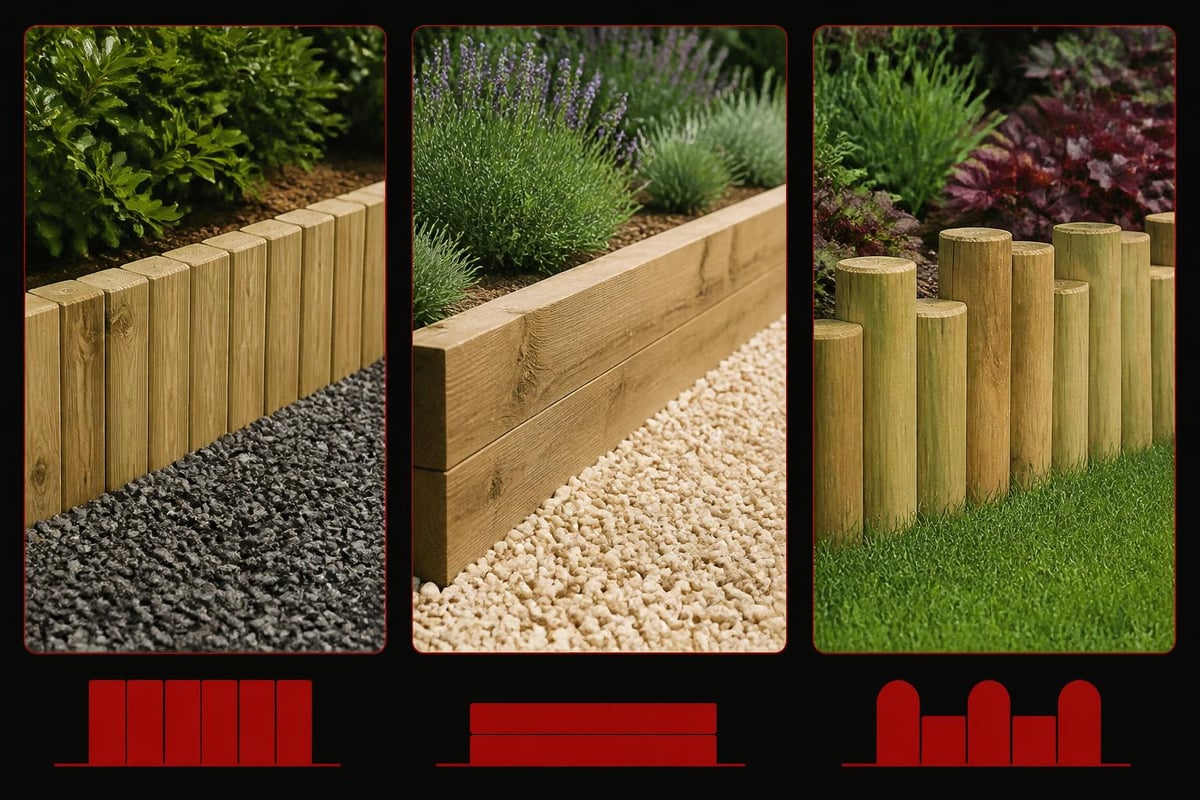
For residential projects, timber kerbing provides an affordable yet attractive solution for defining driveways, pathways and garden beds. Homeowners appreciate the warmth timber brings compared to concrete or stone alternatives.
- Driveway perimeters and edges
- Garden bed separations
- Pathway delineation
- Patio surrounds
- Lawn borders
The versatility of timber allows property owners to achieve professional results whilst maintaining budget consciousness. When properly installed and maintained, timber kerbing can last fifteen to twenty years, making it a cost-effective long-term investment.
Selecting Appropriate Timber Species
Choosing the correct timber species significantly impacts the longevity and performance of kerbing installations. Durability ratings, natural resistance to decay, and compatibility with treatment processes all influence material selection.
Softwood species treated with preservatives offer economical options for many applications. Pressure-treated pine and larch provide adequate durability when properly installed with appropriate drainage considerations. These materials work particularly well for temporary or budget-conscious projects.
Hardwood species deliver superior longevity and structural integrity. Oak, whilst more expensive, offers exceptional resistance to rot and mechanical damage. Sweet chestnut provides similar benefits with natural preservative qualities that reduce chemical treatment requirements.
| Timber Species | Durability Rating | Expected Lifespan | Cost Factor |
|---|---|---|---|
| Pressure-Treated Pine | Moderate | 10-15 years | Low |
| Larch | Good | 15-20 years | Medium |
| Oak | Excellent | 25+ years | High |
| Sweet Chestnut | Excellent | 20-25 years | High |
Treatment and Preservation
Modern preservative treatments enhance timber performance significantly. Tanalised timber, treated through pressure impregnation, offers superior protection against fungal decay and insect attack. This treatment penetrates deep into the wood structure, providing long-lasting protection even when cut or damaged during installation.
Environmental considerations increasingly influence treatment selection. Water-based preservatives provide effective protection whilst minimising environmental impact. These treatments comply with current regulations whilst delivering performance standards suitable for most applications.
Regular maintenance treatments extend timber lifespan considerably. Applying water-repellent finishes according to guidelines for maintaining timber surfaces protects against moisture penetration and weathering. Annual or biennial applications maintain appearance whilst preventing premature degradation.
Installation Techniques and Best Practices
Proper installation forms the foundation of successful timber kerbing projects. Ground preparation, drainage considerations and secure fixing methods determine both immediate appearance and long-term performance.
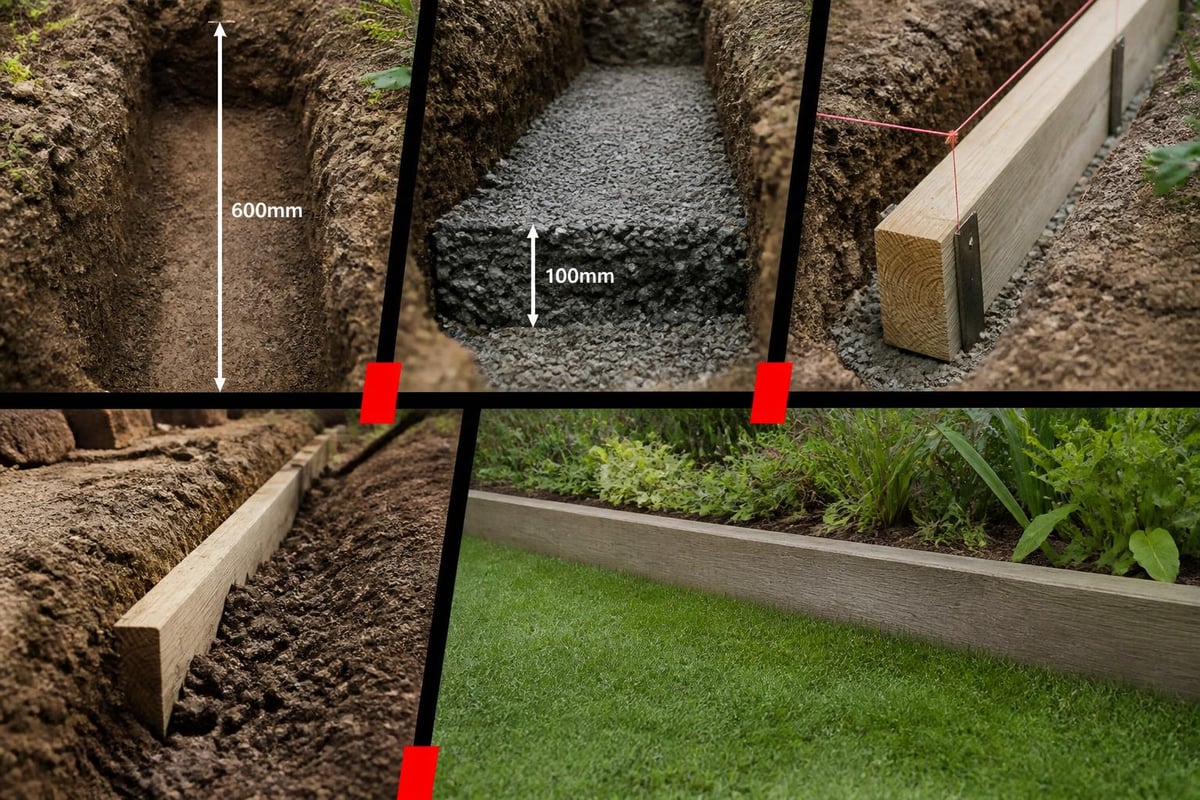
Site preparation begins with excavation to appropriate depths. A minimum depth of 150mm below finished surface level provides adequate stability for most applications. Additional depth may be required for heavy-duty applications or unstable ground conditions.
Foundation and Bedding
Creating a stable foundation ensures timber kerbing remains level and secure throughout its service life. A compacted granular sub-base provides drainage whilst supporting the timber elements against ground movement.
The bedding layer should comprise clean, free-draining material. Sharp sand or fine gravel works effectively, allowing water to drain away from timber surfaces. This drainage reduces moisture exposure, significantly extending material lifespan. The techniques described for timber edging construction provide detailed methodology for achieving professional results.
Compaction of bedding material requires careful attention. Over-compaction creates an impermeable layer that traps moisture, whilst under-compaction allows settlement and misalignment. Achieving the correct balance ensures stability without compromising drainage.
Fixing Methods for Different Applications
Securing timber kerbing appropriately prevents movement whilst accommodating natural timber expansion and contraction. The fixing method selected depends on application requirements, ground conditions and anticipated loading.
Vertical installations typically employ one of three primary fixing approaches:
- Driven stakes positioned at regular intervals behind the kerbing
- Concrete backfill providing rigid support
- Mechanical fixings penetrating into a prepared sub-base
Driven stakes offer flexibility and ease of installation. Treated softwood or hardwood stakes driven at 600mm to 900mm centres provide adequate support for most residential applications. The stakes should penetrate at least 300mm into undisturbed ground below formation level.
Concrete backfill provides maximum stability for heavy-duty applications. A lean-mix concrete haunch cast behind the timber creates rigid support suitable for commercial car parks and roadways. This method requires careful installation to prevent concrete contact with timber faces, which can trap moisture and accelerate decay.
Jointing and Continuity
Creating neat, weathertight joints between timber sections maintains visual appeal and structural integrity. Butt joints work adequately for straight runs but require secure fixing to prevent gapping. Scarfed joints, cut at shallow angles, provide superior appearance and structural continuity.
Curved sections demand special consideration. Building curved timber structures requires either steaming and bending timber or creating segmented curves using shorter sections. The segmented approach proves more practical for most civil engineering applications, with joint frequency increasing as radius decreases.
Drainage Integration and Management
Effective drainage design protects timber kerbing whilst supporting overall project performance. Poorly managed water accelerates timber deterioration and compromises structural stability.
Surface water should drain away from timber faces wherever possible. Grading adjacent surfaces to create positive drainage reduces moisture exposure. Where grading proves impractical, incorporating drainage channels or permeable surfaces helps manage water movement.
Subsurface drainage often proves equally important. French drains positioned behind timber kerbing intercept groundwater before it saturates timber elements. This approach works particularly well for retaining applications or installations in heavy clay soils.
Moisture Protection Strategies
Beyond drainage design, several strategies minimise moisture-related degradation. Creating air gaps between timber and adjacent materials promotes drying between weather events. Applying water-repellent treatments to all surfaces, including cut ends, provides comprehensive protection.
The principles outlined in protecting timber structures from moisture emphasise preventing water ingress rather than managing it after penetration. This preventative approach delivers superior long-term results compared to reactive maintenance strategies.
| Drainage Feature | Primary Function | Maintenance Frequency |
|---|---|---|
| Surface Grading | Direct water away | Annual inspection |
| French Drains | Intercept groundwater | Bi-annual clearance |
| Weep Holes | Release trapped water | Quarterly check |
| Permeable Bedding | Allow water passage | Minimal |
Maintenance Procedures and Schedules
Establishing comprehensive maintenance schedules maximises timber kerbing lifespan whilst maintaining appearance. Regular inspections identify emerging issues before they require costly interventions.
Annual inspections should assess structural integrity, surface condition and drainage performance. Look for signs of decay, insect activity, mechanical damage and movement. Early detection allows targeted repairs that prevent widespread deterioration.
Cleaning timber surfaces removes debris that traps moisture and accelerates degradation. A stiff brush and water suffice for routine cleaning, whilst pressure washing should be avoided as it damages timber fibres. The maintenance guidelines for timber structures provide detailed procedures applicable to kerbing installations.
Surface Treatment Renewal
Refreshing protective coatings maintains weather resistance and appearance. Water-repellent treatments typically require renewal every two to three years depending on exposure conditions. More exposed installations may benefit from annual applications.
Application timing significantly influences treatment effectiveness. Spring and autumn provide ideal conditions, with moderate temperatures and lower humidity allowing proper absorption. Avoid application during freezing conditions or when rain is forecast within twenty-four hours.
Seasonal Considerations and Weather Protection
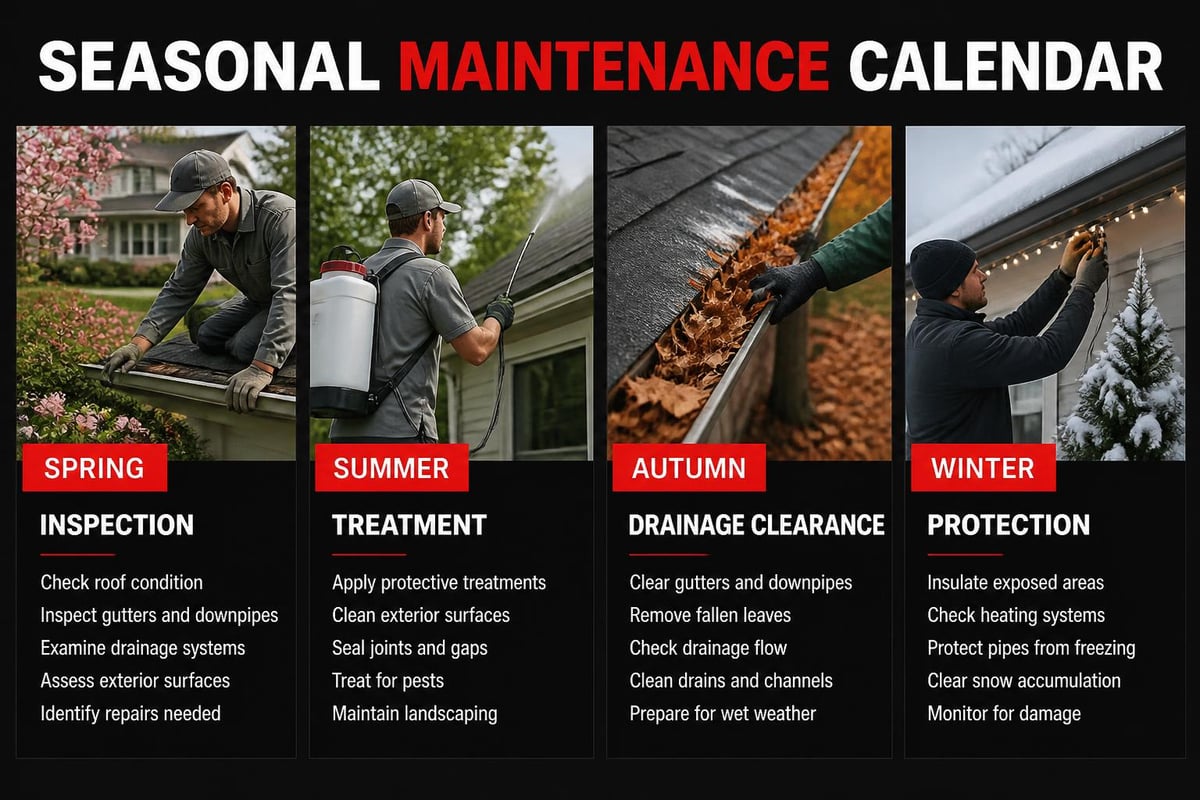
British weather patterns demand specific seasonal maintenance approaches. Winter freeze-thaw cycles, summer UV exposure and autumn leaf accumulation each present distinct challenges requiring targeted responses.
Winter protection focuses on preventing ice damage and managing snow accumulation. Seasonal care for timber kerbing emphasises prompt snow removal to reduce prolonged moisture exposure. Avoid using de-icing salts near timber kerbing, as chlorides accelerate degradation.
Spring inspections assess winter damage and prepare surfaces for summer weather. Repair any splits or cracks that developed during freezing conditions. Remove debris accumulation that may trap moisture against timber surfaces.
Summer and Autumn Management
Summer maintenance focuses on UV protection and moisture management during growth seasons. Vegetation control prevents root penetration and reduces moisture retention against timber faces. Trimming back overhanging plants improves air circulation and reduces shade, both beneficial for timber longevity.
Autumn leaf clearance prevents organic matter accumulation that retains moisture and promotes fungal growth. Regular removal, particularly from horizontal surfaces and drainage features, significantly reduces decay risk. This simple maintenance task delivers disproportionate benefits for minimal effort.
Cost Considerations and Value Engineering
Understanding cost factors enables informed decision-making whilst maintaining quality standards. Material selection, installation complexity and maintenance requirements all influence whole-life costs.
Initial material costs vary considerably between timber species and treatment levels. Pressure-treated softwood represents the most economical option, typically costing £15 to £25 per linear metre including installation. Hardwood alternatives range from £35 to £60 per linear metre depending on species and section sizes.
Installation costs depend on access, ground conditions and project scale. Simple straight runs on prepared ground require minimal labour, whilst complex curved installations or difficult access conditions increase costs proportionally. Professional installation through specialists like JRG Civils ensures compliance with best practices whilst maintaining programme certainty.
Lifecycle Cost Analysis
Evaluating total ownership costs provides clearer value comparisons than initial price alone. A pressure-treated pine installation costing £2,000 with a twelve-year lifespan equates to £167 annually. An oak installation costing £4,000 lasting twenty-five years costs £160 annually whilst requiring less frequent maintenance.
Maintenance costs should include material treatments, inspection time and occasional repairs. Budgeting £50 to £100 annually per project covers typical maintenance requirements for residential installations. Commercial applications may require increased budgets reflecting higher performance standards and more frequent inspections.
Common Failures and Prevention Strategies
Understanding typical failure modes enables preventative design and maintenance approaches. Most timber kerbing failures result from moisture-related decay, inadequate fixing or inappropriate material selection.
Premature decay typically indicates inadequate drainage or insufficient treatment penetration. End grain particularly vulnerable to moisture ingress requires sealing with preservative or end-grain sealer. Cut ends created during installation demand immediate treatment to maintain protection continuity.
Mechanical failures often stem from inadequate fixing or ground movement. Regular inspection of fixings allows early detection of loosening or corrosion. Replacement of failed fixings before complete failure prevents secondary damage to timber elements and adjacent surfaces.
Insect and Fungal Attack
Biological deterioration accelerates when timber remains above twenty per cent moisture content. Maintaining dry conditions through effective drainage and air circulation provides primary defence against both insect and fungal attack.
Secondary protection through preservative treatment offers additional security. Modern water-based preservatives provide effective protection whilst minimising environmental impact. Regular treatment renewal maintains protection levels as surface preservative gradually weathers away.
Integration with Modern Surfacing Systems
Contemporary civil engineering projects increasingly combine traditional timber kerbing with advanced surfacing technologies. Understanding material compatibilities ensures successful integration whilst maximising performance benefits.
Resin-bound and resin-bonded surfaces pair effectively with timber kerbing. The natural aesthetic provides visual warmth complementing these modern materials. Proper edge detailing prevents resin penetration into timber whilst maintaining clean visual lines.
Permeable paving systems benefit particularly from timber kerbing integration. The natural porosity of timber complements permeable surfaces' drainage characteristics. Designing installations to maintain permeability around kerbing elements preserves overall system performance.
Block Paving and Tarmac Applications
Block paving installations utilise timber kerbing to provide flexible edge restraint. The timber's natural give accommodates minor ground movements better than rigid concrete alternatives. This flexibility reduces cracking and displacement in areas subject to settlement or root activity.
Tarmac surfaces require careful detailing where they meet timber kerbing. Creating a slight cant away from timber edges sheds water effectively whilst maintaining clean visual lines. Hot tarmac application demands protection measures preventing timber scorching during laying operations.
Environmental and Sustainability Factors
Timber kerbing offers significant environmental advantages compared to manufactured alternatives. Responsible sourcing, carbon sequestration and end-of-life recyclability contribute to reduced environmental impact across project lifecycles.
Specifying timber from certified sustainable sources ensures forest management meets rigorous environmental and social standards. FSC and PEFC certification schemes provide third-party verification of sustainable practices. British-grown timber reduces transportation emissions whilst supporting domestic forestry industries.
Carbon storage in timber products contributes to climate change mitigation. Each cubic metre of timber kerbing stores approximately one tonne of carbon dioxide, offsetting manufacturing emissions from other project elements. This carbon remains sequestered throughout the product's service life.
End-of-Life Considerations
Proper disposal or repurposing minimises environmental impact when timber kerbing reaches service life end. Untreated or water-based treatment timber can be composted or used as biomass fuel. Older copper-chrome-arsenic treated timber requires specialist disposal but newer preservative systems reduce hazardous waste concerns.
Research into timber reusability after exposure suggests properly maintained structural timber retains significant strength characteristics. Repurposing removed kerbing for less demanding applications extends material utility whilst reducing waste.
Timber kerbing provides versatile, sustainable edge definition for civil engineering projects ranging from residential driveways to commercial developments. Proper material selection, installation techniques and maintenance procedures ensure decades of reliable service whilst maintaining aesthetic appeal. Whether you're planning a new driveway, commercial car park or landscape enhancement project, JRG Civils brings the expertise and attention to detail needed to deliver exceptional results across the North East and throughout the UK.