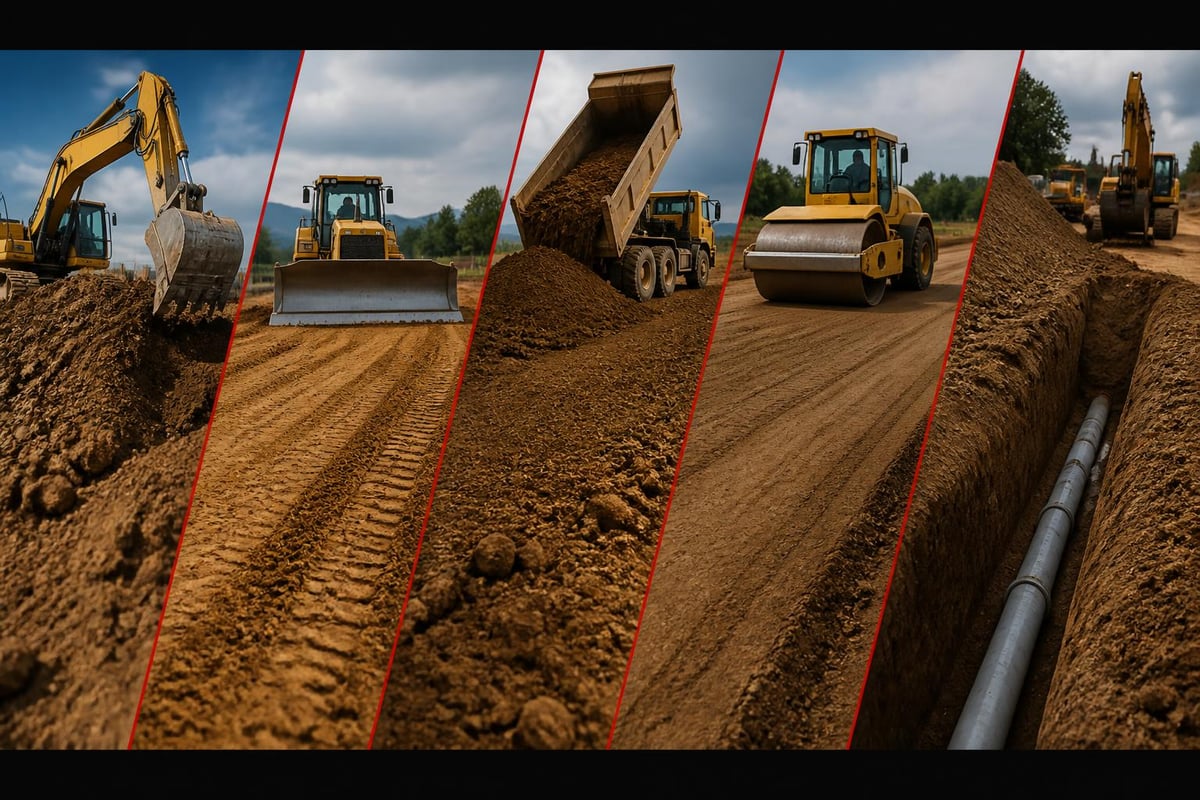
Earth moving work forms the foundational element of virtually every civil engineering and construction project undertaken today. From commercial developments to residential driveways, the process of reshaping terrain, excavating foundations, and preparing sites requires careful planning, specialised equipment, and adherence to rigorous safety standards. Whether you're embarking on a large-scale highway project or a smaller residential patio installation, understanding the complexities and best practices of earth moving work ensures project success, worker safety, and cost efficiency throughout the build process.
Understanding the Scope of Earth Moving Work
Earth moving work encompasses far more than simply shifting soil from one location to another. This comprehensive discipline involves cutting, filling, grading, excavating, and compacting earth materials to prepare construction sites for their intended purpose.
Primary Components of Earth Moving Operations
The fundamental activities within earth moving work include several distinct yet interconnected processes:
- Excavation: Removing earth to create foundations, trenches, or basements
- Grading: Levelling and sloping terrain to ensure proper drainage and site preparation
- Filling: Adding and compacting soil to raise site elevations or backfill excavated areas
- Compaction: Consolidating soil to achieve required density and load-bearing capacity
- Trenching: Creating narrow excavations for utilities, pipelines, or drainage systems
Each of these processes demands specific equipment, techniques, and safety considerations. The various earthmoving methods employed can range from manual techniques for smaller residential projects to heavy machinery for commercial developments.
Site analysis precedes all earth moving work. Professional contractors assess soil composition, water table levels, existing utilities, and environmental constraints before mobilising equipment. This preliminary investigation prevents costly surprises and ensures compliance with local regulations.
Equipment Selection for Modern Earth Moving Work
Choosing appropriate machinery represents a critical decision point that directly impacts project efficiency, safety, and profitability. Modern earth moving work relies on diverse equipment, each designed for specific tasks and site conditions.
| Equipment Type | Primary Application | Ideal Site Conditions |
|---|---|---|
| Excavators | Deep excavation, trenching | Confined spaces, precision work |
| Bulldozers | Pushing, rough grading | Large open areas, heavy materials |
| Graders | Fine grading, road building | Highway work, surface finishing |
| Scrapers | Cut and fill operations | Large-scale earthmoving |
| Compactors | Soil compaction, finishing | All phases requiring densification |
The selection process considers project scale, terrain characteristics, material types, and access constraints. For residential driveways and patios, smaller equipment such as mini-excavators and skid steer loaders often proves most practical. Commercial projects like drive-through facilities demand larger machinery capable of moving substantial volumes efficiently.
Matching Machinery to Project Requirements
Experienced civil engineering contractors evaluate several factors when assembling equipment fleets for earth moving work:
- Material characteristics: Clay, sand, rock, or mixed soils each require different approaches
- Distance of haul: How far excavated material must be transported
- Production rates: Volume of earth to be moved within specified timeframes
- Site accessibility: Width restrictions, overhead clearances, and ground bearing capacity
- Environmental considerations: Noise limitations, emission standards, and protected areas
The safety considerations for excavators and other earth-moving machinery cannot be overstated. Proper equipment selection minimises operational risks whilst maximising productivity across all phases of civil engineering projects.
Safety Protocols and Regulatory Compliance
Safety remains paramount throughout all earth moving work operations. The construction industry's commitment to protecting workers, the public, and property has driven the development of comprehensive safety standards and training requirements.
Operator Training and Certification
Competent operation of earth-moving equipment requires extensive training beyond simply learning to control machinery. Professional operators understand:
- Load capacity limits and stability principles
- Ground conditions and their impact on safe operation
- Proximity hazards including utilities, structures, and personnel
- Emergency procedures and equipment shutdown protocols
- Daily inspection requirements and maintenance awareness
Safety requirements for operating mobile earth-moving equipment mandate structured training programmes that combine classroom instruction with supervised practical experience. These regulations ensure operators possess both theoretical knowledge and hands-on competence before working independently.

Site-Specific Safety Planning
Each earth moving work project demands customised safety planning that addresses unique site hazards:
- Underground utilities: Locating and marking gas, electric, water, and telecommunications infrastructure
- Overhead hazards: Identifying power lines, bridges, and other overhead obstructions
- Soil stability: Assessing trench collapse risks and implementing appropriate shoring
- Traffic management: Protecting workers and the public in active roadway environments
- Weather considerations: Monitoring conditions that affect visibility, traction, and soil behaviour
The material handling equipment standards outlined in federal regulations establish minimum safety requirements, including seat belt usage, rollover protection, and operational protocols. Responsible contractors exceed these minimums, implementing comprehensive safety cultures that prioritise prevention.
Project Planning and Site Preparation
Successful earth moving work begins long before the first excavator arrives on site. Thorough planning transforms complex projects into manageable sequences of coordinated activities.
Pre-Construction Site Assessment
Professional civil engineers conduct detailed surveys that inform every subsequent decision:
- Topographical surveys: Establishing existing ground levels and contours
- Geotechnical investigations: Testing soil bearing capacity, composition, and stability
- Hydrological studies: Mapping groundwater levels and drainage patterns
- Environmental assessments: Identifying protected species, contaminated land, and conservation areas
- Utility surveys: Locating and recording existing underground and overhead services
This data enables engineers to design efficient earth moving work strategies that minimise material waste, reduce equipment movements, and accelerate project timelines. The balance between cut and fill operations often determines project economics, with optimal designs achieving near-equilibrium between excavation and placement.
Material Management Strategies
Efficient earth moving work requires careful planning of material handling:
| Strategy | Application | Benefits |
|---|---|---|
| On-site reuse | Suitable excavated material | Eliminates transport costs, reduces waste |
| Stockpiling | Phased construction projects | Provides material for later phases |
| Off-site disposal | Unsuitable or excess material | Ensures site compliance, enables progress |
| Imported fill | Sites requiring additional material | Achieves design levels, ensures quality |
Whether working on residential projects or commercial developments, contractors must coordinate material movements with construction sequences to maintain productivity whilst controlling costs.
Environmental Considerations and Sustainable Practices
Modern earth moving work increasingly incorporates environmental stewardship alongside traditional engineering objectives. Responsible contractors implement measures that protect ecosystems, minimise pollution, and reduce carbon footprints.
Erosion and Sediment Control
Exposed earth from excavation and grading operations becomes vulnerable to erosion, particularly during wet weather. Sediment runoff pollutes watercourses and damages aquatic habitats. Effective controls include:
- Silt fencing: Barriers that filter sediment from surface water runoff
- Sediment basins: Temporary ponds that allow particles to settle before discharge
- Stabilisation: Rapid revegetation or mulching of exposed soils
- Diversion: Channels that redirect clean water around disturbed areas
- Scheduling: Timing earth moving work to avoid sensitive periods
These measures protect both the environment and project budgets by preventing regulatory violations and cleanup costs. Professional contractors integrate erosion control into initial site planning rather than treating it as an afterthought.
Waste Minimisation and Resource Efficiency
Progressive earth moving work embraces circular economy principles:
- Segregating topsoil for reuse in landscaping rather than disposal
- Crushing concrete and masonry for use as aggregate base materials
- Processing clay soils for use in landscaping and noise bunds
- Recycling asphalt planings in new surfacing applications
- Recovering timber and metals from demolition for recycling streams
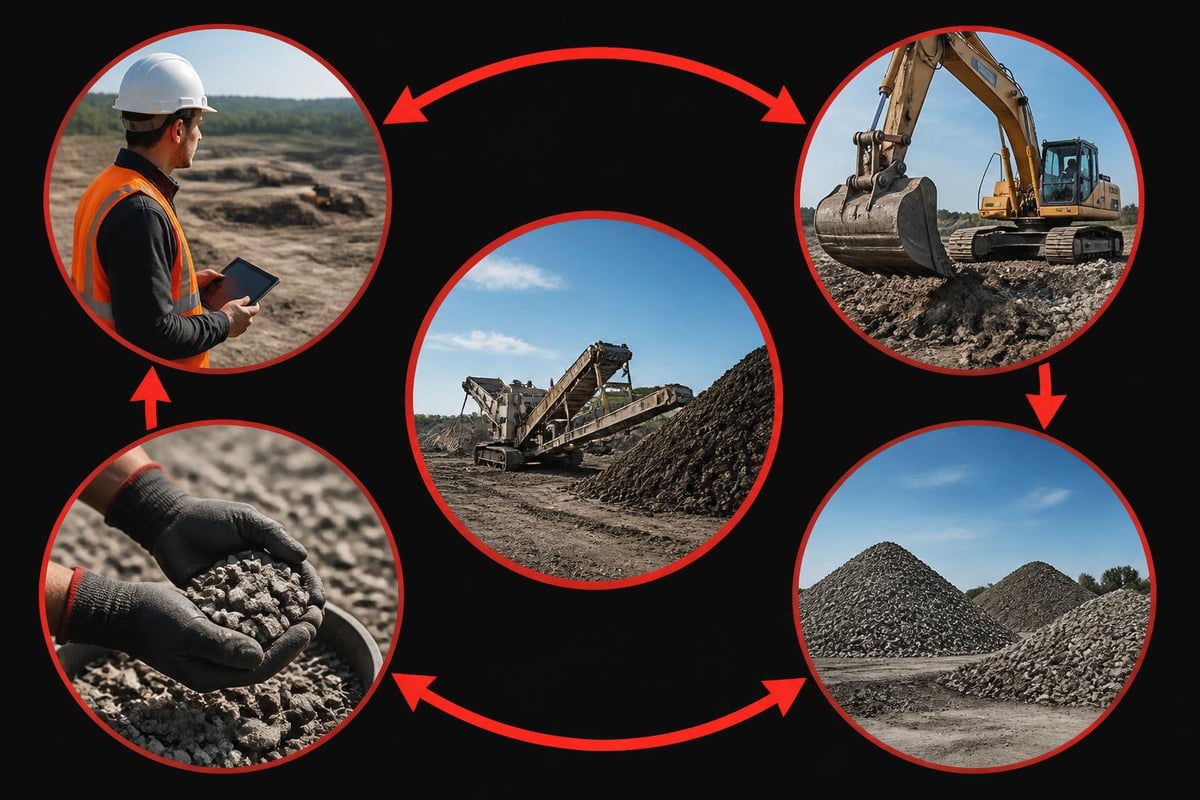
These practices reduce landfill levies, lower material procurement costs, and demonstrate corporate environmental responsibility. They're particularly relevant for highway surfacing and commercial developments where material volumes are substantial.
Quality Control and Specification Compliance
Earth moving work must meet exacting standards that ensure long-term performance of constructed infrastructure. Quality control begins with understanding project specifications and continues through systematic testing and documentation.
Compaction and Density Testing
Proper soil compaction provides the stable foundation upon which all subsequent construction relies. Inadequate compaction leads to settlement, cracking, and structural failure. Testing protocols include:
- Pre-construction baseline testing: Establishing natural soil characteristics
- Layer-by-layer verification: Testing each compacted lift before proceeding
- Nuclear density gauges: Rapid field testing of moisture content and density
- Proof rolling: Using loaded vehicles to identify soft spots
- Plate bearing tests: Assessing load-bearing capacity of prepared surfaces
Professional contractors maintain detailed records demonstrating compliance with specified compaction levels, typically 95% to 100% of maximum dry density depending on application. These records protect all parties by documenting that earth moving work meets design requirements.
Material Testing and Certification
Not all soil proves suitable for every application. Testing programmes verify that materials possess required characteristics:
| Test Type | Purpose | Critical Applications |
|---|---|---|
| Particle size distribution | Classifying soil type | All structural fills |
| Atterberg limits | Assessing plasticity | Clay-rich materials |
| California Bearing Ratio | Measuring strength | Road subgrades |
| Sulphate content | Identifying contamination | Areas with concrete |
| Organic content | Detecting unsuitable material | All engineered fills |
These tests inform decisions about material acceptance, treatment requirements, and appropriate uses within earth moving work projects. They're essential for highway construction, commercial foundations, and any application requiring long-term structural integrity.
Commercial Applications and Large-Scale Projects
Earth moving work for commercial developments presents unique challenges that demand comprehensive planning, substantial resources, and coordinated logistics. Projects such as drive-through restaurants, retail centres, and industrial facilities require extensive site preparation.
Multi-Phase Site Development
Large commercial projects typically unfold across several phases:
- Demolition and clearance: Removing existing structures and vegetation
- Bulk earthworks: Major cutting and filling to achieve design levels
- Drainage installation: Placing underground pipes, chambers, and soakaways
- Service corridors: Excavating trenches for utilities and communications
- Subgrade preparation: Achieving specified compaction for pavements
- Base construction: Placing and compacting stone aggregate layers
Each phase builds upon previous work, making sequencing critical to project success. Delays in earth moving work cascade through subsequent trades, affecting overall completion dates and costs. Experienced contractors maintain buffer capacity and contingency plans to address unexpected conditions.
Coordination with Stakeholders
Complex earth moving work demands coordination among diverse parties:
- Design teams: Engineers, architects, and specialist consultants
- Statutory authorities: Highways departments, environmental agencies, and utilities
- Adjacent property owners: Managing impacts on neighbouring sites
- Subcontractors: Coordinating follow-on trades and specialist services
- Client representatives: Maintaining communication regarding progress and variations
The operational requirements for haulage and earth-moving equipment establish frameworks that protect all stakeholders whilst enabling efficient project delivery. Professional contractors excel at navigating these complex relationships whilst maintaining focus on quality outcomes.
Residential Earth Moving Work Considerations
While commercial projects often dominate discussions, residential earth moving work represents a significant sector requiring equal professionalism and attention to detail. Driveways, patios, garden landscaping, and home extensions all depend upon proper site preparation.
Scale-Appropriate Equipment and Techniques
Residential projects benefit from:
- Compact machinery that minimises ground disturbance and site impact
- Precision excavation that preserves existing landscaping and structures
- Reduced noise and vibration to maintain good neighbour relations
- Flexible scheduling that accommodates homeowner preferences
- Attention to finishing details that enhance property aesthetics
Homeowners selecting contractors for earth moving work should prioritise experience with similar projects, verified references, and comprehensive insurance coverage. The smallest driveway project deserves the same systematic approach as major commercial developments.
Integration with Landscaping and Drainage
Residential earth moving work rarely exists in isolation. Successful projects integrate multiple elements:
- Surface drainage: Ensuring water flows away from buildings and structures
- Subsurface drainage: Installing land drains where groundwater presents challenges
- Retaining features: Constructing walls to manage level changes safely
- Planting areas: Preserving or creating topsoil zones for gardens
- Access routes: Maintaining or establishing pathways during construction
Professional contractors consider the entire property when planning earth moving work, recognising that decisions made during excavation and grading affect aesthetics, functionality, and long-term maintenance requirements.
Technology and Innovation in Earth Moving Work
The earth moving sector continues evolving through technological advancement that improves precision, efficiency, and safety. Modern projects increasingly leverage digital tools that transform traditional practices.
GPS Machine Guidance Systems
Three-dimensional machine control systems revolutionise how operators execute earth moving work:
- Excavators and dozers work directly from digital design models
- Real-time positioning shows exact blade or bucket location relative to design surfaces
- Automated depth control reduces over-excavation and material waste
- Productivity increases through reduced staking and checking requirements
- Quality improves through consistent achievement of design tolerances
These systems prove particularly valuable for highway work and large commercial projects where precision directly impacts material costs and project schedules. Whilst initial investment remains substantial, productivity gains justify adoption for contractors undertaking significant earth moving work volumes.
Digital Site Documentation
Modern earth moving work generates comprehensive digital records:
- Drone surveys: Rapid volumetric measurements and progress monitoring
- Photogrammetry: Creating three-dimensional site models from photographs
- Digital compliance records: Electronically signed test results and inspection reports
- BIM integration: Linking earth moving work with overall project models
- Automated reporting: Real-time dashboards showing productivity and costs
This digital transformation enhances transparency, facilitates collaboration, and creates permanent records that protect all project stakeholders. It represents the future of professional earth moving work across all project scales.
Choosing Professional Earth Moving Contractors
Selecting qualified contractors determines project outcomes more than any other single decision. Whether planning commercial development or residential improvements, certain criteria separate professional operators from inadequate alternatives.
Essential Contractor Qualifications
Reputable earth moving work contractors demonstrate:
- Relevant experience: Proven track record with similar project types and scales
- Appropriate insurance: Comprehensive public liability and employer's liability coverage
- Equipment resources: Well-maintained modern machinery suitable for proposed work
- Safety credentials: Documented safety management systems and training records
- Financial stability: Capacity to resource projects and weather unforeseen challenges
References from previous clients provide invaluable insights into contractor reliability, communication quality, and problem-solving capabilities. Site visits to completed projects reveal finishing standards and attention to detail that specifications alone cannot capture.
Understanding Quotations and Contracts
Professional earth moving work quotations specify:
| Element | Details Required |
|---|---|
| Scope definition | Precise description of work included and excluded |
| Material handling | Disposition of excavated material, sources of imported fill |
| Programme | Anticipated durations, key milestones, and dependencies |
| Pricing structure | Unit rates, lump sums, provisional quantities clearly identified |
| Quality standards | Specifications, testing requirements, certification |
Whilst price matters, selection based solely on lowest cost frequently proves false economy. Professional contractors price work realistically based on proper understanding of requirements and commitment to quality delivery. They maintain the resources, expertise, and insurance protection that projects demand.
Long-Term Performance and Maintenance
Well-executed earth moving work provides stable foundations that perform reliably for decades. However, understanding long-term behaviour helps property owners and facility managers anticipate normal settlement patterns and identify potential problems early.
Settlement Expectations
All earth moving work experiences some settlement as materials consolidate under loading and environmental cycles:
- Immediate settlement: Elastic compression occurring during construction
- Primary consolidation: Gradual compression as pore water expresses from fine-grained soils
- Secondary compression: Very long-term creep in organic or highly plastic materials
Properly compacted engineered fills typically experience minimal problematic settlement. Excessive movement suggests inadequate compaction, unsuitable materials, or unforeseen subsurface conditions. Professional contractors specify and achieve appropriate compaction levels that minimise post-construction movement.
Ongoing Maintenance Considerations
Surfaces constructed over earth moving work require periodic attention:
- Drainage maintenance: Keeping channels, gullies, and pipes clear of debris
- Surface repairs: Addressing minor cracks or settlement before they expand
- Vegetation control: Managing growth that might affect drainage or stability
- Erosion monitoring: Inspecting and maintaining protective measures
- Load management: Avoiding concentrated loads exceeding design assumptions
Understanding that construction represents the beginning rather than the end of a structure's life cycle informs better decision-making during earth moving work specification and execution.
Earth moving work underpins successful civil engineering projects of every scale, from expansive highway networks to intimate residential patios. The combination of proper planning, appropriate equipment selection, rigorous safety protocols, and quality-focused execution ensures that earthworks provide stable, long-lasting foundations for the infrastructure we depend upon daily. Whether you're planning a commercial development, highway improvement, or residential driveway project, JRG Civils brings the expertise, equipment, and commitment to excellence that transforms earth moving work from routine construction activity into the solid foundation for your project's success.