
Driveway curb stones serve as the essential boundary that defines the edge of your driveway whilst providing structural integrity and aesthetic appeal. These robust edging elements have evolved from purely functional components into design features that significantly enhance property value and curb appeal. Whether you're planning a new driveway installation or upgrading an existing surface, understanding the role and selection of appropriate curb stones represents a critical decision that affects both the longevity and appearance of your investment.
Understanding the Purpose of Driveway Curb Stones
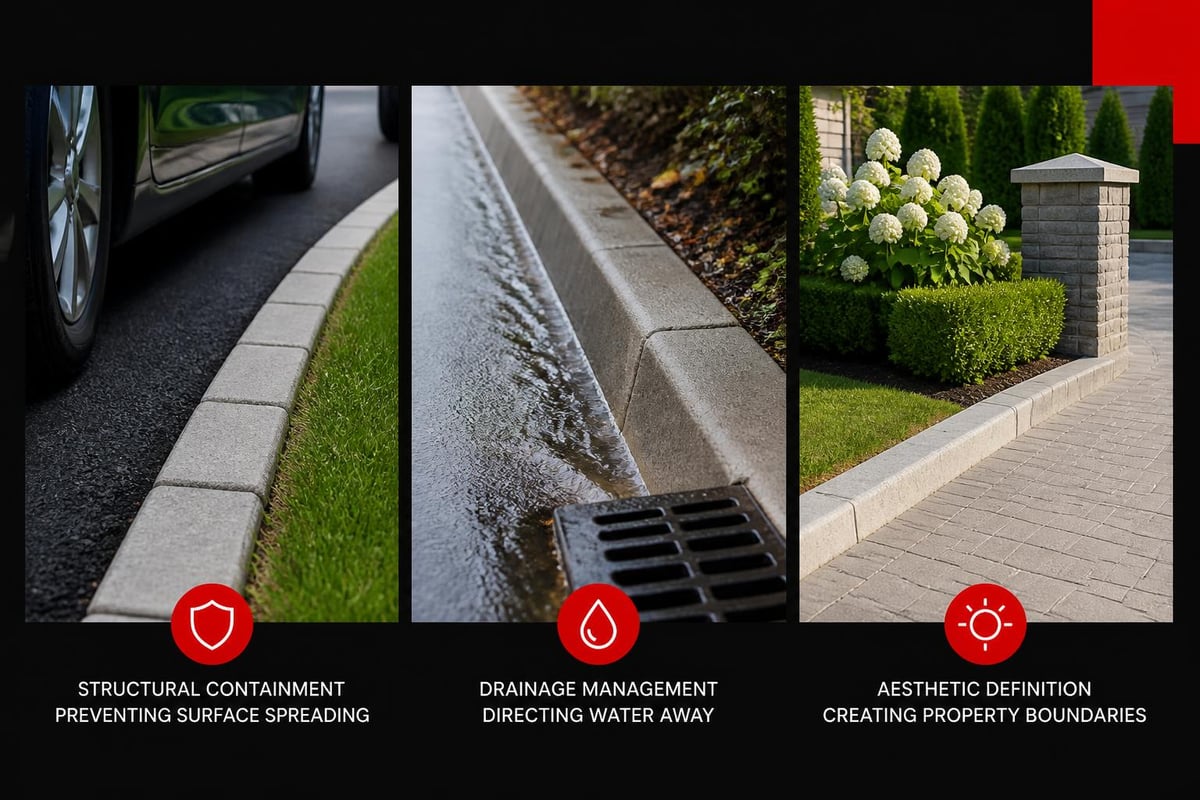
Driveway curb stones perform multiple essential functions that extend beyond simple aesthetics. Structural containment stands as their primary role, preventing the lateral movement of paving materials and maintaining the integrity of the driveway surface over time. Without proper edging, asphalt, block paving, or resin-bound surfaces gradually spread and deteriorate at the edges, leading to costly repairs.
These boundary stones also provide crucial drainage management. By creating a defined edge, they direct water runoff away from the driveway surface and prevent erosion of the base materials beneath. This drainage function proves particularly vital in the UK climate, where persistent rainfall can quickly undermine inadequately protected driveway installations.
Aesthetic and Property Value Benefits
The visual impact of well-chosen curb stones cannot be understated. They create clean, professional lines that frame your driveway and complement your property's architectural style. When selecting natural stone options for driveways, the edging treatment often determines whether the overall appearance reads as premium or pedestrian.
Property valuations increasingly reflect quality landscaping details, with professional curb stone installation adding measurable value. Estate agents consistently report that properties with well-defined driveways and professional edging command higher asking prices and sell more quickly than comparable properties with poorly maintained or undefined driveway boundaries.
Material Options for Driveway Curb Stones
Selecting the appropriate material for your driveway curb stones requires balancing durability, aesthetics, budget, and compatibility with your existing surfaces. The market offers numerous options, each with distinct characteristics.
Natural Stone Curbing
Granite remains the gold standard for driveway edging, offering unparalleled durability and a premium appearance. Its resistance to weathering, chemical exposure, and mechanical stress makes it ideal for high-traffic applications. Granite curb stones typically measure 150mm x 300mm in cross-section, providing substantial presence and stability.
Sandstone delivers a softer, more traditional aesthetic that complements period properties and rural settings. Whilst less dense than granite, quality sandstone provides excellent service life when properly installed. The natural variation in colour and texture adds character to driveway installations.
Limestone curb stones offer a middle ground between granite's hardness and sandstone's warmth. Understanding landscaping curb stone options helps identify which limestone varieties suit specific applications, with harder varieties performing admirably in demanding installations.
Manufactured Curbing Solutions
Concrete curb stones provide cost-effective performance with consistent dimensions and predictable characteristics. Modern manufacturing techniques produce concrete edging that mimics natural stone whilst offering superior uniformity for large-scale projects. These prove particularly suitable for commercial applications where budget constraints and installation efficiency matter.
Advantages of concrete curbing:
- Consistent dimensions simplify installation
- Lower material costs suit budget-conscious projects
- Predictable performance characteristics
- Wide availability across the UK
- Reduced transportation costs compared to natural stone
Reconstituted stone combines natural stone aggregates with binding agents, creating products that bridge the gap between natural and manufactured options. These curb stones capture much of natural stone's aesthetic appeal whilst offering improved consistency and often lower costs.
Design Considerations and Style Selection
The design of your driveway curb stones should harmonise with both the driveway surface material and your property's architectural character. Choosing the right driveway materials involves considering how edging treatments integrate with overall design objectives.
Matching Curb Stones to Driveway Surfaces
| Driveway Surface | Recommended Curb Stone | Design Rationale |
|---|---|---|
| Block paving | Matching or contrasting blocks | Creates cohesive appearance or bold definition |
| Resin-bound | Natural stone or coloured concrete | Provides necessary containment with visual interest |
| Tarmac/Asphalt | Granite or concrete | Durable edge withstands mechanical stress |
| Gravel | Substantial stone or timber sleepers | Prevents gravel migration effectively |
Contemporary properties benefit from clean-lined, minimal curbing using uniform materials and straight runs. Traditional homes often suit more substantial, textured curb stones that echo historical construction methods. Rural properties can embrace natural stone with rustic finishes, whilst urban settings may demand sleek, engineered solutions.
Profile and Finish Options
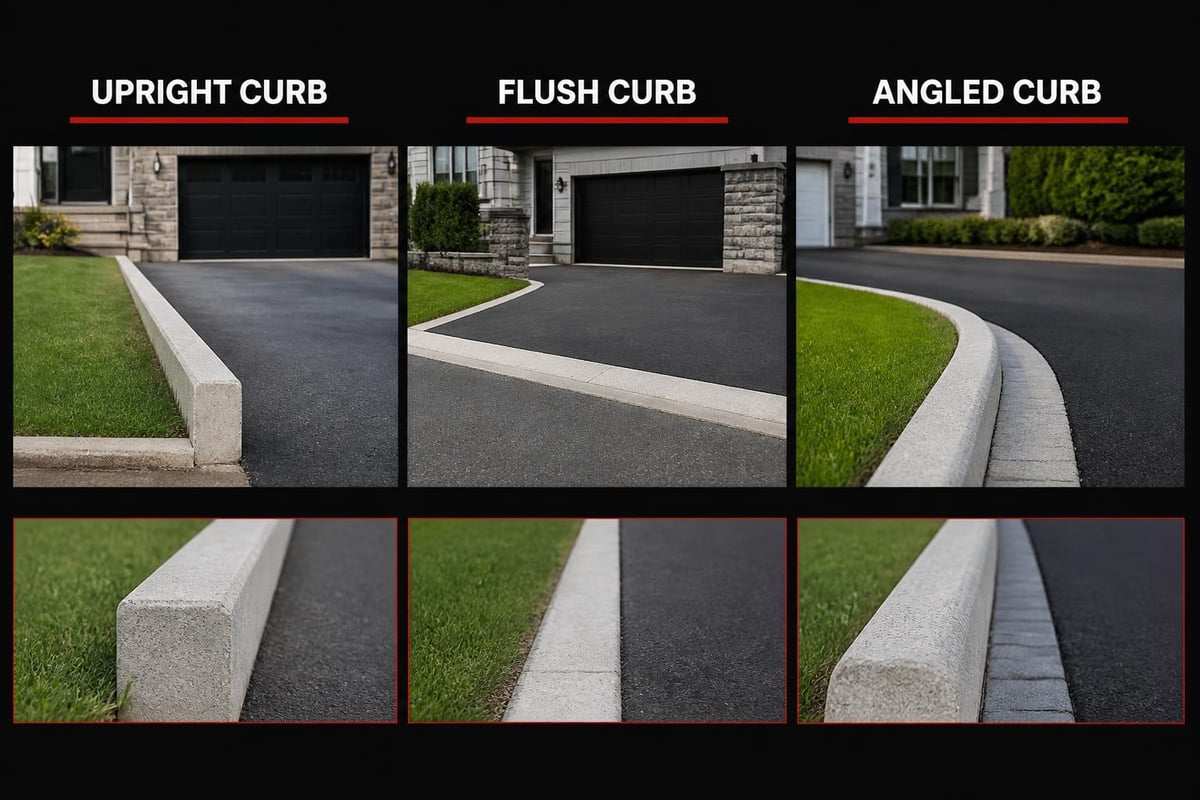
The profile of your driveway curb stones affects both functionality and appearance. Upright kerbs project above the driveway surface, creating a distinct barrier that's particularly effective for containing loose materials like gravel. This traditional profile suits period properties and applications requiring strong visual definition.
Flat-top or flush curbing sits level with the driveway surface, creating a more subtle boundary that accommodates vehicle wheels crossing the edge. This profile works well for modern designs and situations where visual minimalism takes precedence.
Surface finishes range from polished (formal, reflective) to flamed (textured, non-slip) to sawn (smooth, contemporary). Professional installation guidance for kerbs emphasises matching finish to usage patterns and aesthetic objectives.
Installation Methods and Best Practices
Proper installation represents the difference between curb stones that perform reliably for decades and those that fail within years. Professional civil engineering expertise ensures installations meet both aesthetic and functional requirements through attention to foundation preparation, alignment, and securing methods.
Foundation and Base Preparation
Excavation depth typically reaches 300-400mm below finished surface level for driveway curb stones, though site-specific conditions may require adjustments. This depth accommodates:
- Compacted sub-base material (150-200mm Type 1 crushed stone)
- Concrete haunching bed (100-150mm)
- The curb stone itself
- Allowance for proper setting and alignment
The sub-base must achieve thorough compaction using mechanical equipment. Hand tamping proves insufficient for installations subject to vehicular loading. Moisture content during compaction significantly affects density, with materials at optimum moisture achieving superior load-bearing capacity.
Concrete Haunching and Bedding
Concrete haunching provides the primary support and restraint for driveway curb stones. A typical mix ratio uses 1 part cement to 6 parts combined aggregate (3:1 sand to gravel ratio), creating concrete strong enough to resist movement whilst remaining workable during installation.
The haunching should extend to two-thirds the height of the curb stone and project 100-150mm behind it. This configuration creates a substantial buttress preventing backwards displacement under vehicle impact or lateral soil pressure. Front haunching typically extends to one-third height, maintaining alignment without creating an obstacle.
| Installation Component | Specification | Purpose |
|---|---|---|
| Sub-base depth | 150-200mm Type 1 | Load distribution and drainage |
| Concrete bed | 100-150mm | Level setting surface |
| Rear haunching | 2/3 curb height, 100mm width | Primary restraint |
| Front haunching | 1/3 curb height | Alignment maintenance |
| Joint spacing | 10mm maximum | Accommodation of minor movement |
Alignment and Level Control
Professional installation demands rigorous attention to alignment and level. String lines establish both horizontal and vertical references, with frequent checking ensuring consistent results. Driveway curb stones set out of alignment create visual distraction and may compromise drainage function.
Cross-fall (the slope across the driveway width) typically ranges from 1:40 to 1:60, directing water towards edges and drainage points. Curb stones must accommodate this gradient whilst maintaining their own consistent reveal height above the finished driveway surface.
Drainage Integration and Water Management
Effective drainage represents a critical consideration when installing driveway curb stones. The interaction between edging, surface water, and surrounding landscaping determines whether your installation remains stable or suffers from water-related deterioration.
Surface Water Direction
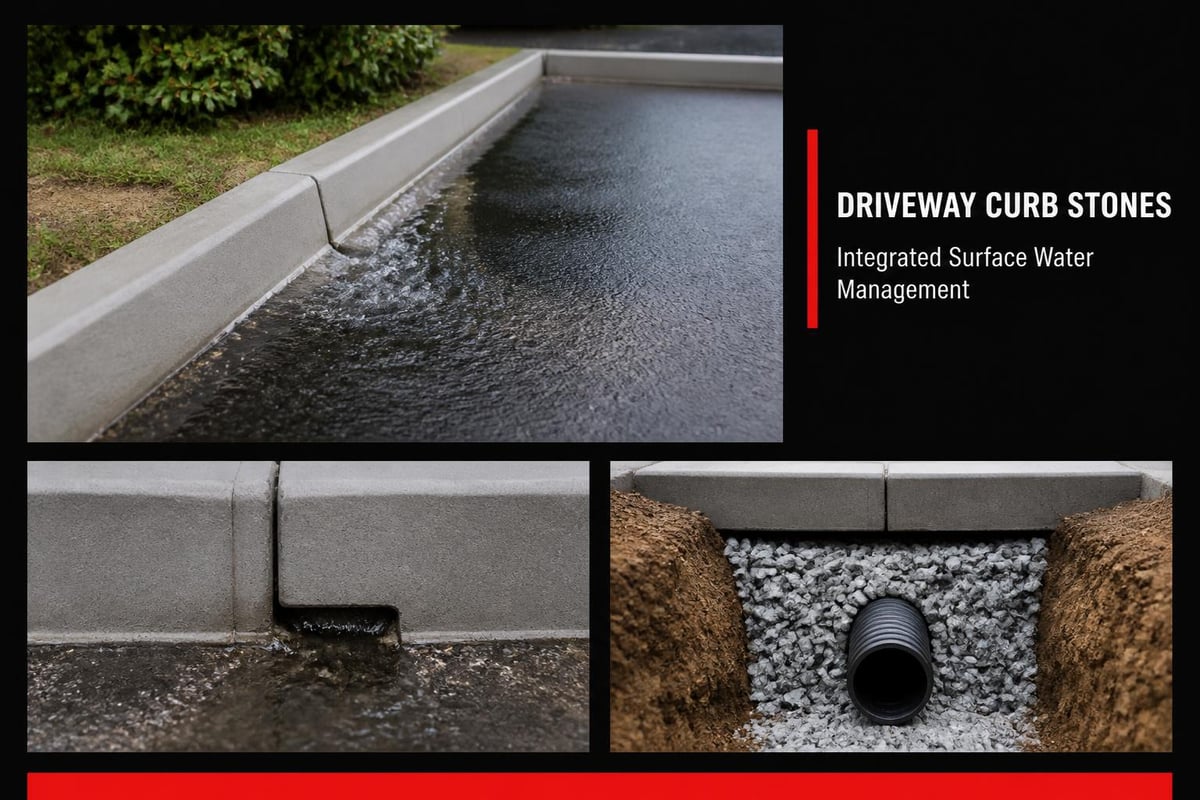
Driveway curb stones must work in conjunction with the overall drainage strategy. Positive drainage requires that water moves away from buildings and doesn't pool on the driveway surface. The curb height and positioning influence how effectively surface water reaches drainage points.
Contemporary installations increasingly incorporate permeable paving systems that allow water infiltration. When using modern paver designs and patterns, curb stones may need modification to accommodate sub-surface drainage requirements whilst maintaining surface containment.
Some installations benefit from drainage gaps integrated into the curb stone run, allowing controlled water passage to planted areas or drainage systems. These gaps require careful design to prevent erosion whilst facilitating necessary water movement.
Managing Ground Water and Stability
French drains positioned behind curb stones address groundwater that might otherwise undermine foundations or create hydrostatic pressure. These consist of perforated pipes surrounded by free-draining aggregate, conducting water away from critical areas.
Clay soils common throughout much of the UK expand when wet and shrink when dry, creating movement that can displace poorly founded curb stones. Adequate sub-base depth, proper compaction, and drainage measures combat these challenging ground conditions.
Maintenance and Long-Term Care
Whilst quality driveway curb stones installed to professional standards require minimal maintenance, some periodic attention ensures optimal performance and appearance throughout their service life. Understanding maintenance requirements during the selection process helps make informed material choices.
Cleaning and Stain Removal
Natural stone curb stones develop character through weathering but may require cleaning to remove specific stains or biological growth. Pressure washing effectively removes surface dirt and algae, though excessive pressure or improper technique can damage softer stones or erode joint material.
- Use appropriate pressure settings (typically 1500-2000 PSI for stone)
- Maintain adequate distance (300mm minimum)
- Apply cleaning solutions suitable for the stone type
- Rinse thoroughly to prevent chemical residue
- Consider applying sealants after cleaning sandstone or limestone
Chemical cleaners must match the stone type. Acidic cleaners suit concrete but can etch limestone or marble. Alkaline cleaners work well for oil stains but may discolour some natural stones. Always test cleaning products on inconspicuous areas before general application.
Joint Maintenance and Repointing
Joint material between individual curb stones requires periodic inspection and maintenance. Weathering, vehicle impact, or ground movement can cause joint degradation, potentially allowing curb stone displacement. Repointing involves removing deteriorated material and installing fresh mortar or suitable pointing compound.
Modern jointing products include resin-based compounds that offer improved flexibility and weather resistance compared to traditional cement mortar. These prove particularly valuable in areas subject to temperature extremes or high traffic volumes.
Addressing Settlement and Movement
Minor settlement commonly occurs during the first year following installation as materials consolidate under loading. Relevelling may prove necessary if this settlement becomes visually apparent or affects drainage function. Professional contractors can lift and reset curb stones, adding or compacting base material as required.
Significant movement or displacement typically indicates foundation inadequacy or drainage problems requiring more substantial remedial work. Early intervention prevents progressive failure that might necessitate complete curb stone replacement.
Cost Considerations and Budget Planning
Understanding the financial investment required for quality driveway curb stones helps establish realistic project expectations and guides material selection. Costs vary significantly based on material choice, installation complexity, and project scale.
Material Cost Comparison
| Material Type | Typical Cost per Linear Metre | Durability Rating | Aesthetic Appeal |
|---|---|---|---|
| Concrete (plain) | £15-25 | Good (50+ years) | Functional |
| Concrete (decorative) | £25-40 | Good (50+ years) | Moderate |
| Reconstituted stone | £35-55 | Very Good (75+ years) | High |
| Natural sandstone | £55-85 | Very Good (75+ years) | Very High |
| Natural granite | £75-120 | Excellent (100+ years) | Premium |
These figures represent materials only. Professional installation typically adds £30-60 per linear metre depending on access, ground conditions, and specification requirements. Complex installations involving radius curves or intricate detailing command premium rates reflecting increased labour requirements.
Balancing Quality and Budget
Value engineering doesn't necessarily mean choosing the cheapest option. Granite curb stones costing twice as much as concrete equivalents but lasting three times as long represent superior long-term value. Similarly, proper installation adds cost but prevents expensive remedial work.
Commercial projects often justify premium materials and installation through reduced lifecycle costs and enhanced property presentation. Residential installations might balance material costs with installation quality, perhaps specifying natural stone for visible frontage areas whilst using concrete for less prominent sections.
Commercial Applications and Large-Scale Projects
Driveway curb stones feature prominently in commercial developments, where they manage significant traffic volumes whilst contributing to site aesthetics and functionality. The commercial sector demands materials and installation methods that accommodate intensive use and facilitate efficient construction.
High-Traffic Considerations
Durability becomes paramount in commercial applications. Car parks, delivery areas, and access roads subject curb stones to repeated vehicle impact, substantial loading, and potential chemical exposure from fuel or de-icing products. Granite and high-strength concrete typically suit these demanding applications.
Commercial specifications often require greater dimensions than residential installations, with 200mm x 300mm or even larger cross-sections providing increased stability and impact resistance. These substantial curb stones better withstand the forces generated by delivery vehicles, refuse trucks, and other heavy equipment.
Design Cohesion in Development Projects
Large-scale developments benefit from coordinated curbing approaches that create visual unity whilst addressing varied functional requirements. Modern driveway landscaping with pavers demonstrates how consistent edging treatments tie together diverse paved areas.
Radius curbing at junctions, entrances, and turning areas requires careful planning and often custom fabrication. These curved sections guide traffic flow whilst maintaining aesthetic consistency with straight curb runs. Manufacturing tolerances and installation techniques must accommodate the geometric complexity of radius work.
Working with experienced civil engineering contractors ensures commercial curb stone installations meet both immediate functional requirements and long-term performance expectations. Projects ranging from drive-through restaurants to retail car parks demand expertise in managing complex specifications, coordinating with other trades, and delivering on schedule.
Environmental and Sustainability Factors
Contemporary construction increasingly emphasises environmental responsibility, with driveway curb stones contributing to or detracting from sustainability objectives depending on material choices and installation approaches. Understanding these factors helps make environmentally conscious decisions.
Material Sourcing and Carbon Impact
Local sourcing significantly reduces the carbon footprint associated with driveway curb stones. UK-quarried stone eliminates international shipping whilst supporting domestic industry. However, local availability varies by region, sometimes making imported materials the practical choice.
Natural stone represents a non-renewable resource extracted through energy-intensive quarrying. However, its exceptional durability and potential for reclamation at end-of-life offset initial environmental costs. Many architectural salvage yards supply reclaimed stone curbing that embodies the ultimate in circular economy principles.
Concrete production generates substantial carbon emissions through cement manufacture. Low-carbon concrete formulations incorporating supplementary cementitious materials like ground granulated blast-furnace slag (GGBS) or pulverised fuel ash (PFA) reduce embodied carbon whilst maintaining performance characteristics suitable for curb stone applications.
Permeable Systems and Water Quality
Sustainable drainage systems (SuDS) increasingly feature in modern developments, managing surface water through infiltration rather than rapid runoff. Driveway curb stones can integrate with permeable paving systems, containing surfaces whilst allowing water movement to underlying drainage structures.
These systems improve water quality by filtering pollutants through aggregate and soil layers before water enters natural water courses. Properly designed permeable installations with appropriate curb stone detailing contribute to flood prevention whilst recharging groundwater resources.
Regional Variations and Local Considerations
The UK's geological and climatic diversity influences both material availability and performance requirements for driveway curb stones. Understanding regional factors helps specify appropriate solutions that perform reliably in local conditions.
Climate and Weather Patterns
Freeze-thaw cycles affect stone durability, with water entering porous materials, freezing, expanding, and causing progressive deterioration. This proves particularly relevant in northern regions and elevated areas. Specifying low-porosity materials or applying appropriate sealants mitigates freeze-thaw damage.
Coastal locations expose curb stones to salt-laden winds that accelerate weathering of some materials whilst leaving others unaffected. Granite withstands coastal conditions admirably, whilst some sandstones and limestones may deteriorate more rapidly without protective treatments.
Ground Conditions and Foundation Requirements
Clay soils predominant in southeast England demand particular attention to foundation design and drainage. Shrinkable clay movement can displace inadequately founded curb stones, necessitating deeper excavations and more substantial haunching than sandy or gravelly soils require.
Made ground common in urban redevelopment sites may contain materials unsuitable for supporting curb stone foundations without remediation. Site investigation identifies ground conditions, informing foundation specifications that ensure long-term stability.
Working throughout the North East and across the UK, experienced contractors understand how regional variations affect material selection and installation methods, adapting specifications to suit local conditions whilst maintaining quality standards.
Quality driveway curb stones represent an investment in property value, functionality, and aesthetic appeal that rewards careful material selection and professional installation. The combination of appropriate materials, proper foundation work, and attention to drainage creates edging that performs reliably for decades whilst enhancing your property's presentation. JRG Civils brings civil engineering expertise and commitment to excellence to every project, from residential driveways to large commercial developments, ensuring your curb stone installation achieves both immediate visual impact and long-term durability. Contact our team to discuss how professional installation can transform your property.