
Foundation quality determines the longevity and stability of any structure, whether it's a commercial development, residential property, or infrastructure project. Earth work excavation for foundation represents the critical first phase of construction, where proper execution prevents costly failures and ensures structural integrity for decades. Understanding the intricacies of this process enables developers, contractors, and property owners to make informed decisions that directly impact project timelines, budgets, and long-term performance.
Understanding Earth Work Excavation Fundamentals
Earth work excavation for foundation involves the systematic removal of soil and rock to create a stable base for building structures. This process requires precise planning, skilled operators, and appropriate machinery to achieve the desired depth and dimensions whilst maintaining safety standards. The work extends beyond simple digging, encompassing soil analysis, drainage planning, and ground stabilisation measures.
Modern excavation projects demand comprehensive site surveys before any machinery arrives on location. Geotechnical investigations reveal soil composition, bearing capacity, and groundwater levels, which dictate excavation methods and foundation design. These assessments identify potential challenges such as rock layers, unstable soil conditions, or underground utilities that could compromise the project.
The scope of foundation excavation varies dramatically based on structural requirements. Single-storey residential properties typically require shallow foundations with excavations between 750mm and 1200mm deep, whilst multi-storey commercial buildings may demand excavations exceeding 3000mm to accommodate deep strip or pile foundations. Climate considerations also influence depth, particularly in regions experiencing frost heave.
Key Excavation Classifications
Different foundation types require distinct excavation approaches. Understanding these classifications helps contractors select appropriate methods and equipment:
- Shallow excavations (up to 1.5m depth) for residential patios, driveways, and light structures
- Medium excavations (1.5m to 3m depth) for standard commercial buildings and multi-storey residences
- Deep excavations (beyond 3m depth) for basements, underground car parks, and high-rise developments
- Trench excavations for strip foundations following building perimeters
- Bulk excavations removing large soil volumes for raft foundations or basement construction
Site Preparation and Survey Requirements
Thorough site preparation prevents delays and ensures accurate earth work excavation for foundation activities. The process begins with clearing vegetation, demolishing existing structures, and establishing site boundaries with precision markers. Topsoil preservation remains essential for landscaping restoration following construction completion.
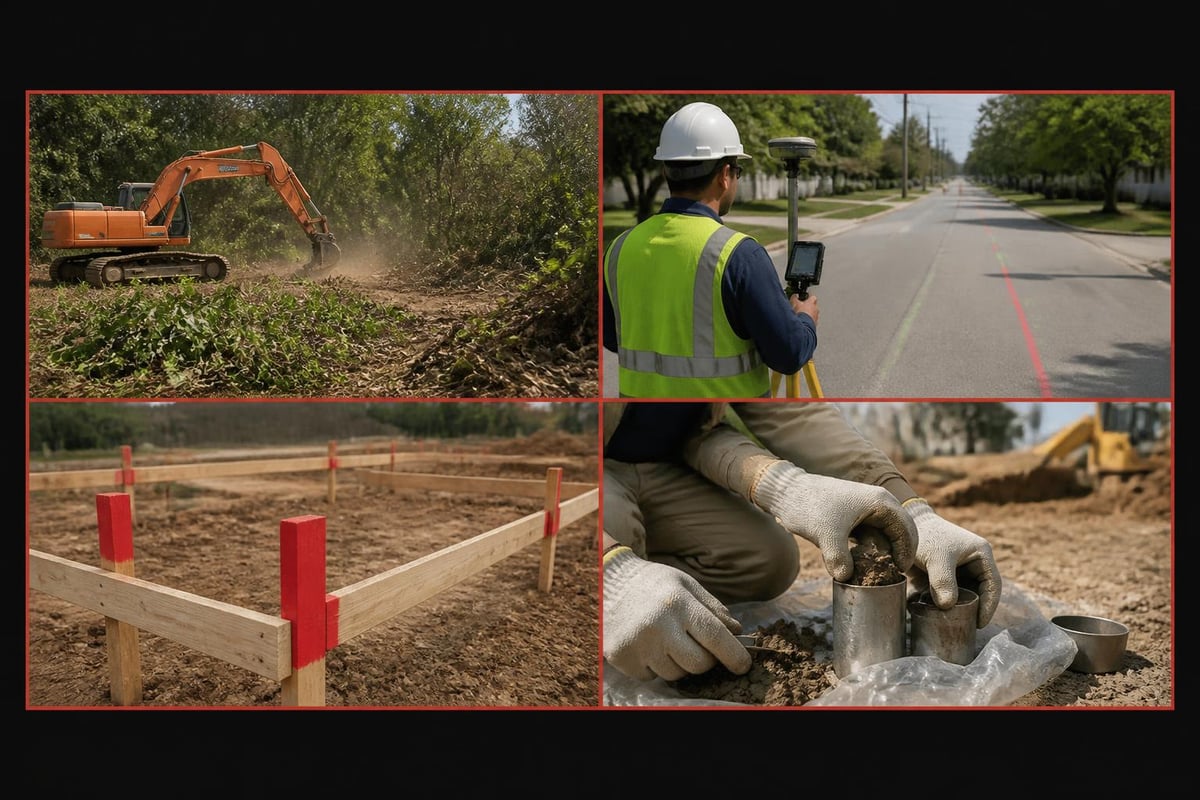
Utility detection services must identify and mark underground services including water mains, gas pipes, electrical cables, and telecommunications infrastructure. Striking these services causes dangerous situations, significant financial penalties, and project delays. Many jurisdictions require mandatory utility surveys before excavation commences, with detailed records maintained throughout the project.
Temporary benchmarks establish reference points for measuring excavation depth and ensuring level consistency. These markers, typically positioned beyond the excavation zone, allow surveyors to verify that excavations meet design specifications at multiple checkpoints. Digital surveying equipment provides millimetre-accurate readings, essential for modern construction standards.
Environmental and Safety Considerations
| Aspect | Requirement | Impact |
|---|---|---|
| Soil erosion control | Silt fencing, sediment traps | Prevents environmental contamination |
| Groundwater management | Dewatering systems, sumps | Maintains dry working conditions |
| Edge protection | Barrier fencing, signage | Prevents unauthorised access |
| Spoil management | Segregated stockpiles | Facilitates proper disposal/reuse |
Excavation Methods and Equipment Selection
Choosing appropriate excavation methods significantly influences project efficiency and cost-effectiveness. Mechanical excavation using tracked excavators remains the most common approach for earth work excavation for foundation projects, offering versatility across various soil conditions. Equipment selection depends on excavation depth, site access, soil type, and proximity to existing structures.
Hydraulic excavators dominate foundation excavation work, available in sizes from 1.5-tonne mini-diggers for restricted access sites to 40-tonne machines for extensive commercial projects. Their precision controls enable operators to achieve exact dimensions whilst minimising ground disturbance beyond the excavation zone. Bucket selection further optimises performance, with narrow trenching buckets for strip foundations and wide ditching buckets for bulk excavation.
Challenging ground conditions may necessitate specialised equipment. Rock breakers attach to excavator arms to fracture solid rock layers, whilst vacuum excavation systems safely expose underground utilities without damage risk. In urban environments with limited access, smaller machinery combined with increased labour hours often proves more practical than attempting to manoeuvre large equipment through confined spaces.
Excavation Process Sequence
- Mark excavation boundaries using spray paint or physical markers based on engineering drawings
- Remove topsoil layer (typically 150-300mm) and stockpile separately for later use
- Excavate in layers of approximately 250-300mm depth, allowing regular depth verification
- Monitor excavation walls for stability, implementing support systems if necessary
- Achieve formation level matching design specifications within tolerances
- Prepare excavation base through compaction or blinding layer application
- Install drainage systems before foundation construction begins
- Final inspection by structural engineers confirming readiness for concrete placement
Soil Handling and Management Strategies
Effective soil management throughout earth work excavation for foundation activities reduces costs and environmental impact. Excavated material classification determines whether soil becomes reusable fill, requires treatment, or needs disposal at licensed facilities. The specification for earthwork in excavation outlines industry standards for soil handling procedures.
Segregating different soil types during excavation preserves material quality for backfilling operations. Topsoil, subsoil, and deeper materials each possess distinct characteristics affecting their suitability for various applications. Contaminated soils discovered during excavation require immediate isolation and specialist handling according to environmental regulations.
Moisture content significantly influences soil behaviour and handling efficiency. Excessively wet conditions create unsafe working environments, damage soil structure, and complicate compaction efforts. Weather monitoring and contingency planning help contractors schedule excavation activities during favourable conditions, though drainage measures can mitigate water ingress issues.
Soil Reuse Opportunities
- Backfilling around completed foundations using suitable excavated material
- Landscaping incorporating preserved topsoil for gardens and grassed areas
- Level adjustment redistributing soil to achieve desired site gradients
- Noise bunding creating earth barriers around noisy construction activities
- Habitat creation forming wildlife-friendly features in development schemes
Foundation Support and Ground Stabilisation
Unstable ground conditions demand additional measures before earth work excavation for foundation work proceeds. Ground improvement techniques transform poor soil into adequate foundation material, avoiding costly deep foundation solutions. Earthwork construction practices detail various stabilisation methods applicable to different soil types.
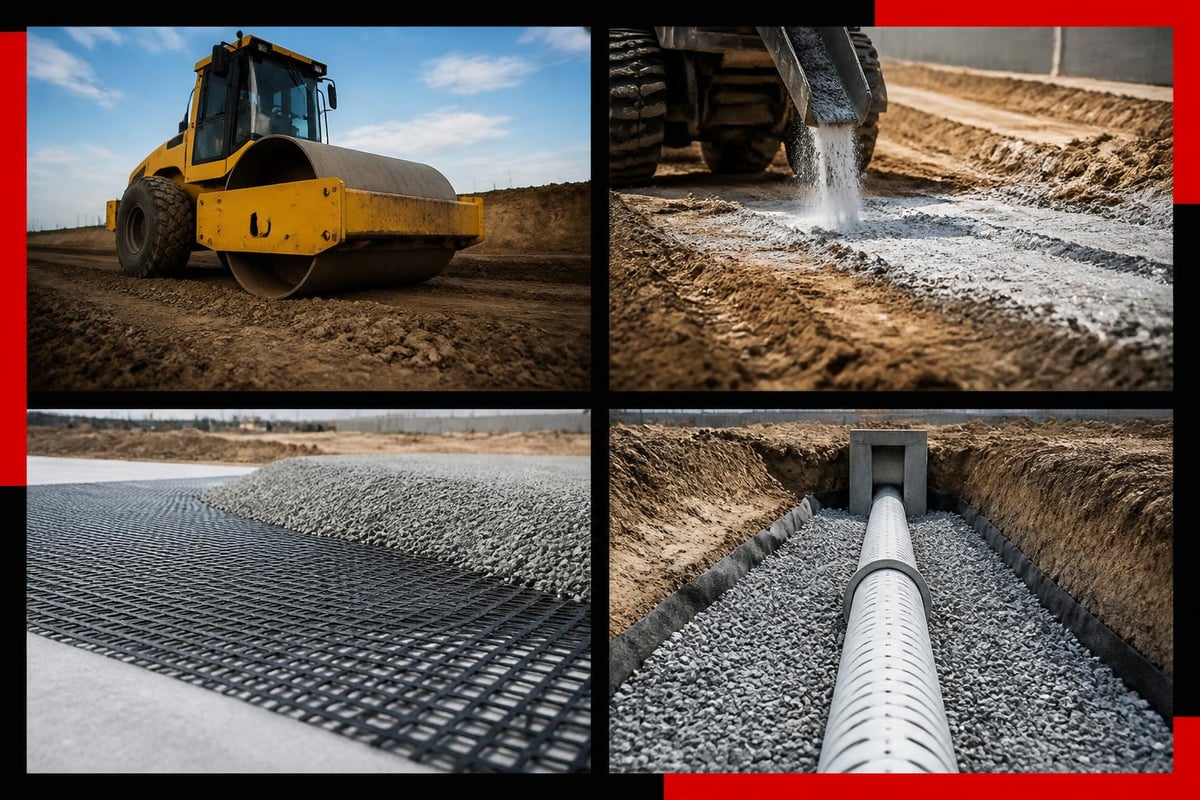
Soil compaction represents the most common stabilisation approach, using vibrating plates or rollers to increase soil density and bearing capacity. This mechanical process removes air voids between soil particles, creating a firmer base that resists settlement under structural loads. Compaction requirements vary by soil type, with granular soils achieving higher densities than cohesive clays.
Chemical stabilisation introduces cement, lime, or other binding agents into weak soils, fundamentally altering their engineering properties. This technique proves particularly effective in clay-rich soils where traditional compaction methods struggle to achieve adequate results. The treated soil develops increased strength and reduced moisture sensitivity, providing reliable foundation support.
Geotextile fabrics and geogrids offer reinforcement solutions where excavations encounter soft spots or variable soil conditions. These synthetic materials distribute loads across wider areas and prevent soil intermixing between different layers. Their installation typically occurs before backfilling operations, creating composite structures with enhanced performance characteristics.
Quality Control and Inspection Protocols
Rigorous quality control throughout earth work excavation for foundation phases prevents defects that compromise structural integrity. Regular inspections verify compliance with engineering specifications, identifying deviations before they escalate into significant problems. Documentation creates an audit trail demonstrating adherence to approved methods and standards.
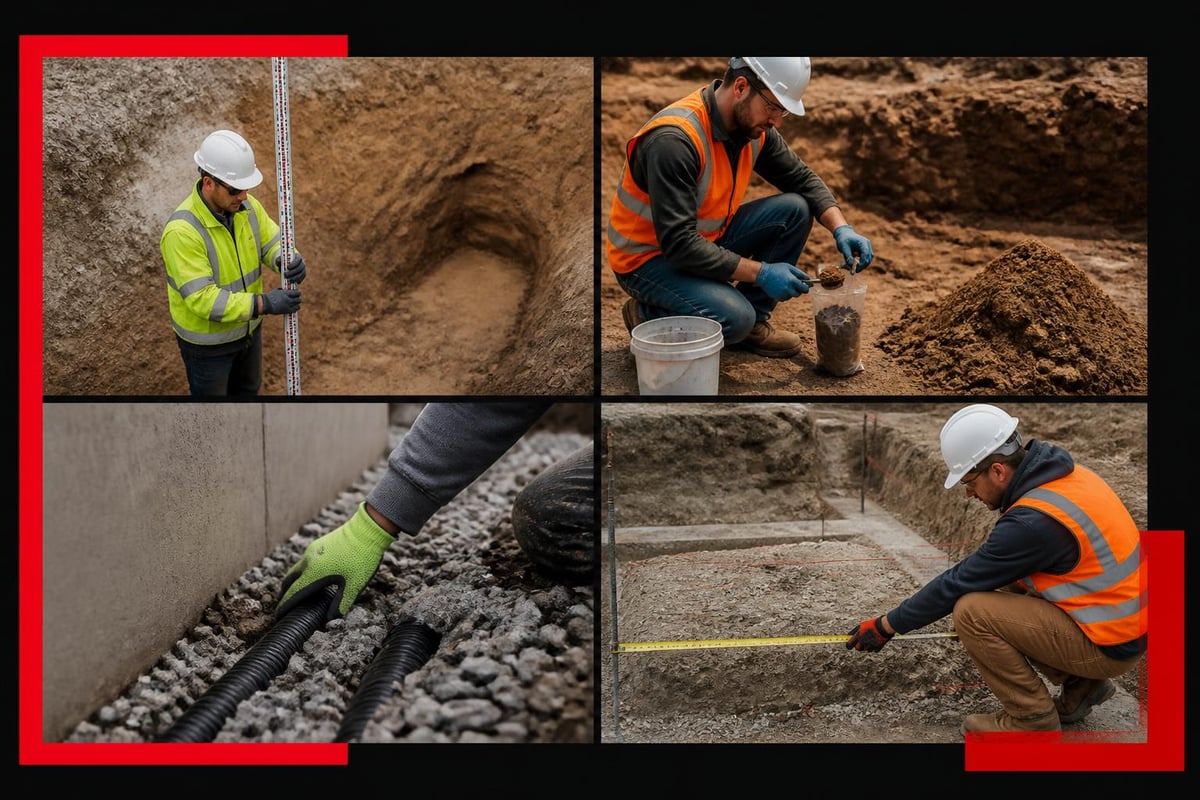
Foundation excavation dimensions require verification at multiple stages. Initial checks confirm excavation depth, width, and alignment match design drawings within acceptable tolerances, typically ±25mm for depth and ±50mm for plan dimensions. These measurements occur using surveying equipment calibrated to recognised standards, with results recorded in site diaries and quality registers.
Soil bearing capacity testing confirms the exposed formation provides adequate support for the proposed structure. Plate bearing tests apply loads to small areas, measuring resultant settlement to calculate soil strength parameters. Where test results indicate inadequate capacity, remedial measures such as additional excavation to firmer strata or ground improvement techniques become necessary.
Critical Inspection Points
| Stage | Inspection Focus | Acceptance Criteria |
|---|---|---|
| Pre-excavation | Utility clearance, site access | All services marked, routes confirmed |
| During excavation | Dimension accuracy, soil condition | Within tolerance, no unexpected conditions |
| Formation level | Bearing capacity, levelness | Meets design assumptions, ±15mm level |
| Pre-concrete | Cleanliness, drainage | Free from debris, water removed |
Drainage Integration and Water Management
Water control proves critical during and after earth work excavation for foundation activities. Groundwater ingress creates hazardous working conditions, damages soil structure, and prevents proper concrete placement. Construction guidelines for earthwork emphasise comprehensive drainage planning as essential for project success.
Temporary dewatering systems remove water accumulating in excavations, maintaining dry conditions for foundation construction. Sump pumps positioned at low points collect water for discharge to appropriate locations, whether surface drains, soakaways, or tankers for off-site disposal. High groundwater levels may require wellpoint systems that lower the water table around excavations.
Permanent drainage solutions installed during foundation construction protect structures throughout their lifespan. Land drains positioned around foundation perimeters intercept groundwater before it reaches building elements, directing flow to collection points. These systems typically comprise perforated pipes surrounded by free-draining gravel, wrapped in geotextile fabric preventing soil ingress.
Surface water management prevents rainwater from entering excavations and undermining foundation stability. Temporary bunds and channels divert run-off away from working areas, whilst permanent solutions incorporate into final site levels and drainage networks. The practical approach to excavation highlights drainage as integral to excavation success.
Seasonal Considerations and Weather Impacts
Weather conditions profoundly influence earth work excavation for foundation scheduling and methodology. Winter months present challenges including frozen ground, reduced daylight hours, and increased precipitation affecting soil workability. Summer excavations contend with dust control requirements and potential drought conditions that harden clay soils.
Frost penetration affects foundation depth requirements in cold climates, necessitating excavations that extend below the frost line to prevent heave damage. British standards typically recommend minimum depths of 900mm in frost-susceptible areas, though local conditions may demand greater depths. Winter excavations may encounter frozen topsoil requiring mechanical breaking before removal.
Prolonged rainfall transforms excavations into waterlogged sites where machinery becomes immobilised and soil loses structural integrity. Contingency planning includes temporary covering systems, enhanced drainage provisions, and flexible scheduling allowing work suspension during severe weather. Weather forecasting services enable contractors to optimise excavation timing, concentrating activities during settled periods.
Seasonal Planning Matrix
- Spring: Ideal conditions after ground thaws, increased daylight, moderate temperatures
- Summer: Extended working hours, dry conditions, dust suppression required
- Autumn: Variable weather, falling leaves requiring clearance, preparing for winter
- Winter: Shortened days, frost precautions, weather-dependent scheduling, ground protection
Backfilling Procedures and Compaction Requirements
Once foundations cure sufficiently, backfilling operations restore ground levels around completed structures. Proper backfilling technique prevents differential settlement, protects foundation walls from lateral pressure, and establishes stable surfaces for subsequent construction phases. Foundation excavation best practices detail systematic approaches to backfilling operations.
Material selection for backfilling significantly impacts performance. Free-draining granular materials such as crushed stone or sandy gravels provide excellent drainage characteristics and achieve high compaction densities. Clay soils, whilst often available from excavation spoil, require careful moisture control and specialised compaction equipment to achieve adequate densities.
Backfilling proceeds in layers, typically 150-250mm thick, with each layer receiving thorough compaction before the next application. This systematic approach ensures uniform density throughout the backfilled zone, eliminating voids that could cause future settlement. Compaction equipment ranges from hand-held vibrating plates for confined areas to heavy rollers for extensive backfilling operations.
Testing protocols verify backfill compaction meets specification requirements, typically 95% of maximum dry density determined through laboratory testing. Nuclear density gauges provide rapid on-site measurements, enabling immediate corrective action if results prove inadequate. Documentation of compaction test results creates quality assurance records demonstrating compliance with engineering requirements.
Safety Management and Risk Mitigation
Earth work excavation for foundation activities present significant hazards requiring comprehensive safety management systems. Excavation collapse represents the most serious risk, capable of causing fatalities and severe injuries to workers. UK Health and Safety Executive regulations mandate protective measures including appropriate battering of excavation sides, shoring systems, or trench boxes depending on excavation depth and soil conditions.
Edge protection prevents personnel and equipment from falling into excavations. Barrier fencing positioned at least 1.5 metres from excavation edges creates physical barriers, supplemented by warning signs alerting workers to hazards. Night-time excavations require adequate lighting and enhanced visibility measures protecting both workers and the public.
Access and egress provisions ensure workers can quickly exit excavations in emergencies. Ladders positioned at maximum 15-metre intervals provide escape routes, securely fixed and extending at least 1 metre above ground level. Deeper excavations may require multiple ladder stages or mechanical access systems meeting regulatory requirements.
Essential Safety Equipment
| Equipment | Purpose | Compliance Standard |
|---|---|---|
| Hard hats | Head protection | EN 397 |
| High-visibility clothing | Worker visibility | ISO 20471 |
| Safety boots | Foot protection | EN ISO 20345 |
| Gloves | Hand protection | EN 388 |
| Edge barriers | Fall prevention | Site-specific risk assessment |
Cost Factors and Budget Considerations
Understanding cost drivers enables accurate budgeting for earth work excavation for foundation projects. Ground conditions exert the strongest influence on expenses, with rock excavation costing substantially more than soft soil removal. Site accessibility affects machinery mobilisation costs and equipment selection, with restricted sites requiring smaller, less efficient equipment.
Disposal costs for excavated material vary dramatically based on classification. Clean soils suitable for reuse incur minimal expenses, whilst contaminated materials require treatment or disposal at specialist facilities commanding premium rates. Volume calculations during design stages should account for soil bulking factors, as undisturbed ground typically expands 20-40% once excavated.
Labour costs reflect skill requirements and project complexity. Experienced machine operators command higher rates but deliver superior productivity and quality outcomes. Complex excavations adjacent to existing structures or involving ground stabilisation works require specialist supervision, increasing daily operational costs but reducing risk exposure.
The introduction to earthwork foundations provides detailed cost estimation frameworks applicable to various project types. Contingency allowances, typically 10-15% of excavation budgets, accommodate unforeseen ground conditions discovered during works.
Modern Technology and Innovation
Digital technology transforms earth work excavation for foundation efficiency and accuracy. GPS-guided excavators achieve design levels without constant surveying intervention, reducing labour requirements and improving precision. These systems integrate 3D models enabling operators to visualise required excavation profiles in real-time, dramatically reducing setting-out time.
Drone surveys capture site conditions before, during, and after excavation activities, creating detailed topographical models for progress monitoring and volume calculations. This technology enables weekly progress tracking against programmed targets, identifying delays requiring management intervention. Photographic records provide valuable documentation for dispute resolution and quality verification.
Building Information Modelling (BIM) platforms coordinate excavation activities with broader construction programmes, highlighting clashes and sequencing issues before they manifest on-site. These digital environments facilitate collaboration between designers, contractors, and specialists, ensuring excavation works integrate seamlessly with foundation designs and utility installations.
Ground-penetrating radar advances utility detection capabilities beyond traditional methods, revealing buried services and underground obstructions without excavation. This non-invasive technology reduces strike risks and enables more accurate excavation planning, particularly valuable in urban environments with complex underground infrastructure networks.
Successful earth work excavation for foundation requires meticulous planning, skilled execution, and rigorous quality control throughout every project phase. Whether you're developing commercial properties, residential estates, or infrastructure projects, professional civil engineering expertise ensures foundations that stand the test of time. JRG Civils brings proven experience across diverse excavation projects throughout the UK, combining technical excellence with the attention to detail that transforms challenging sites into stable building platforms ready for construction success.