
The landscape of civil engineering has evolved considerably over recent years, with advanced earthworks representing a critical foundation for successful infrastructure projects. Modern earthworks extend far beyond simple excavation and grading, incorporating sophisticated techniques, precision equipment, and comprehensive planning methodologies that ensure project longevity and structural integrity. Whether preparing sites for commercial drive-throughs, constructing residential driveways, or developing extensive highway networks, the principles of advanced earthworks remain fundamental to achieving exceptional results across the construction industry.
Understanding Advanced Earthworks in Modern Civil Engineering
Advanced earthworks encompass a comprehensive suite of ground preparation, excavation, and formation activities that create stable foundations for infrastructure development. These operations integrate traditional earthmoving principles with contemporary technology, environmental considerations, and engineering science to deliver superior outcomes.
The scope of advanced earthworks includes detailed site investigations, precise grading operations, soil stabilisation techniques, drainage system installation, and subgrade preparation. Each element requires careful coordination and expert execution to meet the demanding specifications of modern construction projects.
Core Components of Advanced Earthworks
Professional earthworks operations involve multiple interconnected phases that build upon one another:
- Site assessment and surveying to establish existing conditions and project requirements
- Topsoil stripping and preservation for environmental compliance and future landscaping
- Bulk excavation and material removal using efficient machinery and transport logistics
- Formation level establishment through precise grading and compaction processes
- Drainage infrastructure installation to manage surface and subsurface water effectively
Beyond these fundamental activities, advanced earthworks incorporate quality control measures, environmental protection protocols, and health and safety management systems that distinguish professional operations from basic groundworks.
Advanced Techniques in Ground Preparation
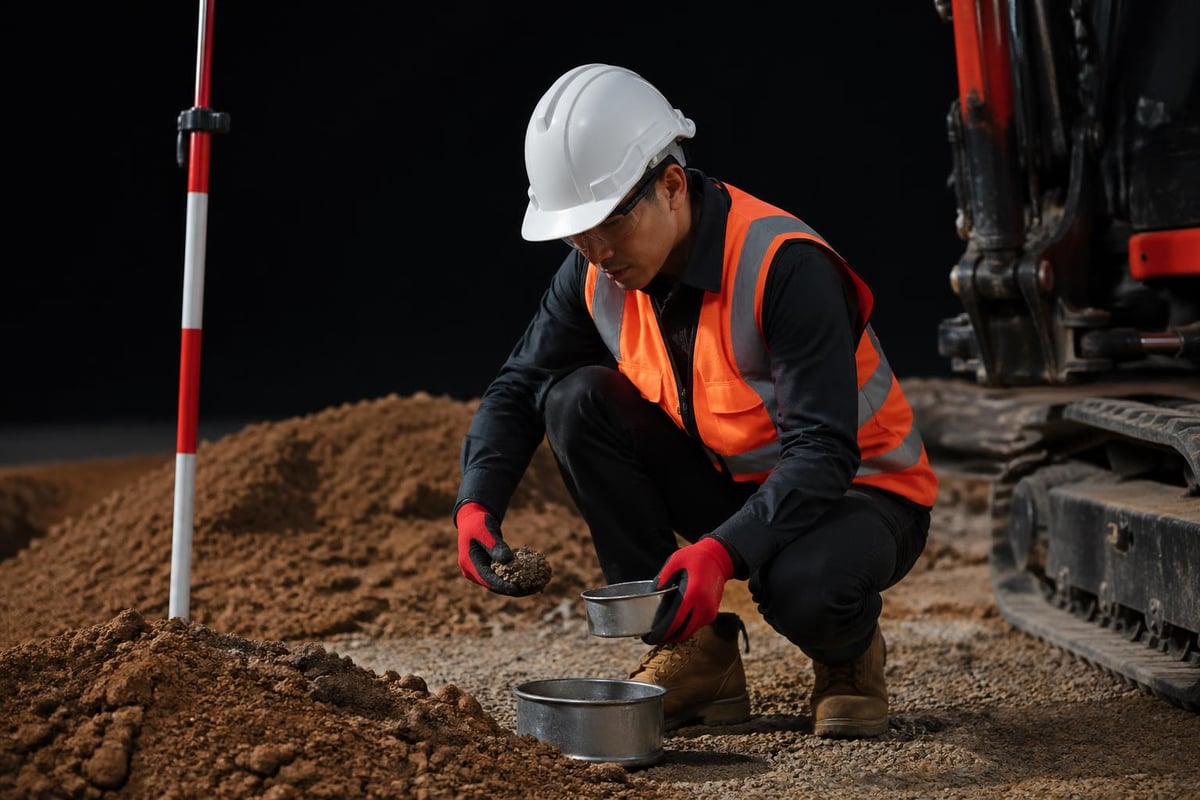
Modern civil engineering projects demand increasingly sophisticated approaches to ground preparation. Advanced earthworks utilise state-of-the-art methodologies that address complex site conditions whilst maintaining efficiency and cost-effectiveness.
Soil stabilisation represents one crucial advancement, employing chemical treatments, mechanical compaction, or geosynthetic reinforcement to enhance ground-bearing capacity. These techniques prove particularly valuable when developing sites with challenging soil conditions or when existing material quality falls below project specifications.
Precision Grading and Formation
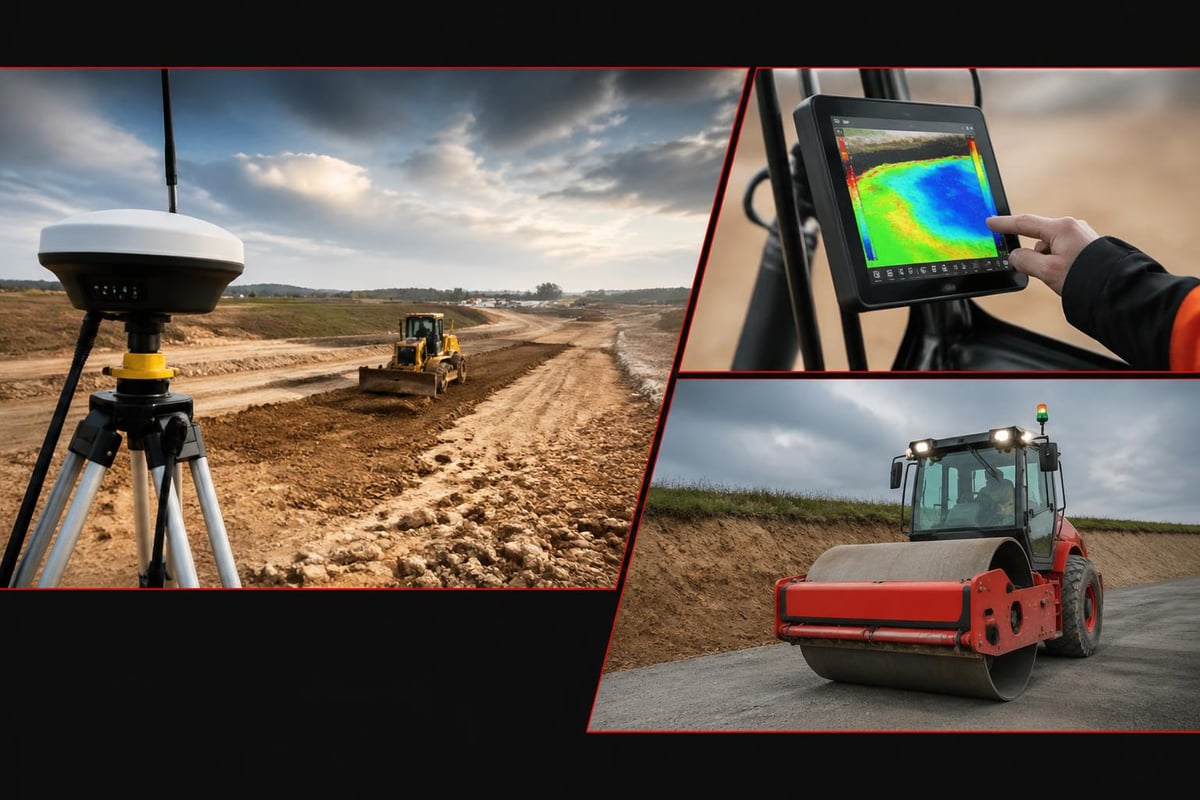
Contemporary projects require exceptional accuracy in establishing formation levels. GPS-guided machinery enables operators to achieve millimetre-precision grading, ensuring surfaces meet exact specifications without extensive manual checking.
| Traditional Methods | Advanced Techniques | Key Benefits |
|---|---|---|
| Manual surveying pegs | GPS machine control | Reduced labour costs |
| Multiple grade checks | Real-time elevation data | Improved accuracy |
| Physical string lines | Digital design models | Faster completion |
| Post-work corrections | Continuous adjustment | Minimal rework required |
This technology integration proves particularly beneficial for highway surfacing projects and commercial developments where tight tolerances directly impact final surface quality and long-term performance.
The application of laser-guided equipment further enhances precision, particularly for drainage gradients and complex surface profiles. Research into climate-resilient railway earthworks monitoring, modelling, and mitigation demonstrates how advanced monitoring techniques can improve infrastructure longevity under challenging environmental conditions.
Material Management and Sustainability Considerations
Advanced earthworks require strategic material management to optimise project economics whilst minimising environmental impact. Professional contractors analyse excavated material properties to determine suitability for reuse within the project, reducing disposal costs and import requirements.
Sustainable material practices include:
- Comprehensive geotechnical testing of excavated soils
- Classification of material according to engineering properties
- Development of cut-and-fill balance strategies
- Identification of material requiring treatment or stabilisation
- Coordination of material movements to minimise double handling
Recent innovations in earthworks assessment, such as efficient evaluation methods using towed seismic arrays and Bayesian inference, demonstrate how technology continues advancing our understanding of ground conditions and material behaviour.
Environmental stewardship has become integral to advanced earthworks operations. Contractors implement erosion control measures, sediment management systems, and dust suppression protocols throughout project execution. These practices protect adjacent properties, water courses, and air quality whilst demonstrating corporate responsibility.
Quality Assurance in Earthworks Operations
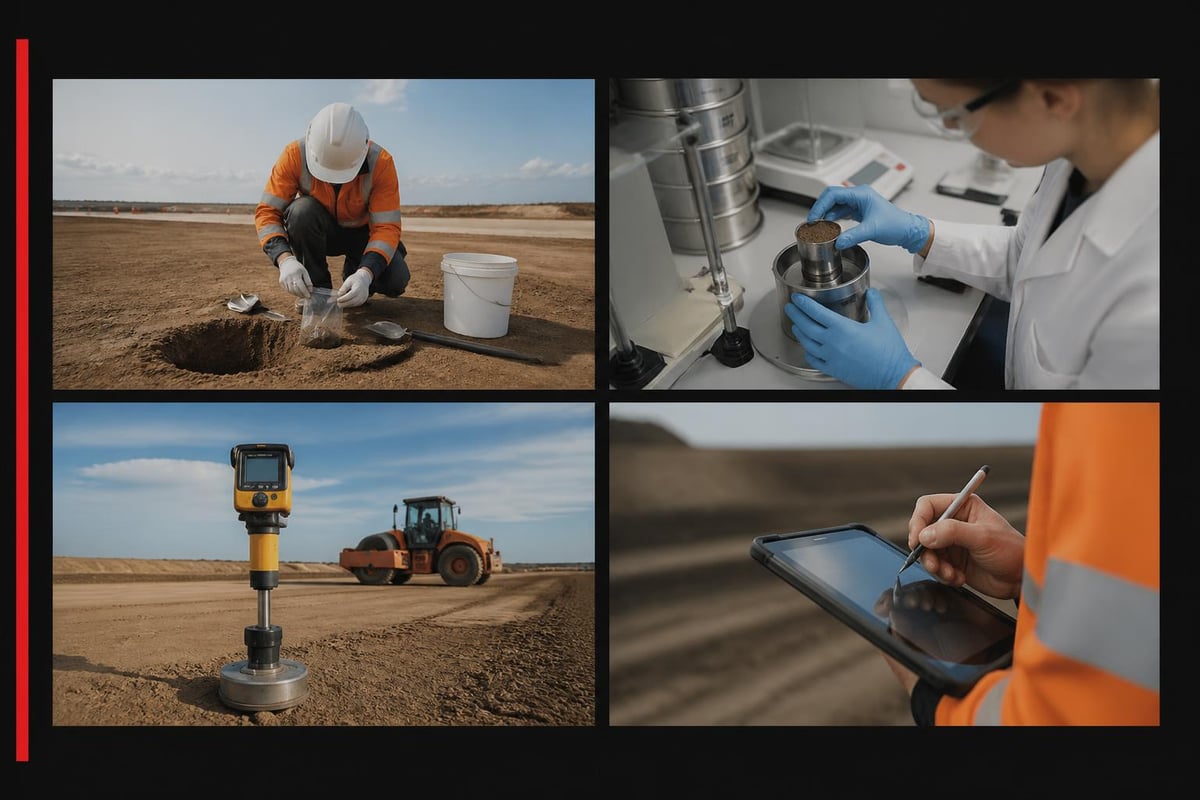
Professional earthworks contractors establish rigorous quality assurance programmes that verify compliance with project specifications at every stage. This systematic approach includes regular testing of material properties, compaction density verification, and dimensional accuracy checks.
Testing protocols typically encompass:
- In-situ density testing using nuclear gauges or sand replacement methods
- California Bearing Ratio (CBR) assessment to confirm structural capacity
- Particle size distribution analysis ensuring material gradation compliance
- Moisture content monitoring to optimise compaction effectiveness
- Formation level surveys confirming dimensional accuracy
These quality control measures provide clients with confidence that completed earthworks will perform as designed throughout the project lifecycle.
Commercial Applications of Advanced Earthworks
The versatility of advanced earthworks becomes evident when examining diverse commercial applications. Drive-through facilities, retail developments, and industrial sites each present unique challenges that require tailored earthworks solutions.
Commercial site preparation typically involves:
- Achieving precise gradients for drainage and accessibility compliance
- Creating stable platforms for heavy structural loads
- Integrating extensive underground service networks
- Establishing durable surfaces for high-traffic conditions
- Coordinating with tight construction programme schedules
Franchise developments such as coffee shops and food outlets demand particularly exacting standards. Site levels must accommodate drive-through lanes, parking areas, service yards, and landscaping features whilst ensuring efficient water management. The integration of comprehensive civil engineering services enables contractors to deliver complete solutions from initial earthworks through final surfacing.
Highway and Infrastructure Projects
Advanced earthworks form the foundation of highway construction and major infrastructure developments. These projects operate at a scale requiring substantial earthmoving equipment, sophisticated logistics planning, and rigorous compliance with highways authority specifications.
Highway earthworks encompass embankment construction, cutting excavation, subgrade preparation, and capping layer installation. Each element must achieve specified compaction levels and material properties to support pavement structures designed for decades of service under demanding traffic loads.
| Project Type | Earthworks Complexity | Critical Considerations |
|---|---|---|
| Urban highways | High | Existing utilities, limited working space |
| Rural carriageways | Moderate | Material haulage distances, environmental impact |
| Junction improvements | Very high | Phased construction, traffic management |
| Pedestrian infrastructure | Low to moderate | Accessibility requirements, aesthetics |
The historical significance of earthworks extends beyond modern infrastructure, as evidenced by ancient symbolic landforms near Lake Titicaca, demonstrating humanity's long-standing relationship with large-scale ground modification.
Residential Earthworks Excellence
Whilst large-scale commercial and highway projects capture attention, advanced earthworks principles apply equally to residential developments. Driveways, patios, and garden landscaping benefit significantly from professional earthworks expertise.
Residential driveway construction demands careful attention to drainage provision, appropriate sub-base specification, and formation preparation that prevents future settlement or surface failure. Homeowners investing in quality driveways deserve earthworks that ensure decades of trouble-free performance.
Drainage Integration in Residential Projects
Effective drainage represents perhaps the most critical aspect of residential earthworks. Without proper water management, even well-constructed surfaces eventually fail due to subsurface saturation, frost damage, or erosion.
Advanced earthworks for residential applications incorporate:
- Surface water management through appropriate gradient design
- Subsurface drainage systems including French drains or land drains
- Soakaway provision sized according to site conditions and rainfall intensity
- Connection to existing drainage infrastructure following building regulations
- Long-term maintenance access for future servicing requirements
Professional contractors balance technical requirements with aesthetic considerations, ensuring earthworks enhance rather than compromise property appearance and functionality.
Equipment and Technology in Advanced Earthworks
Modern earthworks operations depend upon sophisticated machinery that combines power, precision, and versatility. Equipment selection directly influences project efficiency, quality outcomes, and environmental impact.
Essential earthworks machinery includes:
- Excavators ranging from compact models for confined spaces to large machines for bulk excavation
- Bulldozers for spreading and rough grading operations
- Graders equipped with GPS control for precision surface finishing
- Compaction equipment including vibrating rollers and plate compactors
- Dumpers and articulated dump trucks for material transport
Technology integration extends beyond GPS guidance to encompass telematics systems that monitor machine performance, fuel consumption, and operator productivity. This data-driven approach enables contractors to optimise operations continuously whilst maintaining transparency with clients.
Safety Management in Earthworks Operations
Advanced earthworks require comprehensive health and safety management systems that protect workers, site visitors, and the general public. Professional contractors implement rigorous risk assessment procedures, method statements, and safety monitoring protocols throughout project execution.
Safety considerations encompass excavation stability, machinery operation protocols, traffic management systems, and environmental hazard control. The commitment to zero-harm working environments distinguishes reputable civil engineering contractors from less scrupulous operators.
Project Planning and Coordination
Successful advanced earthworks depend upon meticulous planning that begins long before machinery arrives on site. Professional contractors develop detailed execution strategies addressing logistics, programme sequencing, resource allocation, and stakeholder coordination.
| Planning Phase | Key Activities | Deliverables |
|---|---|---|
| Pre-construction | Site surveys, design review, permit applications | Baseline information, approvals |
| Mobilisation | Equipment procurement, team briefings, site setup | Ready-to-commence status |
| Execution | Daily operations, quality monitoring, progress reporting | Completed earthworks |
| Handover | Final inspections, documentation, demobilisation | Certification, as-built records |
Coordination with utilities providers, local authorities, and adjacent landowners ensures earthworks proceed smoothly without disruption or conflict. This stakeholder management capability distinguishes experienced civil engineering firms from general contractors attempting earthworks without specialist expertise.
Future Developments in Earthworks Technology
The earthworks sector continues evolving as new technologies emerge and environmental pressures intensify. Automation, artificial intelligence, and sustainable practices represent key development areas that will shape future operations.
Autonomous machinery capable of executing repetitive earthmoving tasks without human operators promises increased productivity and enhanced safety. Whilst fully autonomous sites remain some years away, semi-autonomous features already assist operators in achieving better outcomes with reduced fatigue.
Environmental monitoring systems incorporating real-time air quality, noise, and vibration measurement enable contractors to demonstrate compliance with increasingly stringent regulations. Organisations like Applied EarthWorks exemplify the integration of environmental stewardship with technical excellence in ground modification projects.
Data-Driven Decision Making
Advanced earthworks increasingly leverage data analytics to optimise performance and predict potential issues before they impact programmes. Machine learning algorithms analyse historical project data, identifying patterns that inform equipment selection, resource allocation, and methodology choices.
Predictive maintenance systems monitor equipment condition, scheduling servicing interventions before breakdowns occur. This proactive approach minimises downtime whilst extending machinery lifespan and reducing total ownership costs.
The integration of Building Information Modelling (BIM) with earthworks design enables three-dimensional visualisation of proposed ground modifications. Contractors can identify clashes with existing infrastructure, optimise material movements, and communicate design intent more effectively to clients and stakeholders.
Advanced earthworks represent the essential foundation upon which successful civil engineering projects are built, requiring specialist expertise, sophisticated equipment, and unwavering commitment to quality. Whether you're planning a commercial development, highway improvement, or residential driveway, professional earthworks establish the platform for long-term performance and value. At JRG Civils, we bring advanced earthworks expertise to projects across the UK, combining technical excellence with meticulous attention to detail that ensures your investment delivers lasting results.