
Premier earthworks represents the cornerstone of any successful construction project, encompassing the critical ground preparation and manipulation activities that transform raw land into a stable, ready-to-build site. Whether you're planning a commercial development, residential driveway, or extensive highway infrastructure, understanding the fundamentals of high-quality earthworks is essential for achieving long-lasting results. From initial excavation through to final grading and drainage installation, every stage demands precision, expertise, and adherence to rigorous industry standards. In 2026, the civil engineering sector continues to evolve with advanced techniques and best practices that ensure projects meet both structural requirements and environmental considerations.
Understanding Premier Earthworks Fundamentals
Premier earthworks involves a comprehensive range of ground manipulation activities designed to create stable foundations for construction projects. The term encompasses excavation, grading, compaction, drainage installation, and site levelling, all executed to the highest professional standards.
At its core, earthworks is about reshaping the natural topography to meet specific engineering requirements. This process includes excavation, grading, and compaction, which are fundamental to altering site conditions appropriately. The quality of these initial works directly impacts the longevity and stability of everything built upon them.
Key Components of Quality Earthworks
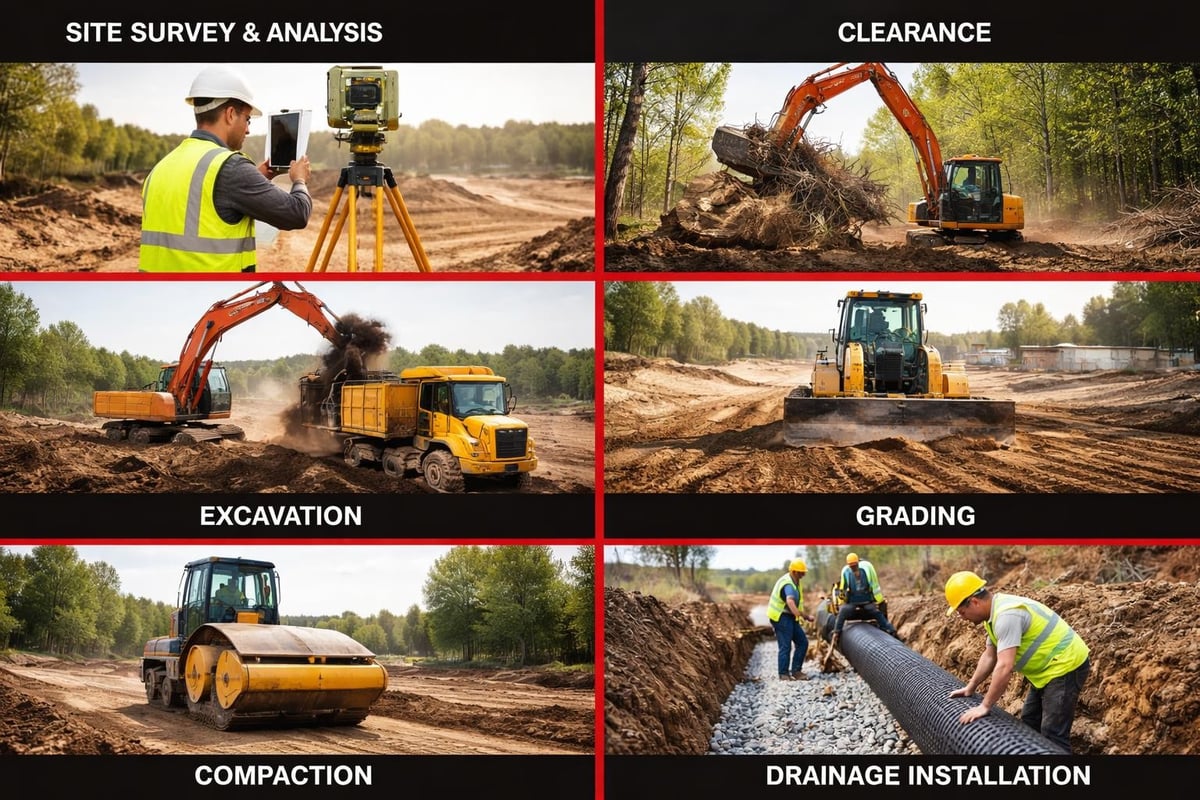
Professional earthworks projects consist of several interconnected phases, each requiring specialized knowledge and equipment:
- Site clearance and preparation – removing vegetation, debris, and unsuitable materials
- Excavation works – cutting and removing earth to achieve required levels
- Grading and levelling – creating precise slopes and flat surfaces
- Compaction – densifying soil to achieve load-bearing capacity
- Drainage installation – implementing systems to manage water flow
- Stabilisation – reinforcing ground conditions where necessary
The success of premier earthworks depends heavily on accurate site surveys and soil analysis. Understanding ground conditions before commencing works prevents costly complications and ensures appropriate methodologies are employed from the outset.
Best Practices in Modern Earthworks
Delivering premier earthworks requires adherence to established best practices that ensure efficiency and environmental responsibility. These guidelines have evolved significantly, incorporating sustainability considerations alongside traditional engineering principles.
Quality control measures begin with thorough planning. Soil testing determines compaction requirements, whilst topographical surveys inform grading specifications. Professional contractors document every stage, maintaining detailed records of material movements, compaction test results, and weather conditions that might affect works.
Material Handling and Soil Management
Effective soil management distinguishes premier earthworks from standard operations. Contractors must categorize excavated materials, separating topsoil for preservation, identifying suitable fill materials, and properly disposing of contaminated or unsuitable earth.
| Material Type | Typical Use | Handling Requirement |
|---|---|---|
| Topsoil | Landscaping restoration | Strip and stockpile separately |
| Clay | Structural fill (when suitable) | Moisture content control critical |
| Sand/Gravel | Drainage layers | Test for contamination |
| Rock | Hardcore/foundations | Size reduction may be required |
| Contaminated soil | None (remove) | Licensed disposal essential |
The International Society for Soil Mechanics emphasizes monitoring execution to ensure adherence to project specifications. This includes regular density testing, moisture content monitoring, and verification that materials meet design requirements.
Technical Specifications for Excellence
Premier earthworks demands precise adherence to engineering specifications. Compaction levels, for instance, aren't arbitrary – they're calculated based on anticipated loading, soil type, and intended use. Residential driveways typically require 95% compaction to standard Proctor density, whilst highway infrastructure may demand 98% or higher.
Drainage Integration
Proper drainage represents one of the most critical aspects of earthworks. Water management failures cause more long-term structural issues than almost any other factor. Premier earthworks incorporates drainage from the planning stage, not as an afterthought.
Effective drainage systems include:
- Surface water management – grading to direct water away from structures
- Subsurface drainage – French drains, land drains, and permeable layers
- Connection to existing systems – proper integration with municipal drainage
- Soakaway provision – sustainable drainage solutions where appropriate
- Maintenance access – ensuring systems remain serviceable long-term
Professional contractors understand that drainage installation ensures site stability, preventing water accumulation that weakens foundations and causes subsidence.
Equipment and Methodology
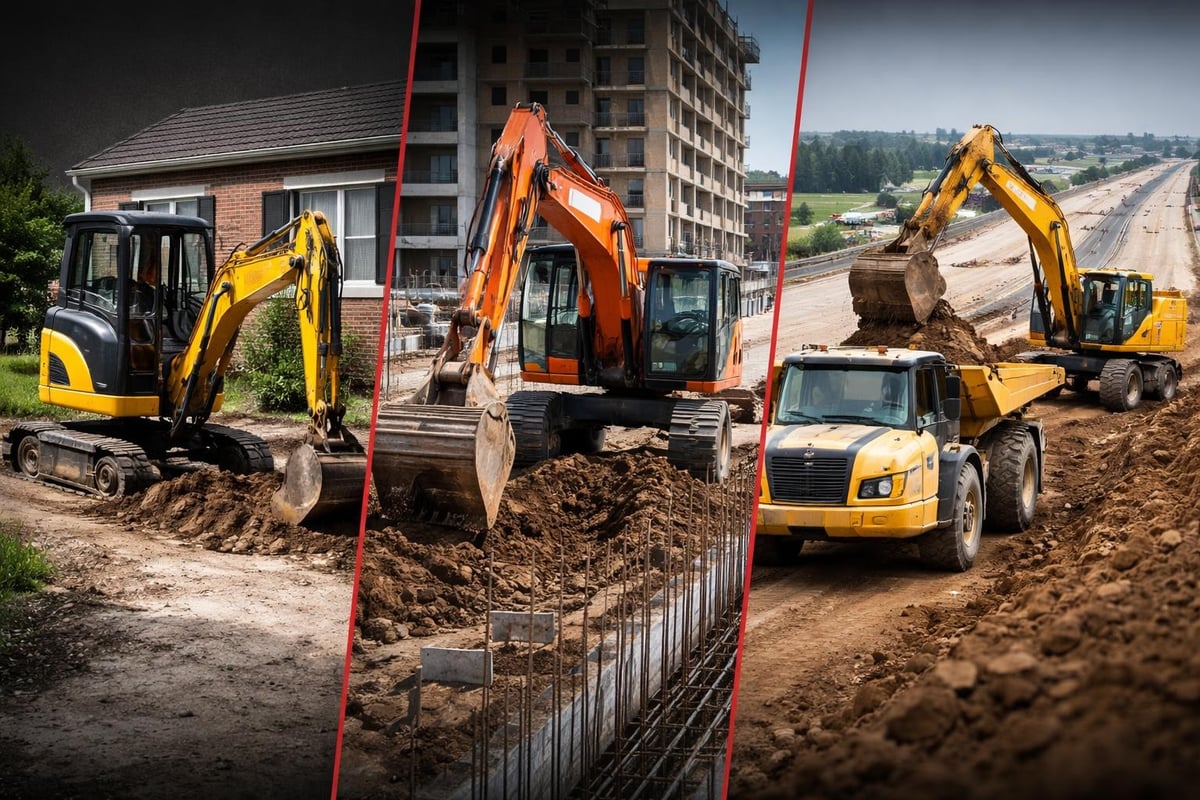
The machinery employed in premier earthworks has advanced considerably. Modern GPS-guided excavators achieve grading accuracy to within millimetres, whilst intelligent compaction systems provide real-time feedback on ground density. This technology ensures consistent results across large sites and eliminates guesswork from critical operations.
Different project types demand specific equipment approaches. Commercial developments often utilize large earth-moving plant for efficiency, whilst residential projects may require compact machinery to minimize site disturbance. The choice of equipment directly affects both project duration and final quality.
Quality Assurance Protocols
Premier earthworks contractors implement rigorous testing regimes throughout projects. Nuclear density gauges or plate bearing tests verify compaction levels, whilst laser theodolites confirm grading accuracy. These measurements aren't merely procedural – they provide objective evidence that works meet specification.
Testing frequency varies with project scale and criticality:
- Major highways – testing every 100 square metres minimum
- Commercial developments – testing at strategic points and layer changes
- Residential driveways – spot testing at critical locations
- Patios and smaller works – visual inspection plus targeted verification
Documentation proves essential. Detailed records demonstrate compliance with building regulations and provide valuable information for future works or investigations. Professional contractors maintain comprehensive site diaries, test certificates, and photographic evidence.
Environmental and Regulatory Considerations
In 2026, environmental responsibility forms an integral part of premier earthworks. Contractors must manage dust, noise, and water runoff whilst protecting existing habitats and archaeological features. Planning permissions increasingly demand ecological surveys and mitigation measures before earthworks commence.
Sediment control prevents construction runoff from polluting watercourses. This involves installing silt fences, constructing settlement ponds, and maintaining vegetated buffer zones around sensitive areas. These measures protect both the environment and contractors from regulatory enforcement.
Working with Existing Infrastructure
Premier earthworks near existing structures requires particular care. Vibration monitoring protects adjacent buildings from damage, whilst utility surveys prevent strikes on buried services. The consequences of severing water mains, gas pipes, or fibre optic cables extend far beyond immediate project costs.
| Infrastructure Type | Detection Method | Protection Measure |
|---|---|---|
| Underground utilities | Ground-penetrating radar + hand digging | Exclusion zones, support systems |
| Existing foundations | Structural survey | Underpinning if required |
| Trees and vegetation | Arboricultural survey | Root protection areas |
| Archaeological features | Heritage assessment | Excavation supervision |
Professional contractors engage with utility companies early, obtaining accurate service plans and arranging diversions where necessary. This proactive approach prevents delays and maintains project safety.
Application Across Project Types
Premier earthworks principles apply across diverse construction sectors, though implementation varies considerably. Highway surfacing projects demand extensive subgrade preparation, ensuring the pavement structure has a stable foundation capable of withstanding decades of heavy traffic loading.
For commercial developments like drive-through facilities, earthworks must accommodate significant paving areas, service trenches, and drainage infrastructure. The projects completed by established civil engineering firms demonstrate how premier earthworks supports complex commercial requirements whilst maintaining strict programme schedules.
Residential Applications
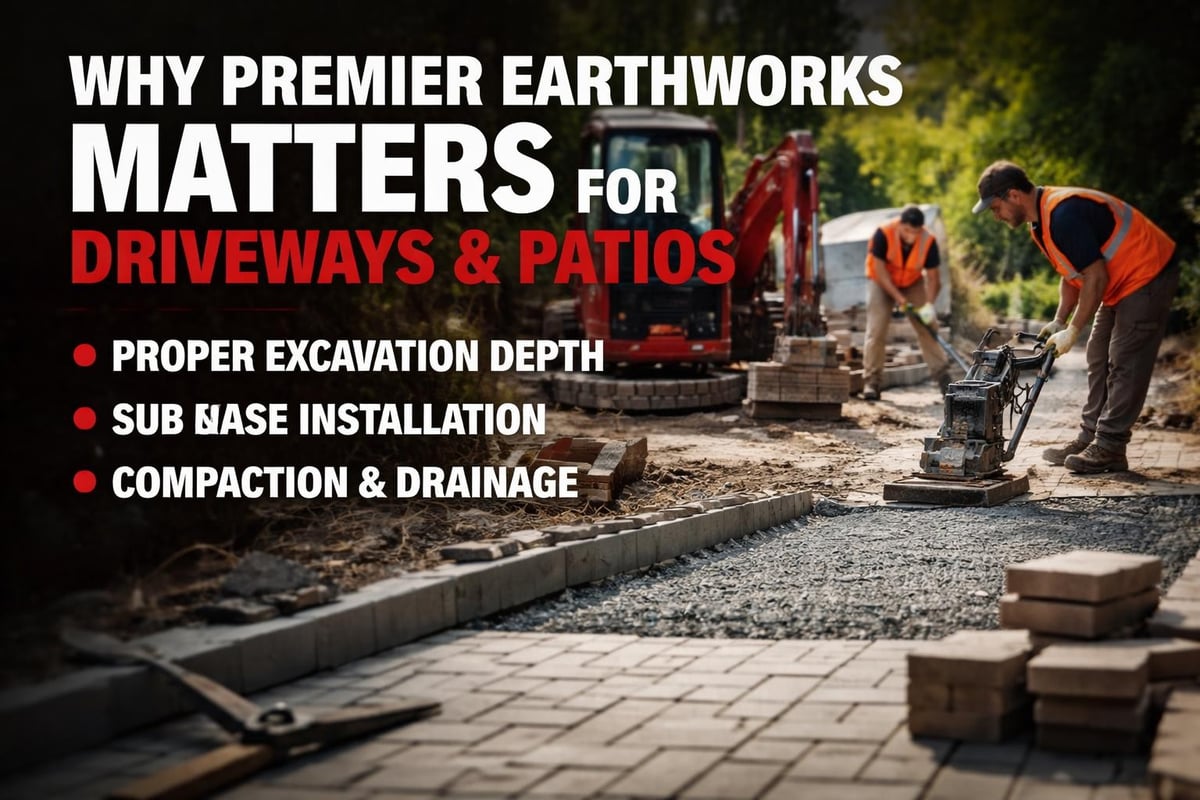
Driveways and patios might seem modest compared to major infrastructure, yet they deserve equal attention to earthworks fundamentals. Poor groundwork causes block paving to sink, tarmac to crack, and surfaces to pool water. Premier earthworks for residential projects includes:
- Thorough excavation to appropriate depth (typically 250-350mm for driveways)
- Installation of geotextile membranes preventing contamination between layers
- Properly graded sub-base using certified Type 1 or MOT material
- Mechanical compaction achieving specified density throughout
- Edge restraint preparation ensuring perimeter stability
Homeowners investing in quality surfacing deserve premier earthworks that ensures their investment performs correctly for decades. The difference between adequate and excellent groundwork becomes apparent within months, as inferior preparation leads to premature failure.
Cost Versus Value in Earthworks
Budget pressures tempt some to economize on groundwork, viewing it as unnecessarily expensive when "cheaper alternatives" exist. This perspective fundamentally misunderstands construction economics. Premier earthworks represents investment, not expense, because it prevents far costlier remedial works later.
Proper compaction, for instance, requires multiple passes with appropriate equipment and verification testing. Skipping these steps saves perhaps 15% initially but virtually guarantees settlement issues requiring complete reconstruction within years. The true cost comparison shows premier earthworks delivers superior lifetime value.
Long-Term Performance Factors
The performance longevity of surfaced areas depends overwhelmingly on earthworks quality. Well-executed groundwork supports surfaces through freeze-thaw cycles, heavy loading, and decades of use. Conversely, inadequate preparation ensures rapid deterioration regardless of surface material quality.
Consider these performance indicators:
Signs of Premier Earthworks:
- No settlement or subsidence over time
- Effective water drainage in all conditions
- Crack-free surfaces after years of service
- Consistent load-bearing performance
- Minimal maintenance requirements
Indicators of Inadequate Work:
- Settlement creating dips and puddles
- Cracking from uneven support
- Drainage failures and water accumulation
- Surface deformation under loading
- Premature need for replacement
Industry Standards and Compliance
Premier earthworks adheres to recognized industry standards that define acceptable practices and performance criteria. In the UK, specifications from bodies like the Highways England Manual of Contract Documents for Highway Works provide detailed requirements for different earthwork categories.
These standards cover material specifications, compaction requirements, testing frequencies, and acceptance criteria. Compliance isn't optional for professional contractors – it represents the baseline for acceptable work. Premier earthworks exceeds these minimums where project requirements demand enhanced performance.
Professional Accreditation
Contractors delivering premier earthworks typically hold relevant industry accreditations demonstrating competence and commitment to quality. These might include ISO quality management certifications, industry scheme memberships, and individual operative qualifications like CPCS plant operator cards and NRSWA streetworks competence.
For clients selecting contractors, these credentials provide assurance that earthworks will meet professional standards. They indicate investment in training, equipment maintenance, and quality systems that distinguish premier service providers from less rigorous operators.
Seasonal Considerations
Weather significantly impacts earthworks operations and outcomes. Winter working presents particular challenges, as frozen ground resists excavation and saturated soils cannot be properly compacted. Premier earthworks contractors adapt methodologies to seasonal conditions rather than compromising quality.
Spring and autumn typically offer optimal conditions – moderate temperatures, manageable moisture levels, and stable weather patterns. Summer heat can cause rapid surface drying that affects compaction, whilst winter frost prevents proper consolidation. Professional scheduling accounts for these factors, planning critical works during favorable periods.
| Season | Advantages | Challenges | Mitigation Strategies |
|---|---|---|---|
| Spring | Good moisture levels, warming soil | Occasional heavy rain | Adequate drainage, weather monitoring |
| Summer | Dry conditions, extended daylight | Dust, rapid drying | Water spraying, early starts |
| Autumn | Stable temperatures | Increasing rainfall | Covered stockpiles, quick turnaround |
| Winter | Lower demand | Frost, saturation, short days | Frost protection, site heating |
Innovation and Future Developments
The earthworks sector continues evolving with technological advances improving efficiency and quality. Machine control systems utilizing GPS and laser guidance enable operators to achieve design levels with unprecedented accuracy, reducing over-excavation and minimizing material waste.
Ground improvement techniques have advanced significantly. Soil stabilization using lime or cement transforms poor-quality materials into acceptable fill, reducing import requirements and transportation costs. These methods support both project economics and environmental objectives by minimizing lorry movements.
Intelligent compaction technology provides continuous monitoring of ground density during roller passes, creating complete coverage maps rather than relying on spot testing. This innovation ensures no areas receive insufficient compaction whilst preventing over-working of already-adequate sections. As these systems become standard equipment, the consistency of premier earthworks continues improving.
Premier earthworks forms the essential foundation for construction success, whether you're developing major infrastructure or enhancing residential properties. Quality groundwork requires expertise, appropriate equipment, and unwavering commitment to professional standards that deliver lasting results. When you need civil engineering services that take pride in excellent standards from initial earthworks through to final completion, JRG Civils brings proven experience across commercial and residential projects throughout the UK, ensuring your investment starts with the solid foundation it deserves.