
Garden kerbing serves as the defining framework that separates different areas of your outdoor space whilst providing both practical and aesthetic benefits. Whether you're looking to create crisp boundaries between your lawn and flowerbeds, define a driveway edge, or establish clear pathways through your garden, proper edging transforms ordinary landscapes into professionally finished outdoor environments. For property owners across the UK, understanding the various options and installation methods available in 2026 ensures your investment delivers lasting value and visual appeal.
Understanding the Purpose and Benefits of Garden Kerbing
Garden kerbing creates essential physical boundaries that prevent lawn grass from encroaching into flower beds whilst simultaneously containing mulch, gravel, and soil within designated areas. This functional barrier reduces maintenance time by eliminating the need for constant edge trimming and prevents materials from migrating across your garden during heavy rainfall.
Beyond practicality, well-installed edging elevates the overall appearance of any property. Clean lines and defined spaces create visual interest whilst making gardens appear more organised and intentional. Professional garden edging ideas demonstrate how this simple addition can dramatically enhance outdoor aesthetics.
The structural benefits extend to protecting plant roots from foot traffic and lawn mower damage. Raised kerbing prevents accidental encroachment into delicate planting areas whilst creating a clear mowing guide that reduces the risk of damage to both equipment and plants.
Material Selection for Different Applications
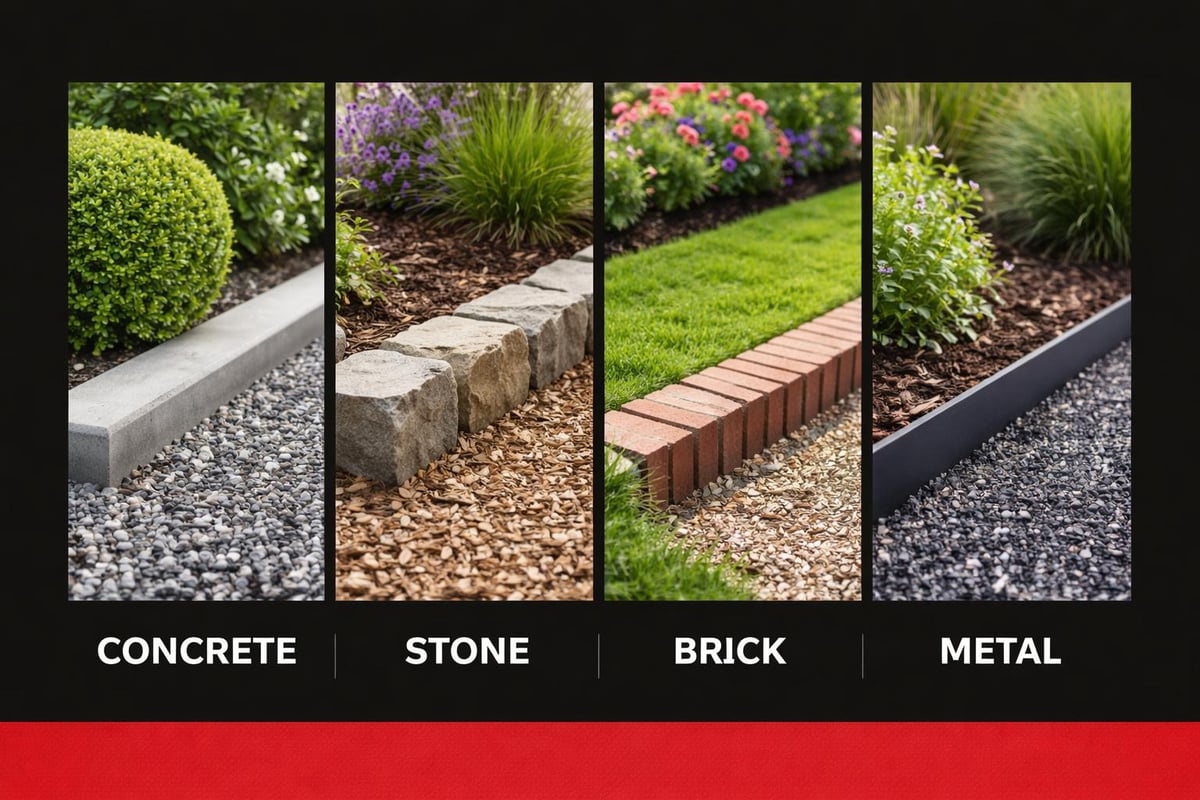
Choosing the appropriate material depends on several factors including budget, aesthetic preferences, durability requirements, and the specific application. Each material offers distinct advantages suited to particular situations.
Concrete Kerbing
- Exceptional durability lasting decades with minimal maintenance
- Available in various profiles including half-battered, bull-nosed, and standard chamfered designs
- Cost-effective for longer installations
- Ideal for driveways and high-traffic areas
- Professional installation ensures proper alignment and longevity
Natural Stone Options
- Premium appearance suitable for heritage properties
- Granite, sandstone, and limestone offer different colour palettes
- Irregular shapes create characterful informal edges
- Higher initial investment with excellent long-term value
- Weather-resistant and virtually maintenance-free
Block Paving and Bricks
- Versatile for matching existing driveway or patio materials
- Can be laid flat or on edge depending on design requirements
- Engineering bricks provide superior strength for vehicular areas
- Reclaimed bricks add vintage charm to period properties
| Material Type | Typical Lifespan | Best Application | Maintenance Level |
|---|---|---|---|
| Concrete Kerbs | 30+ years | Driveways, pathways | Very Low |
| Natural Stone | 50+ years | Feature areas, premium gardens | Very Low |
| Block Paving | 25+ years | Driveways, patios | Low |
| Timber | 10-15 years | Informal gardens, raised beds | Medium |
| Metal Edging | 20+ years | Contemporary designs | Low |
Professional Installation Techniques for Lasting Results
The longevity and performance of garden kerbing depends significantly on proper installation techniques. Shortcuts during the groundwork phase inevitably lead to problems including movement, cracking, and misalignment within months of completion.
Ground preparation begins with excavating a trench to the appropriate depth, accounting for both the kerb height and the foundation layer beneath. For standard garden applications, a 100mm concrete base provides adequate support, whilst driveway kerbing requires 150mm or more to withstand vehicular loading.
Creating a Stable Foundation
The foundation layer must be thoroughly compacted to prevent settlement. Professional installations utilise mechanical compaction equipment to achieve the necessary density, particularly for projects involving domestic driveways and hardstanding areas.
A concrete haunching or backing mix secures kerbs in position whilst providing lateral support. This concrete should be placed on both sides of the kerb for garden applications, or on the lawn side only for driveway installations where tarmac or block paving will support the opposite face.
String lines establish precise levels and alignment throughout the installation. Professional civil engineering contractors use optical levels or laser equipment for longer runs, ensuring consistent gradients and eliminating unsightly dips or humps.
Step-by-Step Installation Process
- Mark out the kerb line using spray paint or marker pegs at 1-metre intervals
- Excavate the trench to the required depth, maintaining consistent width throughout
- Lay and compact the sub-base material, checking levels continuously
- Place concrete foundation and allow partial curing before setting kerbs
- Position kerbs against the string line, checking both level and alignment
- Apply haunching concrete to both sides, shaping to shed water away
- Allow 24-48 hours curing before backfilling and completing adjacent works
Detailed installation guidance provides additional insights into achieving professional results. The precision required for commercial projects, such as those completed by established contractors, demonstrates the importance of methodical approach and proper equipment.
Design Considerations for Different Garden Areas
Garden kerbing applications vary considerably depending on whether you're defining ornamental borders, establishing pathway edges, or creating driveway boundaries. Each scenario presents unique design challenges and opportunities.
Driveway Edging Requirements
Driveways demand robust kerbing capable of withstanding vehicular loads and providing containment for surfacing materials. Standard concrete kerbs in 915mm or 1000mm lengths offer the structural integrity required whilst creating professional-looking boundaries.
The kerb profile affects both functionality and appearance. Bull-nosed kerbs present a rounded top edge that's gentle on tyres and aesthetically pleasing, whilst half-battered designs slope backwards from the face, ideal for situations requiring vehicle overrun capability.
- Minimum 125mm upstand for tarmac containment
- Radiused kerbs for curved driveway sections
- Dropped kerbs at vehicle crossings complying with local authority specifications
- Contrast colours to define parking bays in commercial installations
Pathway and Patio Borders
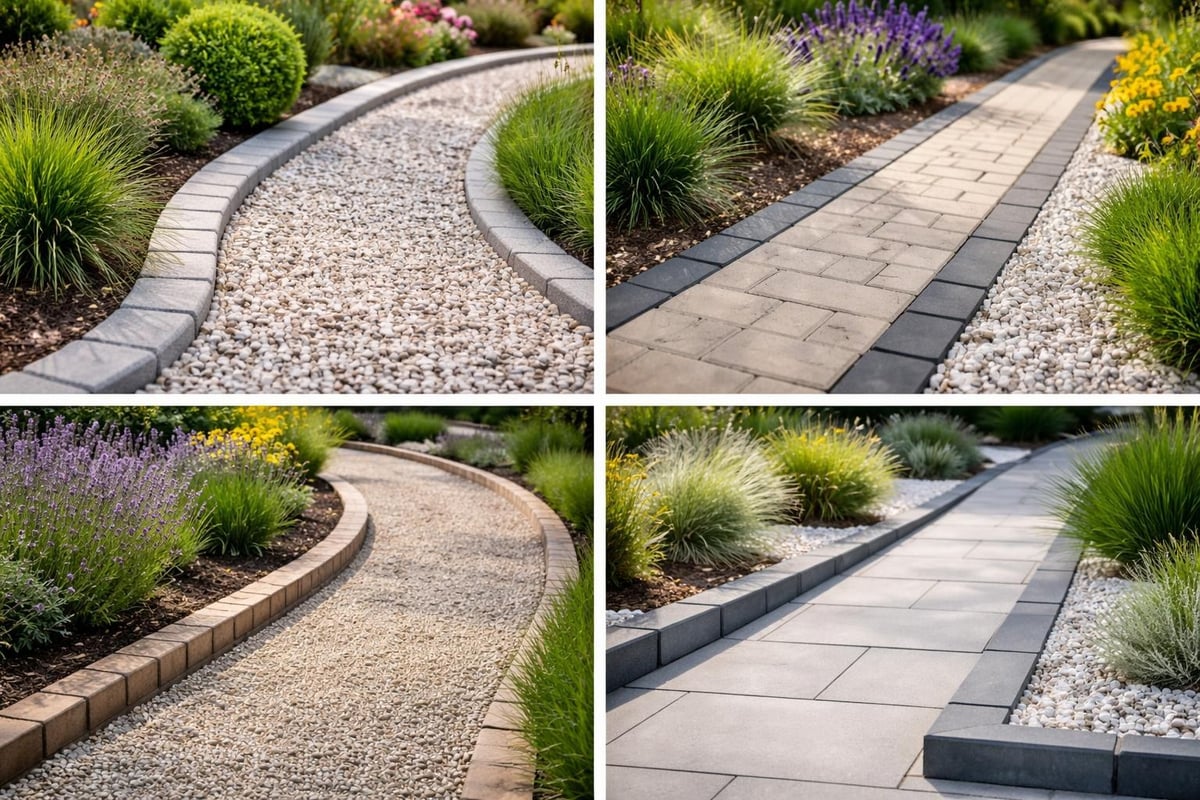
Garden paths benefit from lower-profile edging that defines routes without creating trip hazards. Flexible options accommodate curved designs, whilst soldier-course bricks laid on edge create attractive traditional borders.
Contemporary designs increasingly incorporate metal kerbs for modern gardens, offering sleek lines and minimal visual weight. Steel or aluminium profiles provide clean separation between gravel paths and lawn areas whilst remaining largely concealed when properly installed.
Ornamental Garden Bed Edging
Planting areas require edging that contains mulch and compost whilst complementing the garden's aesthetic character. The choice between formal and informal styles significantly influences material selection and installation approach.
Formal gardens benefit from crisp, geometric lines created by concrete or stone kerbing set to consistent heights. Victorian-style rope-top edging adds period authenticity to heritage gardens, whilst contemporary minimalist designs favour flush or near-flush installations.
Informal cottage gardens accommodate more relaxed approaches including dry-stacked stone, reclaimed materials, or timber edging. These naturalistic treatments blend with planting schemes whilst still providing essential containment functions.
Cost Factors and Budget Planning
Understanding the financial implications of garden kerbing projects enables informed decision-making and realistic budget allocation. Material costs represent only one component, with installation labour and groundwork preparation typically accounting for 50-60% of total project expenditure.
Material Cost Ranges (2026 UK Averages)
| Material | Cost per Linear Metre | Installation Complexity |
|---|---|---|
| Standard Concrete Kerb | £8-£15 | Medium |
| Decorative Concrete | £12-£25 | Medium |
| Natural Stone Kerb | £25-£60 | High |
| Block Paving Edging | £15-£30 | Medium-High |
| Timber Edging | £5-£15 | Low-Medium |
| Steel/Aluminium | £20-£45 | Medium |
Installation costs vary according to site accessibility, ground conditions, and project scale. Longer runs benefit from economies of scale, reducing the per-metre rate, whilst difficult access or existing landscaping obstacles increase labour requirements.
Hidden Costs and Additional Considerations
Groundwork preparation frequently reveals unexpected challenges including poor drainage, unsuitable soil conditions, or buried utilities requiring relocation. Experienced civil engineering contractors factor contingencies into quotations, protecting clients from mid-project budget surprises.
Disposal of excavated materials adds cost, particularly where heavy clay or contaminated soil requires specialist removal. Conversely, good-quality topsoil may offset some expenses through resale or reuse elsewhere on site.
Long-term maintenance costs favour durable materials despite higher initial investment. Concrete and stone kerbing requires virtually no maintenance over decades, whilst timber needs periodic treatment or replacement every 10-15 years.
For those working with limited budgets, affordable kerb ideas for smaller gardens offer cost-effective solutions without compromising on visual impact or functionality.
Integrating Kerbing with Landscape Design
Successful garden kerbing integrates seamlessly with overall landscape design rather than appearing as an afterthought. Coordinating materials, colours, and installation heights creates cohesive outdoor environments that enhance property value and usability.
Material consistency throughout a property establishes visual harmony. Using identical or complementary kerbing materials for driveways, pathways, and garden beds creates intentional design flow. Alternatively, deliberate contrasts between different zones add interest whilst maintaining professional finish quality.
Colour and Texture Coordination
Modern concrete kerbing extends beyond standard grey, with buff, red, and charcoal options available to complement existing paving or building materials. Natural stone selections should reference local geological characteristics, ensuring authentic regional appearance.
Texture plays an equally important role. Smooth-faced kerbs suit contemporary minimalist gardens, whilst textured or split-face finishes complement rustic or traditional settings. The interplay between kerbing and adjacent materials creates either subtle transitions or bold contrasts depending on design intent.
Height Relationships
- Flush installations create seamless transitions for mowing
- 25-50mm upstands define boundaries without impeding access
- 75-100mm heights provide robust containment for loose materials
- 125mm+ upstands suit driveways and heavy-duty applications
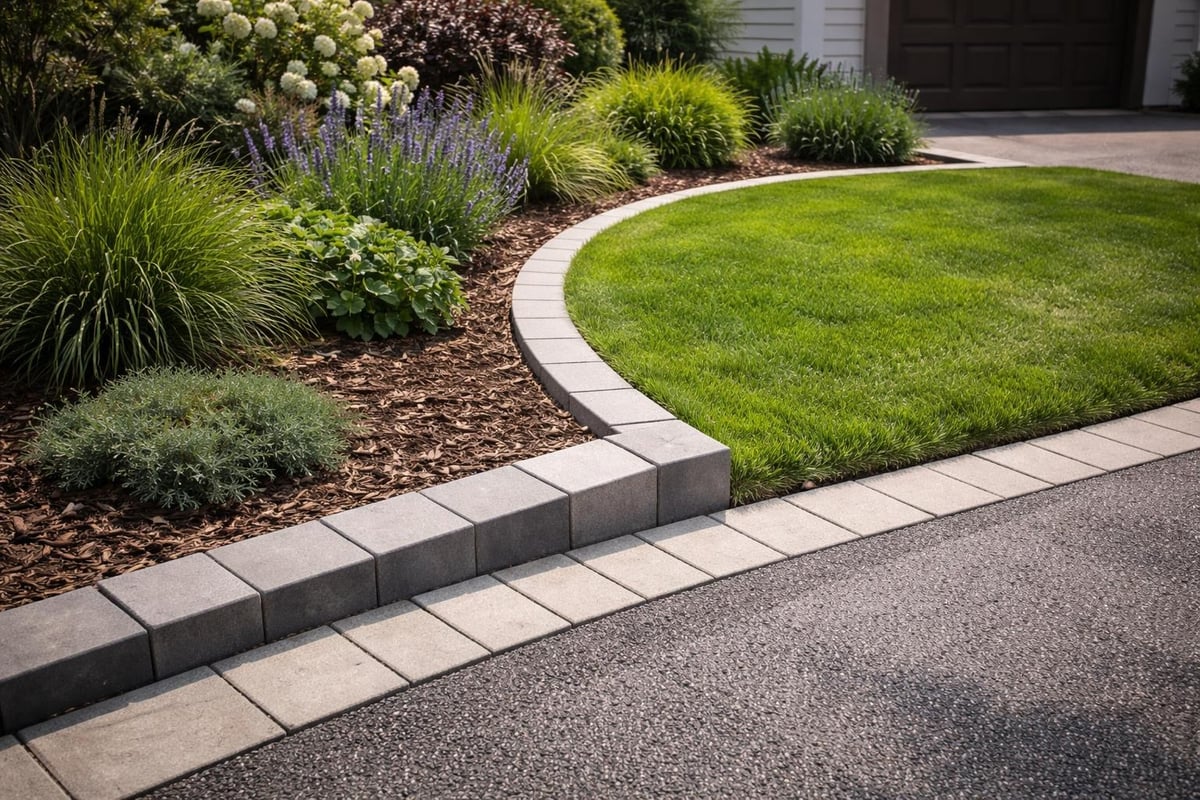
Curves and radius work require specialist installation techniques. Pre-cast curved sections suit larger radius applications, whilst small-radius curves necessitate individual block or brick construction. Kerb designs enhancing garden pathways demonstrate creative approaches to curved layouts.
Maintenance and Long-Term Performance
Properly installed garden kerbing requires minimal ongoing maintenance, though periodic inspection and minor remedial work maximises longevity and preserves appearance. Understanding potential issues enables prompt intervention before minor problems escalate.
Common Issues and Solutions
Settlement represents the most frequent problem, typically resulting from inadequate foundation preparation or groundwater movement. Isolated sunken sections can be lifted and re-seated on fresh concrete, though widespread settlement indicates systemic foundation failure requiring comprehensive reconstruction.
Joint deterioration affects installations where individual units meet. Repointing with appropriate mortar or sealant prevents water ingress and maintains structural integrity. Expansion joints in longer concrete runs accommodate thermal movement, preventing stress cracking.
Vegetation growth between kerb joints and adjacent surfaces detracts from appearance whilst potentially causing movement through root action. Regular application of appropriate weed control treatments maintains clean lines without damaging surrounding plantings.
Annual Maintenance Checklist
- Inspect for movement, cracking, or displacement
- Clear vegetation from joints and interfaces
- Check drainage functionality near kerbed areas
- Clean surfaces to remove algae or moss buildup
- Verify that backfill materials remain at appropriate levels
Repair Versus Replacement Decisions
Minor cosmetic damage including light chipping or surface staining rarely justifies replacement. Localised repairs using colour-matched concrete or mortar restore appearance cost-effectively. However, structural cracking, significant displacement, or extensive deterioration across multiple sections indicates the need for replacement rather than ongoing patch repairs.
Professional assessment helps determine whether problems stem from installation deficiencies, ground movement, or normal wear. Civil engineering contractors experienced in diverse projects including commercial and residential work provide objective evaluation and appropriate solutions.
Environmental and Practical Considerations
Garden kerbing choices influence both environmental impact and practical garden management. Sustainable material selection and thoughtful design contribute to eco-friendly landscapes whilst enhancing functionality.
Permeable kerbing systems allow water infiltration whilst maintaining boundary definition. These solutions reduce surface water runoff, supporting sustainable drainage principles increasingly important in urban environments. Gaps between units or porous concrete formulations enable rainwater absorption whilst preventing soil migration.
Water Management Integration
Proper kerbing installation considers surface water drainage patterns. Creating slight falls away from buildings prevents water pooling whilst directing runoff toward appropriate drainage infrastructure. Kerbs positioned along driveway edges often incorporate linear drainage channels, combining boundary definition with water management.
Raised kerbing protects garden beds during heavy rainfall, preventing soil erosion and nutrient loss. The physical barrier contains mulch layers that would otherwise wash away, maintaining soil health and reducing the need for frequent topdressing.
Material sourcing affects environmental credentials. Locally quarried stone reduces transportation emissions whilst supporting regional economies. Reclaimed materials offer sustainability benefits, though availability and condition vary considerably.
Sustainability Factors
- Local material sourcing minimising transport distances
- Recycled content in concrete products
- Longevity reducing replacement frequency
- Permeable options supporting natural drainage
- Compatibility with native planting schemes
Contemporary garden edging ideas increasingly prioritise environmental considerations alongside aesthetic appeal, reflecting growing awareness of sustainable landscape practices.
Professional Installation Versus DIY Approaches
The decision between professional installation and DIY implementation depends on project scope, available skills, equipment access, and quality expectations. Understanding the implications of each approach enables appropriate choices for specific circumstances.
Small-scale garden bed edging using flexible materials or individual pavers represents achievable DIY territory for competent homeowners. These projects require basic tools, modest physical effort, and limited technical knowledge. Online tutorials provide adequate guidance for straightforward installations.
However, driveway kerbing, extensive pathway borders, or projects requiring precise levels and structural integrity benefit significantly from professional expertise. Specialist equipment including concrete mixers, compaction plates, and levelling instruments ensures results matching commercial standards.
When Professional Installation Proves Essential
Complex projects involving drainage integration, substrate stabilisation, or coordination with other civil engineering works demand professional capabilities. The precision required for uniform gradients across long runs, proper haunching techniques, and structural adequacy for vehicular loading exceeds typical DIY scope.
Insurance and warranty considerations also favour professional installation. Reputable contractors provide guarantees covering both materials and workmanship, protecting clients from defect-related costs. DIY installations carry full responsibility for any failures or consequential damage.
Time investment represents another crucial factor. Professional teams complete installations efficiently through experience and appropriate resources, whilst DIY approaches often extend across multiple weekends with uncertain outcomes. For property owners with limited time or those prioritising rapid project completion, professional services offer compelling value.
Quality expectations significantly influence the professional versus DIY decision. Installations requiring exceptional standards and finishing touches that enhance property value justify professional engagement despite higher costs. Conversely, temporary or purely functional applications may tolerate DIY quality levels.
Regional Variations and Compliance Requirements
Garden kerbing installations across the UK must consider regional variations in materials, design preferences, and regulatory requirements. Understanding local contexts ensures appropriate choices that satisfy both aesthetic and compliance needs.
Planning and Building Regulations
Most garden kerbing installations fall outside planning permission requirements, though exceptions exist. Creating new vehicle accesses, altering listed property boundaries, or working within conservation areas typically requires approval. Consultation with local planning authorities clarifies requirements before commencing work.
Building regulations apply primarily to drainage aspects rather than kerbing itself. However, installations affecting surface water management or creating new impermeable areas may trigger sustainable drainage requirements. Professional contractors navigate these regulations routinely, ensuring compliant installations.
Highways works near public roads demand particular attention. Dropped kerbs for vehicle crossings require local authority approval and must meet specific construction standards. Section 184 licences (or equivalent) authorise private contractors to undertake such works under council supervision.
Regional Material Preferences
Different UK regions exhibit distinct material preferences reflecting local architectural traditions and available resources. Scottish properties often favour granite kerbing, whilst Yorkshire sandstone dominates in northern England. Understanding regional character helps installations complement rather than clash with local vernacular.
Contemporary developments increasingly standardise on concrete kerbing for cost efficiency and consistency. However, premium developments and restoration projects maintain traditional material use, preserving regional architectural identity.
Specialist Applications and Modern Innovations
Garden kerbing continues evolving through material innovations and specialist applications addressing contemporary landscape challenges. Staying informed about emerging options enables optimal solutions for unique requirements.
Illuminated Kerbing Systems
LED-integrated kerbing provides subtle pathway illumination whilst defining boundaries. Low-voltage systems embedded within kerb profiles create ambient lighting for safe navigation after dark. These installations prove particularly valuable for commercial properties and residential developments prioritising accessibility and security.
Solar-powered variants eliminate wiring requirements, simplifying installation whilst supporting sustainable design principles. Battery backup ensures consistent performance regardless of weather conditions or seasonal sunlight variations.
Flexible and Modular Systems
Innovative flexible kerbing products accommodate tight radius curves and irregular layouts impossible with traditional rigid units. Polymer-based materials bend to follow organic garden contours whilst maintaining structural integrity and appearance.
Modular systems enable rapid installation through interlocking components requiring minimal groundwork. Though typically suited to lighter-duty applications, these products offer DIY-friendly alternatives for garden bed edging and decorative applications.
Technological Advancements
- Permeable concrete formulations exceeding 20% void content
- Recycled plastic kerbing from post-consumer waste
- Fibre-reinforced composites enhancing crack resistance
- Pre-finished surfaces eliminating post-installation treatments
- Integrated drainage channels combining functions
Industry leaders continually develop solutions addressing specific challenges. Consultation with experienced civil engineering specialists reveals options beyond standard catalogue products, particularly for large-scale or technically demanding projects.
Garden kerbing transforms outdoor spaces through well-defined boundaries that combine aesthetic appeal with practical functionality, from residential gardens to commercial developments. Whether you're planning driveway edging, pathway borders, or ornamental garden beds, selecting appropriate materials and ensuring professional installation delivers lasting value. For expert civil engineering services throughout the North East and across the UK, JRG Civils brings proven expertise from commercial projects to residential enhancements, delivering excellence from initial groundwork through to final finishing touches.