When searching for earthworks companies near me, you're likely embarking on a significant project that requires substantial ground preparation, excavation, or site development. The earthworks phase forms the foundation of any successful construction project, from commercial developments to residential driveways, and selecting the right contractor can mean the difference between a smooth, efficient project and costly delays. Understanding what earthworks involves, how to identify qualified local contractors, and what questions to ask will empower you to make an informed decision that protects your investment and ensures project success.
Understanding Earthworks and Site Preparation
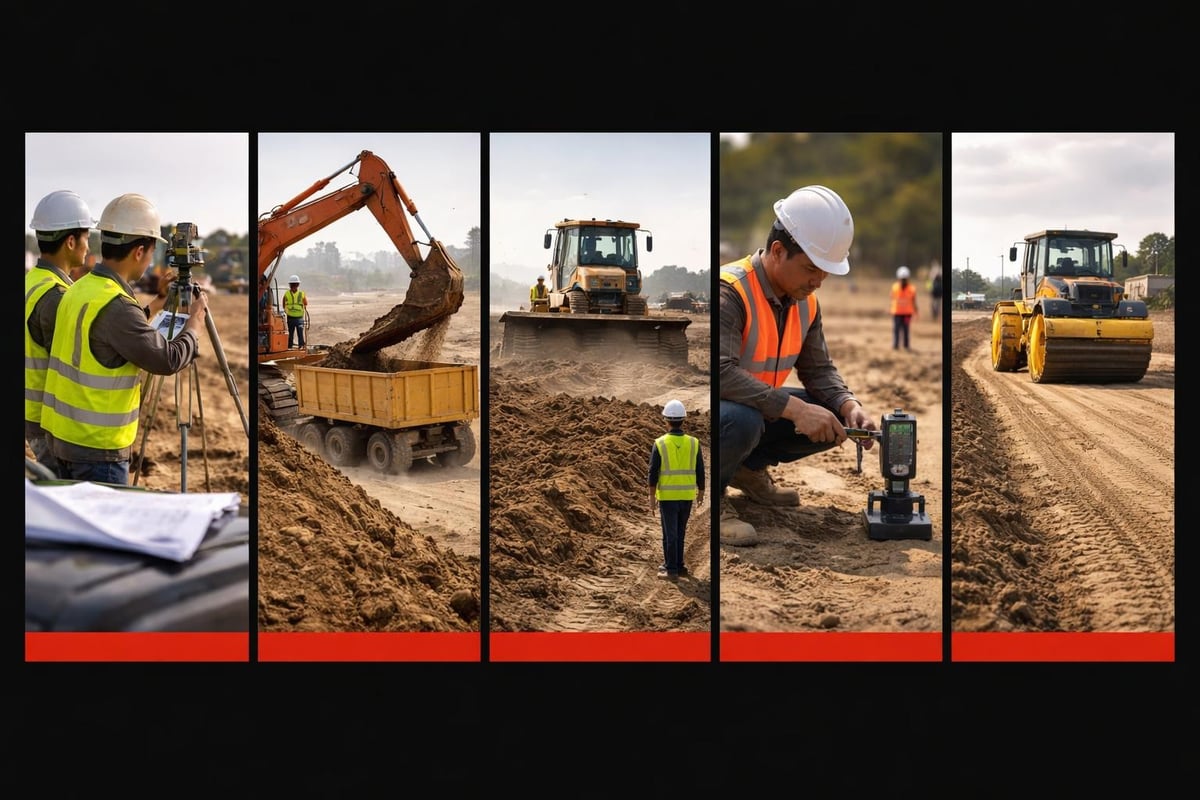
Earthworks encompasses a broad range of civil engineering activities that manipulate the ground surface to create a suitable foundation for construction. This process involves excavation, grading, cut and fill operations, soil compaction, and drainage installation. The complexity of earthworks varies dramatically depending on the project scope, from simple residential driveway preparations to extensive commercial site developments requiring sophisticated design and execution.
Core Components of Professional Earthworks
Professional earthworks companies handle multiple critical tasks that establish project viability:
- Site surveying and assessment to determine existing conditions and establish baseline measurements
- Excavation and removal of unsuitable materials or obstacles
- Grading and levelling to create proper drainage patterns and stable surfaces
- Soil compaction to specified densities that prevent future settlement
- Drainage system installation including French drains, swales, and culverts
- Subbase preparation for roads, car parks, and building foundations
The quality of earthworks directly impacts the longevity and performance of whatever is built upon it. Poor compaction, inadequate drainage, or incorrect grading can lead to surface failures, water pooling, and structural issues that cost significantly more to remedy than proper initial execution.
Finding Qualified Earthworks Companies Near Me
Your search for earthworks companies near me should prioritise contractors with demonstrable local experience, appropriate equipment, and verifiable credentials. Local knowledge matters considerably in earthworks because soil conditions, drainage patterns, local building regulations, and weather considerations vary by region. A contractor familiar with your area understands these nuances instinctively.
Start by examining a company's portfolio of completed projects. Look for diversity in project types and scales that match your requirements. A firm that has successfully completed commercial developments, franchise installations, and residential projects demonstrates adaptability and comprehensive capabilities. Companies like JRG Civils showcase this versatility through their work on Costa Coffee and Greggs drive-throughs alongside residential driveways and patios.
Verification and Credentials Assessment
| Credential Type | What to Verify | Why It Matters |
|---|---|---|
| Insurance Coverage | Public liability (minimum £5 million), employer's liability | Protects you from financial liability for accidents or damage |
| Industry Certifications | CECA membership, CSCS cards, plant operator tickets | Demonstrates professional standards and competency |
| Health & Safety | SSIP certification, H&S policies, risk assessment procedures | Indicates commitment to safe working practices |
| Financial Stability | Company registration, trading history, references | Ensures contractor can complete your project |
| Environmental Compliance | Waste carrier licence, environmental policies | Confirms legal compliance and responsible practices |
Request documentation for all relevant credentials and don't hesitate to verify them independently. Reputable earthworks companies near me will readily provide this information and appreciate your thoroughness.
Essential Questions When Vetting Contractors
When interviewing potential earthworks contractors, ask targeted questions that reveal their expertise, approach, and suitability for your specific project. The responses you receive will help you distinguish between competent professionals and those who may lack the necessary capabilities.
Experience and Specialisation Questions:
- How many similar projects have you completed in the past two years?
- What specific earthworks challenges have you encountered in this area?
- Can you provide references from recent projects of comparable scope?
- What is your typical project timeline for work of this nature?
Technical and Operational Questions:
- What equipment do you own versus hire for projects?
- How do you handle unexpected ground conditions or obstacles?
- What testing procedures do you use to verify compaction and drainage?
- How do you manage site safety and environmental protection?
Pay particular attention to how contractors address best practices in earthworks, especially regarding environmental considerations and sustainable methods. Companies that prioritise responsible practices demonstrate professionalism and forward-thinking approaches.
Project Planning and Specification Development
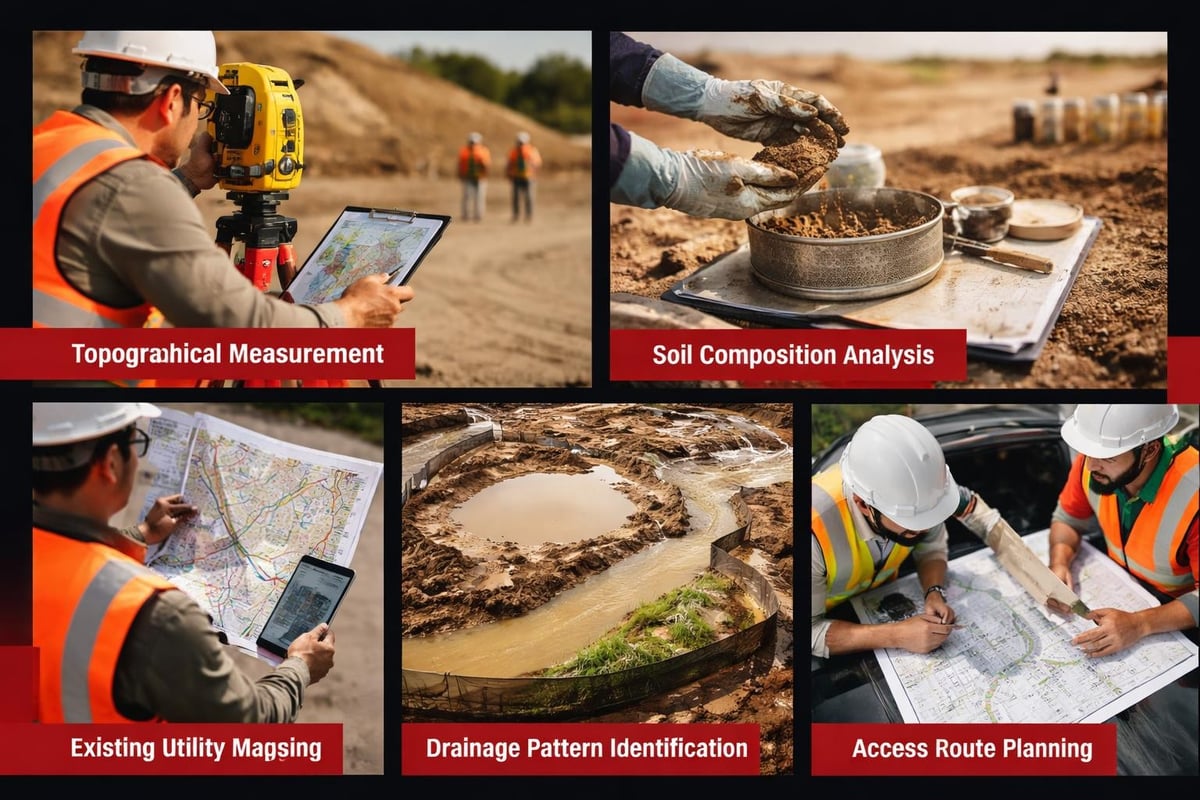
Successful earthworks projects begin with thorough planning and clearly defined specifications. When you engage earthworks companies near me, they should conduct a comprehensive site assessment before providing quotes. This assessment identifies critical factors that influence project scope, timeline, and cost.
Site Assessment Components
A proper assessment evaluates multiple interconnected factors:
- Topographical survey measuring existing ground levels and identifying gradients
- Soil investigation determining soil type, bearing capacity, and drainage characteristics
- Utility location identifying underground services that require protection or diversion
- Access evaluation assessing site accessibility for plant and material deliveries
- Environmental considerations noting protected areas, trees, or habitat constraints
This information allows contractors to develop accurate project specifications and realistic cost estimates. Vague assessments or quotes provided without site visits should raise immediate concerns about a contractor's thoroughness.
Equipment, Resources, and Capability Assessment
The equipment portfolio an earthworks contractor possesses or has reliable access to directly correlates with their capability and efficiency. Modern earthworks requires specialised machinery operated by skilled personnel who understand both the equipment and the engineering principles behind its use.
Essential Earthworks Equipment
| Equipment Type | Primary Function | Project Applications |
|---|---|---|
| Excavators (various sizes) | Digging, trenching, material handling | All earthworks projects |
| Bulldozers | Pushing, spreading, rough grading | Large site preparation, major grading |
| Graders | Fine grading, surface finishing | Road construction, large area levelling |
| Compaction Rollers | Soil compaction, density achievement | All projects requiring stable surfaces |
| Dumpers and Tipper Lorries | Material transportation | Excavation removal, aggregate delivery |
| GPS Grading Systems | Precision grading to design specifications | Complex grading, large commercial projects |
Contractors who own rather than hire equipment typically offer better value and flexibility because they avoid hire costs and can respond more quickly to project needs or schedule changes. However, equipment ownership alone doesn't guarantee quality work without properly trained operators.
Cost Structures and Pricing Transparency
Understanding how earthworks companies near me structure their pricing helps you evaluate quotes more effectively and identify potential issues before they arise. Earthworks pricing depends on numerous variables including site conditions, material quantities, disposal requirements, and project complexity.
Reputable contractors provide detailed, itemised quotations that break down costs into understandable components. This transparency allows you to see exactly what you're paying for and makes it easier to compare quotes from multiple contractors on a like-for-like basis.
Typical Cost Components:
- Site preparation and mobilisation (bringing equipment to site)
- Excavation and material removal (measured in cubic metres)
- Disposal or removal of excavated material
- Import and placement of new materials (aggregates, fill materials)
- Compaction and testing to specified densities
- Grading and finishing to design levels
- Drainage installation and connection
- Site reinstatement and cleanup
Be cautious of significantly low quotes that may indicate shortcuts in methodology, inadequate resource allocation, or hidden costs that will emerge during the project. Quality earthworks requires proper materials, sufficient time for compaction and testing, and skilled execution. Implementing responsible practices adds value through better long-term outcomes.
Regional Considerations and Local Expertise
When searching for earthworks companies near me, prioritise contractors with established regional presence and local project history. Local expertise provides tangible advantages that out-of-area contractors cannot match, regardless of their general capabilities.
Regional knowledge encompasses understanding of local soil types and their behaviour, familiarity with drainage patterns and water table levels, awareness of common ground conditions and potential issues, established relationships with local suppliers for materials and disposal, and knowledge of regional planning requirements and building control expectations.
Weather and Seasonal Factors
Local contractors understand how regional weather patterns affect earthworks timing and methodology. The North East, for example, experiences distinct seasonal variations that influence project scheduling and execution methods. Earthworks in winter requires different approaches than summer work, particularly regarding soil handling, compaction, and drainage considerations.
Experienced regional contractors factor these considerations into project planning automatically, scheduling critical activities during optimal weather windows and implementing appropriate methodologies for prevailing conditions.
Commercial Versus Residential Earthworks
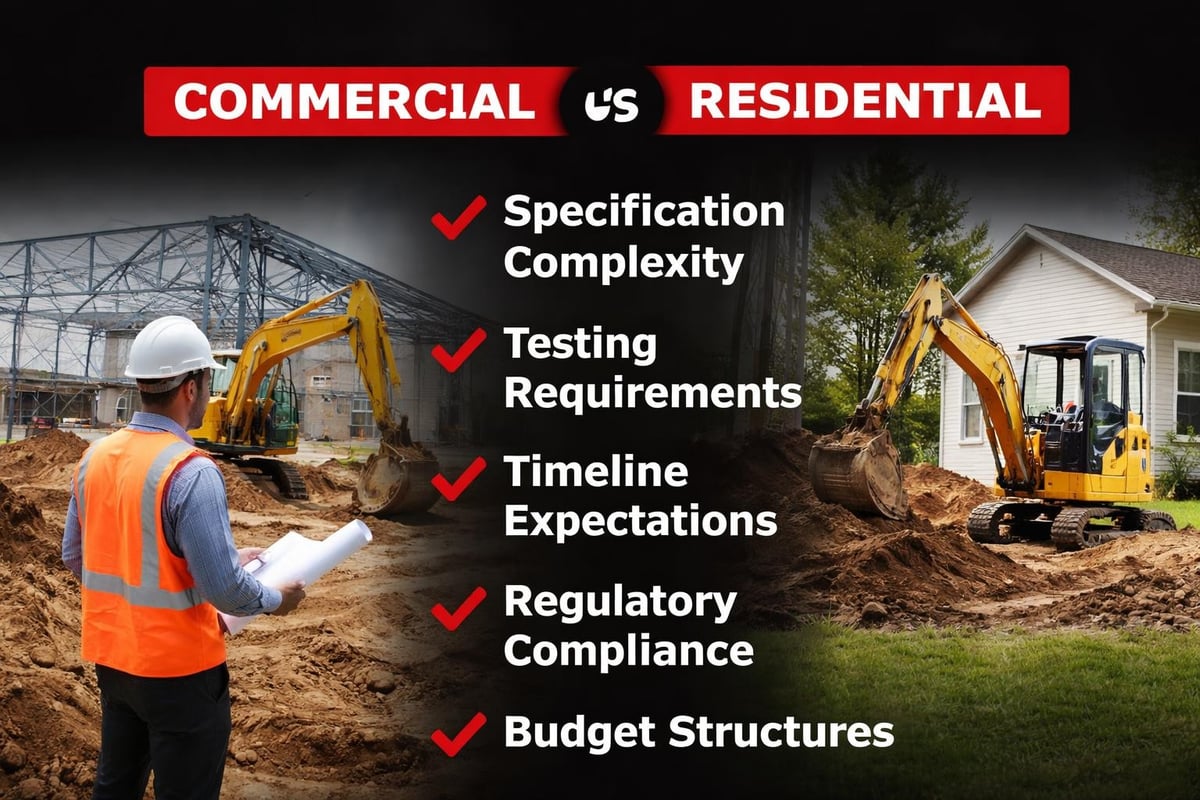
The distinction between commercial and residential earthworks projects involves more than just scale. Commercial projects typically require more rigorous specifications, formal testing protocols, and compliance with specific engineering standards. Residential work, while potentially less formally specified, still demands the same fundamental quality and attention to detail.
Commercial Project Characteristics:
- Formal design specifications prepared by consulting engineers
- Required compaction testing and certification at specified intervals
- Compliance with adoption standards for highways or utilities
- Coordination with multiple contractors and project stakeholders
- Stricter timeline requirements with penalty clauses
Residential Project Characteristics:
- More flexible design approach based on client requirements
- Focus on practical functionality and aesthetic outcomes
- Direct client communication and relationship
- Adaptability to changing requirements during construction
- Value-focused solutions balancing quality and budget
The best earthworks companies near me demonstrate competence across both sectors. This versatility indicates comprehensive capabilities and adaptability to different project requirements and working environments.
Quality Assurance and Testing Protocols
Professional earthworks contractors implement systematic quality assurance processes that verify work meets required standards throughout the project. These protocols protect both the contractor and client by documenting compliance with specifications and identifying any issues before subsequent construction phases commence.
Standard Testing Procedures
| Test Type | Purpose | Frequency |
|---|---|---|
| Density/Compaction Testing | Verifies soil compaction meets specification | Every 200-300mm lift or as specified |
| California Bearing Ratio (CBR) | Determines subgrade strength | At formation level before construction |
| Plate Bearing Tests | Measures surface stiffness | On completed subbase layers |
| Drainage Flow Tests | Confirms drainage systems function correctly | Upon completion of installation |
| Level/Survey Checks | Verifies grading accuracy to design | Throughout grading operations |
Documentation from these tests provides verifiable proof of compliance and creates a permanent record of the foundation upon which subsequent work is built. Contractors who resist or skip testing should be avoided as this indicates potential quality issues.
Timeline Expectations and Project Management
Realistic timeline expectations separate professional earthworks companies near me from those who over-promise to win contracts. Earthworks cannot be rushed without compromising quality, particularly compaction and testing phases that require specific procedures and sometimes waiting periods for optimal results.
A typical small to medium residential earthworks project (driveway or patio preparation) might require three to seven days depending on size, access, and ground conditions. Commercial site developments span several weeks to months based on area and complexity. Weather dependencies mean earthworks timelines always include contingency for delays.
Project Management Best Practices:
- Detailed programme showing each work phase with realistic durations
- Regular progress updates and communication protocols
- Proactive identification of potential delays with mitigation strategies
- Clear procedures for handling variations or unexpected conditions
- Documentation and photographic records throughout the project
Strong project management demonstrates professionalism and protects your interests by maintaining transparency and accountability throughout the earthworks phase. You can explore additional insights on how professional earthworks organisations operate to understand industry standards.
Environmental Responsibility and Sustainability
Modern earthworks contractors increasingly recognise their environmental responsibilities and implement practices that minimise ecological impact while maintaining project efficiency. When evaluating earthworks companies near me, consider their environmental policies and practical implementation of sustainable practices.
Responsible contractors manage excavated materials through reuse where possible, proper disposal when necessary, and segregation of different soil types for appropriate applications. They minimise dust and noise pollution, protect existing vegetation and drainage patterns, implement erosion and sediment control measures, and properly manage fuel storage and equipment maintenance to prevent contamination.
These practices aren't just environmentally sound but often provide cost benefits through reduced disposal volumes, material reuse, and regulatory compliance that prevents delays or penalties. Contractors who prioritise environmental protection demonstrate the broader awareness and responsibility that characterises quality professionals.
Red Flags and Warning Signs
Certain indicators during your search for earthworks companies near me should prompt additional scrutiny or reconsideration of a contractor. Recognising these warning signs protects you from poor outcomes and potential financial losses.
Critical Warning Signs:
- Reluctance to provide verifiable references or credentials
- Quotes provided without thorough site inspection
- Pressure to commit quickly or "special offers" that expire imminently
- Vague specifications or incomplete contract documentation
- Requests for large upfront payments before work commences
- Lack of formal insurance or appropriate business structure
- No permanent business address or professional communication methods
- Poor communication or difficulty reaching the contractor
Trust your instincts when these issues arise. Reputable contractors operate transparently, communicate professionally, and welcome thorough vetting because they have nothing to hide.
The Value of Established Track Records
Company longevity and proven track records provide confidence that earthworks companies near me will deliver quality outcomes and remain accountable throughout and after project completion. While newly established firms can be perfectly capable, established contractors offer additional assurance through their demonstrated staying power and accumulated experience.
Companies that have operated successfully for several years have navigated various economic conditions, built relationships with suppliers and specialists, developed refined methodologies through experience, and established reputations they actively protect. They've also learned from past challenges and incorporated those lessons into improved practices.
Since 2020, firms like JRG Civils have built impressive portfolios spanning commercial franchises and residential projects, demonstrating rapid capability development and commitment to excellence across diverse project types.
Contract Terms and Protection Mechanisms
Before engaging any earthworks contractor, ensure you have a comprehensive written contract that protects both parties and clearly defines all project parameters. Verbal agreements or informal arrangements create ambiguity that inevitably leads to disputes.
Essential Contract Elements:
- Detailed scope of work with specifications and drawings
- Project timeline with key milestones and completion date
- Total cost with payment schedule linked to completed stages
- Variations procedure detailing how changes are managed and priced
- Quality standards and testing requirements
- Insurance and liability provisions
- Dispute resolution procedures
- Warranty or defects liability period
Review contracts carefully and seek professional advice if needed before signing. Reputable contractors use clear, fair contract terms that distribute risk appropriately and create frameworks for successful project delivery.
Integration with Subsequent Construction Phases
Remember that earthworks form just the foundation for your overall project. The quality and accuracy of this phase directly impacts everything built upon it. When selecting earthworks companies near me, consider how they coordinate with subsequent contractors and construction phases.
Professional earthworks contractors provide detailed completion documentation including as-built drawings, test results and certifications, level verification data, drainage system details, and photographs documenting the completed work. This documentation assists subsequent contractors and provides permanent records for future reference or property sales.
They also understand the requirements of following trades, finishing work to appropriate tolerances, providing suitable access and working surfaces, and protecting completed earthworks from damage during subsequent activities.
Making Your Final Decision
After evaluating multiple earthworks companies near me, synthesise all information to make an informed decision. The lowest quote rarely represents the best value when quality, reliability, and long-term outcomes are considered. Balance cost against capability, experience, professionalism, and your confidence in the contractor's ability to deliver.
Check final references thoroughly, speaking directly with previous clients about their experiences. Ask about quality of work, adherence to timelines, communication effectiveness, problem-solving when issues arose, and whether they would hire the contractor again.
Once you've selected a contractor, establish clear communication protocols from the outset. Agree on regular update schedules, primary contact points, and procedures for discussing concerns or variations. This foundation enables smooth project delivery and positive working relationships.
Selecting the right earthworks contractor requires careful evaluation of credentials, experience, and approach to ensure your project starts on solid foundations. Whether you're planning commercial developments or residential enhancements, partnering with established professionals who demonstrate technical competence, environmental responsibility, and commitment to quality protects your investment. JRG Civils brings civil engineering excellence to projects across the UK, combining comprehensive capabilities with meticulous attention to detail from initial site preparation through to final completion.