Finding qualified earthwork companies near me represents one of the most critical decisions in any construction project, whether you're planning a commercial development, residential driveway, or major infrastructure work. The earthwork phase establishes the foundation for everything that follows, making contractor selection paramount to project success. From site preparation and excavation to grading and drainage solutions, the right civil engineering partner ensures your project meets regulatory requirements whilst staying on schedule and within budget.
Understanding Earthwork Services and Capabilities
Earthwork encompasses far more than simple excavation. Professional civil engineering companies provide comprehensive services that include site clearance, cut and fill operations, soil stabilisation, drainage installation, and precise grading to engineering specifications.
Core Earthwork Service Categories
When searching for earthwork companies near me, you'll encounter contractors offering varying specialisations:
- Site preparation and clearance removing vegetation, structures, and debris
- Bulk excavation for basements, foundations, and underground utilities
- Grading and levelling to achieve proper drainage and structural support
- Trenching services for utilities, drainage systems, and service installations
- Compaction and stabilisation ensuring load-bearing capacity meets design requirements
- Drainage solutions including surface and subsurface water management
The scope of earthwork services varies considerably between contractors. Some specialise exclusively in large-scale commercial projects, whilst others maintain expertise across both commercial and residential applications. Understanding earthwork construction fundamentals helps you assess whether a contractor's capabilities align with your project requirements.
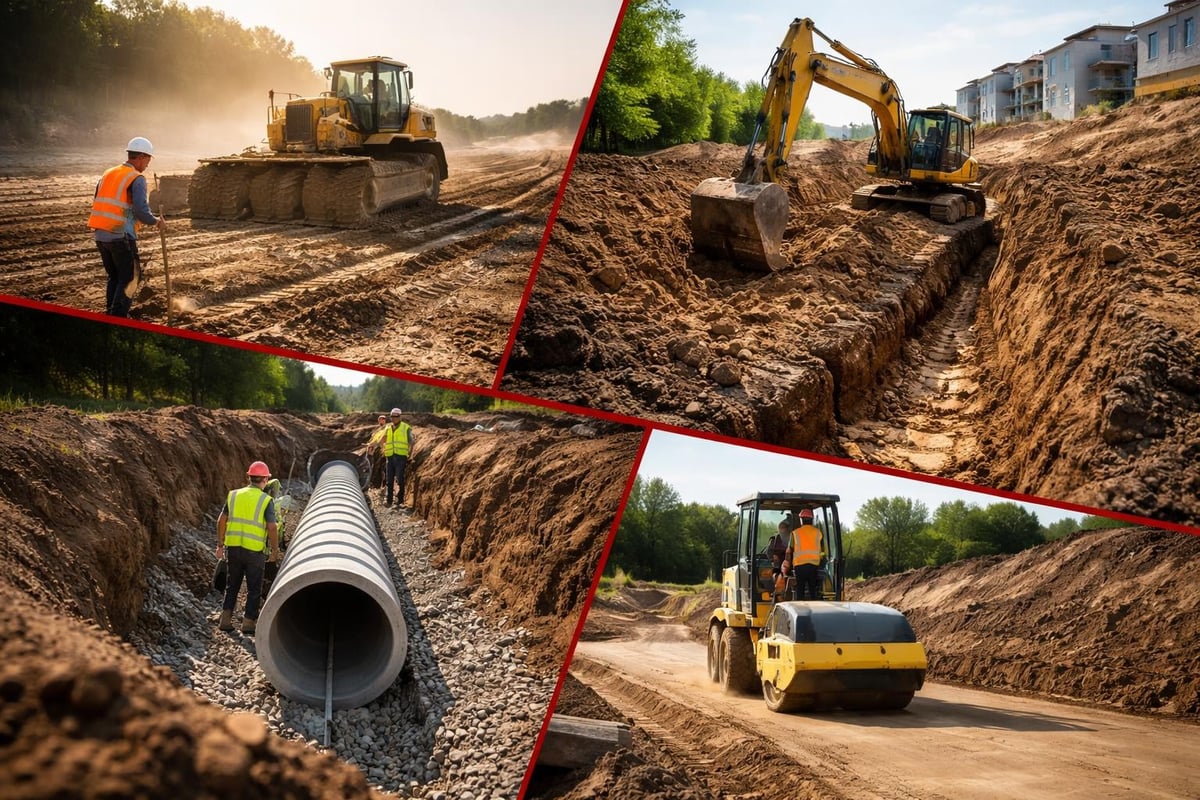
Equipment and Technical Capabilities
Modern earthwork demands sophisticated machinery and technical knowledge. Reputable contractors invest in well-maintained equipment fleets including excavators, bulldozers, compactors, graders, and specialised attachments for varied soil conditions.
| Equipment Type | Primary Applications | Project Scale |
|---|---|---|
| Mini Excavators | Residential driveways, patios, small foundations | Small to Medium |
| Standard Excavators | Commercial foundations, utility trenching | Medium to Large |
| Bulldozers | Site clearance, bulk earthmoving, rough grading | Large |
| Motor Graders | Road construction, precise finish grading | Medium to Large |
| Compaction Machinery | Soil stabilisation, sub-base preparation | All Scales |
Technical expertise extends beyond equipment operation. Quality contractors understand soil mechanics, moisture content management, and how geological conditions affect project execution. This knowledge proves essential when adapting to unexpected subsurface conditions or ensuring compliance with engineering specifications.
Evaluating Local Earthwork Contractors
The abundance of options when searching for earthwork companies near me necessitates a systematic evaluation approach. Your selection criteria should prioritise experience, safety standards, and proven project delivery.
Credentials and Compliance Verification
Professional earthwork contractors maintain proper licensing, comprehensive insurance coverage, and adherence to industry regulations. Verify that potential contractors understand and comply with OSHA excavation safety standards and local building regulations.
Request documentation of:
- Public liability insurance with adequate coverage limits
- Employer's liability insurance protecting their workforce
- Professional indemnity insurance for design-build projects
- Equipment insurance covering machinery and plant
- Valid licenses and certifications for specialised operations
Safety culture reveals contractor professionalism. Enquire about their safety management systems, incident records, and ongoing training programmes. Contractors who prioritise safety typically demonstrate similar diligence in project quality and client communication.
Portfolio Assessment and Reference Checks
Examining completed projects provides insight into contractor capabilities and quality standards. Request portfolios showing projects similar in scale and complexity to yours. Commercial earthwork for franchise developments like drive-through restaurants requires different expertise than residential patio construction.
Critical questions for references:
- Did the contractor complete work on schedule and within budget?
- How effectively did they communicate throughout the project?
- Were there unforeseen complications, and how were they addressed?
- Would you engage them again for future projects?
- How did they handle site cleanliness and environmental considerations?
Companies like JRG Civils demonstrate their versatility through diverse project portfolios, from multiple Costa Coffee and Greggs drive-through installations to residential driveways and patios. This range indicates adaptability and comprehensive technical capabilities.
Cost Considerations and Budget Planning
Earthwork pricing varies significantly based on project scope, site conditions, accessibility, and regional market factors. Understanding cost structures helps you evaluate quotations and identify exceptional value versus suspiciously low pricing.
Primary Cost Components
Earthwork expenses comprise several distinct elements. Material costs include imported fill, aggregate bases, and soil amendments. Labour costs reflect crew size, project duration, and required skill levels. Equipment expenses account for machinery operation, fuel consumption, and transport.
| Cost Factor | Typical Influence | Budget Planning Consideration |
|---|---|---|
| Site Access | 10-25% variation | Restricted access increases costs substantially |
| Soil Conditions | 15-30% variation | Rock or contaminated soil requires specialised handling |
| Volume of Material | Direct correlation | Larger volumes may benefit from economies of scale |
| Distance to Disposal | Variable | Transport costs for unsuitable material |
| Seasonal Factors | 5-15% variation | Winter conditions may increase duration and costs |
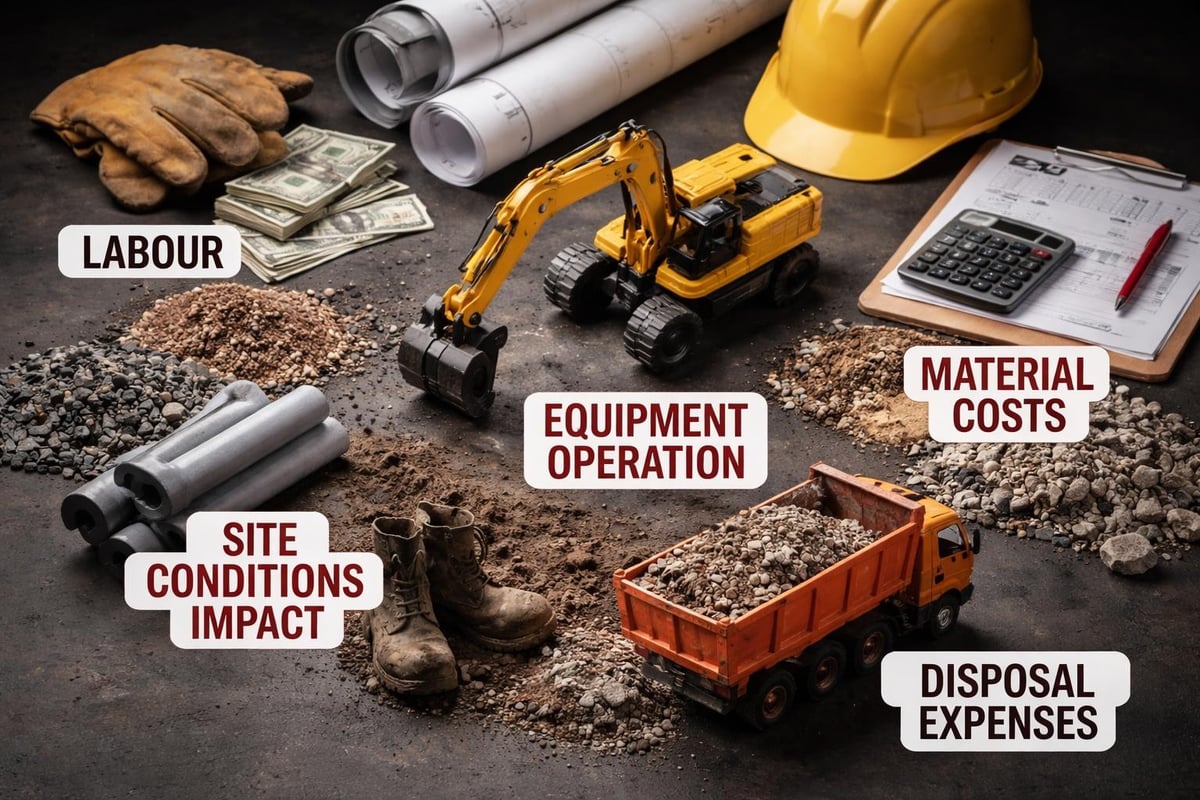
Comprehensive quotations itemise these components rather than providing single lump sums. Detailed breakdowns enable meaningful comparison between contractors and help identify potential value engineering opportunities.
Value Engineering and Cost Optimisation
Experienced earthwork companies near me often suggest cost-effective alternatives without compromising quality or structural integrity. These might include optimising cut-and-fill balance to minimise material import, adjusting project phasing to accommodate weather constraints, or recommending alternative stabilisation methods.
Discuss your budget parameters openly. Professional contractors appreciate transparency and can often propose solutions that align technical requirements with financial constraints. However, be wary of quotes significantly below market rates, as these may indicate inadequate insurance, inexperienced crews, or planned cost escalations.
Project Timeline and Scheduling Factors
Earthwork scheduling requires careful coordination with subsequent construction phases and consideration of weather-dependent constraints. Understanding timeline factors helps establish realistic expectations and identify contractors who demonstrate sound project management.
Weather and Seasonal Considerations
British weather presents particular challenges for earthwork operations. Heavy rainfall saturates soils, reducing trafficability and complicating compaction requirements. Frozen ground conditions halt excavation entirely. Professional contractors factor these seasonal variables into project planning.
Optimal earthwork windows typically occur during drier months, though experienced contractors successfully complete projects year-round through adaptive techniques. These include temporary drainage installations, soil moisture management, and weather-contingent scheduling that builds flexibility into the programme.
Spring and autumn months often see increased contractor demand, potentially extending lead times. Summer offers more predictable conditions but may command premium rates during peak construction season. Winter projects require additional precautions but may offer scheduling advantages and competitive pricing.
Coordination with Other Trades
Earthwork rarely exists in isolation. Your contractor must coordinate with surveyors, utility companies, concrete suppliers, and subsequent construction trades. Effective communication and scheduling discipline prevent costly delays and rework.
- Pre-construction surveys establishing existing conditions and tolerances
- Utility location and protection preventing service strikes and ensuring safe working
- Material delivery scheduling coordinating imported fill and aggregate supplies
- Inspection timing allowing for local authority or engineer approvals
- Handover preparation ensuring proper compaction testing and documentation
Companies managing diverse projects simultaneously, such as commercial developments alongside residential work, demonstrate organisational capabilities essential for complex scheduling demands. Their experience managing multiple stakeholders and competing priorities typically translates to smoother project execution.
Quality Assurance and Regulatory Compliance
Earthwork quality directly impacts structural longevity and performance. Comprehensive quality assurance processes and regulatory compliance distinguish professional contractors from less rigorous alternatives. Understanding these standards helps you evaluate contractor proposals and site practices.
Testing and Verification Procedures
Professional earthwork execution includes systematic testing at critical stages. Compaction testing verifies that fill materials achieve specified density requirements. Moisture content analysis ensures optimal compaction conditions. Grade verification confirms surfaces meet design elevations and tolerances.
Standard quality control measures:
- Nuclear density gauge testing for compaction verification
- Proctor tests establishing optimal moisture-density relationships
- Laser level surveys confirming grade accuracy
- Visual inspections documenting layer thickness and composition
- Photographic records creating comprehensive project documentation
Contractors should provide testing documentation as part of project deliverables. These records prove regulatory compliance, support warranty claims, and facilitate future property transactions or developments.
Environmental and Safety Standards
Modern earthwork must address environmental protection alongside construction efficiency. Best practices in earthwork emphasise erosion control, sediment management, and minimising ecosystem disruption.
Responsible contractors implement:
- Silt fencing and sediment traps preventing watercourse contamination
- Dust suppression measures protecting air quality and neighbouring properties
- Designated vehicle washing areas containing contaminated runoff
- Proper handling and disposal of contaminated or unsuitable materials
- Vegetation protection measures preserving existing landscape features where possible

Safety compliance extends beyond regulatory minimums. Comprehensive excavation safety procedures protect workers, adjacent properties, and the public. Trench shoring, edge protection, and proper access provisions represent non-negotiable safety requirements for professional contractors.
Regional Expertise and Local Knowledge
When evaluating earthwork companies near me, local expertise provides significant advantages. Contractors familiar with regional soil conditions, geological challenges, and local authority requirements navigate projects more efficiently than those working outside their established territory.
Understanding Regional Conditions
The North East, for example, presents distinct geological characteristics requiring specific expertise. Coal mining legacy, variable soil profiles, and regional drainage patterns demand local knowledge that out-of-area contractors may lack.
Regional familiarity benefits projects through:
- Established relationships with local material suppliers ensuring competitive pricing and reliable delivery
- Knowledge of seasonal weather patterns enabling realistic scheduling
- Experience with local authority procedures and inspection requirements
- Understanding of regional soil conditions and appropriate stabilisation techniques
- Existing relationships with specialist subcontractors and testing laboratories
Whilst some contractors operate nationally, those maintaining regional focus often provide more responsive service and deeper local expertise. Companies based in the North East that also accommodate UK-wide projects offer the optimal combination of local knowledge and broader capability.
Building Department Relationships
Navigating planning requirements and building regulations proves smoother when contractors maintain positive relationships with local authorities. Experienced regional contractors understand specific departmental preferences, typical review timelines, and effective communication channels with building control officers.
This familiarity accelerates approval processes and reduces the likelihood of costly compliance issues emerging mid-project. Contractors who regularly work within your local authority's jurisdiction bring this procedural knowledge to your project's advantage.
Commercial Versus Residential Earthwork
Project scale and complexity significantly influence contractor selection. Understanding the distinctions between commercial and residential earthwork helps identify contractors whose expertise aligns with your specific requirements.
Commercial Project Considerations
Large-scale commercial developments like franchise restaurants, retail centres, or industrial facilities demand comprehensive civil engineering capabilities. These projects typically involve:
- Complex drainage systems integrating with existing infrastructure
- Substantial material volumes requiring efficient logistics
- Stringent engineering specifications and compaction requirements
- Coordination with multiple consultants and contractors
- Accelerated schedules with liquidated damages provisions
Contractors with proven commercial experience, such as those completing multiple franchise developments, understand the unique pressures and quality standards these projects demand. Their familiarity with commercial construction schedules, contractor coordination, and detailed specification compliance proves invaluable.
| Project Type | Typical Duration | Crew Size | Specification Detail |
|---|---|---|---|
| Residential Driveway | 3-7 days | 2-4 workers | Moderate |
| Commercial Car Park | 2-4 weeks | 6-12 workers | High |
| Road Construction | 4-12 weeks | 10-20 workers | Very High |
| Large Development | 3-12 months | Variable teams | Comprehensive |
Residential Applications
Residential earthwork encompasses driveways, patios, garden levelling, and foundation preparation for extensions. These projects prioritise aesthetics alongside functionality, require minimal disruption to occupied properties, and often involve direct homeowner communication.
Successful residential contractors demonstrate:
- Excellent client communication and project transparency
- Respect for property boundaries and existing landscaping
- Efficient site management minimising disruption duration
- Attention to aesthetic details and finished appearance
- Flexibility accommodating homeowner schedules and preferences
Companies maintaining expertise across both commercial and residential applications, completing everything from drive-through restaurants to private driveways, offer versatile capabilities suitable for diverse project requirements.
Due Diligence and Contractor Selection
Finalising your contractor selection requires thorough due diligence beyond initial quotations and credentials review. This comprehensive evaluation protects your investment and establishes the foundation for successful project delivery.
Contract Documentation and Terms
Never proceed without comprehensive written contracts specifying scope, schedule, payment terms, and responsibilities. Professional contractors provide detailed contracts addressing:
- Scope of work with specific inclusions and exclusions
- Payment schedule tied to measurable milestones
- Timeline commitments with weather allowances and delay provisions
- Quality standards referencing applicable specifications
- Variation procedures establishing how changes are priced and approved
- Dispute resolution mechanisms protecting both parties
- Warranty provisions covering materials and workmanship
Review contracts carefully, seeking legal advice for complex or high-value projects. Ambiguous terms or unfavourable payment structures may indicate problematic contractors or create future disputes.
Insurance and Bonding Verification
Request current insurance certificates directly from insurers rather than accepting contractor-provided copies. Verify coverage amounts exceed your project value and that policies remain current throughout the construction period.
For substantial commercial projects, consider requiring performance bonds guaranteeing project completion and payment bonds protecting subcontractors and suppliers. Whilst these increase project costs, they provide significant risk mitigation for major investments.
Pre-Project Site Meetings
Conduct detailed site meetings with shortlisted contractors before final selection. These meetings reveal important insights into contractor professionalism, technical understanding, and communication effectiveness.
Observe whether contractors:
- Arrive punctually and professionally prepared
- Ask probing questions about project requirements and constraints
- Identify potential challenges and propose solutions
- Demonstrate genuine interest rather than perfunctory quotation exercises
- Communicate clearly in accessible language rather than impenetrable jargon
Site meeting quality often predicts working relationship quality. Contractors demonstrating thorough preparation, thoughtful questions, and clear communication typically maintain these standards throughout project execution.
Technology and Modern Earthwork Practices
Contemporary earthwork increasingly incorporates advanced technology enhancing precision, efficiency, and documentation. Understanding these capabilities helps identify forward-thinking contractors delivering superior outcomes.
GPS and Machine Control Systems
GPS-guided grading equipment achieves tolerances impossible through traditional methods whilst significantly reducing time requirements. These systems enable excavators and graders to follow three-dimensional design models with millimetre precision.
Benefits include:
- Reduced material waste through precise cut-and-fill execution
- Faster completion of grading operations
- Consistent quality regardless of operator experience levels
- Elimination of traditional grade stake requirements
- Real-time progress monitoring against design specifications
Not all contractors invest in this technology, as equipment represents substantial capital expenditure. However, for projects demanding tight tolerances or complex grading, GPS-controlled machinery delivers measurable advantages justifying any cost premium.
Digital Documentation and Project Management
Modern contractors utilise digital tools for scheduling, progress tracking, and client communication. Cloud-based project management platforms provide real-time updates, photographic documentation, and transparent communication channels.
These technologies benefit clients through improved visibility into project status, faster response to questions or concerns, and comprehensive documentation supporting future property transactions or warranty claims.
Specialist Earthwork Applications
Beyond standard excavation and grading, certain projects require specialist earthwork expertise. Identifying contractors with relevant specialisation ensures appropriate technical capabilities for demanding applications.
Road Construction and Highway Work
Road and highway projects demand specific expertise in pavement design principles, aggregate specifications, and trafficking requirements. Understanding construction specifications for earthwork proves essential for contractors undertaking highway surfacing and road construction.
These projects require:
- Knowledge of structural pavement layers and material specifications
- Experience with hot mix asphalt or concrete paving operations
- Understanding of drainage design and surface water management
- Familiarity with highway safety requirements and traffic management
- Capability coordinating with highway authorities and statutory undertakers
Contractors regularly completing road design and construction projects bring this specialised knowledge, ensuring compliance with stringent highway standards and durable pavement performance.
Drainage and Water Management
Effective drainage represents a critical earthwork component often underestimated in its complexity. Surface water management, groundwater control, and subsurface drainage systems require hydraulic design knowledge and installation expertise.
Specialist drainage applications include French drains, soakaways, attenuation tanks, and comprehensive surface water collection systems. Contractors experienced in these installations prevent future flooding, foundation damage, and premature pavement failure.
Selecting the right contractor when searching for earthwork companies near me fundamentally shapes project outcomes, affecting quality, timeline, and long-term performance. Thorough evaluation of credentials, experience, and communication capabilities identifies partners committed to excellence rather than merely competitive pricing. Whether you're planning commercial highway surfacing, a residential driveway, or comprehensive civil engineering works, JRG Civils combines North East expertise with UK-wide capability, delivering the professional reliability and quality craftsmanship your project deserves.