
When planning a development project that affects public highways, understanding the legal requirements becomes paramount. A Section 278 Agreement, commonly referred to as an s278 agreement, represents a crucial legal framework that enables developers to carry out necessary highway improvements. These agreements exist under Section 278 of the Highways Act 1980 and govern the relationship between developers and local highway authorities when modifications to public roads become necessary. Whether you're building a commercial drive-through, residential estate, or industrial facility, comprehending this process ensures your project progresses smoothly and meets all regulatory requirements.
What Is an S278 Agreement
An s278 agreement establishes the legal basis for developers to execute works on public highways that fall outside their ownership. The legal definition of S278 agreements clarifies that these arrangements permit modifications, improvements, or alterations to existing highway infrastructure at the developer's expense.
The fundamental principle centres on ensuring that any development generating additional traffic or requiring highway modifications contributes to maintaining road safety and capacity. This requirement affects various project types, from small access improvements to substantial junction reconfigurations.
When S278 Agreements Become Necessary
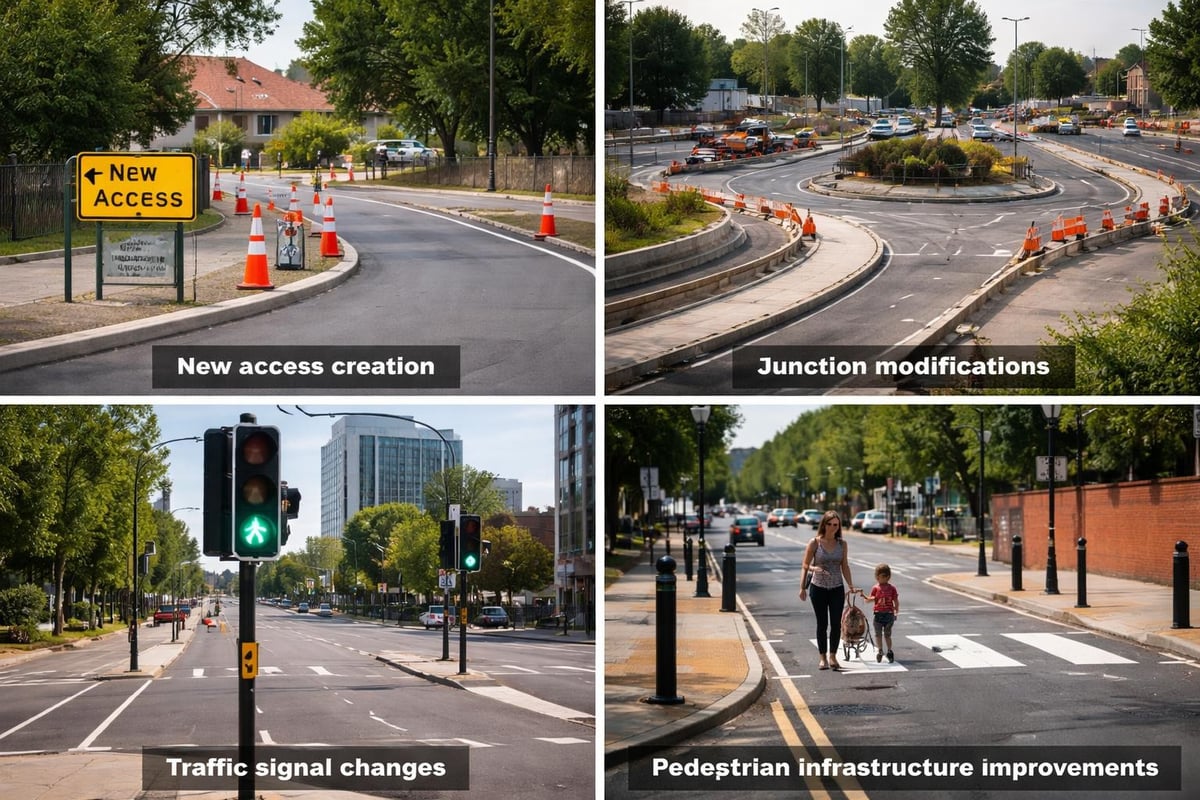
Several scenarios trigger the requirement for these formal agreements:
- New vehicular access points onto public roads
- Modifications to existing junction layouts
- Installation of traffic calming measures
- Street lighting improvements or extensions
- Drainage system alterations affecting highway infrastructure
- Footpath widening or pedestrian crossing installations
- Traffic signal modifications or new installations
Commercial developments particularly frequently require s278 agreements. Drive-through restaurants, retail parks, and industrial estates typically generate significant traffic movements that necessitate highway improvements. Having completed multiple franchise projects including Costa Coffee and Greggs locations, understanding these requirements becomes essential for project delivery.
The Application Process and Timeline
Securing an s278 agreement involves multiple stages that require careful planning and coordination. West Northamptonshire Council’s guidance on S278 agreements outlines the structured approach local authorities expect from applicants.
Initial Consultation and Design
Early engagement with the highway authority proves invaluable. Before submitting formal applications, developers should initiate discussions about proposed works. This preliminary stage allows both parties to identify potential issues and establish design parameters.
The highway authority will review preliminary designs, considering:
- Traffic impact assessments
- Safety audit requirements
- Design standards compliance
- Construction methodology
- Maintenance implications
Road safety audits form a critical component of the design process. Independent assessors evaluate proposed schemes to identify potential hazards before construction commences.
Formal Application Requirements
Once preliminary designs receive approval, the formal application process begins. Documentation typically includes:
| Document Type | Purpose | Key Details |
|---|---|---|
| Detailed drawings | Show proposed works | Scaled plans, sections, specifications |
| Traffic surveys | Demonstrate impact | Peak flow data, junction capacity |
| Programme | Timeline delivery | Construction phases, traffic management |
| Cost estimate | Financial planning | Materials, labour, supervision |
| Insurance details | Risk management | Public liability, professional indemnity |
The highway authority scrutinises these submissions to ensure compliance with local standards and national design guidance. Expect questions, requests for modifications, and iterative design development.
Agreement Negotiation
Negotiating the agreement terms requires patience and attention to detail. The purpose and process outlined by Wigan Council demonstrates how local authorities structure these negotiations.
Financial obligations represent a significant aspect of the agreement. Developers must cover:
- Design check fees
- Legal fees for agreement preparation
- Supervision and inspection costs during construction
- Commuted sums for future maintenance
- Bond or financial security arrangements
The commuted sum calculation considers the anticipated maintenance costs over a specified period, typically 25 years. This ensures the highway authority receives adequate funding to maintain new infrastructure without burdening local taxpayers.
Technical and Financial Considerations
Understanding the technical requirements and financial implications helps developers budget accurately and avoid delays. An s278 agreement imposes specific obligations that extend beyond simple construction contracts.
Design Standards and Specifications
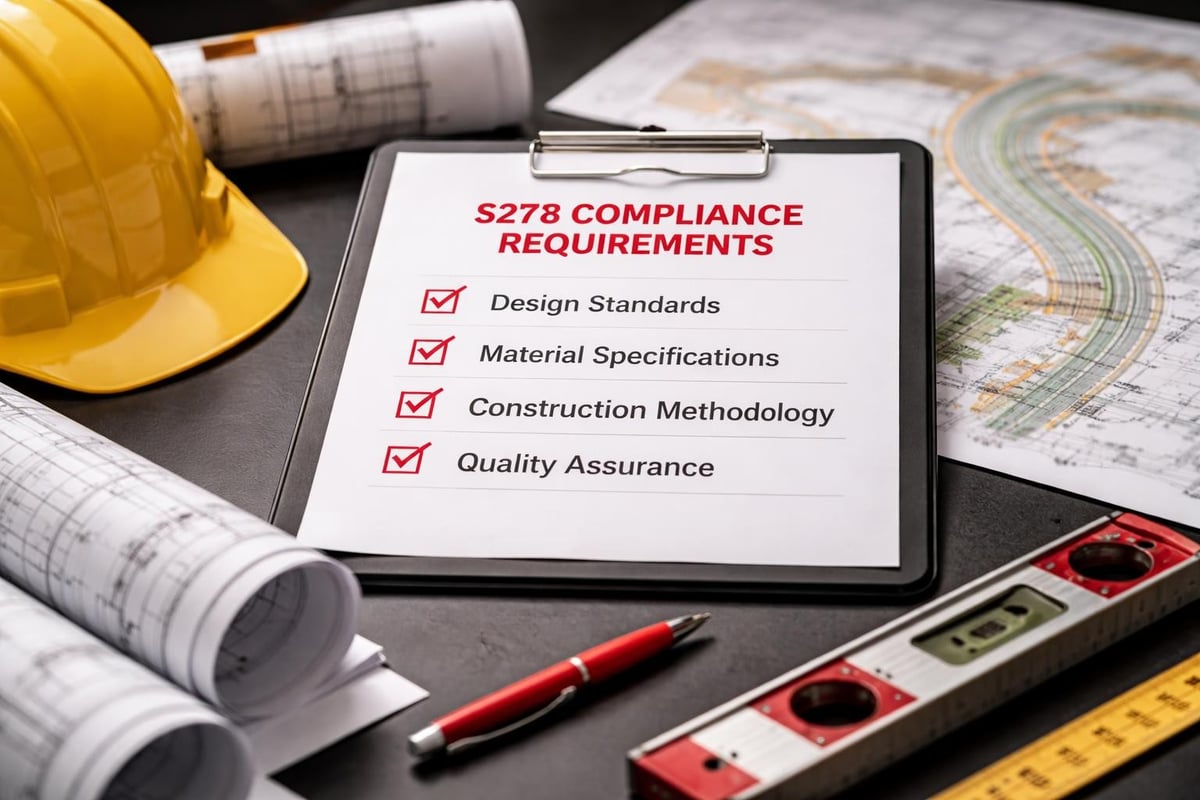
Highway works must comply with rigorous standards. The highway authority typically requires adherence to:
- Design Manual for Roads and Bridges (DMRB)
- Manual for Streets guidance
- Local supplementary design standards
- Disability discrimination legislation requirements
Surfacing specifications demand particular attention. Road construction standards differ significantly from private driveway work, requiring deeper sub-bases, specific material grades, and enhanced drainage provisions. Professional civil engineering contractors with highway experience understand these distinctions and can deliver compliant solutions.
Cost Implications and Budgeting
Financial planning for s278 agreement works requires comprehensive understanding of all cost elements. Beyond the obvious construction expenses, additional costs include:
Professional fees for highways consultants, traffic engineers, and legal advisors can represent 15-25% of construction costs. These specialists navigate the approval process and ensure compliance with technical requirements.
Highway authority charges vary between councils but typically cover administration, technical approval, and supervision. Kent County Council’s consultation on revised charging structures illustrates how authorities are modernising their fee approaches.
The financial security requirement, usually a bond or cash deposit, typically amounts to 125% of the estimated construction cost. This protects the highway authority if the developer fails to complete works satisfactorily.
| Cost Category | Typical Range | Notes |
|---|---|---|
| Construction works | £50,000-£500,000+ | Varies with scope |
| Design fees | 8-15% of construction | Dependent on complexity |
| Authority fees | £5,000-£25,000 | Council-specific |
| Legal costs | £3,000-£10,000 | Agreement preparation |
| Bond/security | 125% of construction | Returned on completion |
| Commuted sum | 10-30% of construction | Maintenance provision |
Programme Management
Timeline planning must accommodate the s278 agreement process. From initial consultation to practical completion, expect:
- Pre-application discussions (4-8 weeks)
- Formal application and review (8-12 weeks)
- Agreement negotiation and completion (6-10 weeks)
- Construction phase (project-specific)
- Inspection and final approval (2-4 weeks post-completion)
This timeline can extend significantly if design revisions prove necessary or if particularly complex works are proposed. Early engagement and comprehensive initial submissions help minimise delays.
Working With Professional Consultants
The complexity of s278 agreements often necessitates professional support. Specialist consultancy services for S278 and S38 agreements provide expertise in navigating the approval process and ensuring compliance.
Selecting Appropriate Advisors
Different aspects of the process require varied expertise:
Transport planning consultants handle traffic assessments, junction design, and liaison with highway authorities. They understand local authority requirements and can present proposals in formats that facilitate approval.
Civil engineering contractors with highway experience execute the physical works to required standards. Established firms bring knowledge of specification requirements, quality assurance procedures, and construction methodologies specific to highway projects.
Legal advisors specialising in property and highway law ensure the agreement protects developer interests whilst meeting authority requirements. They negotiate terms and clarify obligations.
Value of Integrated Project Delivery
Coordinating between design, legal, and construction teams creates efficiency. When civil engineering contractors engage early in the design process, practical construction considerations inform designs from the outset. This integrated approach reduces the likelihood of buildability issues emerging during construction.
Common Challenges and Solutions
Even well-planned projects encounter obstacles during the s278 agreement process. Understanding common challenges enables proactive mitigation.
Design Approval Delays
Highway authorities may request multiple design revisions before approval. Each iteration extends timelines and increases costs.
Solution approaches include:
- Comprehensive pre-application consultation
- Engaging experienced highway design consultants
- Allowing generous timelines in project programmes
- Maintaining regular communication with authority officers
Cost Escalation
Initial estimates sometimes prove insufficient when detailed designs reveal additional requirements.
To manage this risk, build contingency into budgets. A 15-20% allowance for unforeseen elements provides reasonable protection. Regular cost reviews during design development help identify potential overruns before commitment to construction.
Construction Phase Complications
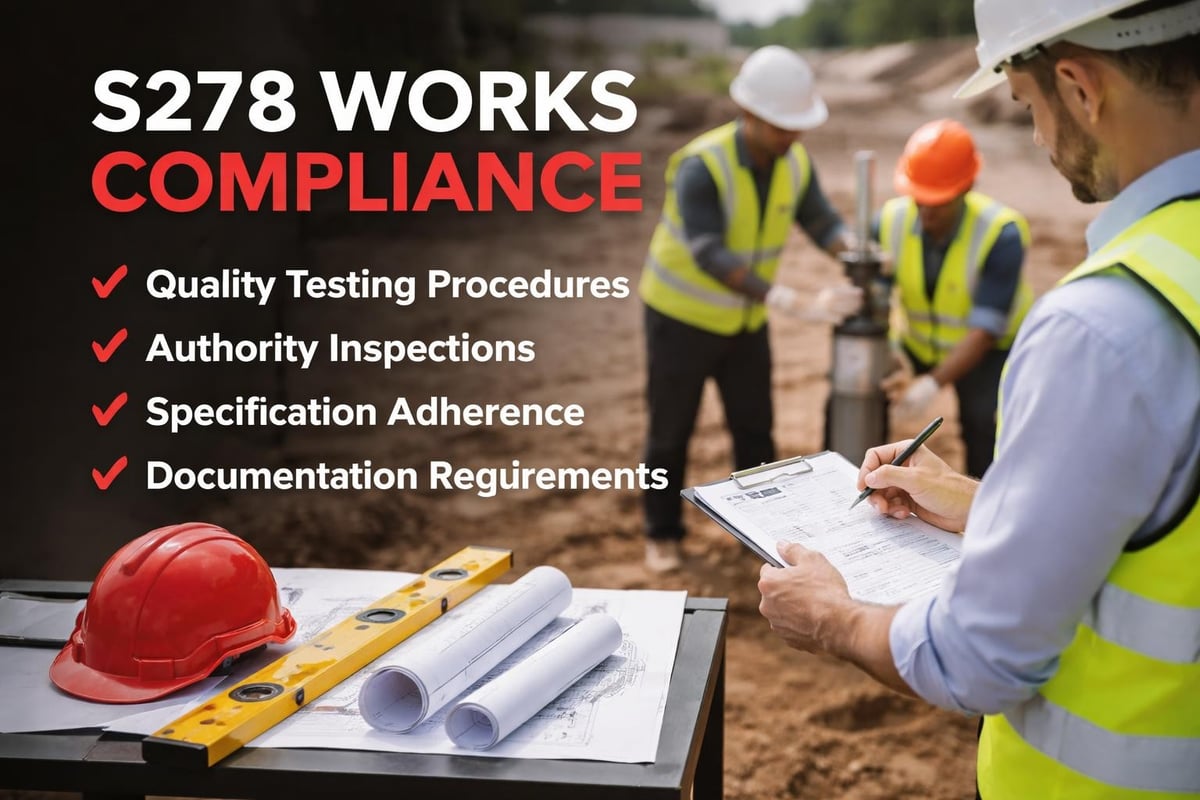
Highway authority inspectors maintain rigorous oversight during construction. Non-compliant work faces rejection, requiring remediation at the developer's expense.
Appointing contractors with proven highway experience significantly reduces this risk. Firms familiar with specification requirements and authority expectations deliver compliant work first time. Quality assurance procedures, including regular testing and documentation, demonstrate compliance and facilitate smooth inspections.
Long-Term Maintenance Considerations
The s278 agreement obligations don't necessarily end when construction completes. Understanding post-construction responsibilities proves essential for comprehensive project planning.
Defects Liability Period
Most agreements include a defects liability period, typically 12 months following practical completion. During this period, the developer remains responsible for rectifying any defects arising from the works.
Common defects requiring attention include:
- Surface deformation or settlement
- Drainage system blockages
- Street furniture damage
- Road marking deterioration
- Lighting failures
Maintaining responsive communication with the highway authority during this period ensures prompt resolution of any issues. Final release of financial securities depends on satisfactory completion of this period without outstanding defects.
Adoption and Ongoing Maintenance
Following successful completion and expiry of the defects period, new highway infrastructure typically transfers to highway authority ownership and maintenance responsibility. The commuted sum paid as part of the agreement funds this ongoing maintenance.
However, some elements may remain the developer's responsibility. Private access roads serving developments, for instance, might not qualify for adoption. Clarifying these distinctions during agreement negotiation prevents future disputes.
Strategic Benefits Beyond Compliance
Whilst an s278 agreement represents a legal obligation, approaching it strategically can deliver broader project benefits. The legal framework and importance of early negotiation emphasises how proactive engagement creates value.
Enhanced Development Value
Well-designed highway improvements enhance development appeal. Quality access arrangements, safe pedestrian facilities, and appropriate traffic management contribute to successful commercial operations and residential desirability.
For commercial developments like drive-through restaurants, efficient traffic flow and clear access points directly impact customer experience and operational success. Investing in comprehensive highway solutions, even beyond minimum requirements, can differentiate developments in competitive markets.
Community Relations
Developers who engage constructively with highway authorities and local communities build positive reputations. Transparent communication about highway works, consideration of local concerns, and delivery of improvements that benefit the wider area strengthen community relations.
This approach proves particularly valuable for developers planning multiple projects within a local authority area. Established positive relationships facilitate smoother approvals on subsequent schemes.
Risk Mitigation
Comprehensive s278 agreement compliance mitigates various project risks:
- Legal risk through documented agreement terms
- Financial risk via clear cost allocation
- Reputational risk through quality delivery
- Operational risk by ensuring fit-for-purpose access
Professional project management throughout the s278 process creates certainty and enables confident programme delivery.
Integration With Wider Development Approvals
The s278 agreement process intersects with other regulatory requirements. Understanding these relationships enables efficient project coordination.
Planning Permission Conditions
Planning approvals frequently include conditions requiring s278 agreements before development commences. These conditions typically specify the scope of required highway works and may reference specific design principles.
Coordinating s278 discussions with planning applications streamlines approvals. Highway authority feedback during planning stages can inform application submissions, reducing subsequent negotiation time.
Building Regulations and Utilities
Highway works often require coordination with building control approvals and utility diversions. Underground services frequently occupy highway verges and carriageways, necessitating careful design and potentially expensive diversions.
Early utility searches and consultation with statutory undertakers identify potential conflicts. Incorporating diversion costs into project budgets prevents unwelcome surprises during detailed design.
Regional Variations in Requirements
Whilst the statutory framework remains consistent across England, individual highway authorities interpret and implement requirements differently. Understanding local approaches proves invaluable when planning projects across multiple regions.
Authority-Specific Procedures
Some councils operate streamlined digital application systems, whilst others require traditional paper submissions. Fee structures vary significantly, with some authorities charging fixed fees and others calculating costs based on project values.
Research into specific authority requirements before commencing applications saves time and ensures appropriate budget allocation. Most councils publish guidance documents outlining their particular procedures and expectations.
Technical Standards Variations
Local authorities may supplement national design standards with area-specific requirements reflecting local conditions, historical precedents, or political priorities. These might address:
- Specific surfacing materials or finishes
- Enhanced landscaping requirements
- Particular traffic calming approaches
- Cycle infrastructure standards
- Accessibility provisions beyond statutory minimums
Engaging with authorities early in the design process reveals these local preferences and enables designs that align with authority expectations from the outset.
Successfully navigating the s278 agreement process requires technical expertise, careful planning, and professional execution. Understanding the legal framework, cost implications, and procedural requirements enables developers to budget accurately and programme effectively for highway improvement obligations. Whether you're planning commercial developments, residential estates, or infrastructure projects requiring highway modifications, working with experienced civil engineering contractors ensures compliant delivery from initial design through to final adoption. JRG Civils brings comprehensive expertise in highway works and s278 agreement delivery, having successfully completed numerous commercial and infrastructure projects across the UK. Contact us to discuss how our civil engineering excellence can support your development ambitions.