
Earth excavation forms the foundation of every successful civil engineering project, from commercial developments to residential driveways. Understanding the principles, methods, and safety requirements of excavation work ensures projects run smoothly whilst maintaining the highest standards of quality and compliance. This comprehensive guide explores the essential aspects of earth excavation that contractors and project managers need to know in 2026.
Understanding Earth Excavation Fundamentals
Earth excavation encompasses the controlled removal and relocation of soil, rock, and other materials from a designated site to create the necessary groundwork for construction projects. The process involves significantly more than simply digging holes.
Professional excavation requires careful planning, precise execution, and comprehensive knowledge of soil types, drainage patterns, and underground utilities. The excavation terminology used in the industry includes specific terms like topsoil, trenching, grading, and cut-and-fill operations, each describing distinct aspects of the work.
Primary Excavation Categories
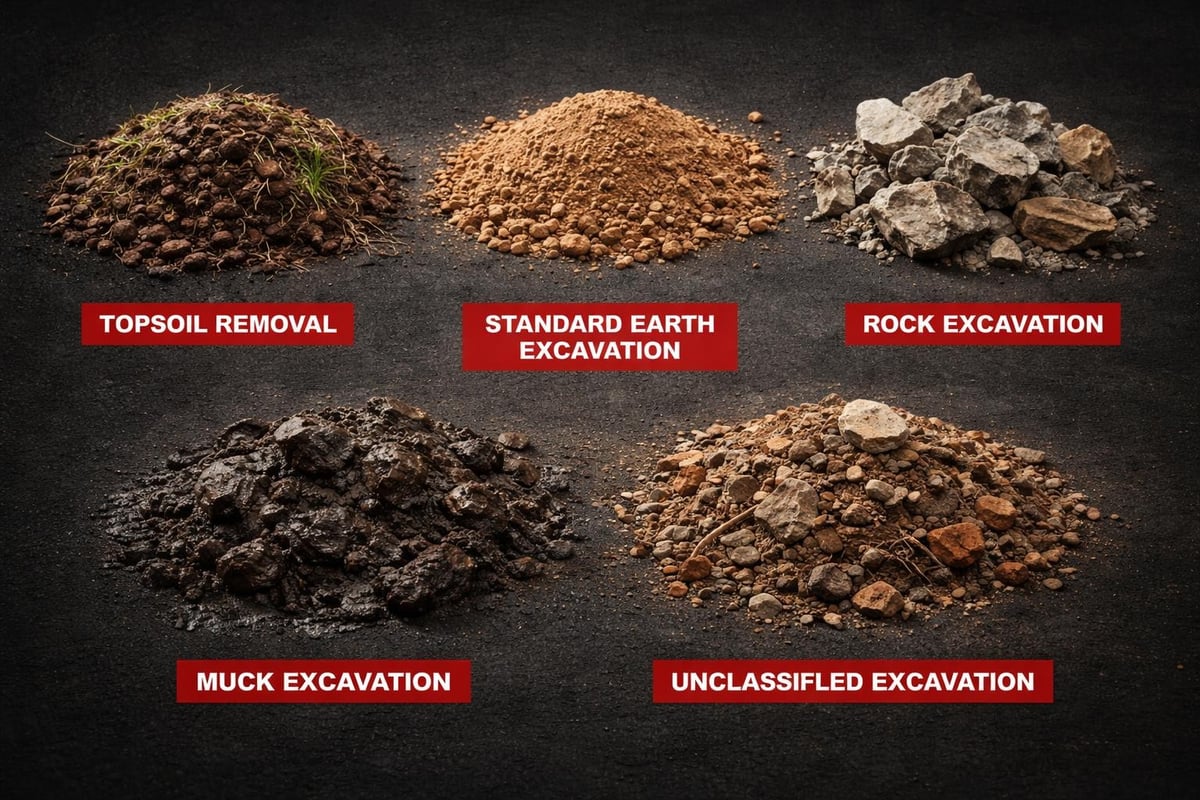
Different projects demand different excavation approaches. The main categories include:
- Topsoil excavation: Removal of the uppermost soil layer containing organic matter
- Earth excavation: Extraction of soil below the topsoil level for foundations and infrastructure
- Rock excavation: Removal of solid rock formations requiring specialized equipment
- Muck excavation: Clearing of waterlogged soil and unsuitable materials
- Unclassified excavation: Combined removal of various material types
Each category requires specific equipment, techniques, and safety measures. Rock excavation, for instance, may necessitate controlled blasting or hydraulic breakers, whilst muck excavation demands dewatering systems and soil stabilization methods.
Safety Standards and Regulatory Compliance
Worker safety remains paramount in all earth excavation operations. The risks associated with excavation work include cave-ins, falls, falling loads, and hazardous atmospheres, making strict adherence to safety protocols essential.
OSHA excavation safety guidelines establish comprehensive standards that protect workers from preventable accidents. These regulations mandate protective systems for excavations exceeding 1.5 metres in depth, including sloping, shoring, or shielding.
Critical Safety Measures
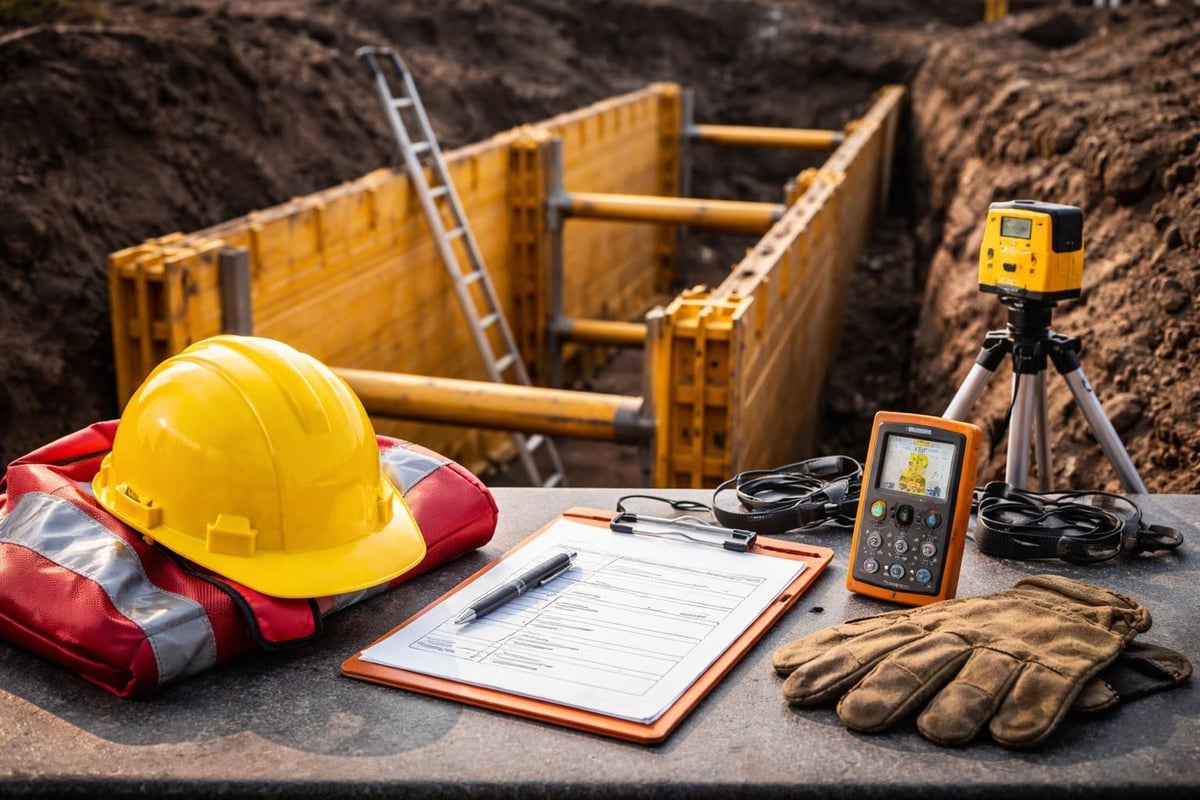
Implementing robust safety measures protects both workers and project timelines. A competent person must inspect excavations daily and after any occurrence that could affect stability.
Essential safety requirements include:
- Conducting thorough site surveys before commencing work
- Locating and marking underground utilities
- Installing appropriate protective systems based on soil type
- Providing safe access and egress points
- Testing for hazardous atmospheres in confined spaces
- Maintaining adequate distance between heavy equipment and excavation edges
The excavation hazards documentation from environmental health authorities emphasizes the importance of atmospheric testing, particularly in deep excavations where oxygen deficiency or toxic gases may accumulate.
| Excavation Depth | Required Protection | Inspection Frequency |
|---|---|---|
| Under 1.5m | Risk assessment basis | Daily minimum |
| 1.5m – 6m | Protective system mandatory | Daily and after incidents |
| Over 6m | Engineered system required | Multiple daily inspections |
Modern Excavation Methods and Techniques
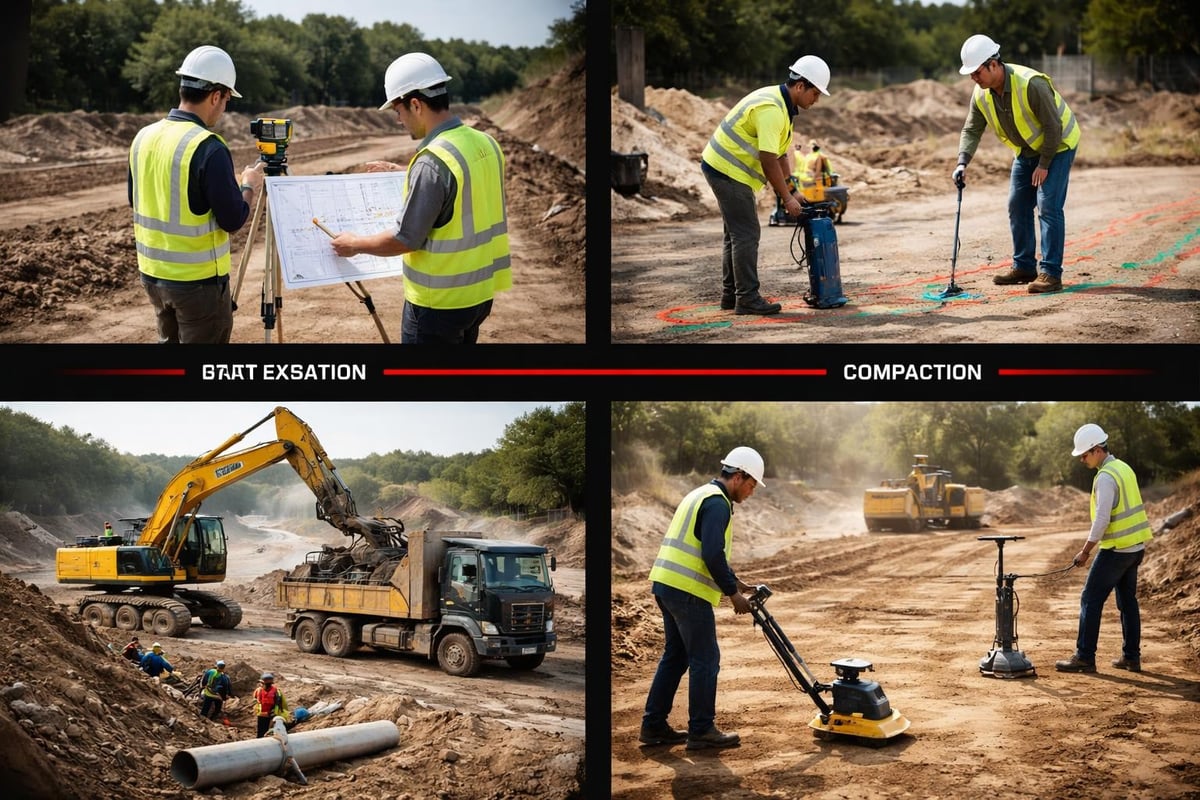
Contemporary earth excavation employs various methods tailored to project requirements, soil conditions, and site constraints. The selection of appropriate earthmoving techniques significantly impacts project efficiency and cost-effectiveness.
Traditional mechanical excavation uses tracked or wheeled machinery including excavators, backhoes, and bulldozers. This approach suits most standard projects from road construction to driveway installations.
For projects requiring precision near sensitive utilities or structures, hydro excavation offers distinct advantages. Hydro excavation services utilize pressurized water to break up soil whilst simultaneously vacuuming the resulting slurry, providing non-destructive digging with millimetre-level accuracy.
Equipment Selection Considerations
Choosing the right machinery depends on multiple factors:
- Project scale: Small residential works versus large commercial developments
- Access constraints: Restricted urban sites versus open rural locations
- Soil composition: Sandy, clay, rocky, or mixed conditions
- Depth requirements: Shallow trenches versus deep foundations
- Environmental sensitivity: Proximity to existing structures or protected areas
The civil engineering sector in the UK continues to evolve, with contractors investing in versatile equipment capable of handling diverse excavation challenges efficiently.
Soil Classification and Assessment
Understanding soil characteristics proves crucial for safe and effective earth excavation. The University of Nebraska-Lincoln’s excavation procedures emphasize soil stability assessment as a fundamental safety requirement.
Soil Type Categories
Professional excavators classify soil into distinct types that determine protective system requirements:
| Soil Type | Characteristics | Stability | Protection Requirements |
|---|---|---|---|
| Type A | Clay, hardpan, cemented soils | Most stable | 3/4:1 slope permitted |
| Type B | Angular gravel, silt, loam | Medium stability | 1:1 slope required |
| Type C | Granular soils, submerged soil | Least stable | 1.5:1 slope minimum |
Soil testing before excavation identifies the classification and informs protective system design. Factors affecting soil stability include moisture content, previous disturbance, vibration from traffic or equipment, and nearby loads.
Weather conditions significantly impact soil behaviour. Prolonged rainfall transforms Type A soil into Type C, requiring immediate protective system adjustments. Frozen soil presents deceptive stability that disappears during thawing, creating sudden collapse risks.
Planning and Site Preparation
Successful earth excavation begins long before machinery arrives on site. Comprehensive planning prevents costly delays, safety incidents, and damage to existing infrastructure.
Pre-excavation planning steps:
- Obtain all necessary permits and approvals
- Conduct detailed site surveys and geotechnical investigations
- Locate and mark underground utilities using detection equipment
- Develop excavation plans including dimensions, depths, and slopes
- Establish site access routes and material storage areas
- Arrange appropriate disposal or reuse of excavated materials
- Coordinate with utility companies for any relocations
Site preparation includes clearing vegetation, removing obstacles, and establishing erosion control measures. For projects involving highways or commercial developments, traffic management plans ensure public safety whilst maintaining site access.
Utility Location and Protection
Underground utilities represent one of the most significant risks in earth excavation work. Gas mains, water pipes, electrical cables, telecommunications lines, and drainage systems often run beneath excavation sites.
The utility location process involves:
- Reviewing utility company records and as-built drawings
- Conducting electromagnetic detection surveys
- Using ground-penetrating radar for non-metallic utilities
- Hand-digging trial holes to verify utility positions
- Marking utility locations with paint and flags
Even with thorough surveys, contractors should excavate cautiously near indicated utility positions, often employing hand digging or vacuum excavation methods within designated tolerance zones.
Mass Excavation Projects
Large-scale developments require mass excavation services involving removal of substantial soil volumes. These projects demand advanced planning, fleet coordination, and precise earthwork calculations.
Mass excavation considerations include:
- Cut-and-fill optimization: Balancing excavated material with fill requirements to minimize haulage costs
- Haul route planning: Establishing efficient routes that minimize environmental impact and traffic disruption
- Stockpile management: Organizing temporary storage of materials for reuse
- Moisture control: Managing groundwater and surface water throughout excavation
- Compaction standards: Ensuring fill areas meet specified density requirements
Advanced GPS-guided machinery enables precise excavation to design specifications, reducing over-excavation and material waste. This technology proves particularly valuable on road construction projects where exact grades and levels determine final surface quality.
Environmental and Sustainability Considerations
Modern earth excavation practices increasingly emphasize environmental responsibility and sustainable methods. Contractors must balance project efficiency with ecological protection and resource conservation.
Environmental management strategies:
- Implementing erosion and sediment control measures
- Protecting existing trees and vegetation where possible
- Managing stormwater runoff to prevent pollution
- Reusing excavated materials on-site when suitable
- Properly disposing of contaminated soils
- Minimizing noise and dust impacts on surrounding areas
Soil reuse significantly reduces project costs and environmental impact. Excavated topsoil can be stockpiled and redistributed for landscaping, whilst suitable subsoil materials may be used for general fill applications after proper testing and approval.
Contaminated Land Management
Excavation may encounter contaminated soils requiring specialized handling. Historical industrial activities, underground storage tanks, or illegal dumping can leave soil containing hazardous substances.
When contamination is suspected or confirmed:
- Cease excavation immediately in the affected area
- Implement contamination control measures to prevent spread
- Engage environmental specialists for testing and assessment
- Develop remediation plans compliant with environmental regulations
- Document handling, transport, and disposal of contaminated materials
- Obtain necessary approvals before resuming excavation
Quality Control and Documentation
Professional earth excavation demands rigorous quality control throughout project execution. Documentation provides verification of compliance and protection against future disputes.
Essential documentation includes:
| Document Type | Purpose | Retention Period |
|---|---|---|
| Daily inspection reports | Safety and condition monitoring | Project duration + 3 years |
| Soil test results | Classification verification | Permanent record |
| As-built drawings | Record actual excavation | Permanent record |
| Utility clearances | Protection verification | Project duration + 5 years |
| Material disposal receipts | Waste tracking | 7 years minimum |
Quality control extends to verifying excavation dimensions, depths, and slopes against design specifications. Laser levels and GPS surveying equipment enable precise measurements, ensuring excavations meet requirements before subsequent construction phases commence.
Inspection and Acceptance
Before proceeding with foundation work, structural installation, or backfilling, excavations require inspection and acceptance. This critical step verifies that:
- Excavation dimensions match approved plans
- Required depths and grades have been achieved
- Soil bearing capacity meets design assumptions
- No unsuitable materials remain in excavation bases
- Protective systems remain adequate and functional
The growing opportunities in civil engineering reflect increasing demand for skilled professionals who understand these quality standards and can deliver projects meeting rigorous specifications.
Backfilling and Compaction
The excavation process extends beyond initial digging to include proper backfilling and compaction. These final stages ensure long-term stability and performance of constructed facilities.
Backfill material selection depends on the application. Structural backfill around building foundations requires free-draining granular materials, whilst pipe bedding demands specific gradations that provide uniform support without damage to pipes.
Compaction requirements vary by application:
- Highway subgrades: 95-100% Standard Proctor density
- Building foundations: 90-95% depending on structural loads
- Utility trenches: 85-95% with special attention to pipe zones
- Landscape areas: 80-85% to support vegetation
Achieving specified compaction requires appropriate moisture content, suitable equipment, and proper lift thickness. Over-compaction can be as problematic as under-compaction, potentially damaging buried utilities or creating excessive settlement.
Advanced Engineering Applications
Understanding excavation engineering principles enables contractors to tackle complex projects involving deep excavations, challenging soil conditions, or constrained urban environments.
Advanced applications include:
- Underpinning existing structures during adjacent excavation
- Dewatering systems for excavations below the water table
- Soil stabilization using chemical or mechanical methods
- Anchored or tied-back retaining systems for deep excavations
- Sequential excavation and support in difficult ground
These specialized techniques require engineering design, detailed planning, and experienced execution teams. The investment in proper engineering prevents catastrophic failures whilst often proving more economical than simpler but less effective approaches.
Seasonal and Weather Considerations
Weather significantly impacts earth excavation operations throughout the year. Planning projects with seasonal factors in mind improves efficiency and reduces weather-related delays.
Winter challenges:
- Frozen ground requiring specialized breaking equipment
- Reduced daylight hours limiting productive time
- Snow and ice creating safety hazards
- Difficulty achieving compaction specifications in frozen materials
Summer considerations:
- Dust control requirements for environmental compliance
- Increased moisture loss requiring water addition for compaction
- Extended daylight enabling longer working hours
- Higher demand potentially affecting equipment and material availability
Spring and autumn present optimal conditions for many earth excavation projects, with moderate temperatures and manageable moisture levels. However, these seasons also bring increased rainfall risks requiring robust drainage and erosion control measures.
Earth excavation forms the essential foundation for successful civil engineering projects, demanding professional expertise, rigorous safety standards, and meticulous attention to detail throughout every phase. Whether you're planning a commercial development, highway improvement, or residential driveway project, partnering with experienced contractors ensures quality outcomes that meet regulatory requirements whilst protecting worker safety and environmental resources. At JRG Civils, we bring proven excellence to excavation and civil engineering projects across the UK, from initial site preparation through final completion. Contact JRG Civils today to discuss how our expertise can support your next project with the professional standards and reliable service your development deserves.