
Finding reliable earthworks near me has become increasingly important as property development, infrastructure projects, and residential improvements continue to expand across the United Kingdom. Whether you're planning a new driveway, preparing a site for commercial development, or undertaking highway surfacing work, understanding the fundamentals of earthworks helps you make informed decisions about your project. This comprehensive guide explores everything you need to know about earthworks services, from initial planning through to project completion.
Understanding What Earthworks Actually Involves
Earthworks encompasses the physical movement, manipulation, and engineering of soil and rock to create stable foundations for construction projects. This civil engineering discipline represents one of the most critical stages in any building or infrastructure development.
The scope of earthworks in civil engineering extends far beyond simple excavation. It includes soil analysis, ground stabilisation, compaction, grading, drainage implementation, and the precise placement of materials to achieve optimal structural integrity. Each element requires specialist knowledge and equipment to execute correctly.
Core Earthworks Activities
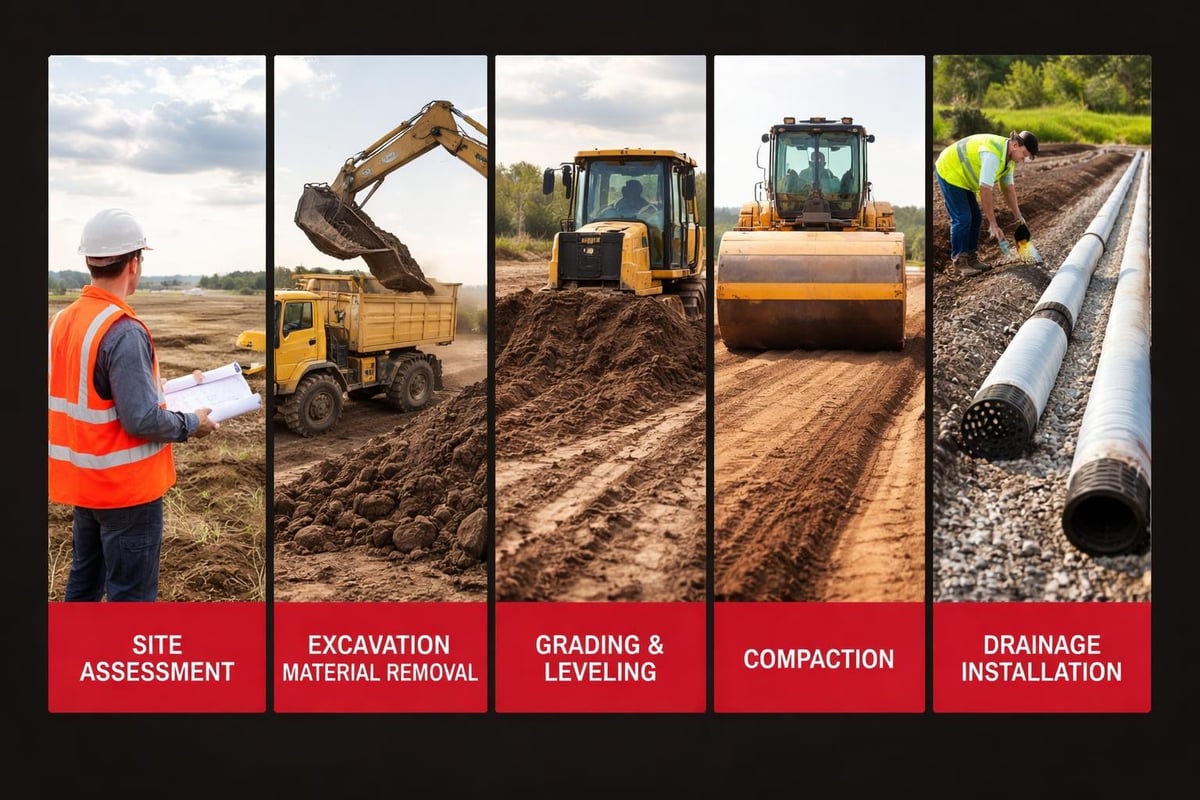
Professional earthworks services typically include several distinct but interconnected operations:
- Site clearance and vegetation removal to prepare land for development
- Excavation and cut operations to remove unwanted material and achieve design levels
- Fill placement and compaction using suitable materials to build up ground levels
- Grading and levelling to create proper drainage patterns and surface profiles
- Soil stabilisation techniques to improve bearing capacity and reduce settlement
- Drainage system installation including French drains, swales, and underground pipework
Each activity demands precision engineering. A miscalculation during excavation can compromise structural stability for decades, whilst improper compaction leads to settlement issues that prove costly to remedy. These complexities explain why searching for qualified "earthworks near me" contractors should focus on experience and proven track records rather than simply the lowest quote.
Types of Projects Requiring Earthworks Services
Understanding the diverse applications of earthworks helps property owners recognise when professional services become necessary. The range spans from modest residential improvements to substantial commercial developments.
Commercial and Industrial Developments
Large-scale commercial projects represent the most complex earthworks undertakings. Drive-through restaurants, retail parks, and industrial facilities require extensive ground preparation before any vertical construction begins. These projects often involve significant cut-and-fill operations to create level building platforms on sloping sites.
Highway construction and surfacing projects demand particularly stringent earthworks standards. The role of earthworks in civil engineering projects becomes apparent when considering road longevity-proper subgrade preparation directly influences pavement performance over its design life. Poor earthworks lead to premature failure, requiring expensive reconstruction years ahead of schedule.
| Project Type | Typical Earthworks Scope | Critical Success Factors |
|---|---|---|
| Drive-through restaurants | Site levelling, drainage, car park formation | Precise gradients for water runoff, compaction for vehicle loading |
| Highway surfacing | Subgrade preparation, layer placement, compaction | Material specification compliance, density achievement |
| Residential driveways | Excavation, sub-base installation, drainage | Proper falls for drainage, adequate depth for vehicle weights |
| Commercial car parks | Mass earthworks, storm water management | Load-bearing capacity, sustainable drainage systems |
Residential Property Improvements
Homeowners frequently require earthworks services for various property enhancements. Driveway construction demands careful attention to drainage and sub-base preparation-shortcuts during earthworks inevitably result in surface cracking, settlement, and premature deterioration.
Patio installations similarly require proper ground preparation. The foundation beneath decorative paving determines its longevity. Garden landscaping projects involving retaining walls, raised beds, or level lawn areas all depend on competent earthworks to achieve lasting results.
Selecting the Right Earthworks Contractor
Choosing appropriate contractors when searching "earthworks near me" requires careful evaluation beyond proximity and price. Several factors separate competent civil engineering firms from general groundwork providers.
Essential Qualifications and Experience
Professional earthworks contractors should demonstrate:
- Proven project portfolio showing similar work to your requirements
- Appropriate insurance coverage including public liability and professional indemnity
- Qualified personnel with relevant civil engineering or construction qualifications
- Modern equipment fleet maintained to current safety and efficiency standards
- Understanding of soil mechanics and ability to interpret ground investigation reports
Experience with diverse project types indicates adaptability and comprehensive knowledge. A contractor who has successfully completed commercial developments, highway projects, and residential work brings valuable perspective to any earthworks challenge.

Questions to Ask Potential Contractors
When interviewing earthworks providers, specific questions reveal their competence and suitability:
- How do you determine the appropriate depth and specification for sub-base materials?
- What ground investigation do you recommend before commencing earthworks?
- How do you ensure adequate compaction throughout fill layers?
- What measures prevent drainage problems following earthworks completion?
- Can you provide references from similar projects completed in the past two years?
Vague or dismissive responses to technical questions should raise concerns. Competent contractors welcome detailed discussions about methodology because they understand that informed clients typically experience better project outcomes.
Cost Considerations for Earthworks Projects
Budget planning for earthworks requires understanding the variables that influence pricing. Simple price-per-square-metre comparisons rarely capture the true scope of what quality earthworks entail.
Factors Affecting Earthworks Pricing
Several elements determine the final cost of earthworks services:
Site conditions represent the primary cost variable. Rocky ground requiring mechanical breaking costs substantially more to excavate than soft soil. High water tables necessitate dewatering systems, adding equipment and time expenses. Restricted access limiting machinery size increases labour requirements and project duration.
Material specifications significantly impact costs. Some projects accept on-site soils for re-use as fill material following processing. Others require imported engineered fill meeting specific grading and compaction requirements. Material testing, transportation, and placement costs vary accordingly.
Project complexity influences pricing through design intricacy, tolerance requirements, and sequencing constraints. Simple excavations cost less than multi-level platforms with integrated drainage systems. Tight tolerances demand additional quality control measures.
| Cost Element | Budget Allocation | Key Considerations |
|---|---|---|
| Site investigation | 2-5% of total | Essential for accurate pricing, prevents costly surprises |
| Excavation and disposal | 25-40% of total | Volume calculations, disposal facility charges, haulage distance |
| Fill materials | 20-35% of total | Specification requirements, source location, testing needs |
| Compaction and finishing | 15-25% of total | Layer thickness, required density, surface tolerances |
| Drainage installation | 10-20% of total | System complexity, pipe specifications, outfall arrangements |
Understanding applications of earthworks helps appreciate why professional services command appropriate fees. The technology, expertise, and quality control required to deliver lasting results justify investment in experienced contractors.
Environmental Considerations in Modern Earthworks
Contemporary earthworks practice incorporates significant environmental awareness. Responsible contractors balance project requirements with ecological sensitivity and regulatory compliance.
Minimising Environmental Impact
Modern earthworks operations employ several strategies to reduce environmental disruption:
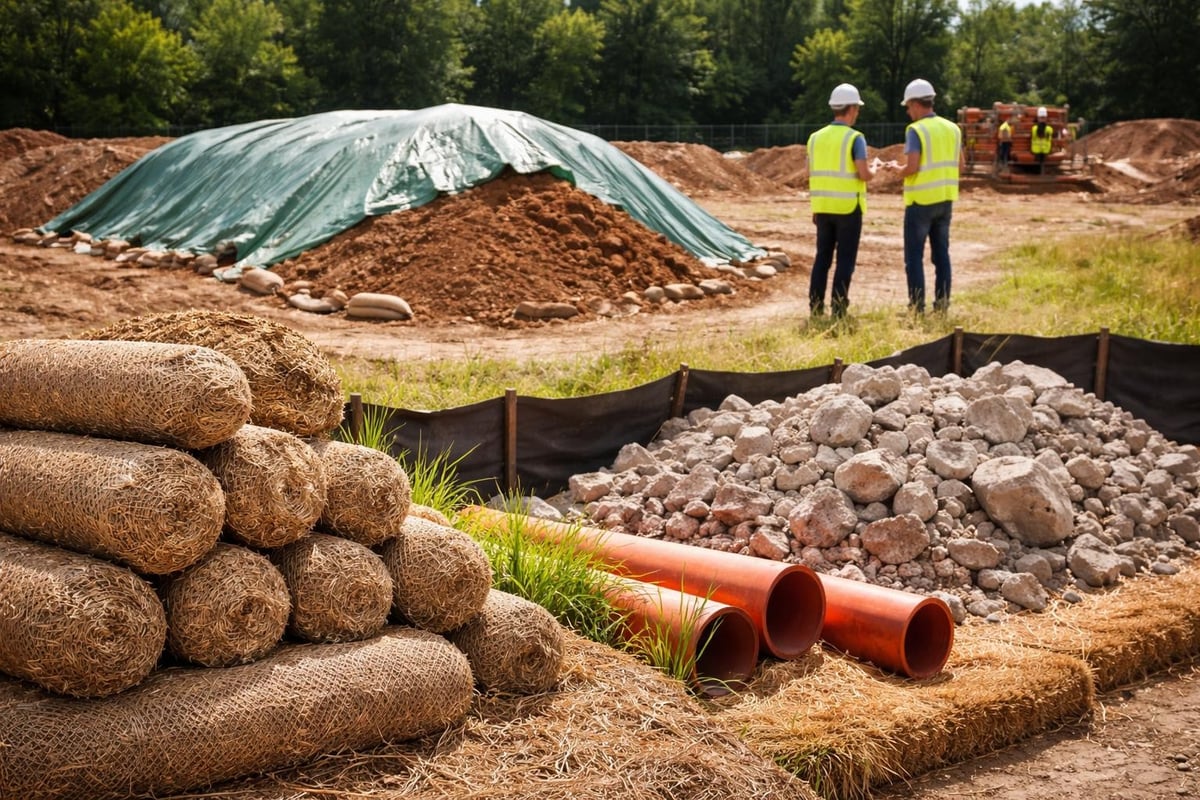
- Topsoil stripping and preservation for reuse in landscape restoration
- Erosion and sediment control during construction to protect watercourses
- Dust suppression measures to maintain air quality for neighbouring properties
- Noise management through appropriate equipment selection and working hours
- Material reuse strategies to minimise waste and reduce carbon footprint
The environmental impacts of earthworks during road construction extend beyond the immediate construction phase. Material selection, haulage distances, and construction techniques all contribute to the carbon footprint of earthworks operations. Progressive contractors actively seek ways to reduce these impacts without compromising structural performance.
Regulatory Compliance
Earthworks projects must comply with numerous regulations governing construction activities. Planning permissions often include conditions regarding working hours, noise limits, and environmental protection measures. Environmental permits may be required for activities affecting watercourses or protected habitats.
Competent contractors understand these requirements and incorporate compliance into project planning from the outset. This proactive approach prevents costly delays and potential enforcement action during construction.
Technology and Equipment in Contemporary Earthworks
Modern earthworks benefit enormously from technological advancement in both machinery and project management systems. These innovations improve accuracy, efficiency, and ultimately project outcomes.
Machine Control Systems
GPS-guided excavators and graders represent a significant evolution in earthworks precision. These systems allow operators to achieve design levels within millimetres, dramatically reducing over-excavation and material waste. For complex projects with intricate grading requirements, machine control technology delivers consistency impossible to achieve through traditional methods.
Laser-guided screeds ensure uniform compaction and surface regularity in sub-base preparation. This precision proves particularly valuable in highway surfacing projects where pavement performance depends directly on subgrade uniformity.
Compaction Monitoring Technology
Achieving specified compaction represents one of the most critical aspects of quality earthworks. Traditional methods rely on periodic testing using nuclear density gauges or sand replacement techniques. Whilst effective, these approaches sample limited locations and provide retrospective information.
Modern compaction monitoring systems integrated into roller drums provide continuous real-time feedback about achieved density. This technology enables operators to identify areas requiring additional passes immediately, ensuring comprehensive compaction throughout the project rather than discovering deficiencies during final testing.
Quality Assurance in Professional Earthworks
Quality control separates competent earthworks contractors from those cutting corners. Rigorous testing and documentation provide assurance that works meet specification requirements and will perform as intended throughout their design life.
Testing Protocols
Professional earthworks projects incorporate systematic testing at various stages:
- Pre-construction ground investigation to characterise existing soil conditions
- Material approval testing confirming imported fill meets specification requirements
- Layer thickness verification ensuring proper placement depth before compaction
- Density testing confirming achieved compaction meets design requirements
- Surface level surveys verifying final grades match design intent
Each test generates documented evidence of compliance. This paperwork proves invaluable should any issues emerge years later, demonstrating that works were completed to appropriate standards at the time of construction.
Documentation and Certification
Comprehensive project documentation includes method statements detailing how works will be executed, risk assessments identifying potential hazards, and quality plans specifying testing frequencies and acceptance criteria. Completion documentation packages typically contain material certificates, test results, photographs, and as-built drawings showing final conditions.
This documentation serves multiple purposes. It demonstrates regulatory compliance, provides future reference for maintenance planning, and offers protection should disputes arise regarding work quality.
Timing and Seasonal Considerations
When searching for "earthworks near me" contractors, timing considerations affect both availability and optimal construction conditions. Understanding seasonal influences helps with project planning and realistic scheduling.
Weather Impact on Earthworks
Earthworks operations face significant weather constraints. Heavy rainfall renders clay soils unworkable, causing projects to halt until conditions improve. Winter months bring increased risk of frost damage to freshly placed materials before they achieve adequate compaction and stabilisation.
Spring and autumn typically offer optimal earthworks conditions in the United Kingdom. Ground moisture levels support efficient working without excessive wetness, whilst temperatures remain moderate. Summer can present challenges when prolonged dry periods cause fine materials to generate excessive dust, requiring additional suppression measures.
Experienced contractors plan earthworks scheduling around these seasonal patterns. Rush jobs commenced during unfavourable weather often experience quality compromises and cost overruns as contractors battle unsuitable conditions.
Project Duration Planning
Realistic timeframes for earthworks depend on project scale and complexity. Small residential driveways might require only a few days for excavation, sub-base installation, and preparation for surfacing. Large commercial developments could involve weeks or months of earthworks before vertical construction commences.
| Project Scale | Typical Duration | Weather Contingency |
|---|---|---|
| Residential driveway | 3-5 days | Add 20-30% for weather delays |
| Large patio or garden terracing | 1-2 weeks | Add 25-40% for weather delays |
| Commercial car park | 3-6 weeks | Add 30-50% for weather delays |
| Highway surfacing section | 2-4 weeks | Add 40-60% for weather delays |
Integration with Subsequent Construction Phases
Quality earthworks create the foundation for all subsequent construction activities. Understanding this integration helps property owners appreciate why cutting corners during earthworks proves counterproductive.
Highway Surfacing and Pavement Construction
Road construction exemplifies the critical relationship between earthworks quality and final performance. The subgrade layer created during earthworks must provide uniform support for pavement layers above. Variations in subgrade strength create differential movement, leading to cracking and premature failure of the road surface.
Professional highway contractors recognise this interdependency. They specify earthworks standards appropriate for expected traffic loading and design life requirements. Residential driveways subjected to occasional car movements require different earthworks specifications than commercial access roads serving heavy goods vehicles multiple times daily.
Building Foundations and Structures
Buildings similarly depend on competent earthworks for their foundations. Whether constructing a simple garden shed or a multi-storey commercial building, the ground beneath must provide adequate bearing capacity and remain stable over time. Poor earthworks lead to settlement issues that manifest as cracked walls, jammed doors, and structural distress.
The JRG Civils approach to civil engineering emphasises quality from project inception. This philosophy recognises that excellence in earthworks establishes the platform for successful project delivery across all subsequent construction phases.
Local Considerations When Searching "Earthworks Near Me"
Geographic factors influence earthworks requirements and contractor selection. Local soil conditions, regulatory environments, and access to materials vary significantly across different regions of the United Kingdom.
Regional Soil Characteristics
The North East features diverse ground conditions ranging from boulder clay to limestone bedrock. These variations affect excavation difficulty, material reusability, and foundation design. Contractors familiar with local geology bring valuable knowledge to project planning and execution.
Clay-dominant soils common across much of the region exhibit volume changes with moisture variations. Proper earthworks design accounts for this behaviour through adequate drainage provision and appropriate material selection for fill operations. Local contractors understand these challenges and design solutions accordingly.
Access to Quality Fill Materials
Proximity to suitable quarries and material suppliers affects both earthworks costs and environmental impact. Locally sourced materials reduce haulage distances, lowering carbon emissions and transportation expenses. Established contractors maintain relationships with reliable suppliers, ensuring material availability and consistent quality.
Some projects generate excavated material suitable for reuse as engineered fill following processing. This approach maximises sustainability whilst reducing disposal costs and import requirements. Determining material suitability requires testing and assessment-another area where experienced contractors add value through their technical knowledge.
Long-Term Performance and Maintenance
Quality earthworks deliver benefits extending decades beyond project completion. Conversely, substandard work creates ongoing problems and maintenance expenses that far exceed any initial cost savings.
Drainage Longevity
Properly designed and constructed drainage systems installed during earthworks continue functioning effectively for many years. Surface water flows away from buildings and paved areas, preventing standing water, ice formation, and structural damage. Underground pipes laid to correct gradients on well-compacted bedding maintain their alignment and capacity.
Poor earthworks compromise drainage performance. Inadequate compaction allows pipes to settle, creating sags that trap sediment and reduce flow capacity. Insufficient falls prevent effective water removal, leading to surface ponding and premature pavement deterioration.
Structural Stability
Well-executed earthworks provide stable platforms that support structures and pavements throughout their design lives. Materials specified and placed according to engineering principles maintain their bearing capacity and resist deformation under loading. This stability prevents the settlement, cracking, and distortion that characterise failed earthworks.
The economic case for quality earthworks becomes clear when considering lifecycle costs. Investing appropriately during initial construction delivers decades of reliable performance. Economising on earthworks typically necessitates expensive remedial works within a few years as problems emerge.
Selecting the right earthworks contractor fundamentally determines your project's success, longevity, and overall value. Whether you're planning commercial development, highway improvements, or residential enhancements, professional earthworks establish the foundation for excellence in every subsequent construction phase. JRG Civils brings civil engineering expertise, modern equipment, and meticulous attention to detail to projects across the North East and throughout the United Kingdom, ensuring your earthworks deliver lasting quality from initial excavation through final completion.