When selecting kerbing for commercial developments, driveways, or highway projects, the choice of profile can significantly impact both functionality and aesthetics. Bullnose kerbing has emerged as a preferred solution across the UK construction industry, offering a distinctive rounded edge that provides practical benefits whilst maintaining visual appeal. This specialised kerbing type features a characteristically smooth, curved face that transitions gracefully from vertical to horizontal planes, creating a softer appearance compared to traditional square-edged alternatives.
Understanding Bullnose Kerbing Design and Characteristics
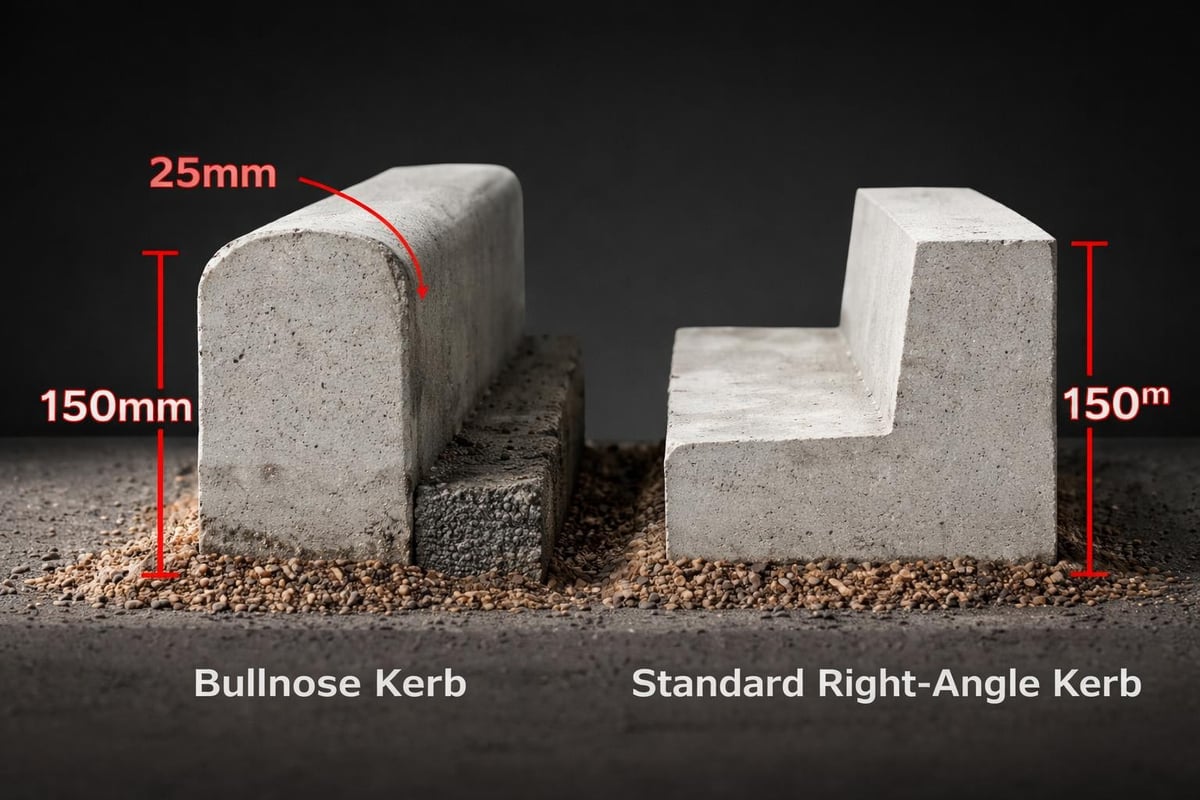
The defining feature of bullnose kerbing lies in its unique profile. Unlike conventional kerbs with sharp 90-degree angles, bullnose kerbs feature a rounded face that creates a gentle curve between the upright and horizontal surfaces. This design consideration serves multiple purposes in civil engineering applications.
Structural Specifications
Bullnose kerbing typically adheres to British Standards, with most products complying with BS EN 1340:2003 regulations. Standard dimensions include:
| Specification | Typical Measurement |
|---|---|
| Height | 125mm to 150mm |
| Width | 255mm to 305mm |
| Length | 915mm or 1000mm |
| Radius | 25mm to 75mm (curved face) |
The curved radius distinguishes bullnose variants from other kerbing types, with the gentle arc providing both aesthetic and functional advantages. Manufacturers produce these units from high-strength concrete, often incorporating hydraulic pressing techniques that enhance durability and weather resistance.
Material Composition and Finishes
Premium bullnose kerbing utilises carefully selected aggregates and cement ratios to achieve superior strength characteristics. The manufacturing process typically involves:
- High-pressure hydraulic pressing for enhanced density
- Controlled curing to maximise compressive strength
- Quality aggregates selected for frost resistance
- Precision moulding ensuring consistent curved profiles
Surface finishes vary considerably, allowing specification to match project requirements. Common options include smooth-faced units for contemporary aesthetics, textured surfaces providing improved grip, and exposed aggregate finishes that complement natural stone surroundings.
Applications Across Commercial and Residential Projects
Bullnose kerbing demonstrates remarkable versatility across diverse civil engineering applications. Its unique profile makes it particularly suitable for specific scenarios where traditional kerbing might prove less effective or visually appropriate.
Highway and Road Infrastructure
In highway construction, bullnose kerbing serves critical functions beyond simple edge definition. The rounded profile reduces vehicle damage when tyres contact the kerb during manoeuvres, particularly valuable in:
- Service station forecourts where frequent vehicle movements occur
- Roundabout perimeters requiring gentle guidance
- Bus stop lay-bys experiencing regular heavy vehicle traffic
- Residential street corners with frequent turning movements
The curved face minimises tyre wall damage whilst maintaining effective channelisation, making it an excellent choice for areas experiencing regular vehicular contact. This characteristic has made bullnose kerbing particularly popular in drive-through developments, including coffee shops and fast-food establishments where vehicles frequently navigate tight corners.
Driveway and Entrance Applications
For residential and commercial driveways, bullnose kerbing provides an elegant transition between paved areas and surrounding landscaping. The softer profile creates a more welcoming appearance than traditional sharp-edged kerbs, whilst still providing robust edge restraint for block paving or tarmac surfaces.
Property developers frequently specify bullnose kerbing for:
- Domestic driveway edging providing durable boundaries
- Shared access roads in housing developments
- Commercial car parks requiring defined parking bays
- Entrance features creating premium first impressions
The aesthetic appeal combines with practical performance, as the curved profile accommodates slight vehicular overruns without causing significant damage to either vehicle or kerb.
Installation Techniques and Professional Considerations
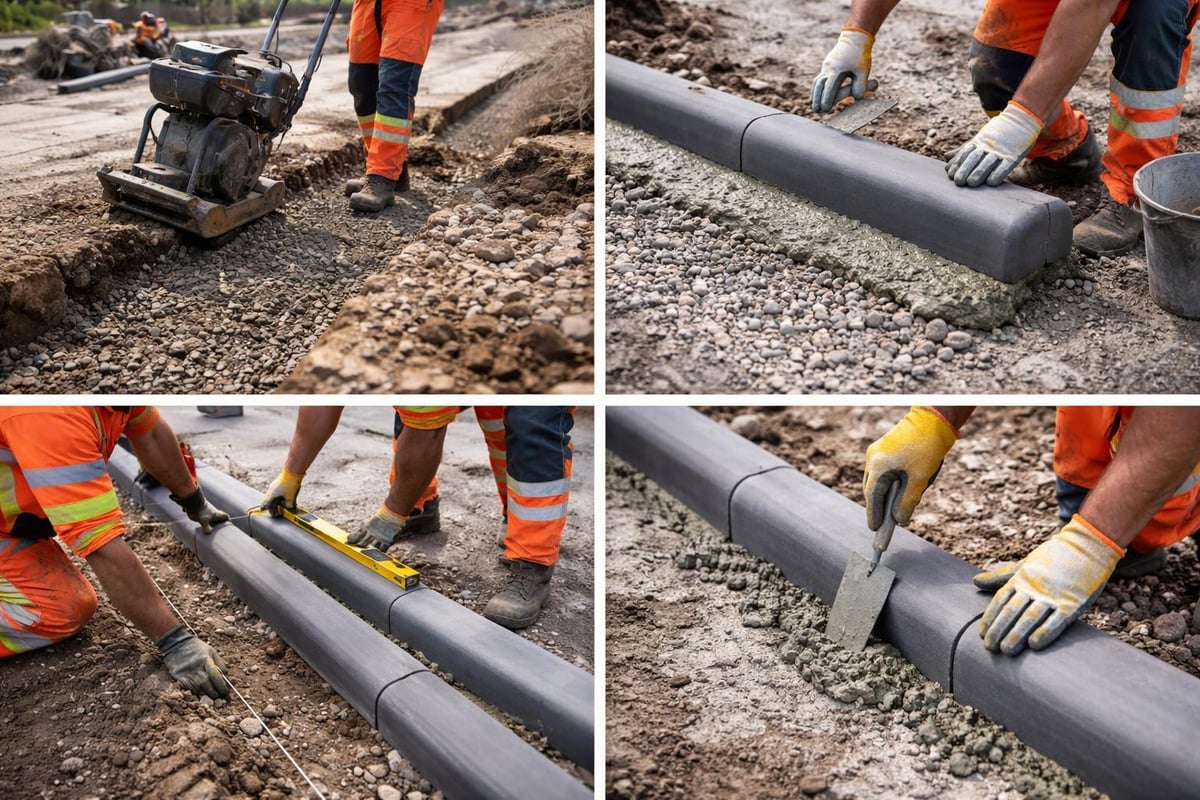
Proper installation proves critical to bullnose kerbing performance and longevity. Professional civil engineering contractors follow established procedures ensuring optimal results across varying site conditions.
Foundation Preparation
Successful bullnose kerbing installation begins with adequate foundation preparation. The curved profile requires stable bedding to prevent settlement or rotation that might compromise the designed appearance.
Foundation requirements typically include:
| Foundation Element | Specification |
|---|---|
| Excavation depth | 150mm to 300mm below finished level |
| Sub-base material | Type 1 MOT compacted in layers |
| Concrete bed | ST2 or ST3 concrete, 100mm minimum |
| Haunch support | 150mm rear and side concrete backing |
The concrete bed must accommodate the bullnose profile, ensuring the curved face remains properly aligned and supported. Skilled installers position units precisely, maintaining consistent reveals and alignment throughout extended runs.
Alignment and Levelling Precision
Professional installation demands meticulous attention to alignment, particularly on curved sections where the bullnose profile accentuates any irregularities. Experienced contractors utilise:
- String lines establishing precise horizontal and vertical alignment
- Optical levels ensuring consistent top-of-kerb heights
- Spacers maintaining uniform joint widths
- Templates verifying consistent reveals and exposures
Joint spacing typically ranges between 3mm and 5mm, with joints filled using appropriate pointing mortar or jointing compounds. This careful attention to detail ensures the finished installation presents clean lines that enhance rather than detract from the overall project appearance.
Comparative Advantages Over Alternative Kerbing Types
When evaluating kerbing options, bullnose kerbing offers distinct advantages that make it preferable for specific applications. Understanding these benefits helps inform specification decisions across civil engineering projects.
Safety and Vehicle Interaction
The rounded profile provides tangible safety benefits compared to sharp-edged alternatives. Bullnose kerbs reduce potential damage during vehicle-kerb contact, minimising:
- Tyre sidewall damage from sharp edge impacts
- Alloy wheel scratching during parking manoeuvres
- Pedestrian trip hazards at kerb transitions
- Vegetation trimming difficulties around sharp corners
This gentler interaction proves particularly valuable in high-traffic areas where vehicles frequently approach or cross kerb lines. The curved face allows tyres to roll rather than impact, reducing wear on both vehicle and infrastructure.
Visual Appeal and Design Integration
Beyond functional benefits, bullnose kerbing delivers aesthetic advantages that enhance project presentation. The softer profile creates:
- A more refined, premium appearance suitable for quality developments
- Better integration with curved landscaping features
- Reduced visual harshness in pedestrian areas
- Enhanced compatibility with traditional architecture
These visual characteristics make bullnose kerbing particularly appropriate for prestigious commercial developments, residential estates, and public realm improvements where appearance carries equal weight to performance.
Maintenance Requirements and Long-Term Performance
Understanding maintenance needs ensures bullnose kerbing continues performing optimally throughout its service life. Proper specification and installation minimise ongoing requirements whilst maximising durability.
Durability Factors
Quality bullnose kerbs manufactured to British Standards typically offer exceptional longevity when correctly installed. Key durability factors include:
| Performance Aspect | Expected Outcome |
|---|---|
| Compressive strength | >50 N/mm² (typical) |
| Freeze-thaw resistance | F1 or F2 classification |
| Abrasion resistance | Class 3 or better |
| Design life | 40+ years in normal conditions |
The curved profile actually enhances longevity in certain applications, as the distributed stress during vehicle contact reduces point-loading that might cause edge spalling on square-edged units.
Routine Maintenance Procedures
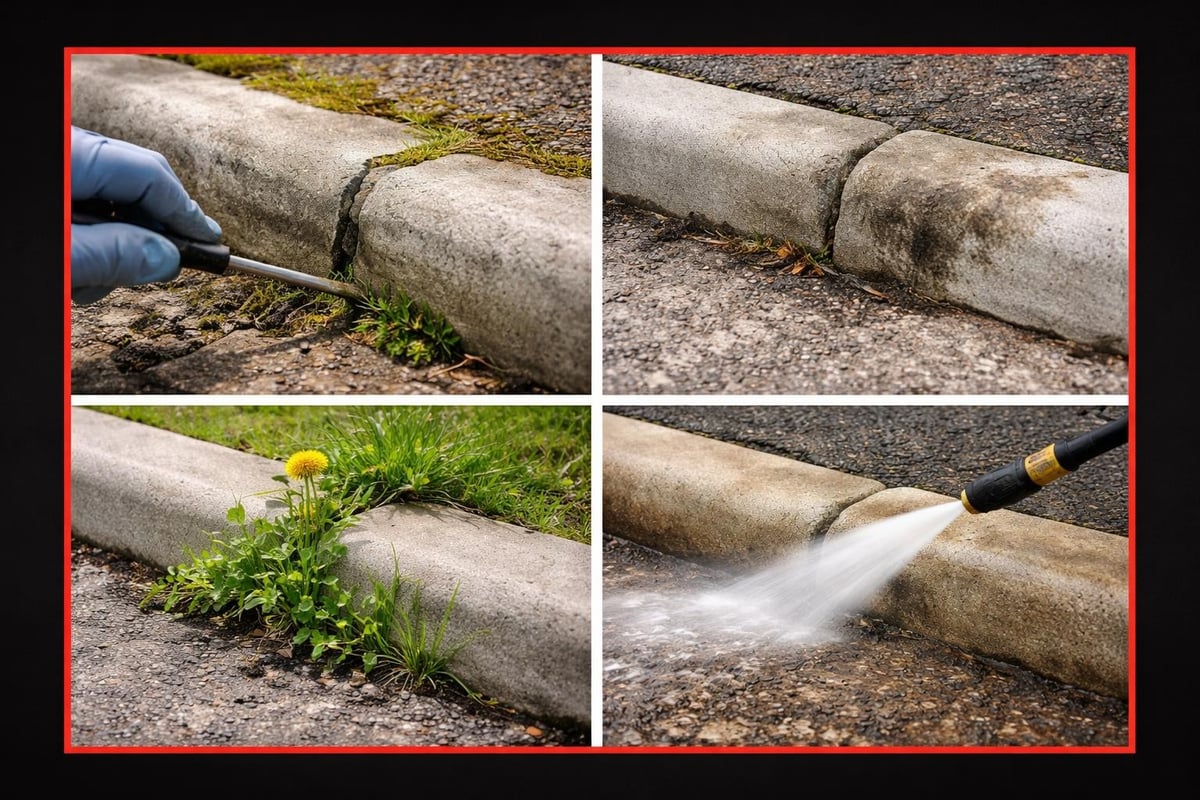
Whilst bullnose kerbing requires minimal intervention, periodic maintenance preserves appearance and functionality:
- Joint inspection identifying mortar degradation requiring repointing
- Surface cleaning removing organic growth and staining
- Alignment monitoring detecting settlement requiring remedial works
- Drainage clearance preventing water accumulation behind kerb lines
Professional civil engineering contractors typically recommend annual inspections for commercial installations, with remedial works addressing minor issues before they escalate into more significant problems.
Specification Considerations for Different Project Types
Successful bullnose kerbing specification requires matching product characteristics to specific project requirements. Different applications demand particular attention to varying performance criteria.
Commercial and Industrial Projects
Large-scale commercial developments including retail parks, business estates, and industrial facilities require bullnose kerbing capable of withstanding heavy traffic loads whilst maintaining appearance. Specification priorities include:
- Enhanced strength grades accommodating HGV overruns
- Extended lengths reducing joint quantities
- Specialist finishes matching architectural requirements
- Certified performance meeting contract specifications
Drive-through facilities particularly benefit from bullnose kerbing's vehicle-friendly profile, with the rounded edge accommodating the frequent turning movements characteristic of these operations. Costa Coffee and Greggs locations, for example, experience constant vehicle circulation where traditional kerbing might suffer accelerated deterioration.
Residential and Landscape Applications
Domestic projects prioritise aesthetic integration and appropriateness to residential scale. Bullnose kerbing in residential settings typically features:
- Smaller unit dimensions proportionate to domestic driveways
- Colour-matched finishes coordinating with paving materials
- Smooth or lightly textured faces providing refined appearance
- Standard strength grades adequate for occasional vehicle contact
The curved profile proves particularly effective bordering ornamental gardens, creating elegant transitions between paved areas and planted borders whilst preventing soil migration onto hard surfaces.
Technical Standards and Compliance Requirements
Professional civil engineering projects require adherence to relevant technical standards governing kerbing performance and installation. Bullnose kerbing specifications must address regulatory compliance alongside functional requirements.
British and European Standards
The primary standard governing concrete kerbs, including bullnose variants, is BS EN 1340:2003. This comprehensive specification addresses:
| Standard Requirement | Application to Bullnose Kerbing |
|---|---|
| Dimensional tolerances | ±3mm length, ±2mm height/width |
| Strength classification | Minimum 3.5 N/mm² flexural |
| Freeze-thaw resistance | Appropriate class for exposure |
| Visual quality | Surface finish uniformity |
Compliance ensures kerbing performs reliably across anticipated service conditions, with manufacturers' certification providing verification of conformity. Professional contractors specify certified products from established suppliers, guaranteeing performance and facilitating warranty claims if issues arise.
Installation Standards and Best Practice
Beyond product standards, installation quality determines ultimate performance. Industry best practice, codified in documents including BS 7533 (pavements constructed with clay, natural stone, or concrete pavers), establishes:
- Minimum foundation depths based on anticipated loading
- Concrete bed specifications providing adequate support
- Haunch dimensions preventing lateral movement
- Drainage provisions managing water behind kerb lines
Following these guidelines ensures bullnose kerbing installations deliver anticipated performance throughout their design life, protecting client investments whilst minimising maintenance requirements.
Colour and Finish Options for Design Coordination
Modern bullnose kerbing extends far beyond traditional grey concrete, with manufacturers offering extensive colour and finish ranges enabling precise design coordination across diverse project types.
Standard and Bespoke Colour Ranges
Contemporary production techniques facilitate consistent colour throughout bullnose kerbing units, avoiding the surface-only colouring that characterised earlier products. Common options include:
- Natural grey providing economical traditional appearance
- Buff tones complementing sandstone and warmer palettes
- Charcoal and black creating contemporary contrasts
- Red and terracotta matching clay brick surroundings
Bespoke colour matching proves feasible for substantial projects, allowing integration with specific architectural palettes. This flexibility makes bullnose kerbing suitable for heritage conservation work and prestige developments where visual coordination proves critical.
Surface Texture Variations
Beyond colour, surface treatment significantly influences appearance and performance characteristics. Available finishes include:
- Smooth-faced providing clean, contemporary aesthetics
- Exposed aggregate revealing natural stone characteristics
- Shot-blasted creating subtle texture without roughness
- Polished delivering premium appearance for high-status projects
Texture selection should consider functional requirements alongside aesthetics, with exposed aggregate finishes providing enhanced slip resistance in pedestrian areas whilst smooth faces suit vehicular applications where tyre contact occurs.
Cost Considerations and Value Assessment
Understanding bullnose kerbing costs helps inform specification decisions, balancing initial expenditure against long-term value and performance.
Comparative Pricing Structures
Bullnose kerbing typically commands premium pricing compared to standard square-edged alternatives, reflecting additional manufacturing complexity. Indicative pricing considerations include:
| Product Category | Relative Cost Factor |
|---|---|
| Standard concrete kerb | Baseline (1.0x) |
| Bullnose kerb (grey) | 1.2x to 1.4x |
| Coloured bullnose | 1.5x to 1.8x |
| Specialist finishes | 2.0x+ |
Installation costs remain comparable across kerbing types, as laying techniques differ minimally. The premium investment delivers returns through enhanced appearance, reduced maintenance, and superior performance in appropriate applications.
Whole-Life Cost Benefits
Evaluating bullnose kerbing on whole-life basis rather than initial cost alone reveals significant value. The rounded profile's resistance to damage reduces:
- Replacement frequency in high-traffic areas
- Reactive maintenance addressing impact damage
- Associated disruption from repair works
- Health and safety risks from damaged kerbing
For commercial developments expecting heavy use over decades, this durability justifies initial premium pricing through reduced lifecycle costs and sustained appearance.
Environmental and Sustainability Considerations
Modern construction practice demands attention to environmental impacts throughout material lifecycles. Bullnose kerbing specification increasingly incorporates sustainability criteria alongside traditional performance requirements.
Sustainable Manufacturing Practices
Progressive manufacturers implement environmental management systems reducing bullnose kerbing's ecological footprint through:
- Recycled aggregate content utilising construction waste materials
- Optimised cement ratios reducing CO₂ emissions per unit
- Local production minimising transportation impacts
- Energy-efficient curing lowering manufacturing energy consumption
Specifying products from certified suppliers demonstrating environmental commitment helps projects achieve sustainability targets whilst supporting responsible industry practices.
Longevity and Resource Efficiency
Bullnose kerbing's exceptional durability constitutes perhaps its greatest environmental benefit. Extended service life means:
- Fewer replacement cycles over building lifetimes
- Reduced material consumption across decades
- Minimised waste generation from premature failure
- Lower cumulative carbon footprint per service year
This resource efficiency aligns with circular economy principles, where durable infrastructure reduces ongoing environmental impacts through extended utility.
Integration with Modern Drainage Systems
Effective surface water management proves essential across civil engineering projects, with kerbing playing crucial roles in drainage system performance. Bullnose kerbing integrates effectively with contemporary drainage solutions.
Gully and Channel Coordination
The rounded profile accommodates various drainage configurations without compromising water collection efficiency. Professional installations coordinate bullnose kerbing with:
- Linear drainage channels positioned behind kerb lines
- Road gullies located at strategic collection points
- Permeable paving systems managing surface runoff
- Attenuation features controlling discharge rates
Careful detailing ensures water flows to collection points efficiently whilst the kerb line maintains its primary functions of edge definition and vehicular guidance.
Sustainable Drainage Considerations
Modern sustainable drainage systems (SuDS) require kerbing that facilitates rather than impedes water management. Bullnose variants can incorporate:
| SuDS Feature | Integration Method |
|---|---|
| Infiltration zones | Lowered sections allowing water passage |
| Filter strips | Permeable joints directing flows |
| Bio-retention areas | Transition details managing levels |
| Attenuation basins | Inlet/outlet protection structures |
These integrated approaches demonstrate how traditional infrastructure elements like bullnose kerbing evolve to support contemporary environmental management objectives.
Selecting appropriate kerbing significantly influences both immediate project success and long-term performance across civil engineering developments. Bullnose kerbing's unique rounded profile delivers practical benefits in vehicle interaction, visual refinement, and durability that justify specification across diverse applications from commercial drive-throughs to residential driveways. Whether you're planning highway infrastructure, commercial developments, or residential enhancements, JRG Civils brings the expertise and attention to detail necessary to deliver exceptional results across the North East and throughout the UK.