
Earthwork and excavation form the foundation of nearly every civil engineering project, from commercial developments to residential driveways. These processes involve removing, moving, and compacting soil and rock to create stable surfaces for construction. Whether preparing a site for a drive-through restaurant or laying the groundwork for highway surfacing, understanding the complexities of earthwork operations ensures projects meet structural requirements whilst maintaining safety standards throughout every phase.
Understanding Earthwork and Excavation Fundamentals
The relationship between earthwork and excavation is intrinsic to successful civil engineering outcomes. Earthwork encompasses the broader process of manipulating earth materials, including cutting, filling, grading, and compacting. Excavation represents a specific subset: the removal of soil, rock, or other materials from a designated area to achieve required depths and dimensions.
Modern civil engineering projects demand precision in both disciplines. The excavation of earthwork for building foundations requires careful planning to ensure structural integrity from the outset. Site conditions, soil composition, and project specifications all influence the approach contractors take when commencing earthwork operations.
Site Assessment and Planning Requirements
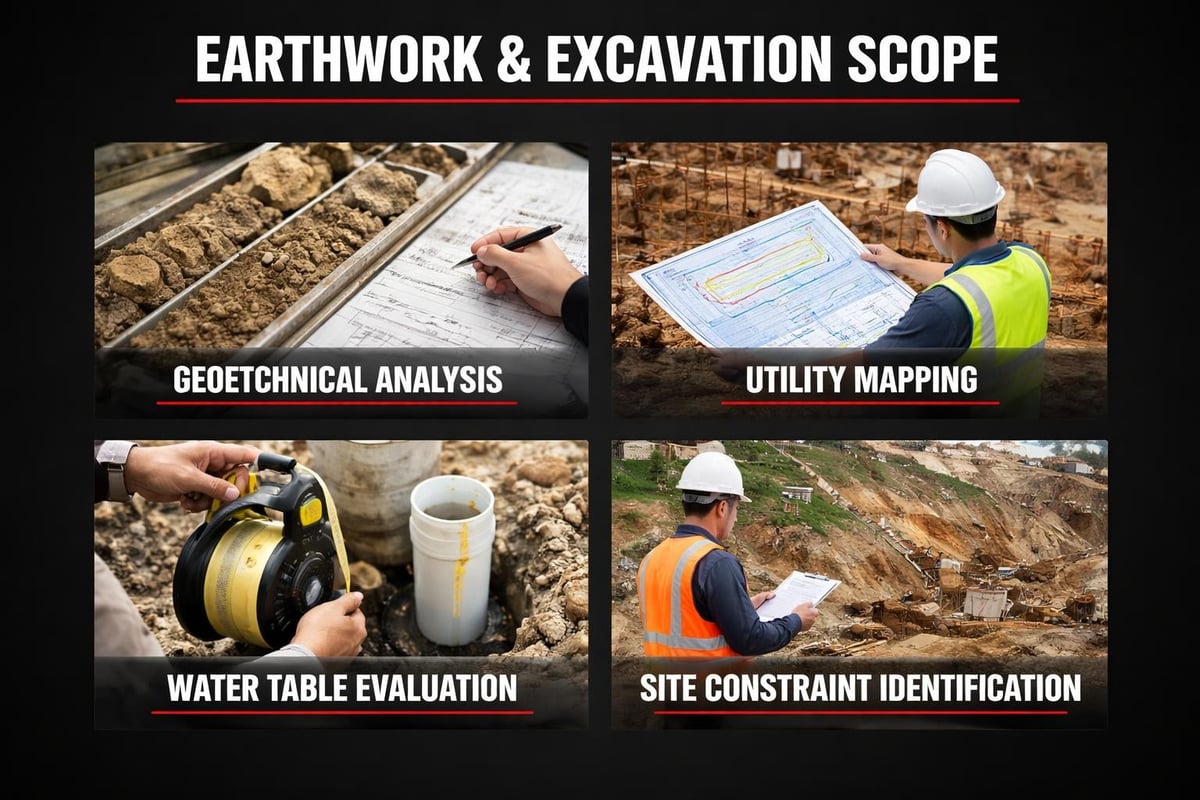
Before any machinery arrives on site, thorough assessment determines the scope of earthwork and excavation needed. Geotechnical investigations reveal soil bearing capacity, water table levels, and potential obstructions. These findings directly inform excavation depth, necessary support systems, and equipment selection.
Key assessment factors include:
- Soil classification and bearing capacity
- Underground utilities and services
- Water table depth and drainage requirements
- Access constraints and site boundaries
- Environmental protection measures
- Adjacent structure considerations
Successful projects integrate this data into comprehensive earthwork plans that account for material volumes, cut-and-fill balances, and disposal or reuse strategies. For commercial developments like the drive-through facilities completed by JRG Civils’ commercial teams, precision in planning prevents costly delays and ensures compliance with design specifications.
Safety Standards and Regulatory Compliance
Safety remains paramount throughout earthwork and excavation activities. The risks associated with these operations demand strict adherence to established protocols and continuous monitoring. OSHA’s trenching and excavation guidelines provide comprehensive frameworks that protect workers from cave-ins, falls, and other hazards inherent to excavation work.
Competent persons must inspect excavations daily and after any event that could affect stability. These inspections verify that protective systems function correctly and identify emerging hazards before they cause harm. The investment in proper safety measures protects both personnel and project timelines.
Protective Systems and Hazard Mitigation
Excavations exceeding 1.5 metres typically require protective systems unless cut entirely in stable rock. The selection between sloping, shoring, or shielding depends on soil type, excavation depth, and surrounding conditions.
| Protective System | Best Applications | Key Advantages |
|---|---|---|
| Sloping | Adequate space available | Natural stability, cost-effective |
| Shoring | Limited space, deeper excavations | Supports vertical walls, adjustable |
| Trench Boxes | Linear excavations, utilities | Mobile protection, quick installation |
| Benching | Stable soils, moderate depths | Step-by-step stability, clear access |
Understanding excavation safety hazards enables teams to implement appropriate controls before work commences. Regular toolbox talks, emergency response drills, and equipment inspections create a safety culture that prevents incidents whilst maintaining productivity.
Earthwork Processes and Methodology
The execution phase of earthwork and excavation follows a structured sequence that optimises efficiency whilst maintaining quality standards. Each stage builds upon the previous, creating a systematic approach to site transformation.
Site Clearance and Preparation
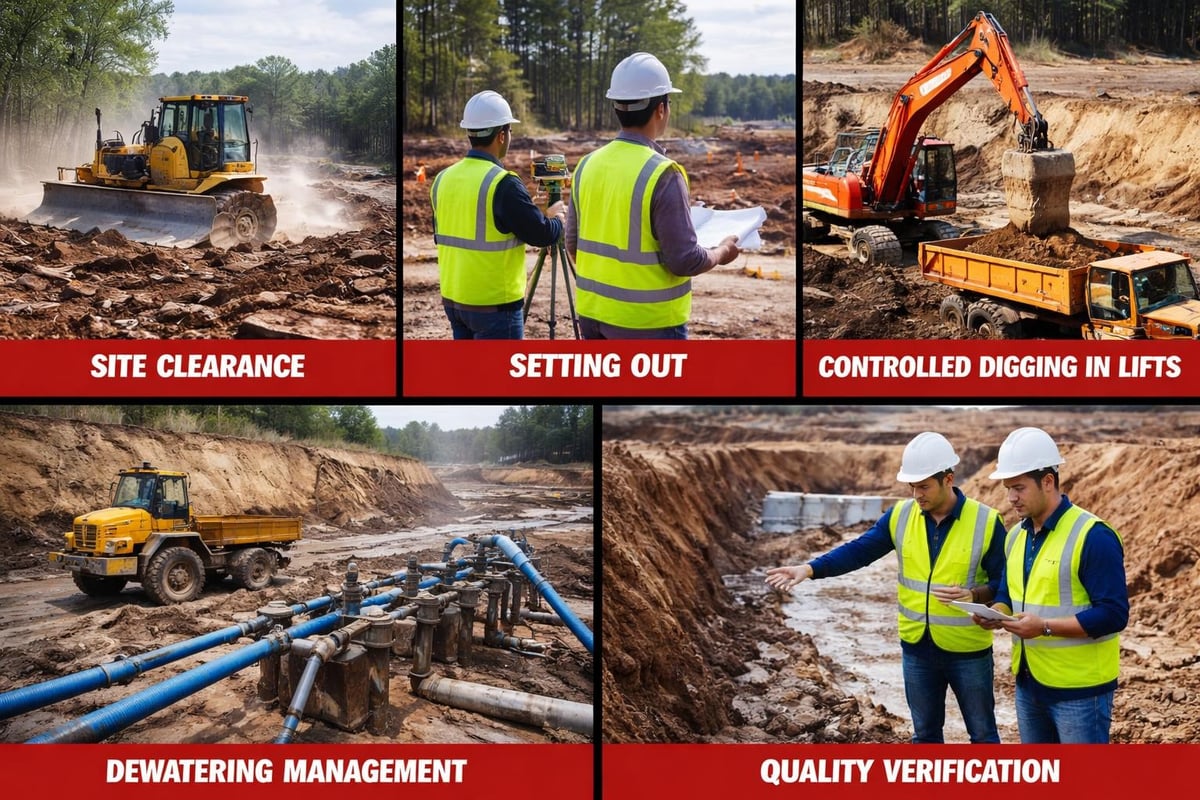
Initial operations remove vegetation, topsoil, and existing structures from the work area. This material often requires segregation for potential reuse in landscaping or final grading. Topsoil preservation matters particularly for projects where restoration forms part of the contract requirements.
Accurate setting out transfers design dimensions from plans to physical markers on site. Total stations and GPS-guided equipment ensure excavation boundaries align with engineering drawings. This precision proves critical for projects requiring exact levels, such as highway surfacing where gradients must meet strict specifications.
Bulk Excavation Execution
Modern earthwork and excavation operations leverage technology to achieve design parameters efficiently. GPS-guided excavators provide real-time feedback, allowing operators to reach target depths and contours with minimal over-excavation. This technology reduces material waste and accelerates progress on large-scale projects.
Excavation methodology considerations:
- Sequential excavation in stable lifts
- Continuous dewatering where groundwater present
- Regular survey checks confirming depth and alignment
- Immediate stabilisation of exposed surfaces
- Weather monitoring and contingency planning
- Material stockpiling organisation for reuse
The earthwork processes outlined in construction best practices emphasise the importance of maintaining control throughout each operation phase. For residential projects such as driveways and patios, smaller-scale earthwork demands equal attention to detail despite reduced volumes.
Material Handling and Earthwork Balance
Efficient earthwork and excavation projects achieve balance between cut and fill volumes, minimising material import or export costs. This balance requires careful calculation during design stages and active management during construction.
Cut and Fill Optimisation
The volume of material excavated (cut) ideally matches the volume needed for filling and grading (fill) elsewhere on site. However, soil expansion during excavation and compaction during filling means volumes rarely align perfectly. Understanding bulking factors and compaction ratios ensures accurate quantity calculations.
| Material Type | Bulking Factor | Compaction Ratio |
|---|---|---|
| Clay | 1.25 – 1.35 | 0.90 – 0.95 |
| Sand | 1.10 – 1.20 | 0.95 – 1.00 |
| Gravel | 1.15 – 1.25 | 0.90 – 0.95 |
| Rock | 1.50 – 1.80 | 0.75 – 0.85 |
Projects involving significant earthwork benefit from sophisticated software that models these factors, predicting haulage distances and optimising equipment deployment. For commercial developments requiring extensive site preparation, this planning directly impacts project viability and profitability.
Compaction and Quality Control
Material placed as fill requires compaction to specified densities. Under-compacted fill leads to settlement, potentially causing structural damage to pavements, buildings, or other constructed elements. Nuclear density gauges and plate bearing tests verify that compaction meets specification requirements.
The civil engineering work undertaken across the UK demonstrates the importance of systematic compaction in layers typically not exceeding 225mm thickness. Each layer receives testing before the next lift commences, ensuring cumulative stability throughout the fill section.
Equipment Selection and Deployment
Earthwork and excavation projects demand appropriate equipment matched to soil conditions, excavation volumes, and site constraints. The wrong equipment selection compromises productivity and increases operational costs substantially.
Primary Excavation Machinery
Hydraulic excavators remain the workhorse of earthwork operations, available in sizes from 1-tonne mini excavators for confined spaces to 90-tonne machines for bulk earthmoving. Track-mounted variants provide stability on soft ground, whilst wheeled versions offer mobility on firm surfaces.
Bulldozers excel at pushing material across relatively flat terrain, performing initial site clearance and final grading operations. Their blade configurations vary to suit different material types and operational requirements.
Loading shovels and dump trucks form the material handling chain, moving excavated earth from cut areas to fill zones or off-site disposal. Route planning and cycle time optimisation maximise fleet productivity.
For specialised applications like utility trenching, mechanical trenchers cut narrow excavations rapidly. These machines prove particularly effective for linear excavations where width permits their use and soil conditions suit their cutting mechanisms.
Support Equipment and Tools
Successful earthwork and excavation extends beyond primary machinery. Dewatering pumps manage groundwater, compaction equipment densifies fill material, and surveying instruments verify dimensional accuracy. This supporting plant ensures operations proceed efficiently regardless of encountered conditions.

Environmental Considerations and Sustainability
Modern earthwork and excavation practices increasingly prioritise environmental protection alongside operational efficiency. Sustainable approaches minimise ecological impact whilst often reducing project costs through material reuse and waste reduction.
Erosion and Sediment Control
Exposed earthwork surfaces vulnerable to erosion require protection, particularly during wet weather. Silt fencing, sediment traps, and temporary stabilisation prevent soil migration into watercourses or neighbouring properties. These measures form part of environmental management plans that guide contractor activities.
Dust suppression becomes critical during dry conditions, protecting both site operatives and nearby communities. Water bowsers dampen haul roads and exposed surfaces, whilst early stabilisation through seeding or mulching provides longer-term control.
Material Reuse and Waste Minimisation
The hierarchy of waste management applies directly to earthwork and excavation. Material excavated from one area often provides suitable fill elsewhere, eliminating disposal costs and reducing the need for imported material. This approach requires testing to confirm suitability, but the environmental and financial benefits justify the investment.
Contaminated soil demands specialist handling and disposal through licensed facilities. Early identification through site investigations allows contractors to segregate affected material, preventing cross-contamination of clean earth and simplifying remediation processes.
Quality Assurance and Project Documentation
Rigorous quality control throughout earthwork and excavation operations ensures final surfaces meet design tolerances and performance specifications. This verification protects both contractor and client, providing evidence that work complies with contract requirements.
Testing Protocols and Acceptance Criteria
Earthwork quality depends on achieving specified densities, moisture contents, and dimensional accuracies. Regular testing at defined frequencies confirms compliance, with results recorded in detailed logs that form permanent project records.
Standard testing regime includes:
- Nuclear density testing for compaction verification
- Particle size distribution analysis for material classification
- California Bearing Ratio (CBR) tests for pavement subgrade
- Level surveys confirming grade and depth accuracy
- Visual inspections by qualified engineers
- Photographic records documenting progress and conditions
The construction specifications developed by highway authorities establish acceptance criteria that earthwork must satisfy. Commercial projects often adopt these rigorous standards, ensuring long-term performance even where formal highway specifications do not apply.
Documentation and As-Built Records
Comprehensive documentation provides traceability from design through execution to final acceptance. Daily records capture weather conditions, plant deployment, materials used, and testing results. These records prove invaluable should future investigations query construction methods or material provenance.
As-built drawings reflect actual constructed conditions, incorporating any approved variations from original designs. These documents become essential references for future maintenance, modifications, or adjacent developments requiring knowledge of subsurface conditions.
Specialist Applications in Civil Engineering
Earthwork and excavation methodologies adapt to specific project types, each presenting unique challenges and requirements. Understanding these variations enables contractors to deploy appropriate techniques and resources.
Highway and Road Construction
Road projects demand precise control of subgrade levels and compaction to create stable foundations for pavement layers. The tolerances specified for highway earthwork typically exceed those for general civil engineering work, reflecting the critical relationship between foundation quality and pavement performance.
Bulk earthwork for new highway alignments involves significant cut-and-fill operations balanced to minimise material haulage. Environmental constraints often limit disposal options, making on-site balance economically essential. GPS-guided machinery proves particularly valuable, maintaining accurate grades over extended distances.
Commercial Development Platforms
Creating level platforms for commercial buildings requires excavation to formation level followed by engineered fill to achieve design heights. Projects such as drive-through restaurants demand careful coordination between earthwork contractors and structural engineers to ensure foundations receive adequate support.
The speed of earthwork execution often determines overall project timelines for commercial developments. Efficient bulk excavation, systematic compaction, and rigorous testing create platforms ready for foundation construction without delays that cascade through subsequent trades.
Residential Groundwork and Landscaping
Smaller-scale earthwork and excavation for residential projects requires equal professionalism despite reduced volumes. Driveways, patios, and garden features benefit from proper excavation depth, sub-base preparation, and edge restraint installation. Shortcuts at the earthwork stage manifest as premature failure of finished surfaces.
Access constraints in residential areas demand careful planning of material delivery and removal. Mini excavators, wheeled dumpers, and grab lorries provide solutions where large plant cannot operate, maintaining progress despite spatial limitations.
Future Trends and Technological Advancement
The earthwork and excavation sector continues evolving through technological innovation and changing regulatory landscapes. Contractors embracing these developments position themselves competitively whilst improving safety and efficiency outcomes.
Automation and Remote Operation
Semi-autonomous earthmoving equipment increasingly features on major projects, with operators controlling machines remotely from safe locations. This technology particularly benefits hazardous excavations or contaminated sites where minimising personnel exposure proves essential.
Machine control systems using 3D models guide equipment automatically, maintaining precise grades without constant surveying. The productivity gains and accuracy improvements justify the technology investment, particularly on projects with complex geometries or tight tolerances.
Sustainable Earthwork Practices
Environmental pressures drive innovation in earthwork methodology. Electric and hybrid excavation equipment reduces carbon emissions, whilst advanced soil stabilisation techniques enable reuse of materials previously considered unsuitable. These practices align with broader construction industry sustainability commitments.
Low-carbon concrete alternatives for soil stabilisation, geosynthetic reinforcement systems reducing excavation requirements, and precision excavation minimising over-dig all contribute to greener earthwork operations. Contractors adopting these approaches meet client expectations whilst differentiating their service offerings.
Successful earthwork and excavation requires meticulous planning, rigorous safety management, and precise execution across every project phase. These foundational operations determine the long-term performance of infrastructure, commercial developments, and residential enhancements alike. Whether you require bulk earthmoving for a major development or precise excavation for a domestic driveway, JRG Civils delivers civil engineering excellence backed by proven expertise across the North East and throughout the UK. Our commitment to quality standards from initial excavation through final finishing ensures your project achieves lasting success.