
Infrastructure projects require careful consideration of every component, and few elements prove as critical as the systems that manage water flow and define roadway boundaries. In civil engineering, the integration of curb and channel systems forms the backbone of effective drainage management whilst providing clear delineation between vehicular and pedestrian spaces. These elements work together to protect road surfaces, direct stormwater runoff, and enhance both safety and longevity of highways, driveways, and commercial developments.
Understanding Curb and Channel Systems
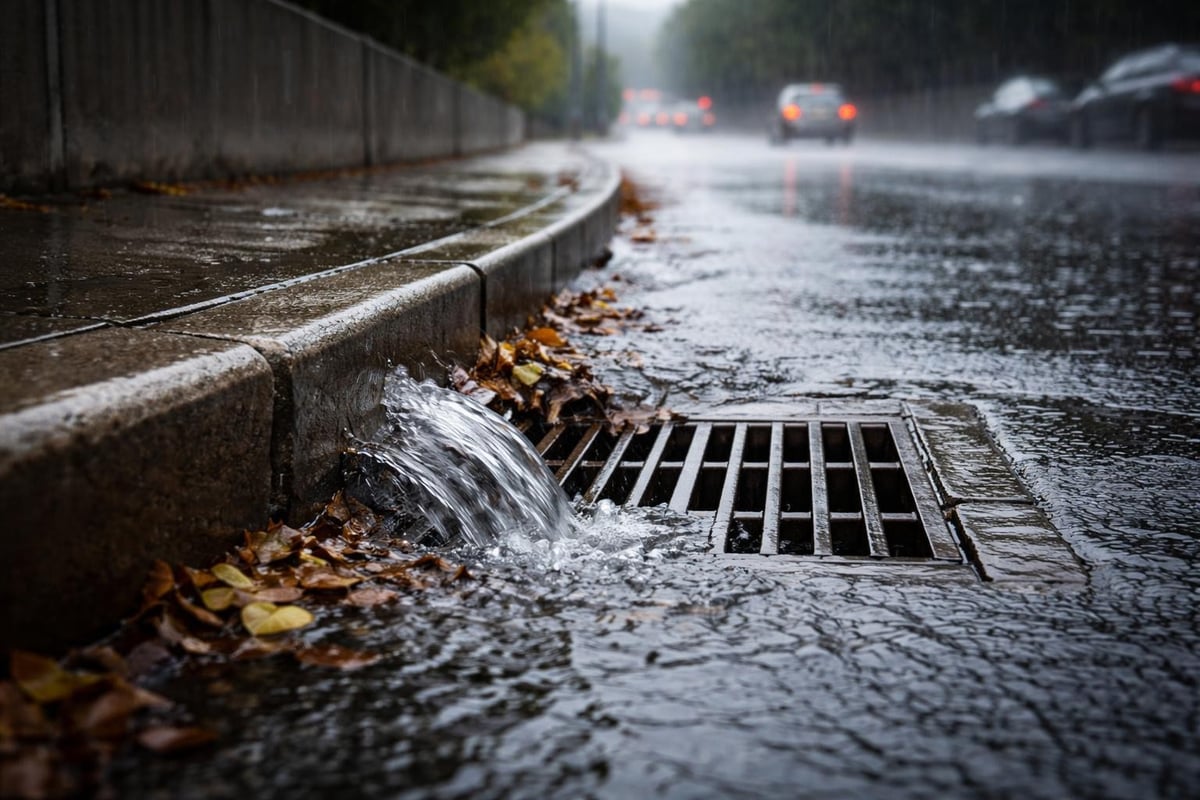
A curb and channel system comprises two interconnected components that serve distinct yet complementary purposes. The curb itself acts as a vertical or sloped barrier along the edge of roadways, car parks, and driveways, providing physical separation between different surfaces. The channel, often referred to as a gutter, runs alongside the curb to collect and convey surface water away from the paved area.
Together, these elements create a sophisticated drainage solution that prevents water accumulation on road surfaces. When properly designed and installed, curb and channel systems protect the structural integrity of pavements by directing water away before it can penetrate beneath the surface and cause subsidence or deterioration.
Primary Functions and Benefits
The curb and channel configuration serves multiple critical functions in modern infrastructure:
- Water management: Collecting and channelling stormwater runoff prevents pooling and hydroplaning hazards
- Structural protection: Directs water away from pavement edges, preventing erosion and undermining
- Traffic delineation: Provides clear visual and physical boundaries for vehicles
- Pedestrian safety: Creates separation between footpaths and roadways
- Aesthetic enhancement: Offers clean, professional transitions between different surface types
Different project types demand varying curb and channel specifications. Commercial developments like drive-through facilities require robust systems capable of handling high traffic volumes and concentrated water flow. Residential driveways need solutions that balance functionality with visual appeal whilst maintaining effective drainage.
Design Standards and Specifications
Seattle’s Streets Illustrated provides comprehensive design criteria that emphasize the critical relationship between curb construction and overall roadway drainage design. Proper specification ensures systems perform effectively throughout their service life.
Material Considerations
The choice of materials significantly impacts both performance and longevity. Modern curb and channel installations typically employ:
| Material Type | Primary Advantages | Typical Applications |
|---|---|---|
| Concrete | Durability, formability, cost-effectiveness | Highways, commercial car parks, driveways |
| Granite blocks | Superior strength, aesthetic appeal | Heritage areas, premium developments |
| Pre-cast units | Speed of installation, consistency | Large-scale projects, time-sensitive works |
The New Jersey Administrative Code details acceptable materials and specifications for both granite block and concrete curbs, providing valuable guidance for specifying appropriate solutions.
Concrete remains the predominant choice for most applications due to its versatility and reliability. Typical specifications call for minimum compressive strengths of 3000 psi at 28 days, though high-traffic areas may require higher grades. The concrete must be properly mixed, placed, and cured to achieve optimal performance.
Dimensional Requirements
Proper sizing ensures effective water collection and conveyance. Standard curb heights typically range from 150mm to 225mm, though specific project requirements may necessitate variations. The channel width generally measures between 300mm and 600mm, with the precise dimension determined by anticipated water flow volumes.
Mecklenburg County’s Land Development Standard Drawings offer detailed diagrams showing various curb and gutter configurations that aid in proper stormwater management planning.
The longitudinal gradient of the channel critically affects drainage efficiency. Minimum gradients of 0.5% prevent standing water, whilst steeper slopes accommodate higher flow rates. In situations where natural fall proves insufficient, additional drainage interventions become necessary.
Construction Methods and Best Practices
Installing curb and channel systems demands precision and adherence to established procedures. Quality outcomes depend upon proper preparation, accurate formwork, and attention to detail throughout the construction process.
Site Preparation and Excavation
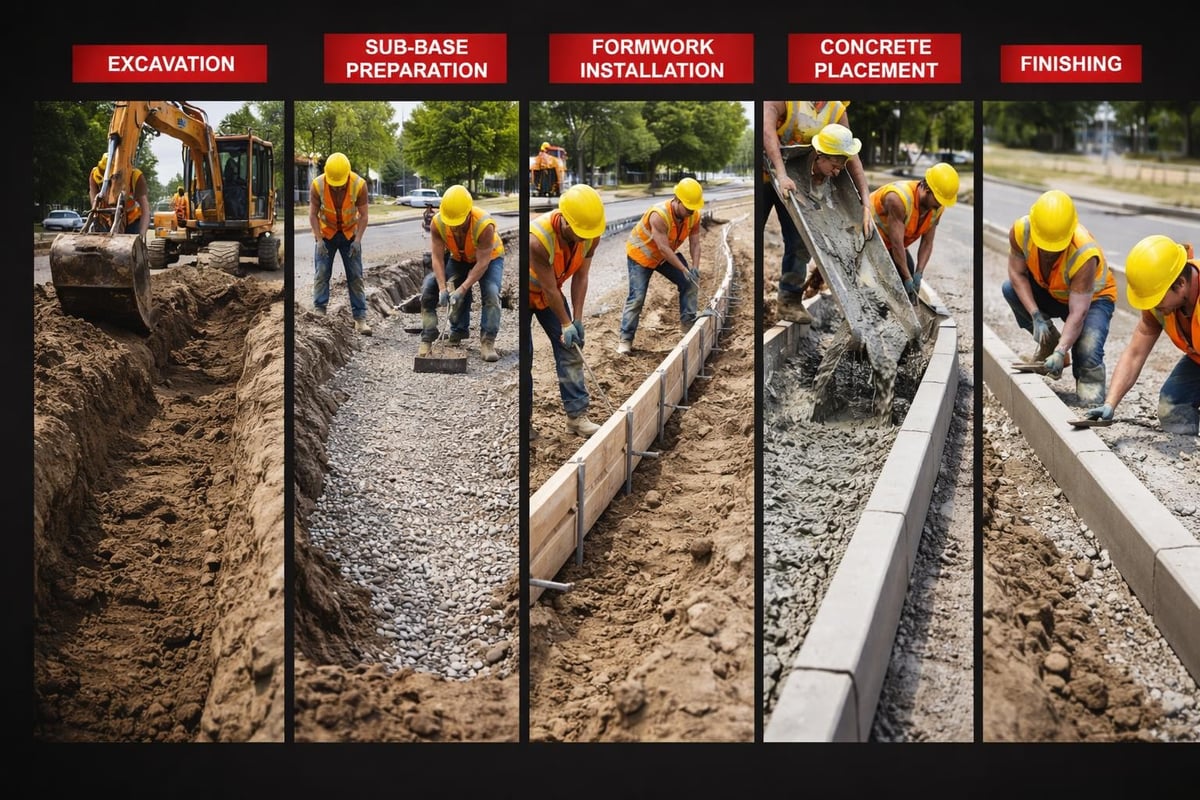
Successful installation begins with thorough site preparation. The existing ground must be excavated to the correct depth, accounting for both the curb and channel thickness plus the required sub-base material. Inadequate preparation leads to settlement and premature failure.
The sub-base provides essential support and drainage beneath the curb and channel. A well-compacted granular material, typically 150mm thick, creates a stable foundation that resists movement and facilitates water infiltration away from the concrete structure.
Formwork Installation
Precise formwork ensures the finished curb and channel achieves the specified dimensions and alignments. Professional contractors employ rigid formwork systems that maintain their position during concrete placement and compaction.
Key considerations during formwork installation include:
- Accurate height setting using string lines and level instruments
- Proper bracing to resist concrete pressure
- Alignment verification at regular intervals
- Joint locations planned to coincide with road joints where applicable
- Release agent application to facilitate formwork removal
San Bernardino County’s Public Works Department provides standard plans ensuring consistency in design and construction across various infrastructure elements.
Concrete Placement and Finishing
The concrete placement phase requires careful execution to achieve the desired finish and performance characteristics. Concrete should be placed in a continuous operation where possible, working from one end to the other to prevent cold joints.
Proper compaction eliminates voids and ensures the concrete fully fills the formwork. Vibration equipment must be used judiciously to achieve consolidation without causing segregation or surface defects.
The finishing process creates the smooth surfaces necessary for effective water flow. The channel receives particular attention, with skilled finishers creating the slight concave profile that optimises drainage capacity. Surface tolerances typically permit variations of no more than 3mm under a 3-metre straight edge.
Drainage Integration and Performance
Effective curb and channel systems form part of broader drainage strategies. Understanding how these elements integrate with other infrastructure components ensures comprehensive stormwater management.
Connection to Drainage Networks
The channel collects surface water and conveys it to designated collection points. Gully grates positioned at strategic intervals capture the flowing water and direct it into underground drainage pipes. Proper spacing of these collection points prevents the channel from becoming overwhelmed during heavy rainfall.
The City of Senatobia’s Minimum Design and Construction Standards includes valuable guidelines for channel design calculations and drainage appurtenances relevant to comprehensive system planning.
Hydraulic capacity calculations determine appropriate channel dimensions and gully spacing. These calculations consider:
- Catchment area contributing to the channel
- Expected rainfall intensity for the design storm event
- Channel gradient and surface roughness
- Available flow depth before water overtops the curb
Alternative Approaches
Whilst traditional curb and channel systems prove effective in many situations, alternative solutions offer benefits in specific contexts. Vegetated swales and dry swales provide environmentally sensitive alternatives that combine drainage with sustainable urban drainage principles.
These alternatives work particularly well in:
- Low-traffic residential developments
- Areas where infiltration is prioritised
- Landscapes requiring softer, naturalistic aesthetics
- Situations demanding enhanced water quality treatment
However, conventional curb and channel installations remain the preferred solution for highways, commercial car parks, and high-traffic areas where robust performance and clear delineation prove essential.
Maintenance and Longevity Considerations
Properly installed curb and channel systems deliver decades of reliable service, though periodic maintenance ensures continued performance. Understanding maintenance requirements allows asset owners to budget appropriately and schedule interventions before minor issues escalate.
Common Issues and Solutions
Several typical problems affect curb and channel systems over time:
| Issue | Cause | Remedy |
|---|---|---|
| Settlement | Inadequate sub-base, poor compaction | Reconstruction with improved foundation |
| Cracking | Thermal movement, structural loads | Joint sealing, partial replacement if severe |
| Channel blockage | Debris accumulation, sediment build-up | Regular cleaning, improved gully maintenance |
| Surface scaling | Freeze-thaw damage, poor concrete quality | Surface treatment or replacement |
Regular inspection programmes identify developing problems before they compromise system performance. Visual surveys conducted bi-annually detect cracks, settlement, or blockages requiring attention.
Cleaning and Debris Removal
Channel functionality depends upon unobstructed water flow. Leaves, litter, and sediment accumulate over time, reducing capacity and potentially causing localised flooding. Scheduled cleaning operations, particularly before and after autumn leaf fall, maintain optimal performance.
Professional cleaning equipment removes accumulated material efficiently whilst inspecting for structural defects. High-pressure water jetting proves particularly effective for sediment removal, restoring the channel to its original capacity.

Project-Specific Applications
Different project types present unique challenges and opportunities for curb and channel implementation. Understanding these variations helps in specifying appropriate solutions.
Commercial Developments
Drive-through facilities, retail car parks, and commercial premises demand robust curb and channel systems capable of handling concentrated traffic and substantial water volumes. These installations typically feature:
- Enhanced concrete specifications for increased durability
- Greater channel widths to accommodate higher flow rates
- Reinforcement in high-stress areas
- Integration with extensive underground drainage networks
Projects such as Costa Coffee and Greggs drive-throughs require particular attention to traffic flow patterns, ensuring curbs provide clear guidance whilst channels efficiently manage water from large paved areas.
Highway and Road Projects
Major road schemes incorporate curb and channel systems as integral components of the overall design. The City of Coeur d’Alene’s engineering standard drawings demonstrate various configurations guiding consistent infrastructure development.
Highway applications prioritise:
- High-speed traffic safety through appropriate height and profile
- Capacity for significant water volumes from extensive catchments
- Durability under heavy vehicle loading
- Integration with road drainage and bridge structures
- Visibility and reflectivity for night-time conditions
Residential and Private Works
Driveways, private roads, and residential developments benefit from curb and channel systems that balance functionality with aesthetic considerations. These projects often employ:
- Decorative concrete finishes or coloured surfaces
- Reduced dimensions appropriate to lower traffic volumes
- Integration with garden landscaping and property boundaries
- Cost-effective solutions meeting performance requirements
Attention to detail in finishing and alignment proves particularly important in residential contexts where visual quality contributes significantly to property value and homeowner satisfaction.
Specifications and Quality Assurance
Achieving successful outcomes requires clear specifications and rigorous quality control throughout the construction process. Professional civil engineering contractors implement comprehensive quality management systems ensuring every aspect meets or exceeds requirements.
Specification Development
Detailed specifications communicate exact requirements to contractors and suppliers. Well-written specifications address:
- Material grades and sources
- Dimensional tolerances
- Surface finish requirements
- Testing and inspection procedures
- Curing and protection measures
- Weather limitations during construction
Reference to industry standards and local authority requirements ensures compliance with regulatory frameworks whilst maintaining consistency across projects.
Testing and Verification
Quality assurance programmes incorporate testing at critical stages. Concrete testing verifies mix designs achieve specified strengths, whilst surface level surveys confirm dimensional accuracy. These verification procedures provide documentary evidence of compliance and identify any deviations requiring correction.
Professional contractors maintain detailed records throughout construction, creating comprehensive as-built documentation. This information proves invaluable for future maintenance planning and potential modifications.
Proper curb and channel design and installation fundamentally impact infrastructure performance, drainage effectiveness, and long-term durability. Whether tackling highway surfacing projects, commercial developments, or residential driveways, selecting the appropriate system configuration and ensuring quality construction delivers reliable results that serve communities for decades. JRG Civils brings extensive experience in civil engineering and building contract work across the North East and throughout the UK, delivering excellence in every project from initial design through to final finishing touches.